
Reviewed · CYCLING TOURS
Tsuwano Cycling Tour with Local Guide
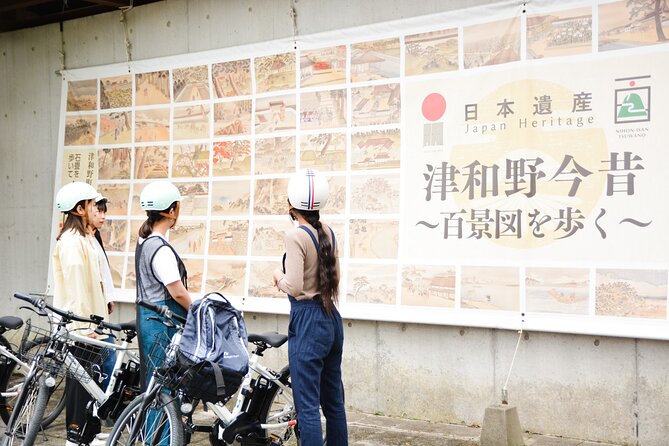
Tsuwano feels like it slipped out of time, and this electric bike tour turns that feeling into something you can understand. I like the way the town’s past is not just mentioned, it’s used as a visual guide as you ride, especially through the Edo-era Hyakkeizu world.
What I also really like is the short 3-hour loop that mixes main streets with quieter spots, and the free stops at shrines and sacred places. One thing to consider: it is a powered ride but still a group tour, so if you want total freedom or longer pacing, this one may feel a bit structured.
Key Points You’ll Care About
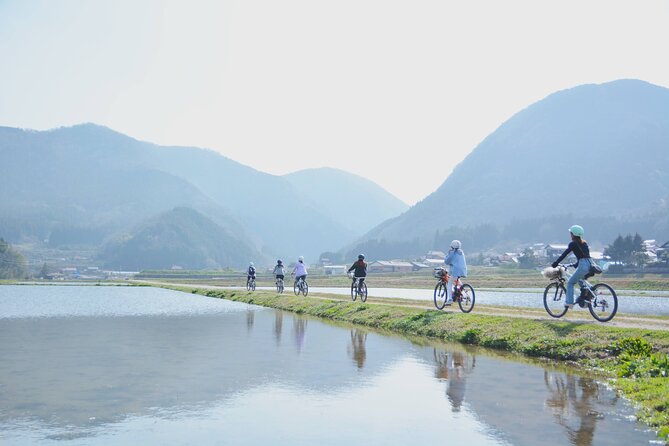
- Electric bikes make the ride comfortable for a wide range of walkers
- Hyakkeizu, One Hundred Sceneries of Tsuwano gives you a smart way to connect old paintings to today
- Small group size (max 6) helps you actually hear the guide and ask questions
- Six shrine and heritage stops keep the tour varied without long museum detours
- No snacks included, so plan a light bite before or after
- Good weather matters, since the tour has a weather requirement
Tsuwano by Electric Bike, With the Hyakkeizu Map in Your Head
Tsuwano is a small rural town in Shimane Prefecture, and it has a talent for preserving older Japan in plain view. A big reason is the Hyakkeizu, One Hundred Sceneries of Tsuwano from the Edo period. The paintings were created about 160 years ago, and they’re tied to Tsuwano’s feudal domain and later recognized as a Japan Heritage site and a National Heritage. That’s not trivia for trivia’s sake. It’s the spine of this tour.
This is an electric bike cycling tour, which matters more than you might think. Electric assist lets you focus on the streets, the shrines, and the guide’s storytelling, instead of turning the day into a workout. In reviews, people repeatedly mention that the guides keep a meticulous pace, which is a polite way of saying you’re not left behind.
The route is also designed like a gentle history lesson. You move through the town, then the guide connects what you see today to what was painted long ago. That contrast gives Tsuwano extra meaning. You stop noticing it as a place you pass through, and you start noticing patterns, names, and sacred spots that explain why the town looks the way it does.
Price and What You Get for $99
For $99, you’re getting a guided electric bike tour for about 3 hours plus the bicycle itself. That is already a solid “value math” because you would otherwise have to sort out bike logistics and hire a guide separately.
Also, several stops explicitly include admission tickets free. That matters because you’re not paying for the fun to keep stacking up in small chunks. The tour includes guide time, bike time, and access to multiple cultural stops that fit well into a half-day plan.
What’s not included is snacks. That’s not a deal-breaker, but you should plan around it. If you’re the type to get hungry mid-ride, grab something before you meet your guide, or budget for a bite right after.
Stop 1: Tonomachi Street, the Main Street That Sets the Tempo
You start at Tsuwano Eki mae Ushiroda, near Tsuwano Station. Then you roll into Tonomachi Street, the main street of Tsuwano.
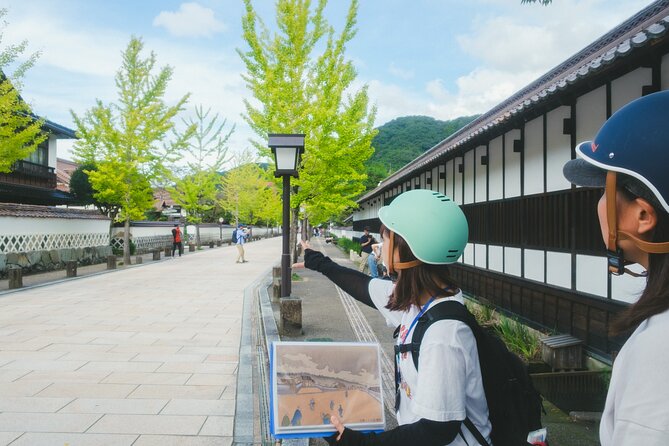
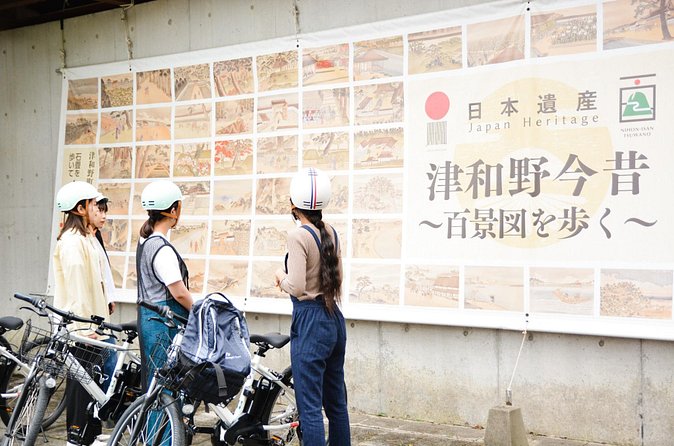
This is the best early stop because it gives you bearings fast. You’re not yet deep in side lanes or sacred grounds. You’re seeing the town’s everyday rhythm, then listening as your guide frames it historically. One of the most praised aspects of the tour is how guides use images from the Hyakkeizu to compare then and now. On a main street, that method clicks quickly. You can notice what changed, what stayed, and what likely influenced how the town developed.
Timing here is about 30 minutes. It feels like enough for orientation without eating up the day. If you’re someone who hates rushing, pay attention to your guide’s cues. The ride is paced carefully, and you’ll get the best experience if you stay with the group rather than trying to sprint ahead for photos.
Stop 2: Yasaka Shrine, Plus Hidden Hyakkeizu Stories
Next you head to Yasaka Shrine for about 30 minutes. This stop is where the Hyakkeizu theme becomes more than a title.
You learn the history of the shrine, and you also get the hidden stories linked to the Hyakkeizu scenes. The important part for you is not memorizing names. It’s learning how the guide reads the paintings like a map. A painting shows a mood and a setting, but your guide helps you understand what the scene meant in the context of Tsuwano in the late Edo period.
This is also where the guide’s communication style shows up. Multiple reviews mention explanations that are easy to understand, with anecdotes and discussions that help you appreciate the region. Guides named Alessandro, Ale, and Yui appear in reviews, and the pattern is consistent: people leave feeling like they now see Tsuwano differently, not just after the ride but when they look at photos later.
Admission is free at this stop, so it’s a good cultural payoff without added cost.
Stop 3: Narutaki jinja Shrine, a Waterfall Spot and a Moment to Reset
Stop 3 takes you to Narutaki jinja Shrine for another 30 minutes. Here, the tour shifts from town streets into something quieter and more reflective.
You explore a hidden waterfall spot and learn Tsuwano’s history, then you get to practice simple meditation. That combination is unusual in a bike tour, and it’s one of the reasons people describe the day as feeling like time slows down.
If you’re thinking, I’m on vacation and I don’t want to be told to meditate, relax. The key is that it’s simple and brief, and it gives you a mental breather. With an electric bike, the physical effort is lower, so a pause like this feels like a natural contrast. It helps you absorb the stories instead of treating them like a checklist.
Practical note: waterfall areas can be cool and damp. Wear what you can move comfortably in, and consider bringing a light layer if you run cold easily.
Stop 4: Washibara Hachiman Shrine, Joyato Lanterns and the Yabusame Track
Stop 4 is Washibara Hachiman Shrine, again for about 30 minutes. This is one of the tour stops with the most specific cultural details.
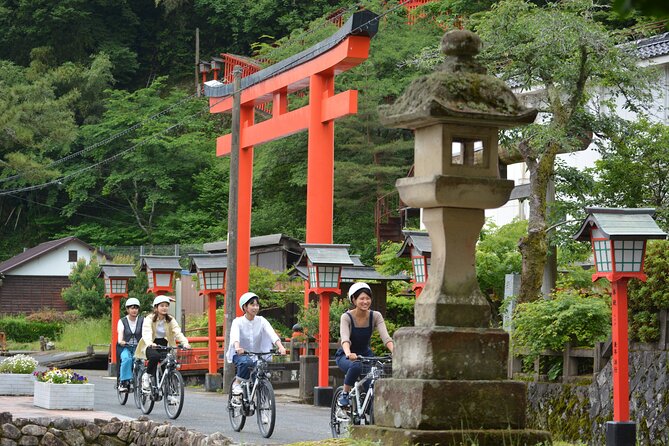
You hear the stories behind the large joyato, the stone lanterns, and the baba, the horse track where the Yabusame horseback archery ritual takes place. This matters because it turns a shrine visit into something operational and human. It’s not just a building or a view. It’s a place designed for practice, ceremony, and skill.
If you like learning how old traditions were actually carried out, this stop will click. You can picture the ritual space, and your guide helps you connect the physical layout to the cultural practice. That’s the kind of context that makes the rest of Tsuwano feel more intentional.
Admission is free here too, so the cultural pay-off stays high relative to what you pay.
Stop 5: Tsuwano Shrine, the Former Lords in the Countryside Views
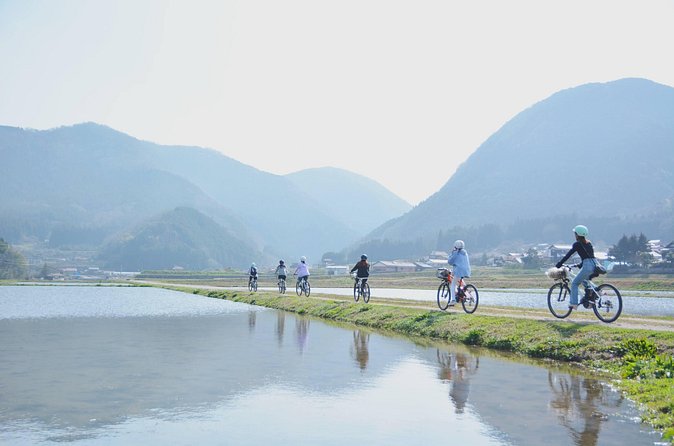
Then it’s Tsuwano Shrine for about 30 minutes. This stop sits a little more in the countryside feel, with rural views around the shrine and stories about the former lords of the Tsuwano domain.
This is the point where you’ll start linking the dots between the political past and the physical present. The Hyakkeizu paintings show scenes of the feudal era, but your guide translates that into why certain places matter. You’re not only told that someone ruled Tsuwano. You learn what that rule looked like on the ground through the shrines, the ceremonial spaces, and the town’s layout.
If you have limited time in Shimane Prefecture, this stop helps you make that time count. It gives you a human scale to the Edo period, not just a list of eras.
Stop 6: Washibara Hachiman Cedar Tree, Over 1,000 Years of Watching
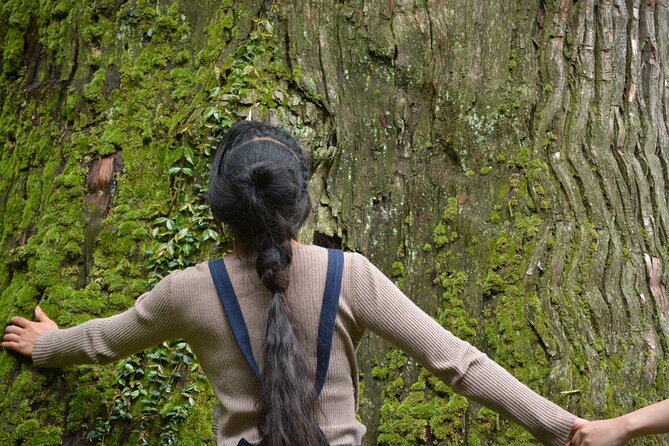
Your last stop is again at Washibara Hachiman Shrine for about 30 minutes. This is where you visit a giant cedar tree that has watched over Tsuwano for more than 1,000 years.
That long view of time is powerful in a day that already uses the Hyakkeizu paintings as a time machine. The cedar tree is not an artifact behind glass. It’s a living witness. Your guide frames it in a way that fits the rest of the tour, so the tree feels like the final “page” of the story rather than a random photo moment.
The tour ends back at the meeting point, Tsuwano Eki mae Ushiroda. So you get closure without having to figure out the ride back on your own.
What the Hyakkeizu Changes About How You See the Town
If there’s one idea that repeatedly shows up in the best feedback, it’s the contrast method. People talk about seeing Tsuwano as a kind of time capsule when they compare the present with the Hyakkeizu scenes drawn about 160 years ago.
Here’s why that approach works for you:
- You get a mental framework. Instead of wandering and hoping you’ll recognize something special, you learn what each scene represents.
- Your photos get meaning. When you later look at pictures, you’ll remember stories, not just objects.
- History stops feeling abstract. The Edo period becomes a set of locations, rituals, and community landmarks that you actually rode past.
In reviews, guides are praised for using images from the Hyakkeizu to frame the tour, which is exactly what you want from a local guide. A good guide doesn’t just translate facts. They help you see patterns.
Also, the group is small, with a maximum of 6 travelers. That can make the storytelling feel more personal, and it keeps the ride calmer.
Pace, Comfort, and Who Should Book This
This is a great option if you want a guided introduction to Tsuwano without committing to a full day. The tour lasts around 3 hours, and the structure moves through six meaningful stops.
Most travelers can participate. That suggests a general “come as you are” vibe. The electric bikes lower the physical barrier, and the guide’s meticulous pace helps you enjoy the ride rather than manage fatigue.
You’ll probably enjoy this most if you:
- like history that feels connected to real places
- enjoy walking into shrines and learning what they mean beyond architecture
- want an easy-to-follow route that still includes quieter corners
You might not love it as much if you:
- prefer to wander on your own with no structure
- need snacks included as part of your plan
- hate any chance of weather disruption, since the tour requires good weather and can be rescheduled or refunded if poor weather stops it
Practical Tips Before You Go
Here are a few no-stress ideas so you can get the most out of the 3 hours.
- Eat before you meet since snacks are not included. You don’t want to be hunting food mid-tour.
- Bring a light layer if you tend to feel cool near water. Narutaki’s waterfall area can feel different from the town streets.
- Stay close to the guide at each stop. The best moments are the explanations, and they move through the day with a careful rhythm.
- Use the Hyakkeizu theme as your game. When you pause, try to picture what the painting might have shown. That simple trick makes the contrast work better.
And yes, do ask questions. Reviews repeatedly praise guides for being friendly and enthusiastic, and this kind of tour gets better when you treat it like a conversation.
Should You Book Tsuwano Cycling With a Local Guide?
I think you should book this if you want a first, focused look at Tsuwano that’s more than sightseeing. The combo of an electric bike, a local guide, multiple free shrine stops, and the Hyakkeizu comparison method makes it feel like a guided story, not a rushed tour circuit.
It’s also a good choice for short attention spans in a good way. The day is broken into manageable chunks, and you get changes of scene: main street, shrine history, a waterfall with a calm reset, ceremonial horse archery lore, and a cedar tree that brings the time theme home.
Just make sure you plan around the one drawback. Bring your own snack options, and keep your schedule flexible enough for good weather requirements.
If you’re passing through Shimane and want Tsuwano to make sense quickly, this is one of the cleanest ways to do it.
FAQ
How long is the Tsuwano cycling tour?
It runs for about 3 hours.
What is the price of the tour?
The price is $99.
What is included in the ticket price?
You get bicycle use and a local guide. Snacks are not included.
Where do I meet for the tour?
You meet at Tsuwano Eki mae Ushiroda, Tsuwano, Kanoashi District, Shimane 699-5605, Japan. The tour ends back at the meeting point.
What is the group size?
The tour has a maximum of 6 travelers.
What is the cancellation policy and what if weather is poor?
You can cancel for a full refund up to 24 hours in advance. The tour requires good weather, and if it’s canceled due to poor weather, you’ll be offered a different date or a full refund.
More Cycling Tours in Shimane Prefecture
- Hidden Kyoto E-Biking tour
★ 5.0 · 1,843 reviews - Tokyo Guided Small-Group Biking Tour
★ 5.0 · 1,250 reviews - Bike Tour Exploring North Kyoto plus Lunch
★ 5.0 · 1,087 reviews - Tokyo Great Cycling Tour
★ 5.0 · 811 reviews
Cycling Tours, compared.




3h Tokyo E-Bike Tour: Hidden Gems, and Local Life with guide
Read our review →
Arashiyama Bamboo Forest & Hidden Gems Bike Tour (Early Bird)
Read our review →
Hiroshima in a Nutshell: Morning Bike Adventure
Read our review →Browse the lists this tour appears in