
Reviewed · HAKONE TOURS
Hike Hakone Hachiri
Hakone Hachiri is interesting because it is not just a scenic hike, it is a walk through the old Tokaido route that once connected Tokyo to Kyoto and Osaka, with Edo-era details tucked into the trees and stone. I especially love the chance to meet Mr Yamamoto, the 13th generation manager of a rare amazake teahouse, and the shaded Cedar Avenue section with centuries-old Japanese cedars. One thing to consider is that this is a moderate hike with real footwork time, so you will want sturdy shoes and patience if weather turns wet.
This is also a smart day if you like history you can see, not just read about. You’ll get context at the checkpoint and ruins stops (think Hakone Sekisho and Yamanaka Castle Ruins), then you’ll stretch your legs on a preserved 12 km section of the old foot highway. The views of Mt Fuji can happen weather permitting, and on a rainy day, your guide can adjust the pacing and route.
Because it is a private experience for your group, the guide attention feels personal. I went into it expecting a hike, and left thinking about how people once moved through this landscape one checkpoint at a time, guided by tea stops and official gates. Expect a steady day from 8:30 am to about 9 hours, starting and ending at Mishima Station, and plan to handle lunch on your own.
Key highlights worth knowing
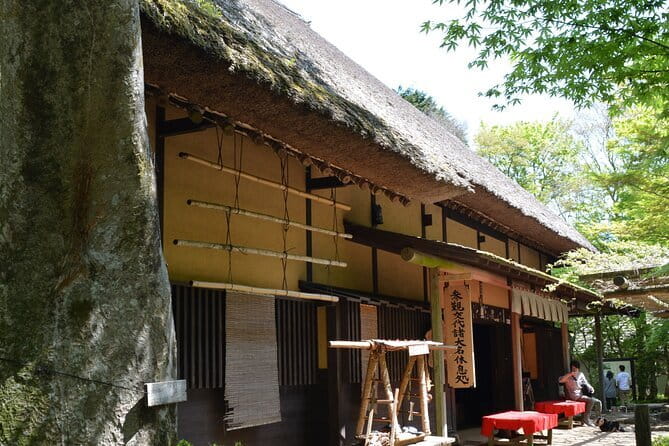
- Meet Mr Yamamoto at an Amazake Chaya run by a 13th generation family line, with admissions handled for the stop
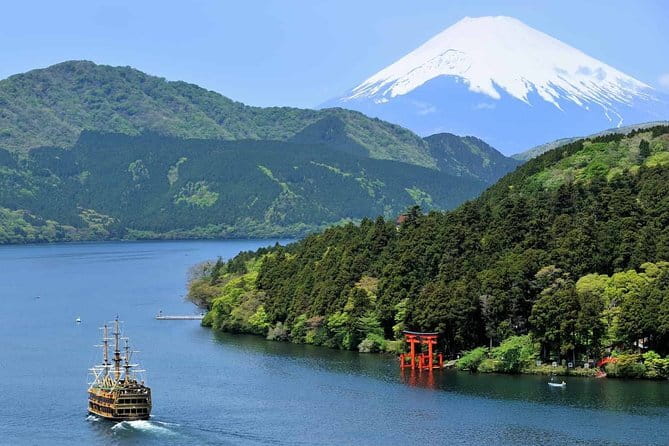
- Lake Ashinoko lunch by the crater lake with red torii gates in the water
- Cedar Avenue planted by Tokugawa Hidetada for shade along the Tokaido, with 400-year-old cedars on both sides
- Hakone Sekisho checkpoint lessons on how the Edo government controlled travel near Edo
- A 12 km Old Tokaido Foot Highway stretch between Odawara and Mishima in a Japan Heritage Area
- Genbegawa World Water Heritage Area finish in Mishima, for a different kind of nature context
Walking the Tokaido trail, not just the scenery
Hakone Hachiri follows part of the ancient Tokaido Highway, the road that once linked Edo (Tokyo) with Kyoto and Osaka. What makes this hike feel special is that the route keeps switching gears. You are in thick forest shade, then you are beside water at Lake Ashi, then you hit checkpoint history, and later you walk an older foot highway segment where the trail itself matters as much as the views.
This is declared a Japan Heritage Area, so you get a sense of place that goes beyond taking photos. I like that the day is built around specific route-linked stops, instead of a generic “walk in nature” template. Your guide also has the freedom to keep the pace human for your group, which is where private tours often win.
More Hiking & Trekking in Hakone:
- Hike Japan Heritage Hakone Hachiri with certified mountain guide
★ 5.0 · 46 reviews - Traverse Outer Rim of Hakone Caldera and Enjoy Onsen Hiking Tour
★ 5.0 · 30 reviews - Hakone Hachiri: Old Tokaido Highway Hiking Tour
★ 4.9 · 22 reviews
Price and logistics: how the day is set up
The cost is $231.18 per person, and you are paying mainly for your guide and a private day structured around multiple historical sites. Since the hike runs about 9 hours, it is not a quick add-on. If you are already visiting the Hakone and Mishima area, this is a good use of time because you are covering several distinct stops in one run.
A few practical points that matter:
- Start and end are both at Mishima Station (8:30 am start time).
- You’ll use a mobile ticket.
- There are group discounts, but it is still private, meaning only your group participates.
- Lunch and coffee or tea are not included, so plan on budgeting for a meal during the Lake Ashi stop.
Also, it is smart to book ahead. On average, this is booked about 31 days in advance, so if you have fixed dates, don’t wait until the last week.
Morning start at Mishima Station, with a real trail plan
You meet at Mishima Station, listed at 16-1 Ichibanchō, Mishima, Shizuoka 411-0036. The start time is 8:30 am, and the tour ends back at the same station. That round-trip setup is handy if you want an easy transfer to your next hotel or rail connection without a complicated pickup.
Since it is near public transportation, you do not need a car to make the start work. And because it’s a private tour, you avoid the “herding” feeling that can happen on crowded day trips.
From here, the day is organized like a guided walk through route history: first a teahouse stop, then Lake Ashi, then cedar shade, then official checkpoints and ruins, then the long preserved hike segment, and finally a water-heritage walk to close the loop.
Stop 1: Hakone Amazake Tea House and meeting the Yamamoto line

The day begins at the Hakone Amazake Tea House, a place that is rare now. Tea houses used to line the Tokaido in large numbers, and you are visiting one of the few that remain. Mr Yamamoto is the 13th generation manager, and the family continues with the next generation involved in the operation.
Admission for this stop is included. What you gain here is tone. This is not just a “rest stop,” it is a living example of how travel culture worked. On the old road, people did not only walk, they also paused, ate, and checked in with local hospitality. Having a guide explain what you are looking at makes the teahouse feel like part of the route, not a random detour.
Possible drawback: if you are already sensitive to heat or you prefer faster starts, the teahouse stop can feel like a slower rhythm compared to straight trail time. That said, it is usually a welcome reset before you move into the longer hike sections.
A change of pace from Hakone:
- Hakone 6 hour Private Tour with Government-Licensed Guide
★ 5.0 · 218 reviews - Custom Private Tour in Hakone with a Certified Local Guide
★ 5.0 · 91 reviews - Hakone 8 hour Private Tour with Government-Licensed Guide
★ 5.0 · 63 reviews - Private Tour – Hakone Day Trip! A Tour to Explore All Must-Sees!
★ 5.0 · 58 reviews
Stop 2: Lake Ashinoko lunch with torii gates on the water
Next up is Lake Ashinoko, where you have lunch by the lake. Lake Ashi is described as a crater lake about 700 meters deep, and the signature detail here is the red torii gates standing in the water.
This stop is listed as 1 hour, and it comes with lunch time built in. Admission is free for the lake stop, but remember lunch itself is not included in the tour price. So bring cash or be ready to buy your meal there.
What I like about this part is the contrast. You go from cedar shade and road history into open water and a more visual, airy setting. If the day is clear, this also sets you up for better long-distance views later. If it is cloudy, you still get the atmosphere of the lake, and you can shift your focus from Mt Fuji hopes to the route itself.
Cedar Avenue: the Tokaido shade corridor planted by Tokugawa Hidetada
Then comes one of the most memorable segments: the Cedar Trees of Hakone Old Road, often called Cedar Avenue. You’ll walk under towering Japanese cedar trees, described as 400-year-old cedars planted along both sides of the route.
This section ties directly to Edo-era planning. The second Edo Period shogun, Tokugawa Hidetada, ordered the planting of sugi (Japanese cedar) along the Tokaido to provide shade for travelers. That means the trail is doing a job. It is infrastructure from the era of controlled travel: shade so people could walk through the day, and a corridor that guided movement.
This stop is about 30 minutes, and admission is free. In a way, that makes it easy to miss if you are speeding, so I’d treat it as a moment to slow down. Even if you don’t care about botany, it is one of those places where you can feel how travel was designed.
Hakone Sekisho and the museum: checkpoint life on the Tokaido
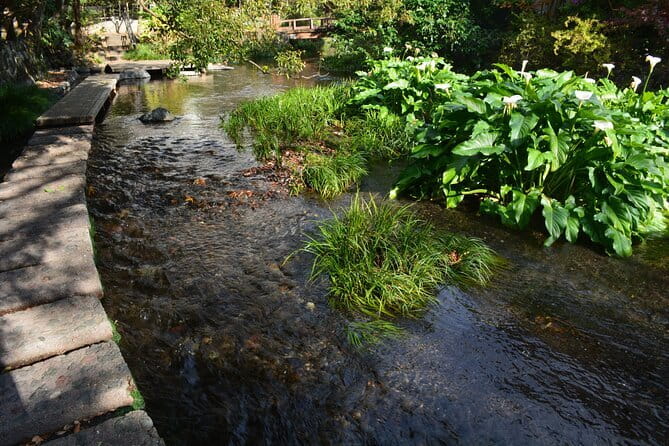
The hike continues to Hakone Sekisho and the Hakone Sekisho Museum, a checkpoint area tied to how the Edo government controlled movement. On the Tokaido, checkpoints appeared at intervals to make sure travelers were legitimate and to protect the shogun in Edo.
Hakone was the checkpoint closest to Edo, so it was described as one of the most heavily policed. This is where you start seeing the route as a system, not just a path.
Time here is about 30 minutes, and admission is free for this stop. The museum adds context, and your guide helps you connect what you see to the day-to-day reality of inspections and travel permission.
If you prefer fast moving days, this stop might feel like it adds “indoors time.” But if you like how things worked, this is one of the best value stops of the whole itinerary.
Yamanaka Castle Ruins: “castle in the middle of the mountain”
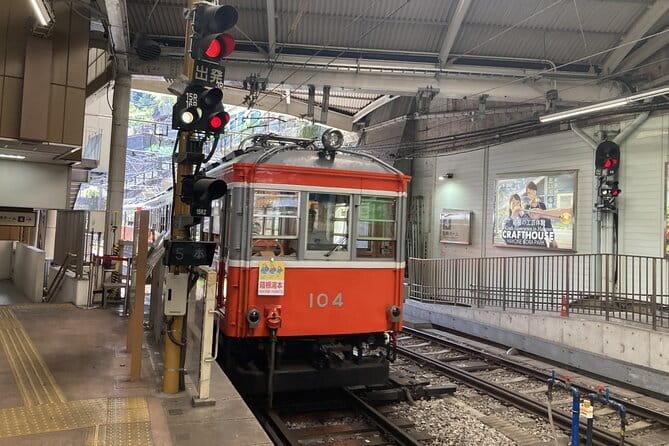
After the checkpoint, you move into Yamanaka Castle Ruins. The name matters. Yamanaka Castle literally means castle in the middle of the mountain, and the site is described as having earthworks made for defense.
Historically, it was connected to Hojo’s western boundary protection. Even without digging into technical details, you can read the place as a strategic spot, because the terrain and fortification style are about controlling movement and watching for trouble.
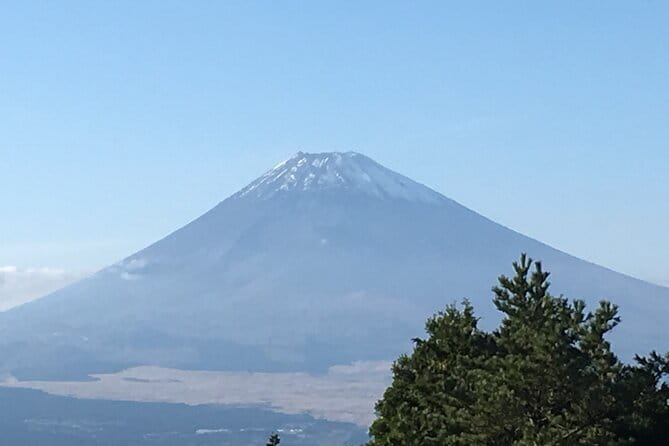
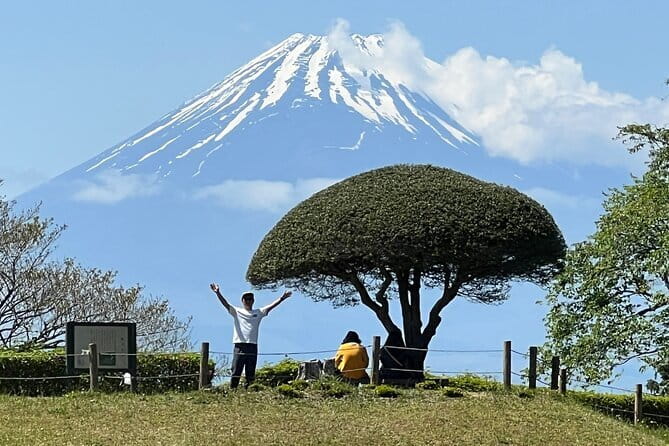
This stop is also about 30 minutes, admission free. It is one of the places where Mt Fuji could show up if weather permits. If the sky is clear, you might catch that classic silhouette feeling. If it’s gray or rainy, focus on the earthworks and the sense of purpose in where people built.
The 12 km Old Tokaido Foot Highway stretch between Odawara and Mishima
Now you hit the big chunk: a 12 km hike along the preserved Old Tokaido Foot Highway between Odawara and Mishima, described as part of a Japan Heritage Area. This is your long walking segment, listed at about 5 hours.
This is where your shoes earn their keep. Stones, uneven ground, and the simple effort of walking for hours matter more than any one view. I like this portion because it feels like the old route itself, not just a scenic park trail. You get to experience the length of the journey in your own legs.
What can be challenging: it is long for a single day, and you will need to pace yourself. If you rush, you will pay for it later. Your guide will help set a rhythm, and the private format means you are less likely to get pulled along by a faster group.
Also, if you are hoping to avoid crowds, this longer stretch is often a better bet than the most famous Hakone viewpoints. You are still in a popular region, but the feel is more “route hike” than “theme sightseeing.”
Closing walk in Mishima: Genbegawa World Water Heritage Area
At the end, you head to Mishima for a walk along the Genbegawa World Water Heritage Area, about 30 minutes.
This is a nice way to reset after the big hike. Instead of pushing for one more scenic peak, you get a last dose of local nature context, tied to water and heritage.
It also gives you a smoother finish back to Mishima Station, so you can transition to your next meal, train, or hotel without feeling stranded.
Mt Fuji hopes, rainy days, and what to pack
Weather is a real factor here. The experience notes that views of Mt Fuji are possible from Yamanaka Castle Ruins, but only weather permitting. And there is also an expectation of good weather overall.
That said, the day can still work if it rains. You might find the guide adjusts for conditions, and you still get a satisfying hike experience, including time on stone surfaces. That is why sturdy, comfortable shoes matter. Do not show up in fashion sneakers and hope for the best.
Practical packing tips based on the route feel:
- Wear shoes with grip for uneven and stony sections
- Bring a rain layer if the forecast is questionable
- Plan for a moderate hike day, not a casual stroll
Is $231.18 worth it? My value take
For a private experience that runs roughly 9 hours, the price can feel steep until you break down what you are buying.
You are paying for:
- A guided day connecting multiple sites tied to the old Tokaido
- Admission included for the Hakone Amazake Tea House stop
- A structured itinerary with several free-admission stops
- A small-group feel that keeps the day from feeling mechanical
You are not paying for:
- Lunch
- Coffee and/or tea
- Any mention of an air-conditioned vehicle
So the value comes from whether you want that guided, route-specific storytelling while you hike. If you just want to walk and take photos, you could probably do a self-guided route. But if you want the checkpoint context, cedar-planted-shade explanation, and the tea house family perspective, the guide time is the main product.
Also, because this is booked in advance fairly often, you can treat it as a “use your time wisely” day in the Hakone area.
Who should book Hike Hakone Hachiri?
I think this tour fits best if you match a few traits:
- You enjoy history you can walk through, not just read in a museum
- You are comfortable with a moderate physical fitness level
- You want a private day, so you can keep your own pace
- You’d rather trade some crowds for the feel of a long old-road hike
It is also a strong option for couples and adult groups who want one grounded, meaningful day rather than hopping between quick photo stops.
If you dislike long walks, or if 12 km feels like too much for your body on one day, this might be a tough match.
Should you book it?
Book if you want a guided Tokaido day that blends rare teahouse culture, Edo checkpoint context, and a real 12 km old-road hike, all anchored by a guide named Tony who can keep the day moving while making the stories make sense.
Hold off if you need a mostly flat, short hike, or if you are unwilling to handle your own lunch and drinks during the Lake Ashi stop. Also reconsider if your schedule can’t flex when weather is bad, since the experience notes a good-weather requirement.
If you do book, do one simple thing: wear the best shoes you own and plan your lunch budget. Everything else in the day is built around your guide and the route.
FAQ
How long is the Hike Hakone Hachiri experience?
It is about 9 hours (approx.).
Where do we meet and where does the tour end?
You meet at Mishima Station, address 16-1 Ichibanchō, Mishima, Shizuoka 411-0036, Japan, and the tour ends at the same location.
What time does the tour start?
The start time is 8:30 am.
Is lunch included?
Lunch is not included. Lunch time is scheduled during the Lake Ashinoko stop.
What is included in the price?
The included item is the guide fee, and the teahouse stop has an admission ticket included.
Is it a private tour?
Yes. It is private, and only your group will participate.
What fitness level do I need?
The tour is listed for travelers with a moderate physical fitness level.
What if the weather is poor?
The experience requires good weather. If it is canceled due to poor weather, you will be offered a different date or a full refund.
Is Mt Fuji part of the experience?
Mt Fuji views from Yamanaka Castle Ruins are mentioned as possible, but only weather permitting.
Latest write-ups near Hakone
- Hakone Hachiri: Old Tokaido Highway Hiking Tour★ 4.9 · 22 reviews
- Kowakien Yunessun Hot Springs Entry Ticket★ 4.2 · 23 reviews
- Odawara: Guided Ninja & Samurai Tour of Odawara Castle★ 5.0 · 25 reviews
- Traverse Outer Rim of Hakone Caldera and Enjoy Onsen Hiking Tour★ 5.0 · 30 reviews
- Odawara: Odawara Castle Tenshukaku Entrance Ticket★ 4.2 · 30 reviews
- Private Hakone Half-day Car Tour with Hotel Pickup – Local Guide★ 5.0 · 48 reviews
- Private Tour – Hakone Day Trip! A Tour to Explore All Must-Sees!★ 5.0 · 58 reviews
- Hakone 8 hour Private Tour with Government-Licensed Guide★ 5.0 · 63 reviews
Hakone Tours, compared.
Hakone 6 hour Private Tour with Government-Licensed Guide
Read our review →
Custom Private Tour in Hakone with a Certified Local Guide
Read our review →
Hakone 8 hour Private Tour with Government-Licensed Guide
Read our review →
Private Tour – Hakone Day Trip! A Tour to Explore All Must-Sees!
Read our review →
Private Hakone Half-day Car Tour with Hotel Pickup – Local Guide
Read our review →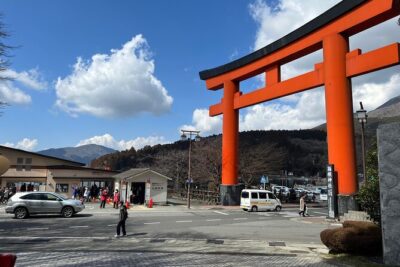
Hike Japan Heritage Hakone Hachiri with certified mountain guide
Read our review →
Odawara: Odawara Castle Tenshukaku Entrance Ticket
Read our review →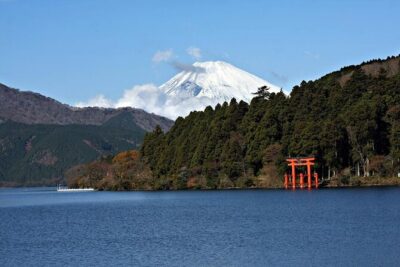
Traverse Outer Rim of Hakone Caldera and Enjoy Onsen Hiking Tour
Read our review →Browse the lists this tour appears in