
Reviewed · SAPPORO & HOKKAIDO TOURS
Sapporo 4hr Private Tour with Government Licensed Guide
Sapporo can feel spread out, especially in winter. This 4-hour private tour gives you a smart way to sample the city’s highlights with a guide who handles navigation, so you are not wasting time figuring things out. I like that the itinerary is flexible, built around your interests instead of a rigid checklist, and you are not stuck hunting for a meeting point.
My main caution is simple: it is fundamentally a walking tour, and a lot fits into half a day. If you want to cover far-apart places in one go, you may end up relying on taxis at your own expense, and some stops have admission fees not covered by the tour.
One more thing I really like is how strong the guide experience tends to be. Names like Roy Aoki, Kumiko Nakamura, Tom Yakuwa, and Waka come up with consistent praise for clear English, punctual timing, and thoughtful planning that helps you feel oriented fast.
Key points worth knowing before you go
- Private guide, not a group shuffle, for a tour that actually adapts to your pace and interests
- Meet near your hotel area so you can start smoothly without commuting stress
- Choose 2 to 3 sites from a menu, which is the only sane way to do a half-day in Sapporo
- A mix of iconic Sapporo and local flavor, from Odori Park and Susukino to beer, markets, and viewpoints
- Plenty of stops are admission-free, but some are not, so check what you want to pay for ahead of time
- Guides are good at real-world navigation, including helping you move around efficiently once you decide your route
What you really get from a 4-hour private Sapporo tour
This is a time-tight, high-efficiency way to get bearings in Sapporo. The tour runs about 4 hours, and you work with a licensed local English-speaking guide. In practice, that means you spend less time staring at maps and more time seeing the places that define the city.
You also do not have to commit to a one-size-fits-all route. You select 2 to 3 sites from a list of options, and the guide customizes the path based on what you care about most. That choice matters because Sapporo’s best sights do not all cluster in one tiny pocket.
Finally, it is private, so you are not squeezed into other people’s priorities. If your style is “pick a few things, do them well,” this format matches that perfectly.
Also on the shortlist for Sapporo:
- Sapporo Bar Hopping Food Tour
★ 5.0 · 232 reviews - Hokkaido Seasonal: Lake Toya & Noboribetsu Jigokudani Valley
★ 4.7 · 173 reviews - Sapporo Private Tour with a Local – Highlights & Hidden Gems
★ 5.0 · 91 reviews
Meeting your government-licensed guide and keeping the day easy
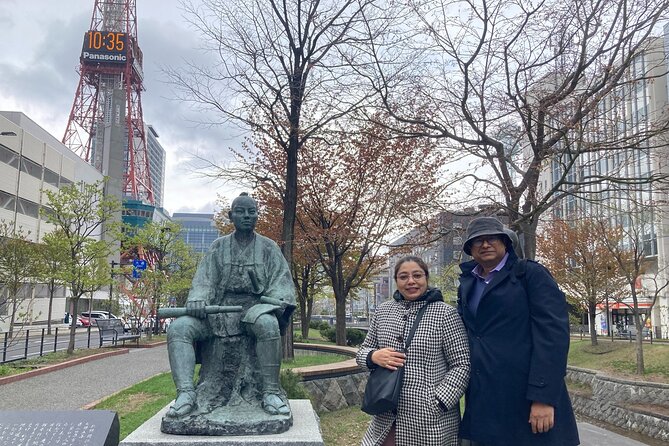
The tour is designed so you do not need to hunt for a fixed meeting location. You meet the guide on foot within a designated area in Sapporo, and pickup is offered, but the key point is that this is not a private-vehicle sightseeing bus.
You should expect a walking pace and lots of short site visits. The sample timing shows about 30 minutes per stop, which is great for orientation and photos, but not enough for long meals or slow wandering. If you want a longer sit-down lunch, plan it as a separate pause that does not eat the sightseeing clock.
Also note what is not included: transportation fees and entrance fees are on you. That sounds boring, but it is useful. It means you can decide where you want to splurge on ticketed attractions and where you are happy with free sights.
How to choose your 2 to 3 stops without ending up rushed
Your guide can customize the route, but you still need a strategy for picking only 2 to 3 stops. Here is the practical way to do it:
First, choose one “big idea” stop and one “signature Sapporo” stop. For example, that could be the Sapporo Snow Festival seasonally, then something like the Sapporo Beer Museum or Odori Park in the center. Add a third option if you genuinely care, like the Nijo Market for local food energy.
Second, pair stops that make geographic sense. Central Sapporo options often work together, like Odori Park, Susukino, the Clock Tower, and the Sapporo TV Tower. If you pick something farther out, like Moerenuma Park or Jozankei Onsen, be ready for the fact that your third stop may need to be closer to keep the day comfortable.
Third, think about season. If you are in February, the Snow Festival is a natural centerpiece. If you are not, swap it for parks, shrines, and viewpoints.
Stop-by-stop guide to what you can actually see
Most tours will not fit every listed place into one 4-hour visit, but your guide can mix and match the menu based on your choices. Below is what each option is best for, plus the main tradeoffs.
A change of pace from Sapporo:
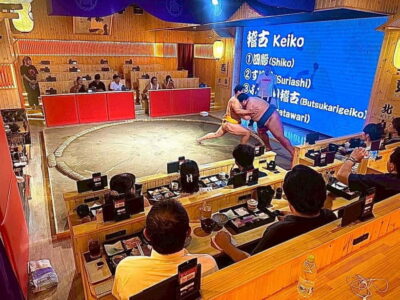
- Sapporo: Sumo Show Experience with Japanese food & Photo
★ 4.9 · 81 reviews - Popular in SapporoExperience authentic hand-made soba at a real soba shop!
★ 5.0 · 77 reviews - Mondo’s most popular plan! Experience making soba noodles and the king of Japanese cuisine, tempura, in Sapporo!
★ 5.0 · 71 reviews - 【Private Car】Asahiyama Zoo, Blue Pond, Shirahige Falls, Ningle Terrace (from Sapporo)
★ 5.0 · 60 reviews
Stop 1: Sapporo Snow Festival (February highlight)
The Sapporo Snow Festival runs for one week every February in Sapporo. This is a classic way to understand why Hokkaido gets famous for winter culture, not just cold weather.
Plan on taking it slow here, even if your time is limited. The festival is free in the plan, which is a big plus when you are also paying for ticketed attractions elsewhere. The drawback is obvious, it is seasonal, so only build your route around it if your dates match February.
Stop 2: Moerenuma Park (free-form park design)
Moerenuma Park sits in the outskirts of Sapporo and is known for its spacious design around a marsh. It is about a 4-kilometer circumference, so even with only 30 minutes, you get a sense of why people call it a standout park rather than a quick stop.
Because it is out of the center, it is best as your “one nature stop” rather than a place you also try to cram with several downtown attractions. The plan lists admission as free, so that helps.
Stop 3: Historical Village of Hokkaido (Kaitaku-no Mura)
The Historic Village of Hokkaido is an open-air museum with about 60 buildings from the Meiji and Taisho periods. If you care about how Hokkaido was developed and settled, this gives you a structured look without doing homework first.
Admission is not included in the plan, so check ticket expectations in your budget. The time can feel like a lot for only 30 minutes, but it still works if you want a quick overview and photos.
Stop 4: Mt. Moiwa (views over Sapporo)
Mount Moiwa is a small, forested mountain southwest of central Sapporo with a famous view over the city. Even if you only spend a short window here, it helps you connect the “grid” of downtown with the hills and neighborhoods beyond.
The stop lists admission as free, which is great value. The tradeoff is that it is a viewpoint stop, not a culture stop, so make sure it fits your priorities.
Stop 5: Shiroi Koibito Park (Ishiya chocolate world)
Shiroi Koibito Park is tied to Ishiya, a local chocolate company. The park is themed around the famous Shiroi Koibito cookie, making it a fun family-friendly option and a nice detour for a sweet souvenir.
Admission is not included in the plan, so this is one to choose if you genuinely want the ticketed attraction, not just want something to “fill time.” If you are more into food history than packaged sweets, you might prefer the Beer Museum or the market options.
Stop 6: Sapporo Beer Museum (beer roots since 1877)
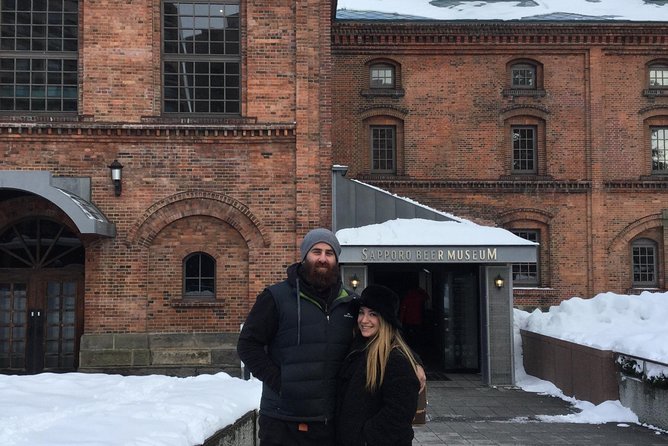
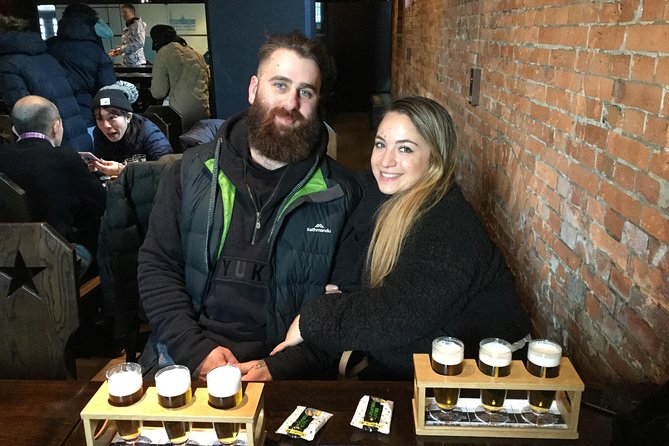
Hokkaido is tied to the story of beer in Japan, and Sapporo Beer has been brewed in Sapporo since 1877. The Sapporo Beer Museum is a natural fit if you want a local brand story in a real place, not just tasting somewhere generic.
Admission is not included in the plan, so this is a “pay for the experience” stop. The upside is that it fits well as your signature Sapporo flavor stop, and your guide can steer you toward what to focus on given the time.
Stop 7: Odori Park (center spine of the city)
Odori Park is the broad median in the center of Sapporo, separating north and south. It stretches about 1.5 kilometers over twelve blocks, so it is easy to understand how the city is laid out around this green spine.
Admission is free in the plan, and it is one of the best anchors for a short walking route. You can also line it up with seasonal events when dates match, including food-stall festivals that happen in the park area.
Stop 8: Susukino (entertainment district energy)
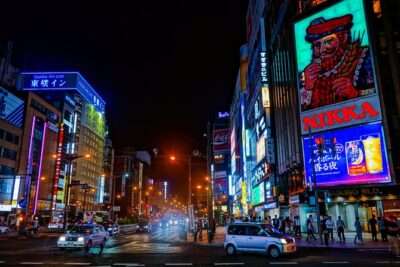
Susukino is Sapporo’s entertainment district. It is packed with shops, bars, restaurants, karaoke, pachinko, and the adult side of things too. It is not a “sit and read” stop, it is a feel-the-city stop.
Admission is free, and it is great for your evening atmosphere planning. The tradeoff is that it is easy to get distracted, so you may want your guide to keep you on track within your 4-hour window.
Stop 9: Okurayama Ski Jump Stadium (Winter Olympics legacy)
The Okurayama Ski Jump Stadium hosted ski jump competitions at the 1972 Winter Olympics. Even if you are not a ski person, it is a meaningful winter-sports landmark and a good contrast to parks and shopping.
Admission is not included in the plan, so treat it as a “worth paying for if you care” stop. If you are mainly sightseeing by foot, it can also help balance your route with something distinctly Hokkaido.
Stop 10: Sapporo Factory (shopping and entertainment complex)
Sapporo Factory is a large shopping and entertainment complex that opened in 1993, with around 160 establishments. It is useful if you want a rainy-day indoor option or a place to browse without needing a strict plan.
Admission is not included in the plan, but shopping and cafés are usually your activity anyway. The drawback is that it can feel more like a mall, so pair it with at least one culture or view stop to keep the day feeling authentic.
Stop 11: Jozankei Onsen (hot spring town just outside Sapporo)
Jozankei Onsen is located inside Shikotsu-Toya National Park area, about an hour from central Sapporo. It is a classic onsen escape, and it can be an excellent pick if your Sapporo days feel too “city-only.”
The plan lists admission as free for this stop, which is a pleasant surprise. Still, onsen experiences can cost money depending on what you choose to do inside the area, so it is smart to ask your guide what fits your interests and time.
Stop 12: Nijo Market (fresh local produce and seafood)
Nijo Market is a public market in central Sapporo, occupying about one city block. It is known for fresh local produce and seafood like crab and salmon.
Admission is free in the plan, which is great value. The only drawback is that markets are best when you arrive hungry and ready to sample small things, not when you are trying to speed through for photos. If you want to eat, tell your guide early so they can time it in your 4 hours.
Stop 13: Clock Tower (Tokei-dai)
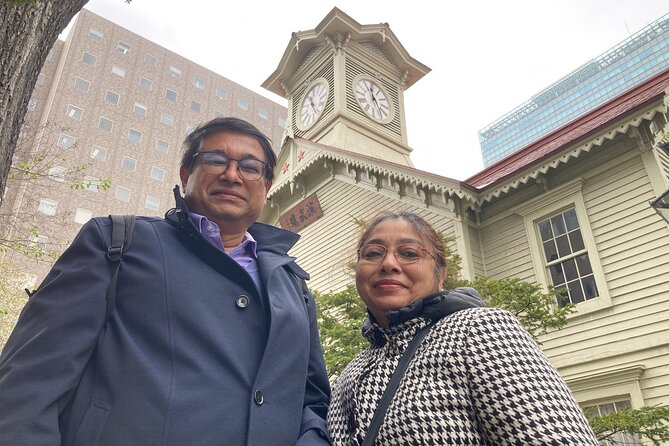
The Clock Tower is a symbol of Sapporo. Built in 1878 during Sapporo’s early development, it began as a drill hall connected to the Sapporo Agricultural College, and then evolved into a clock landmark.
Admission is free in the plan, and it works as a quick “anchoring history” stop. It is small compared to museums, so it is best as part of a central walking loop.
Stop 14: Hokkaido Shrine Ton-gu (Hokkaidō Jingū) near Maruyama Park
Hokkaidō Shrine was built in 1871 and is one of Japan’s most important Shinto sites, near Maruyama Park. It became even more popular after being dedicated to the memory of Emperor Meiji, which adds meaning to the visit beyond just a pretty shrine setting.
Admission is free in the plan. The tradeoff is that it is a thoughtful stop, so give it a little attention rather than rushing through at the end.
Stop 15: Maruyama Park (green space and spring blooms)
Maruyama Park on the west side of Sapporo is a year-round natural area, with a hill that reaches 226 meters. In spring, it is known for beautiful blooms on the slopes, while other seasons bring different park vibes.
Admission is not included in the plan. It can be a great third stop if you want the “Sapporo outdoors” feeling, but it may not be the best use of time if your priorities are more museum or food focused.
Stop 16: Sapporo TV Tower (views from downtown)
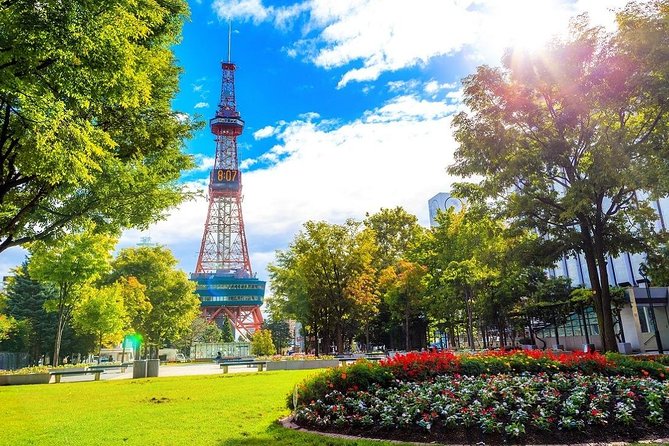
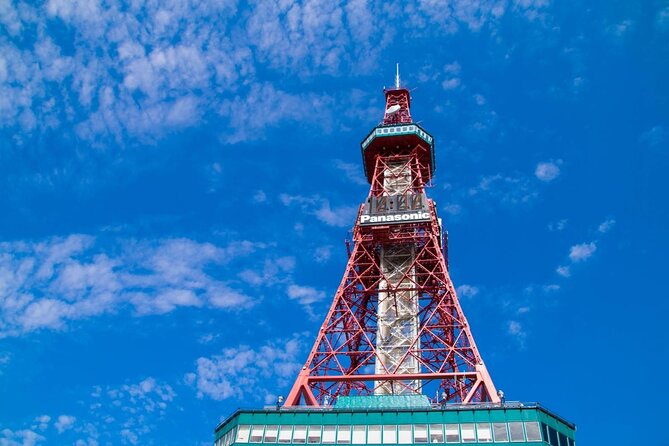
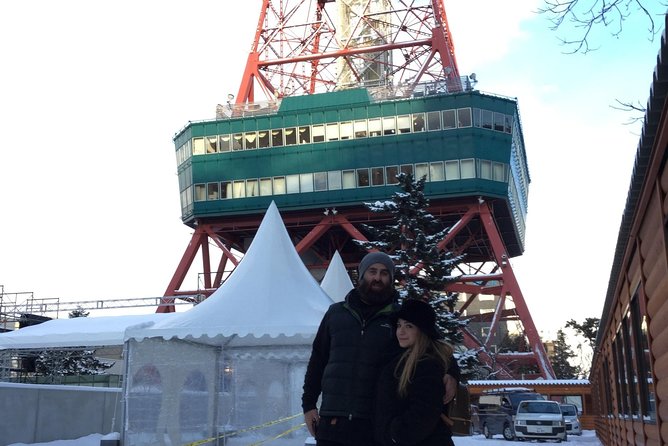
The Sapporo TV Tower, built in 1957 and about 147 meters tall, remains one of the city’s most visited landmarks. It is easily accessible from Odori Park and is a straightforward way to get a view over Sapporo.
Admission is not included in the plan. If you choose it, decide ahead of time whether you want to pay for the view versus enjoying the exterior and surrounding streets.
Stop 17: Former Hokkaido Government Office Building (western-influenced landmark)
The Former Hokkaido Government Office building is one of Sapporo’s most visibly western-influenced landmarks. It was built in 1873 to house the offices of the earlier government that oversaw the region.
Admission is not included in the plan. The upside is that it adds architectural variety to your day, but the drawback is that it might not fit if you selected too many ticketed attractions in your first two stops.
Stop 18: Sapporo Science Center (hands-on family fun)
The Sapporo Science Center is a modern, child-friendly facility with more than 200 displays and exhibits, many interactive. If you are traveling with kids, this is one of the easiest ways to keep everyone engaged without needing advanced Japanese.
Admission is not included in the plan. Adults can still enjoy it, but the value is strongest when your group wants hands-on learning rather than more sightseeing monuments.
Price and value: what your $122.20 per person is buying
At $122.20 per person for roughly 4 hours, you are paying for the private setup: a government-licensed local guide who can handle navigation and tailor your route. In a city where trains and neighborhoods can be confusing, that can be the difference between a pleasant half day and a stressful one.
What you should mentally budget for: entrance fees, lunch, and transportation. The tour explicitly does not include transportation fees, and entrance fees are not included. Some stops are marked admission-free, which helps, but ticketed stops like the Beer Museum and Shiroi Koibito Park can quickly add up if you pick several of them.
This is why choosing only 2 to 3 sites is the key to value. If you choose mostly free and low-cost stops (Odori Park, Susukino, Clock Tower, Nijo Market, and the shrine), you keep the experience affordable. If you choose multiple ticketed attractions, the tour still works, but you should plan for additional spending.
The guide factor, and why it makes Sapporo feel simpler

The most praised part of this experience is the guide. Guides such as Roy Aoki and Ms Teri stand out for being punctual and professional, with the ability to plan a custom route based on real interests. Kumiko Nakamura is noted for efficient pacing, city-history explanations, and clear communication.
You will also benefit if you care about food. More than one guide has been praised for steering people toward enjoyable meal moments and snackable local experiences. Even if you do not plan to eat at every stop, having a guide who understands what to prioritize saves time and prevents you from spending your half day choosing between five menus with no clue.
Finally, the tour is praised for being family-friendly. Waka is mentioned as patient and good with teenagers, which matters if your group spans ages and attention spans.
Practical tips to avoid feeling rushed in winter
Sapporo weather can change your comfort level fast. For this type of walking route, I suggest you wear shoes that handle slippery pavement and cold sidewalks.
Also, think about timing. With an approximate 30 minutes per stop, you want to treat each stop as a mini-visit. If you pick a ticketed attraction, be ready to go straight to what you care about most so you do not lose time to extra sections.
If you have limited mobility or you are traveling with someone who gets tired quickly, this is still doable, but your stop choices matter. Choose a central cluster like Odori Park, Clock Tower, and TV Tower. Save far-out options like Moerenuma Park or Jozankei Onsen for when you can spend the full time getting there comfortably.
Should you book this private Sapporo tour?
Book it if you want a half-day “get oriented fast” experience with a professional local guide and you like the idea of choosing 2 to 3 stops based on your tastes. It is a great fit for first-time visitors, time-constrained travelers, and anyone who wants Sapporo without doing the research.
Skip it or adjust expectations if you want to cover a long list of far-apart sights in one day without extra costs. Because it is a walking tour and transportation fees are not included, your most realistic strategy is a central loop plus one special stop, or two nearby stops plus one seasonal highlight.
If you are going in February, add the Snow Festival to your choices. If you care about local food identity, pair Odori Park or Susukino with the Beer Museum and the market option. With the right stop mix, this tour is one of the easiest ways to make Sapporo feel personal instead of random.
FAQ
How long is the Sapporo private tour?
It runs for about 4 hours.
Is this tour private or shared with other people?
It is a private tour. Only your group participates.
Can I customize the stops I visit?
Yes. You choose 2 to 3 sites from the available options, and the guide customizes the route to match your interests.
Does the guide pick me up from my hotel?
Pickup is offered, and you meet the guide on foot within a designated area in Sapporo.
Is the tour mostly walking?
Yes. It is a walking tour, and the tour notes that pickup is on foot.
Are entrance tickets and transportation included in the price?
Transportation fees and entrance fees are not included. Some stops are listed as admission ticket free, while others are marked as not included.
Is a mobile ticket provided?
Yes, a mobile ticket is included.
Are service animals allowed?
Yes, service animals are allowed.
If my plans change, can I cancel for a refund?
Yes. You can cancel up to 24 hours in advance for a full refund.
Are guides government licensed and do they speak English?
The tour includes a government licensed local English speaking guide.
Can I combine multiple tour groups into one?
No. The tour notes that you cannot combine multiple tour groups.
Latest write-ups near Sapporo
- Private Japanese Cooking Class in Sapporo with Local Host Kanae★ 5.0 · 20 reviews
- Authentic Sapporo: Nijo Market Seafood Lunch & History Tour★ 4.8 · 20 reviews
- Hokkaido, Sappro, Otaru & Cape Kamui One-day Tour★ 4.4 · 21 reviews
- [Otaru & Yoichi] Let’s go to Otaru Canal, Sakaimachi Street, Music Box Hall, and Yoichi Nikka Whiskey by private car (arriving and departing from Sapporo)★ 5.0 · 21 reviews
- Sapporo: Custom Highlights and Hidden Gems Tour with a Local★ 4.9 · 21 reviews
- Full Day Indigenous Ainu of Hokkaido and Jozankei★ 5.0 · 25 reviews
- Sapporo: The Indigenous Ainu People & Jozankei walking tour★ 4.9 · 25 reviews
- Sapporo Winter : Asahiyama Zoo (Penguin Fun & Snowmobile)★ 5.0 · 28 reviews
Sapporo & Hokkaido Tours, compared.
Hokkaido Seasonal: Lake Toya & Noboribetsu Jigokudani Valley
Read our review →
Sapporo Private Tour with a Local – Highlights & Hidden Gems
Read our review →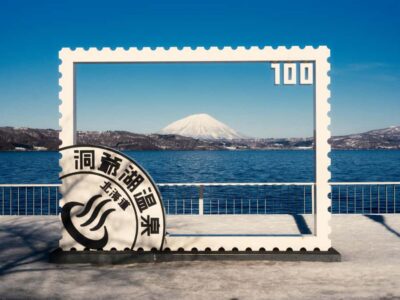
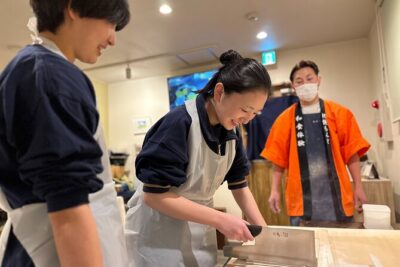
Popular in SapporoExperience authentic hand-made soba at a real soba shop!
Read our review →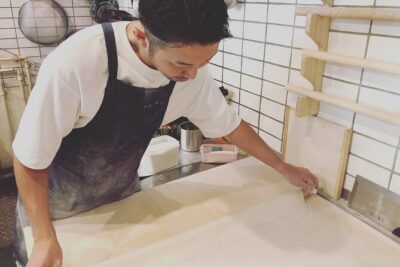
Mondo’s most popular plan! Experience making soba noodles and the king of Japanese cuisine, tempura, in Sapporo!
Read our review →
【Private Car】Asahiyama Zoo, Blue Pond, Shirahige Falls, Ningle Terrace (from Sapporo)
Read our review →Browse the lists this tour appears in