
Reviewed · JDM & CAR CULTURE TOURS
Tokyo: Daikoku JDM Car Meet & Night Car Culture Tour
Tokyo’s Daikoku car meet is famous, but what makes this tour special is the ride there. You get the meet, yes, but you also get the city views and the car culture build-up from the comfort of a chosen vehicle. I especially like the guide-led storytelling and the stop at A PIT Autobacs, which sets the tone before you ever hit Daikoku. One thing to keep in mind, though, is that specific cars and the overall turnout can vary, and the tour depends on having good weather.
You start near Shibuya and stay in a tight small group (max 10). There is also a private option if you want more quiet conversation and less waiting. The vehicle choice is part of the experience too, with options like a JDM Legend car, a performance van, or a premium sports sedan.
If you are traveling with kids, it is built with families in mind, including a booster seat, plus guidance on strollers in the sedan or van options. Just know that if you are expecting movie-style chaos, this scene is often more chill and relaxed than Hollywood would suggest.
Key highlights worth your attention
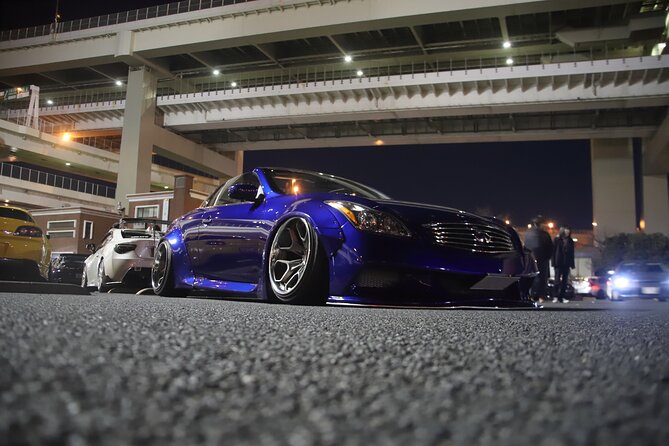
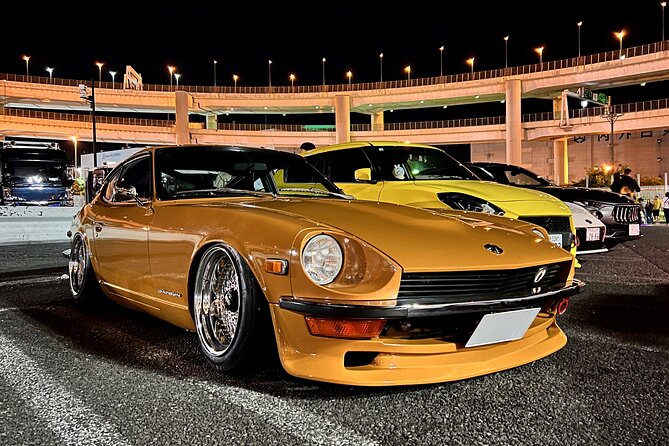
- Daikoku Parking Area, plus smart pre-meet stops at A PIT Autobacs and another dedicated car-focused highway rest stop
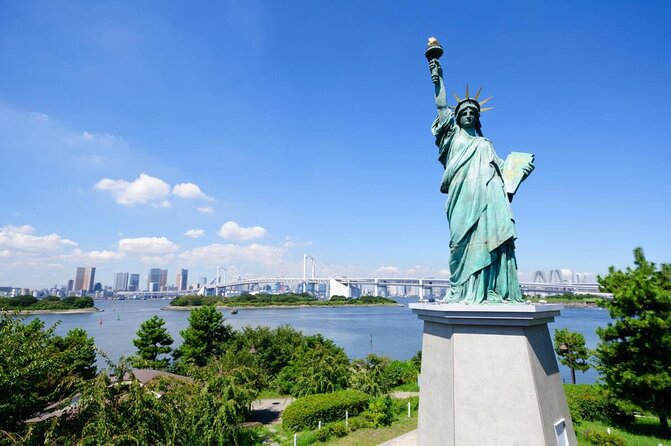
- Rainbow Bridge to Odaiba views from inside the car, not from a train window
- Tokyo and Yokohama highway routing that gets you city skyline angles most tourists never see
- Guide-led car culture talk that blends local knowledge, engineering talk, and what to notice at each stop
- Small group size and flexible vehicle options for comfort, style, and easier conversation
Shibuya pickup, small-group size, and how the tour really starts
The tour starts right where you want it, in central Shibuya at Dōgenzaka, at the Dōgenzaka Center Building area. It is near public transportation, and you are not sent across town to some faraway hotel pickup. You meet, you load up, and then the whole evening becomes one long route built around car culture and nighttime sightseeing.
The group size matters. With a max of 10 travelers, it stays conversational. You are not yelling over a bus full of people, and you can actually ask your guide what you are looking at. If you book for a group of 4 to 5, there is a note that you should use the Performance Van option, which helps keep the experience smooth.
Vehicle choice is also part of the value here. Depending on what you select, you might ride in a JDM Legend car, a performance van, or a premium sports sedan. If you are a car fan, that matters because the ride itself becomes part of the vibe. If you are not a car fan, you still benefit from comfortable seating for a multi-stop night drive.
More Evening Experiences in Tokyo
- Tokyo Night Foodie Tour in Shinjuku – Seasonal Sushi, Wagyu Beef
★ 5.0 · 1,161 reviews - Tokyo: Daikoku JDM Car Meet & Night Car Culture Tour
★ 4.8 · 626 reviews - Tokyo After 5: Authentic Japanese Food & Drink Night Tour
★ 4.5 · 560 reviews
Rainbow Bridge and Odaiba views, the kind you get from the road
One of the best reasons to do this at night is simple. Some of Tokyo’s most famous sights are better when you are moving past them at highway speed. The route includes crossing the Rainbow Bridge, with views over Odaiba and the man-made island scene. You also get a look at Fuji TV from the road, which is one of those things that feels like a quick postcard until you realize most visitors only see it at angles that are way less dramatic.
Another strong aspect is how the tour uses driving corridors as viewpoints. You are not stuck waiting for a bus tour timing window. Instead, you get a flow of sights as you travel, including passes by areas like Roppongi Hills Mori Tower along the way. It turns “getting from A to B” into part of the entertainment.
If the goal is photos, you will have some chances, but do not expect perfect control over lighting. This is a moving road experience, and the best moments come when you are present and ready, not when you are obsessing over one exact frame.
Autobacs A PIT in Koto: browsing parts and car culture before the meet
Stop one is built for car people. You head to the A PIT Autobacs store, which is described as Autobacs’ flagship. The time budget is about 25 minutes of riding plus about 25 minutes at the location. That is not a long shopping spree, but it is enough time to see what stands out in a Japanese car retail space and to spot the kind of parts, collectibles, and branding that you do not usually find in the standard convenience store version of car life.
What I like about this stop is the timing. You are not thrown into Daikoku first thing. You get to reset your brain into car-culture mode, see what enthusiasts care about, and then the meet feels like a natural continuation instead of a random stop.
Also, admission is free for this stop, which helps with value. You are not paying extra entry fees on top of the tour price just to browse.
The only downside is that it is short by design. If you want to spend a full hour digging into every display, this will feel fast. But if you want a taste and you care more about the meet itself, it hits the sweet spot.
Tatsumi No.1 Parking Area for Hakozaki: quick break, car-fan energy
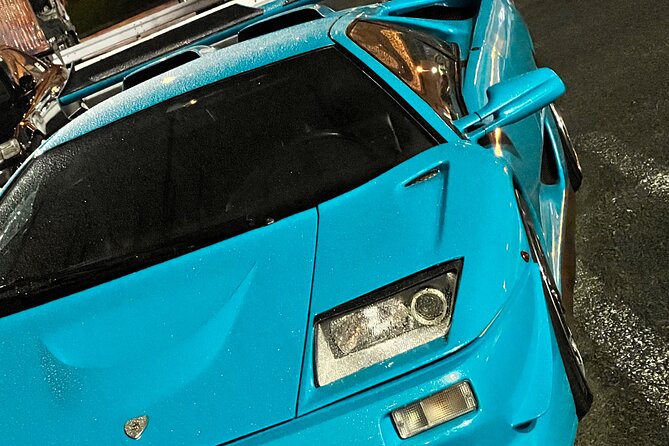
Next you swing by Tatsumi No.1 Parking Area for Hakozaki. The plan includes a short hop of about 10 minutes and a rest period around 15 minutes. So you get just enough time to break the drive, look around, and feel the culture without turning the evening into a long parking-lot hang.
This stop is interesting because it is not only about cars at Daikoku. It shows you how enthusiasts structure their nights across the highway network. In Japan, highways and parking areas often function like social hubs for drivers, and Tatsumi is one of those places where that energy shows up.
Admission is free for the parking area, too. So again, you are not paying extra just for time on your feet.
If it is raining, you may notice people move more quickly, and your time may feel more compressed. The tour is set up to keep you moving, and the weather can change how comfortable it is to stand around and chat.
More JDM & Car Culture Tours in Tokyo:
- GT-R35 800hp Club Membership – secret underground car meet
★ 4.8 · 998 reviews - Tokyo: Fast & Furious Tokyo Drift 3 Experience (Kaila Yu SP)
★ 4.8 · 947 reviews - Secret Car Meet: R34 Skyline Car Club Membership
★ 4.8 · 494 reviews - Tokyo Drift: Daikoku PA Supreme Car Experience 大黒PA
★ 4.7 · 372 reviews
The Daikoku meet: what to expect when you arrive
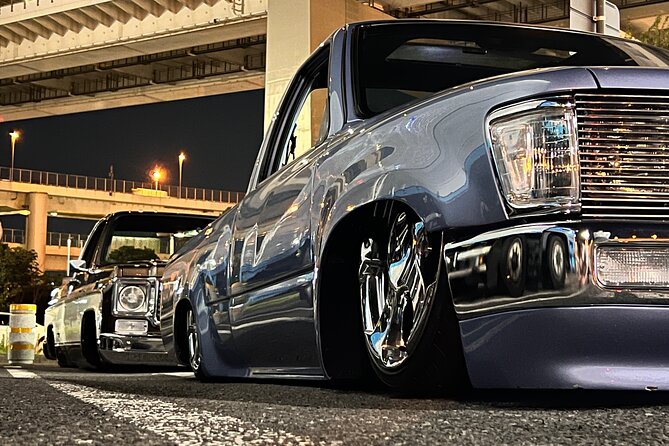
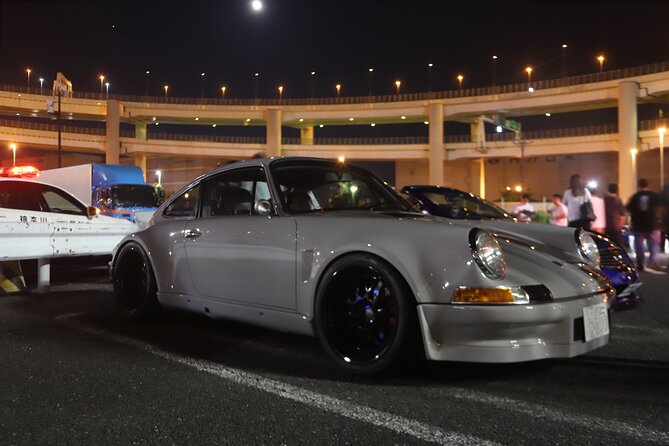
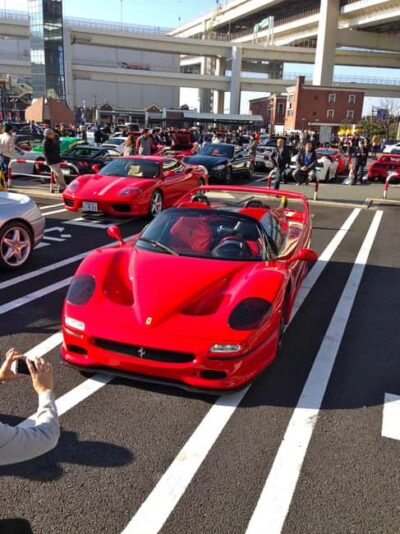
Daikoku Parking Area is the core event. The tour gives you about an hour on location, plus driving time into Yokohama by way of the Wangan Highway, which is a long straight highway connecting Tokyo and Yokohama.
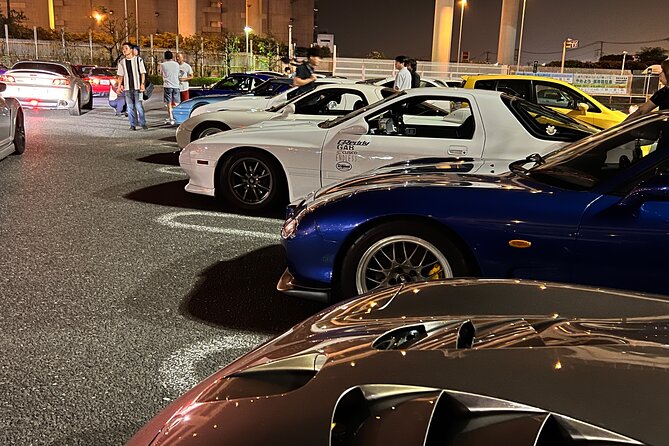
That hour is the heart of the experience. You will see a mix of classic, modern, and sometimes futuristic cars. The big idea is to walk and look slowly enough to notice differences. JDM fans often zero in on specific models, but even if you are more general about cars, you will start recognizing patterns. The way people park, the way they talk to each other, and the small custom details are where the scene becomes interesting.
One thing I really appreciate about this kind of guided meet stop is that the guide is not just there for transportation. They help you understand what you are seeing. That can mean pointing out what to look for on cars and why certain cars matter in Japanese car culture.
Important reality check: specific cars are not guaranteed. The tour is clear about that. What you are paying for is access, the right timing and route, and guided context, not a promise that your exact dream build will be parked on the perfect spot.
You may also see bigger moments. There is at least one account in the provided info of police stepping in and shutting the meet down when the scene gets crowded. You cannot count on that happening, but it tells you the meet can sometimes shift fast, and part of the value is having a guide who keeps the experience calm and safe even when things change.
Highway sightseeing that feels like Tokyo from a different angle
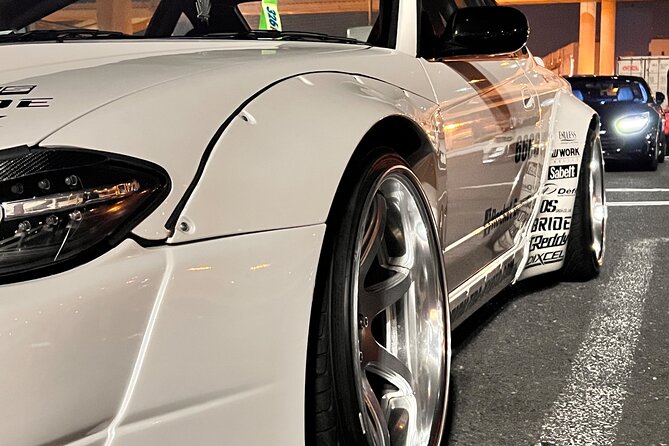
The drive is not just transportation. The route is designed for nighttime sightseeing from moving lanes. Before arriving at Daikoku, the tour route includes stand-out visual moments such as:
- a chance to spot Tokyo Skytree as you travel on the Furukawa Line
- passing near Haneda Airport through tunnels under the runways, where you may catch airliners taxiing above if timing is right
- an approach that sets up a view of the Yokohama Bay Bridge and the wider skyline
On the way back, you keep the “from the road” perspective. You get views of Yokohama Port and areas like Minatomirai, plus a strong view of Tokyo’s skyline again from the car when crossing the Rainbow Bridge from the Odaiba side back toward Tokyo.
There is also a mention of seeing Tokyo Tower from the C1 Loop Highway at night. If you are the kind of person who thinks Tokyo is always the same from train windows, this is where the experience changes your mind. You see different angles, and you notice how the city lights stack at highway speed.
Riding comfort, safety, and how the guide keeps things smooth
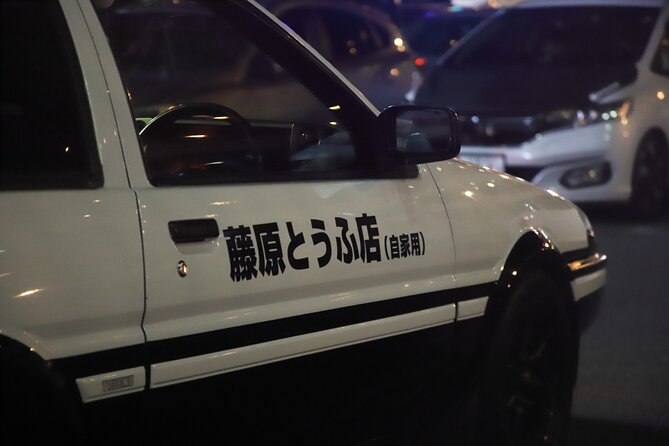
This tour is designed to feel like hanging out with car people, not being herded around. That shows in the way groups handle transitions between stops and how the guide keeps conversation going during travel time.
Comfort depends on your vehicle choice, but you will usually be in a more relaxed seat than public transit. There are two luxury vans used by the operator, described as comfortable with capacity for 5 and maximum capacity up to 6. If you have a larger group, the info also notes that splitting may be necessary during on-road portions, which is worth knowing so you do not worry if your whole group is not always in the same vehicle at the same moment.
Safety comes up repeatedly in the provided feedback. People highlight that even on exciting expressway driving, the ride stays controlled. That matters because you are on busy roads at night, and you want a driver who treats that seriously.
Also, the guide matters. The provided info includes multiple guide names tied to positive experiences, including Michael, Mori, Karim, Kareem, and Sasha. Across them, the theme is consistent: they do more than point at cars. They share stories about the scene, what you are seeing, and the real-life culture behind the images people see online.
Price and value: what you get for about $99
At $99.49 per person, you are paying for a few key things at once:
- transportation through multiple iconic areas in a single night plan
- a guide who can explain what matters at each stop
- time at A PIT Autobacs, Tatsumi Parking Area, and Daikoku Parking Area
- city-view driving through places like Rainbow Bridge, Odaiba, Skytree, and parts of the Haneda area
This is not a “just drop me at Daikoku” tour. You are not paying simply for access to one parking lot. You are paying for the build-up, the route as a sightseeing element, and the cultural context.
The value is best if you fall into one of these categories:
You are a car fan who wants to understand what you are seeing. You are a parent bringing a teen who is excited by cars. Or you simply want a Tokyo night that feels different from standard landmarks and crowded walking tours.
The only caution is expectation. If you expect every night to deliver the exact lineup you saw on social media, you may feel disappointed. Specific car sightings are not guaranteed, and weather can affect turnout and the feel of the night.
For whom this tour is a great match, and who should think twice
This tour is a great match if you want a car-centered night with real context. It is also a strong choice for groups that can keep the conversation going, since small-group size makes it easier to talk and ask questions.
It is particularly good if you want:
- more than one car stop, not just Daikoku
- a guide who talks through culture and details
- nighttime skyline moments from highways, not just from observation decks
Think twice if:
- you only care about a single specific car model and cannot handle the fact that it might not be there
- you hate driving on expressways at night, even if the tour is set up for safety
- you are shopping-focused, because Autobacs time is intentionally short
What to bring and how to set expectations for a great night
Because the tour includes outdoor viewing time at parking areas and you are moving around at night, you will be happier if you plan for comfort first. Wear layers, because night temperatures can shift quickly. If rain is in the forecast, follow the operator’s guidance since the experience requires good weather and can be rescheduled or refunded if it cannot run properly.
Also, mentally shift from sightseeing mode to car-scene mode. At Daikoku, the best moments often come from noticing details: how cars are modified, how people interact, and why certain cars attract attention. The guide helps with that translation, but your attention still matters.
Finally, remember that the tour is built around time on the road and time on location. You will not have endless hours to wander. The plan is designed to show you a lot without making the night feel exhausting.
Should you book the Tokyo Daikoku JDM Car Meet and Night Car Culture Tour?
If you are even slightly interested in Japanese car culture, I think this is an easy yes. The combination is hard to beat for the price: Daikoku plus Autobacs plus Tatsumi, tied together by highway views that you do not get from normal tourist routes.
Book it if you want a small-group night with a guide who clearly loves cars, and you like the idea of seeing Tokyo and Yokohama from the seat instead of from behind glass. Skip it only if you need a guaranteed lineup of specific cars or you are not comfortable with nighttime driving.
If you go with flexible expectations and a curious mindset, you will leave with a very different Tokyo night story than the usual temple and tower photos.
FAQ
How long is the Daikoku JDM Car Meet and Night Car Culture Tour?
The tour runs about 3 to 4 hours.
Where do we meet for the tour in Tokyo?
You meet at Dōgenzaka, Shibuya, at the address listed as 2-chōme298 道玄坂センタービル. The tour ends back at the meeting point.
What vehicle options are available?
You can choose from a JDM Legend car, a Performance Van, or a Premium Sports Sedan, based on your selection. The tour also notes two luxury vans used by the operator.
Is food and drinks included?
No. Food, drinks, and souvenirs are not included.
Can you guarantee specific cars at Daikoku?
No. Specific car sightings cannot be guaranteed due to variable factors.
Is the tour family-friendly?
Yes. It is family-friendly, with a booster seat provided. Small foldable strollers can be taken depending on the size and whether you ride in the sedan or van option.
What happens if the weather is bad?
The tour requires good weather. If it is canceled due to poor weather, you will be offered a different date or a full refund.
Latest write-ups near Tokyo
- Tokyo Customized Private Tour: See Top Attractions in 1 Day★ 4.8 · 67 reviews
- From Tokyo: Top 5 Scenic Spots of Mount Fuji Full-Day Tour★ 4.5 · 67 reviews
- Tokyo: Shinjuku Izakaya and Golden Gai Bar Hopping Tour (2h)★ 4.9 · 67 reviews
- Traditional Japanese Music ZAKURO SHOW in Tokyo★ 5.0 · 67 reviews
- Tsukiji: Unlimited Sake Tasting Experience★ 4.9 · 67 reviews
- Tokyo: Not a show- a professional sumo practice with experts★ 4.9 · 67 reviews
- Samurai Ninja Museum Asakusa: Kid-Friendly Ninja Training★ 4.7 · 67 reviews
- Private Harajuku Omotesando Architecture Walking Tour★ 5.0 · 67 reviews
JDM & Car Culture Tours, compared.
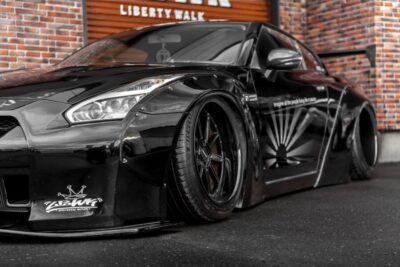
GT-R35 800hp Club Membership – secret underground car meet
Read our review →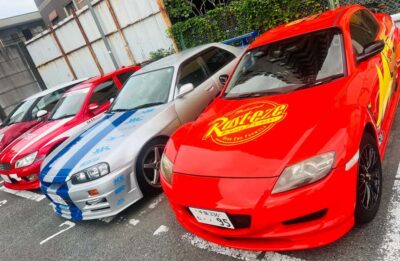
Fast & Furious Tokyo Drift 3 Experience (Kaila Yu SP)
Read our review →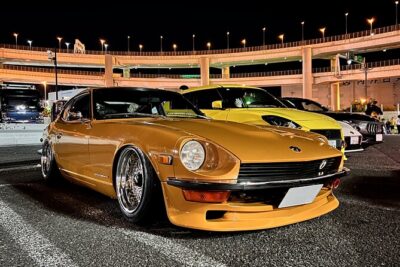
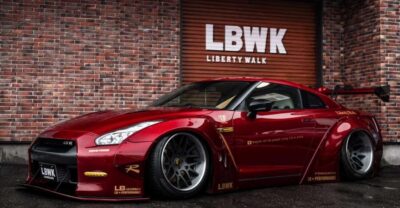
Secret Car Meet: R34 Skyline Car Club Membership
Read our review →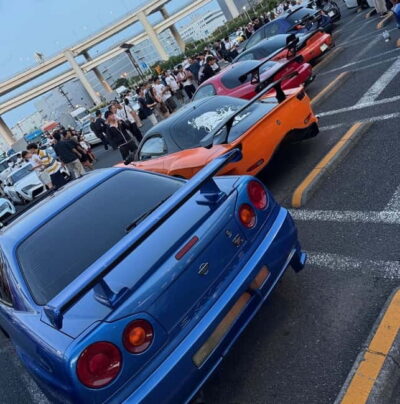
EVO, WRX, Skyline – JDM Night Run to Daikoku Car Meet
Read our review →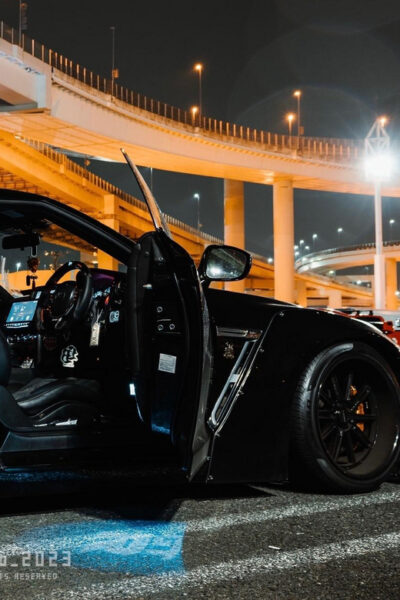
Tokyo Drift: Daikoku PA Supreme Car Experience 大黒PA
Read our review →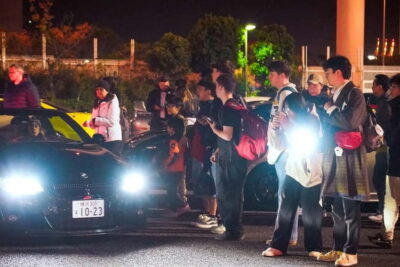
Go Daikoku PA Fast & Furious 3 Sports Car Meetup
Read our review →Browse the lists this tour appears in