
Reviewed · MT FUJI TOURS
Private Local Hiking to enjoy the nature and culture of Mt.Fuji
Mt. Fuji can be crowd-heavy. This hike is different because it mixes Fuji culture with real trail time around the lakes and forests at the mountain’s foot. Led by Yuki, a certified mountain guide who’s climbed Mt. Fuji over 40 times, you get more than photos. I like that the day includes shrine history plus quiet nature stops like Saiko Lake, and I also like the practical approach, including included rain gear and trekking poles. The one possible drawback is that this is weather-dependent, and cloudy or rainy conditions can reduce the classic Fuji views.
You’ll start with an easy rhythm, then work up to a longer viewpoint walk at Sankodai. The pace is described as moderate, with an uphill segment and a longer one-way hike to a lookout, so comfortable walking shoes matter. If you want a simple, sit-on-a-bus sightseeing loop, this is not that. If you want an authentic morning outdoors with a local guide who knows how to read the mountain, it fits nicely.
Key takeaway: you’re not just “seeing Mt. Fuji,” you’re learning why people have worshiped it, how volcanic activity shaped the forests, and how to enjoy the day like someone who actually lives here.
Key things you’ll notice on this Mt. Fuji private hike
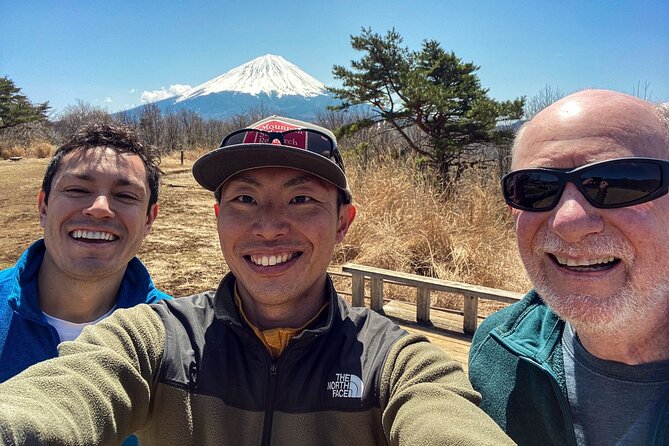
- Yuki as your guide: certified mountain guide with Mt. Fuji climbs over 40 times, plus local field expertise
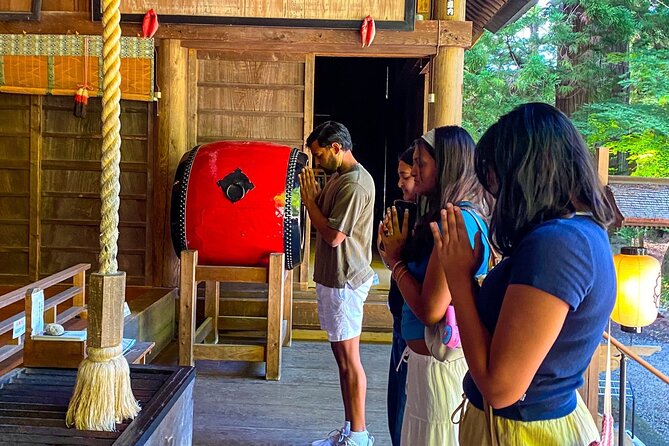
- Shrines and spiritual history: Fuji Omuro Sengen Shrine and a sacred cave tied to Mt. Fuji worship
- Quiet water and dramatic forest: Saiko Lake for calm views, then Aokigahara’s Jukai sea of trees
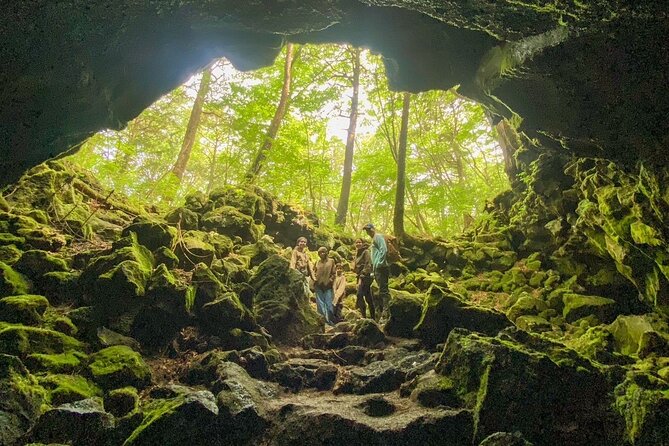
- A real lava cave stop: Ryugudoketsu-iriguchi adds geology and legend to the walk
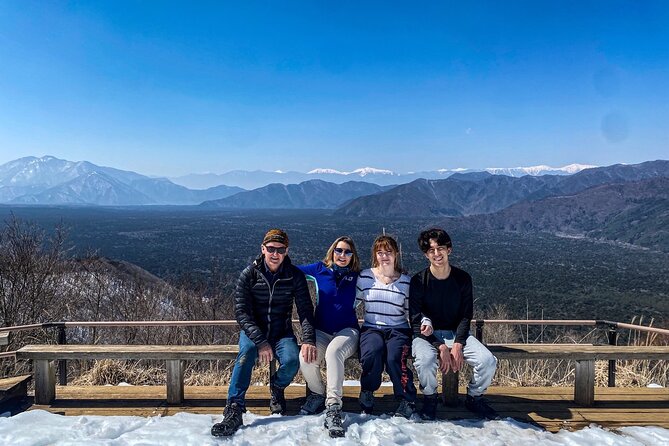
- Sankodai viewpoint hiking: a longer hike to see Fuji, Jukai, and Lake Saiko together
- Food and recovery after the trail: Yoshida udon plus a Japanese garden and matcha time
Why this Mt. Fuji hike feels local, not tour-bus
The biggest draw here is the shape of the day. You won’t spend the morning only in one famous viewpoint area. Instead, you move through a chain of places that show different sides of the region: lake calm, forest formed by eruptions, and places where locals built shrines to settle fears tied to volcanic events.
I also like the tone of the experience. This is not a lecture from a distance. You walk, stop, look, and hear why each place matters, then you keep moving before you get bored.
One more thing that matters on Mt. Fuji day trips is timing. Starting at 9:00 am helps you get into the area earlier, when conditions are often better for views and the trail feels less crowded.
More Mt Fuji days:
- Mt Fuji Area Private Guided Tours in English-Nature up close, quiet, personal
★ 5.0 · 288 reviews - Explore Mt. Fuji Ice Cave in Aokigahara Forest
★ 5.0 · 243 reviews - From Tokyo: Mount Fuji Full Customized Tour English Guide
★ 5.0 · 137 reviews
Yuki the guide: what you get from a true local mountain person
Your guide is Yuki (ゆうき). He’s described as a certified mountain guide, with 40+ Mt. Fuji climbs, and he also has a local license as a hunter. That mix shows up in how he approaches the landscape like a living system, not a postcard.
In practice, you can expect two kinds of help. First is the hiking support: choosing routes that make sense for weather and keeping the pace comfortable. Second is the story layer, with specifics about worship traditions, eruption history, and why certain spots are sacred before a climb.
Several people also noted Yuki’s hospitality on the trail, including small extras during breaks. That’s not required in the description, but it’s the kind of personal touch that can make a long morning feel easier.
Gear, pace, and fitness: what moderate really means here
The tour includes a smart set of hiking gear: trekking shoes, trekking poles, rain jackets and pants, and gloves. That’s a big value item, especially because weather at Mt. Fuji can change quickly, even when the forecast looks fine.
The walking effort is described as moderate. There’s about 1 hour up and 30 minutes down on one key section, and there’s also a longer about 1 hour 30 minutes viewpoint hike at Sankodai (listed as about an hour one way). So think “you can do it if you walk regularly,” not “light stroll.”
If you’re traveling with someone who gets tired quickly, this is still a good fit because the route includes quiet pause points near lakes, shrines, and cave stops. But if your idea of hiking is 10 minutes of walking and then sitting, you might find the viewpoint segments tiring.
Lake Kawaguchiko first: the Fuji reveal and why this stop sets the tone
You begin with Lake Kawaguchiko, the most popular of the Fuji Five Lakes. It’s famous for a reason: when Mt. Fuji is visible, the combination is instantly striking.
From the itinerary flow, this first stop works as your warm-up in two ways. It gets you oriented, and it also gives you the “are we going to see Fuji today” moment early enough that you’re not stuck hoping later.
One practical thing: the tour includes views from the trail when it’s sunny. That doesn’t mean you’ll have perfect conditions every time, but it does mean the day is designed so you’re not waiting until the end for the main sight.
More Hiking & Trekking in Fujikawaguchiko:
- Fushimi Inari Hidden Hiking Tour (Private Option Available)
★ 5.0 · 1,750 reviews - Kyoto: 3-Hour Fushimi Inari Shrine Hidden Hiking Tour
★ 4.9 · 270 reviews - Hiroshima Local guided Hiking Tour&Open-air Tea Ceremony
★ 5.0 · 213 reviews - Hiking the Historic Nakasendo Trail [1 Day Tour from Nagoya]
★ 5.0 · 104 reviews
Fuji Omuro Sengen Shrine: history tied to eruptions
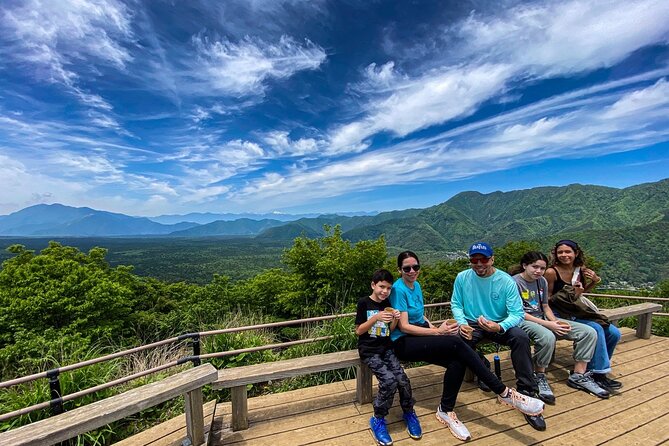
The first major cultural stop is Fuji Omuro Sengen Shrine. It’s described as ancient, connected to Mt. Fuji worship, and specifically tied to the biggest eruption. The story is that ancestors built the shrine to settle the eruption down and started worship from there.
This stop matters because it changes how you see everything else. When you understand that the region has long treated Mt. Fuji as both powerful and spiritually significant, the later natural stops feel less like “random scenic points” and more like places with layered meaning.
Plan on a short visit here, around 15 minutes, with admission free.
Saiko Lake: a calmer Fuji moment before the forest
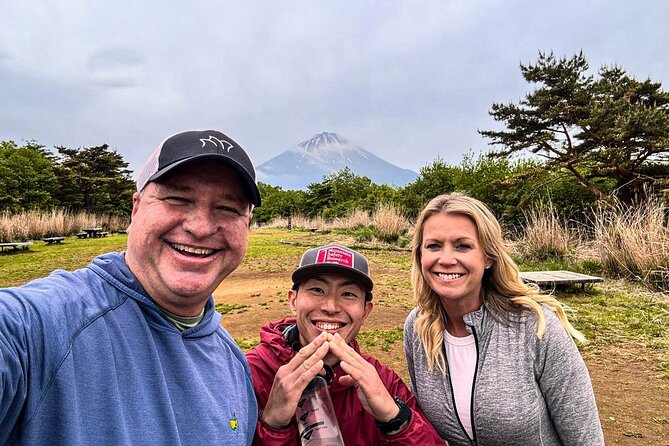
Next is Saiko Lake, which you’ll use as a contrast to Lake Kawaguchiko. Saiko is described as much quieter, with stunning views of the lake and Mt. Fuji.
Even if the weather limits the mountain view, this is still a good mental reset. You get breathing space before the Aokigahara forest segment, which can feel bigger and more dramatic.
This stop is brief, about 10 minutes, and also admission free.
Aokigahara Jukai sea of trees: volcanic roots of a forest legend
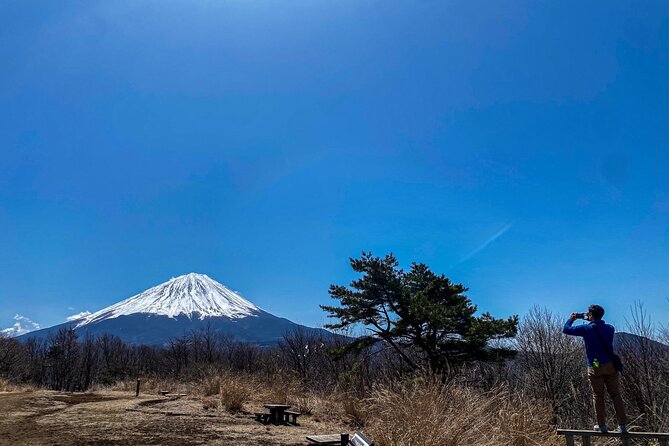
Then you hit Aokigahara Forest, known here as Jukai, the sea of trees. The name comes from how the forest looks when seen from a viewpoint, like an endless sweep.
The tour connects the forest to volcanic history too. One of Mt. Fuji’s big eruptions is described as happening about 1,200 years ago, and the eruption is linked to the forest formation.
This combination of visual drama and geological context is why this stop lands well for many people. You’re not just walking among trees. You’re seeing the result of a long-ago eruption in a way that’s easy to understand.
Expect this as a shorter stop, about 15 minutes, admission free, with time to look around and catch the feel of the area.
Ryugudoketsu-iriguchi cave: a sacred place before the climb
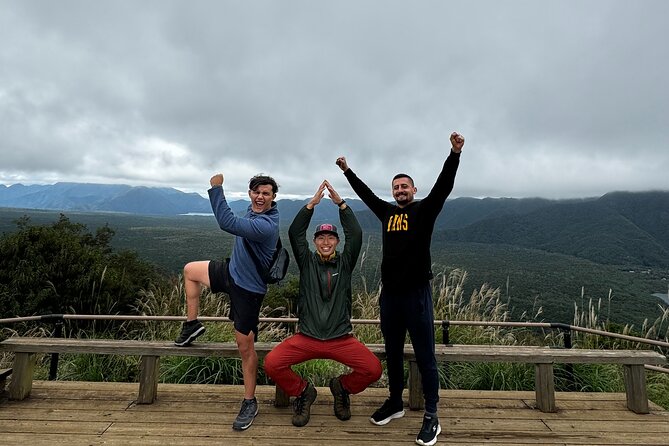
The tour includes Ryugudoketsu-iriguchi, described as a sacred cave people used to visit to pray for the goddess of Mt. Fuji before climbing. The belief was that the inside of the cave was like the inside of the goddess, so worship happened with that idea in mind.
It’s a unique kind of stop. You’re shifting from open-air views into something more intimate and symbolic, and it keeps the day from feeling like a simple hiking circuit.
Time here is about 30 minutes, admission free. If you like mythology or local belief systems tied to geography, this one usually sticks.
Sankodai viewpoint hike: Fuji plus Jukai plus Saiko, in one working circuit
The physical highlight is Sankodai. This is the one that asks you to commit a bit, because it’s listed as about an hour hike one way to the view point, with a total time of about 1 hour 30 minutes.
Here’s what makes it special: at the viewpoint, you can enjoy a view that combines Mt. Fuji, the sea of trees (Jukai), and Lake Saiko at the same time. That’s the kind of “triple subject” panorama that makes an earlier culture stop and a forest walk feel like they were building toward something.
The trail is described as suitable for outdoor beginners, which is reassuring if you’re not an experienced hiker. Still, bring your patience and plan for uneven terrain. This is the part where having trekking poles can make a noticeable difference going down.
Some people also noted that Yuki provides helpful breaks and may bring small treats like coffee or snacks. Even when that doesn’t happen, the structure of the day gives you a reason to slow down at the top instead of rushing through.
Menkyo-kaiden and Yoshida udon: eating like the locals, not like a theme park
After the hike, you’ll eat at a local restaurant. The tour description calls out the area’s famous Yoshida udon, and the restaurant stop is Menkyo-kaiden.
This is the meal moment, and it’s also where your guide helps with the “where to go, what to order” part. The listed cost for the meal here is about 1,000 yen per person, though the tour summary also notes lunch is around 1,000 yen and is not included.
So what should you expect? A straightforward local meal, served in the context of the hike, not packaged for speed. If you want to taste what people actually eat after time outside, this is one of the best parts of the day.
Fujisan Onsen Hotel Kaneyamaen garden and matcha break
To close the loop, you’ll finish at Fujisan Onsen Hotel Kaneyamaen, a long-running hotel in Fujiyoshida with a big Japanese garden. The garden is open to the public, and you get a relaxed end to the morning rather than heading straight back.
You can enjoy matcha with a Japanese sweet for an optional 1,000 yen per person, or just sit with a cup of matcha and enjoy the garden atmosphere. Either way, it’s a good “cool down” after walking.
This stop also gives you a chance to swap stories with your group and compare notes on how visible Fuji was that day. It’s the kind of ending that makes the hike feel complete.
Price and value: what you really pay for at $131.38 per person
At $131.38 per person, you’re buying more than a route. You’re paying for a private, guided experience that includes guide fee and private transportation, plus hiking gear like shoes, poles, and rain protection.
Those included items are a big part of the value. If you had to rent poles or buy rain gear, the cost adds up quickly, especially for a short trip. Private transport is also not trivial around the lakes, where getting from spot to spot under your own steam can be time-consuming.
What’s not included is also clear. Lunch is about 1,000 yen and insurance is not included. If you’re someone who already has hiking poles and proper rain gear, you may feel the “extras” less strongly. But for most visitors, the included gear and the guide’s local route choices are what make the price feel fair.
Also watch the pickup detail: pickup is available only if you’re staying in the Kawaguchiko or Fujiyoshida area, or if you can come to the areas on your own. If your lodging is outside that zone, you may need to get yourself to the start point.
Weather, Fuji visibility, and how to plan your expectations
This experience requires good weather. That means you should plan this day with flexibility. If Mt. Fuji disappears behind clouds, the cultural stops and forest still make sense, but the big payoff of those signature viewpoints can be reduced.
Cloudy weather can actually change the feel of the walk. Some people ended up hiking on cloud days and still had a good time because Yuki adjusted the route to keep views and comfort in mind.
If you’re traveling in a season where you expect rain, lean on the included rain jackets, pants, and gloves. They’re there for a reason.
Who this private Mt. Fuji hike suits best
This fits well if you:
- want Mt. Fuji culture plus real nature time, not just a few photo stops
- enjoy moderate hiking and can handle about 1.5 hours of a longer one-way segment at Sankodai
- like learning why places are sacred, not only where they are
- appreciate a guide who brings structure, pacing, and helpful breaks
It might not suit you as well if:
- you want a fully flat walk with minimal effort
- you dislike weather-based plans and prefer indoor or guaranteed-view activities
- your lodging is far from the Kawaguchiko and Fujiyoshida pickup zones and you don’t want to handle transport
Should you book this private hiking tour?
If you want a Mt. Fuji day that feels thoughtful, outdoorsy, and locally grounded, I’d book it. The combo of shrine history, quiet lake time, Aokigahara’s Jukai atmosphere, and a viewpoint hike at Sankodai gives you variety without feeling scattered.
The price makes more sense when you compare it to what’s included: private transport, a certified guide like Yuki, and actual hiking gear. Add in the garden and matcha ending, and you get a complete half-day experience that’s more than a “check the box” activity.
Book it confidently if your group can walk moderately and you’re okay with the mountain’s mood. Just be honest with yourself about the longer viewpoint hike, that’s the main physical commitment.
FAQ
Where does the tour start, and what time does it begin?
The tour starts at 9:00 am.
Is pickup included?
Pickup is offered, but it’s only available for guests staying in the Kawaguchiko or Fujiyoshida area, or for those who can come to the areas on their own.
How long is the hike?
The duration is about 5 to 6 hours.
What fitness level do I need?
The hike is described as moderate, including about 1 hour up and 30 minutes down, plus a longer viewpoint walk at Sankodai (about 1 hour 30 minutes total time listed for that stop).
What hiking gear is provided?
The tour includes trekking shoes, trekking poles, rain jackets and pants, and gloves.
What food will I have, and what does it cost?
You’ll enjoy a local meal featuring Yoshida udon. The food stop is listed with an estimated cost of about 1,000 yen per person. Lunch is also noted as around 1,000 yen and is not included.
What optional treat is available at the end?
At the garden stop (Fujisan Onsen Hotel Kaneyamaen), you can have matcha with a Japanese sweet for an optional 1,000 yen per person, or just enjoy the garden and matcha.
Will I see Mt. Fuji for sure?
The itinerary includes iconic views when it’s sunny, but the experience requires good weather, so visibility depends on conditions.
What happens if the weather is bad?
If the tour is canceled due to poor weather, you’ll be offered a different date or a full refund.
What is the cancellation policy?
You can cancel for a full refund up to 24 hours before the experience starts. If you cancel less than 24 hours before, the amount paid is not refunded.
Latest write-ups near Fujikawaguchiko
- Tokyo: Mt. Fuji Hidden Gems and Aokigahara Forest Tour★ 4.6 · 20 reviews
- Private Fuji Half-day Car Tour with Hotel Pickup and Local Guide★ 5.0 · 20 reviews
- Sushi Cooking Class at Sushi Factory -KIWAMI- Mt.Fuji★ 5.0 · 23 reviews
- Mt Fuji Area: In-depth Guided Adventure in English or French★ 5.0 · 27 reviews
- From Kawaguchiko: Mt. Fuji Private Tour with a Local Guide★ 5.0 · 35 reviews
- Ramen Cooking Class at Lake Kawaguchiko (Short Course)★ 5.0 · 42 reviews
- Hidden Fuji drive tour with a Local English speaking guide★ 5.0 · 43 reviews
- Ramen Cooking Class at Ramen Factory in Mt.Fuji★ 5.0 · 101 reviews
Mt Fuji Tours, compared.
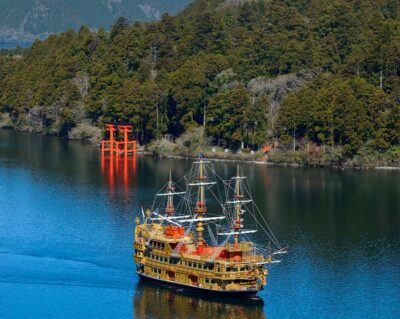
Mt Fuji and Hakone 1-Day Bus Tour Return by Bullet Train
Read our review →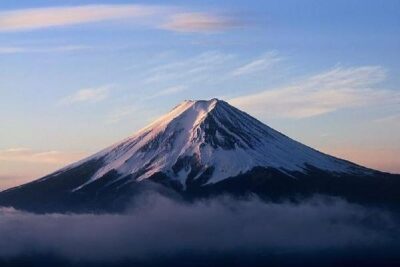
Mt Fuji & Hakone Cruise, Drum Show Bullet Train 1 Day from Tokyo
Read our review →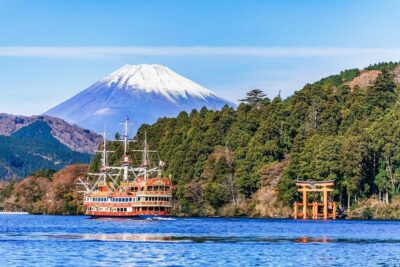
Tokyo Mt Fuji 5th St & Hakone Cruise Bus Tour w/Bullet Train
Read our review →
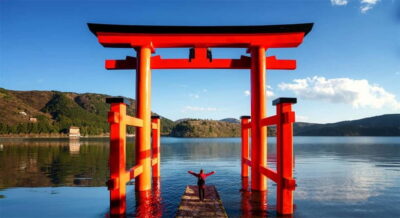
Mt. Fuji Tour, Hakone Ropeway, Owakudani, Lake Ashi
Read our review →
Mt.Fuji,Kawaguchiko Oishi Park,Arakurayama Sengen Park
Read our review →
Mt. Fuji 5th Station & Hakone Cruise 1-Day Bus Tour
Read our review →
Mt Fuji Top 5 Spots Day Tour: Arakurayama Park,Oshino Hakkai
Read our review →Browse the lists this tour appears in