Reviewed · TOURS
Discover the Wonders of Sakurajima Half Day Tour in Kagoshima
Sakurajima is not a normal day trip. This half-day tour takes you right up to an active volcano world, with the practicality of a guided route and the payoff of hands-on experiences.
I love the way it packs major stops into about 4.5 hours, so you are not stuck guessing transportation. I also love that you get a local-style flow led by guides like Yuki, Yukiko, and Naomi, who were praised for clear explanations and easy pacing. One thing to consider, though, is that visibility can drop fast if it is foggy or rainy, which affects what you can see from Yunohira Lookout.
You will start and finish at the Sakurajima Ferry Kagoshima Terminal, take the ferry to the island, hop around on buses, and spend meaningful time at a shrine, a volcano visitor center, a hot-spring foot bath, and a volcanic ash art workshop. If you want a stress-free introduction to Kagoshima’s volcanic heartbeat, this is a strong way to do it.
Key highlights to look for
- Short, focused itinerary that adds up to about 4 hours 30 minutes
- Ferry ticket included so you do not have to coordinate island access
- Volcanic ash art at Ougaku Togei (Sakurajima-yaki related experience)
- Hot-spring foot bath with a long 100 m soak and iron-rich water
- Yunohira Lookout from the fourth station at 373 m for wide views
Sakurajima’s “active volcano” factor: what you really get on this tour
Sakurajima has a way of making the phrase active volcano feel real. You are not just looking at a mountain. You are visiting a place where people live with eruptions and plan their daily routines around what the volcano is doing.
What makes this tour especially useful is that it hits the island’s “how it works” stops, not just the photo stops. The Sakurajima Visitor Center gives you context on past eruptions, how the volcano formed, what grows there, and how tourism and disaster prevention are handled. That matters because it turns your sightings into a story you understand, even if you only have a half day.
Also, the experiences are not purely passive. You soak your feet in a natural hot spring and you make art using colored volcanic ash. That is a big part of why the tour keeps scoring high. It gives you a memory you take home, not only images on your phone.
The other key point is guidance. Multiple guides got named in good reviews, including Yuki, Yukiko, Naomi, Aya, Kuni, and Yoshihiro. Some were praised for especially clear English and smooth pacing. That can make the difference between feeling lost on a busy island and actually enjoying the route.
Also on the shortlist for Kagoshima:
- Sakurajima Century Lava Climb Journey with E-bike
★ 5.0 · 54 reviews - Kagoshima Private & Custom Tour with Licensed Guide and Vehicle
★ 5.0 · 29 reviews - Kagoshima-city Sightseeing spot Private Tour
★ 5.0 · 16 reviews
Price and value: what $95.54 buys you (and what it does not)
At $95.54 per person, the value comes from what is bundled. Your price includes the ferry to Sakurajima, plus the volcanic ashes art experience fee. Each stop also has admissions included in the schedule, like the visitor center, shrine time, and the foot bath.
Lunch is not included, so you will want a plan for food on your own once you finish the morning-to-afternoon flow. The good news is that the itinerary is timed enough that you likely will not feel rushed to find a meal between stops.
Is it cheaper than going alone? Sometimes, yes, sometimes not. One review mentioned you can DIY by taking the ferry, then using the island’s buses, with the ferry taking about 15 minutes and costing 230 yen, plus a bus ticket. That is useful context. But DIY requires you to know where you are headed, how long each ride takes, and how to manage crowds. This tour basically swaps that decision-making for a guided sequence and set time blocks.
Also, small group matters. The tour has a maximum of 30 travelers. Reviews repeatedly mention a friendly, personalized feel, including a case where the group was just a few people. That does not guarantee a tiny group every time, but it does mean you are not trapped in a huge bus every step of the way.
Getting there and moving around: ferry plus the Island View Bus rhythm
Your meeting point is the Sakurajima Ferry Kagoshima Terminal in Honkoshinmachi, Kagoshima. The tour ends back at the same place. That is great for peace of mind, especially if you are only in Kagoshima for a short window or you arrive with cruise timing.
The first ferry ride is about 20 minutes, and there is another 20-minute ferry back at the end. You get that repeated “island entry and exit” timing, which keeps the day feeling compact.
On Sakurajima, the tour uses the Island View Bus to reach key sights efficiently. Here is the practical note: one review flagged that parts can involve walking and that the public buses can get jam packed. So, plan to be comfortable with a little walking and bus squeeze, especially on a busy day.
The upside of the bus approach is that you gain access to spots that are not convenient by casual strolling. Yunohira Lookout is a specific height target, and it is not something you want to wing on your own if you only have half a day.
Stop-by-stop: what each Sakurajima moment is for

1) Sakurajima Ferry Kagoshima Terminal: the easiest start
This is where your day begins, and it sets the tone. You are not spending your first hour figuring out tickets or ferry timing. The ferry ticket is included, and the schedule gives you a clean start.
The ferry itself is short enough that it feels like a quick transition, not a commute. Use it as a reset moment. Look toward the island and get that first sense of scale. Even before you reach the main sights, Sakurajima already feels like a place with physical presence.
Practical tip: arrive a bit early. The guidance in the tour info says to be at the pick up point 10 minutes before pickup time. If you are late, there is no refund for no-shows, so arriving early is not just polite, it is smart.
2) Tsukiyomi Shrine: quiet history right by the port
Tsukiyomi Shrine is next, with 30 minutes on the schedule. It is described as having a history of 1,300 years. In practice, that means you get a cultural grounding stop early, right next to Sakurajima Port.
The feeling here is intentionally calmer than the rest of the day. You are standing on shrine grounds surrounded by nature and slowing down. It also helps contextually: Sakurajima is both geology and lived-in culture. The shrine ties that together.
Drawback to keep in mind: if the weather turns rainy or visibility is poor, you might end up focusing more on indoor parts of the day. Still, the shrine stop tends to be a good “breather” even in bad weather, because you are not relying on wide views to enjoy it.
3) Sakurajima Visitor Center: how to understand what you are seeing
You get 45 minutes at the Sakurajima Visitor Center, and this is one of the most valuable parts of the tour because it gives you a map for interpretation.
The visitor center panels show:
- records of past eruptions
- how the volcano was formed
- information about vegetation
- how tourism and disaster prevention are handled
This is the stop that turns Sakurajima from scenery into knowledge you can use. When later you see eruptive activity at the viewpoint or you feel the island’s geothermal vibe, it will make more sense.
Even better, this is also one of the best “weather fallback” locations. If fog rolls in, you may lose view quality, but you still walk away with the story.
4) Sakurajima Nagisa Foot Bath Park: a long hot soak in iron-rich water
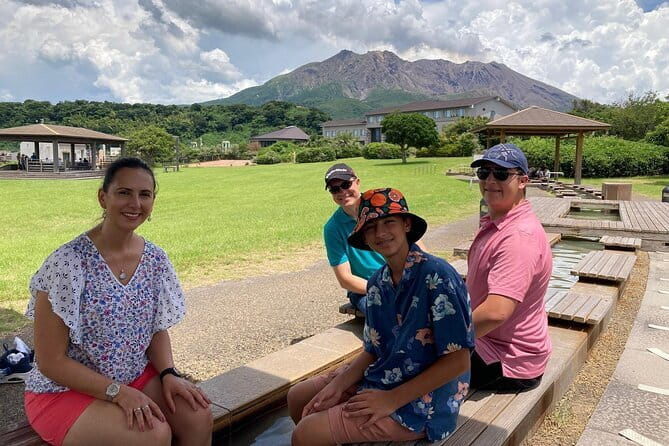
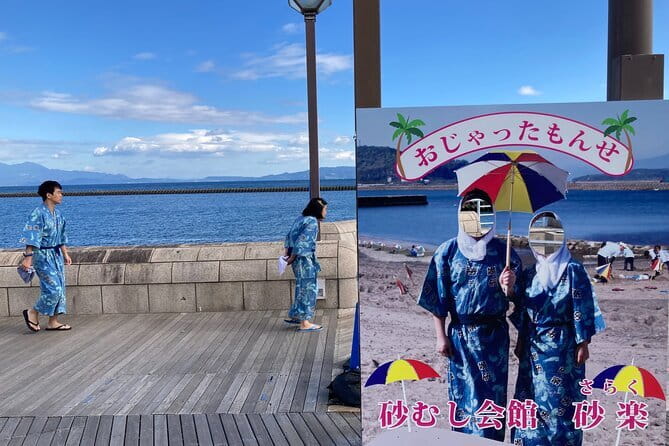
Next comes the foot bath park, 30 minutes on the schedule. This is one of the signature experiences: a 100 m long foot bath, fed by a natural hot spring from 1,000 m underground.
The water is terra-cotta colored and contains iron. That detail matters because it signals you are not imagining the heat. The color and mineral feel are part of why this spot is memorable.
The tour info encourages you to bring your own towels. That is a small thing, but it can save you from awkward logistics on a rainy day. If you show up without a towel, you may still get by, but it is better to be prepared.
A balance note: you are on a half-day tour. You will be walking and riding buses. The foot bath is a welcome break that lets you reset physically, not just visually.
5) Ougaku Togei, Sakurajima-yaki ash art: the souvenir you actually make
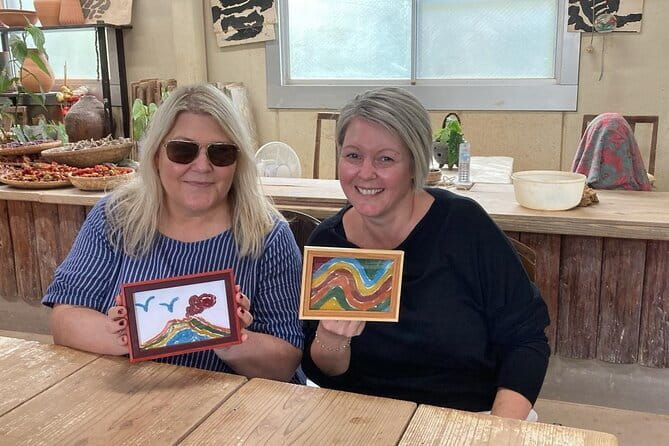
Then you head to Ougaku Togei, with 1 hour 15 minutes allocated. This is the workshop stop for volcanic ash art. The key idea is Sakurajima-yaki, pottery made with natural volcanic ashes, and here you make a picture using colorful stained ash.
The tour info says the program does not take long (minimum 20 minutes), so you likely have time for guidance, choosing colors, and finishing your piece.
This is also where the best reviews get very specific. People loved that it is fun even if you are not an artist, and that the shop offers options depending on how confident you feel with art. Some groups bought multiple works, which tells me the studio atmosphere is not rushed and the output feels worth it.
Included: the volcanic ashes art experience fee is part of your tour price. Admission for the stop itself is listed as free in the schedule, but the workshop cost is covered by the included fee.
Practical tip: you will want to consider how you will carry your finished art back to your lodging. The workshop process is part of the value, but you do not want to lose your souvenir on the last ferry.
6) Yunohira Lookout: the highest public viewpoint at 373 m
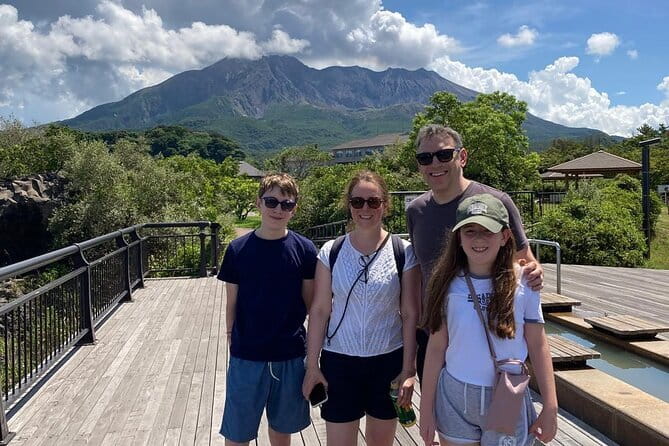
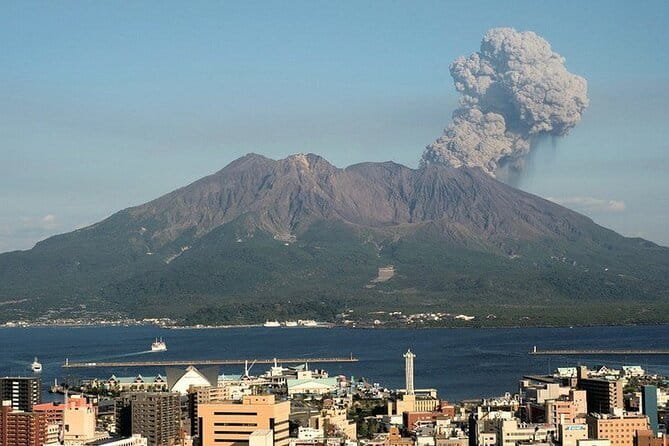
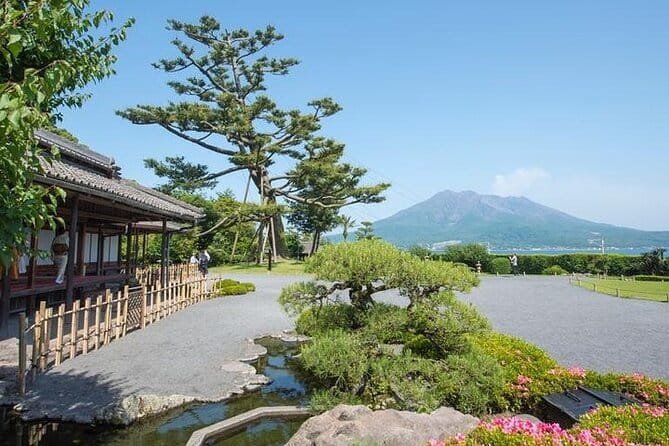
Finally, you go to Yunohira Lookout. It is located at the fourth station, 373 m above sea level, on the North Peak of Sakurajima. This is the highest point accessible to the public.
You get 50 minutes here, and the purpose is clear: panoramic views of the active volcano and Kagoshima bay.
Weather is the wild card. Rain and fog can reduce visibility, and multiple reviews mention that view quality can change dramatically. One review even described eruptive activity while at the observation point, which is one of those “only on an active-volcano day” moments you cannot plan. Even if you do not get eruptions during your visit, the lookout is still the main reward for doing a volcano tour.
If you are visiting during cooler seasons, this is also the spot where you might want layers, since viewpoints can feel more exposed. The tour does not mention clothing, so I cannot promise a temperature, but I can say elevation viewpoints often feel more windier.
Then it is back to the ferry terminal, with the last 20-minute ferry ride returning you to the same meeting point.
Weather and visibility: how to think about risk on a volcano day
This experience requires good weather. That is not marketing language. It is practical reality because your most dramatic payoff is tied to what you can see at viewpoints.
Here is how to handle it smartly. Even when the views are muted, you still have strong indoor or low-visibility-friendly parts:
- Sakurajima Visitor Center with its eruption and geology context
- Tsukiyomi Shrine, which is calmer even if the sky is gray
- the volcanic ash art workshop, which keeps going regardless of fog
- the foot bath, which is a physical reset
So do not judge the whole tour by whether Yunohira is crisp. The schedule is built so that you still leave with meaningful experiences.
One more practical note from the route reality: bus days can feel crowded. If it is raining, crowds can be more compressed too. If you go expecting the chance of fog or crowds, you will handle it better and stay in the moment.
Who should book this Sakurajima Half Day Tour
This is a great match if you want:
- a highlights route without transportation stress
- a guided explanation of what you are seeing on an active volcano island
- a hands-on volcanic ash art souvenir
- a relaxing foot bath break built into the schedule
It is especially good for cruise stop timing because it brings you back to the same meeting point and focuses your time.
It is also a good fit for couples, small groups, and families who want clear time blocks. Reviews mention teen enjoyment too, and the itinerary structure tends to keep kids from wandering off into “what do we do now” mode.
Who might need a different plan? If you hate walking and crowded buses, or if you strongly prefer purely DIY flexibility, you might find the island bus experience less comfortable. One review described it as more walking and packed public buses than expected, and they were disappointed by limited English from a specific guide. That does not mean every guide is the same, but if English clarity is your top priority, look for a tour guide with strong feedback or be ready for moments where English varies.
My take: is this tour worth it for Kagoshima visitors?
Yes, I think it is worth it if you want an easy first encounter with Sakurajima. The best part is the mix: you get context at the visitor center, a cultural pause at Tsukiyomi Shrine, a geothermal reset at the Nagisa Foot Bath, and a take-home volcanic ash art piece at Ougaku Togei, then you finish with the big viewpoint at Yunohira.
The tour feels designed for “do not waste time.” It gives you ferry access and a route across key sights without you doing route math. It also gives you downtime in the foot bath and in the visitor center, which makes the half-day feel complete instead of frantic.
The main downside is outside anyone’s control: weather. If it is foggy, the lookout might not be as dramatic. If you can accept that as a possibility and still want the shrine, center, workshop, and foot soak, you will likely be happy.
Should you book this Sakurajima Half Day Tour?
Book it if you want a guided Sakurajima highlights plan with ferry included and a volcanic ash workshop you actually do. I would also book it if you value spending your time in a structured sequence, especially during short trips.
I would hesitate if you are very sensitive to crowded buses and want zero walking, or if you absolutely need crystal-clear views from the top. In that case, consider a different day plan or keep your expectations flexible if fog or rain rolls in.
If you are the type who likes your souvenirs handcrafted, your hot soak mineral-rich, and your volcano tour explained in plain language, this one should land well.
FAQ
How long is the Sakurajima half day tour?
The duration is about 4 hours 30 minutes.
Where does the tour start and end?
It starts at Sakurajima Ferry Kagoshima Terminal in Honkoshinmachi, Kagoshima, and it ends back at the same meeting point.
What is included in the price?
The tour includes the ferry ticket to Sakurajima Island and the volcanic ashes art experience fee.
What is not included?
Lunch is not included.
Do I need to bring a towel for the foot bath?
Yes, foot baths are encouraged to bring their own towels.
Is this tour a ferry day trip, or do I stay on the mainland?
You take the Sakurajima ferry both ways, including a ferry ride from Kagoshima to Sakurajima and a return ferry ride.
What is Yunohira Lookout and how high is it?
Yunohira Lookout is an observatory at the fourth station, 373 m above sea level, on the North Peak of Sakurajima.
Is there a limit on group size?
Yes, the tour has a maximum of 30 travelers.
What happens if the weather is poor?
The tour requires good weather. If it is canceled due to poor weather, you will be offered a different date or a full refund.
Latest write-ups near Kagoshima
- Kagoshima Private & Custom Tour with Licensed Guide and Vehicle★ 5.0 · 29 reviews
- Sakurajima Century Lava Climb Journey with E-bike★ 5.0 · 54 reviews
- Kagoshima-city Sightseeing spot Private Tour★ 5.0 · 16 reviews
Tours, compared.
Mt Fuji and Hakone 1-Day Bus Tour Return by Bullet Train
Read our review →
Shinjuku Food Tour (13 Dishes at 4 Local Eateries)
Read our review →
Peaceful Hiroshima & Miyajima UNESCO 1 Day Bus Tour
Read our review →
Tokyo Mt Fuji 5th St & Hakone Cruise Bus Tour w/Bullet Train
Read our review →
Flagship 2-Hours Official Street Go-Kart Tour – Tokyo Bay Shop
Read our review →