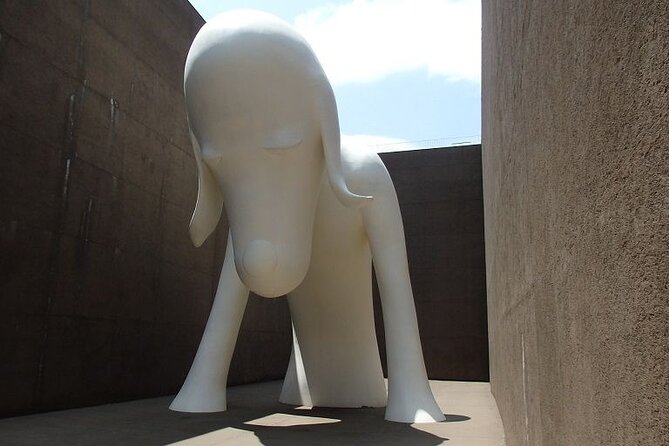
Reviewed · FULL-DAY
Aomori Full-Day Private Trip with Government-Licensed Guide
Aomori is a smart choice when you want Japan that feels less rehearsed. This full-day private setup is interesting because you are not rushing through town, you are connecting themes, like Nebuta festival culture and Jomon-era history, through museums and an archaeology site.
I like that it is a true private day for your group, so you can shape the pace. I also like the lineup of stops that are built for learning, Wa Rasse for Nebuta crafts and story, and Sannai-Maruyama for the Jomon settlement you can actually picture.
One consideration: it is a walking tour and the plan is timed. If you move slowly, hit heavy crowds, or arrive off-schedule, you may need to adjust what you fit in since entrance fees and lunch are not included.
Key things that make this Aomori day tour worth your time

- Licensed local English guide who can explain what you are seeing, not just point
- Customizable 3-4 site plan, so you can emphasize Nebuta, Jomon, or art
- Wa Rasse Nebuta Museum with festival floats and multimedia displays
- Tadao Ando design at the Aomori Contemporary Art Center, plus thoughtful architecture details
- Sannai-Maruyama with reconstructed Jomon foundations you can walk through and interpret
A private Aomori day that links Nebuta and Jomon (without the usual tour chaos)
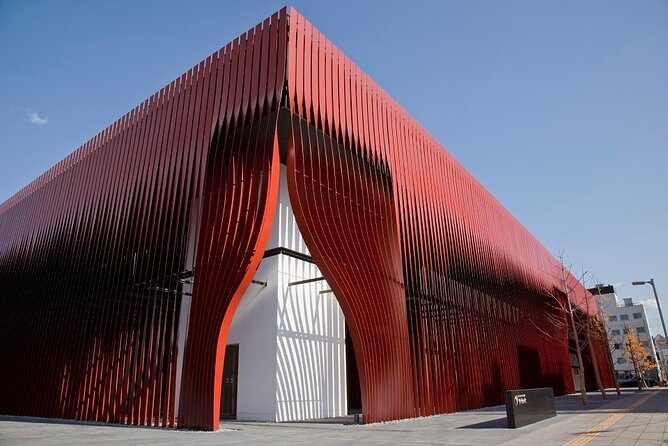
If you want Aomori to make sense fast, a licensed guide really helps. The magic of this tour format is that it does not treat Aomori like a checklist. Instead, you move from festival culture to ancient life, showing how regional identity forms, even when the city itself has changed a lot over time.
A quick reality check: Aomori city keeps an Edo-period grid layout, but World War II bombing reshaped much of the built environment. That mix matters. You are walking through a city that carries structure from long ago, while many attractions you visit today live in more recent buildings. A guide helps you read that contrast in plain terms.
Price and logistics for a 6-hour walking plan
The price is $154.84 per person for an approximately 6-hour private experience. For me, the value is in the guide time plus the flexibility. You get a licensed local English-speaking guide and the ability to customize your selection of 3-4 sites from the main options.
Here is the practical side. This is a walking tour. Pickup is offered on foot in a designated area in Aomori city, so you are not relying on private transportation. That also means you should build your own movement stamina and keep a comfortable pace, especially because museum admission and lunch are not included.
Admission tickets are not included for the listed stops. So if you care about controlling costs, factor in museum entry fees as an extra day budget. Also, transportation fees are not included, so you may want to think through how you will reach the meeting area and get back afterward.
Start smart: getting oriented in Aomori before the museums
You begin by meeting your guide inside a designated walkable area in Aomori city. Early in the day, I like when a guide does orientation like this, because it sets expectations before you step into museum logic.
Aomori’s center has that Edo-era grid pattern. Even if you are not a history nerd, seeing the layout while someone explains the wartime rebuilding context makes the city feel more legible. The goal is simple: you should understand where you are, why it is laid out that way, and why the modern museums feel like they belong right here.
If you arrive early, use that time to get calm and comfortable. You will be doing several one-hour museum blocks, plus walking time between them.
Wa Rasse Nebuta Museum: festival art you can see year-round
Wa Rasse is one of the most logical stops in Aomori for first-timers, and also for people who love festivals but hate guessing logistics. This arts and cultural center focuses on the Nebuta Festival, and it uses floats from the previous year along with video installations, sound, and photos.
What I like about this stop is that it turns festival energy into something you can study. Nebuta is famous for scale and speed in August, but the museum lets you slow down and understand design details and symbolism without the crush of parade day.
A practical note: admission is not included. So if you are budgeting, treat this as a paid entry stop. Also, because it is tied to Nebuta, it pairs well with the rest of the day if you want to understand how Aomori’s identity expresses itself through craft and performance.
Kyodokan Folk Museum: Jomon pottery and reconstructed life
Next up is the Aomori Prefectural Kyodokan, a folk museum built around early Japanese life. The standout here is the collection of Jomon-period pottery plus miniature reconstructions of Jomon huts and tools.
This is where the day shifts from festival culture to deep-time archaeology. If you normally find “ancient history” vague, reconstructions make it concrete. You can look at pottery forms, then connect them to tools and daily life in a way that feels human, not abstract.
Again, admission is not included. Still, even if you only spend an hour, you should leave with clearer mental images of what Jomon life may have looked like in this region.
Aomori Contemporary Art Center with Tadao Ando design
The Aomori Contemporary Art Center (ACAC) is on the grounds of Aomori Public College, and it is designed by Tadao Ando. The building and its water feature blend into the space in a way that makes the architecture part of the experience, not just a container for art.
This stop works best when you like design details. Pay attention to how the structure frames light and movement. Even if you are not an art scholar, you can still appreciate why this building is often described with respect to its quiet, intentional feel.
Admission is not included, so plan for an extra ticket cost. But even a straightforward visit can feel different from standard museum rooms because the setting itself shapes your attention.
Munakata Shiko Memorial Museum: woodblock prints and regional pride
Aomori native Munakata Shiko has his own memorial museum here, and it focuses on his woodblock prints. The museum highlights his work and includes well-known pieces like Ten Great (as listed among the featured masterpieces).
What makes this stop worth it is the focus. Instead of sampling a little bit of everything, you spend your time with one creator and their visual language. It is a clean way to learn about regional art without getting lost in too many styles.
Admission is not included. Still, if you like prints, you should find an hour comfortable. If you are not big on art, this stop can become a pause that breaks up the more archaeological parts of the day.
Aomori Museum of Art plus Sannai-Maruyama: reconstructed Jomon foundations
This part is the payoff for people who want real archaeology. The Aomori Museum of Art sits close to the Sannai-Maruyama archaeological site. The museum building is a white cube designed by architect Jun Aoki, shaped to harmonize with the surrounding historical setting.
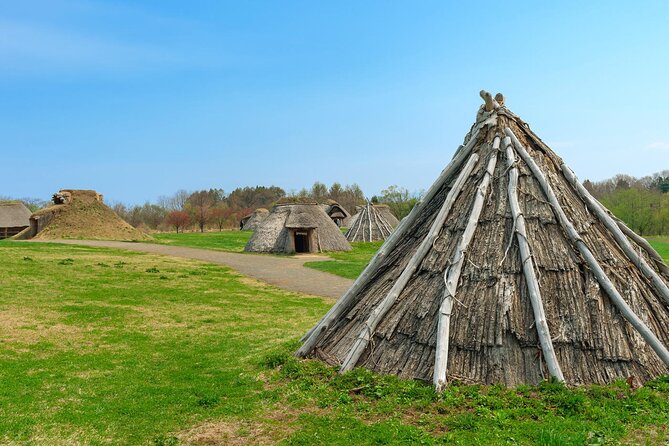
Then you hit Sannai-Maruyama. This archaeological site reveals reconstructed foundations of a Jomon-era settlement. It was first discovered in 1992 and later recognized as a special national historic landmark.
I like this pairing because it gives you two ways to connect with the same theme. Museum space often helps you understand what you are about to see. The site itself answers with scale and layout: where structures may have stood, and how a community may have been organized.
Admission is not included for the museum stop, and the site visit is timed as part of the day’s flow. So if you want photos, plan extra attention here because the reconstructed foundations are the kind of thing you will want to revisit through your camera lens.
How your guide can reshape the day (and why names matter)
The tour is designed to be customizable for your party, within a set framework. That is the practical value of hiring a guide in Aomori instead of doing everything alone.
In the feedback you provided, multiple guides earned strong praise for planning and for tailoring. Names that showed up with standout mentions include Kaz (often spelled KAZ), Rocky Tanaka, Fuji-san, and Tomohiko Kudo. One recurring theme: guides who contact you ahead of time, help you adjust the schedule on the fly, and make sure you understand what you are looking at.
Here is what that can mean for you. Your guide can choose the best 3-4 stops from the main options based on your interests. If you are Nebuta-focused, you can spend more weight on Wa Rasse. If you are history-focused, you can prioritize Jomon-related stops and give Sannai-Maruyama more attention.
Some guides also showed flexibility beyond the core museum set in the feedback you shared, including temple visits and other local experiences. Just keep expectations grounded: entrance fees are only covered for sights listed under What to Expect, so anything outside that may cost extra and depends on what your guide can fit into time.
Crowds, timing, and the one thing that can spoil any walking tour
A walking day with multiple one-hour blocks is efficient, but it is not forgiving. One negative experience in your information involved rushing and missed stops when timing and crowd conditions went sideways. That is the main caution I would carry into your planning.
To protect your day:
- Start with a buffer mindset. You are moving between several places in a set time window.
- Be honest about your walking pace at the start. If you need slower breaks, say so early, not after you are already behind.
- Know that museum entry tickets and lunch are extra. Build time for bathroom and water breaks, especially on hotter or rainy days.
Weather matters too. If rain hits, you still do the museums, but walking conditions can slow you down. A good guide will adapt, but you should also adapt with them.
Who this tour suits best, and who should consider a different format
This is ideal for you if:
- You want a licensed English-speaking guide rather than self-navigation
- You care about art plus history, not just one theme
- You like the idea of a private, customizable schedule for your group
It may be less ideal if:
- You hate walking and want a fully vehicle-based day
- You expect lunch and museum tickets to be included
- You want to add Hirosaki, because this tour does not visit Hirosaki
One more fit question. If you are traveling with mobility needs, it can still work, but you should plan around the fact that it is a walking tour and the meeting is on foot. In your provided feedback, one guide did help with accessible planning for festival tickets, but that is not a guarantee, so it is smart to ask before you book.
Should you book this Aomori private day trip?
Book it if you want the strongest version of Aomori in one day: festival culture at Wa Rasse, Jomon history through Kyodokan and Sannai-Maruyama, plus architecture and art stops that make the city feel modern without forgetting its roots.
Skip it or switch strategy if you want Hirosaki, want museum tickets included, or need a vehicle-heavy itinerary. Also, if you are someone who gets stressed by timing, take the customization option seriously and tell your guide what matters most so trade-offs feel intentional, not accidental.
With a 4.8 rating based on 33 reviews and a 94% recommendation rate in your details, the overall signal is clear: when the guide is on, this kind of private museum-and-archaeology day is one of the best ways to understand Aomori beyond the obvious stops.
Full-Day, compared.


Mount Fuji Full-Day Private Tour from Tokyo (Customizable)
Read our review →
Hiroshima / Miyajima Full-day Private Tour with Government Licensed Guide
Read our review →
Tokyo Private Full-Day Tour by Car or Van
Read our review →
5 Top Highlights of Kyoto Full Day Bike Tour (E-bike option)
Read our review →
Full Day Biking Tour Exploring the Best of Kyoto
Read our review →