
Reviewed · CYCLING TOURS
Full Day Biking Tour Exploring the Best of Kyoto
Kyoto by bicycle is interesting because it lets you move with the city, not against it. I love the small-group size, which makes it easier to ask questions and keep a steady pace, and I love that lunch and bottled water are built in. The one possible drawback is that it is a long day, roughly 7 to 8 hours, and you should be comfortable riding for hours, not just rolling past a couple of sights.
What makes it feel special is the mix of famous Kyoto landmarks with calmer stops that help you understand how the city works. Guides like Karl and Indra are repeatedly praised for telling the stories behind places like Fushimi Inari-taisha, and for keeping the ride organized so you spend more time seeing and less time figuring things out.
Key highlights to know before you ride
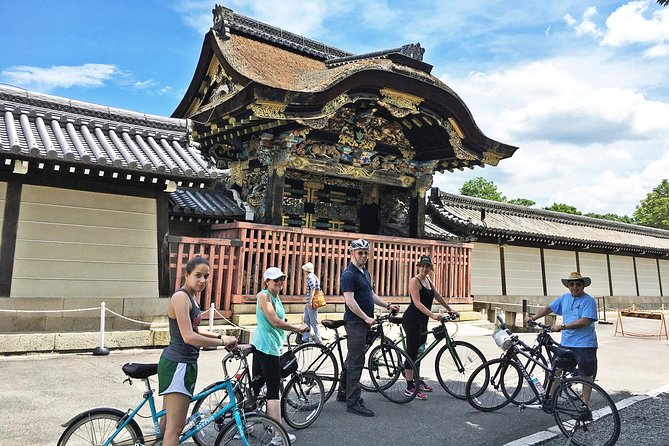
- Helmet, bike, lunch, and bottled water included, so you can travel light and focus on the route.
- Small-group format (max 8 travelers) means more personal attention at each stop.
- A smart lineup of temples and neighborhoods, from Nishi Honganji to Gion to the Golden Pavilion.
- Fushimi Inari routing that reduces crowd stress, with guides choosing a path between congestion.
- A generally easy ride style, with routes that tend to use safer side streets and back roads.
Why biking Kyoto beats walking and buses
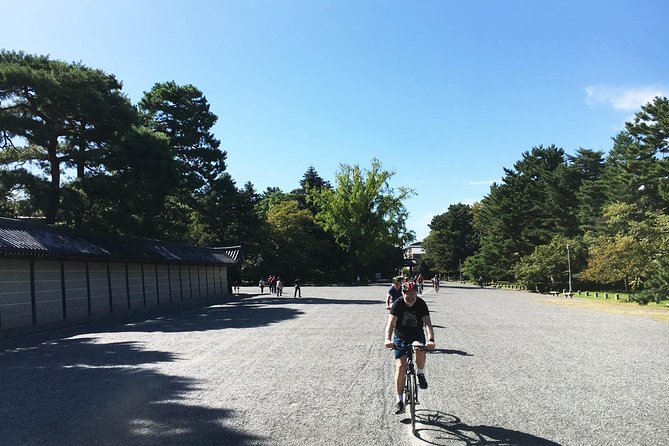
Kyoto is packed with sights, but it is also packed with people. Walking gets slow fast, especially if you bounce between districts that feel like they are on different planets. Biking changes the math. You cover real distance, yet you still arrive close enough to feel the mood of each area.
On this kind of full day tour, the best part is that you are not doing a random grab bag of stops. You get a route that strings together major icons and less hectic corners of the city, so the day feels like a guided story instead of a checklist. You also get tiny moments that you would likely skip on a bus, like the quiet atmosphere around a shrine or the way a street changes as you switch neighborhoods.
There is also a very practical upside: the ride itself is sightseeing. You see everyday Kyoto too. You pass residential lanes and local streets, not just the places with souvenir shops and photo lines.
Just go in knowing it is an active day. Expect some sweat, and expect to spend time out of the saddle at temples and shrines. It is not a sit and look experience.
More Cycling Tours in Kyoto
- Hidden Kyoto E-Biking tour
★ 5.0 · 1,843 reviews - Bike Tour Exploring North Kyoto plus Lunch
★ 5.0 · 1,087 reviews - Arashiyama Bamboo Forest & Hidden Gems Bike Tour (Early Bird)
★ 5.0 · 613 reviews
The Cycle Kyoto start, bikes, and what the day feels like
The tour meets at Cycle Kyoto, in Minami Ward near Kyoto Station, and you start by meeting the guide, getting your bike fitted, and grouping up with the rest of the tour. This matters because bike fit affects your whole day. If you get the seat height and handle position right early, the ride feels much easier.
The bikes are high quality “Cannondale” models, and you wear a helmet for the ride. Bottled water is included, and you get lunch during the day, so you are not hunting for food between stops.
How hard is it? The tour is aimed at people with moderate physical fitness, and riders must be at least 13 and comfortable on a bike. Many people also describe the route as generally flat and on safer, easier streets. Still, it is a full day. One rider noted it was about an 18 mile bike ride, plus a lot of walking once you are off the bike at temples and around shrine grounds.
Small practical issues can matter. One person mentioned the bike has a small front pouch for a phone and wallet. If you bring a backpack, you may need to carry it yourself during the day. Another person noted that an optional eco bike upgrade might be helpful for riding, but they found the seat uncomfortable after a while. So, if you are sensitive to seat time, wear padded shorts if you have them.
Nishi Honganji and Kitano Tenmangu: a calm start before the big names
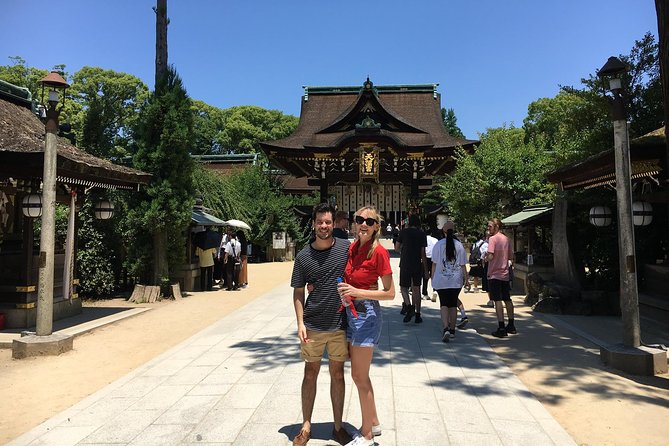
The day opens with an immediate jump into Kyoto’s spiritual side, but in a way that avoids starting at the loudest tourist magnets. First up is Nishi Honganji. This is one of the less visited religious sites in the city, and you also get the chance to see how enormous wooden architecture can be, even when it is not the first place most first-timers think of.
Why this stop works: it sets your eyes for what comes later. After seeing a large wooden temple space, you start noticing details like rooflines, carved elements, and the flow of foot traffic across grounds. It also helps you get into the habit of slowing down and listening to the guide’s commentary.
Next is Kitano Tenmangu Shrine, where you join local shrine goers. That local feel is a big part of the value here. Instead of just snapping photos, you get a chance to stand in the rhythm of a shrine visit. One key benefit is timing: the stop is short, so you do not get stuck in a long queue or wander too far before the ride continues.
The drawback to keep in mind: both of these are “walk-and-look” moments inside a day that is mostly cycling. If you want to linger for a long time, you may feel like you are moving on schedule. That said, the whole point of a full day tour is covering a lot without getting lost.
Kinkaku-ji Golden Pavilion and the imperial-residence ride
Then comes the headline Kyoto stop, Kinkaku-ji, the Golden Pavilion. You get commentary here, time to enjoy the iconic view, and even a simple break with an ice cream and time to relax. This is the moment most people picture when they think of Kyoto, and it is worth seeing in person at least once.
What you gain from having a guide at Kinkaku-ji: you do not just look at the gold. You learn what the pavilion represents and what kind of setting surrounds it, so your photos end up showing more than surface beauty.
One small practical tip: since it is a very popular place, plan to be flexible about crowd flow. You are only there for about 30 minutes, so be ready to move when your group moves. If you need longer, you might still be able to revisit later, but this stop is designed to keep the day moving.
There is also an in-between ride segment described as cruising through grounds connected to a former seat of Japan’s imperial family. You are not only pedaling through streets, you are passing areas tied to power and tradition, which helps connect the spiritual sites to the city’s historical role.
This stop combination is a strong way to balance Kyoto’s “wow” factor with context.
More Full-Day Tours in Kyoto
- 5 Top Highlights of Kyoto Full Day Bike Tour (E-bike option)
★ 5.0 · 511 reviews - Full Day Guided Tour to Kyoto and Nara from Osaka by Van
★ 5.0 · 420 reviews - Nara Park, Osaka & Kobe from Kyoto Full Day tour
★ 5.0 · 207 reviews - Kyoto Private Car Tour – Full Day with Local Guide & Nara Option
★ 5.0 · 169 reviews
Gion plus Tofuku-ji: geisha district energy and Zen viewpoints
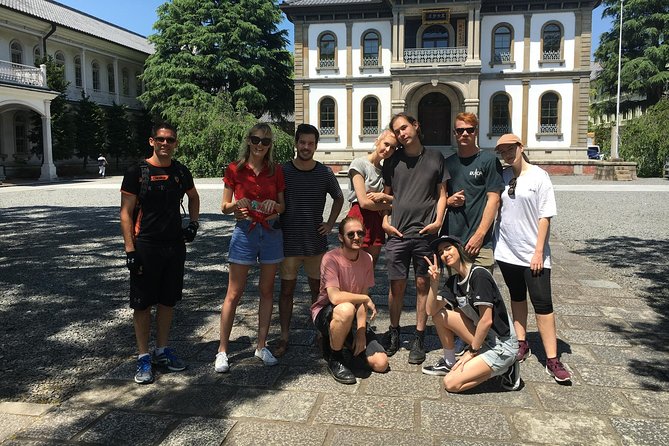
After the Golden Pavilion, you roll into Gion, Kyoto’s famous geisha district. This is one of those places where your first instinct might be to chase photographs. The tour approach is better. You get a guided walk to understand what you are seeing, and you get a real sense of why the area feels both historic and carefully maintained.
A quick, useful mindset shift: in Gion, it is not about spotting a geisha every five minutes. It is about noticing the lanes, the architecture, and the atmosphere that makes the district feel like a story from another era.
Next, you hit Tofuku-ji. Here, the focus is on a temple with big Zen temple grounds and a great viewpoint from a bridge. The stop is short, around 5 minutes, so you need to use your time well. Look up at what the bridge frames, take in the space, and let the guide’s notes give you something to remember beyond the first photo.
Why these two stops together make sense: Gion is city energy, lively and layered, while Tofuku-ji gives you a quieter pause. The ride between them also helps you reset, so by the time you reach Fushimi Inari-taisha, your eyes are ready again.
Fushimi Inari-taisha without the worst crowd pain
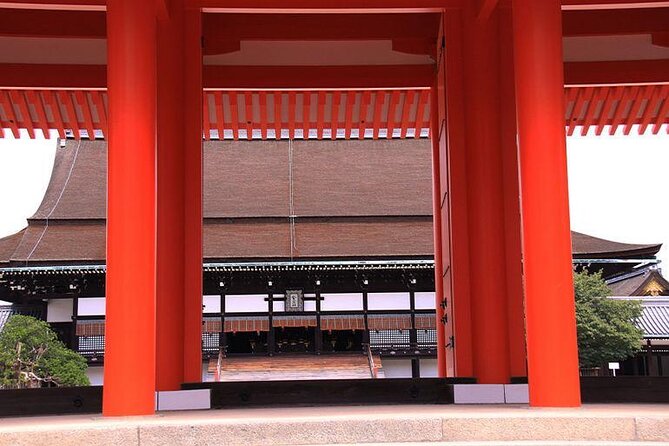
Fushimi Inari-taisha is Kyoto’s most visited attraction, and the torii gates can be overwhelming if you arrive at the wrong time. The tour helps because your guide picks a path between crowds, so you are less likely to get stuck in slow moving clusters.
You get about 20 minutes at the shrine, which may not sound like a lot until you realize how quickly you can burn time on lines and bottlenecks. With guided routing, you can focus on the walk through the torii gates and the feeling of the shrine grounds, not just navigating through other people’s schedules.
This stop is also where the guide’s personality matters a lot. Several guides, including Indra, are praised for explaining the story and the logic behind the torii gates, which turns a photo stop into an understanding stop. When you know what you are looking at, the gates feel less like a tourist tunnel and more like a living part of the shrine’s world.
If you are the type who likes to go higher and deeper up the trails, note that this tour is time-managed. But you will still get the core experience, and you can always return later for a longer personal exploration.
Lunch and small comforts that keep a long day enjoyable
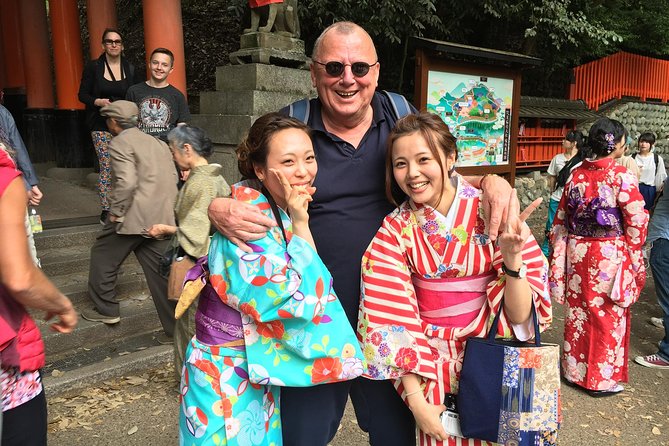
One of the most practical reasons this tour is good value is that it includes lunch and bottled water. Kyoto can make meal planning tricky when you are bouncing between districts. Having food handled means you can ride, look, and not spend your mental energy on where to eat.
The lunch itself is described as delicious and hearty Japanese fare. You also get a change of pace from temple grounds and shrine walks, which is exactly what you want in the middle of a bike day.
Other comfort details matter too:
- A helmet is included, which is a big deal in any busy city.
- Water is included, so you do not have to buy bottles at every stop.
- The route is designed for a small group, so you are not chasing a guide down a chaotic street every few minutes.
The only caution is that the day is active. Even with short stops, you may feel tired by the end. One rider noted being exhausted after a lot of walking in addition to biking. That is not a deal breaker. It just helps to treat this like a day trip with energy planning.
Bring sunscreen and a light layer you can peel off. If you tend to get sweaty, plan your clothes accordingly. Also, keep your essentials minimal since the bike pouch is small.
Price and value at about $119 per person
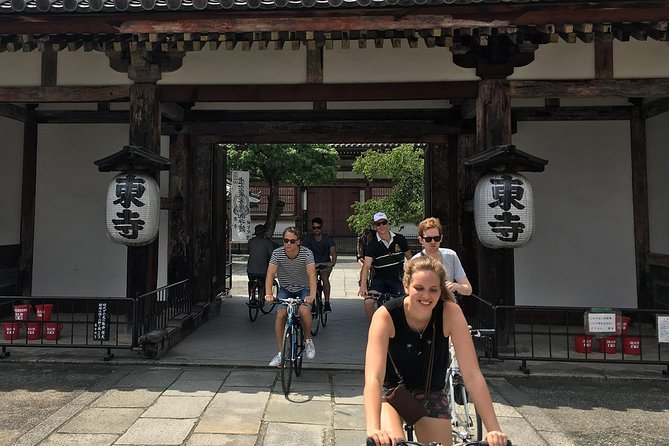
At about $119.38 per person, you are paying for a full day that includes bike and helmet use, bottled water, lunch, and guided storytelling across multiple major Kyoto stops. That is not just “transport.” You are buying structure, reduced crowd stress, and time efficiency.
Here is how I think about value on a day like this:
- Bikes cost money to rent, and helmets and fittings are not always included.
- Lunch plus water can quietly add up in Kyoto, especially if you get hungry at the wrong time.
- Most importantly, guidance is what turns big sights into a coherent experience. People often remember the stories they were told at each stop, not just the scenery.
Also, the small-group limit helps. A maximum of 8 travelers means the guide can manage pacing and answer questions without turning the day into a herd herding situation.
What could make it feel less like a deal? If you get a guide whose style does not match your taste, the experience can feel more like riding with a script than riding with context. One person suggested the learning component felt weaker for their guide. That is the only real “value risk” I see in the information you provided.
If you want a full-day overview with real context, the price starts to make sense fast.
Who should book this Kyoto bike tour
This tour is a strong fit if you:
- Want to see a lot without spending your trip stuck between taxi lines or trains.
- Enjoy cycling and are comfortable riding for hours.
- Like learning why places look the way they do, not just taking photos.
- Prefer small groups where the guide can keep you together.
It might not be ideal if you:
- Have limited cycling comfort, especially for a long active day.
- Hate being on a schedule, since the stops are time-managed.
- Need long, quiet solo exploration at each site, because you will move onward as a group.
Guide styles can vary. But the recurring theme is that guides such as Karl, Indra, Jay, Juan, Paul, and Jamie are often praised for being funny, organized, and good at connecting the dots between locations.
Should you book the full day bike tour?
If you want the best “first week in Kyoto” experience, I would lean yes. This tour gives you a big arc: calm temple starts, a major icon at Kinkaku-ji, lively city energy in Gion, and the big spiritual crowd magnet of Fushimi Inari, plus a stop like Tofuku-ji that adds a quieter perspective.
Book it if you can ride comfortably and you are okay with an active day. Bring a small bag plan, wear sunscreen, and accept that you will be tired by the end, but in the good way.
Skip it or choose a gentler option if you are expecting something like a relaxed walking tour with frequent breaks. This is a bike day first, with sightseeing built around the ride.
FAQ
How long is the Full Day Biking Tour Exploring the Best of Kyoto?
The tour runs about 7 to 8 hours.
What is included in the tour price?
It includes use of a bicycle and helmet, bottled water, and lunch. Admission is also included for Kinkakuji Temple.
Which Kyoto highlights will I see?
You will visit Nishi Honganji, Kitano Tenmangu Shrine, Kinkakuji Temple, Gion, Tofuku-ji Temple, and Fushimi Inari-taisha Shrine. You will also ride through areas tied to a former seat of Japan’s imperial family.
What fitness level do I need?
The tour is listed for travelers with moderate physical fitness. You should be comfortable riding a bike, since the day involves substantial cycling.
Is there a minimum age?
Yes. Riders must be at least 13 years old.
How big is the group?
The tour has a maximum of 8 travelers.
Where do I meet, and where does the tour end?
You start at Cycle Kyoto at 7 Higashikujō Nishisannōchō, Minami Ward, Kyoto, 601-8003, Japan, and the tour ends back at the meeting point.
Can the tour accommodate dietary requirements?
Dietary requirements need to be known ahead of time, so you should share them before the tour.
What if the tour is canceled due to weather or too few people?
The experience requires good weather. If it is canceled due to poor weather, you will be offered a different date or a full refund. It can also be canceled if the minimum number of travelers is not met, with a different date or a full refund offered.
Latest write-ups near Kyoto
- Kyoto: Nishiki Market Tour with a Local Foodie & Tastings★ 4.5 · 67 reviews
- Kyoto Kimono Rental mimosa |Kimono/Yukata Rental Couple Plan★ 4.8 · 67 reviews
- Kyoto: Traditional Kimono Fabric Handicrafts Workshop★ 5.0 · 67 reviews
- Kyoto Tea Ceremony and Samurai Photo Session★ 5.0 · 70 reviews
- Kyoto: Replica food making experience★ 4.8 · 70 reviews
- Kyoto: Kinkakuji, Golden Pavilion Guided Tour★ 4.7 · 71 reviews
- Private departure transfer from Kyoto city to Kansai International airport★ 5.0 · 72 reviews
- Uji: Green Tea Tour with Byodoin and Koshoji Temple Visits★ 4.8 · 72 reviews
Cycling Tours, compared.

3h Tokyo E-Bike Tour: Hidden Gems, and Local Life with guide
Read our review →
Arashiyama Bamboo Forest & Hidden Gems Bike Tour (Early Bird)
Read our review →
Hiroshima in a Nutshell: Morning Bike Adventure
Read our review →Browse the lists this tour appears in