
Reviewed · HALF-DAY
Nagasaki Half-Day Private Tour with Government-Licensed Guide
What makes this Nagasaki experience interesting is the mix of serious history and practical sightseeing, all done at a local pace. I like that you can choose which sites you visit instead of being locked into a fixed route, and I like the focus on getting you to the right places quickly without big-group bottlenecks. One possible drawback to plan for is that it is a walking and public transit tour, so you will want comfy shoes and you should expect some uneven street time.
Two other things make it feel smarter than a standard morning tour. You start with hotel pickup on a practical, on-foot meet-up approach, then you get a short list of powerful stops, and you still have the rest of the day free to explore Nagasaki on your own. Guides you might meet, such as Hiromi, Hiro, Yoshi, Noriko (Norah), or Asako, are often praised for tailoring the day to what your group wants to see, including when schedules get affected by rain.
Key reasons this Nagasaki tour works so well
- Pick 2-3 stops so the morning stays personal, not rushed
- Government-licensed English guide with local context, often including family-style storytelling
- No fixed itinerary so you can match the day to your interests and energy level
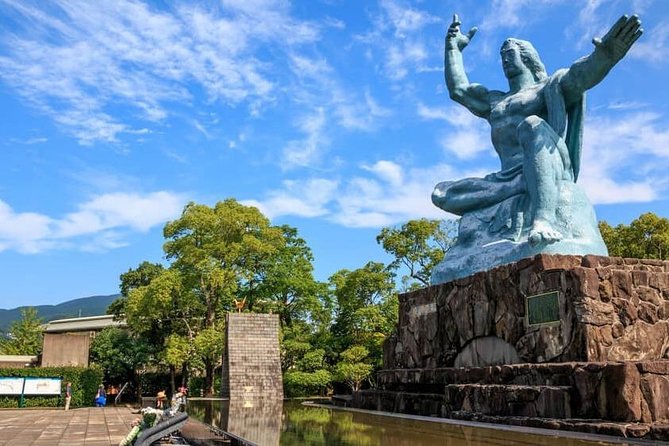
- Peace Park plus the Nagasaki Atomic Bomb Museum area for a moving, well-grounded overview
- Real Nagasaki sights like Glover Garden, Dejima, Dutch Slope, and Meganebashi, not just one theme
- Walk and use public transport instead of wasting time on a private-vehicle-only approach
A customizable half-day that keeps Nagasaki personal
Nagasaki is one of those cities where the details matter, and this tour is built around that idea. Instead of dragging you through a checklist, you decide which 2-3 stops from the program you want your morning to include.
I also like the pacing. The day is short, around 4 hours, and the goal is to give you a clear sense of Nagasaki’s layers, then send you back with enough context to explore further yourself.
The big consideration is physical and logistical, not historical. You will be walking through town streets and moving by public transport, and there is no private vehicle included.
Also on the shortlist for Nagasaki:
- Nagasaki: Private Walking Tour with a Local
★ 4.7 · 79 reviews - Nagasaki Full-Day Private Tour with Government-Licensed Guide
★ 5.0 · 66 reviews - Nagasaki Private Historical Tour with Licensed Guide
★ 5.0 · 13 reviews
How the government-licensed guide changes your morning
A licensed local guide does more than point at buildings. In Nagasaki, the meaning is in the context, and your guide connects the dots between the atomic bombing legacy, the port city’s international past, and the religious communities that shaped neighborhoods over centuries.
You will often get the kind of storytelling that makes you slow down without feeling lectured. Several guides associated with this experience are described as genuinely engaged and flexible, including when families bring kids or when the weather turns.
That also explains why so many people mention a guided tram or transit route between key sights. It is not only about what you see, it is about how you get your bearings fast, then enjoy the day.
Choosing 2-3 stops: the best combinations for your interests
The program offers a long menu of possibilities, but the strength is choosing just a few so you can actually absorb them. Think of your morning as three chapters, and you can pick one site per chapter, or mix them based on your priorities.
If you want the most emotionally powerful starting point, pair Nagasaki Peace Park with the Nagasaki Atomic Bomb Museum area. Many visitors want that arc, because the park sets the tone and the museum documents what happened and how the city rebuilt afterward.
If you want strong views plus a light historical contrast, combine the Inasayama Observation Deck with Glover Garden or Meganebashi. That gives you a wide-angle look at the city, then a closer look at Nagasaki’s foreign merchant-era presence.
If you want “port city Nagasaki” in a deeper way, pick one site about early international contact, like Dejima, then balance it with faith and community history like Oura Church or Urakami Cathedral.
Stop-by-stop guide to Peace, port history, temples, and churches
Below are the main stops you can choose from. For each one, I’ll tell you what it adds, how long you’ll likely spend, and what to budget for if tickets are not included.
Nagasaki Peace Park (Heiwa Kōen)
This is a tranquil memorial space connected to the atomic bombing of August 9, 1945. It is a strong opener because it frames the day’s themes before you go deeper into sites around the hypocenter.
The time on site is short, about 15 minutes, but it is free for admission. The drawback is that if you pick Peace Park but skip the nearby museum, you may leave wanting more documentation.
Inasayama Observation Deck (Mount Inasa)
Mount Inasa sits close to the city center at 333 meters, and it gives you a quick, high-value view over Nagasaki. It is especially helpful if you want to understand the city’s shape after a morning of walking among historic streets.
Admission is listed as free, and the stop is typically around 15 minutes. The catch is obvious, it is a viewpoint, so you will get the best value when you care about geography and city layout.
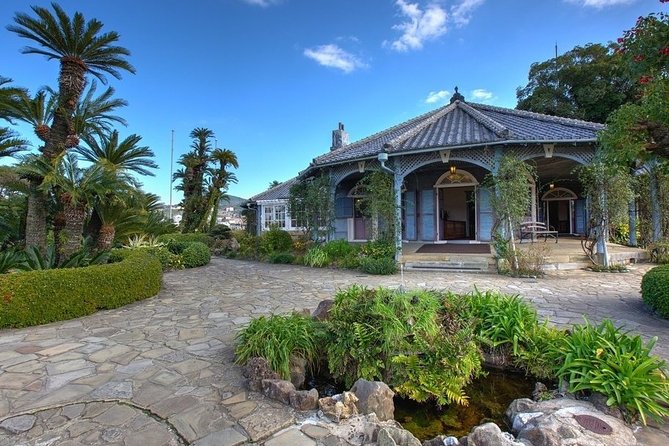
Glover Garden
Glover Garden is an open-air museum featuring mansions and related buildings from some of Nagasaki’s former foreign residents. It helps explain how foreigners lived and worked here during earlier eras, and why Nagasaki became such a visible port city.
Plan on about 15 minutes, and admission is not included. If you hate timed museum stops, pair it with something more street-level, like Dutch Slope or Meganebashi, so your day feels balanced.
Sofukuji Temple
Sofukuji Temple belongs to the Obaku school of Zen Buddhism and was originally built in 1629 for Nagasaki’s Chinese residents. The Chinese arch-style structure link is the draw here, and it adds an angle beyond Europe and Christianity.
Admission is not included, and you should expect about 15 minutes. The possible drawback is that this stop is more interpretive than dramatic, so it helps if you enjoy religious architecture.
Dejima
Dejima was a man-made island created in 1636 to separate Portuguese residents from the Japanese population and control missionary activity. It is one of the best “how the port worked” story-starters in Nagasaki.
The listed time is about 15 minutes and admission is not included. Because it is historically specific, you will get more out of it if you care about early global trade and controlled contact.
Urakami Cathedral
Urakami Cathedral is a working Catholic church in a large European-style red brick building. It has a tragic yet interesting history tied to Nagasaki, and it is a place where faith is not just display.
You’ll typically have around 15 minutes, with admission not included. The consideration here is emotional weight, so if your group wants lighter stops, balance it with something scenic like Inasayama.
Nagasaki Museum of History and Culture
This modern museum covers Nagasaki’s history as one of Japan’s major international trading ports. It is an excellent “connect everything” stop, especially if you want a more structured understanding.
Expect around 15 minutes, and admission is not included. The drawback is that the museum might feel short if you love reading panels, so consider choosing it only if you like museums.
Nagasaki Gokoku Shrine
A Gokoku Shrine is dedicated to the spirits of those who died for the nation. This is more about the way Japan honors sacrifice than it is about the international port story, so it gives your morning a different lens.
Admission is not included and the stop is about 15 minutes. It may feel subtle compared with Peace sites and church buildings, but that can be a good thing.
Catholic Oura Church (Ōura Tenshudō)
Oura Church was built toward the end of the Edo Period in 1864 by a French missionary for a growing community of foreign merchants. For many visitors, it is one of the most visually memorable church stories because it marks a turning point in foreign presence.
Time is listed at about 15 minutes, with admission not included. If you’re short on time, this pairs well with Glover Garden because both reflect the foreign merchant era from different angles.
Kofukuji Temple
Kofukuji Temple is described as the oldest and one of the most important Chinese-founded temples in Nagasaki, located in the Teramachi district. It is connected to the Obaku tradition, and it fits well when you want a “Chinese Nagasaki” thread.
Expect about 15 minutes, with admission not included. If your group isn’t into temple settings, swap it for a street-level stop like Dutch Slope.
The Confucian Temple (Confucius Shrine) and Chinese Museum of Successive Generations
This is one of only a handful of shrines dedicated to Confucius in Japan, built in 1893 by Nagasaki’s Chinese community. It gives you a thoughtful look at cultural heritage beyond religion-as-practice, focusing on education and tradition.
Time is about 15 minutes, with admission not included. It might be a quieter choice, best when you enjoy cultural context and calm spaces.
Twenty-Six Christian Martyrs Monument
This monument and adjacent museum commemorate the 26 Christians executed here on February 5, 1597. It is the clearest stop in the program for the early Christian martyr story in Nagasaki.
Time is about 30 minutes, and admission is not included. The consideration is emotional intensity, so it pairs well with a thoughtful guide who can set context without rushing.
Dutch Slope (Oranda-zaka)
Dutch Slope is a stone-paved street leading up a hillside where foreign traders lived after the port opened to foreign trade in 1859. It is not just a street photo opportunity, it is a physical trace of the trading era.
The listed admission is free, and the stop is free to enter. The downside is that it is short, so you might want to pair it with another historic street or viewpoint to make the morning feel complete.
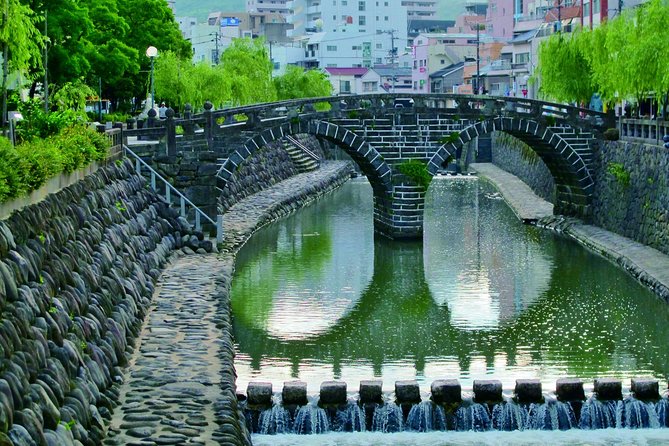
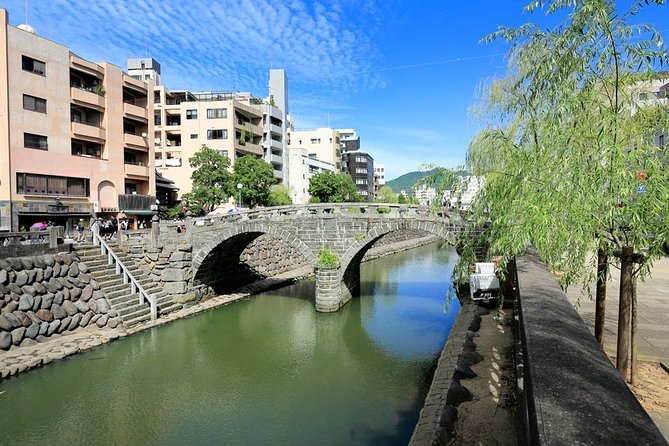
Spectacles Bridge (Meganebashi)
Meganebashi is a stone bridge over the Nakashima River, famous for its name because of how it resembles spectacles. This is a great “breather stop” between heavier sites, and it keeps the day grounded in everyday Nagasaki scenery.
Admission is listed as free and time is about 15 minutes. It is brief by design, so it is not the place to go deep into the city’s past.
Nagasaki Atomic Bomb Museum
This museum near the hypocenter documents the devastation caused by the August 9, 1945 bombing and the city’s recovery. It is often described as solemn, and it is the place where many people feel they finally understand the scale behind the memorial tone.
Admission is not included, and the time is about 15 minutes. The consideration is simple: if you want to read every panel, you’ll likely wish you had longer, which is why choosing the right combination matters.
Getting there on foot and public transit, without wasting time
This is a walking and public transport tour. That sounds basic, but it changes the vibe. You are not trapped in a vehicle schedule, and your guide can route you through the areas that make sense for your chosen stops.
Pickup is offered, and you meet the guide on foot within a designated area. In practice, that means you should be ready to walk from your meeting point to the first sites, and plan for city blocks rather than exact curb-to-curb transfers.
A private tour also means fewer delays from other groups. Your guide can keep your schedule moving even when you stop for photos or want to ask one more question about a building or neighborhood.
Price, value, and what to budget for
At $122.20 per person for about 4 hours, this is not the cheapest way to see Nagasaki. But it is also not paying for a “busload experience,” and that matters here because the best parts of the city are about understanding context, not ticking boxes.
The value comes from three things:
- You choose the 2-3 sites, so your time matches your interests.
- You get a government-licensed English guide, not a casual interpreter.
- The rest of your day stays open, so you can keep exploring after you get your bearings.
What you will likely need to budget for is admissions and any transportation outside what the tour covers. The tour specifically lists that transportation fees and entrance fees are not included, and lunch is not included.
That said, some stops are free to enter, including Nagasaki Peace Park, Inasayama Observation Deck, Dutch Slope, and Meganebashi. So your final spend depends heavily on which sites you pick.
Who should book this Nagasaki tour (and who might skip)
This is a good fit if you:
- Want a private morning instead of a crowded group.
- Care about the mix of memorial history and international port city stories.
- Like the idea of walking at your pace, with your guide adjusting to your energy level.
- Travel with kids or multigenerational groups and want the schedule to bend.
It might be less ideal if you:
- Hate walking and stairs, since it is built around city streets and public transport.
- Expect a private vehicle, because one is not included.
- Want a full day museum-and-memorial marathon. The timing is designed for a focused overview, not deep, slow reading of every exhibit.
If you are sensitive to language clarity, I recommend setting expectations early and asking your guide to repeat key points if needed. Most guides are praised for clear communication, but one report mentioned trouble hearing a guide whose English was harder to follow.
Should you book this Nagasaki half-day private tour?
If you only have a morning in Nagasaki, this is one of the smarter ways to start. You get structure without rigidity: pick 2-3 stops that match your mood, let a local guide connect the stories, then take the rest of the day to explore at your own speed.
My advice is to choose your stops with your emotional energy in mind. If your group is ready for heavier themes, pair Peace Park with the Atomic Bomb Museum area. If you want a balanced day, add a viewpoint like Inasayama or a lighter street stop like Dutch Slope or Meganebashi.
If you can, wear comfortable shoes and give your guide a short list of what you care about most. The whole point is that this morning should feel like your Nagasaki, not someone else’s checklist.
FAQ
How long is the Nagasaki half-day private tour?
It’s listed as about 4 hours.
Is this tour private?
Yes. It’s a private tour, so only your group participates.
Can I choose which sights to visit?
Yes. You customize your itinerary by choosing 2-3 sites from the available options.
Is hotel pickup included?
Pickup is offered, and the guide meets you on foot within a designated area.
Do I need to pay for entrance fees?
Entrance fees and transportation fees are not included. Some sites listed as free include Nagasaki Peace Park, Inasayama Observation Deck, Dutch Slope, and Spectacles Bridge.
How do you get around during the tour?
It’s a walking and public transport tour, and there is no private vehicle included.
What is included in the tour price?
Included items are a licensed local English speaking guide, a customizable tour of 2-3 sites, and meeting up with the guide within the designated area on foot.
Is there a mobile ticket?
Yes, a mobile ticket is part of the experience.
Is free cancellation available?
Yes, free cancellation is available up to 24 hours in advance for a full refund.
Are service animals allowed?
Yes, service animals are allowed.
Latest write-ups near Nagasaki
- Nagasaki Full-Day Private Tour with Government-Licensed Guide★ 5.0 · 66 reviews
- Nagasaki: Private Walking Tour with a Local★ 4.7 · 79 reviews
- Nagasaki Private Historical Tour with Licensed Guide★ 5.0 · 13 reviews
Half-Day, compared.
Kyoto Arashiyama Bamboo forest & Garden Half-Day Walking Tour
Read our review →
Miyajima Half-day Trip Historical Walking Tour
Read our review →

Naha, Okinawa: Kerama Islands Half-Day Whale Watching Tour
Read our review →
Himeji Half-Day Private Tour with Government-Licensed Guide
Read our review →
Miyajima Half-day Private Tour with Government Licensed Guide
Read our review →Browse the lists this tour appears in