
Reviewed · SUMO EXPERIENCES
Nagoya: Grand Sumo Tournament Tour
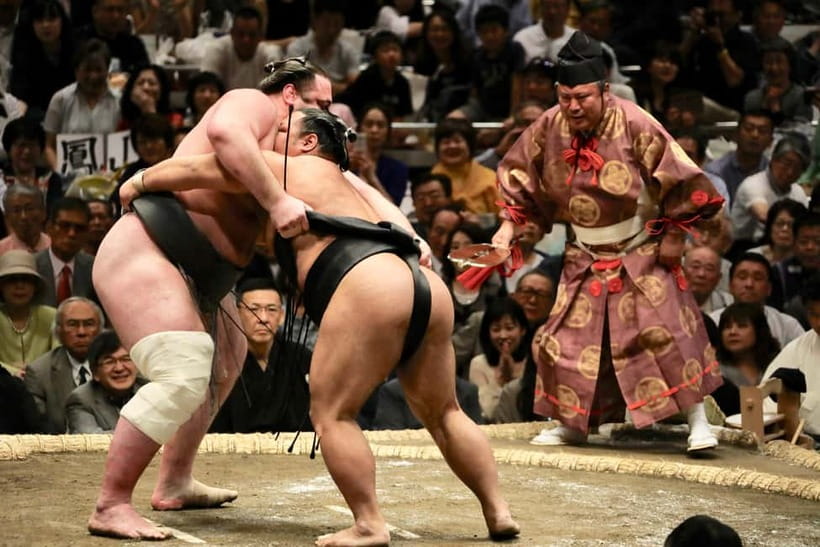
Nagoya’s grand sumo tournament feels special because you are not just watching big men fall down. You get real-time commentary in an easy-to-follow way, plus an earphone guide system that keeps the explanations clear even when you are farther from the ring. Guides such as Keiko, Yummi, Mari, and Yuki have led this tour style in the past, and the vibe is built around helping first-timers actually understand what they are seeing.
I really love the English wrestler pamphlet with photos and profiles, because the fights make sense when you know who is on the dohyo and what to look for. I also love the cheering towel gimmick, because it turns a spectator sport into a shared moment with your group, not a passive seat-wait.
One thing to consider is timing. You watch for 3 hours starting at 15:00, and the tournament energy builds as top-division bouts roll in. If you dislike waiting for the main matches, plan to lean into the rituals and pacing rather than expecting peak action right away.
Key things you will notice on this tour
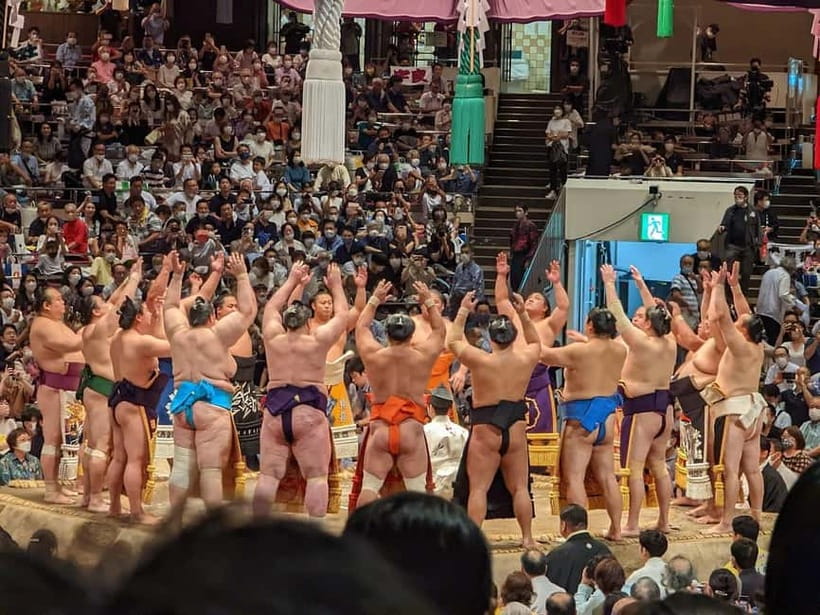
- English materials that match the action: wrestler photos and profiles, walked through as the bouts happen
- Earphones with live commentary: you hear your guide clearly even from a distance
- A cheering towel you actually use: your guide shows you when and how to cheer a chosen wrestler
- A sumo booklet for the bigger picture: background that helps you read the traditions
- Optional Nagoya Castle walk: Tokugawa-era building choices, fortress thinking, and Honmaru details
- Seat category you can plan around: chair S or chair A at the tournament
Sumo in Nagoya, explained like you are part of the day
If sumo is new to you, the biggest surprise is how much there is beyond pushing and throwing. There are rituals, timing, rankings, and little signals that change what a fight means. This tour solves the usual problem, you sit there confused, then leave with only a vague idea of who won.
The core of the experience is simple. You watch the top-division tournament bouts, and your guide talks you through what matters while it is happening. The earphone system is the trick. You are not relying on overhearing one person from far away. You get the commentary right in your headset, so you can focus on the ring instead of hunting for sound.
And yes, Nagoya helps. The city is a practical base from Osaka and Kyoto. You are looking at roughly a 50-minute train ride from Osaka, and around 34 minutes from Kyoto. That means you can do this as a true day trip without turning the whole trip into logistics.
More Sumo Experiences in Nagoya:
- Tokyo: Sumo Show Experience with Chicken Hot Pot and a Photo
★ 4.8 · 6,678 reviews - Tokyo: Sumo Show and Dining Experience
★ 4.8 · 2,742 reviews - the SUMO show
★ 5.0 · 1,960 reviews
The 15:00 start, and why the schedule is smarter than it looks
This tour’s viewing window is built around 3 hours of watching top-division bouts starting at 15:00. On paper, that can sound like a lot of sitting. In practice, it is designed to keep the event fun, not exhausting.
Here is the logic I like. If you start too early and you are just waiting, your brain gets bored. Sumo has its own rhythm, but your attention still needs momentum. Starting at 15:00 keeps you closer to the parts of the tournament where your newly learned rules start paying off fast.
So your job is easy. Arrive ready to settle in. Wear comfortable shoes. Then treat the first matches as your training ground, because by the time the top bouts get going, your guide’s explanations and the wrestler profiles will click.
Your English cheat sheet, pamphlet first, questions later
One of the most useful parts is that you do not get a random packet and a shrug. You get a pamphlet with photos and profiles of each wrestler, plus English translation. Your guide walks you through it while you watch the bouts.
That changes everything. Instead of thinking, big guy versus bigger guy, you can start noticing patterns. You will hear your guide point out what a wrestler is known for, how style choices show up during handwork and movement, and why certain moments matter. Sumo is steeped in tradition, but the good part is it is not mysterious when someone explains it live.
You also get a sumo booklet, which helps you connect what you see today with the bigger structure behind the sport. If you want to understand rankings and the overall culture around tournaments, this is the fastest on-ramp.
The cheering towel: ridiculous in a good way
This is the part that makes the tour feel like fun, not homework. You are assigned a particular wrestler to support, and you get a cheering towel for that athlete.
Your guide shows you when to use it, usually when the wrestler is about to go into action. That guidance matters, because otherwise you might guess wrong and miss the moment. Once you are doing it at the right time, the whole room becomes louder and warmer. You feel it, and you also see how the ceremony and crowd energy work together.
For first-timers, this is a sneaky confidence booster. Instead of clinging to your guide every second, you have a simple role. Cheer, watch, learn, repeat.
A change of pace from Nagoya:
- From Nagoya: Gujo, Hida Takayama, and Shirakawa-go Day Tour
★ 4.4 · 398 reviews - Ghibli Park 1-Day Bus Tour from Nagoya
★ 4.5 · 277 reviews - From Nagoya: Hida Takayama & Shirakawa-go Tour w/Opt. Lunch
★ 4.5 · 256 reviews - Hiking the Historic Nakasendo Trail [1 Day Tour from Nagoya]
★ 5.0 · 104 reviews
Hearing the guide clearly from your seat, not from the aisle
The earphone guide system is included, and it is a big quality-of-life upgrade. Tournament arenas can be loud, echoey, and packed. Even if your seat is fine, it is easy to lose context if you rely on your ears only.
With the headset, your guide can give real-time commentary that stays aligned with the action in front of you. That means you are not stuck waiting for someone to point out what just happened. You learn it as it happens, and your understanding builds match by match.
Seat options are chair S or chair A. The good news is that your guide audio is part of the design, so you should not feel like you picked a bad seat just because you cannot see everything perfectly. Your experience still has structure.
Nagoya Castle, optional but worth your legs
After (or before, depending on your day flow), the tour offers an optional walking tour of Nagoya Castle. This matters because it ties the day together. Sumo is a modern sport, but the tournament setting at Nagoya gives you a historic frame.
Nagoya Castle is tied to the Tokugawa clan, who ruled Japan for almost three centuries. The castle was built in the early 17th century, and your local guide explains what was going on politically and militarily at the time. You learn about how the Tokugawa clan mobilized feudal lords who had once been antagonistic. That is the kind of detail that makes a building feel like more than a photo stop.
You also hear about construction logic. The tour talks through architectural techniques used to build it and how effective it was as a fortress and even a kind of dungeon. That fortress mindset helps you look at walls, layout, and the idea of defense rather than only thinking about aesthetics.
Then you get the Honmaru Palace focus, including hinoki cypress wood, decorative metal fittings, and fine art gracing the walls, ceilings, and sliding doors. If you love craftsmanship, this is the moment you slow down. You start noticing the materials and finish details rather than only the scale.
For many people, this castle stop is what makes the day feel distinctly Nagoya. It is not interchangeable with any other sumo day trip.
Getting there smoothly from Osaka and Kyoto, and where to meet
Nagoya is an easy add-on if you are already in the Kansai region. Plan your travel so you arrive with time to settle in before the start.
From Osaka, expect about a 50-minute train ride. From Kyoto, it is around 34 minutes. That is short enough that you can keep your day mostly sane, assuming you do not get side-tracked by the usual temptation to snack your way through station shopping halls.
Meeting point is Meijo Line Nagoyajo Sta. (M07), Exit 7 on the ground. Your guide will be holding a recognizable signboard. The tour ends back at the meeting point, so you can plan your return without guessing.
Hotel pick-up and drop-off is not included. So you will want to handle your own transit to the station.
Price check: what $225 buys, and why it may be worth it
At $225 per person, this is not the cheapest way to see sumo in Japan. So here is how I would judge value.
You are paying for three things that usually cost you extra time or extra confusion on your own:
- Live, real-time guidance that you hear through earphones
- English translation support with a wrestler pamphlet your guide walks through during matches
- A structured experience design that includes the cheering towel and optional castle context
If you tried to do this independently, you could buy tickets and watch the action. But you would likely miss the rules, the rituals, and the reasons specific bouts matter. That is where guided support becomes the difference between seeing sumo and understanding sumo.
You also get chair S or chair A seating. Seat category matters, especially for comfort during a multi-hour tournament block. This tour builds those practical pieces in so you can focus on the experience.
In short, the price makes sense if you are a first-timer, a curious culture traveler, or anyone who hates figuring out what you should be paying attention to while inside a loud venue.
Who this tour fits best
This is a strong match if:
- You are seeing grand sumo for the first time and want your questions answered in real time
- You want English support that connects the sport to the people competing
- You like guided culture context, especially the Tokugawa-era story at Nagoya Castle
- You want a small-group feel, not a crowded blur
If you already know a lot about sumo and you mainly want to watch quietly, you might feel less urgency for the guided pieces. But even then, the wrestler profiles and the cheering towel can add fun without requiring you to become a sumo scholar.
Should you book the Nagoya sumo and castle tour?
I would book it if you want the easiest path to getting real enjoyment from grand sumo in Japan. The combination of earphone commentary, English wrestler materials that match the fights, and an actual role like cheering with a towel makes the day feel guided and lively, not just ticketed.
Skip it only if your idea of a great day is minimal talking, no structured learning, and you do not want to sit for a 3-hour viewing block starting at 15:00. Otherwise, this tour is a practical, high-reward way to experience Nagoya at its most ceremonial, then round it out with a castle visit that explains why the place mattered.
FAQ
FAQ
What language is the tour conducted in?
The tour is offered in English.
How long do we watch the top-division bouts?
You watch for 3 hours, with the viewing starting at 15:00.
Is Nagoya Castle included?
Nagoya Castle is an optional walking tour. You can choose to add it.
What seats are included for the sumo tournament?
You get chair S or chair A seats.
What does the earphone guide system do?
It lets you hear the guide’s real-time commentary clearly even from a distance.
What items do I receive for the sumo matches?
You receive a pamphlet with photos and profiles of the wrestlers in English, plus a cheering towel for a particular wrestler. You also get a sumo booklet that explains the sport.
Where is the meeting point?
Meet at Meijo Line Nagoyajo Sta. (M07) Exit 7 on the ground. The guide will be holding a recognizable signboard.
Do I need hotel pick-up and drop-off?
No. Hotel pick-up and drop-off are not included.
Can I reserve without paying right away?
Yes, you can reserve and pay later, with an option to book your spot and pay nothing today.
What if I need to cancel?
You can cancel up to 24 hours in advance for a full refund.
Latest write-ups near Nagoya
- Nagoya : Private Nabana no Sato Tour : Illuminations & Shopping★ 5.0 · 21 reviews
- Private Full-day Nagoya City Tour★ 5.0 · 22 reviews
- Guided Tour of Nagoya by Car★ 5.0 · 27 reviews
- Nagoya Street Food Walking Tour of Osu★ 5.0 · 28 reviews
- Full-Day Kisoji Nakasendo Trail Tour from Nagoya★ 5.0 · 31 reviews
- Shirakawago & Takayama Bus Tour from Nagoya w/Optional Lunch★ 4.5 · 37 reviews
- Ise’s Sacred Shrines and Captivating Coastlines – From Nagoya★ 5.0 · 45 reviews
- Magome-juku, Tsumago-juku & Ena-kyo 1d Bus Tour from Nagoya★ 4.6 · 75 reviews
Sumo Experiences, compared.
Sumo Show Experience with Chicken Hot Pot and a Photo
Read our review →
Tokyo Shinjuku Sumo Show & Experience with Photo
Read our review →
Sumo Show & Experience w/ Optional Kimono & Hot Pot
Read our review →
Authentic Sumo Experience in Tokyo: Enter the Sanctuary
Read our review →Browse the lists this tour appears in