
Reviewed · TEMPLE & SHRINE TOURS
Naha: Guided E-Bike Tour of the 12 Zodiac Temples
Shuri in Okinawa is full of lanes that feel like they were designed for getting lost, in the best way. This guided e-bike tour strings together the 12 zodiac temples and shrines with smart transfers and stops you can actually find without a map, plus photo-worthy moments like the Shureimon Gate.
I especially like how the route mixes cycling with short rides so the day stays fun instead of exhausting. I also like the helmet intercom system, which makes it easier to stay together and lets guides like Maria and Maki explain things clearly as you roll through the Shuri backstreets. One drawback: you really do need bike confidence, since the experience is built around riding, not just walking.
Key highlights at a glance
- Twelve zodiac temples in one 3-hour loop, with a guide to connect the spiritual dots
- Shuri Kannon-do with its vivid red temple look, carvings, and a view over Shuri
- Shureimon Gate photo moment with your bike in front of a major Okinawan symbol
- E-bike plus intercom helmets, so you can hear instructions and stay in sync
- Stops that go beyond the main drag, including a miracle spring and a former royal mausoleum
- Short, sensible timing at each site, which helps you see more without rushing
Riding through Shuri’s zodiac temple circuit
This tour is interesting because it turns Okinawa’s Shuri area into a moving story. You are not just hopping from landmark to landmark. You are traveling along a spiritual route where each stop has its own role in local faith and history, from guardian temples to prayer sites and older royal connections.
The structure is built for people who want something active but not chaotic. The group is capped at 5 participants, and you get a live guide speaking English, Chinese, or Japanese. That small size matters because you get clearer explanations, time to ask questions, and an easier pace through side streets.
You are also getting help with one of Shuri’s real challenges: it is easy to miss the places that sit in smaller lanes. With a guide, you get to the spots like Shuri Kannon-do, the Ankoku-ji area, and the gates and trees that mark the old royal world of Shuri.
More Temple & Shrine Tours in Naha:
- Zodiac Shrines and Naha Backstreets Cycling Tour
★ 5.0 · 29 reviews - Kyoto: Fushimi Inari, Kinkakuji, Bamboo Grove 1 Day Bus Tour
★ 4.8 · 4,316 reviews - Kyoto: Tea Ceremony Ju-An at Jotokuji Temple
★ 4.9 · 3,207 reviews
Getting started at the bike shop near Monorail Makishi Station
Your tour starts and ends at the same place: the bike shop area (ダイショウビル). The meeting point is described as a 5-minute walk from Monorail Makishi Station, next to the post office, so it is fairly painless to plug into your Naha day.
After you meet your guide, you get fitted with an electric bike. The tour includes an e-bike rental and helmets with an intercom system, which is a practical touch in a busy city. You will likely hear instructions in real time while you ride, and you can communicate within your group without constantly stopping to wave.
The itinerary also includes short pedicab or rickshaw segments. That is a good thing. It helps you conserve energy for the real riding moments and keeps you from feeling like you spent all day in traffic jams and slow stretches.
Shuri Kannon-do and the red temple that anchors the route
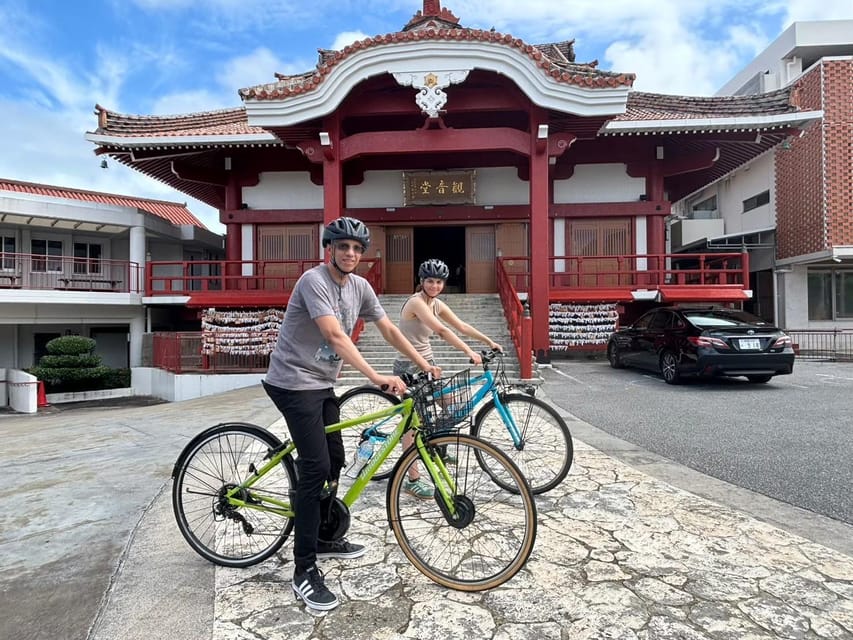
The first major temple stop is Shuri Kannondo (Shuri Kannon-do), described as a guardian temple from the Ryukyu Kingdom. Expect a dose of Okinawa’s religious art style here, with beautiful carvings and decorations that look especially striking up close.
This is also the moment where you get a sense of place. The tour notes that from the bright red temple, you enjoy views of Shuri. That matters because these temples are not just objects in the landscape. They were built in specific spots that make sense when you can see the area around them.
A practical tip: wear shoes you can walk in, even if most of your day is on a bike. Your time inside or near the temple areas may be short, but you will still want stable footing.
Ankoku-ji: gates, trees, and traditional touches in small spaces
Next comes Ankoku-ji (Ankoku-ji Temple), described as a local temple with traditional houses. Even if your time here is brief, this stop is one of the more atmospheric ones because it feels rooted in everyday Shuri rather than only staged for visitors.
The highlights called out are an ancient gate and a large gajumaru tree. Those details are the kind you might miss if you are flying past or trying to self-navigate. With a guide, you understand what you are looking at instead of just seeing old wood and stone.
Because the visit is relatively short, your best move is to slow down mentally once you arrive. Take a moment to look at the gate, then look at how the tree frames the scene. That is where the feel of a place like this really clicks.
More Cycling Tours in Naha:
- Afternoon Adventure: Okinawa Local Cycling with Spectacular Views
★ 5.0 · 92 reviews - E-Bike Nature Tour in Shuri
★ 5.0 · 25 reviews - Hidden Kyoto E-Biking tour
★ 5.0 · 1,843 reviews - Tokyo Guided Small-Group Biking Tour
★ 5.0 · 1,250 reviews
Shureimon Gate: symbol of Okinawa, with your bike in the frame

Then you hit one of the big visual payoff moments: the Shureimon Gate. This gate is specifically called out as a symbol of Okinawa, and the tour includes a chance to take a photo with your bike in front of it.
This is a smart photo stop because the gate itself is the subject, not a backdrop you need to fight for. A guided photo moment also saves time. You do not waste your limited daylight searching for the right angle or walking back and forth trying to figure out where the best spot is.
One consideration: you may want to keep your camera ready as you approach. The gate is a bright focal point, and it is easier to get a clean shot when you are not fumbling with bags and straps at the last second.
Daruma Temple: health and pregnancy prayers, plus striking red shapes
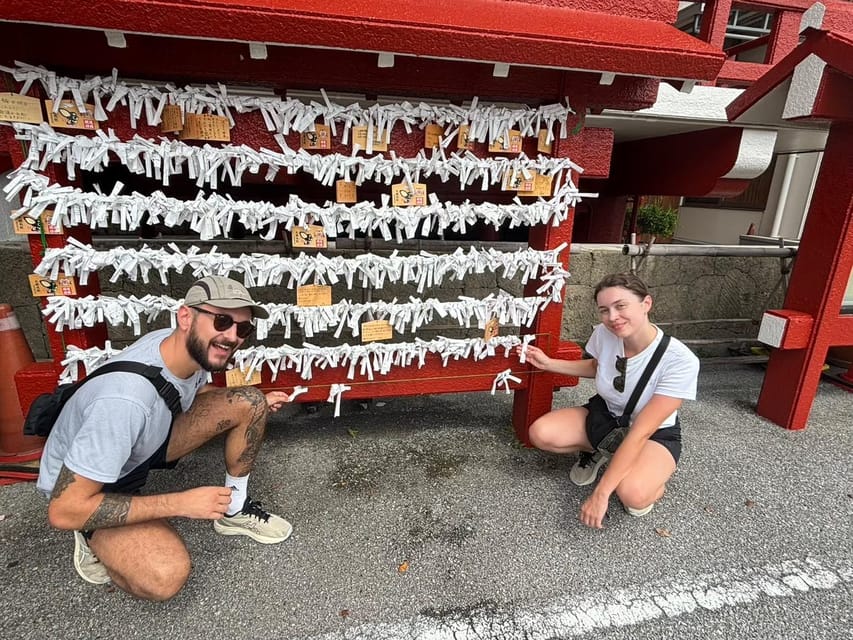
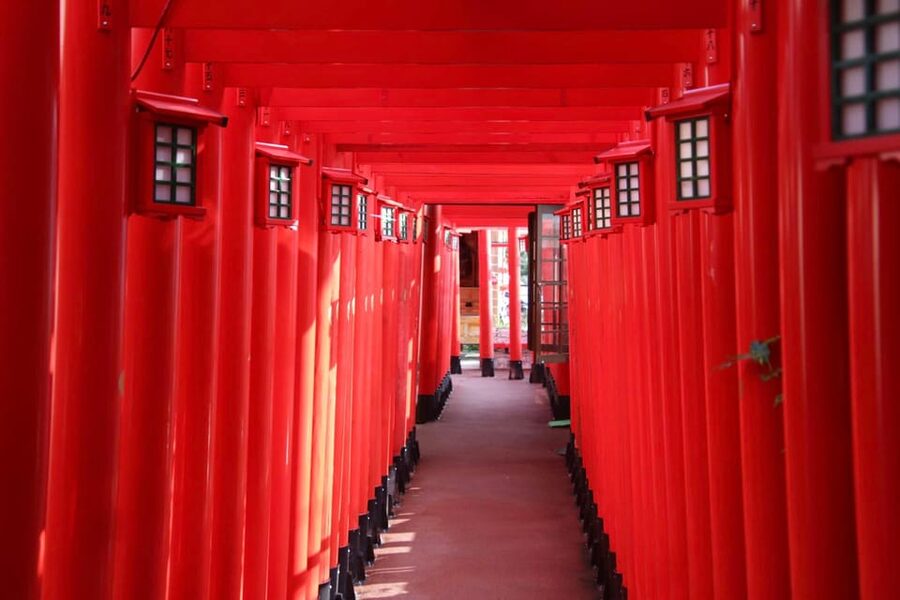
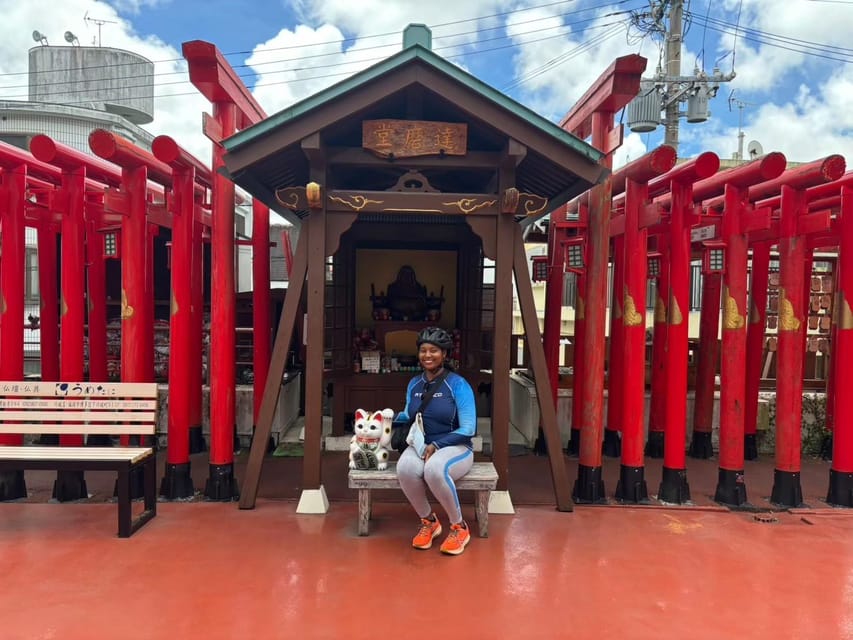
At Daruma Temple, the tour shifts into prayer culture. This is described as a popular place for health and pregnancy prayers, and the visual theme is strong: striking red daruma dolls and a torii gate.
That mix is what makes Daruma Temple worth the time. You see how local religious practice uses symbols that feel bold and unmistakable. It also helps to explain the meaning so you know what you are looking at beyond the color.
Time here is around the middle of the tour flow, so if you like your stops paced evenly, this one works well. If you prefer quiet contemplation over photo moments, you might spend a bit longer looking at details rather than rushing for pictures.
Seikoji Temple’s calm: Jizo statues and the feel of the sacred
Next up is Seikoji Temple, described as a peaceful place with a sacred atmosphere. The tour highlights Jizo statues and mentions a modern building in the mix.
That pairing is important context. It suggests how living religious spaces adapt while still honoring tradition. You might find it easier to connect with the site if you focus on how the older statues relate to the newer surroundings.
This stop is also a nice contrast after the bright visual identity of Daruma Temple. If you are the type who enjoys variety, Seikoji gives your eyes and mind a breather.
Saki Kasahigawa and Sogenji: the miracle spring and a former royal mausoleum
The tour then moves into two of the more specific nature and history-linked stops.
First is Saki Kasahigawa, described as a miracle spring that flows from the deep forest. The idea here is simple but memorable: feel the history in the flowing water. Even if you do not have a long time at the spring, the change in setting can make the day feel less like a checklist.
Finally, you reach Sogenji Temple, described as a former royal mausoleum. The tour notes a sense of pure air in the park, plus a gate and another gajumaru tree. In many temple visits, the meaning comes from the people you imagine who once stood there. Here, the royal connection helps you picture Shuri’s past in a more grounded way.
When a tour includes a calm park-like area after a few busier stops, it often leaves you with better memories. This one is designed that way: you end your site time, then ride back with a clearer head.
How the tour stays smooth: pacing, safety, and small-group energy
What makes this experience work is the way it controls effort. The tour includes electric bikes, short transfers by pedicab or rickshaw, and short visits at each stop. That combo matters if you want to see a lot without turning the day into leg day.
It also helps that guides do more than recite facts. From the feedback tied to this experience, I like the focus on keeping people safe and comfortable. Guides such as Hiro, Qwan, and Maria are described as checking that everyone is okay with their bikes, reminding people to stay hydrated, and giving directions for navigating traffic.
The helmet intercom system is not just a tech detail. It supports the real goal of a small tour: stay together and keep moving. If you are concerned about missing turns or losing the group in narrow lanes, this kind of setup reduces stress fast.
One practical consideration: you still need to bring water and wear comfortable shoes. You are riding and walking in short bursts, and Okinawa weather can add up quickly.
Value for $95: what you get, and what costs extra
At $95 per person for a 3-hour tour, the value comes from the bundle: bike rental, helmets with intercom, and a live guide for the whole loop. You are paying for time and guidance, not just transportation.
Also, the stops are arranged to maximize what you see in a short window. In Shuri, that matters. Side streets can hide temples in plain sight, and self-guided navigation might get frustrating quickly. A guided route helps you spend time looking at the right things, not wandering.
What is not included is also clear: meals and drinks. Temple offerings are not included either, so if you plan to offer money at any shrine or temple, that is on you. The good news is that the tour duration is short enough that you can easily plan to eat afterward near Naha.
If you want to spend the least possible time planning, this tour is built for that. The e-bike rental and the guide remove most of the friction of seeing these sites.
Who this e-bike temple tour suits best
This is best for people who can ride a bike confidently. The tour specifically notes that people who cannot ride a bike are not suitable.
If you like active sightseeing, this fits. If you prefer a purely walking pace, you might find it a bit too cycling-focused. But if you want a practical balance, it delivers: ride through Shuri, stop at meaningful spiritual sites, then ride again.
It also works well for first-timers in Okinawa’s Naha area because the meeting point is tied to Monorail Makishi Station access, and the route centers on Shuri. If you are already comfortable in Naha and want a day that feels different from the beach-and-shopping loop, this temple circuit gives you culture you can actually move through.
One more good fit: people who want better photos. The Shureimon Gate bike photo moment is included, and the short stops mean you get clean, focused time at each location.
Should you book the Naha guided Zodiac Temples e-bike tour?
Book it if you want 12 zodiac temples and shrines in a single, guided 3-hour outing, with the help of a guide to find the side-street stops. The e-bike + helmet intercom setup makes the day feel more relaxed and more connected, especially in an area like Shuri where lanes can be confusing.
Skip it if you cannot ride a bike comfortably or you are hoping for a fully hands-off, stroll-only experience. Also, be realistic about time at each site. It is not designed for lingering for hours at one temple, it is designed for seeing many meaningful places in one run.
If that sounds like your style, this is a strong way to experience Shuri by bicycle, with practical guidance and plenty of moments you will remember.
FAQ
How long is the Naha guided e-bike tour?
The tour lasts 3 hours.
How much does the tour cost?
It costs $95 per person.
How many people are in the group?
The tour is a small group limited to 5 participants.
Where do I meet the guide?
The meeting point is a 5-minute walk from Monorail Makishi Station, next to the post office.
What does the tour include?
You get electric bicycle rental and a guided tour with a helmet with an intercom system.
What should I bring?
Bring comfortable shoes and water. It is also recommended to bring sunscreen and a hat.
Are sandals or flip flops allowed?
No. Sandals or flip flops are not allowed.
Do I need to be able to ride a bike?
Yes. People who cannot ride a bike are not suitable for this tour.
What if the weather is bad?
If the precipitation probability exceeds 70% or there is severe weather, the schedule may change. You will be contacted the day before.
Are meals included?
No. Meals and drinks are not included.
Latest write-ups near Naha
- Okinawa: Naha: 1 day Kerama Islands diving‣ license required★ 3.9 · 20 reviews
- Gorilla Kart Tour-Plenty of Time Slots|Many Great Views★ 3.9 · 20 reviews
- E-Bike Nature Tour in Shuri★ 5.0 · 25 reviews
- Kintsugi Experience in Naha, Okinawa – Art from Broken Pieces!★ 5.0 · 28 reviews
- Naha: Full-Day Introductory diving & Snorkeling in the Kerama Islands, Okinawa★ 4.5 · 28 reviews
- Okinawa Hip-Hop Bus C Course Tour to Northern Island★ 4.0 · 29 reviews
- Zodiac Shrines and Naha Backstreets Cycling Tour★ 5.0 · 29 reviews
- Sushi Making Experience Class in Naha Makishi Public Market★ 5.0 · 35 reviews
Temple & Shrine Tours, compared.
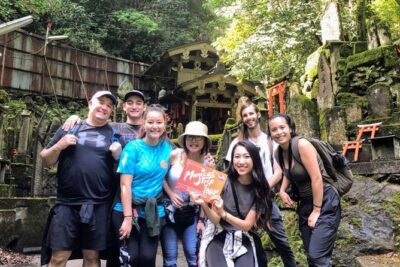
Fushimi Inari, Kinkakuji, Bamboo Grove 1 Day Bus Tour
Read our review →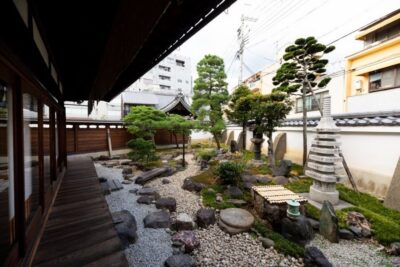

Meiji Shrine, Asakusa, Skytree Bus Tour and Cruise
Read our review →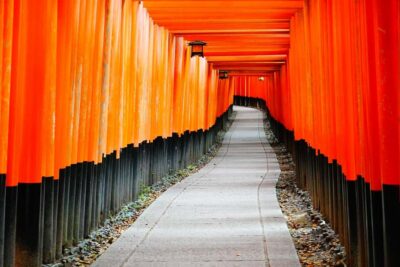
Osaka/Kyoto:Kinkakuji,Arashiyama,FushimiInariShrine,NaraPark
Read our review →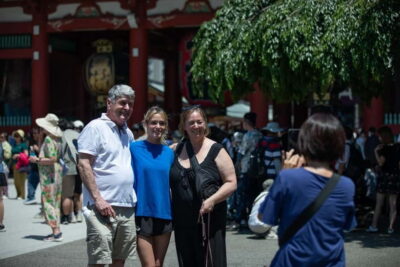
Asakusa Walking Tour with Sensoji Temple Visit
Read our review →
Nikko: Kegon Falls, Lake Chuzenji & Toshogu Temple
Read our review →
Kamakura & Enoshima Day Trip including Temple Tickets
Read our review →
Nikko Toshogu Shrine and Kegon Waterfall Tour
Read our review →Browse the lists this tour appears in