
Reviewed · CALLIGRAPHY CLASSES
Try Mindful Calligraphy Near Kanazawa’s Ninja Temple
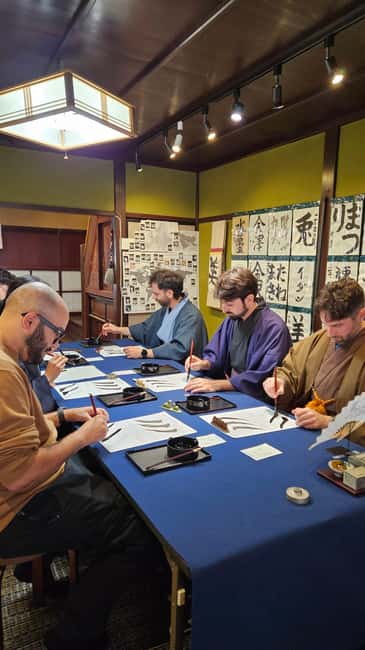
This calligraphy trial in Kanazawa is interesting because you are doing real writing practice, not watching a staged performance. I like that it happens in an actual classroom setting, and I also like the sense of quiet focus you get inside a traditional 100-year-old house. One consideration: the session is only 1 hour, so it is plenty for a first try, but not enough to feel fully fluent.
I also like that you get English-friendly guidance while learning tools, brush technique, and cultural context, including how Kanji, Hiragana, and Katakana fit together. Still, there is a practical heads-up if you have dietary limits, because calligraphy ink and brushes can contain animal-derived materials, and vegans are not suitable.
Key highlights to know before you go
- Real practice, real tools: You learn strokes with brush and ink, guided step-by-step.
- Pick your own word: Choose a character or word you like and make it your own.
- Traditional setting: A historic home makes the whole hour feel calmer and more grounded.
- You take something home: Your final work is created on a hanging scroll or folding fan.
- English-supported teaching: An experienced instructor works in English and Japanese.
- Small group attention: Many people end up with extra attention when the group is small.
Why This Calligraphy Class Feels Like Practice, Not a Show
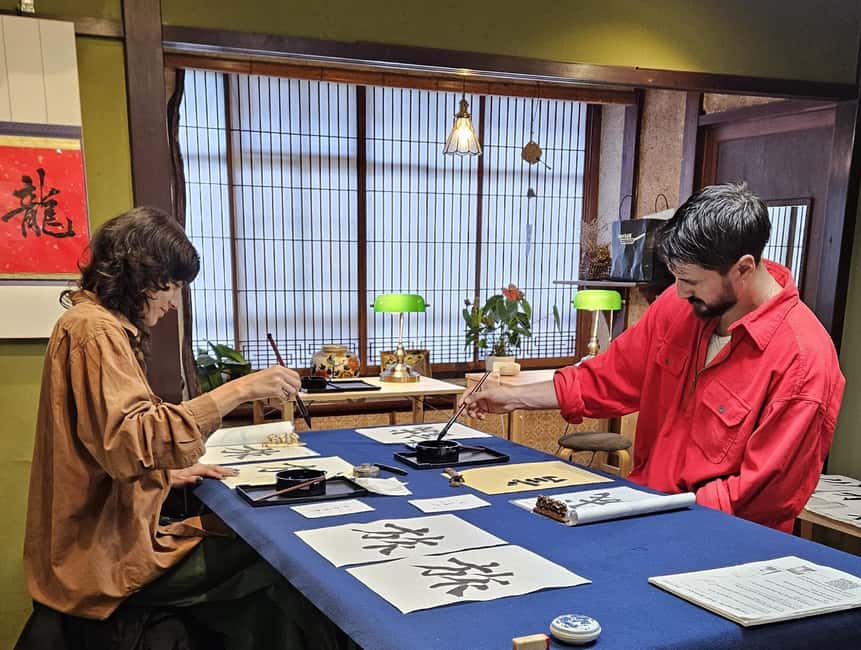
The best part is that you are not being entertained at arm’s length. You are learning how to hold the brush, how to control pressure and speed, and how to build basic strokes into something readable and pleasing. That hands-on approach makes the hour feel like an activity you finish, not something you just watch.
I also love how the lesson treats calligraphy as everyday skill. You get the chance to write in a way that reflects Japanese aesthetics and discipline, rather than trying to copy a perfect sample. The quiet focus is real too, and the class has a meditative feel without getting overly spiritual or complicated.
The main trade-off is time. If you are the type who loves repeating practice until it clicks, you may wish for more than an hour. Still, the structure is designed so you practice enough to make a meaningful final piece, not just scribble for 20 minutes.
Inside the 100-Year-Old House in Kanazawa
This class happens in a traditional home that feels like part of the city’s everyday life, not a rental studio. Calligraphy works are visible from outside, so it is easier than most classes to spot once you are in the right area. Even better, the setting naturally slows you down, which helps when you are learning a medium that rewards patience.
You are also likely to notice that the studio can be active at certain times. On Thursdays and Saturdays after 3:00 PM, the local calligraphy school is also in session, so you may see local children working in the same space. That is not a downside, it is just useful to know if you prefer a quieter room.
Another small detail that matters: this is described as an actual classroom experience. That means you spend time learning tool basics and practicing strokes using guide sheets, rather than jumping straight to a finished souvenir.
More Samurai & Ninja Experiences in Kanazawa
- Kanazawa: Samurai Residence Remains Nomura Family admission
★ 4.4 · 111 reviews - Kanazawa: Samurai, Matcha, Gardens and Geisha Full-Day Tour
★ 4.9 · 75 reviews - Full-Day Tour from Kanazawa: Samurai, Matcha, Gardens and Geisha
★ 5.0 · 68 reviews
Your Brush Lesson: Tools, Strokes, and the Three Japanese Scripts
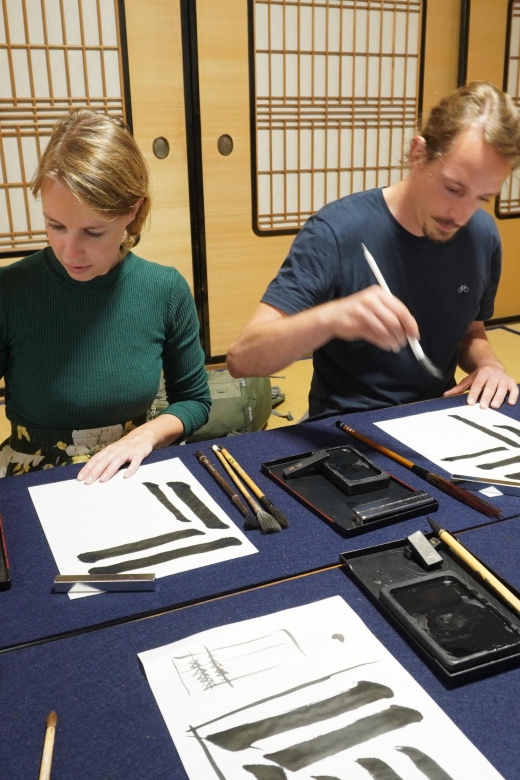
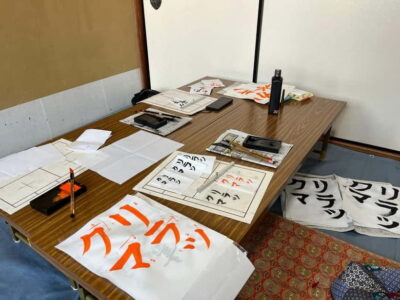
The trial lesson is built around the essentials: brush and ink, then strokes, then your own piece. You start with an explanation of the calligraphy tools so you understand what each part of the brush and ink is doing. After that, you practice basic strokes and brush techniques using guide sheets, so your first attempts have something to measure against.
What I find most useful is the cultural framing. You learn that Japanese writing uses three scripts: Kanji, Hiragana, and Katakana. Kanji are ideographic characters, so each one carries meaning, almost like a picture made with brushwork. Hiragana and Katakana are phonetic scripts with flowing forms derived from Chinese characters, and the class connects those forms to Japanese writing aesthetics.
In practical terms, this context helps you look at your own attempts with the right mindset. You stop thinking only in terms of correctness and start thinking about form, balance, and expression. Calligraphy is not just copying shapes, it is controlling how the stroke begins, travels, and finishes.
Pick Your Favorite Word and Make a Scroll or Fan
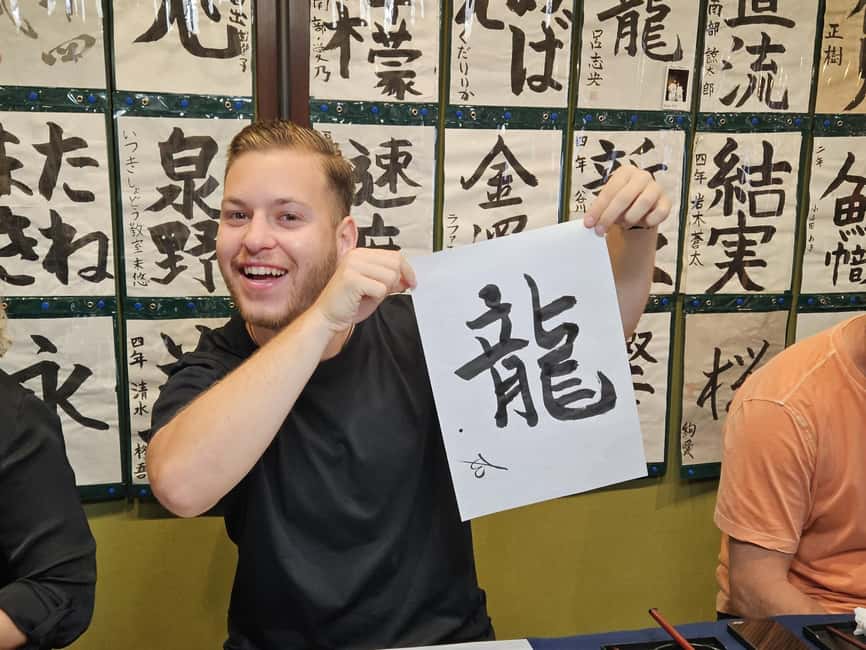
This is the part you will remember when you are back home. After practicing the basics, you choose your favorite word to write and then create your own unique calligraphy artwork.
Your completed piece is made directly on a hanging scroll or a folding fan, and you take it home as a souvenir. That detail matters because it changes the whole feel of the class. You are not making a practice sheet you throw away, you are creating something meant to be kept.
The instruction approach is supportive. People have specifically praised the way teachers keep a steady pace and encourage you to try without making you feel rushed. If you get stuck, the guidance is hands-on and focused on the brush technique, not just the final look.
One more consideration: because you are working in ink and creating a finished piece, you should expect that this is slower than doodling with a pen. The reward is that your final work looks like you made a deliberate art choice, not just a quick activity.
English-Friendly Teaching and What You Learn From Real Instructors
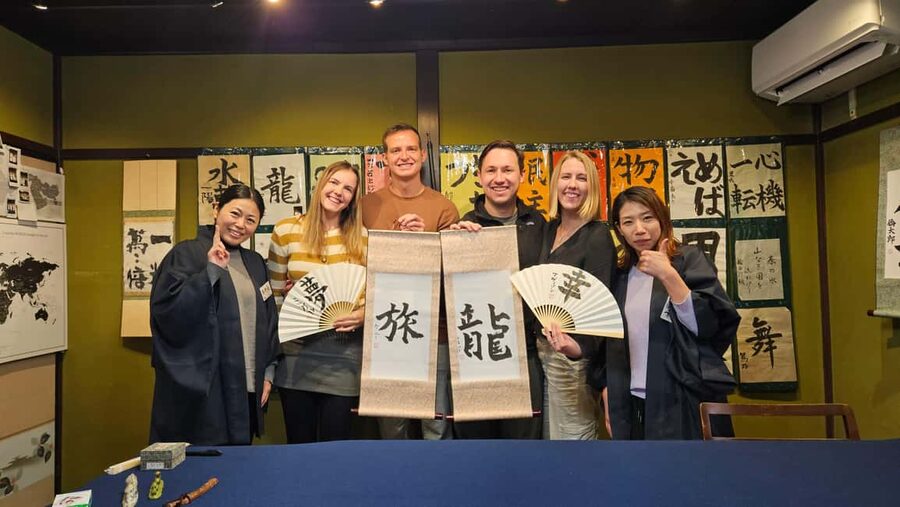
If English support is important to you, this class is a strong fit. The instructor and guidance are offered in English and Japanese, and the tone is described as kind, patient, and encouraging. More than one person mentioned how helpful the teaching was when they were not expecting to understand the finer points of stroke work.
Names that show up in the feedback include Naomi and Daiki. Several comments mention Naomi as a patient instructor, and some also mention Daiki as additional support, including cultural explanations tied to calligraphy. People also noted that the instruction included more than just technique, including stories and context that help you understand why the brush behaves the way it does.
This is where you get value beyond the souvenir. You leave knowing what you did, why it matters, and what to watch for if you try again later. The class does not pretend everyone is starting at the same level, and that is part of why the hour feels manageable.
More Calligraphy Classes in Kanazawa:
- Tokyo: Calligraphy on Kanji Fan & Scroll with Drink
★ 5.0 · 210 reviews - Kyoto: Calligraphy class at Buddhist temple in city center
★ 5.0 · 167 reviews - Let’s experience calligraphy in YANAKA, Taito-ku, TOKYO !!
★ 5.0 · 127 reviews - Experience all of Japanese culture and Japanese food experience classes “origami, udon, Japanese food, green tea, calligraphy” in 4 hours
★ 5.0 · 105 reviews
Price and Value: What $44 Includes for One Hour
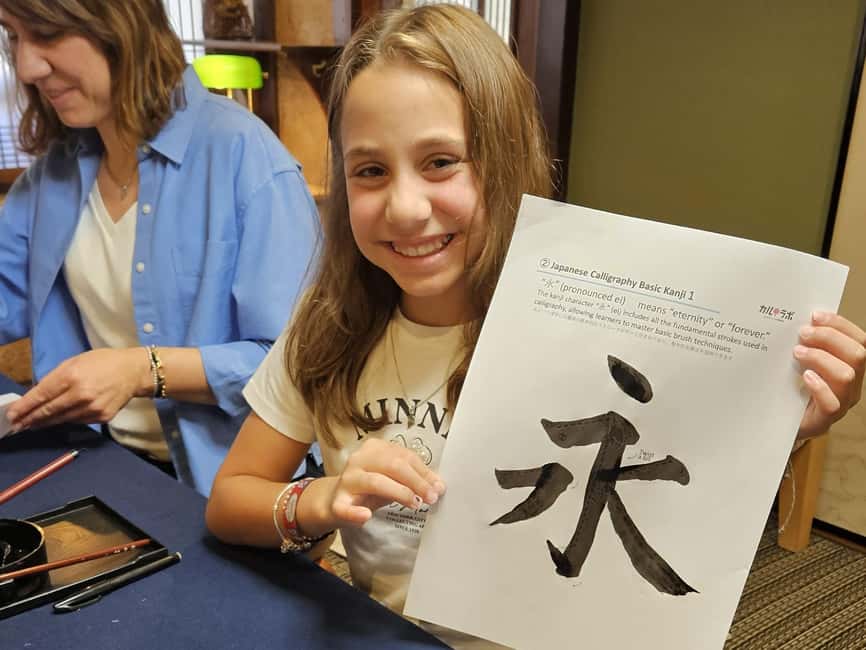
At $44 per person for a 1-hour lesson, you are paying for four things bundled together: instruction, practice, a finished keepsake, and cultural context. The strongest value piece is that your work is created on a hanging scroll or folding fan, so you do not leave empty-handed.
You also get guided time. Learning brush technique is hard to self-teach from a video, because pressure, angle, and timing matter. The class solves that by having you practice with guide sheets while an instructor checks what you are doing.
Is it a lot? Not really, if you compare it to typical single-session classes that charge similar fees but do not produce a real take-home artwork. Here, you leave with an actual calligraphy piece you can display or gift, and you also spend the hour doing something calming rather than just ticking off a sight.
Getting There in Kanazawa and Timing Your Calligraphy Hour
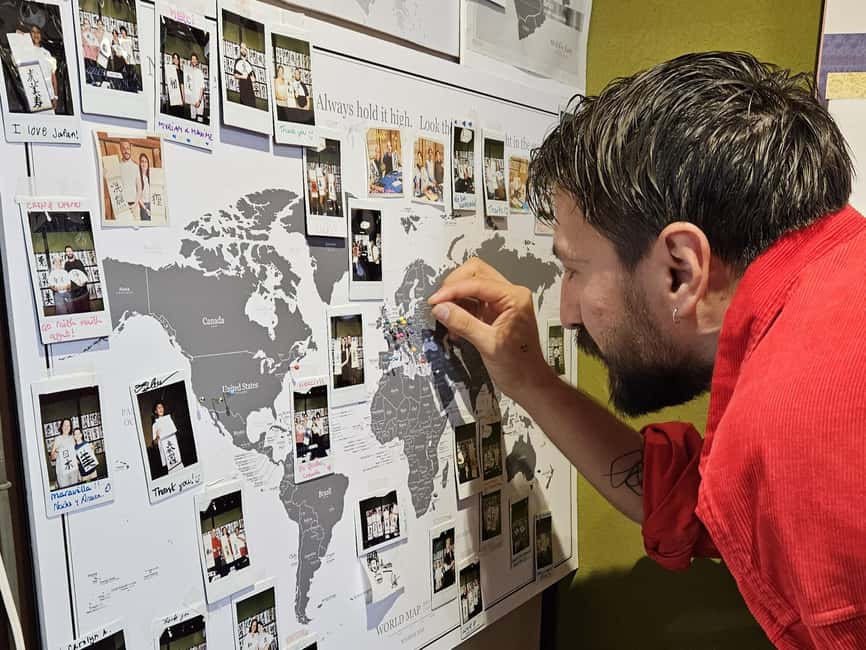
The meeting point is listed at 1-1-26 Nomachi, Kanazawa, Ishikawa 921-8031. You should find it fairly easily because calligraphy works are visible from outside the building. There is also a bus stop nearby served by the Kanazawa Loop Bus, which can make it simpler if you are moving around the city by public transit.
For timing, think of this as a break you build into your day, not something you squeeze between hectic stops. People described the class as calming and a good way to pause from sightseeing. If you go after a busy stretch, you will likely enjoy the contrast: controlled strokes, quiet concentration, and a finished keepsake at the end.
What to do before you arrive: give yourself a little buffer to find the building and get settled. What to do after: plan a simple plan, because you will want time to look at your finished scroll or fan and take photos without rushing.
Who Should Book This Mindful Calligraphy Trial, and Who Might Skip It
I think this is a great choice for first-timers who want something authentic and hands-on in Kanazawa. It is especially good if you care about learning basics properly, not just trying to copy a finished sample. The small-group feel and patient coaching are ideal if you want support while you learn something new.
It is also a solid option if you want a break with structure. The class includes tool explanations, stroke practice, and then a final artwork, so you always know what comes next.
Skip it if your group includes children under 5. The class also is not suitable for vegans, because calligraphy tools like brushes and ink traditionally include animal-derived materials. If that affects you, it is worth choosing a different creative workshop instead.
Should You Book? My Practical Take
Book it if you want a calm, skill-building experience where you leave with an actual artwork. The combination of real practice, supportive teaching (including English support), and a take-home hanging scroll or folding fan is hard to beat for a one-hour activity.
I would not book it if you are hoping to master calligraphy in a single session. You will learn the basics and make a piece, but it is still a trial lesson. If you can accept that, you will enjoy how much you can accomplish in just one quiet hour.
FAQ
How long is the calligraphy trial lesson?
The lesson is 1 hour.
What language support do you get during the class?
The instruction is available in English and Japanese.
What do I make, and can I take it home?
You will practice and then create your completed calligraphy artwork on a hanging scroll or a folding fan, which you can take home as a souvenir.
Is this class suitable for young children?
It is not suitable for children under 5 years old.
Is the class vegan-friendly?
No, vegans are not suitable because traditional calligraphy tools such as brushes and ink can contain animal-derived materials.
When might local children be present in the studio?
On Thursdays and Saturdays after 3:00 PM, the local calligraphy school is also in session, so local children may be in the studio.
More Temple & Shrine Tours in Kanazawa
- Kyoto: Fushimi Inari, Kinkakuji, Bamboo Grove 1 Day Bus Tour
★ 4.8 · 4,316 reviews - Kyoto: Tea Ceremony Ju-An at Jotokuji Temple
★ 4.9 · 3,207 reviews - Tokyo: Meiji Shrine, Asakusa, Skytree Bus Tour and Cruise
★ 4.7 · 1,986 reviews - Osaka/Kyoto:Kinkakuji,Arashiyama,FushimiInariShrine,NaraPark
★ 4.1 · 1,596 reviews
Latest write-ups near Kanazawa
- Explore Kanazawa Half Day Private Tour with Local Guide★ 5.0 · 69 reviews
- Kanazawa: Private Tour with Local Guide★ 4.9 · 70 reviews
- Kanazawa Half Day E-bike Tour★ 5.0 · 81 reviews
- Kanazawa 4hr Private Tour with Government Licensed Guide★ 5.0 · 89 reviews
- From Kanazawa: Shirakawa-go, Gokayama and Wood Carving Village★ 5.0 · 90 reviews
- Private Tour Kanazawa, Shirakawago, Hida Furukawa,Takayama★ 5.0 · 108 reviews
- Kanazawa Private/Group Walking Tour: Local & Major Highlight★ 4.8 · 113 reviews
- [One-day bus tour departing from Kanazawa Station] Shirakawa-go/Takayama tour platinum route bus tour★ 4.5 · 127 reviews
Calligraphy Classes, compared.
Calligraphy class at Buddhist temple in city center
Read our review →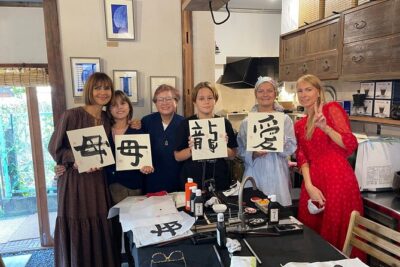
Let’s experience calligraphy in YANAKA, Taito-ku, TOKYO !!
Read our review →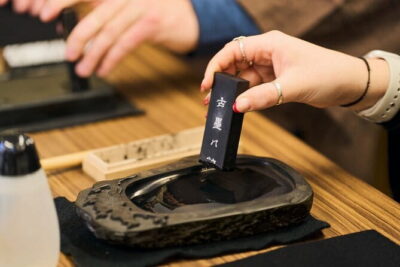
Calligraphy Workshop & Original T-Shirt Creation
Read our review →
An Amazing set of Cultural experience: Kimono, Tea Ceremony and Calligraphy
Read our review →Browse the lists this tour appears in