
Reviewed · CYCLING TOURS
2.5 Hour-Guided Cycle Tour in the Central Tokyo
What makes this tour interesting is the way it mixes Tokyo sightseeing with neighborhood lanes, so you spend more time moving through real residential streets than standing in crowds. I love the safe, easy setup with a helmet and a guide focused on keeping the ride comfortable. I also love the sightseeing balance, you get quieter stops like Imado Shrine plus the wow moment of riding with Tokyo Skytree in view.
One key consideration: this experience requires good weather, so you should be flexible if rain or poor conditions force a change. The upside is that the tour is short enough to still leave you plenty of free time later that same day.
Practical details before you commit
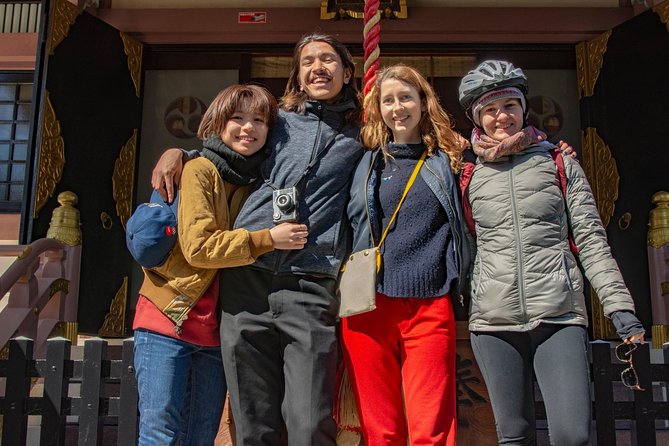
You meet your guide at Hikifune Station, and the tour runs about 2 hours 30 minutes. The guide name that shows up in the best feedback is Takeshi, and the vibe comes through clearly, calm, safety-first, and ready to help with photos. With a max of 6 travelers, you are unlikely to feel like you are in a big herd.
Key things you will actually care about
- Helmet provided for a calmer ride through busy areas
- Meet at Hikifune Station, then return to the meeting area after the loop
- Short 2.5-hour format, leaving the rest of your day open
- Free temple and shrine admissions at the included stops
- Folding rental bikes fit most riders between 140 and 180 cm tall
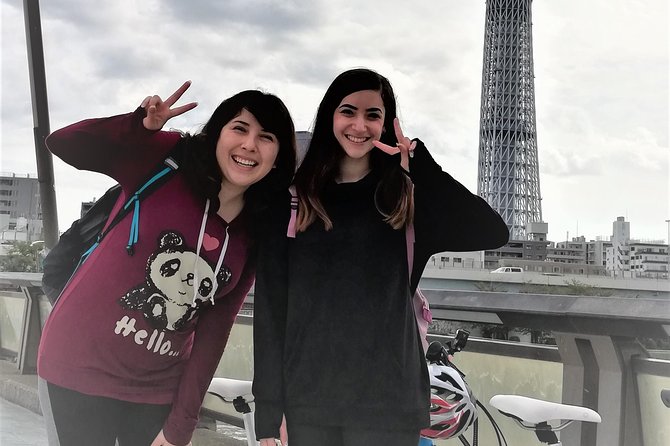
- Tokyo Skytree views from the street, including cycling under it
More Cycling Tours in Tokyo
- Tokyo Guided Small-Group Biking Tour
★ 5.0 · 1,250 reviews - Tokyo Great Cycling Tour
★ 5.0 · 811 reviews - Tokyo Top Highlights 3h Guided E-bike Tour
★ 5.0 · 714 reviews
Why this Tokyo backstreets bike tour works so well
This is the kind of half-day activity that makes you feel like you used Tokyo correctly. You see major landmarks, yes, but the real point is the route itself. By biking through central Tokyo backstreets, you get to notice the small stuff, storefront rhythms, neighborhood routines, and the way people actually move around the city.
The other big win is that it stays within a comfortable time window. At about 2.5 hours, you are not committing to a full day of logistics, and you do not feel rushed to cram in everything. You can do this in the morning or afternoon, then enjoy the rest of your day on your own terms.
Value for money: what $50.08 gets you in Tokyo
At $50.08 per person, the value comes from what is bundled, not just the route. You get guided cycling, helmet support, and rental folding bikes. The included sightseeing stops also list free admission, which matters because temples and shrines can add up when you start stacking tours.
Here is how I think about it as a travel buy: this is paying for two things that are hard to DIY. First, biking through Tokyo’s neighborhoods without turning it into a navigation headache. Second, having a guide who can point out what you are seeing, including details at the quieter religious sites and the craft stop.
It is not a luxury tour, it is a practical one. That is exactly why it is a good deal for many first-time visitors who want something active but not exhausting.
The ride setup: bikes, fit, and comfort tips
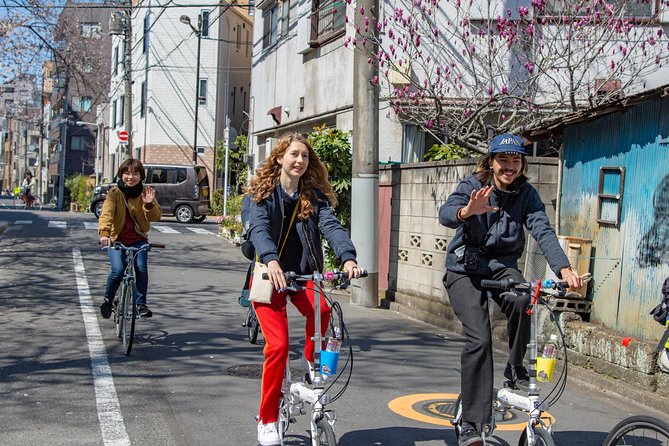
The tour uses folding bikes with 14 to 20 inch sizing. They are described as suitable for people between 140 and 180 cm tall, and you are asked to inform the operator if you are over 180 cm.
A few practical thoughts for your comfort:
- If you are between sizes, tell them early rather than guessing.
- If you plan to bring a tandem bike, you need to request it at least 3 days before your booking.
- Wear something you can move in. Even if it is a gentle ride, you will feel the wind and the stop-and-go rhythm.
One nice detail from real tour experiences: on a wet and cold day, the guide showed up prepared with raincoats and still kept safety as the priority. That does not mean the weather will always cooperate, but it does suggest you are not left to figure everything out on your own.
A change of pace from Tokyo:
- Mt Fuji and Hakone 1-Day Bus Tour Return by Bullet Train
★ 5.0 · 26,383 reviews - 1-Day Tokyo Bus Tour
★ 5.0 · 14,250 reviews - Tokyo: TOKYO SKYTREE® Admission ticket
★ 4.5 · 11,192 reviews - Tokyo: teamLab Planets TOKYO Digital Art Museum Entry Ticket
★ 4.6 · 9,779 reviews
Where you start and how the timing feels
You start by meeting your guide at Hikifune Station. Then you ride, stop for sightseeing, and finish back at the meeting area. The total time is about 2 hours 30 minutes, and you should plan the rest of your day as free time.
This matters because Tokyo rewards unstructured time. After the ride, you can hop to nearby neighborhoods, eat street snacks, or revisit a spot you liked without having to follow a strict tour schedule.
Stop-by-stop: what you will see and why it matters
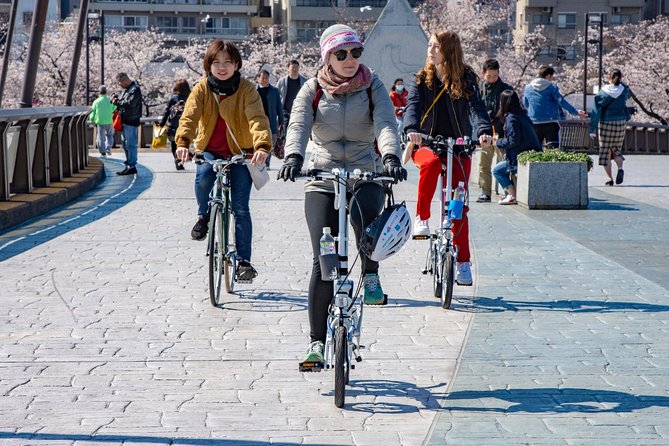
The itinerary is built around variety, river scenery, religious sites, a craft shop, and a neighborhood look at daily life. You also cycle through classic Tokyo viewing zones, but from street level, not from inside a vehicle.
Suida River bank and the spring sakura mood
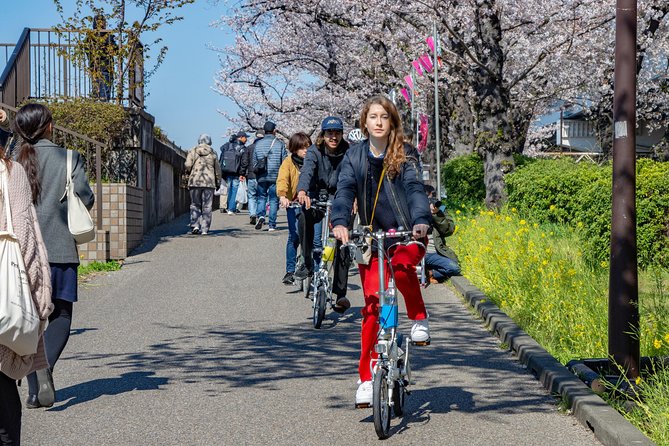
The ride begins along the bank of Suida River, an area known for cherry blossoms in spring. Even if you are not traveling during peak bloom, river banks still give you a calmer visual break from dense city streets.
Practical value: riding beside water usually makes the pace feel smoother. It also sets you up for some scenic contrast before the temples and shrines.
Honryuin Matsuchiyama Shoden, part of Sensoji
Next is Honryuin Matsuchiyama Shoden, described as part of Sensoji, which dates back to 595. This stop is short, around 20 minutes, and the focus is on the kind of icon details you might miss if you are just rushing through.
You will see images involving a daikon (Japanese radish) and a pouch. The symbolism shared here points to minds trapped in deep ignorance. It is the sort of religious detail that turns a quick stop into a memorable one because you start reading the place instead of just walking through it.
One drawback to know: because it is part of a larger sacred complex, it can feel more like a sightseeing site than a quiet retreat. The advantage is that the guide helps you aim your attention.
Imado Shrine: a power spot for love and marriage
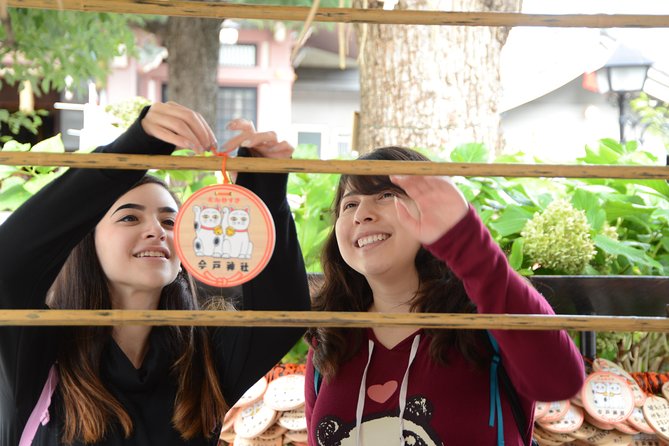
After that comes Imado Shrine, founded in 1063 and now popular as a power spot, especially for people seeking lovers or marriage partners.
You get about 15 minutes here. That is enough time to slow down, look around, and participate if you want to. The value of this stop is not only the shrine itself, it is the way a local “power spot” culture shows up in how visitors treat the place.
Consideration: since this is a popular shrine, you may notice more visitors at certain times. Keep your expectations flexible and use the guide to keep your timing smooth.
Senso-ji Temple walk, plus bike parking logistics
Then you head to Senso-ji Temple for about 30 minutes. The plan includes parking bikes near the temple and strolling inside.
This is one of Tokyo’s anchors for a reason. You will get the big-feeling temple atmosphere, but unlike a typical walking-only visit, you also get the benefit of seeing the surrounding district from the street as you approach.
What I like about having this in a bike tour is simple: it breaks up the standard tourist flow. Instead of arriving only as a pedestrian, you approach with momentum, see how the neighborhood transitions around the shrine area, then slow down once you are inside.
Asakusa Amezaiku Ameshin: craft candy with artistry
Next is a traditional craft stop at Asakusa Amezaiku Ameshin, a Japanese candy shop where you can watch how the candies are made. You get about 15 minutes.
If you like food crafts, this is a great breather. You are not just buying a souvenir you can also watch the making process, and that turns it into a moment you remember, not just a bag you carry.
Practical note: since the tour includes the idea of street stall food you can buy for fueling, it helps to carry cash and a little patience. Craft shops can get popular quickly.
Sumida River crossing and river views
There is also time for cycling across a bridge on the Sumida River, with wonderful landscape views.
This segment is a classic Tokyo contrast. You get that skyline and river rhythm, then you drop back into neighborhood streets right after, so the scenic payoff stays fresh rather than feeling repetitive.
Cycling under Tokyo Skytree
A standout moment is cycling under the Tokyo Skytree. The route gives you multiple perspectives, not just a one-and-done view.
This is where the tour feels like it earns its place on your itinerary. Skytree is huge, and it is easy to look at it and forget it. From the bike, you feel your proximity, you experience it at street level, and your photos tend to look more interesting because you are not framed from the same angle as everyone else.
In reviews, the guide is also known for helping with photos, including for solo riders, so if you want a proper Skytree shot, this is a good moment to ask.
Kyojima Minami Park: old-fashioned daily life
Finally, you ride to Kyojima Minami Park for about 20 minutes. The description focuses on an old-fashioned shopping area where you can see daily life in Japan.
This is the part that often makes a cycle tour feel worth it. You leave the most famous temple zone and the biggest landmark zone, then end in a place that feels like a neighborhood, not a stage.
Practical value: this is a good spot to pay attention to how people shop, snack, and chat. Even short stops can teach you how the city functions on a normal day.
What makes the guide experience the difference
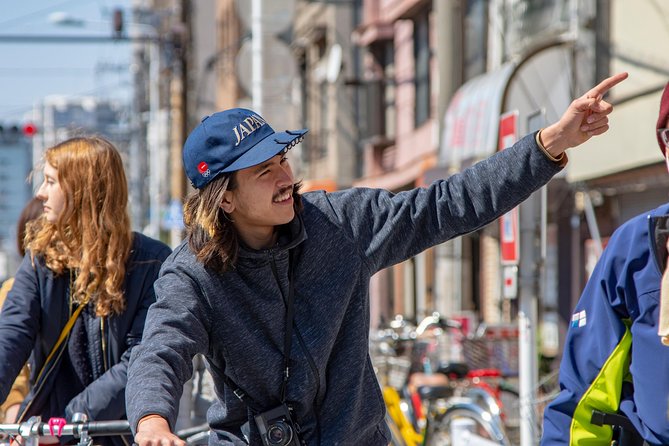
The strongest theme in the best feedback is the guide. People highlight Takeshi for local knowledge, a safety-first approach, and a ride pace that feels right for recreational cyclists.
That is exactly what you want when cycling in Tokyo. Traffic can be intense, and crossing busy zones without stress matters. A good guide reduces the mental load. You spend energy enjoying the city instead of worrying about turns, signals, and timing.
If you are a solo traveler, that photo support is a real plus. If you are traveling with family, the tour’s gentle style is a big reason it works, especially when kids or teens can ride comfortably.
Tips to get the most out of the backstreets route
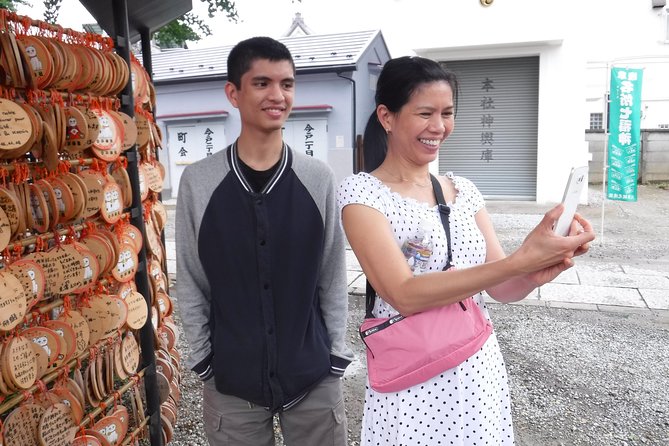
You do not need to overplan, but these small moves help:
- Bring layers. Even a short ride can feel cool with wind and river air.
- Keep a phone ready for quick photos. The Skytree segment and river crossing give you good angles, and stopping for pictures is easier when you are prepared.
- Budget for small purchases at street stalls. The tour includes an opportunity to see street stalls selling authentic Japanese foods, and you can buy what you want to keep fueled.
- Wear comfortable footwear. You will park bikes and stroll inside temple areas.
Who should book this tour
This works best if you want:
- A short, active way to see central Tokyo without a full-day commitment
- A mix of landmark moments and quieter cultural stops
- A guide to help you move safely and notice details
It is also a strong option if you prefer small group energy. A maximum of 6 travelers makes it easier to keep the ride comfortable and the guide’s attention more personal.
Who might want to skip it
If you know you cannot ride a bicycle for about 2.5 hours, or if your schedule is locked down with no flexibility, the weather requirement could be a deal-breaker. Since it requires good weather, you will want backup options in your day planning.
Also, check the bike fit guidance. If you are outside the 140 to 180 cm range, the operator asks you to inform them in advance so they can plan the right setup.
Should you book this Tokyo backstreets bike tour?
I think you should book it if you want an afternoon or morning that feels like local Tokyo, with temples, shrines, river scenery, and Tokyo Skytree views all tied together by an easygoing bike route. At this price, the value is strongest when you treat it as guided transport plus curated neighborhoods, not just a list of stops.
You might skip it if you only want big, famous sights and do not care about smaller neighborhood streets, or if weather risk would stress you out. But if you are open to riding through central Tokyo’s backstreets, this is one of the more satisfying ways to see multiple districts in a single go.
FAQ
How long is the guided cycle tour?
The tour runs for about 2 hours 30 minutes.
Where do I meet the guide?
You meet your guide at Hikifune Station. The tour then ends back at the meeting point area in Higashimukōjima.
What is the price per person?
The price is $50.08 per person.
Are helmets provided?
Yes, you are provided a helmet and should wear it for safety.
What type of bikes are used, and will they fit me?
The tour uses rental folding bikes. They are described as suitable for people between 140 and 180 cm tall. If you are over 180 cm, you should inform the operator priorly. Tandem bikes are possible if you request them at least 3 days before.
How many people are on the tour?
The maximum group size is 6 travelers.
What happens if the weather is poor?
This experience requires good weather. If it is canceled due to poor weather, you will be offered a different date or a full refund.
Latest write-ups near Tokyo
- Tokyo Nights: Shibuya Photo Adventure★ 5.0 · 20 reviews
- Wagyu & Sake 8 Course Tasting Dinner in Shinjuku★ 4.9 · 20 reviews
- Making Japanese desserts Nerikiri & drinking matcha in Tokyo★ 5.0 · 20 reviews
- Mt. Fuji 5th Station, Owakudani Ropeway, Pirate Ship plus Outlet shopping!★ 4.5 · 20 reviews
- Japanese Whisky Hunting《HIGH-QUALITY-ONLY》Rare Tasting Class★ 5.0 · 20 reviews
- Kintsugi Experience with Arita Ware in Tokyo (English Guide)★ 4.8 · 20 reviews
- This is Asakusa! A Tour Includes the All Must-Sees!★ 5.0 · 20 reviews
- Ebisu Local Food Tour: Shibuya’s Most Popular Neighborhood★ 5.0 · 20 reviews
Cycling Tours, compared.
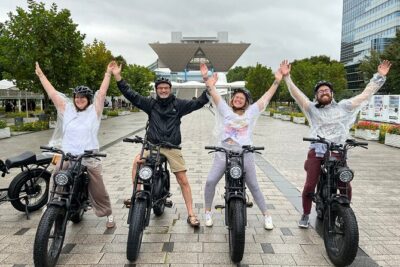
3h Tokyo E-Bike Tour: Hidden Gems, and Local Life with guide
Read our review →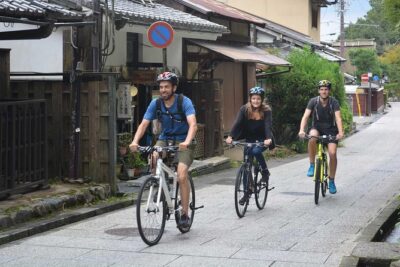
Arashiyama Bamboo Forest & Hidden Gems Bike Tour (Early Bird)
Read our review →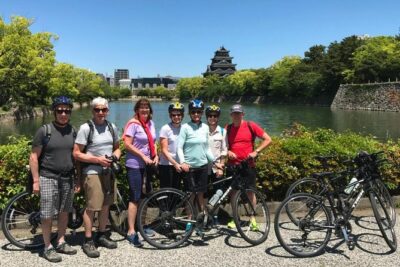
Hiroshima in a Nutshell: Morning Bike Adventure
Read our review →Browse the lists this tour appears in