Reviewed · TICKETS
Tokyo: TOKYO SKYTREE® Admission ticket
Tokyo Skytree is interesting because you get a true sense of Tokyo’s scale fast, with observation decks stacked high above the city. I especially love the 360-degree views from the Tembo Deck at 350m, with windows all around so you can scan the Sumida River and landmarks in every direction. I also like the extra-feel of the Tembo Galleria at 450m, where the spiraling ramp makes the city look even more dramatic.
The main drawback to plan for is visibility. Weather and haze can blur distances, so your odds of spotting far sights like Mount Fuji depend on conditions. On busy days, you’ll also want a little patience for entry and elevator lines.
Key points before you go
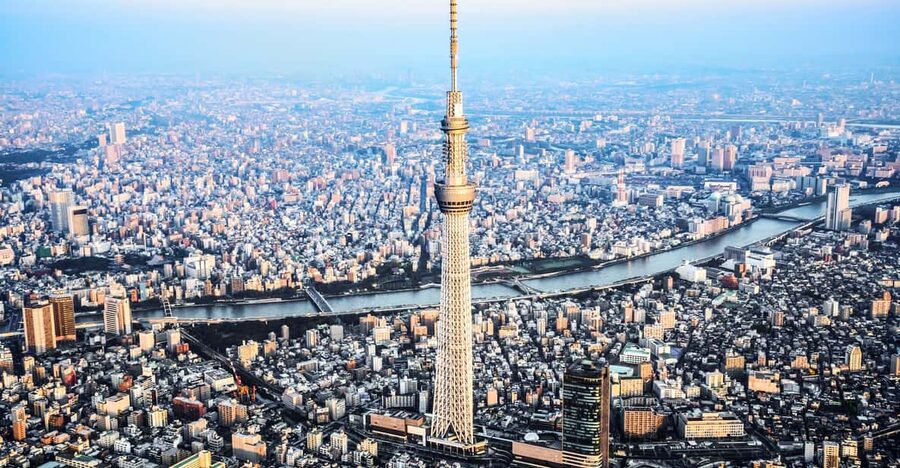
- 350m Tembo Deck views with windows around the whole circular deck, so you can turn in place and compare directions
- Optional 450m Tembo Galleria with a spiraling ramp that adds a more dynamic, “down-and-around” perspective
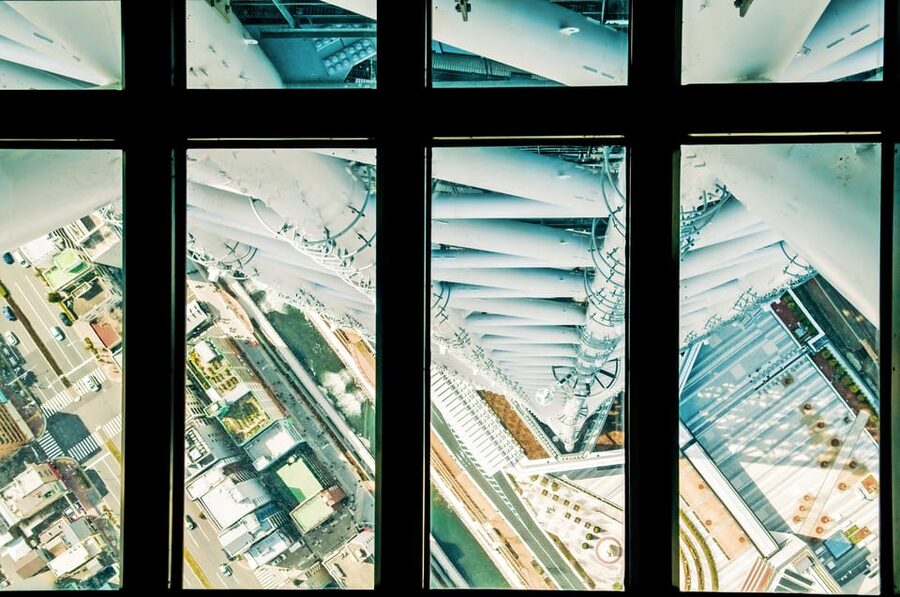
- Floor 340 glass flooring for that stomach-flutter look straight down (expect it to be short, but memorable)
- Skytree Cafes at 340 and 350 so you can take breaks without leaving the viewpoint area
- Tokyo Solamachi inside Skytree Town, with lots to do after you come down
Tokyo Skytree at 350m, a fast route to big-picture Tokyo
Tokyo Skytree is the kind of activity that pays off even if you only have part of a day. You trade time on the ground for one clean, high-up viewpoint where Tokyo stretches out in every direction. From up there, Tokyo stops feeling like a maze and starts feeling like a map you can actually read.
I like that the experience moves in clear steps. You go from ticket exchange, to elevator, to the 350m deck, then you can add the 450m Galleria if you want more height and a different camera angle. It’s also a nice “vacation rhythm” when jet lag hits, because you can keep things simple: look, walk, pause, repeat.
One practical thing I focus on is how people actually use the decks. The Tembo Deck is built for turning slowly and scanning landmarks. The Galleria is built for moving with purpose, especially if you like photos or you want that sense of altitude while still seeing the city move below.
Also on the shortlist for Tokyo:
- Mt Fuji and Hakone 1-Day Bus Tour Return by Bullet Train
★ 5.0 · 26,383 reviews - 1-Day Tokyo Bus Tour
★ 5.0 · 14,250 reviews - Tokyo: teamLab Planets TOKYO Digital Art Museum Entry Ticket
★ 4.6 · 9,779 reviews
Tickets, voucher exchange, and getting to the right floor
Your ticket is tied to a simple on-site workflow. You exchange your voucher at the ticket counter on the 4th floor of Tokyo Skytree and collect your admission ticket there. The coordinates for the area are 35.71006269999999, 139.8107004, which is handy if you’re navigating by map.
The experience is set up to be low-stress compared to showing up cold. The listing notes skip-the-ticket-line benefits, and you can feel the effect once you’re inside, because you’re not wasting time hunting down which counter does what. Still, you should expect some waiting for elevator movement up to the decks. Even when everything is well-run, elevators can only move so fast.
Timing matters. If you’re going at dusk or night, you’ll usually get better light for photos, but that can also mean higher demand. If you go earlier, you’ll likely have an easier time finding a comfortable viewing spot and you’ll spend more time actually looking instead of waiting.
Tembo Deck (350m) and the 360-degree view that makes Tokyo click

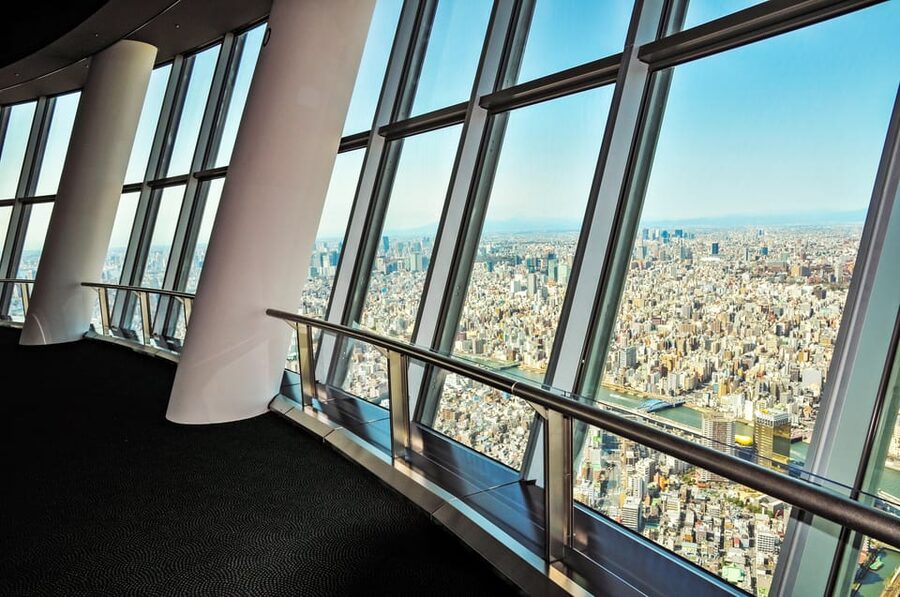
The Tembo Deck is the core payoff. You ride the elevator up to the 350m Tembo Deck and step onto a large circular space with windows on all sides. That layout is great if you want to orient yourself quickly. You can pick one direction, spend a minute or two, then rotate to the next without constantly relocating.
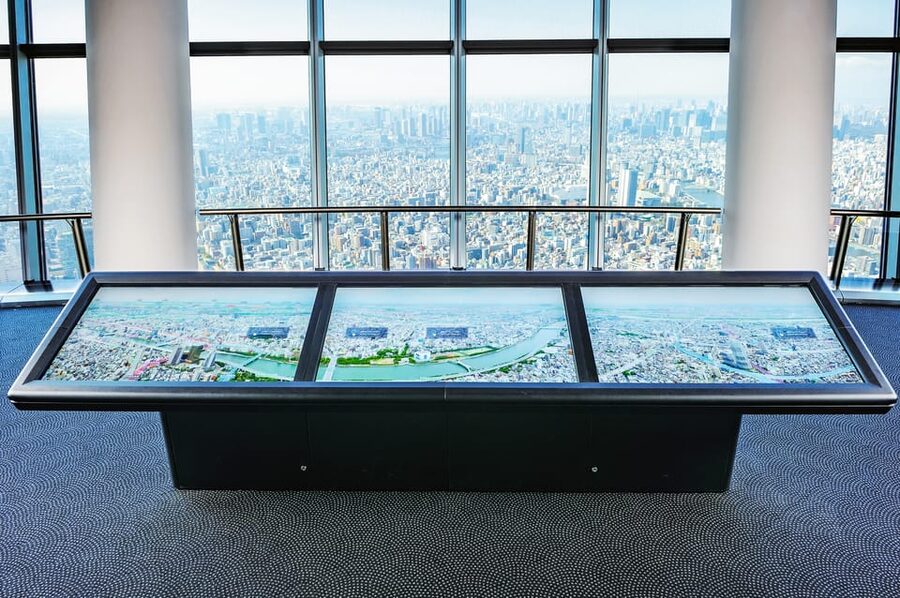
What you’ll look for depends on the day, but there are interactive displays to help you identify major sights. From this height, you can scan the winding Sumida River, try to spot big stadium shapes like Tokyo Dome, and search toward Tokyo Bay and Tokyo Tower. With clear weather, Mount Fuji can show up, but don’t treat that as guaranteed. It’s a “when the air cooperates” perk.
Here’s how I’d use the Tembo Deck to get the best experience:
- Start with one direction long enough to match what you see to the map in your head.
- Then do a slow circle, letting your eyes catch famous forms and river lines.
- Save your most crowded-time photos for later, after you’ve already gotten your bearings.
Some visitors also use the Tembo Deck area to handle breaks well, because you have on-site food options right in the viewing zone.
Tembo Galleria (450m) spiral ramp, worth paying for or not?
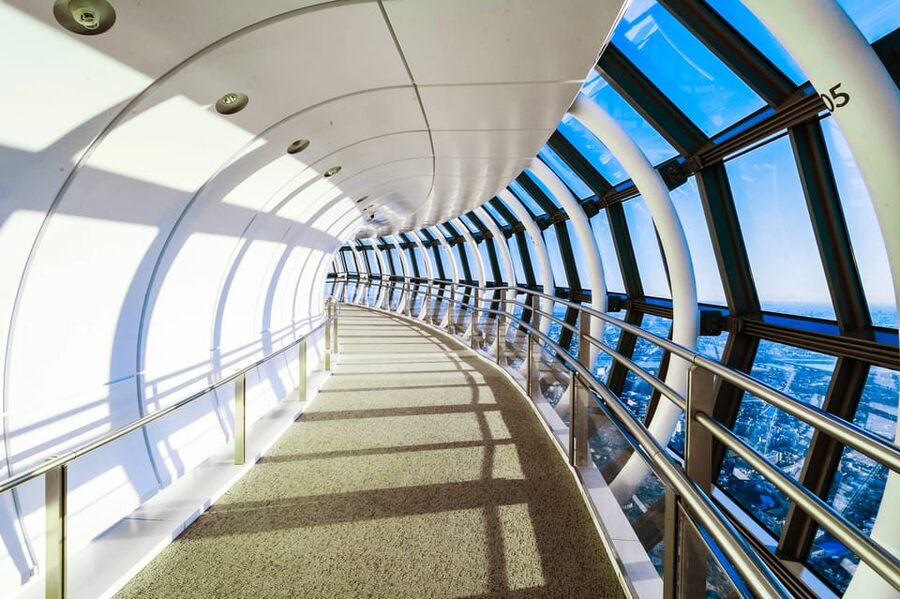
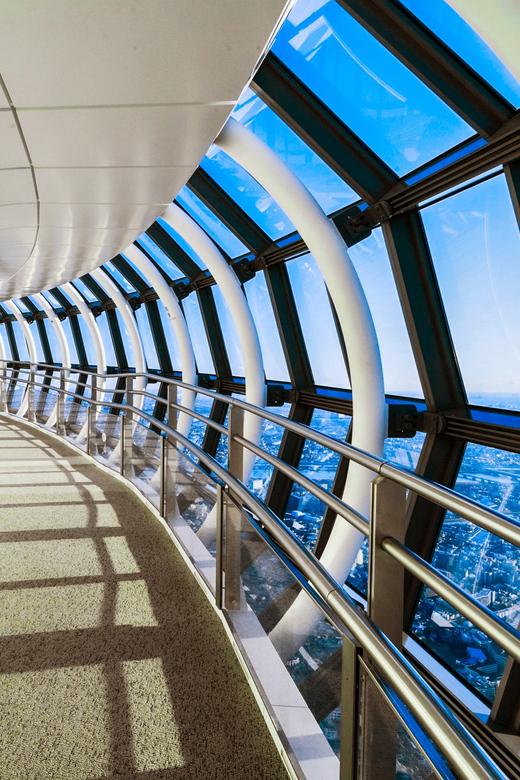
If you choose the option that includes it, the Tembo Galleria at 450m is the way to see Tokyo from higher up and at a different angle. The Galleria is described as a long, sloping spiral ramp, which means you’re not just standing and looking. You’re walking through a continuous viewpoint experience, which can make photos feel easier because the background changes as you move.
In practice, the Galleria tends to be most satisfying when:
- you like photographing from multiple angles,
- you want more “top-down” drama from the ramp,
- and your timing gives you clearer light than the lower deck might have.
But it’s also fair to ask if it’s your best value. One person felt the extra cost for the Galleria was not radically different from the main deck, except for looking downward more. If budget is tight, you can still have a full “Tokyo in one view” moment from the 350m deck. My advice is simple: if you’re the type who loves height and photos, add it. If you’re visiting for one big view and prefer to keep it efficient, the Tembo Deck alone can be enough.
A change of pace from Tokyo:
- Mt Fuji & Hakone Cruise, Drum Show Bullet Train 1 Day from Tokyo
★ 4.0 · 7,413 reviews - Tokyo: Sumo Show Experience with Chicken Hot Pot and a Photo
★ 4.8 · 6,678 reviews - Tokyo: Shinjuku Food Tour (13 Dishes at 4 Local Eateries)
★ 5.0 · 6,603 reviews - Tokyo Mt Fuji 5th St & Hakone Cruise Bus Tour w/Bullet Train
★ 4.4 · 5,024 reviews
Floor 340 glass flooring, plus Skytree Cafes that keep you from rushing
On the way back down, you’ll pass through other floors with small moments that make the whole visit feel less like a single elevator trip. There’s a Floor 345 gift shop stop, and then you’ll reach Floor 340, where the glass flooring lets you look straight down from above the tower’s interior.
I like glass-floor moments because they force your body into the present. It’s quick, it’s physical, and it cuts through the “I’ve seen this view already” feeling. The caution is that the effect is only as intense as the specific glass section you stand on. Some people love it instantly, while others find it short and a little less of a full thrill attraction than they hoped.
Two cafés are also inside the viewpoint areas, which is a big deal. You can eat without leaving the skyline:
- Skytree Café 350, on the 350th floor, is positioned as Japan’s highest café. It’s a great option when you want drinks and light snacks with uninterrupted views.
- Skytree Café 340 is on the 340th floor, with seating for 64 guests, which helps if you want a slightly slower pace and a more relaxed break.
If you’re the kind of traveler who hates wasting time searching for food after a major viewpoint, this setup is genuinely useful. You stay in the experience zone instead of breaking the day into two separate missions.
Sunset and night skyline tips, plus how to think about Mount Fuji
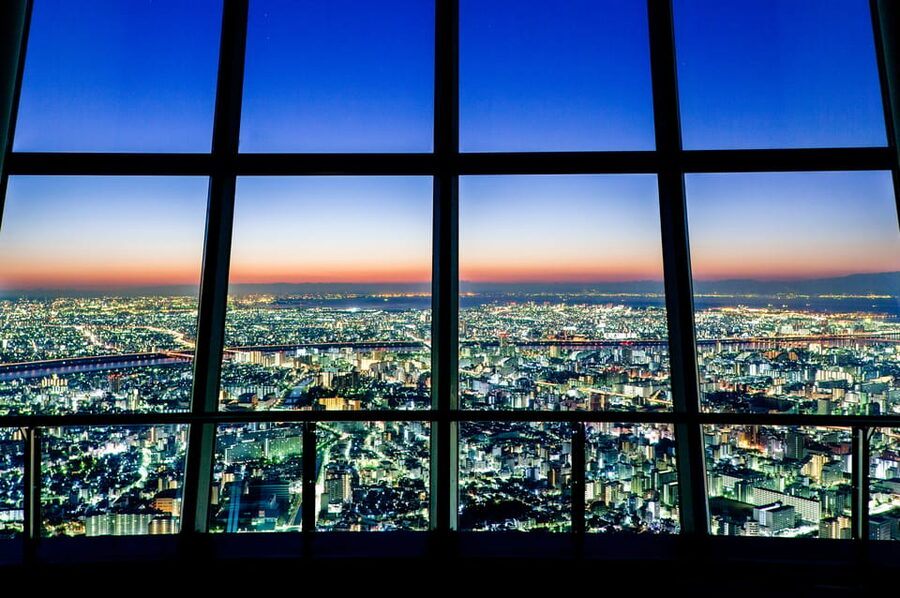
If you care about light, you’re going to think about your time slot. Dusk is a favorite because it gives you a transition: bright city details first, then the gradual shift into darker skies with lights turning on. More than one person described night views as the moment that feels like the city turns into a scene.
My practical suggestion is to plan around your photo priorities:
- Want crisp daylight structure and easier skyline shapes? Aim for earlier slots.
- Want the city lights and that slow neon glow effect? Aim for late afternoon into evening.
- If you want Mount Fuji, treat it as a conditional bonus. Visibility improves when the air is clear, and haze or clouds can wash out distance.
One useful insight I take from these kinds of skyline experiences is that the upper deck can feel less forgiving when visibility is poor. Some visitors noted clearer views of distant scenery from the lower level when the upper deck got hazier. That doesn’t mean the higher level is “worse,” it just means you should stay flexible: if it’s cloudy up there, enjoy the views you can get instead of fixating.
Also, watch for signs about low visibility. When the staff flags conditions, it’s not just a formality. It’s there so you understand what you can realistically expect from that day’s air.
Tokyo Solamachi after your views, a smart way to fill the rest of the day
A big reason Tokyo Skytree works well as a one-day activity is the area around it. Once you come down, you can keep going inside Tokyo Skytree Town at Tokyo Solamachi.
This complex has 300 shops and restaurants plus a planetarium, so you have options whether you want snacks, shopping, or something more calm after standing in view lines. I like using this as a gentle landing pad for your afternoon. You get the big skyline moment first, then you can shift to browsing without pressure.
If you want to make your day even easier, think about ordering your time like this:
1) go up and get your main views,
2) come down and take a snack break,
3) then wander Solamachi based on your energy level.
This keeps the visit from feeling like a rush job. It also helps if the weather changes while you’re up there, because you still have a full plan once you’re back on the ground.
Practical logistics that save time and stress
Even with skip-the-ticket-line benefits and friendly on-site help, you can still lose time if you’re unprepared. Here are the moves that usually work best for a smooth visit.
First, arrive with a clear expectation: you’ll likely spend about 1 to 2 hours up there if you do both levels and take photos. If you’re adding cafés and shopping time, you’ll stretch that longer. Plan a buffer for elevator rides, especially around popular times like sunset and evenings.
Second, don’t try to sprint. The viewing decks are about scanning. When you move fast, you end up with more “seen it” photos and less “I understand Tokyo now” comprehension. Take a slower circuit first, then do a second pass if you want specific landmark shots.
Third, use the staff help. Even without a full guided tour, the on-site team can point you toward the right floors quickly and explain what’s ahead. A recurring pattern in experiences like this is that staff friendliness and direction makes the difference between feeling rushed and feeling in control. Names that came up in recent accounts include Anna and Ali, and those kinds of friendly interactions usually mean you’ll have less confusion about where to go next.
Finally, keep your expectations realistic about the glass floor and the crowding. The elevator is quick and the organization is efficient, but busy periods mean you might not get the exact front-row angle you want.
Value check: is a $13 ticket a smart buy for this view?
At about $13 per person for admission to the Tembo Deck (350m), this is one of the more cost-effective ways to get high-level skyline viewing in Tokyo. You’re paying for height, design, and a full circulation experience, not just a platform with a single view angle.
The value is even better when you treat it like a full half-day plan. You’re not only purchasing the elevator ride. You’re also getting access to a viewing deck designed for orientation, optional higher-level views, indoor breaks with cafés, and nearby time in Tokyo Solamachi with lots of choices.
If you’re deciding between Tembo Deck only versus adding the Galleria, here’s the value logic:
- If you want maximum height and a more “movement-based” viewpoint experience, add the 450m Galleria.
- If you want one big 360-degree moment and you’d rather save money or avoid extra crowding, the 350m Tembo Deck can still deliver the core wow.
The glass floor is a plus, not the main reason to go. Plan around the 360-degree views first, and you’ll feel satisfied even if conditions are less than perfect.
Who should book, and who might skip the second level
This ticket is a great fit if you:
- want a clear orientation view of Tokyo in a short amount of time,
- like skyline photos and don’t mind crowds at peak hours,
- enjoy high-up moments like glass-floor sections,
- or you want an easy “one-stop” plan that includes dining and shopping after.
You might consider Tembo Deck only if you:
- hate heights and prefer the main level only,
- have a tight budget,
- or you’re concerned that the extra Galleria cost might not feel meaningfully different for you.
On the flip side, if you’re chasing the best angles and you like the idea of a spiraling ramp with a more dynamic viewpoint, the Galleria is the add-on that can make the experience feel more than one simple panorama.
Should you book this Tokyo Skytree admission ticket?
Yes, I’d book it if you want a high-value way to understand Tokyo fast from a real observation tower. For about $13, the Tembo Deck alone gives you the essentials: 360-degree views at 350m, helpful displays, and an experience zone that includes cafés.
Choose the Tembo Galleria too if you’re a photo person or you want the feeling of going higher and looking down more. Skip it if you want the best money-to-time ratio and you prefer keeping things simpler.
If your travel dates have questionable weather, don’t cancel your day. Just be ready for visibility to vary. Plan your visit for sunset or night if you can, because the payoff is usually the lights turning on across the city.
FAQ
What is included in the Tokyo Skytree ticket?
Admission to the Tembo Deck at 350m is included. Admission to the Tembo Galleria at 450m is included only if you select that option.
How high are the observation decks?
Tembo Deck is at 350m, and Tembo Galleria is at 450m.
Where do I exchange my voucher?
You exchange your voucher at the ticket counter on the 4th floor of Tokyo Skytree, then collect your admission ticket the day of your visit.
Is the ticket good for just one day?
Yes. The ticket is valid for 1 day, and you should check availability to see the starting times.
Do I need to wait in a long ticket line?
The activity notes that you can skip the ticket line.
Is there glass flooring, and which floor is it on?
Yes. There is glass flooring on Floor 340, where you can look straight down.
Are there places to eat inside the tower?
Yes. There are two Skytree Café locations inside the Tembo Deck area: Skytree Café 350 and Skytree Café 340.
What is Tokyo Solamachi?
Tokyo Solamachi is a complex within Tokyo Skytree Town with 300 shops and restaurants, plus a planetarium.
What languages can staff help with?
The host or greeter is listed as English and Japanese.
Can I combine this with TeamLab Planets TOKYO?
There is a special combo ticket option that combines Tokyo Skytree views with TeamLab Planets TOKYO.
What is the cancellation policy?
This activity is listed as non-refundable.
Latest write-ups near Tokyo
- Harajuku Private Tour: Kawaii Fashion & Animal Cafe Included★ 5.0 · 69 reviews
- Mt Fuji Customizable Private Tour English Speaking Driver Pick-up★ 5.0 · 69 reviews
- Tokyo Night Cooking Class: 5 Home-Cooked Japanese Dishes★ 5.0 · 70 reviews
- Tokyo: Sumida Aquarium Entry Ticket★ 4.6 · 70 reviews
- Private Customizable Walking Tour of Tokyo★ 5.0 · 70 reviews
- Official Japan Go-Kart Through Tokyo Bay / Ginza (IDP Required)★ 4.5 · 71 reviews
- Wagyu Beef and Sake Pairing Foodie Tour in Tokyo★ 5.0 · 71 reviews
- Experience Big soba knife Soba Making Class in Tokyo Kappabashi★ 5.0 · 71 reviews
Tickets, compared.
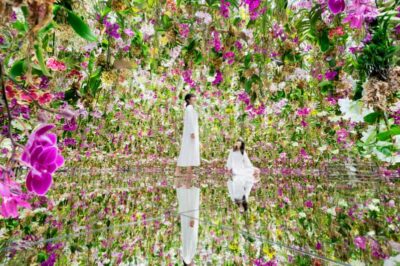
teamLab Planets TOKYO Digital Art Museum Entry Ticket
Read our review →
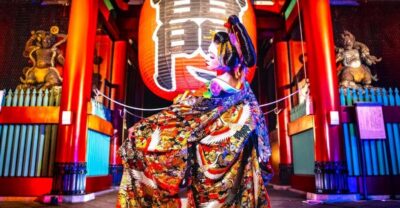
Japanese Dance Cabaret Theater Asakusa-Kaguwa Ticket
Read our review →