
Reviewed · HIROSHIMA TOURS
The Journey of Hiroshima from Tragedy to Peace
Hiroshima can be heavy to visit, but this guided walk is the kind that turns a list of monuments into a clear story of tragedy and peace. I love how the tour links the city before, during, and after the bombing into one timeline, and I love that it gets you to the Atomic Bomb Dome without rushing past the meaning. One drawback to consider: it is not suitable for people with mobility impairments, since it involves walking and time spent standing.
You’ll meet your guide at the Gates of Peace in front of the Italian restaurant Mario, and you’ll hear the material in English from an experienced professional with a degree in Peace Studies. Expect the tone to be respectful and emotional, not sightseeing-light, so bring your patience and your best listening ears.
Key highlights you should know first
- Gates of Peace start: a simple meetup point in the heart of the memorial area, then you’re guided right into the message.
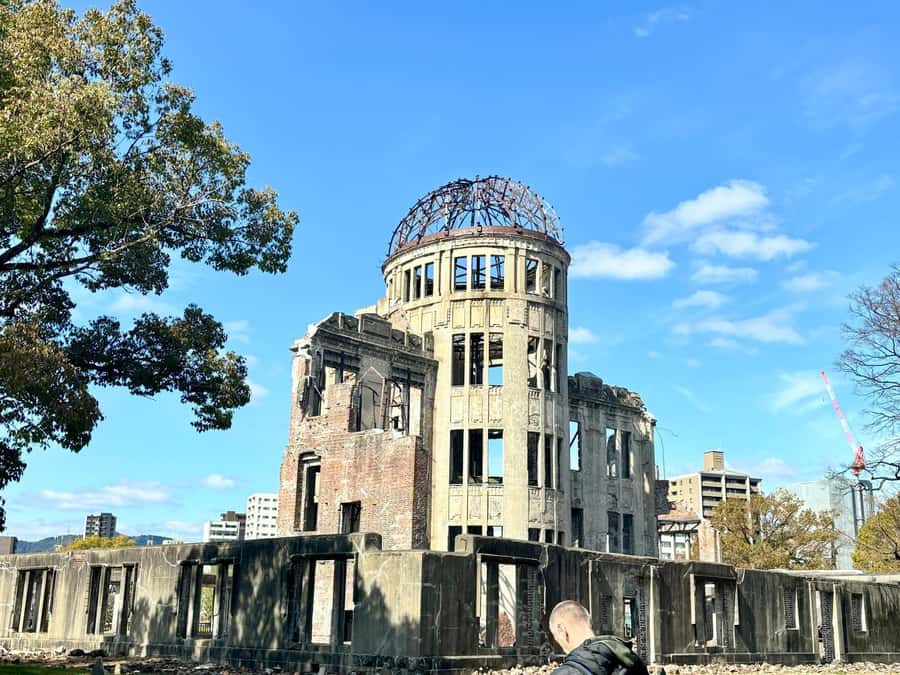
- Atomic Bomb Dome, UNESCO site: the tour treats it as more than a photo stop, with context on why it survived and what it means.
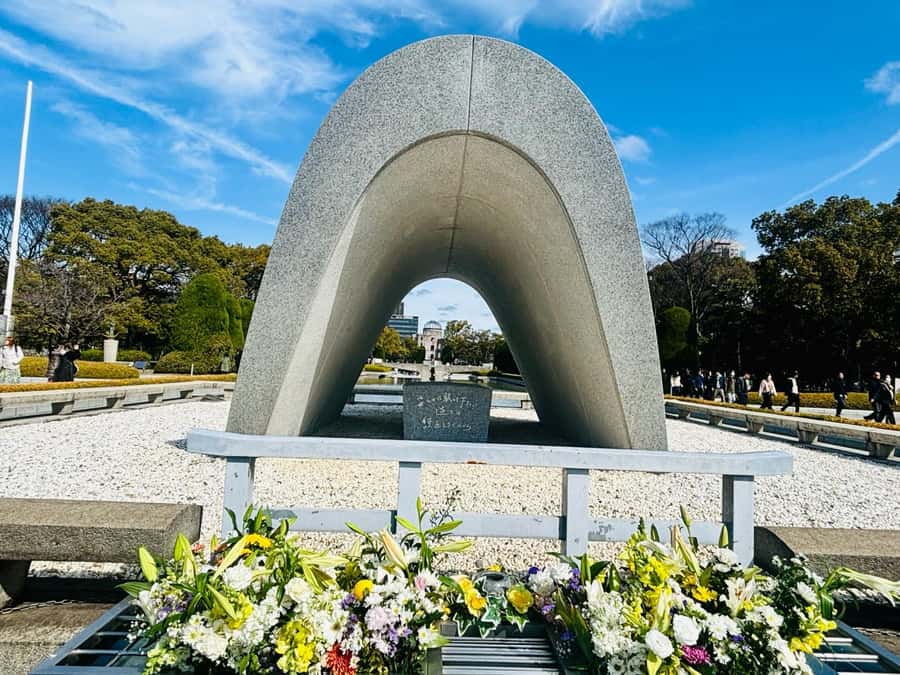
- Peace Cenotaph with the names and eternal flame: you get the promise behind the memorial, not just the sight.
- Children’s Monument and paper cranes: a focus on lives affected, including the legacy of Sadako Sasaki.
- Korean Monument recognition: it acknowledges Korean victims as part of the shared narrative.
- Ring the Peace Bell: you literally join the call for peace, then continue on to the hypocenter for reflection.
Walking from grief to hope in Hiroshima Peace Memorial Park
This is not a tour that tries to soften the facts. Instead, it helps you stay steady as you move through space and time. You start at the Gates of Peace, where the tone shifts from ordinary street life to a memorial zone that asks you to slow down and pay attention.
I like that the pacing is built around moments, not just checkpoints. You have time to look, take photos, and ask questions, which matters here because the details are what make the impact stick. And if you’re someone who worries you might miss the meaning while reading signs, a good guide can turn those signs into a story you actually understand.
Also on the shortlist for Hiroshima:
- Peaceful Hiroshima & Miyajima UNESCO 1 Day Bus Tour
★ 5.0 · 5,309 reviews - Hiroshima: Hiroshima and Miyajima UNESCO Sites 1-Day Tour
★ 4.9 · 2,330 reviews - Hiroshima / Miyajima Full-day Private Tour with Government Licensed Guide
★ 5.0 · 1,298 reviews
Meeting at the Gates of Peace, then setting the tone
You’ll meet your guide at the Gates of Peace in front of the Italian restaurant Mario. That is convenient if you want an easy landmark rather than hunting for a van at the far edge of the park. From there, you’re not left to figure out what to see first.
This opening also does something useful: it gives you a clear frame. You’re not just walking around with a map. You’re walking with an explanation of how the memorial grounds communicate Hiroshima’s commitment to peace.
Mother and Baby in Storm, the first emotional anchor
Your first stop is the Mother and Baby in Storm statue. This is one of those pieces that hits fast because it’s human and immediate. Instead of beginning with dates and damage, it starts with compassion that emerged in the aftermath, which is a reminder that even in catastrophe, people cared for each other.
Practical tip: don’t rush the first stop. If you’re trying to process a lot of information, starting with emotion can actually make the later historical details easier to hold.
Dr. Marcel Junod Memorial, humanitarian action after the blast
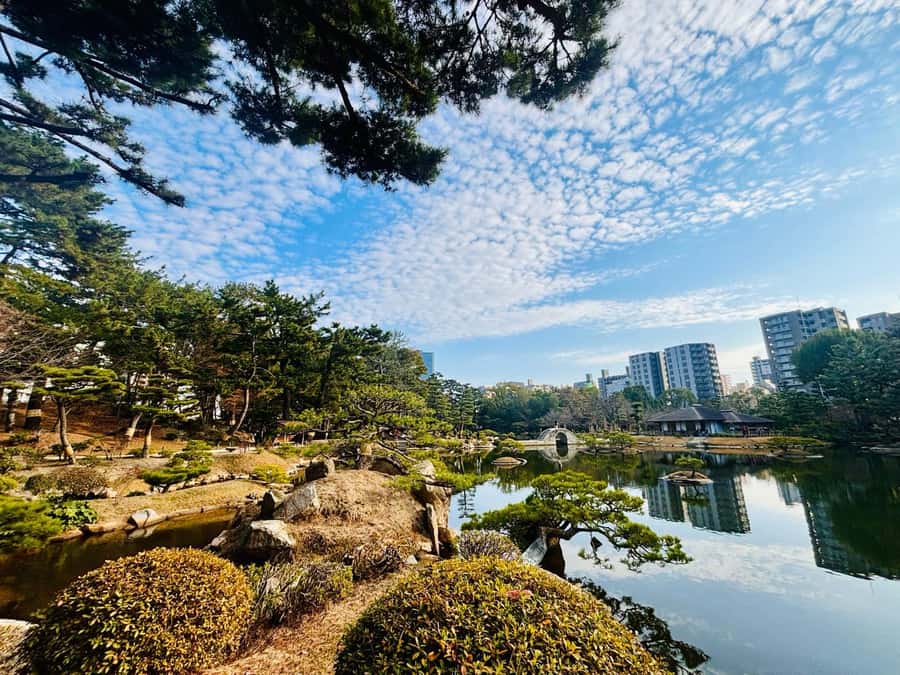
Next you’ll visit the Dr. Marcel Junod Memorial. This honors a Swiss physician who became known for his humanitarian work after the bombing. I like this stop because it broadens the story beyond Hiroshima residents and nuclear policy debates.
It also helps you understand something important about peace work: it is not only about treaties. It is also about people showing up, documenting reality, and trying to reduce suffering.
A change of pace from Hiroshima:
- Hiroshima Historical Walking Tour – Why A-Bomb was Dropped
★ 4.8 · 893 reviews - Hiroshima Peace (Heiwa) Walking Tour at World Heritage Sites
★ 5.0 · 872 reviews - Hiroshima in a Nutshell: Morning Bike Adventure
★ 5.0 · 524 reviews - Hiroshima City 4hr Private Walking Tour with Licensed Guide
★ 5.0 · 437 reviews
Norman Cousins Peace Memorial, using words as pressure
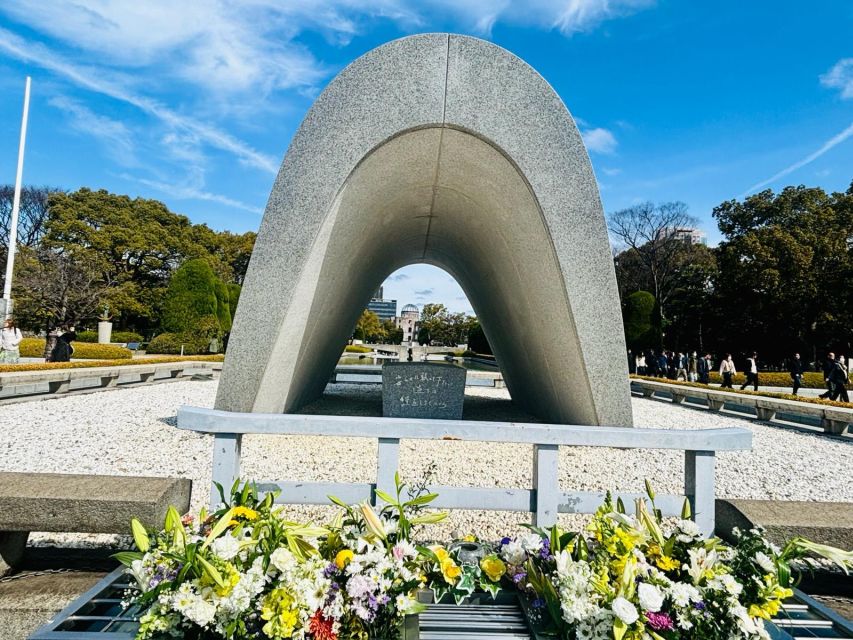
Then comes the Norman Cousins Peace Memorial. Cousins was an American author and peace activist who advocated for nuclear disarmament. This stop is your bridge between the memorial park as a place of remembrance and the memorial park as a place of action.
If you wonder what remembrance is supposed to change, Cousins’ inclusion gives you a clue. The idea is that memory should push for prevention.
Peace Cenotaph and the eternal flame
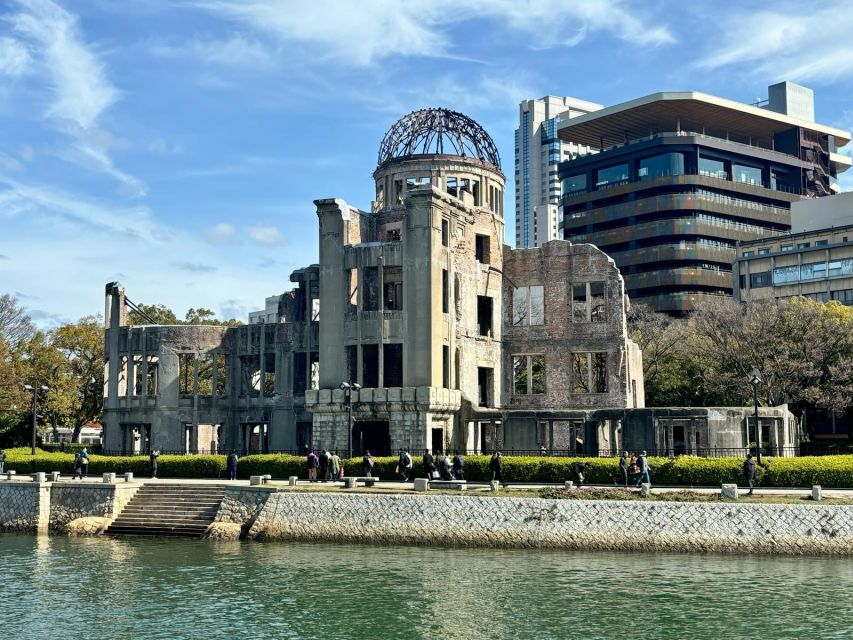
The Peace Cenotaph is next, a curved stone structure that holds the names of atomic bomb victims. Inside it is the kind of list you cannot breeze past, because each name hints at a life cut short.
At this stop, you’ll also learn about the eternal flame, a commitment that it will remain lit until the last nuclear weapon is eliminated from the earth. That line can feel heavy, but it’s also one of the most concrete ways Hiroshima turns grief into a promise.
Practical tip: this is a good moment to step back and just look. Let the scale sink in, then let your guide’s explanation add meaning to what you’re seeing.
Hiroshima National Peace Memorial Hall for Atomic Bomb Victims
After the cenotaph, you’ll visit the Hiroshima National Peace Memorial Hall for the Atomic Bomb Victims. The hall includes extensive archives and serves as a memorial to those who died, with insights into their experiences prior to the bombing.
A key consideration: entrance to the museum is not included. So you may want to bring extra money if you decide you want to go inside exhibits in addition to what you see on the tour route. If you’re on a tight schedule, the guided context outside the museum can still be very valuable, but the extra exhibits can add depth.
A survivor story at the Peace Park Rest House
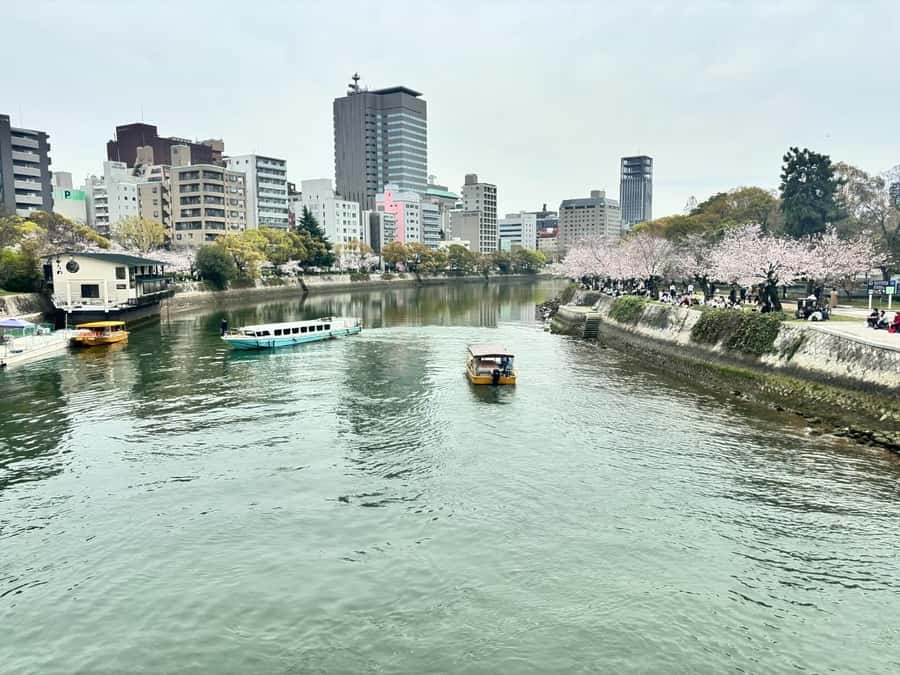
At the Hiroshima Peace Park Rest House, you’ll hear about the survival of a resident who was 170 meters from the hypocenter during the explosion. That distance detail matters because it makes the event feel less like an abstract “before and after,” and more like a near miss in a real location.
This is also where the tour’s tone may feel unexpectedly personal. You’re not only hearing about victims, you’re hearing about resilience, rebuilding, and what it took to live after something that should have ended everything.
Children’s Monument and Sadako Sasaki’s paper cranes
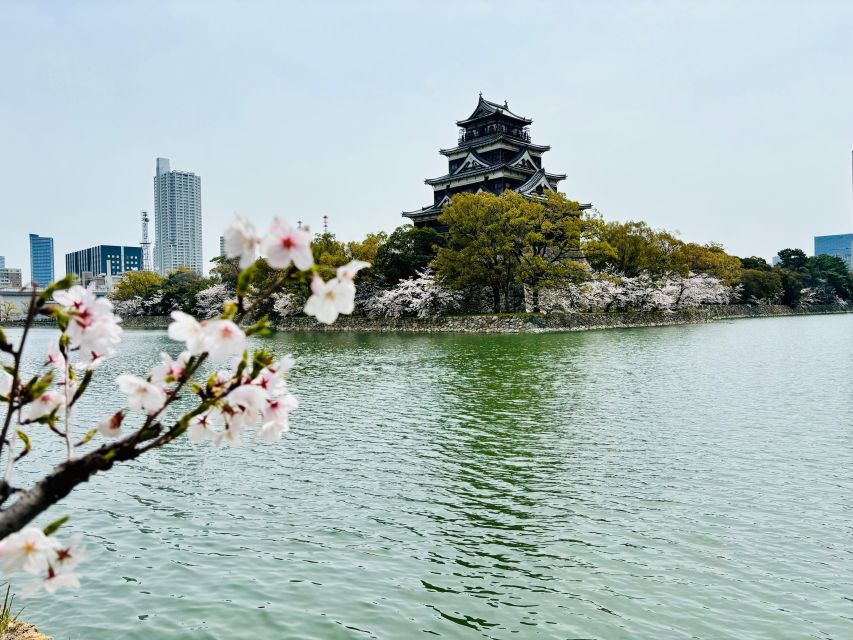
Then you’ll reach the Children’s Monument, dedicated to Sadako Sasaki and other children affected by the atomic bomb. Paper cranes are central here, and the message is simple but powerful: peace is something people hope for, not something only governments negotiate.
This stop is often the one where people quietly slow down. If you’re photographing, remember that this is also about reading the names and reflecting on what those symbols represent for real families.
Korean Monument, expanding the shared narrative
You’ll also visit the Korean Monument, which honors the memory of Korean victims of the bombing. It’s an important inclusion because Hiroshima is often discussed through the lens of Japan’s experience alone, even though the bombing harmed people from many backgrounds.
For me, this stop is part of why the tour feels honest. It refuses to shrink the story into a single national frame. It also underlines the necessity of peace and reconciliation, not just remembrance.
Ring the Peace Bell, then let the sound do the work
Next comes the Peace Bell. Visitors are invited to ring it in remembrance, and you’ll get a chance to join that moment as part of the group.
This is a small action with big effect. A bell is physical, immediate, and shared. The sound turns a silent park into something communal for a few seconds, then you continue on, carrying that feeling forward.
Atomic Bomb Dome, UNESCO context and why survival matters
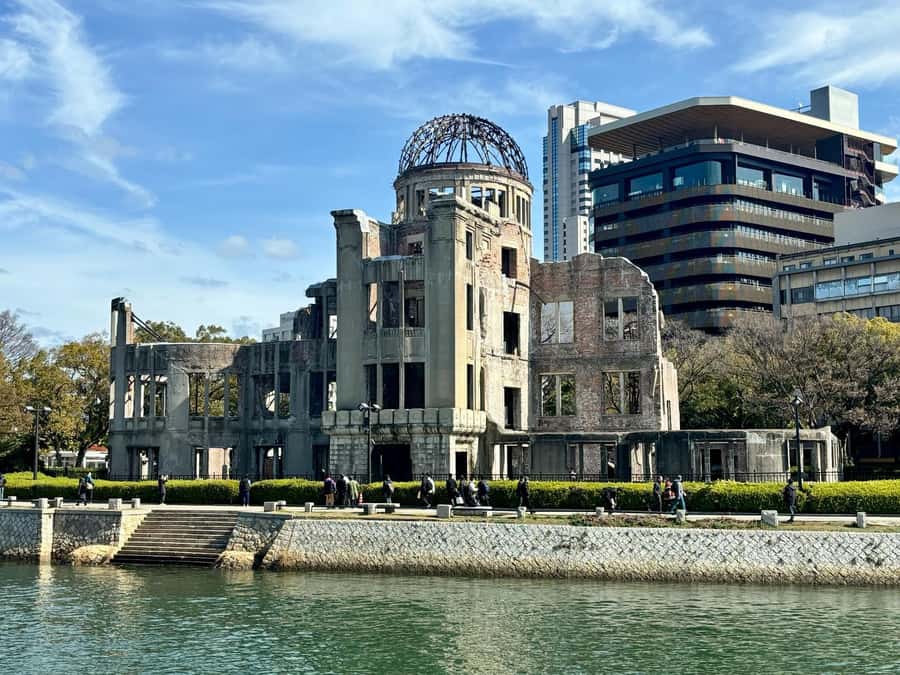
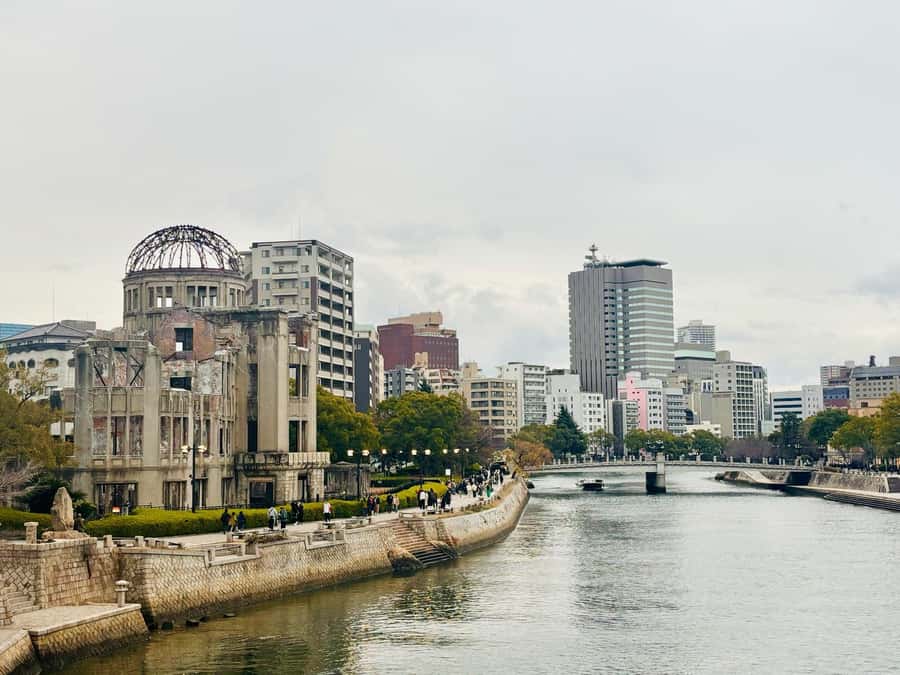
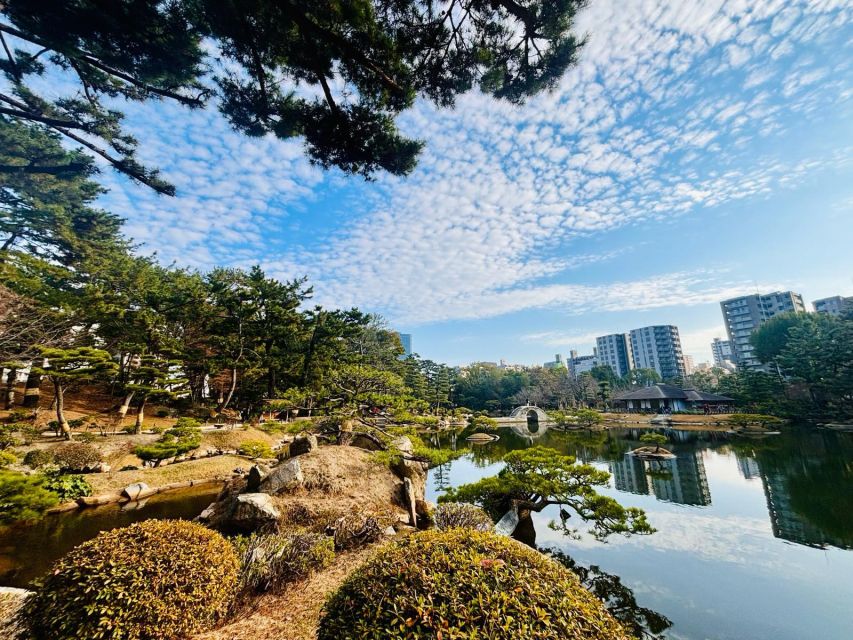
Finally, you approach the Atomic Bomb Dome, a UNESCO World Heritage Site. The tour explains its survival against incredible odds and why it remains one of the most haunting reminders of devastation wrought by war.
The Dome is famous, but it can still feel unreal until someone gives you the specific reasons it matters. You’ll learn how to look at it as a survivor building, not just a landmark, and the guide ties it back to the larger commitment to peace.
Practical tip: plan to take photos, but also put the camera down for a few minutes. This is a place where seeing it with your eyes first can beat the best photo later.
Ending at the hypocenter, a moment for reflection
Your journey concludes at the hypocenter, the point directly under the explosion. This stop is less about facts and more about a pause that helps you process what you learned.
Even if you’re familiar with Hiroshima’s history, this is where the information becomes real. You’re standing at the center of the event, guided into reflection on the people who endured tragedy and the hope for peace in the world.
I find this ending matters because it prevents the visit from turning into trivia. It forces a clean emotional closure: you learned the story, and now you’re asked to carry the message forward.
Price and value at $30 per person
At about $30 per person, this is strong value for a guided walk through multiple major memorial sites. You’re paying for a professional guide with a peace studies background, plus context that you likely would not get from reading signs alone, especially when the route includes emotionally complex stops like the names at the cenotaph and the memorials for children and foreign victims.
What’s not included is also part of the value equation. Food is not included, and museum entrance is not included, so you may want to budget a bit for snacks and any optional entry fees. If you prefer to learn through guided narrative rather than self-guided wandering, you’ll likely feel like the price is reasonable.
If you’re traveling with limited time, this kind of structured route can also save energy. Instead of spending your headpower figuring out what matters most, the guide helps you focus on meaning.
Who this tour suits best, and who should rethink it
This walking tour is a great fit if you want history you can understand, not history you just passively absorb. It’s especially good for first-time visitors who would otherwise feel overwhelmed, because it gives a clear sequence: before, during, after, with memorial stops that each add a different angle.
It might be less suitable if you have mobility limitations, since it is not listed as appropriate for people with mobility impairments. If that’s you, you can still visit Hiroshima Peace Memorial Park on your own, but you would need a different approach than this guided walking format.
Booking decision, should you take it?
If you care about context, and you want a pace that includes questions and discussion, I’d book this. The guide content focuses on both the human impact and the peace message, with stops that cover victims, humanitarian response, children, and international memory.
I’d particularly choose it if:
- you want the Atomic Bomb Dome explained in a way that connects to the rest of the park
- you want the names and meaning at the Peace Cenotaph, not just a quick photo
- you like a guide who can slow things down at the hardest stops
Skip it only if you know you cannot handle the emotional weight, or if walking time would be an issue for your body. Otherwise, this is one of those experiences where a guide is not a luxury, it is the point.
FAQ
Where do I meet the guide?
Meet at the Gates of Peace in front of the Italian restaurant Mario.
How much does the Hiroshima Peace Memorial Park walking tour cost?
It is listed at $30 per person.
What places does the tour include?
It includes Hiroshima Peace Memorial Park, the Atomic Bomb Dome, the Hiroshima Peace Memorial Hall for Atomic Bomb Victims, Children monuments, and the Flame of Peace.
Is museum entrance included?
No. Entrance to the museum is not included.
What language is the tour offered in?
The tour is offered in English.
Is the tour suitable for people with mobility impairments?
No, it is not suitable for people with mobility impairments.
Where does the tour end?
The activity ends back at the meeting point.
Can I get a full refund if I cancel?
You can cancel up to 24 hours in advance for a full refund.
Latest write-ups near Hiroshima
- An Amazing set of Cultural experience: Kimono, Tea Ceremony and Calligraphy★ 5.0 · 69 reviews
- Hiroshima: Private Walking Tour with a Local★ 4.6 · 70 reviews
- Hiroshima: Miyajima Island Half-Day Tour with Guide★ 4.9 · 71 reviews
- Kimono and Tea Ceremony in Miyajima★ 5.0 · 73 reviews
- Hiroshima and Miyajima Private Guided Tour★ 4.5 · 75 reviews
- HIROSHIMA ORIZURU TOWER Admission Ticket★ 4.6 · 75 reviews
- Hiroshima & Miyajima: UNESCO A-Bomb Dome & Itsukushima★ 5.0 · 76 reviews
- Hiroshima to Miyajima: Private Custom Tour with Ferry Ride★ 4.9 · 77 reviews
Hiroshima Tours, compared.
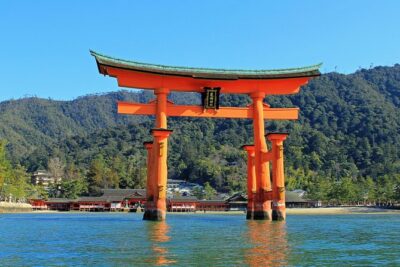
Peaceful Hiroshima & Miyajima UNESCO 1 Day Bus Tour
Read our review →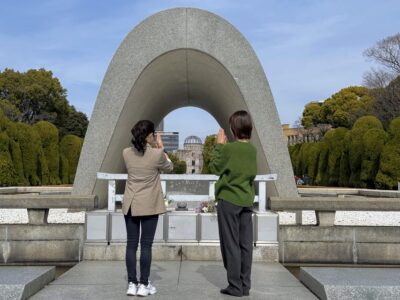
Hiroshima and Miyajima UNESCO Sites 1-Day Tour
Read our review →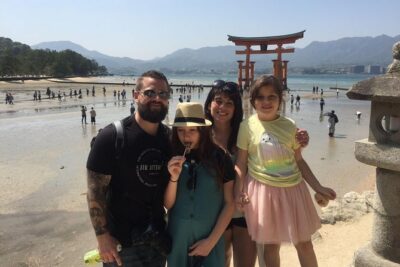
Hiroshima / Miyajima Full-day Private Tour with Government Licensed Guide
Read our review →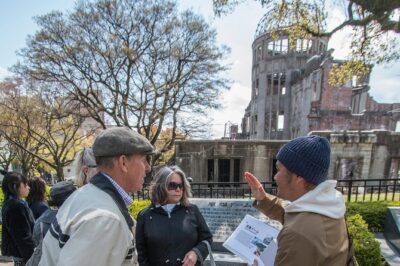
Hiroshima Peace (Heiwa) Walking Tour at World Heritage Sites
Read our review →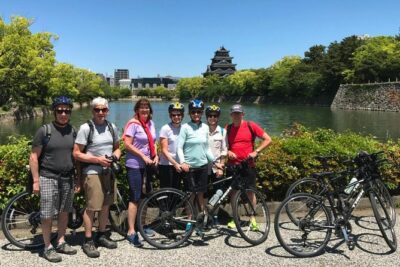
Hiroshima in a Nutshell: Morning Bike Adventure
Read our review →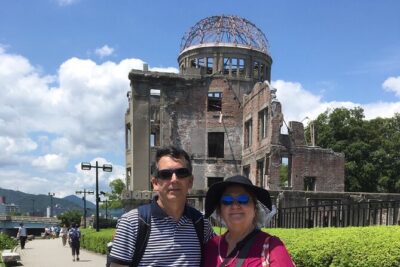
Hiroshima City 4hr Private Walking Tour with Licensed Guide
Read our review →

Japanesel Archery Experience HIROSHIMA CASTLE SHARAKU
Read our review →Browse the lists this tour appears in