
Reviewed · HISTORICAL TOURS
History of Hiroshima Group Walking Tour
What makes the History of Hiroshima Group Walking Tour so compelling is the way it guides you through the city’s most important memorial spaces as a connected story, not a checklist. You start at the Gates of Peace, then move site to site toward the Atomic Bomb Dome, with context that helps the meanings land.
I like this format because it treats the subject with seriousness while still keeping the pace easy, about 2 hours.
Two things I really like are the guide’s Peace Studies perspective and the fact that the route is tight enough for limited time. In past experiences tied to this tour, guides such as Ali, Malek, Cva, Shiva, and Moe were praised for clear explanations, strong English, and even humor to lighten the mood at the right moments.
One thing to consider: this is heavy history. If you want a light, sightseeing-only walk, you may find the memorials emotionally intense, especially with several short stops where you have to absorb a lot quickly.
Key takeaways before you go
- Gates of Peace starts with the bigger-world context so Hiroshima makes sense beyond the local tragedy.
- Peace Memorial Park stops are short but meaningful, including names, survival, and children’s memorials.
- You’ll see Korean victims and survivors remembered, not just the most commonly mentioned narratives.
- The Atomic Bomb Dome is the final anchor, a structure that survived and now carries weight as a symbol.
- Guides bring a Peace Studies lens plus human warmth, often with Q and A time.
- Free admission tickets are included, so you spend less time figuring out entry.
Why this Hiroshima walk is more than a photo stop
Hiroshima can be overwhelming at first. You arrive with the big, famous image in your head, but the city also has layers of memory, grief, and the stubborn work of rebuilding a future. This tour helps you hold those layers in one thread.
The route also respects your time. It is designed as a compact walk, with about 2 hours on foot and a group cap of 30 travelers. That matters because the Peace Memorial area is not just scenic. It is reflective, and lingering is tempting. A structured walk keeps you moving, but it also prevents you from missing key parts of the story.
And because it is guided, you get “why this is here” answers, not just “what it is.” The guide is specifically described as having a degree in Peace Studies, which shows up in the way they connect the bombing’s impact to the city’s role as a symbol of peace and resilience.
More Historical Tours in Hiroshima:
- Hiroshima Historical Walking Tour – Why A-Bomb was Dropped
★ 4.8 · 893 reviews - Hiroshima Peace (Heiwa) Walking Tour at World Heritage Sites
★ 5.0 · 872 reviews - Miyajima Half-day Trip Historical Walking Tour
★ 5.0 · 284 reviews
Your 2-hour route through Peace Memorial Park and Ground Zero
This walking tour begins at Ristorante Mario (4-11 Nakajimachō, Naka Ward, Hiroshima) and ends at the Hiroshima Atomic Bomb Hypocenter Monument in Ōtemachi. That end point is important. It is not just another landmark. It closes the loop on the whole experience by putting you right at the ground-zero marker.
The walking pace feels built for most people. The tour reviews repeatedly describe it as easy and “a walk in the park” style. Still, you are walking through memorial grounds and outdoors, so wear comfortable shoes and dress for weather.
The tour also uses a mobile ticket, which keeps things simple when you arrive. And it has an “included” core that is focused: you are paying for the guided tour and the story, not for extra add-ons. Lunch is not included, so plan to eat before or after.
Stop-by-stop: what you’ll see and why it matters
The heart of the experience is nine stops that move you from explanation to memory, from individual names to wider lessons, and finally to the landmark that survived.
Stop 1: Gates of Peace
You start at the 10 Gates of Peace. The guide sets the scene by explaining why an atomic bomb was dropped on Hiroshima and how it shaped the course of world history. It is a strong opening because it gives you context before you step into the memorial spaces.
This start also helps you avoid a common mistake: treating the Peace Memorial Park as purely local. Hiroshima is local, yes, but the story also reaches global history, and the gates are where that connection begins.
More Walking Tours in Hiroshima:
- Hiroshima City 4hr Private Walking Tour with Licensed Guide
★ 5.0 · 437 reviews - Hiroshima Walking Tour Why A Bomb was dropped to Hiroshima
★ 5.0 · 347 reviews - Hiroshima: History of Hiroshima Group Walking Tour
★ 4.8 · 266 reviews - Hiroshima: Food and Culture Guided Walking Tour with Dinner
★ 4.9 · 212 reviews
Stop 2: Arashi no Naka no Boshi Statue (Mother and Baby in the Storm)
Next is the Mother and Baby in the Storm monument. It is dedicated to mothers who sacrificed their lives trying to save their children. A statue can feel quiet at first, but this one lands because it humanizes the tragedy in a single image.
If you are someone who wants the story to include everyday people, this stop is where you start feeling that shift from event to lives.
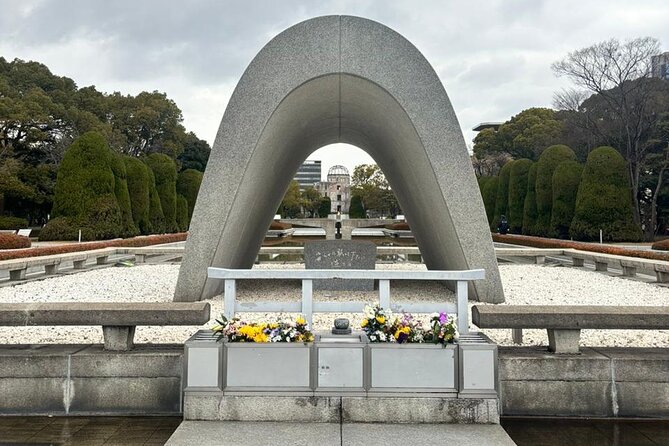
Stop 3: Cenotaph for the Atomic Bomb Victims
Then comes the Peace City Monument Cenotaph for the Atomic Bomb Victims, where the focus is the victims’ names. This is not spectacle. It is remembrance, and the act of reading or noticing the names matters.
A drawback here, if it affects you, is that the memorial names can pull you into a more personal, slower frame of mind. Even though the stop is relatively brief, you may want a few extra seconds to just take it in.
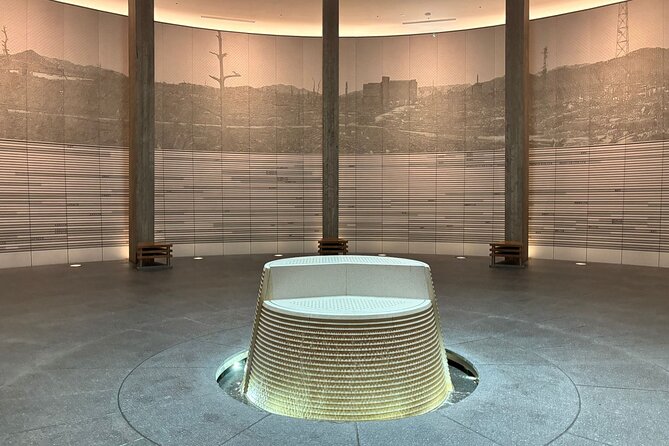
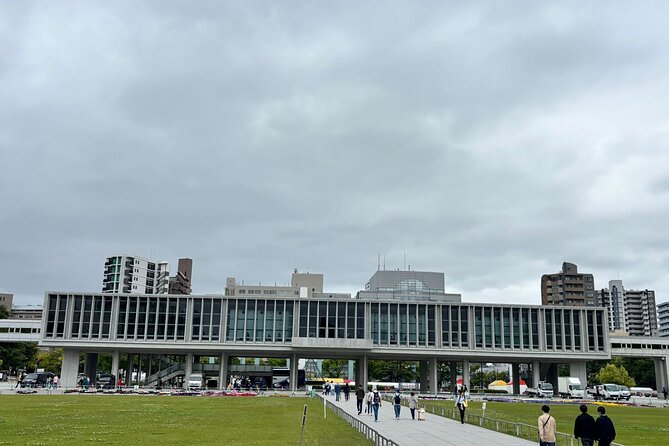
Stop 4: Hiroshima National Peace Memorial Hall for the Atomic Bomb Victims
At the National Peace Memorial Hall, you see the destruction of the city. This stop adds the physical reality behind the memorials. Text and artifacts often help you understand scale, and the hall is designed for that kind of learning.
The benefit of having a guide is that you do not get stuck trying to interpret everything alone. You get “what you are looking at” guidance in the moment.
Stop 5: Rest House of Hiroshima Peace Park
This is one of the most striking narrative bridges on the route: the solo survival of the Rest House building, about 170 meters from ground zero.
That distance detail is worth holding onto. It turns “a bombing happened” into “a specific place survived where almost nothing else did.” Even if you have heard the story before, the short explanation plus the sightline help the memory feel concrete.
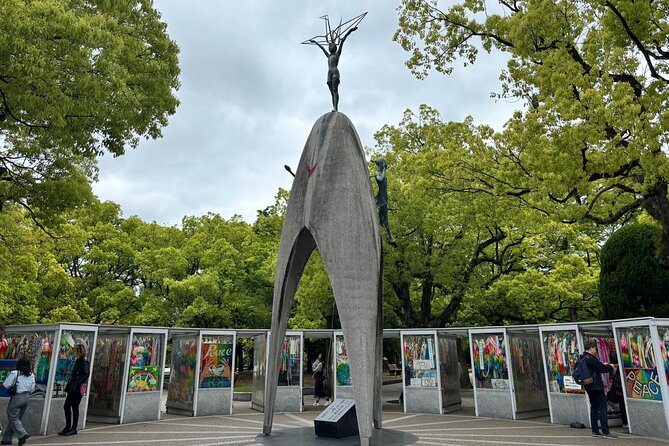
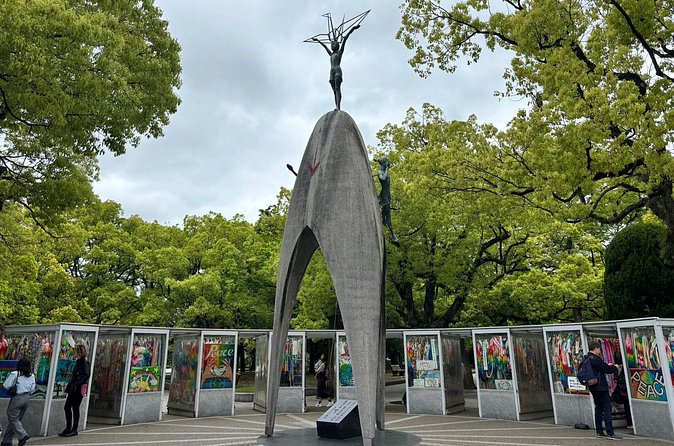
Stop 6: Children’s Peace Monument (including Sadako and the paper crane)
Next is the Children’s Peace Monument, dedicated to Sadako and other children who died in the bombing. It tells the story behind the paper crane, which became a global symbol of peace.
This stop tends to stick with people for the same reason children’s stories often do: it compresses a huge tragedy into a small, understandable symbol. If you are traveling with kids, this is also one of the most accessible moments on the route.
Stop 7: Monument to Korean Victims and Survivors
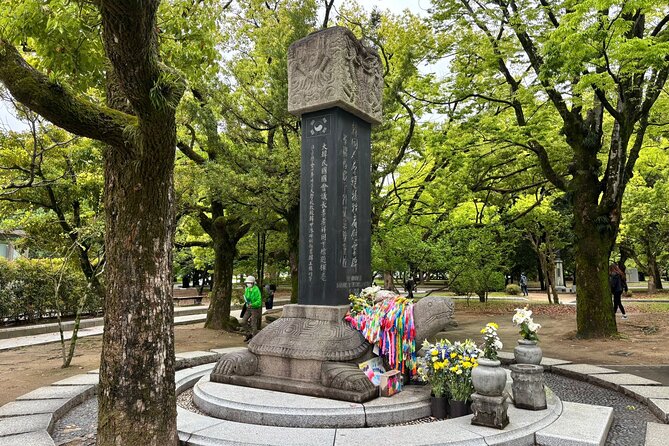
Then you come to the Monument to Korean Victims and Survivors. It explicitly acknowledges Korean victims, which is not always centered in casual summaries of Hiroshima.
If you care about a fuller, less simplified historical picture, this stop is a key value add. It helps you see how Hiroshima’s war-era story connects to more than one group affected by the bombing.
Stop 8: Peace Bell
The Peace Bell is short, but it acts like a pause. Think of it as a moment where you can reset emotionally before the final anchor of the walk.
If the route feels heavy, this is where you can take a breath without the story losing momentum.
Stop 9: Atomic Bomb Dome
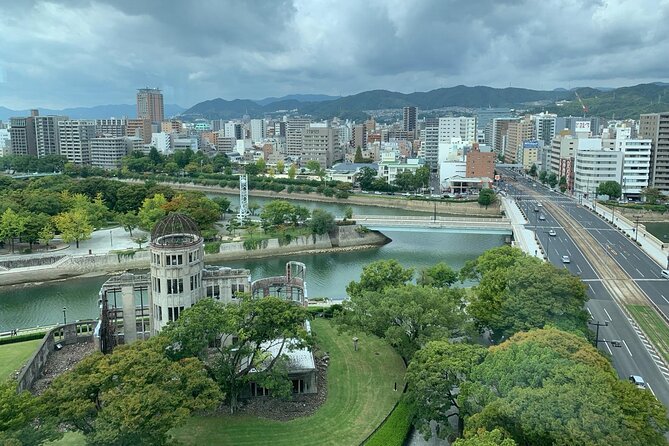
Finally, you reach the Atomic Bomb Dome. It is remembered because the building survived the atomic bombing in Hiroshima. It is the last stop because it is the visual summary of everything you learned along the way.
It also creates a closing sensation that is hard to replicate with a guidebook. You do not just see the structure. You have the context to understand why it is preserved and what it represents.
Guides with Peace Studies and a human touch
This tour stands or falls on the guide, and the strongest praise across experiences is consistent: guides explain things clearly, answer questions, and manage the tone with care.
More than one guide described on this tour route was noted for:
- Strong English and the ability to field group questions
- Warm, engaging delivery
- A sense of humor used carefully to reduce tension without disrespecting the subject
- Keeping the group interested during a walk that covers a lot of ground emotionally and historically
That last point matters. Even with a great route, if your guide speaks in a monotone or refuses questions, you lose the value. Here, the pattern is that the guide talks like a real teacher, not a script reader.
If you are the type who likes to ask, this is a good fit. The structure leaves room for conversation, and the guide can steer you toward what to notice next.
Price and what you actually get for $32.84
At $32.84 per person, you are paying for a guided walk that lasts about 2 hours, capped at 30 travelers. That price is reasonable for Hiroshima because it includes what you would otherwise spend time and effort figuring out on your own: the tour narrative plus included guided support.
Another value point is that the stops are associated with free admission tickets for the listed sights on the route. So you are not paying separate entry fees mid-walk. You also end up getting guided interpretation, which is usually the missing ingredient when you DIY through memorials.
One note on value: this is not a long “read everything” experience. The stops are meaningful but compact. If you love museums and you want to linger, you might want to pair this with extra unplanned time after the walk.
Practical tips for timing, comfort, and making it meaningful
Because the tour requires good weather, plan a flexible day. If Hiroshima weather is shaky, expect that your day might get nudged by conditions.
A few practical choices can make a big difference:
- Bring comfortable walking shoes. This is a walking tour through outdoor memorial grounds.
- Wear layers. Even on pleasant days, the area can feel cooler or windier than you expect.
- If you get emotional easily, it helps to know that the route includes multiple high-intensity stops, including names, children’s remembrance, and the dome.
Also, eat smart. Lunch is not included, so either grab something light nearby before you start at Ristorante Mario, or plan a meal after you finish at the Ground Zero monument. You will appreciate not worrying about food while you are focused on the story.
Should you book this History of Hiroshima Group Walking Tour?
I think this is a strong booking for first-timers who want a guided, respectful overview without spending your whole day in planning mode. It is also a good fit if you want a clear 2-hour structure that leads you through the most important memorial spaces in the Peace Memorial area and ends at the Atomic Bomb Hypocenter Monument.
Book it if:
- You want a guided story with a Peace Studies angle and thoughtful pacing
- You have limited time and want to see the biggest, most relevant memorial stops
- You like the idea of a smaller group, up to 30 people, rather than a huge crowd
Skip it or consider pairing differently if:
- You know you need lots of time to sit, read, and reflect slowly, because several stops are brief
- You are looking for a purely visual tour with minimal emotional weight
If you do book, my advice is simple: treat it like a guided walk through memory, not a checklist. Take your time at the spots that hit you most, and let the guide’s context do what it is meant to do, connect the places into one human story.
FAQ
How long is the History of Hiroshima Group Walking Tour?
The walk is listed at about 2 hours.
Where does the tour start and end?
It starts at Ristorante Mario, 4-11 Nakajimachō, Naka Ward, Hiroshima and ends at the Hiroshima Atomic Bomb Hypocenter Monument in Ōtemachi.
What is the price per person?
The price is $32.84 per person.
Is the tour a self-guided experience or guided?
It is a guided tour.
Are admission tickets included for the stops?
The tour information shows admission ticket free for the listed stops, and the included section specifies the guided tour.
Is lunch included?
No. Lunch is not included.
How big is the group?
The maximum group size is 30 travelers.
Is there a mobile ticket?
Yes, it includes a mobile ticket.
Is the tour suitable for children?
Yes. 2 children age 0 to 10 can join free of charge.
What weather conditions does the tour need?
It requires good weather.
What if I need to cancel?
You can cancel for a full refund if you cancel at least 24 hours in advance. If you cancel within 24 hours, the amount paid is not refunded.
Latest write-ups near Hiroshima
- Hiroshima: Atomic Bomb Dome and Peace Memorial Museum 3 hours★ 5.0 · 20 reviews
- Hiroshima: City and Miyajima Bike and Boat Tour★ 5.0 · 20 reviews
- Miyajima Guided Tour and Fresh Oyster Farm Tour★ 5.0 · 20 reviews
- Hiroshima: Tour of Atomic Bomb Dome & Peace Memorial Museum★ 5.0 · 20 reviews
- Miyajima Highlights: Itsukushima Shrine & Island Nature★ 5.0 · 21 reviews
- Miyajima Highlights: Itsukushima Shrine & Island Nature★ 4.9 · 21 reviews
- Dinner Cruise on HANAIKADA (Raft-Type Boat) with Scenic View of Miyajima★ 5.0 · 21 reviews
- Hiroshima Private Tour with a Local – Highlights & Hidden Gems★ 4.5 · 24 reviews
Historical Tours, compared.
World Heritage Shirakawa-go and Experience Tours from Kanazawa
Read our review →
Imperial Palace and Shogun Historical Walking Tour
Read our review →
World Heritage Kyoto & Nara Uji Authentic Matcha Experience
Read our review →
Kyoto Gion: 2-Hour Geisha Culture & History Walking Tour
Read our review →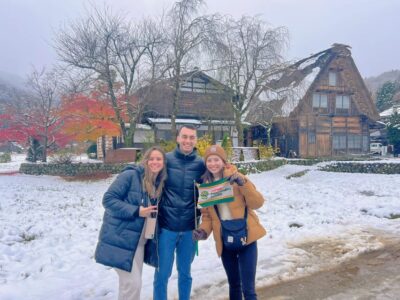
World Heritage Shirakawa-go Morning Guided Tour
Read our review →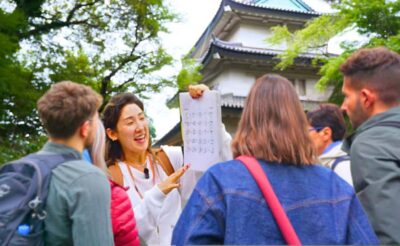
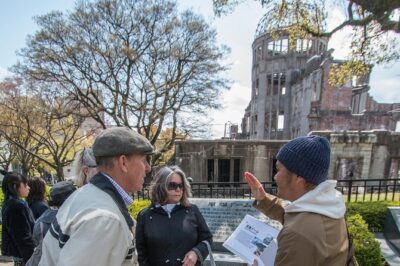
Hiroshima Peace (Heiwa) Walking Tour at World Heritage Sites
Read our review →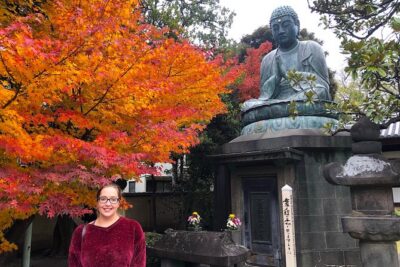
Yanaka Walking Tour: Historic and Traditional District of Tokyo
Read our review →Browse the lists this tour appears in