
Reviewed · PEACE MEMORIALS
Hiroshima: Tour of Atomic Bomb Dome & Peace Memorial Museum
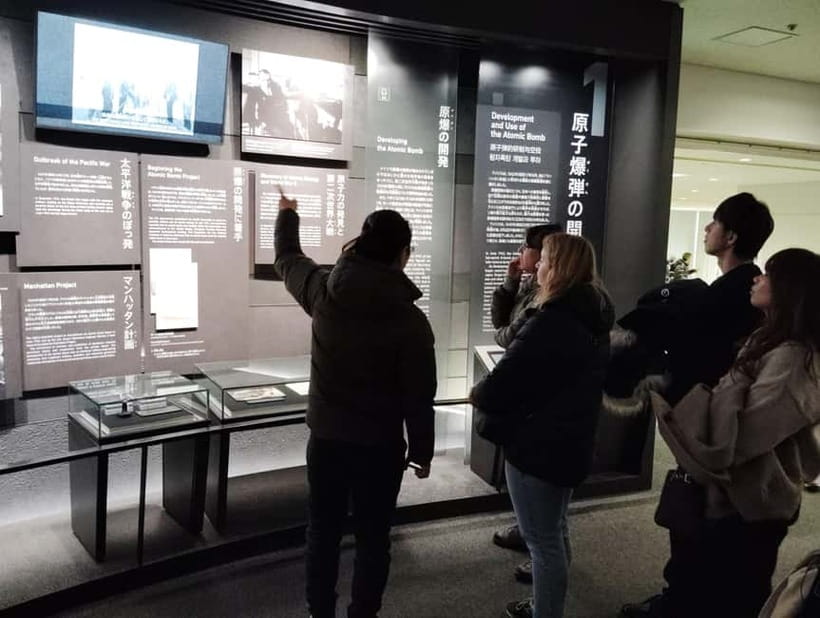
Hiroshima is one of those places where history is not stuck in a textbook. In just a few hours, you stand near the Atomic Bomb Dome and walk through the Peace Memorial Museum, where the story of Aug 6, 1945 is told with clarity and force. What makes this experience so interesting is that a local guide helps you connect the buildings, the damage, and the human impact, instead of just ticking off sights.
I really like the in-depth, guided explanation of what happened, including the radiation, heat rays, and shock waves, and how that led to catastrophic damage and more than 100,000 deaths within about a 10-square-kilometer area around the hypocenter. I also like the chance to hear personal, human stories from the people leading the tour, such as family-linked perspectives and even teaching moments like paper birds connected to Sadako. One possible drawback is that the content is heavy, and you may not feel comfortable the whole time.
You will want a tour that keeps you steady and oriented. This one runs in a private group format with English or Japanese support, and it focuses on the two core Hiroshima sites that most people come to see for a reason.
Key takeaways before your Hiroshima visit
- Local guidance with context so you understand what you are seeing, not just where to stand
- Atomic Bomb Dome stop with a focused guided visit and walking time
- Peace Memorial Museum time on the ground with admission included
- UNESCO World Cultural Heritage sites as part of a tight, well-paced loop
- Human stories and teaching moments, including paper birds connected to Sadako
- Private group pace that helps you ask questions without feeling rushed
Why the Atomic Bomb Dome and Peace Memorial Museum work as a pair
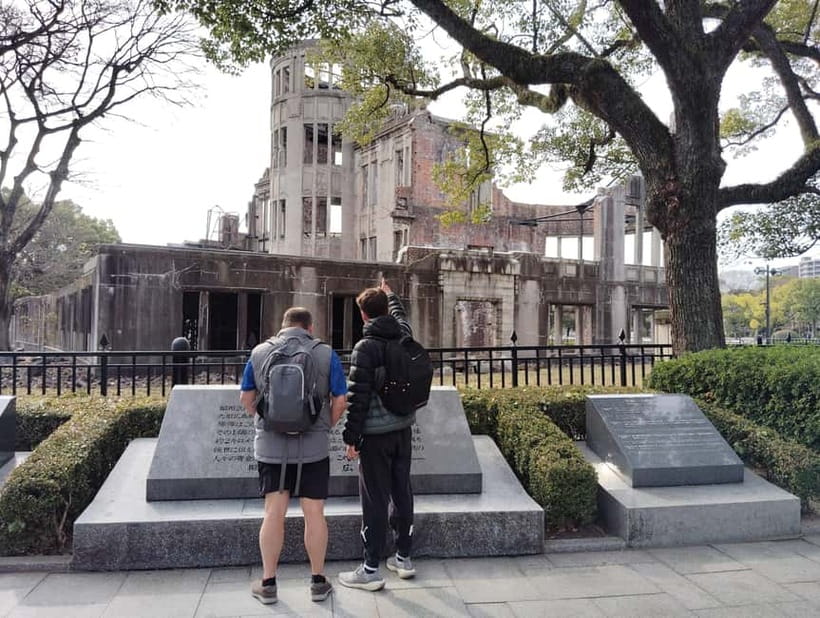
The Atomic Bomb Dome and the Peace Memorial Museum are powerful alone. Together, they give you a fuller picture of cause and effect, and they help you notice details you might otherwise miss.
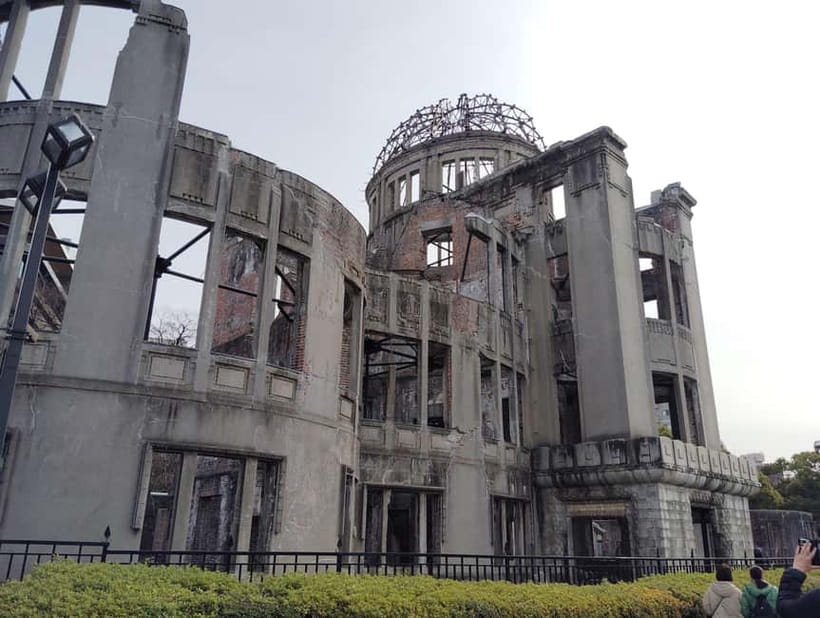
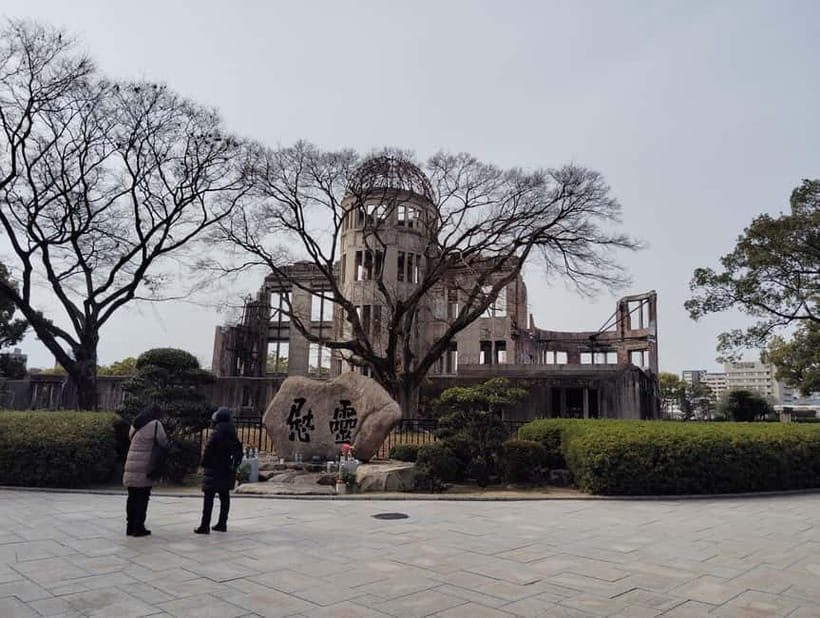
The Dome is striking because what remains is not a polished ruin. You are looking at an exposed steel frame, and it quietly forces the question you came to ask: what did the blast do, and why is this structure still here. The museum then slows you down and fills in the gaps. It takes the abstract horror of war and gives it specifics, including the long-term suffering of survivors, such as burns, radiation damage, and the discrimination they faced afterward.
I like that this tour does not try to rush you through. You get time to look, time to listen, and time to let the meaning land.
Other Peace Memorial visits:
- Hiroshima Historical Walking Tour – Why A-Bomb was Dropped
★ 4.8 · 893 reviews - Hiroshima: Miyajima Peace Memorial Icons of Peace and Beauty
★ 4.9 · 361 reviews - Hiroshima/Guided Virtual Tour of Peace Park/PEACE PARK TOUR VR
★ 5.0 · 157 reviews
Meeting up in Hiroshima Port or near Seven-Eleven Otemachi
This tour is designed for a half-day. You will meet your guide at one of two starting points, depending on what you choose: 広島港 (Hiroshima Port) or セブン-イレブン 広島大手町1丁目店. Meeting point can vary, so make sure you confirm your exact pickup spot when you book.
From a practical standpoint, those two options matter. The Hiroshima Port start can be convenient if you are already around the water or moving between day activities. The Seven-Eleven Otemachi start can feel more central if your plans have you in the city core.
Either way, the tour is short enough that logistics are usually not a headache. Still, I would plan to arrive a few minutes early. The sites you are visiting are popular, and you will want your mind in the right place before you start learning.
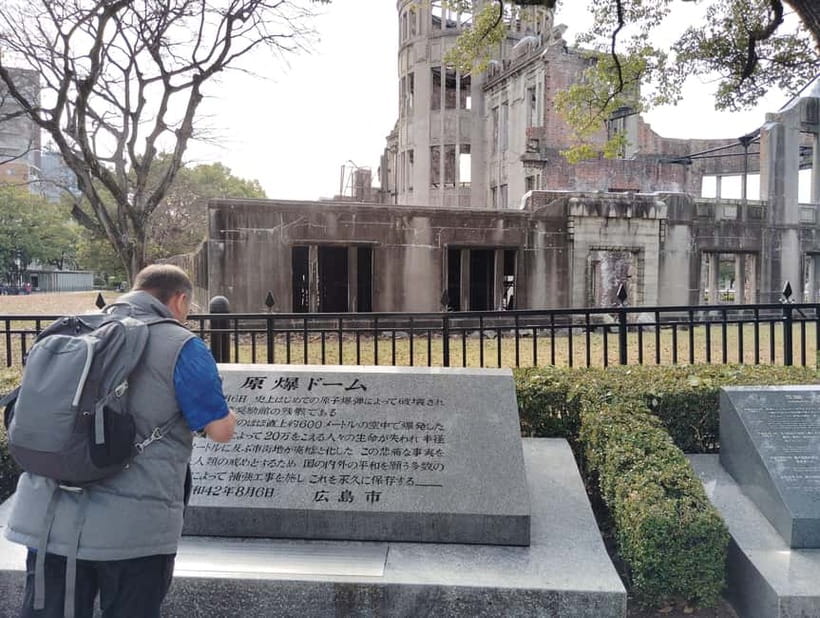
Atomic Bomb Dome, a 20-minute guided focus that changes how you look
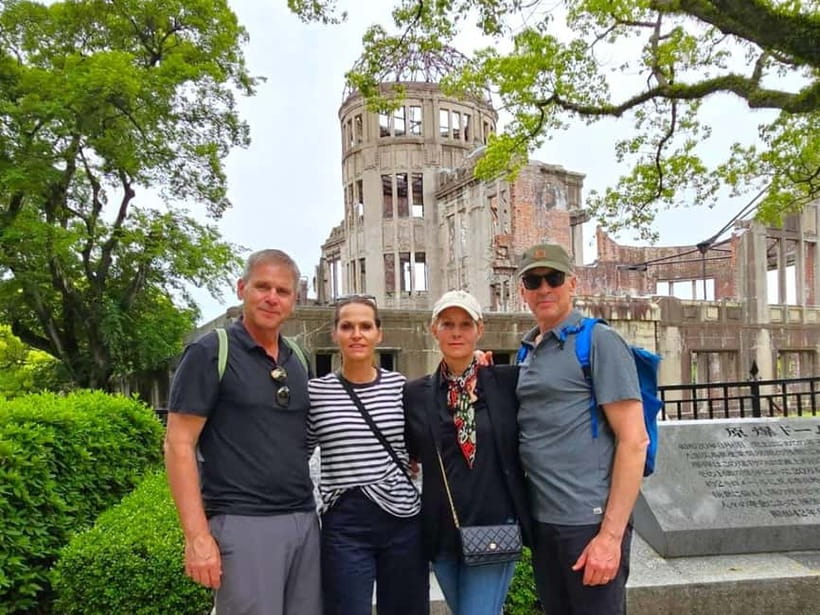
Your first major stop is the Atomic Bomb Dome, with a visit and guided walk time of about 20 minutes. That might sound brief, but it is exactly what you want for your first contact with the memorial area. If you spend too long trying to take in everything at once, you can end up staring at the same sight without actually understanding what you are seeing.
With a guide, you are not just photographing the Dome. You are being shown what to notice. The exposed steel frame is the anchor, and your guide helps connect that visual to the damage caused by the atomic bomb. You will hear the basics of how the bomb produced radiation, heat rays, and shock waves, and how those forces led to catastrophic damage to buildings and other structures.
A quick note on pacing: 20 minutes feels manageable even for a somber subject. You are close enough to absorb the moment, but not trapped in a long, silent loop that can drain you.
Also, since this is a UNESCO World Cultural Heritage site, it carries extra weight. Your guide’s job is to keep you respectful and focused, while still making sure you understand the meaning of what survives.
Hiroshima Peace Memorial Museum, where the story becomes specific
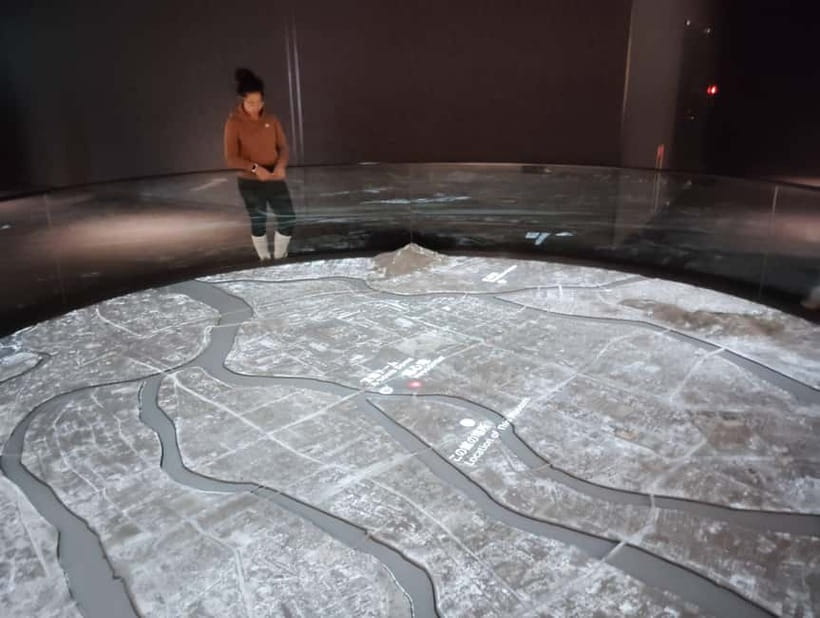
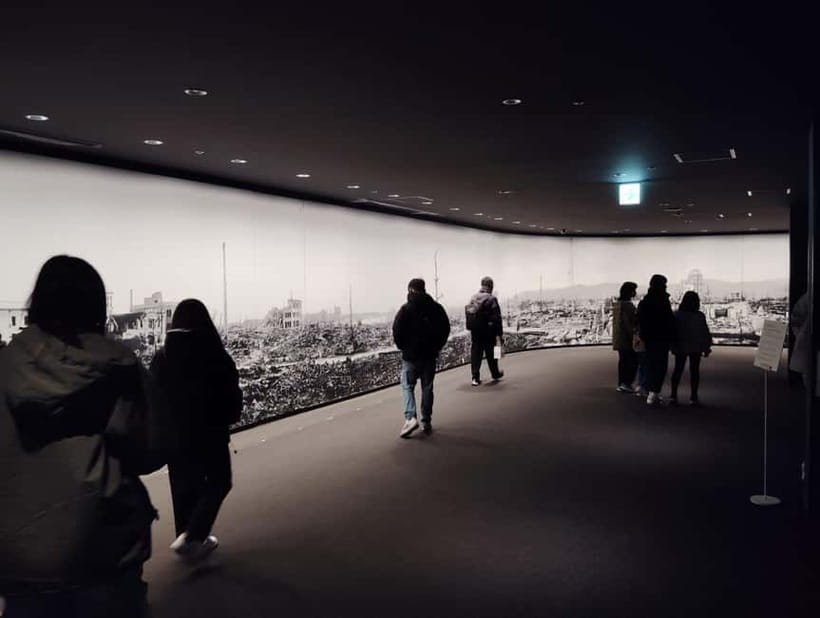
After the Dome, you move to the Hiroshima Peace Memorial Museum for about 2.5 hours. This is the main part of the tour, and it is where the visit turns from a strong visual to a detailed understanding of impact.
The museum’s role is not to shock you for shock’s sake. It documents the damage and consequences in a way that stays tied to real people. The tour framing includes the fact that more than 100,000 people died in the affected area, and that survivors continued to face burns, radiation damage, and discrimination later on. That matters because it stops the story from ending with the blast.
This is also where your guide’s approach really shows. In past groups, guides have shared personal or family-linked perspectives that make the explanations feel less like facts on a screen and more like lived experience. One example from a recent tour is that the guide’s connection to the bombing helped the group understand what they were seeing with much more clarity.
You may also encounter teaching moments that connect history to human meaning. One guide-led activity involved making paper birds to help it sink in what they meant to Sadako. That sort of small, hands-on moment can make the museum feel less like a wall of information and more like a story you can understand.
Drawback to consider: a museum like this can be mentally tiring. You might want to take a slow breath before it gets emotionally dense. I like having a guide here, because they can help you find the threads you need, instead of you wandering and missing the points that tie everything together.
More Museums in Hiroshima:
- Hiroshima; Hiroshima Peace Memorial Museum and Castle Tour
★ 5.0 · 89 reviews - Hiroshima: Atomic Bomb Dome and Peace Memorial Museum 3 hours
★ 5.0 · 20 reviews - Tokyo: teamLab Planets TOKYO Digital Art Museum Entry Ticket
★ 4.6 · 9,779 reviews - Osaka Castle: Museum and Tower Entry Ticket
★ 4.5 · 2,380 reviews
What the guided storytelling does for you (Gordon Michasiw and Emiko as examples)
A big reason this tour earns strong praise is the guides. You get a live tour guide in English or Japanese, and the best part is how the explanations are tailored to your questions and attention.
Gordon Michasiw shows up in feedback as an example of a guide who combines strong event knowledge with context about the surrounding area. One group even noted Gordon met them after arriving via the Shinkansen, which made the day feel smoother. Another highlight from that same style of guiding is that the walk back to the train station included local food tips, so the tour did not end when the museum doors closed.
Emiko is another name that shows up in recent feedback, with praise for the tour content and also for personal warmth. One couple mentioned Emiko even made a small, personal birthday gift for the wife. That kind of care is not about turning a memorial into a celebration. It is about showing that the people leading the tour genuinely care about the human side of your visit.
Here is the plain truth: for a subject this difficult, a self-guided visit can leave you with gaps, or worse, with details you do not know how to interpret. A good guide turns the exhibits into meaning, and it keeps you from getting lost in the sheer amount of information.
Timing on a heavy topic, and how to handle the discomfort
This tour is built around the memorial sites connected to Aug 6, 1945. At 8:15 that morning, an atomic bomb was dropped on Hiroshima, where many people lived. The tour framing explains that the bomb produced radiation, heat rays, and shock waves. It also notes the scale of deaths and the long aftermath of burns, radiation damage, and discrimination.
If you want a cheerful day trip, this is not it. I appreciate that the experience is honest about that. You may not feel comfortable for parts of it, and that does not mean you are doing it wrong.
What I like about having a private group is that you can keep your pace without the pressure of a large crowd forcing you forward. You can pause when you need a minute, ask for clarification when you want it, and listen when the guide is explaining something you did not catch on your own.
A practical tip: go into the museum with the idea that you are absorbing facts and also processing emotion. If you try to treat it like a normal sightseeing stop, you will feel drained faster than you expect. If you treat it as a guided learning experience, you are more likely to come away with understanding, not just overwhelm.
Price and value, what $105 includes and what to plan for
The price is $105 per person for a 3 to 4 hour guided experience. That includes museum admission to the Peace Memorial Museum, plus the guide fee.
That inclusion matters. Museum admission is one less thing to manage, and in tours like this, the guide fee is the real value. You are paying for focused interpretation at two sites that can otherwise feel like they require background knowledge you may not have time to research.
Food and drinks are not included, so plan to cover that yourself. You might also want water for the walking segments, especially if you are doing this on a warm day. Keep your budget realistic: add a little for snacks and drinks, and you will feel totally fine.
Is it a deal or a splurge? For Hiroshima, I think it is a fair middle ground, because you are getting a guided structure around emotional, high-impact sites. The cost makes more sense the moment you realize how much you rely on the guide to connect the dots.
Practical walking and pacing tips for your 3 to 4 hour plan
This tour has two main blocks: the Atomic Bomb Dome with about 20 minutes of visit and walking, then the Peace Memorial Museum with about 2.5 hours. Between those, you are doing short transfers by walking or moving through the area.
So, bring shoes that you can stand in and walk in without fuss. The walking time is not extreme, but the day is long enough that sore feet can pull your attention away from what you came to learn.
Also, plan your day so you are not rushing right after. You will likely want a little time to process, especially once the museum information gets specific. If you stack dinner and other plans immediately, you may feel like you are pushing yourself through a fog.
Finally, if you are coming from elsewhere in Japan, I would build in a little buffer. One guide-linked experience included meeting people arriving via the Shinkansen and then walking back with them afterward, but that is the kind of smooth flow you should only expect if your timing is cooperative.
Who should book this Hiroshima Peace Memorial guided tour
This tour is a good fit if you want to understand Hiroshima with structure. If you care about why the memorials are built the way they are, and you want the story explained in a careful way, you will likely appreciate the guided format.
It is also a good fit for couples and small private groups who want a calmer pace. Private group touring matters here because it reduces the feeling of being rushed at memorial sites.
If you are sensitive to difficult content, consider booking with the expectation that it may be emotionally challenging. The guide will likely help you make sense of what you are seeing, but the subject itself is not light.
If you only want a quick photo stop, you might find the museum time too long. This tour is built for meaning, not speed.
Should you book this Hiroshima tour or choose something else?
I think you should book this tour if your goal is understanding, not just sightseeing. The combination of the Atomic Bomb Dome and the Peace Memorial Museum, guided by an English or Japanese-speaking local, is the difference between seeing objects and grasping impact.
Skip it if you are looking for a casual, upbeat half-day. Also, if you know you react strongly to heavy memorial content and you need complete control over pacing, you might prefer an option where you can move completely on your own.
For most people who come to Hiroshima to learn, this is a solid, respectful choice because it gives you focused time, a private-group feel, and strong guide-led context.
FAQ
How long is the Hiroshima tour?
The duration is 3 to 4 hours, depending on the starting time availability.
Where do we meet the guide?
You can meet at either 広島港 or セブン-イレブン 広島大手町1丁目店. The exact meeting point may vary depending on the option booked.
What places are included in the tour?
The tour includes a visit to the Atomic Bomb Dome and the Hiroshima Peace Memorial Museum.
Is the Peace Memorial Museum ticket included?
Yes. Admission to the Peace Memorial Museum is included.
Which languages are available for the live guide?
The tour offers live guidance in English and Japanese.
Is food or drinks included in the price?
No. Drinks and foods are not included.
Is this tour a private group?
Yes. It is described as a private group.
Can I pay later and cancel if needed?
Yes. You can reserve and pay later, and you can cancel up to 24 hours in advance for a full refund.
Latest write-ups near Hiroshima
- Hiroshima: Atomic Bomb Dome and Peace Memorial Museum 3 hours★ 5.0 · 20 reviews
- Hiroshima: City and Miyajima Bike and Boat Tour★ 5.0 · 20 reviews
- Miyajima Guided Tour and Fresh Oyster Farm Tour★ 5.0 · 20 reviews
- Miyajima Highlights: Itsukushima Shrine & Island Nature★ 5.0 · 21 reviews
- Miyajima Highlights: Itsukushima Shrine & Island Nature★ 4.9 · 21 reviews
- Dinner Cruise on HANAIKADA (Raft-Type Boat) with Scenic View of Miyajima★ 5.0 · 21 reviews
- History of Hiroshima Group Walking Tour★ 5.0 · 23 reviews
- Hiroshima Private Tour with a Local – Highlights & Hidden Gems★ 4.5 · 24 reviews