
Reviewed · WALKING TOURS
Nara Highlight Walking Tour with Furoshiki Experience with Lunch
This tour is interesting because it packages Nara’s top sights into one walk, with a hands-on cultural stop and deer encounters built in. You get UNESCO temples and shrines, plus a short furoshiki workshop you can take home.
I love how the route mixes big landmark names like Todai-ji with smaller, calmer stops like Tamukeyama Hachimangu. I also like that you’re not stuck in a huge crowd, with a maximum of 7 people, so your guide can actually keep pace with your questions.
One consideration: it is a lot of walking for about 5.5 hours, so wear comfy shoes. Also, lunch and the furoshiki experience depend on your option, and Wednesday departures may not include lunch.
Key highlights to look for
- Small group size (up to 7), which helps you move smoothly between major sights without feeling rushed
- Kasuga Taisha and Todai-ji included, so you get both Shinto shrine atmosphere and the Great Buddha scale
- Deer time in Nara Park, where you can watch the famous free-roaming behavior up close
- Nigatsu-do Temple stop, tied to the Omizutori water-drawing ceremony in March (over 1,250 years old)
- Shika no Fune Mayu lunch plus furoshiki, a real break instead of another quick snack stop
- Naramachi old town townhouse, a short look at a 1917 historic property in the backstreets
Nara on Foot: How this Half-Day Flow Really Feels
Nara is one of those places where it helps to have a simple game plan. Sites are close enough that a walking tour works, but spread out enough that you do not want to guess your timing after you arrive. This tour runs about 5 hours 30 minutes and strings together major World Heritage stops, plus a deer encounter and a practical cultural workshop.
What you will like right away is the pacing. You are stopping for short, focused chunks of time, like 20 to 40 minutes at the big-ticket sights. That format keeps the day from turning into one long blur of photos. It also makes it easier to pay attention to details you might otherwise skip, like lantern density at Kasuga Taisha or the solemn feel of the halls at Todai-ji.
The second thing I like is the guide format. The tour includes an English-speaking local guide, and the small group size can make a noticeable difference in how much you understand while you walk. In at least one highlighted example, the guide Keiko is praised for keeping the group engaged, even when the party was very small, and for sharing clear context as you go.
The one drawback is physical. About 5.5 hours of walking plus shrine and temple interiors adds up. If you plan to also eat in the old town afterward, build in time for it, or you might feel a bit tight-lipped late in the day.
More Lunch Experiences in Nara:
- Bike Tour Exploring North Kyoto plus Lunch
★ 5.0 · 1,087 reviews - Tokyo: Mt.Fuji & Lake Kawaguchiko 1-Day Bus Tour w/Optional Lunch
★ 4.5 · 839 reviews - Osaka/Kyoto: Arashiyama, Nara & Fushimi Inari Shrine w/Lunch
★ 4.4 · 754 reviews
Kasuga Taisha Lanterns and Tamukeyama Hachimangu
You start at Kasuga Grand Shrine, a 20-minute stop with the admission ticket included. Kasuga Taisha is famous for its bronze and stone lanterns, and the vibe here is different from the flashier tourist zones of Japan. Even if you are not visiting during a big festival, you can feel why the lanterns matter. The shrine’s lighting traditions create a sense of rhythm, like you are moving through layers of time rather than just touring structures.
Kasuga is also a great “wake-up” stop because the place is visually strong. When something has this many lanterns, your eyes do not get bored quickly. You can spend a few minutes simply noticing how the lanterns are placed and how the shrine complex frames paths and views.
Next up is Tamukeyama Hachimangu, listed as a smaller Shinto shrine built in 749. It is dedicated to Hachiman, connected to protection and war. The practical reason this stop is worth your time is that it adds texture. Todai-ji is the headline later, but Tamukeyama Hachimangu gives you a calmer religious setting that helps you understand Nara as a living spiritual landscape, not only a set of World Heritage monuments.
One small timing note: these early stops are short. That is by design. If you want deeper photo sessions or quiet meditation time, you might need to plan to return to these places later on your own.
Nigatsu-do: When You Hear About Omizutori, You Notice Everything
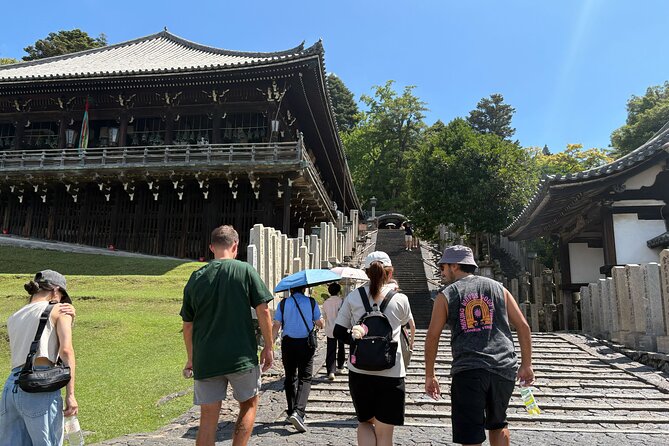
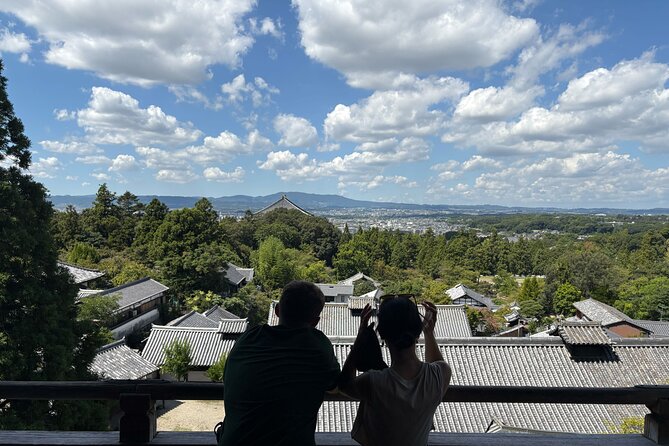
Nigatsu-do Temple is another 20-minute stop, and admission is free. This hall is closely tied to the Omizutori (Water-Drawing) ceremony, held every March, with a history over 1,250 years old. Even if you are not there in March, hearing that context changes how you look at the space.
Here is the trick: ceremonies like Omizutori tend to shape architecture and visitor movement over centuries. You start thinking less like a modern tourist and more like a person watching a ritual unfold. The hall also offers views, which matters because Nigatsu-do is the kind of place where scenery and spiritual function overlap.
This stop also helps you manage energy. After Kasuga and Tamukeyama, you are not jumping immediately into the biggest crowd magnet yet. Nigatsu-do becomes a comfortable bridge, not a sudden overwhelm.
Todai-ji and the Great Buddha Scale That Stops Conversations
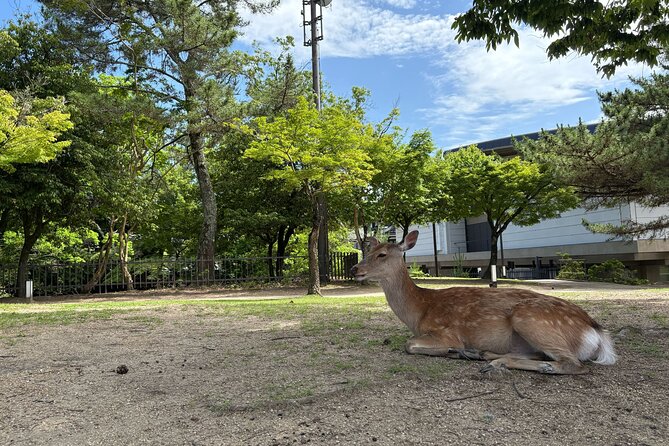
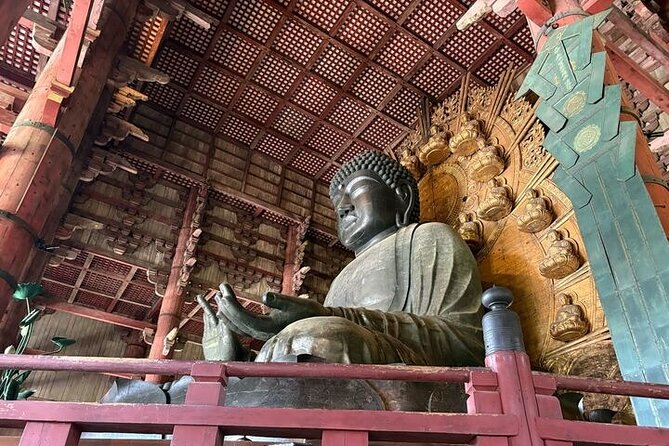
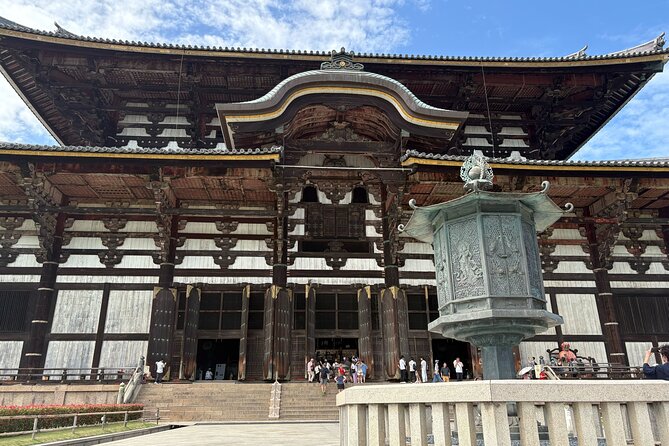
Todai-ji Temple is a 40-minute included stop, and it is the big one on the schedule. It is a UNESCO World Heritage site and home to the Great Buddha, one of the largest bronze statues in the world. The scale here is not subtle. Even if you have seen photos, seeing it in person tends to make you go quiet for a second.
I love Todai-ji because it works on two levels at once. First, you get that “wow” effect from the main Buddha hall and the statue itself. Second, the temple environment makes you slow down just enough to notice craftsmanship and space proportions. That is where having an English-speaking guide helps, because the explanations make the bronze and architecture feel less like random decoration and more like intentional choices.
A smart move: do not spend your entire visit staring at only the Buddha. Look at the edges, the hall structure, and how people move through the space. You will get more than one kind of “aha” from the stop.
From here, the deer factor also becomes relevant. Nara Park is known for free-roaming deer, and this part of the day is usually when you can spot them nearby. If deer are a priority for you, keep your snacks put away and watch how the deer behave around groups.
More Walking Tours in Nara:
- Nara Half Day Trip Walking Tour (Private Option Available)
★ 5.0 · 937 reviews - Kyoto Geisha Walking Tour: Gion District & Hidden Gems
★ 4.7 · 3,273 reviews - Tokyo Tsukiji Fish Market Food and Culture Walking Tour
★ 5.0 · 3,184 reviews - Kyoto: Gion Magical Night Walking Tour with Geisha Trivia
★ 4.9 · 2,393 reviews
Shika no Fune Mayu Lunch, Plus Your Take-Home Furoshiki
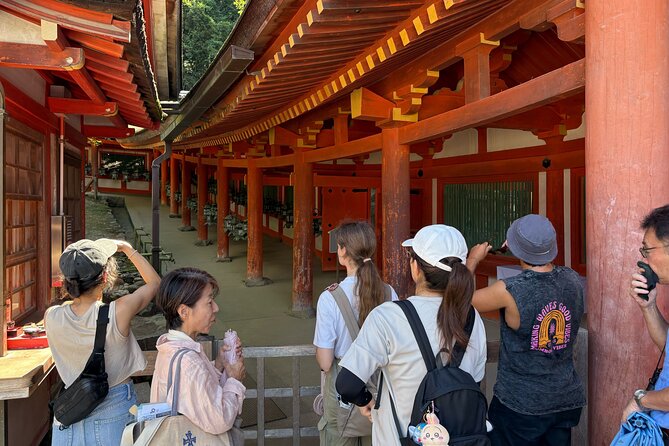
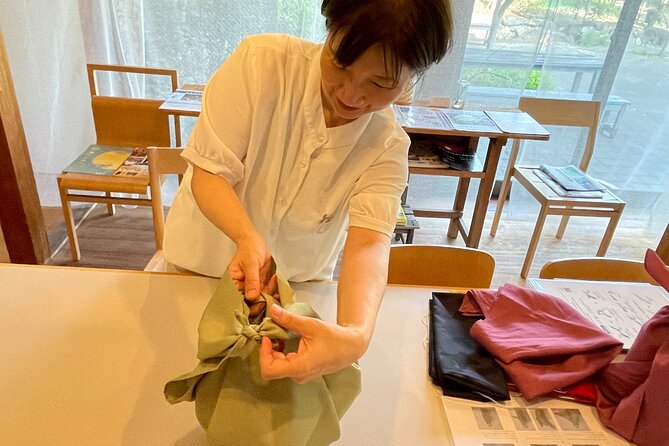
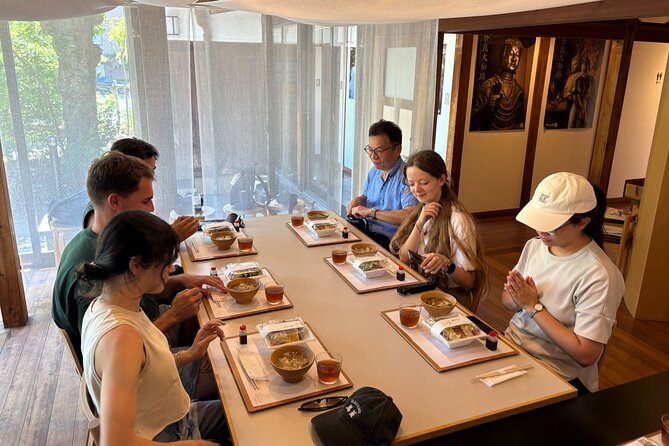
Now for the part that feels the most “you are doing something” instead of just viewing: Shika no Fune Mayu. This is a 1-hour stop where you have lunch and also the furoshiki wrapping experience, with admission ticket included.
Lunch here is built around a classic Japanese setup, with freshly cooked rice and seasonal vegetables from Nara. That seasonal detail matters because it makes the meal taste connected to where you are standing. This is also the right timing to reset your legs. After temples and shrine interiors, you want to eat something real, not just a vending machine grab.
Then comes furoshiki. Furoshiki is cloth wrapping, and the tour gives you a short workshop so you can take your own cloth home. What makes this valuable is that it is not just craft as a souvenir. You learn a practical folding or tying concept you can actually use later. In daily life, you can use it to wrap small items, tote light purchases, or gift something neatly without plastic.
A key detail to confirm before you go: the furoshiki experience is listed as included depending on your option. On some departures, you might have the workshop as part of the day, but your booking details will determine the exact inclusions.
Also note a schedule quirk: lunch is included depending on the option, and Wednesday is not included. If you are traveling on a Wednesday, check your specific option so you are not stuck deciding what to eat while everyone else is already seated.
Naramachi Backstreets: A Short Taste of Old Town Nara
After the big religious sites, the tour shifts into a calmer, more “street-level” stop at Naramachi Nigiwai-no-Ie. This is a 15-minute stop with admission free.
This is a historic townhouse in the old Naramachi district of Nara. It was built in 1917 by an antique dealer and is now a Registered Tangible Cultural Property. Even with only 15 minutes, this stop works because it changes what you are looking at. You have spent the morning with shrines and temple halls, then suddenly you are in the living side of Nara: the buildings that supported commerce and daily life.
If you want to stretch your legs after the tour ends, this area is also a natural launch point. The tour finishes around the shopping district, which is described as easy to access from JR Nara Station or Kintetsu Nara Station.
That last bit matters for your real-life planning. You do not want a tour that ends far away from transit when your day is done. This ending location keeps the wrap-up simple.
Price and Value: Why $37 Feels Fair for What You Get
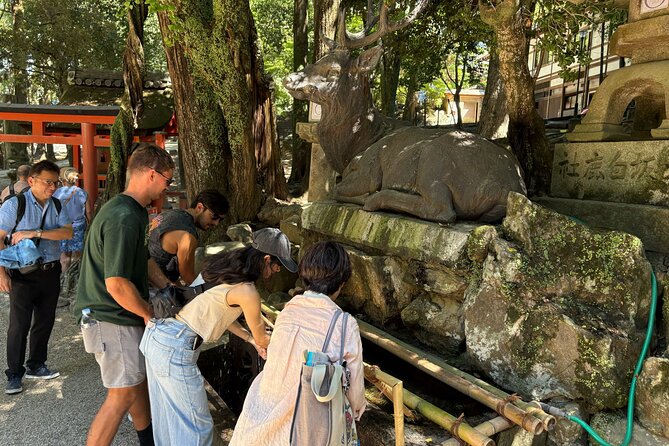
At $37.00 per person, this tour sits in the “good value” category if you care about both sights and structure. You are not just paying for someone to point at temples. You are paying for an organized route that includes entrances to multiple sites, plus lunch (depending on your option), plus a guided workshop.
Here is how the value stacks up for practical travelers:
- Multiple admissions included: Kasuga Taisha, Todai-ji, and the stop at Shika no Fune Mayu include tickets in the schedule. Nigatsu-do and Naramachi Nigiwai-no-Ie are free stops, which helps keep the total cost sensible.
- Time efficiency: 5.5 hours is enough to hit the main UNESCO moments without turning your day into a full-on two-part marathon.
- Guide cost included: an English-speaking local guide plus small group time can be hard to replicate if you DIY.
- Deer plus old town stop: these are not always included in more rigid, temple-only tours.
The one additional cost to remember: bus fee is not included and is listed as ¥500 per person. If you are the kind of traveler who hates surprises, have that amount available.
Also, the mobile ticket format is a small convenience. It saves you time once you’re in Nara, especially if you are bouncing between transit and meeting points.
What It’s Like With a Tiny Group (and Why That Matters)
This tour caps at 7 travelers, which changes the whole feel of a walk. With fewer people, the guide can adjust. You do not constantly lose sight of the group every time someone stops to read a sign.
It also helps with the “learning factor.” When you have time to ask, you learn faster. When you learn faster, the stops feel less like checkboxes and more like places you understand.
You also get a bit of human reassurance. In the kind of scenario where the group is very small, the guide can keep you engaged and help you connect the dots between sites. One English-speaking guide, Keiko, is specifically highlighted for keeping participants engaged and offering clear historical insight, even when the group was only two people.
That kind of attention is what makes a guided tour worth it, even in a country where DIY travel is easy. You get the benefits without the “herding” feeling.
Who Should Book This Nara Highlight Walk?
This tour is best for you if you want:
- Big Nara names in one morning to afternoon block, especially Kasuga Taisha and Todai-ji
- A guided experience with context in English, not just a map and a hope
- An activity beyond sightseeing, the furoshiki workshop, plus a sit-down Japanese lunch (where included)
- Deer time in a structured day, rather than wandering around with no plan
It may not be the best fit if:
- You want a super slow, linger-at-everything pace
- You are visiting on a Wednesday and your option does not include lunch, unless you are comfortable planning your own meal
- You prefer to skip hands-on workshops and only want temples. (There is a workshop here by design.)
If you like walking, like learning a bit as you go, and enjoy a day that feels both classic and practical, this hits the sweet spot.
Should You Book It?
I think you should book this tour if you want a well-paced way to see Nara’s top UNESCO highlights without wasting time figuring out connections. The route hits major spiritual landmarks, adds deer time, and gives you a take-home skill through furoshiki. For the $37 price, with admissions included for key stops, it is a strong value.
Book it especially if you care about guidance, because the small group size and the English-speaking local guide setup mean you can actually understand what you are seeing. Just double-check your option for lunch and furoshiki, because the schedule notes mention Wednesday may not include lunch, and the workshop depends on what you selected.
If you go in with comfy shoes and a little flexibility around deer and crowds, you will leave with a day that feels like more than a checklist.
FAQ
What’s the duration of the Nara Highlight Walking Tour?
The tour lasts about 5 hours 30 minutes.
How many people are in the group?
The tour has a maximum of 7 travelers.
Does the tour include lunch and is it the same every day?
Lunch is a traditional Japanese lunch, but it depends on the option. The information also says Wednesday is not included.
Is the furoshiki experience included?
Yes, you can expect a furoshiki wrapping experience, but it depends on your option.
What are the main included sites or stops?
The tour includes visits to places such as Kasuga Grand Shrine and Todai-ji Temple, plus other stops like Nigatsu-do Temple. The furoshiki and lunch are at Shika no Fune Mayu.
Do I need to pay for transportation during the tour?
The bus fee is not included and is listed as ¥500 per person.
Where does the tour start and end?
It starts at 行基菩薩像27 Higashimuki Nakamachi, Nara 630-8215, Japan, and ends at Nakatanidou29 Hashimotochō, Nara 630-8217, Japan, around the shopping district with easy access to JR Nara station or Kintetsu Nara station.
Latest write-ups near Nara
- Nara – Highlights Bike Tour★ 4.5 · 89 reviews
- All must-sees in 3 hours – Nara Park Classic Tour! From JR Nara!★ 5.0 · 108 reviews
- Nara:Authentic Tea Ceremony(Max 5 ppl) -Master Matcha Making★ 5.0 · 119 reviews
- Nara Early Bird Tour (Kyoto Departure Option Available)★ 4.9 · 142 reviews
- Nara 6hr Private Tour with Government-Licensed Guide★ 5.0 · 219 reviews
- Nara Early Morning Tour (Kyoto or Osaka Departure Available)★ 5.0 · 676 reviews
- Nara Half Day Trip Walking Tour (Private Option Available)★ 5.0 · 937 reviews
- World Heritage Kyoto & Nara Uji Authentic Matcha Experience★ 5.0 · 1,573 reviews
Walking Tours, compared.
Kyoto Geisha Walking Tour: Gion District & Hidden Gems
Read our review →
Tokyo Tsukiji Fish Market Food and Culture Walking Tour
Read our review →
Gion Magical Night Walking Tour with Geisha Trivia
Read our review →
Imperial Palace and Shogun Historical Walking Tour
Read our review →
Gion Geisha District Walking Tour – Stories of Geisha
Read our review →
Shinjuku Local Bar and Izakaya Guided Walking Tour
Read our review →
Browse the lists this tour appears in