
Reviewed · CYCLING TOURS
Tokyo: 3-Hour Bike/E-Bike Tour of the City’s Hidden Gems
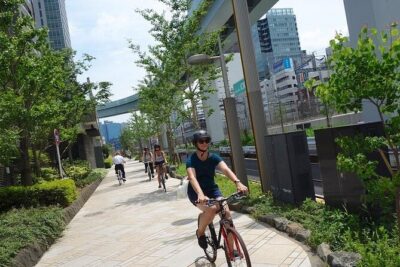
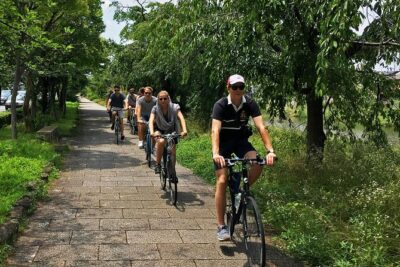
Tokyo by bike in three hours is a smart way to feel like you have a handle on the city fast. You’ll cover about 18 kilometers and still stop for photos and history breaks. I love the e-bike option that helps you keep energy for traffic time, and I love the small-group setup that makes it easy to ask questions. One catch: you do need to be comfortable riding among cars and pedestrians, because each stop is brief and you are moving most of the time.
The route blends big-name sights with calmer streets, then finishes in the Harajuku-Shibuya area. You get a mini pouch for your phone, wallet, and keys, plus bike insurance and a raincoat if the weather turns. It is not a slow sightseeing day, but it is a very efficient, fun one.
Key highlights at a glance
- 18 kilometers in about 3 hours so you cover real ground without feeling rushed all day
- Bike or e-bike included, with a raincoat on rainy days
- Free admission for many stops, with one notable paid stop (Akasaka Palace)
- Maximum 7 travelers, which helps the guide manage pacing and safety
- English and Japanese guides in person, with stories about history, architecture, and culture
- Bike insurance + phone/wallet mini pouch, plus optional helmet rental
How this 3-hour bike and e-bike tour really works
This is built like a “see a lot, learn a little, stay mobile” Tokyo day. You ride for the majority of the three hours, with short time blocks at each stop to look around and take photos. The upside is scale. On foot, you would burn hours just moving between central neighborhoods.
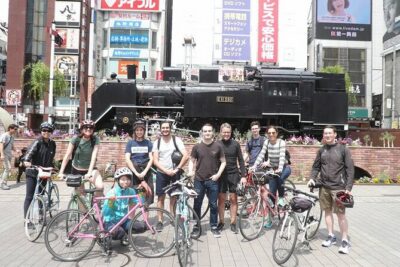
Group size matters here. With a maximum of 7 riders, the guide can keep everyone together without the constant stop-and-wait feeling you sometimes get on larger tours. It also makes it easier to ask direct questions, especially if you are trying to understand what you are looking at in places like the Imperial Palace gates or Tokyo Station’s architecture.
You’ll need moderate physical fitness. Even with an e-bike, you are still pedaling and steering through busy areas. And even with short stops, you should plan to stay alert on the bike. The good news is that multiple guides you might encounter, including Show, Naoki, Kosei, Sho, Miguel, Rinto, and others mentioned in the program’s feedback, are praised for keeping riders safe and for explaining what you are seeing in plain language.
If you’re considering renting a helmet: helmets are not included. Rental is ¥1000, and you need cash on the day if you want one. I recommend thinking about this before you show up, especially if you are used to biking at home with a helmet every time.
More Cycling Tours in Tokyo
- Tokyo Guided Small-Group Biking Tour
★ 5.0 · 1,250 reviews - Tokyo Great Cycling Tour
★ 5.0 · 811 reviews - Tokyo Top Highlights 3h Guided E-bike Tour
★ 5.0 · 714 reviews
Stop 1: Zojo-ji and the Tokyo Tower photo moment
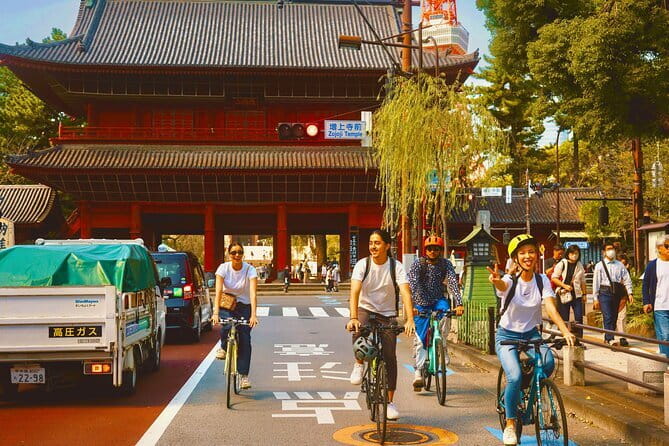
You start at Zojo-ji, a famous temple complex with one of those Tokyo skyline pairings that feels instantly cinematic. The big reason this stop works is the photo setup: you get the temple, and you get Tokyo Tower in the background.
You have about 15 minutes here, and admission is free. If you are lucky, you may be able to go inside the temple and see more of the structure. Either way, even a quick temple visit is a nice contrast to modern Tokyo traffic, and it gives you a calm mental reset before you roll into the more government and business districts.
Practical tip: arrive ready to stop quickly for photos. The pace is the point of this tour, so don’t count on a long wandering session at each location.
Stop 2 and 4: Imperial Palace area, guards, and the Otemon Gate
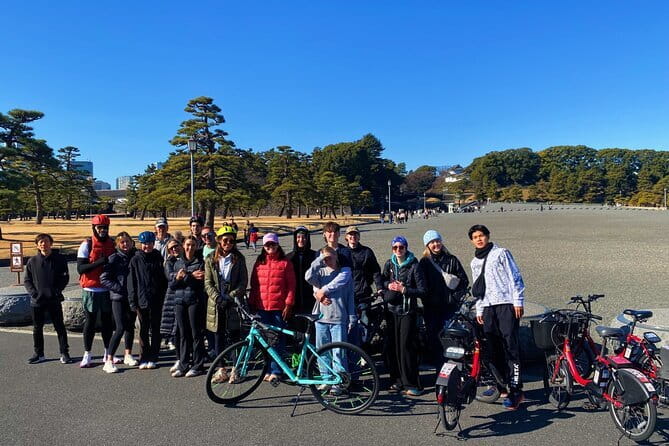
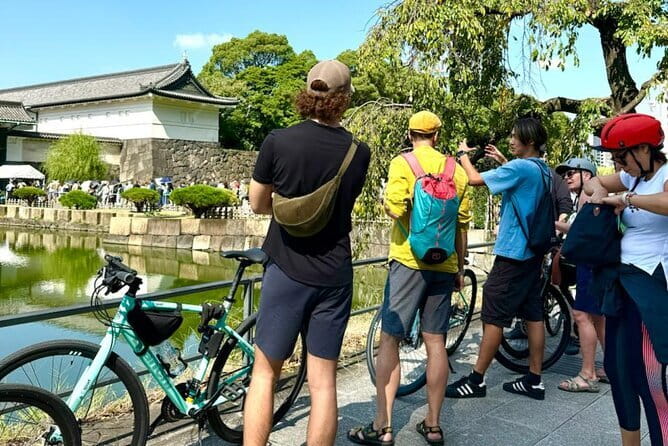
Next you head into the Imperial Palace area, where the vibe shifts from temple grounds to formal, ceremonial space. You’ll see the entrance area and then make it to the Kokyo Otemon Gate, the main gate people associate with the Imperial Palace.
These are quick stops, around 10 minutes each, and admission is free for both of these listed stops. What makes them worthwhile is that you are seeing the gates up close and moving through the surrounding area by bike, which feels more like passing through the city than just arriving and leaving on foot.
A good part here is the guide context. The program is designed to explain Japanese history and architecture along the ride, not just at one or two big lectures. When you pair that kind of story with a real landmark like Otemon Gate, it clicks faster.
Practical tip: don’t try to memorize everything in ten minutes. Instead, pick one idea the guide tells you, like why the gate matters or what the location represents. That way, the short time still lands.
Stop 3: Tokyo Station Marunouchi Hiroba and the red-brick classic
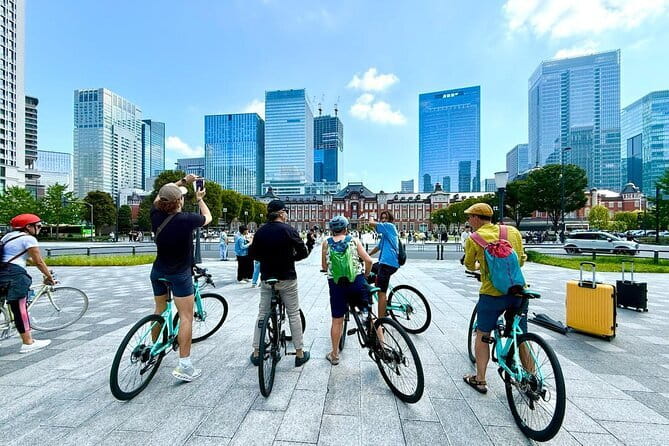
Then you hit one of the most satisfying “wow” moments for architecture lovers. Tokyo Station’s Marunouchi area is a mix of modern city movement and historical design, with the iconic red-brick facade that opened in 1914.
You’ll spend about 10 minutes at Tokyo Station Marunouchi Ekimae Hiroba, with free admission for that stop. It’s the kind of place where you can get good photos without needing a museum ticket, and it helps break up the more ceremonial feel of the Imperial area.
What I like about including Tokyo Station is practical: it puts you in the middle of the city’s transport heartbeat. After this stop, you’re no longer just seeing isolated sights. You’re seeing how the city is built and organized.
A change of pace from Tokyo:
- Mt Fuji and Hakone 1-Day Bus Tour Return by Bullet Train
★ 5.0 · 26,383 reviews - 1-Day Tokyo Bus Tour
★ 5.0 · 14,250 reviews - Tokyo: TOKYO SKYTREE® Admission ticket
★ 4.5 · 11,192 reviews - Tokyo: teamLab Planets TOKYO Digital Art Museum Entry Ticket
★ 4.6 · 9,779 reviews
Stop 5: Akasaka Palace (State Guesthouse) for a brief, formal look
Akasaka Palace is a short stop, about 5 minutes, and this is the one item where admission is listed as not included. The palace started as a royal villa and now functions as a state guesthouse, so you are looking at a place with very official status.
Because the tour time is short, you should treat this stop as a moment to orient yourself with the setting rather than a deep visit. If you are a traveler who loves government and institutional architecture, it will feel like an interesting side note that most people skip.
Practical tip: keep some cash or a plan ready in case you want to cover the entrance fee for this stop, since it is not included in the tour.
Stop 6: Japan National Stadium, Olympics 2020 connection
After the formal palace setting, the tour swings toward modern big event Tokyo with Japan National Stadium. You’ll spend 15 minutes here, and admission is listed as free.
This stop matters if you want a quick, human scale link to recent history. The stadium is where the 2020 Tokyo Olympic and Paralympic Games took place. Riding by it rather than just reading about it makes it feel real, and the extra stop time compared to some others gives you a little room to look around.
Stop 7, 8, 9: Aoyama Street, Cat Street, and Shibuya Crossing
Now for the Tokyo mood shift. This is where your route starts to feel like a fashion, street, and people-watching montage.
Aoyama Street
You’ll have about 5 minutes at Aoyama Street, which is known for high-end fashion brands and unique architecture. The value here is quick visual sampling. You see Tokyo’s polished design side without needing hours in department stores.
Shibuya Cat Street
Then it’s Shibuya Cat Street, another 5 minutes stop. This area is associated with a mix of current brands and vintage shopping. You likely will not have time to browse deeply, but you do get the feel of the streets, and that matters if you want your day to end with the right energy.
Shibuya Crossing
Finally, you bike through the legendary Shibuya Crossing. This is a short 5-minute moment, and that’s exactly why it works on a short tour. You get the landmark experience without spending the whole day stuck in pedestrian bottlenecks.
The whole sequence from Aoyama to Cat Street to Shibuya helps you see how Tokyo can feel like different cities in the same neighborhood radius.
The ride itself: e-bike vs bike, hills, and heat

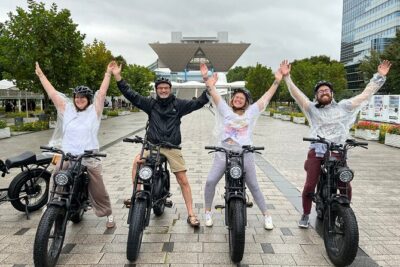
If you are on the fence about e-bike, my advice is to lean that way unless you are very confident on hilly rides. The difference is not just comfort. It changes how much attention you can give to the street and the guide’s explanations.
In the feedback for this tour, the e-bike option is a repeated highlight, especially for warm, humid conditions. Some riders who chose regular bikes found certain climbs harder, which meant they had to focus more on effort and less on enjoying the scenery and conversation. Even people who were not avid cyclists still found the ride doable, mainly because the e-bike keeps you from arriving drained.
That said, e-bikes are not always a perfect fit for everyone. One note in the program feedback mentioned an e-bike that felt too small or had performance issues. That is rare, but it’s smart to check the bike right away at the start. You want comfort and control, not adjustments you discover mid-ride.
Also consider the social side: if your group includes riders with different fitness levels, the e-bike can help everyone keep a shared pace. That usually makes the experience smoother for the whole group.
Guide stories: what you gain beyond photos
This is not just a “ride to landmarks” activity. The guide is there for context, and that context is what turns a list of stops into understanding.
The tour is designed to share stories and recommendations about Japanese history, architecture, and culture while you move. And it’s not only one style of explanation. The guides named in the feedback, like Show, Naoki, Kosei, Miguel, and Rinto, are praised for answering questions and keeping riders engaged at each stop.
You should expect the information to be tied to what you can see right then: the structure of a gate area, why Tokyo Station looks the way it does, what the Olympics connection means for the stadium, and what to notice in the fashion streets.
One practical consideration: this kind of tour typically does not include headsets, so when the guide speaks, it helps to stay positioned where you can hear clearly. If you struggle with audio in noisy outdoor settings, plan to stay close to the guide during stop points.
Timing and what each stop means for your day
The tour covers a lot, but it does not linger. Here is the time pattern to expect:
- Short, photo-ready stops: often 5 to 10 minutes
- A couple longer moments: Zojo-ji (15 minutes) and Japan National Stadium (15 minutes)
That makes it excellent if you have a half-day window and want a grounded orientation to central Tokyo. It is less ideal if your travel style is slow and museum-heavy. This is a ride-first experience, with brief scene checks at each location.
It also helps if you are someone who likes structure. The tour gives you a plan, you follow it on a safe route, and you end in the right area to keep exploring without immediately needing to navigate everything alone.
Where you start and where you end (and why that matters)
You meet near Shiba Park in Minato City. The start point is listed at Shibakoen 2-chōme, at the Shiba Park Building address provided in the meeting instructions.
You end near Yoyogi Park, close to Harajuku Station, with the tour finishing in the Jinnan area between Yoyogi Park and Shibuya. The walk times listed are helpful if you are planning your next meal or train connection:
- about 5 minutes to Yoyogi Park
- about 10 minutes to Shibuya Station
This ending is a smart play. Instead of sending you back to a far-away meeting point, it drops you into one of Tokyo’s most convenient exploration zones for shopping, food, and wandering.
Price and value: does $59.45 make sense?
At $59.45 per person, this tour can be good value if you look at what is included and what it saves you.
You are paying for:
- a guided route through central Tokyo
- bike use (and e-bikes are available)
- bike insurance
- a raincoat on rainy days
- a small-group experience with enough structure to avoid getting lost
You also cover a meaningful distance, about 18 kilometers, in around three hours. That matters because the combination of guided movement plus multiple major stops would usually take a lot more time if you tried to build the day yourself.
The costs to watch:
- Helmet rental is not included (¥1000, cash needed).
- Food and drink are not included.
- Akasaka Palace has a stop where admission is not included.
Even with those extras, it tends to pencil out well if you were already planning to see several central landmarks and you want transportation handled while a guide keeps you pointed in the right direction.
Best weather, best rider, and best expectations
This experience requires good weather. If conditions are poor, it can be canceled and you’ll be offered another date or a full refund. So if you are traveling in rainy season, consider booking with flexibility.
Best rider fit:
- First-time visitors who want a fast orientation
- Travelers who like seeing neighborhoods up close but do not want to walk the whole day
- People who want a structured “greatest hits plus side streets” mix
People who may want to skip:
- Anyone who feels nervous riding in busy pedestrian areas and traffic
- Travelers who want long time at a single attraction, since many stops are only about 5 to 10 minutes
A quick note on kids: child seats can be set up for an extra fee of ¥3000, but you have to contact at least 2 days before and bring cash on tour day. If you are traveling with a child, plan ahead.
Should you book this Tokyo bike or e-bike tour?
I’d book it if you have about half a day to work with and you want to cover serious ground without juggling transit and directions. The small-group size, the e-bike option for comfort, and the mix of iconic stops like Zojo-ji, Imperial Palace gates, Tokyo Station, and Shibuya Crossing make it a strong choice for an efficient Tokyo introduction.
I would not book it if you hate the idea of sharing busy streets on a bike or if you need long museum-style pacing. This tour is designed to move, photograph, and learn in short bursts.
If you do book, bring cash for any helmet you want and keep an eye on the Akasaka Palace stop since admission is not included there.
FAQ
How long is the Tokyo bike and e-bike tour?
The tour lasts about 3 hours.
How much distance do we ride?
You will ride about 18 kilometers during the tour.
Is a bike or an e-bike included?
Yes. The tour includes use of a bicycle, and an e-bike option is available.
What is included in the price?
Included are use of the bike, a raincoat on rainy days, an in-person guide (English and Japanese), a mini pouch for your phone and essentials, and bike insurance.
Are helmets included?
No. Helmets are available for rental for ¥1000, and you need to bring cash on the day if you want one.
Do I need to pay for admission at the stops?
Many stops list free admission. Akasaka Palace (State Guesthouse) is listed as not included for admission.
Where do we meet and where does the tour end?
You meet at Shiba Park Building in Minato City, near Shibakoen. The tour ends near Yoyogi Park in the Jinnan area, with about a 5 minute walk to Yoyogi Park and about a 10 minute walk to Shibuya Station.
What fitness level is needed?
The tour asks for a moderate physical fitness level.
What if the weather is bad?
This experience requires good weather. If it is canceled due to poor weather, you will be offered a different date or a full refund.
Latest write-ups near Tokyo
- Tokyo Nights: Shibuya Photo Adventure★ 5.0 · 20 reviews
- Wagyu & Sake 8 Course Tasting Dinner in Shinjuku★ 4.9 · 20 reviews
- Making Japanese desserts Nerikiri & drinking matcha in Tokyo★ 5.0 · 20 reviews
- Mt. Fuji 5th Station, Owakudani Ropeway, Pirate Ship plus Outlet shopping!★ 4.5 · 20 reviews
- Japanese Whisky Hunting《HIGH-QUALITY-ONLY》Rare Tasting Class★ 5.0 · 20 reviews
- Kintsugi Experience with Arita Ware in Tokyo (English Guide)★ 4.8 · 20 reviews
- This is Asakusa! A Tour Includes the All Must-Sees!★ 5.0 · 20 reviews
- Tokyo: Karate Experience with Former All-Japan Champion★ 5.0 · 20 reviews
Cycling Tours, compared.

3h Tokyo E-Bike Tour: Hidden Gems, and Local Life with guide
Read our review →
Arashiyama Bamboo Forest & Hidden Gems Bike Tour (Early Bird)
Read our review →
Hiroshima in a Nutshell: Morning Bike Adventure
Read our review →Browse the lists this tour appears in