
Reviewed · SAKE TASTINGS
Private Pewter Sake Cup Experience with a Kyoto Artisan
Making a sake cup with your own hands is rare in Kyoto, and this workshop gives you a very direct kind of souvenir: real metal shaping, not just watching. You work with pewter and a hammer under the guidance of the artisan behind Saluk.
What I love most is how hands-on it feels, from picking your hammer to rotating the cup as you strike patterns. I also like the option to personalize with letters, numbers, initials, or even a date, so the cup becomes yours, not a generic keepsake.
The main consideration is location. The studio sits outside central Kyoto, so you will want to plan for transit time and build in a little buffer so the 2.5 hour session does not feel rushed.
Key Highlights to Know Before You Go
- Choose from several hammers and learn how different shapes create different textures and patterns
- Stamp a personal mark on the base, from initials to a date
- Finish the rim for comfort, including height and a beveled drinking edge
- Understand pewter for drinking, and how people use the cup beyond sake
- Get a true craft workshop feel in a quieter, calmer area near public transport
- Leave with real size and function, roughly 64 mm wide, 53 mm tall, holding about 90 ml (115 ml to the rim)
A Kyoto Workshop Where You Make the Whole Souvenir by Hand
This is one of those Kyoto experiences that feels like craft you can actually take home, instead of a decorative token. You are not just learning a technique, you are making an object meant for real use: a pewter sake cup.
The class is taught by Kanako at Saluk. It runs about 2 hours 30 minutes and is set up for an intimate experience, with your group staying together. That matters because hammering metal is a very physical, very specific task. You need time to get the motions right, and you benefit from being able to ask questions when something feels off.
You also do not have to bring anything. Materials are provided, and the workshop has an organized flow, so beginners are not left guessing.
More Food & Drink in Kyoto
- Kyoto Night Foodie Tour in Gion (9+ dishes + 6 Sake tastings)
★ 5.0 · 1,762 reviews - 3-Hour Kyoto Insider Sake Brewery Tour with Tastings & Pairings
★ 5.0 · 917 reviews - Arashiyama Bamboo, Temple, Monkeys, or Secret Sake Brewery
★ 4.8 · 886 reviews
From Choosing Your Hammer to Striking Pewter Patterns
The experience starts with the part that makes this workshop so memorable: striking metal with your own hands.
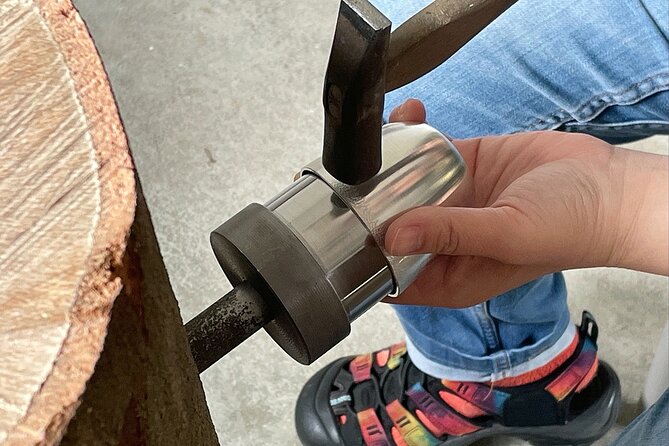
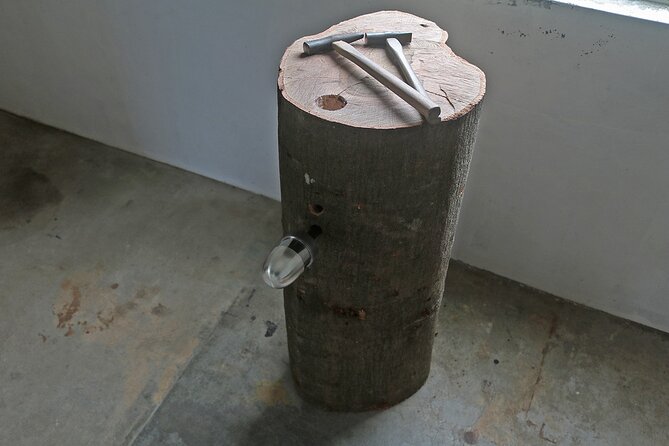
First, you choose a hammer from several types. The hammer shapes influence the final look, because each hammer creates a different pattern when it hits the pewter. Then you place the pewter cup on the anvil and strike while rotating the cup. The rotation is key, because it spreads the design evenly and helps you avoid a flat look.
You can use just one hammer, or mix several. That option is a big deal, especially if you want something more planned. One person can go for a consistent repeating texture, while another can blend styles for a more layered look.
As you work, you are also learning how pewter behaves. Pewter takes impressions in a way that feels responsive, and that helps beginners stay engaged. You are doing something with your hands the whole time, so you will not spend half the class waiting for someone else to move on.
Why Pewter Gets Sake Lovers Excited
Pewter is not just a trendy material. It has a long role in Japanese drinkware, and the workshop explains why it is prized for sake.
The practical takeaway for you is this: the cup is designed for drinking. It is not meant to be a shelf-only souvenir. You can use it for sake, but the cup is also good for whiskey and chilled green tea, and you can use it for other occasions depending on your taste.
One more interesting point Kanako shares is about everyday practicality. Pewter is said to help keep water cleaner, which some people connect to ikebana and flower arranging. Even if you do not plan to use it for that, it adds to the feeling that this is a working craft, not just a decorative one.
Stamps, Rim Bevels, and What the Artisan Finishes for Safety
Once the main hammered pattern is done, you have a chance to make the cup feel personal.
If you want, you can stamp letters, numbers, initials, or a date on the base. This is where the souvenir becomes emotionally useful. It is easy to remember to take photos in Kyoto. It is harder to take something home that feels like a specific moment. A date stamp gives you that anchor.
After stamping, the finishing steps focus on comfort. You use a file to adjust the height and bevel the rim at an angle. That rim angle matters because you are going to hold the cup to your mouth. A good bevel makes the rim feel pleasant in a way that raw hammered metal never would.
Then there is a safety and quality step. The final polishing is done by Kanako using a rotary machine. That makes sense. The hammering is hands-on and fun, but final rim finishing benefits from a craftsman’s control, especially when the goal is a smooth drinking edge.
More Sake Tastings in Kyoto
- Kyoto: Insider Sake Brewery Tour with Sake and Food Pairing
★ 5.0 · 704 reviews - Kyoto Sake Brewery & Tasting Walking Tour
★ 5.0 · 623 reviews - 1.5-Hour Kyoto Insider Sake Experience with 7 Tastings & Pairings
★ 5.0 · 297 reviews - Kyoto: Insider Sake Experience with 7 Tastings and Snacks
★ 5.0 · 266 reviews
What Happens After You Finish, and How Big the Cup Really Is
The finished cup has clear, useful dimensions, so you can picture it before you decide this class is for you.
It measures about 64 mm in diameter and 53 mm in height. It holds about 90 ml, and if you fill it to the rim, it reaches around 115 ml.
That size is part of the value. If you only want a giant mug, this might not match your style. But for sake and small pours, it is spot on. For green tea or whiskey, it gives you that more intentional, slower-drinking feel.
You also take the cup home as a completed souvenir. Some people end up using their cup for more than they expected, because once you have the real thing, you stop treating it like a tourist purchase.
Getting to Craft Gallery SALUK35-2 and Making the Most of the Quiet Setting
The meeting point is Craft Gallery SALUK, 35-2 Shizuichinonakachō, Sakyo Ward, Kyoto, 601-1122. The class ends back at the meeting point.
You should expect to travel a bit for the setting. While the workshop is near public transportation, it is not in the densest downtown core. One reason this is a positive is mental. Kyoto can be loud and crowded, especially in popular areas. Here, the workshop experience is tied to a calmer environment, which fits perfectly with the slow rhythm of hammering and finishing.
If you are coming from Kyoto Station, plan your route so you arrive a little early. Even if public transport is easy, you will do better if you are not sprinting with tools and metal in your head.
This is also a good choice if you want something that feels more like a real studio than a storefront. The whole vibe is workshop focused, and that helps you stay present in the making.
Price, Timing, and Value for a Private 2.5 Hour Class
At $144.96 per person for about 2 hours 30 minutes, this class is not cheap on the surface. But value here is not just time. You are paying for a true craft outcome.
You get:
- A handmade pewter cup, with functional finishing
- Personalization options for initials, letters, numbers, or a date
- Materials provided, so you are not adding extra costs
- A private, small-group setting where the artisan can guide you directly
The other value piece is exclusivity. This workshop includes access to a workspace that is usually closed to the public. That changes the feel. You are not doing a mass-produced activity designed to move crowds through a schedule. You are learning techniques that have been part of Japanese craft for centuries, delivered in a small, teachable way.
In other words, you are buying skill, attention, and a physical object that you helped shape. That is the kind of souvenir that actually justifies the cost.
Who This Experience Fits Best (and Who Might Skip It)
This workshop is a strong match if you like hands-on learning, even if you are a beginner. The class is designed so most travelers can participate, and the structure keeps you from feeling lost.
It is also a good fit if you want a Kyoto memory that is not only a photo. A stamped date and a hammered pattern are the kind of details that mean something later when you see the cup on your shelf or in your cupboard.
You might want to consider your fit if you prefer low-effort activities. This is not a passive cultural show. You are physically hammering metal, then doing finishing steps like filing and beveling.
It is also worth thinking about your comfort with commute time. If you hate traveling away from the main Kyoto sightseeing routes, you will want to choose your day accordingly. The quiet setting is part of what makes it good, but that means it is not a quick stop you can tack onto any random afternoon.
Practical note: service animals are allowed, and the meeting point is near public transportation. If you have specific needs, it is smart to plan your route and arrive with extra time so the session stays comfortable.
Should You Book This Private Pewter Sake Cup Class?
Book it if you want a Kyoto craft that you can hold, use, and personalize. You are getting a real workshop experience with Kanako at Saluk, and you leave with a finished pewter cup designed for drinking. The combination of hammering time, optional stamping, and rim finishing makes this feel like more than a souvenir purchase.
Skip it if you mainly want top sights, short errands, and zero physical work. This class asks you to participate. If that sounds fun, you are in the right place.
If you are deciding between a generic workshop and something with real artisan access, this one is easier to justify. You are paying for a private, hands-on output, not just the chance to watch someone else work. When the cup is stamped and finished, it becomes a small ritual you can bring back with you to your own kitchen table.
FAQ
What will I make in this Kyoto workshop?
You will make a handmade pewter sake cup. You’ll hammer patterns into the metal, and you can also stamp letters, numbers, initials, or a date on the base if you want.
Do I need to bring anything with me?
No. You do not need to bring anything, because the materials are provided.
How long is the experience?
It runs about 2 hours 30 minutes.
Is this a private class or a group tour?
It is private. Only your group will participate, and the class is described as an intimate small-group setting.
Can I personalize the cup?
Yes. You can personalize it by stamping letters, numbers, initials, or a date on the base.
What is the size of the finished cup?
The cup is about 64 mm in diameter and 53 mm in height. It holds about 90 ml (about 115 ml when filled to the rim).
Where do I meet and how does the tour end?
You meet at Craft Gallery SALUK, 35-2 Shizuichinonakachō, Sakyo Ward, Kyoto, 601-1122, Japan. The experience ends back at the same meeting point.
Latest write-ups near Kyoto
- Kyoto Private Tour Full Day with Local Guide&Nara Option(PerGroup★ 5.0 · 20 reviews
- Sacred Pathways: Discover the Philosopher’s Path of Kyoto★ 4.9 · 20 reviews
- Kyoto UNESCO World Heritage Site Private Tour with a Premium Van★ 5.0 · 20 reviews
- Hammer Pattering Experience of Ring★ 5.0 · 20 reviews
- KYOTO: Private Tea Ceremony in Hidden Townhouse (Kid-Friendly)★ 5.0 · 20 reviews
- Sushi or Traditional Japanese Cuisine in a Kyoto Home with Emika★ 5.0 · 20 reviews
- The Kyoto VIP Experience!★ 5.0 · 20 reviews
- Kyoto Customized Private Tour: See Top Attractions in 1 Day★ 4.7 · 20 reviews
Sake Tastings, compared.

Kyoto Night Foodie Tour in Gion (9+ dishes + 6 Sake tastings)
Read our review →
1-Day Snow Monkeys, Zenko-ji Temple & Sake in Nagano
Read our review →
3-Hour Kyoto Insider Sake Brewery Tour with Tastings & Pairings
Read our review →
Arashiyama Bamboo, Temple, Monkeys, or Secret Sake Brewery
Read our review →

Insider Sake Brewery Tour with Sake and Food Pairing
Read our review →
1.5-Hour Kyoto Insider Sake Experience with 7 Tastings & Pairings
Read our review →Browse the lists this tour appears in