Reviewed · FULL-DAY
Nagasaki Full-Day Private Tour with Government-Licensed Guide
Nagasaki has a way of sticking with you. This private full-day tour helps you understand what you are seeing, from the solemn memory at Nagasaki Peace Park to the port city layers tied to foreign trade and faith.
I really like two things about it. First, you get a true private setup, so the pace and the talking points match your group, and guides such as Hiro, Mei, Yoko, Yoshi, and Minnie come highly rated for being friendly and practical. Second, you choose 3 to 4 sites from a solid menu, so you are not stuck speed-running everything. One drawback to plan for: it is a walking and public transport day, so you will want comfortable shoes and a clear strategy for hills and museum time.
Key highlights at a glance
- Licensed English-speaking guide who tailors the day to your interests, not a scripted loop
- Hotel pickup on foot plus local transit like trams and buses, which keeps the day feeling real
- Pick 3 to 4 stops from Peace Park, Inasayama, Dejima, Glover Garden, churches, temples, and more
- Smart mix of themes: WWII memory, foreign merchant history, and Christian and Chinese heritage
- Short, efficient site stops (often about 15 minutes) that work well if you want orientation and context
- Excellent customer feedback around guide warmth, timing, and flexibility, including families and first-timers
A hard-to-forget day: peace, ports, and faith in one route
Nagasaki is not one story. It is several stories braided together, often in the same view. This tour leans into that, with options that connect WWII remembrance to the city’s earlier and later role as a trading hub, then to the faith communities that took root there over centuries.
What makes the experience feel worth it is the way the guide turns stops into meaning. Instead of just standing in front of a sign, you get the background you actually need to understand why a place looks the way it does, and why people still care.
You also get a private group setting. In plain terms, that means fewer awkward gaps and more chances to ask questions. If you are visiting with family, it is especially helpful since the guide can slow down, repeat key points, or adjust the day to match a child’s attention span.
Also on the shortlist for Nagasaki:
- Nagasaki: Private Walking Tour with a Local
★ 4.7 · 79 reviews - Nagasaki Half-Day Private Tour with Government-Licensed Guide
★ 5.0 · 53 reviews - Nagasaki Private Historical Tour with Licensed Guide
★ 5.0 · 13 reviews
Price and logistics: what $155 really buys
At $155.22 per person for about 6 hours, this is not a cheap add-on, but it also is not a car-and-driver luxury day. The price is mainly paying for a licensed local guide, a customized plan with 3 to 4 chosen stops, and help getting around without stress.
Transportation fees and entrance tickets are not included as a blanket promise. That matters because some stops are marked free (like Peace Park and the Inasayama Observation Deck), while many others are not. The best value for your money comes when you:
- Choose at least one or two free sites to reduce out-of-pocket costs
- Group nearby stops so you do not burn time on transfers
- Keep your expectations aligned with the short stop times, often around 15 minutes, unless you pick a longer site option
If you want a day where someone handles routing and explanations, and you are fine doing public transit, this price tends to make sense. If you hate walking or want a full buffet of sightseeing without tradeoffs, you may feel the limits of “3 to 4 sites” in a single day.
Hotel pickup on foot, then trams and buses
A key practical detail: this is a walking and public transport tour. Pickup is offered, but it is described as meeting the guide on foot within a designated area, rather than a private vehicle picking you up at the curb.
In real life, this can be a plus. One of the strongest themes in feedback is the fun of riding around using local transit such as buses and trams. You get to feel like you are in Nagasaki, not just passing through it behind tinted glass.
For you, the planning tip is simple:
- Wear shoes you can walk in for hours
- Think about the day’s hill choices early, since places like observation points and historic slopes can add up
- Bring a small water bottle and plan for weather. Museum stops and viewpoints do not blend well with sudden rain
Choose your 3 to 4 stops like a local, not a checklist
The tour is designed for customization. The menu is wide, but you only pick 3 to 4 sites. That is how you keep the day from turning into “see everything, remember nothing.”
Here are a few smart ways to choose your mix:
If it is your first time and you want the big emotional anchor
- Nagasaki Peace Park
- Nagasaki Atomic Bomb Museum
- One “city contrast” stop like Inasayama Observation Deck or Glover Garden
If you care most about Nagasaki as a crossroads
- Dejima
- Glover Garden
- Dutch Slope and Meganebashi as an easy walk-and-view combo
If you want faith history and architecture
- Urakami Cathedral
- Oura Church
- Twenty-Six Christian Martyrs Monument
If you like Chinese heritage in Japan
- Sofukuji Temple
- Kofukuji Temple
- Confucius Shrine
Also, your guide can adjust the order based on your interests and time. In some days, guides have even added small personal-interest moments that fit the route, like an unexpected cat shrine stop. That is not something you should assume will happen every time, but it shows the day is flexible if you ask.
Nagasaki Peace Park and the Atomic Bomb Museum
These two are the heavyweight combo on the list, and you do not need to choose both, though many people do because they complement each other.
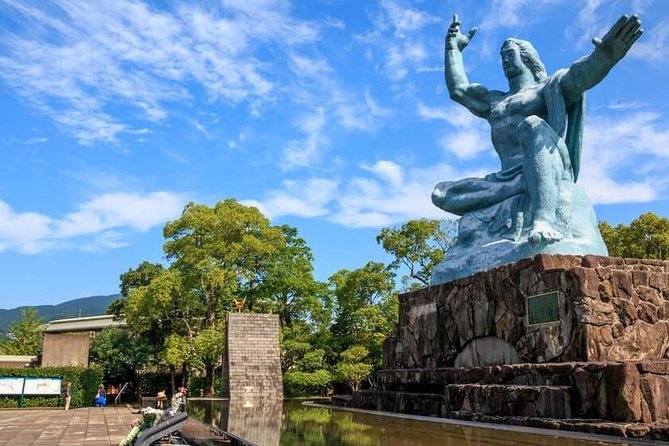
Nagasaki Peace Park is a tranquil space tied to August 9, 1945. The listed stop time is about 15 minutes, and the admission is free. The value here is orientation. You understand what this place commemorates and how Nagasaki frames remembrance in public space.
Nagasaki Atomic Bomb Museum is listed for about 30 minutes, and it is not marked as free. This is where the story gets more detailed through exhibits focused on devastation and recovery, and it is located near the hypocenter of the bombing. Compared to the park’s quiet atmosphere, the museum tends to hit with more specifics and artifacts.
How to handle both in one day:
- If you do both, consider pairing them with a lighter stop afterward, like a viewpoint or a historic street, just to rebalance your mood.
- Expect that you will move slowly emotionally. Even if the timing is short on paper, you will likely want a few extra seconds at certain exhibits or monuments.
One real consideration: these sites can be emotionally heavy. It is not a “fun photo” day partway through. If you are traveling with someone who gets overwhelmed by intense WWII material, tell your guide upfront so they can suggest the best pairing.
Inasayama Observation Deck: the view you plan around
Inasayama Observation Deck is Mount Inasa, with the summit around 333 meters above the city center. This stop is listed as about 15 minutes and admission is free.
Why people like it is practical and emotional. Practically, it gives you the geography of Nagasaki in one shot, so the port and neighborhoods start making sense. Emotionally, it lets you step back after heavier places and see the city as it lives now.
Getting to the top is flexible. The description notes you can reach it by ropeway, bus, or car. Since the tour is walking plus public transport, your guide will likely pick the easiest route for your day and the other stops you chose.
A small planning tip: if you prefer photos, go ready. There is often a temptation to rush views because the stop time is short. If the view is a priority, make it one of your core picks, and leave less time pressure for it than for a quicker museum.
Glover Garden, Dejima, and the Dutch Slope for port-city context
If you are trying to understand why Nagasaki looks the way it does, this cluster is where the city’s “outside contact” story becomes visible.
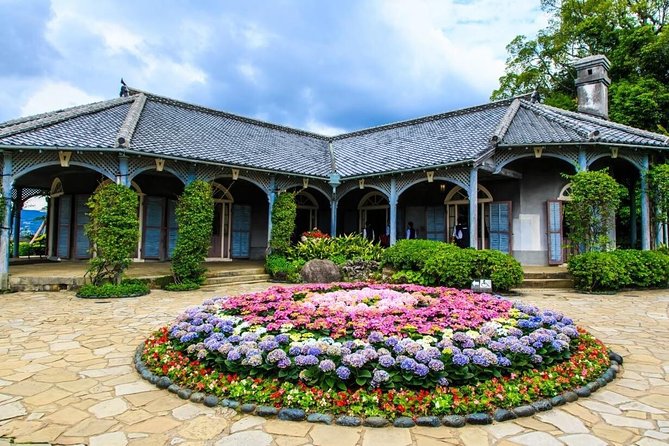
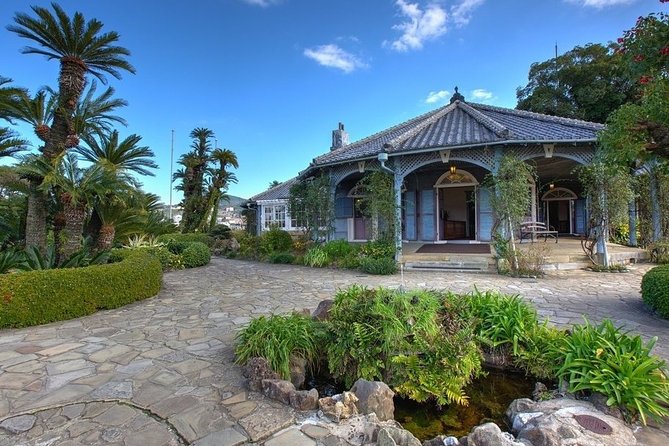
Glover Garden is an open-air museum showcasing mansions tied to former foreign residents. It is listed for about 15 minutes, and admission is not included. What you will likely notice is how Western merchant life is represented through buildings and setting, more than through one big single exhibit.
Dejima is a man-made island created in 1636 to segregate Portuguese residents from the Japanese population and control missionary activities. This is listed for about 15 minutes, with no admission included. Dejima’s value is big for the time: you grasp the logic of controlled contact, not just the fact that foreigners came.
Then there is the Dutch Slope, a stone-paved street where foreign traders lived after the port opened in 1859. It is listed without a defined ticket, and it is a great “walk and understand” stop because you can feel the slope and the setting.
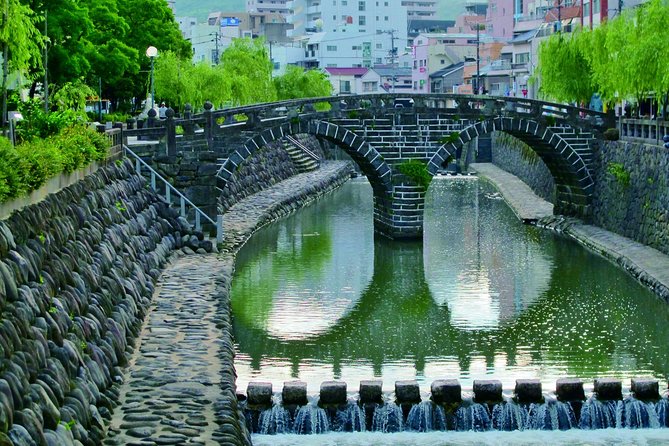
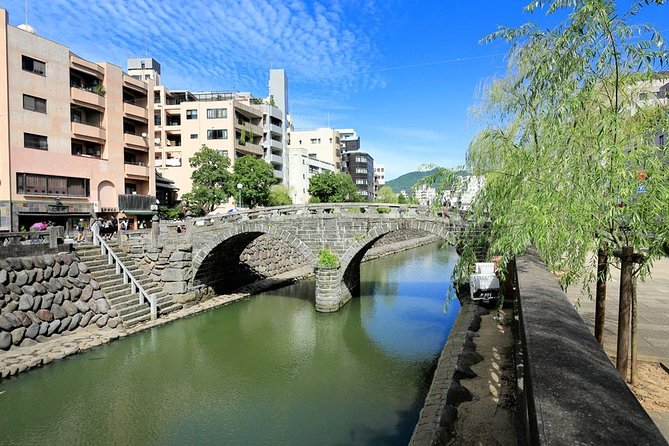
To add a simple connection, Meganebashi (Spectacles Bridge) is also in the options. It is listed as a stop but without a time value in the text you provided. It is known for its resemblance to spectacles, and it is a good visual punctuation point after the trade-history stops.
How to avoid feeling rushed: if you pick Glover Garden and Dejima, also choose one extra walkable visual stop like Meganebashi or Dutch Slope rather than stacking too many timed museum-type places in the same segment.
Temples and Chinese heritage: Sofukuji, Kofukuji, and Confucius
Nagasaki is one of the clearer places in Japan to see how Chinese culture influenced religious life. These stops give you that thread.
Sofukuji Temple belongs to the Obaku school of Zen Buddhism and has a setting tied to the Chinese community of Nagasaki. It is listed for about 15 minutes. Admission is not included. The description notes it has Chinese-arch style elements, so it is a good pick if you care about architecture and cultural blending.
Kofukuji Temple is also an Obaku foundation and is listed as one of the older and more important Chinese-founded temples in Nagasaki. It is listed for about 30 minutes, with admission not included. Because it is longer than many of the other options, it tends to suit visitors who want time to slow down, look around, and absorb the atmosphere.
Confucius Shrine (Kōshi-byō) is listed as a separate stop and built in 1893 by Nagasaki’s Chinese community. It is listed for about 15 minutes. It is one of the few Confucius shrines in Japan, so it gives you a specific, memorable angle beyond the usual “temple town” story.
Your best strategy here is to pick two of these, not all three, if you also want to include WWII or foreign-trade sites. Three temple stops plus one museum can eat your “context time,” since the tours work best when each site covers a different theme.
Christian Nagasaki: Urakami Cathedral, Oura Church, and the Martyrs
If your idea of Nagasaki includes the story of Christianity under pressure, these stops are the heart of it.
Urakami Cathedral is a working Catholic church in Nagasaki, now housed in a large European-style red brick building. It is listed for about 15 minutes, and admission is not included. What you are getting here is not just a building, it is a living reminder that this faith survived and reappeared in forms that fit local life.
Oura Church (Ōura Tenshudō) is another Catholic landmark, listed for about 15 minutes (and also repeated in the stop list you provided). It was built toward the end of the Edo Period in 1864 by a French missionary for foreign merchants in the city. Admission is not included. If you like early church history, this is a strong option.
Then there is the Twenty-Six Christian Martyrs Monument with the adjacent museum, listed for about 30 minutes. This is tied to Christians executed on February 5, 1597. Admission is not included. Even if you only spend the planned time, it is the kind of stop that tends to stick because it grounds the story in names and dates.
A sensible way to combine them:
- Urakami Cathedral plus Oura Church for the two church viewpoints
- Add the Martyrs Monument if you want the historical anchor that explains why these later buildings matter
One consideration: these sites can also be emotionally intense, just in a different way than the WWII stops. Tell your guide what feels like too much, so the day stays manageable.
Bridges, museums, and the Nagasaki Kunchi festival stop
Not every stop is a memorial or a major faith landmark. Some are here to balance the day and help you read the city as a living place with culture, art, and festivals.
Nagasaki Lantern Festival (Nagasaki Kunchi) is tied to Suwa Shrine and held annually on October 7 to 9. The description notes it has been celebrated for about 400 years. This stop is listed for about 15 minutes and admission is free. If your dates line up with October, you will get more festival atmosphere. If not, you still get the historical framework for why the city builds big seasonal identity around this event.
Nagasaki Museum of History and Culture is listed for about 15 minutes, not included admission. It is described as a modern museum dedicated to Nagasaki’s role as a major international trading port. If you want your WWII and foreign-trade stops to feel less random, this museum can help you stitch the story together quickly.
Nagasaki Prefectural Art Museum is also listed for about 30 minutes, not included admission. It is modern, spacious, and near the port. This can be a nice breather if your earlier stops included heavy memorial themes. Since it is art, the best value depends on whether you enjoy museums at all.
And then there is Meganebashi (Spectacles Bridge) again, because it functions like a city bookmark. It is quick, it is visual, and it helps you understand the river setting in downtown Nagasaki.
Should you book this private Nagasaki tour?
I would book it if you want:
- A licensed English-speaking guide to explain the why behind what you see
- A flexible day built around 3 to 4 carefully chosen stops
- A Nagasaki experience that mixes WWII remembrance with port history and religious heritage
- The practicality of pickup on foot plus public transit, so you travel like you are in Nagasaki, not like you are on a bus tour
I would skip or reconsider if you:
- Want a full “see everything” itinerary, because the format is intentionally limited to 3 to 4 sites
- Have mobility limits or hate walking, since the tour is walking plus public transportation with no private vehicle included
- Prefer longer museum time without pressure. Many stops are planned around short windows, often 15 minutes
If you pick your stops with care and use your guide to shape the order, this is one of the more focused ways to understand Nagasaki in a single day.
FAQ
How long is the Nagasaki private tour?
The tour duration is about 6 hours.
Is this tour private?
Yes. It is a private tour/activity, and only your group participates. You cannot combine multiple tour groups.
What does the tour include?
It includes a licensed local English-speaking guide, a customizable tour of 3 to 4 sites, and meeting the guide on foot within a designated area of Nagasaki. Pickup is offered from your Nagasaki hotel.
Are entrance fees included?
Entrance fees are not included. Some stops on the list are marked free, including Nagasaki Peace Park, Inasayama Observation Deck, and Nagasaki Lantern Festival.
How many stops can I choose?
Your itinerary is customized based on your interests, choosing 3 to 4 sites from the attraction list.
How do we get around during the tour?
This is a walking & public transport tour. Pickup is on foot, and you will use public transportation rather than a private vehicle.
What is the cancellation policy?
Free cancellation is available up to 24 hours in advance for a full refund. If you cancel less than 24 hours before the start time, the amount paid is not refunded.
Latest write-ups near Nagasaki
- Nagasaki Half-Day Private Tour with Government-Licensed Guide★ 5.0 · 53 reviews
- Nagasaki: Private Walking Tour with a Local★ 4.7 · 79 reviews
- Nagasaki Private Historical Tour with Licensed Guide★ 5.0 · 13 reviews
Full-Day, compared.

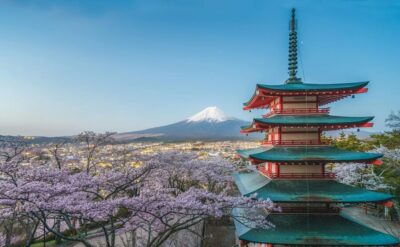
Mount Fuji Full-Day Private Tour from Tokyo (Customizable)
Read our review →
Hiroshima / Miyajima Full-day Private Tour with Government Licensed Guide
Read our review →
Tokyo Private Full-Day Tour by Car or Van
Read our review →
5 Top Highlights of Kyoto Full Day Bike Tour (E-bike option)
Read our review →
Full Day Biking Tour Exploring the Best of Kyoto
Read our review →