
Reviewed · WALKING TOURS
Sapporo: The Indigenous Ainu People & Jozankei walking tour
Sapporo plus Jozankei is a smart way to spend one long day in Hokkaido, because you get culture in the morning and a real hot spring wind-down by evening. What makes this tour interesting is the mix of Ainu heritage learning and an end-of-day onsen ritual, with stops that feel like everyday local life rather than a checklist.
I especially like the Ainu Cultural Center part, since you can interact with craftwork and learn in context, not just stare at objects. I also like the way Jozankei is handled on foot, so you actually see the village details and get a chance to enjoy the vibe at a slower pace.
One consideration: it is a long day with walking, including uneven surfaces and a full onsen day-bath setup, so if your back gives you trouble, or you prefer less movement, this may not be the best fit.
Key moments that make this tour worth your time
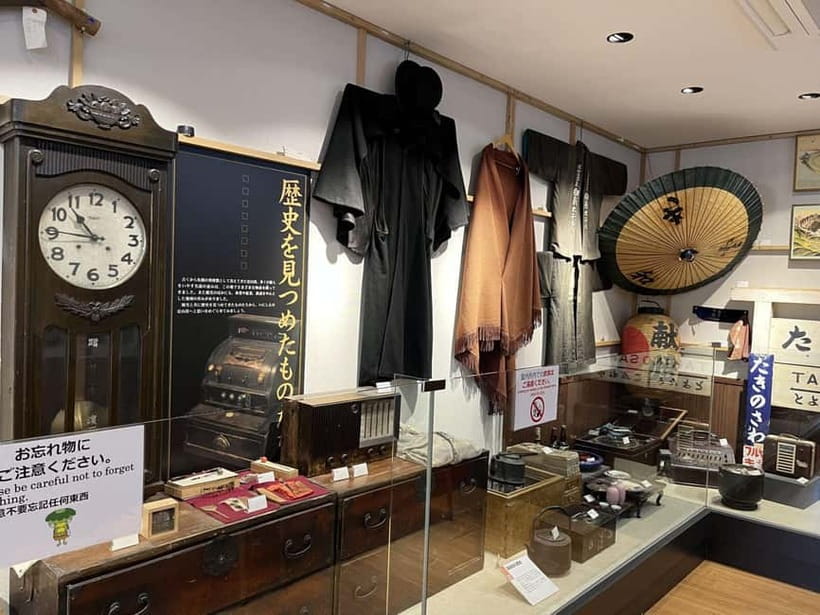
- Touch, feel, and learn at the Ainu Cultural Center with traditional craftwork made by Ainu artisans
- A guided walk through Jozankei’s key sights, including shrine and temple grounds and park stops
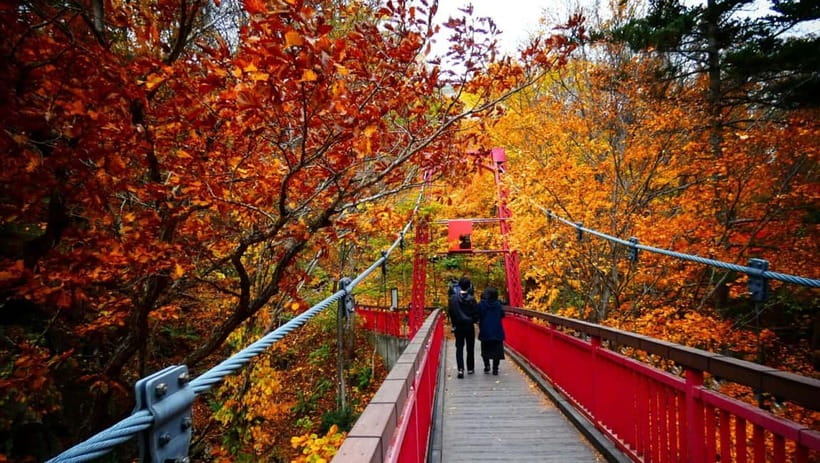
- The Futami Tsuribashi Suspension Bridge crossing, plus a scenic footbath break
- A real onsen finish at Hotel Shika no Yu, with day-bath time and onsen etiquette guidance
- An English-speaking guide experience, with time to chat during transitions
Ainu Cultural Center in Sapporo: more than a museum visit
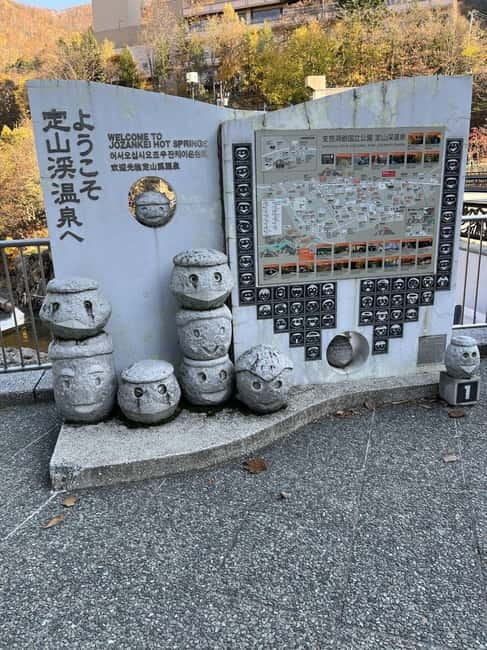
The day starts in Sapporo with your guide meeting you at the Myomu spot near Sapporo Station. It is an easy meetup if you know where to look: walk toward the south exit area after turning left outside the main JR gates, and you will spot the circular white stone structure labeled Myomu. Your guide will be there wearing a Snow Monkey Resorts tour tag. The timing matters here because you want to arrive before the museum segment begins.
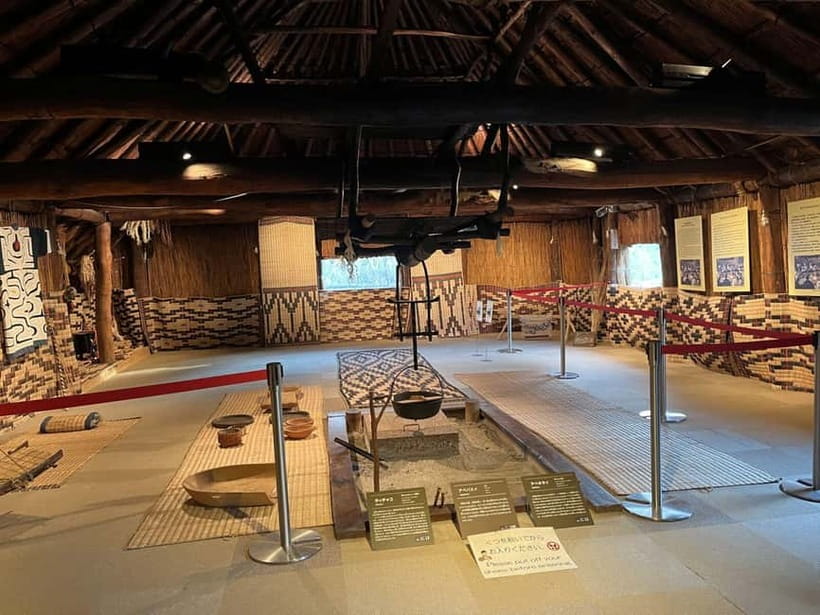
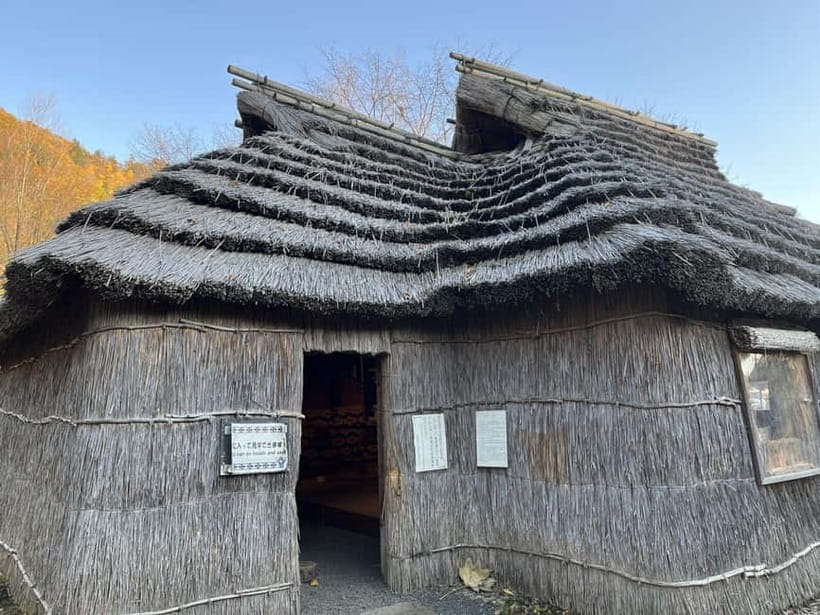
The Ainu Cultural Center is the core cultural stop, and it is built for hands-on learning. Instead of feeling like the Ainu story is locked behind glass, the center invites you to experience items and crafts in a more direct way. You learn about Ainu lifestyle, history, and art, tied to the reality that the Ainu are the original inhabitants of Hokkaido.
This is also where the tour’s tone becomes clear. It is not only about facts. It is about context and understanding. You get a chance to see how traditional knowledge shows up in everyday objects, skills, and community life. If you care about cultural depth, this museum segment does more for you than the typical quick stop.
You will likely hear guide storytelling that connects what you see to lived practices. In past tours, English guides such as Scott have been singled out for making the material understandable and for staying talk-friendly during slower parts of the day. If you ask questions, this is the section where you are most likely to get meaningful answers.
More Walking Tours in Sapporo:
- Kyoto Geisha Walking Tour: Gion District & Hidden Gems
★ 4.7 · 3,273 reviews - Tokyo Tsukiji Fish Market Food and Culture Walking Tour
★ 5.0 · 3,184 reviews - Kyoto: Gion Magical Night Walking Tour with Geisha Trivia
★ 4.9 · 2,393 reviews
Getting to Jozankei: using transport time well
After the museum, you move on to Jozankei by coach. The travel block is part of the pacing of the day, so try to use it to plan your clothing and energy. Jozankei sits inside the broader Shikotsu-Toya National Park area, and the whole region’s feel is shaped by long volcanic activity. That is why you will notice the heat culture ties in naturally, not like the onsen is a random add-on.
In winter, the day can stretch a bit, mainly because bus schedules and connections may mean some longer waiting. The good news is that the tour structure still keeps you moving between key points. A small group also helps, because you lose less time to back-and-forth and you get a smoother flow through stops.
If you are the type who hates feeling rushed, this is a decent format. You get structured time at major sights, plus some free time in Jozankei to breathe and take photos without needing to keep up with every single step of the guide.
Jozankei on foot: shrines, parks, and the right kind of small-village strolling
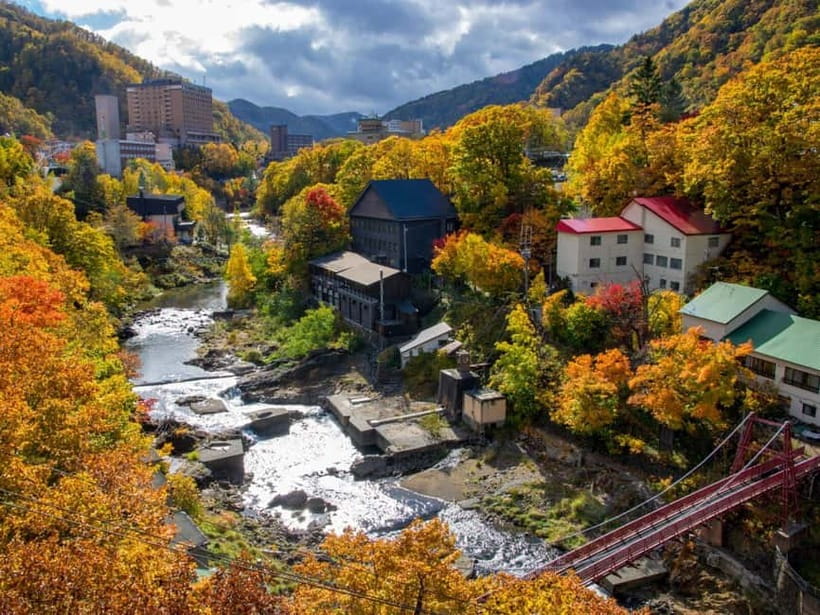
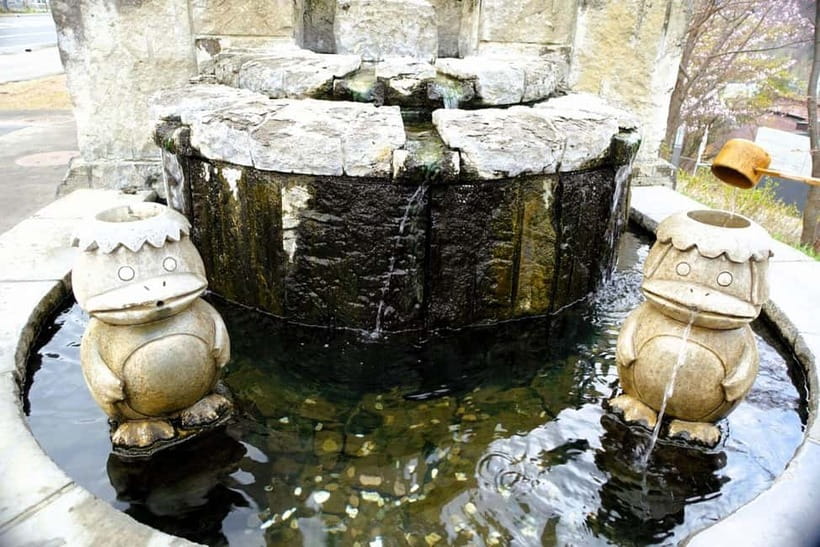
Once you arrive in Jozankei, the walking portion becomes the fun part. The village atmosphere is what you’re here for: compact streets, quiet religious spaces, and parks that feel designed for slow pauses. The tour includes visits to the Jozankei Shrine and Temple area, plus park stops like Gesen Park and Futami Park.
At the shrine and temple, you are not just checking boxes. You are seeing how a hot spring town organizes itself around places of worship and reflection. That matters, because in places like this, the onsen culture is tied to everyday rhythm, not just tourism.
Then you move into the park and scenic breaks. Gesen Park is one of those stops where you can get a few minutes to regroup, grab water, and adjust your pace. Futami Park pairs well with what comes next, because it sets you up for the bridge crossing with a calmer stretch of scenery and walking.
As you go, keep your focus on footwear. Even when the routes sound straightforward, you are walking on surfaces that can be uneven. Comfortable shoes are not optional here, especially if you are visiting in colder months.
Crossing the Futami Tsuribashi Suspension Bridge, plus a footbath break
One of the most memorable moments is the crossing of the Futami Tsuribashi Suspension Bridge. Suspension bridges have a way of making you pay attention: you feel the movement, you slow your steps, and your eyes naturally sweep the surroundings. It is a simple activity, but it turns the walk into something you remember.
After that, the tour includes time connected to the footbath at the area stops. The idea is similar to a full onsen, just in a lighter, more casual way. It is a good move for your body if you are dealing with cold air or sore legs from the morning. Even if you plan to do the main onsen later, the footbath helps you transition.
If you tend to get tired on long walking days, take the footbath stop seriously. Sit, rest, and let your legs recover. It is not just for soaking. It is a break that keeps the rest of the day comfortable.
Also, bring your water and actually drink it. This tour includes explicit advice to stay hydrated, and in cold climates you can still get dehydrated while you focus on the views.
A change of pace from Sapporo:
- Sapporo Bar Hopping Food Tour
★ 5.0 · 232 reviews - Hokkaido Seasonal: Lake Toya & Noboribetsu Jigokudani Valley
★ 4.7 · 173 reviews - Sapporo Private Tour with a Local – Highlights & Hidden Gems
★ 5.0 · 91 reviews - Sapporo: Sumo Show Experience with Japanese food & Photo
★ 4.9 · 81 reviews
Hotel Shika no Yu onsen day bath: rules, etiquette, and 2 hours that reset your day
The finale is the Hotel Shika no Yu hot spring experience. This is not a quick splash. The tour builds in a day-bath session, about two hours, which is enough time to relax instead of feeling like you have to rush.
Before you go in, your guide shares onsen etiquette rules. This is important because onsen culture works on local expectations, and following them helps you enjoy it rather than worry about doing something wrong. Your towel and change of clothes are part of this preparation, and you will want them within reach.
Here is the practical reality: the onsen part is where the tour’s pacing makes sense. After walking around Jozankei, you get a controlled reset. Your body cools down outside, then warms back up properly inside. That rhythm is one reason people feel so good after these kinds of tours.
You may also notice there are footbath options connected to earlier stops, but the main reward is the day-bath. If you like “doing it like locals,” the onsen etiquette and the structured time help you feel comfortable in a setting that can be unfamiliar at first.
Price and value: why $170 can make sense for a full day
At $170 per person, the first question is always value. Here, the price is easier to justify because several costs are handled for you.
You get an English-speaking tour guide, transportation by coach between Sapporo and Jozankei, and entry or admission tickets to each listed attraction. That means you are not doing the math for transit plus museum fees plus the onsen entry yourself. The tour also covers the route between the stops, so you are free to focus on the experience rather than logistics.
The one obvious gap in the value equation is lunch, which is not included. Plan on finding food in the Jozankei area during your free time or bringing something that works for you. A long day without lunch can turn into a long day you resent.
Also consider timing. The total time listed is 570 minutes, which is roughly nine and a half hours. That is a big commitment. You are paying for coordination and for the day-bath finish, so if you only want the onsen or only want the museum, you might compare with shorter options. But if you want both, this package is efficient.
What to pack and how to pace yourself for this long, cold-day itinerary
This tour is straightforward, but you have to prep like it is real walking plus a hot spring session. What to bring is clearly spelled out: comfortable shoes, a change of clothes, a towel, and water.
That sounds basic, but the combination matters. Comfortable shoes help you handle uneven surfaces and keep your feet from getting unhappy halfway through. A towel and change of clothes are necessary for the onsen experience, so you do not want to arrive underprepared.
Hydration is also a big deal. It is easy to forget water in colder weather because you do not feel sweaty. Still, walking and time outside add up, so drink when you can.
Pacing tip: in winter, the day can include longer waits tied to coach timing. When that happens, do not treat it like lost time you can’t control. Use it to warm up, stretch your legs, and keep your energy for the next sight. A small-group setup also helps you stay oriented and avoid feeling like the tour has turned into a maze.
Who should book this tour, and who might want a different plan
This experience fits best if you want a structured cultural start and a proper onsen ending in one day. If Ainu culture is high on your interest list, the Ainu Cultural Center portion is the main reason to book. If you also want the outdoors feel of Jozankei, the bridge crossing and parks make the day more than museum time.
You should also like onsen culture if you are comfortable learning etiquette and following it. The tour does not treat the hot spring as a sightseeing photo spot. It treats it as a real experience, with guidance and a two-hour day-bath block.
On the other hand, it is not suitable for wheelchair users, and it may not work well if you have back problems. The walking and the uneven ground matter, even if the pace is managed by the guide.
If you are the type who wants constant movement with no waiting, you might find some coach timing in winter a bit slow. But if you prefer guided structure over self-planning, this tour’s flow is a good match.
Should you book the Sapporo Ainu and Jozankei walking tour?
If you want one day that connects culture with the hot spring lifestyle, this tour is a strong pick. You get guided learning at the Ainu Cultural Center with hands-on engagement, then you enjoy Jozankei’s shrine, parks, and the Futami Tsuribashi Suspension Bridge, before finishing at Hotel Shika no Yu for a long, relaxing day bath.
Book it if you:
- want an English-guided cultural start and an onsen finish
- enjoy walking and can handle uneven surfaces
- are willing to bring your own basics like towel, water, and a change of clothes
Consider skipping or choosing a shorter option if you:
- have difficulty with extended walking or uneven terrain
- do not want a near full-day commitment
- only care about one half of the day, either Ainu culture or the onsen
FAQ
What time does the tour start?
You are asked to be at the meeting point at 9 a.m.
Where do I meet the guide?
Meet after exiting the main JR gates of Sapporo Station, turn left, walk toward the South Exits, and look for the MYOMU circular white stone structure. Your guide will be standing there wearing a Snow Monkey Resorts tour tag.
How long is the tour?
The duration is 570 minutes.
What is included in the price?
An English speaking tour guide, transportation fees from Sapporo Station to the listed destinations and activities, and all entry or admission tickets for the attractions on the tour.
Is lunch included?
No, lunch is not included.
What hot spring is included at the end of the day?
The tour ends with a hot spring day bath experience at Hotel Shika no Yu.
What should I bring for the onsen?
Bring comfortable shoes, a change of clothes, a towel, and water.
Is the tour suitable for wheelchair users or people with back problems?
No. It is not suitable for wheelchair users, and it is also not suitable for people with back problems.
Latest write-ups near Sapporo
- Private Japanese Cooking Class in Sapporo with Local Host Kanae★ 5.0 · 20 reviews
- Authentic Sapporo: Nijo Market Seafood Lunch & History Tour★ 4.8 · 20 reviews
- Hokkaido, Sappro, Otaru & Cape Kamui One-day Tour★ 4.4 · 21 reviews
- [Otaru & Yoichi] Let’s go to Otaru Canal, Sakaimachi Street, Music Box Hall, and Yoichi Nikka Whiskey by private car (arriving and departing from Sapporo)★ 5.0 · 21 reviews
- Sapporo: Custom Highlights and Hidden Gems Tour with a Local★ 4.9 · 21 reviews
- Full Day Indigenous Ainu of Hokkaido and Jozankei★ 5.0 · 25 reviews
- Sapporo Winter : Asahiyama Zoo (Penguin Fun & Snowmobile)★ 5.0 · 28 reviews
- Hokkaido Noboribetsu Lake Toya, Otaru Panoramic Tour From Sapporo★ 3.5 · 28 reviews
Walking Tours, compared.
Kyoto Geisha Walking Tour: Gion District & Hidden Gems
Read our review →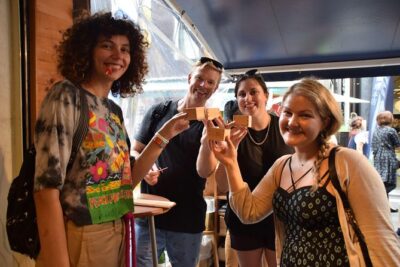
Tokyo Tsukiji Fish Market Food and Culture Walking Tour
Read our review →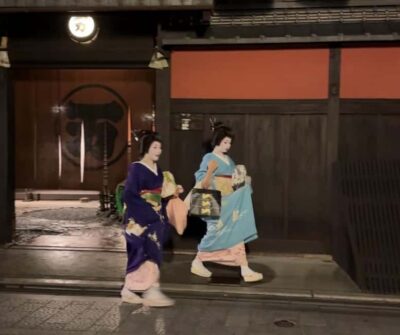
Gion Magical Night Walking Tour with Geisha Trivia
Read our review →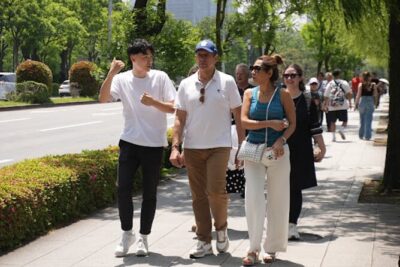
Imperial Palace and Shogun Historical Walking Tour
Read our review →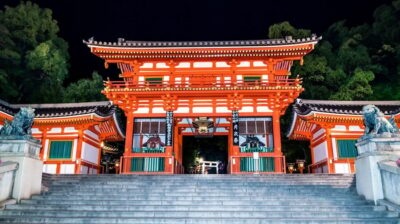
Gion Geisha District Walking Tour – Stories of Geisha
Read our review →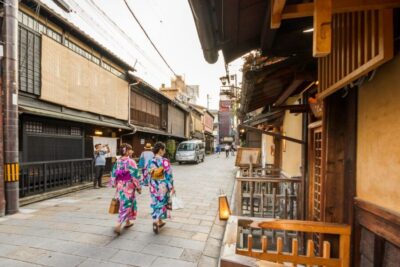
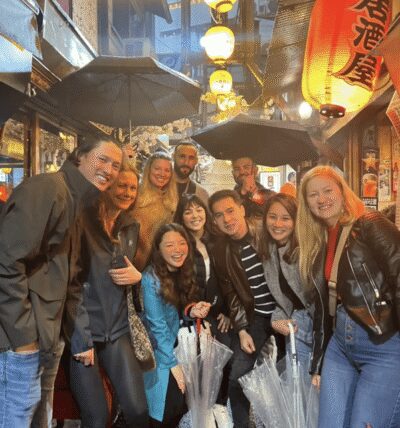
Shinjuku Local Bar and Izakaya Guided Walking Tour
Read our review →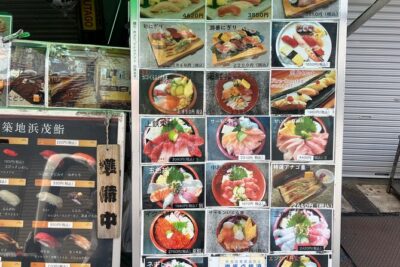
Browse the lists this tour appears in