
Reviewed · OSAKA TOURS
90 min Shared Handmade Udon Experience
There’s something genuinely fun about making udon where you knead the dough with your feet, and this one takes place at a Michelin-listed restaurant. I also love that the class ends with you eating what you just made, served in broth built from kombu, shiitake mushrooms, and katsuobushi. One drawback to note up front: it is not recommended if you have a wheat allergy.
The vibe is small and hands-on, and I like that you get guidance you can actually repeat at home, including a recipe. You’ll also leave with free photos taken during the class, and you might even spot names like Keiko or Nozomi running the show depending on the session.
Key highlights you will care about
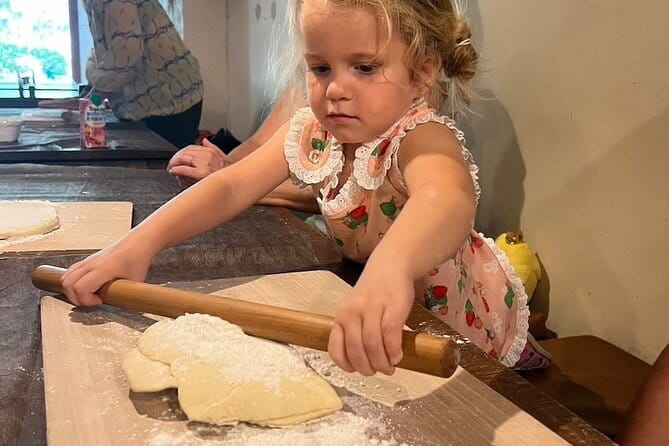
- Foot-kneaded Sanuki style dough for a firmer, softer texture than store-bought udon
- Michelin-guide listed restaurant (featured in the guide from 2018 to 2023)
- Eat immediately, with hot or cold udon tasting cooked for you
- Broth built from kombu, shiitake, and katsuobushi, served in attractive bowls
- Take-home recipe so you can redo the process at home
- Small, intimate class size, with a max of 20 participants
Entering A Michelin-listed Osaka udon lesson, with real foot-kneading
This is the kind of Osaka food experience that feels local, not staged. The whole point is to learn Sanuki udon, the style where the dough gets kneaded with your feet. That physical step matters because it helps you end up with a chewy, springy texture you just do not get from the packaged noodles most people buy.
The restaurant itself has credibility, too. It was featured in the Michelin guide from 2018 to 2023, which usually means you are not just paying for a cooking stunt. You are showing up to a real place that understands how udon should taste, look, and feel.
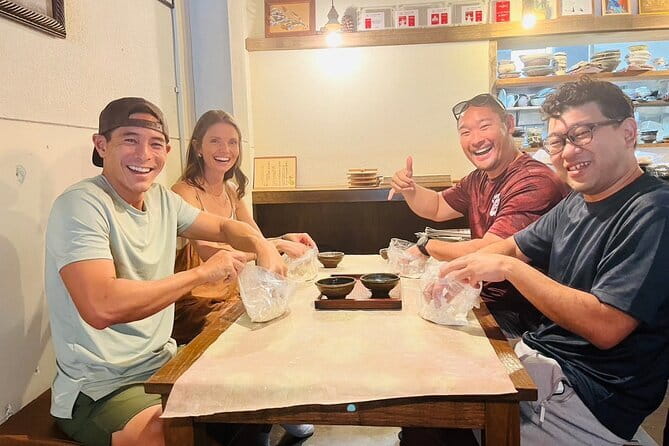
You will be in a small group. The class can have other participants mixed in, so think of it as a friendly shared workshop. The maximum group size is 20, which is big enough to meet people but small enough that you are not lost in a crowd.
One practical note before you go: wear clothes you do not mind getting messy. Even if you are careful, flour and water are part of the process. And timing matters, because the class runs on a schedule, then the restaurant resumes serving regular customers right after.
Also on the shortlist for Osaka:
- Osaka Go Karting Tour with Funny Costume
★ 5.0 · 2,658 reviews - Osaka Castle: Museum and Tower Entry Ticket
★ 4.5 · 2,380 reviews - Osaka: Shinsekai Food Tour with 13-15 Dishes at 5 Eateries
★ 4.8 · 2,204 reviews
What happens to your udon dough, and why Sanuki style tastes different
Sanuki udon is built on texture. When the dough is kneaded with your feet, it develops a smooth consistency and an elastic chew that tends to stay better after cooking. The instruction focuses on recreating that process at home, not just making noodles once for show.
You will learn the steps in a guided way, and the class is friendly even if you have never cooked before. A lot of people think cooking classes only work for experienced cooks, but this one is designed so beginners can follow along and still end up with something you want to eat.
Also, this is not a “watch for an hour” situation. It is hands-on, with enough structure that kids and adults can join in. One parent-friendly detail I really like is that the class is described as fun for everyone, including families with children. Another family detail from the experience highlights is how groups of mixed ages fit comfortably into the class flow.
After your hands-on portion, the chef cooks your noodles for you, then serves them with the special broth. That’s a great split of roles, because you get the satisfaction of making the dough while still getting a professional cook result for the final bowl.
The broth and bowl: hot or cold udon tasting you actually get to savor
Here is where the experience earns its keep: you do not just make noodles, you eat them right after. You get an udon tasting that can be served hot or cold, and you can choose based on what fits your appetite that day.
The broth is described as made from all-natural, additive-free ingredients. The flavor base comes from kombu (kelp), shiitake mushrooms, and katsuobushi (bonito stock). That combination gives you a layered, savory foundation that tastes distinctly Japanese, and it is the kind of broth you will remember because it is not watered down or overly sugary.
The chef serves the noodles in beautiful bowls. That sounds like a small detail, but it matters because it turns the meal into a proper sit-down payoff, not just a snack at the end of class. And since the restaurant has that Michelin guide spotlight history, the presentation likely matches the food quality.
If you want to order more, side dishes like tempura or extra udon are available, but they are not included in the class fee. That is a good setup for different appetites. You can keep it simple, or you can add more classic pairings if you are hungry.
Your 90 minutes, paced for hands-on learning (not a food marathon)

The class runs about 1 hour 30 minutes. That timing is smart. You get enough time to learn and form the noodles, but it does not drag into a long activity that exhausts kids or leaves adults feeling rushed.
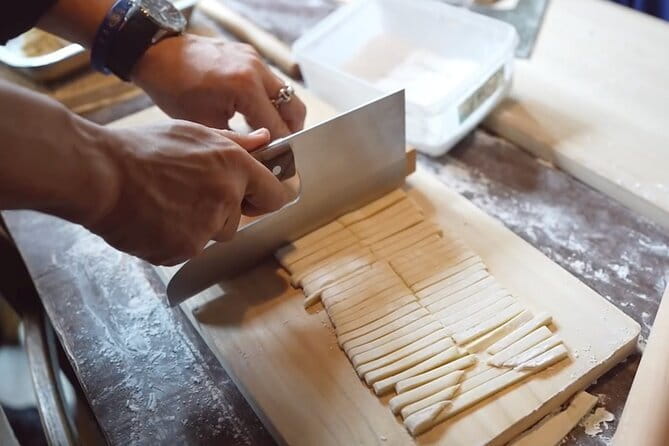
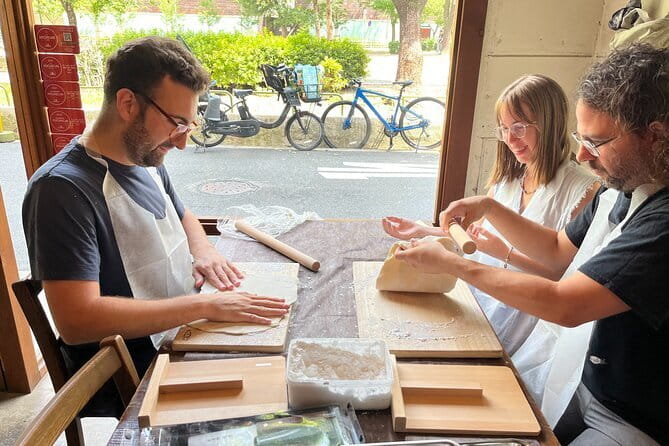
The flow is essentially: arrive, get taught the process, make your dough and shape the udon, then eat what the chef cooks. You also get instruction that supports the big promise of the experience, which is recreating udon at home. The recipe given after the class is part of that, so you can practice without needing to remember everything from memory.
You can also enjoy making udon while sipping sake or beer if you want. The key detail is that alcohol is not included in the fee. So you can treat drinks like a nice extra, but do not expect them bundled into the $52.85 price.
A small but useful detail is that the instructor takes photos during the class and shares them for free. I like this because cooking classes often feel chaotic, and grabbing a photo afterward is an easy way to remember the day without trying to set up your own shots while you have flour on your hands.
And yes, you may be grouped with other participants. That is normal for small classes, and it can actually make the experience more fun, especially if you come with family or a small group and you want a lively atmosphere.
A change of pace from Osaka:
- Osaka Food Tour: 13 Dishes at 5 Local Eateries
★ 5.0 · 2,149 reviews - Hungry Osaka Street Food Tour:15 Tastings & 3 Drinks with a Local
★ 5.0 · 1,727 reviews - Osaka: teamLab Botanical Garden Entry Ticket
★ 4.5 · 1,710 reviews - Osaka: Tea Ceremony Experience
★ 4.9 · 1,426 reviews
Price and value: what $52.85 buys you in Osaka
At $52.85 per person, this is not the cheapest meal you can buy in Osaka. But you are paying for a guided food workshop, plus food and materials that come with the class.
Here is what you get for that price:
- a handmade udon lesson
- udon tasting (hot or cold)
- a recipe to take home
- free photos taken during the class
- local taxes included
That means the fee is not just “watch someone cook.” It is a full experience with instruction, an eating payoff, and the tools to repeat it later. The take-home recipe is especially valuable if you are the type who likes making Japanese comfort foods at home after a trip.
You should also consider what is excluded. Alcoholic beverages are not included, and side dishes like tempura or extra udon cost extra. If you order add-ons, your total day spend rises, but you also have control over how much you want.
Finally, the max group size of 20 helps keep the value feeling real. Smaller classes tend to mean better attention, and you are less likely to feel like you are just following along in a crowded room.
Who this is best for, and who might want a different plan
This class is built for a wide range of people. It is described as a fun activity even with no cooking experience, and it also works well for children and adults together. In other words, it is not only for foodies who already know their way around kitchens.
I think it is a strong choice for you if:
- you want a hands-on Osaka food moment, not just a tasting tour
- you like learning a technique you can repeat later
- you are traveling with family, since the class is family-friendly
- you enjoy smaller, more personal activities where you meet people
There are a couple of situations where you should think twice. It is not recommended for travelers with a wheat allergy, so if that applies, you will want to choose a different food experience. Also, because you are kneading dough, you should be ready for messy clothes and a physical activity that is more hands-on than sitting at a table.
If you are joining alone, the class requires a minimum of two participants. The experience says to contact in advance if you want to join solo or if your group includes one adult and children and you need the right session. Also, confirm your dietary needs in advance. Vegetarian is available, but you need to let them know before the day.
Getting the most out of the class in Osaka: practical tips
This is the kind of activity that works best when you show up ready to participate. Wear comfortable clothes you can move in, and bring a mindset that says it is okay if your noodles are not identical to the chef’s. The goal is learning the method, not producing restaurant-perfect strands on your first attempt.
Arrive on time. The class resumes serving regular customers after your session, so the restaurant has a tight flow. Being late can throw off your time and also the rhythm of the class.
If you drink sake or beer, remember alcohol is not included. So if you want a beverage pairing, plan for that added cost. It can be a nice cultural touch if you like it, but you can also enjoy the class fully without alcohol.
Finally, take advantage of the photos. Cooking classes can be hard to document while you are focused on the steps. Having the instructor take and share photos gives you a simple way to remember the day without disrupting the class.
Should you book Udonzin Beat’s 90-minute shared udon experience?
If you want an authentic-feeling Osaka food activity that goes beyond tasting, I would book this. The combination of foot-kneaded Sanuki udon, immediate eating of the noodles, and the take-home recipe is a strong package for the price. You also get the credibility of a Michelin guide listed restaurant, plus free photos that make it easy to remember the day.
I would skip it only if wheat allergy applies, or if you strongly dislike messy, hands-on activities. If you are traveling with family or you want something interactive that still feels like a real restaurant experience, this one fits very well.
If you are still deciding, think about what you want from Osaka. Do you want another meal, or do you want a skill you can carry home? This is the kind of class where you do both: you eat a bowl you helped create, and you get the recipe to try again later. And if plans change, free cancellation is offered up to 24 hours in advance.
FAQ
How long is the handmade udon experience?
It lasts about 1 hour 30 minutes.
Is udon tasting included?
Yes. You get udon tasting served hot or cold as part of the experience.
Are alcoholic drinks included?
No. Sake or beer is available if you want it, but alcoholic beverages are not included in the fee.
Is there a vegetarian option?
Yes. Vegetarian is available, and you should let them know in advance about any dietary restrictions.
Is the class recommended for people with a wheat allergy?
It is not recommended for travelers with a wheat allergy.
Are photos included?
Yes. The instructor takes your picture during the class, and the photos are included for free.
Latest write-ups near Osaka
- Ramen and Gyoza Cooking Class in Osaka Dotonbori★ 5.0 · 73 reviews
- Osaka: Sushi Making in Spacious Studio (SAME-DAY OK!)★ 5.0 · 75 reviews
- 1.5〜2 Hours Traditional Kintsugi Work Shop in Namba Osaka★ 5.0 · 75 reviews
- Osaka E-Bike Tour With A Local Guide★ 4.7 · 75 reviews
- Retro Osaka Street Food Tour: Shinsekai★ 4.5 · 77 reviews
- Osaka: Osaka Castle Guided Tour with Local Guide★ 4.7 · 78 reviews
- Osaka Okonomiyaki Cooking Experience!★ 5.0 · 79 reviews
- Kamigata Ukiyoe Museum:Ukiyo-e Woodblock Printing Experience★ 4.9 · 79 reviews
Osaka Tours, compared.



Shinsekai Food Tour with 13-15 Dishes at 5 Eateries
Read our review →
Osaka Food Tour: 13 Dishes at 5 Local Eateries
Read our review →
Hungry Osaka Street Food Tour:15 Tastings & 3 Drinks with a Local
Read our review →

Browse the lists this tour appears in