
Reviewed · COOKING CLASSES
Osaka Okonomiyaki Cooking Class “Learn here and make it at home”
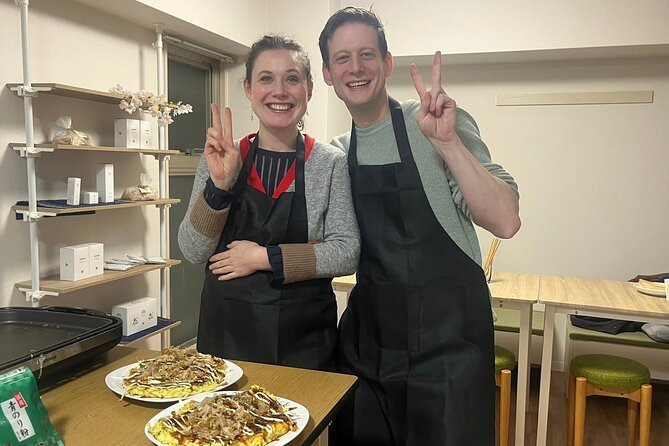
Osaka is one of the best food cities in Japan, and this class turns that fact into something you actually do, not just watch. You will make Okonomiyaki and Takoyaki step by step, then sit down and eat what you cooked. It is a simple plan, but it feels special because you leave with skills you can repeat at home.
I especially love how practical the instruction is. The focus is on the actual process, from prepping the batter and cabbage to finishing with sauce and toppings. I also like the small-group setup, max 8, which keeps things interactive and makes it easier to ask questions when you get stuck.
The main thing to consider is the pace and equipment involved. You are cooking for real, using a hot griddle, and wearing the provided apron and gloves. If you are not comfortable with heat and quick technique, you might feel a little rushed in the cooking portion.
Key highlights at a glance
- Two Osaka classics, cooked hands-on: Okonomiyaki and Takoyaki, from scratch
- A step-by-step flow: 30 minutes of prep plus 1.5 hours of cooking, then 1 hour to taste
- Instruction in multiple languages: English teaching, with Japanese or Spanish upon request
- You get the full setup: ingredients, tools, aprons, and disposable plastic gloves provided
- Toppings and packaging tips: written recipes plus chances to see ingredients and labels for shopping later
Osaka Okonomiyaki and Takoyaki, cooked instead of just eaten
If you love Osaka food but hate the idea of another photo-only meal, this is a smart choice. You start with two iconic dishes that are deeply tied to Osaka daily life: savory pancakes (Okonomiyaki) and fried dough balls (Takoyaki). The format matters because you learn the logic behind each one, not just the final look.
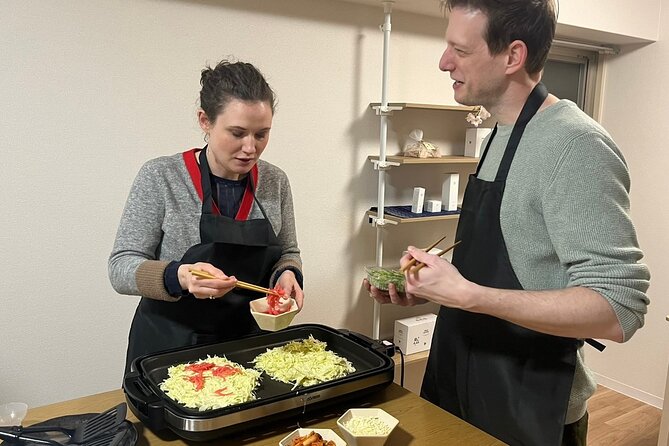
Okonomiyaki is all about structure and texture. You handle batter, cabbage, and fillings, then you finish with the sauce and typical toppings like bonito flakes. Takoyaki is more technique-forward, because you are filling little dough balls with octopus and getting that classic shape. In both cases, you will see how the ingredients work together, which is what makes it easier to recreate later.
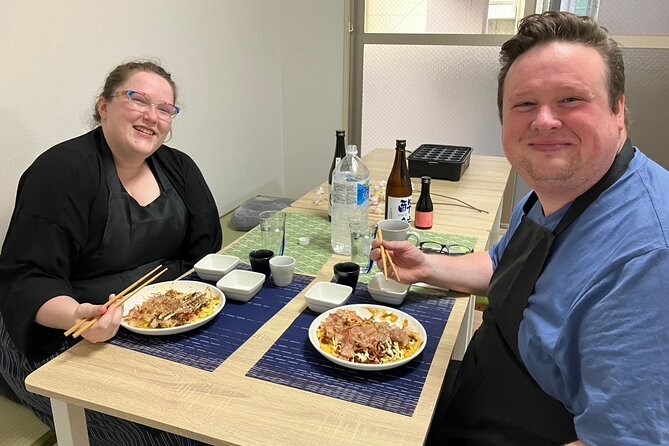
And yes, the best part is you get to eat. After cooking, you take a full tasting break with drinks, including sake and beer for adults, plus soft drinks for everyone else.
More Cooking Classes in Osaka
- Osaka: Ramen and Gyoza Cooking Class in Dotonbori
★ 5.0 · 378 reviews - Osaka Cooking Class: Okonomiyaki &Japanese cuisines experience
★ 5.0 · 261 reviews - Ramen and Gyoza Cooking Class in Osaka
★ 5.0 · 202 reviews
Where you meet near Shinsaibashi and Honmachi
The class takes place in central Osaka, in a quiet neighborhood feel. The kitchen is about a 5-minute walk from both Shinsaibashi and Honmachi stations on the Osaka Metro, so you can tie it into a normal evening out without a big detour.
The meeting point is at 南船場コレット9044-chōme-3-1 Bakurōmachi, Chuo Ward, Osaka, 541-0059. The session ends back at the meeting point, which is convenient if you plan to continue exploring after.
Practical tip: since this is a cooking class, plan to arrive a little early and keep your route simple. This area is easy to navigate, but you will want to focus once you are inside, especially when hot griddles and fast steps are involved.
Inside the kitchen: orientation and how they teach you
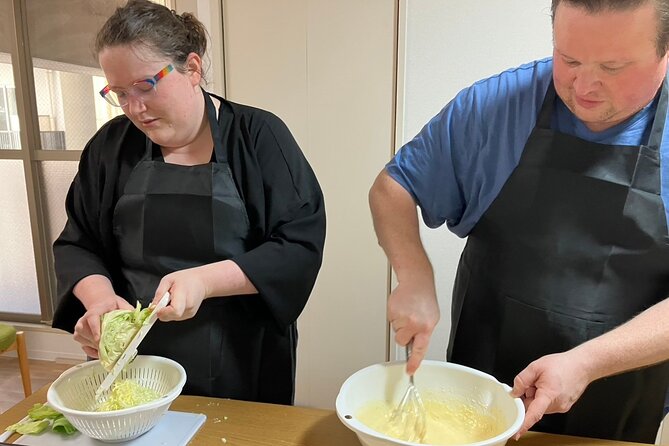
Before you touch the cooking process, you get a 30-minute orientation and preparation session. This is not time wasted. It sets the rules and tempo, and it gives you a clear order of operations so you do not spend the cooking block guessing.
You also get your gear right away. Aprons and disposable plastic gloves are provided, so you do not need to worry about bringing kitchen clothes. That also means you can show up as you are, without turning your day into a packing exercise.
One detail I really appreciate is the multilingual support. In most cases you will have an English-speaking instructor guiding you. There is also a Japanese-speaking instructor and a Spanish-speaking instructor available upon request. In practice, that flexibility helps you when you want precise tips, like how to manage heat or how to handle toppings without overloading.
If you have food needs, vegetarian or allergy options require a message after booking. So if that applies to you, handle it early, before the day of class.
Making Okonomiyaki: cabbage, batter, fillings, and the sauce finish
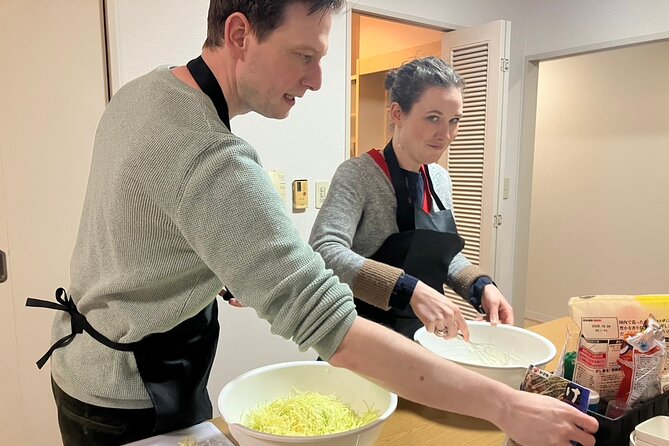
Okonomiyaki at home is where many people get stuck. They can find recipes, but the real question is how thick to keep the batter, how to treat the cabbage, and when to add fillings so the pancake cooks evenly.
In the class, you get a step-by-step approach to Japanese savory pancakes built around batter, cabbage, and fillings. The usual fillings include pork and seafood, and the whole thing is topped with sauce and bonito flakes. That topping phase is not just decoration. It is part of the flavor balance and the final texture, so pay attention to timing.
As you cook, watch how the instructors treat consistency. If your batter is too thin or you pack toppings too heavy, the pancake can be hard to flip or it cooks unevenly. The class is built to help you correct things quickly while you are still in control.
Also, do not skip the sensory cues. Even without fancy tools, you can tell when the pancake is ready by how it looks and how it releases from the pan. You will get guidance on those signals during the cooking time, which is one reason an in-person class beats a video every time.
A change of pace from Osaka:
- Osaka Go Karting Tour with Funny Costume
★ 5.0 · 2,658 reviews - Osaka Castle: Museum and Tower Entry Ticket
★ 4.5 · 2,380 reviews - Osaka: Shinsekai Food Tour with 13-15 Dishes at 5 Eateries
★ 4.8 · 2,204 reviews - Osaka Food Tour: 13 Dishes at 5 Local Eateries
★ 5.0 · 2,149 reviews
Takoyaki time: filling the dough balls with octopus
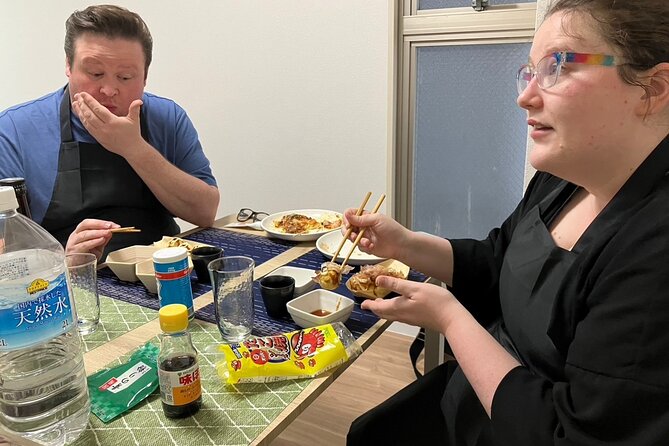
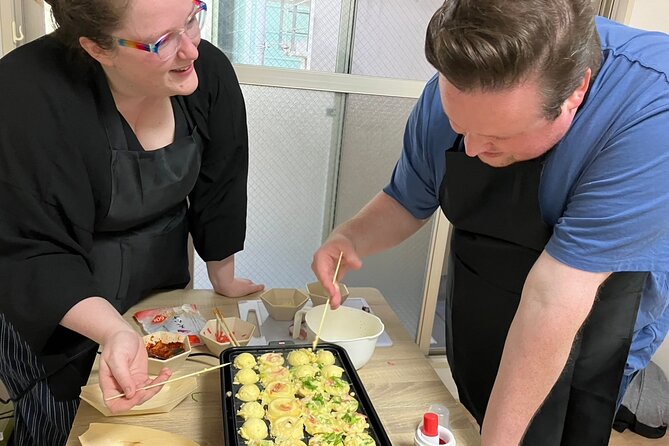
If Okonomiyaki is about managing a single big pancake, Takoyaki is about precision in tiny bites. You are making fried savory dough balls filled with octopus, then topping them with sauce, bonito flakes, and seaweed powder.
The hardest part for many people is managing the shape. Takoyaki makers are known for turning and shaping each piece so it cooks evenly and becomes that classic round form. In class, you get the process broken down, and you get to practice while someone can correct your technique.
I love that the class covers the building blocks that matter for Takoyaki. The filling is not optional. Getting the octopus into the dough ball properly affects taste and texture. And the toppings are a key part of the dish, so you will not just learn to cook the dough. You learn how to finish it the Osaka way.
Once you start, you will understand why people are obsessed with Takoyaki stalls. It is playful, fast, and a little bit competitive, even when you are just cooking for dinner.
The tasting hour: eat what you made with sake, beer, and soft drinks
After the cooking block, you sit down for a 1-hour tasting session. This is not a quick snack break. It is time to relax and actually enjoy the two dishes you worked on.
Drinks are included. Alcoholic options include sake and beer, with an important rule: alcoholic drinks are served only to travelers age 20 and above. If you are under 20, you still get included non-alcoholic options, like soft drinks.
This is also when the class energy shifts from action to conversation. With small groups, it often feels like the instructors are walking you through what you did and how it all comes together. That matters because you can leave with a better mental model for making it at home.
Recipes and ingredient shopping tips that help you cook again
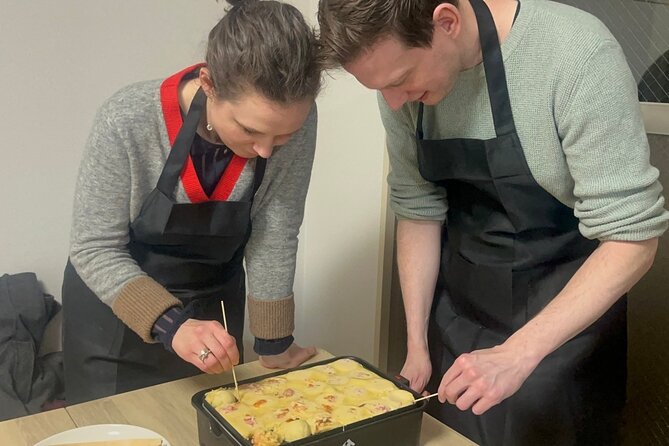
One of the quiet wins here is what happens after class, not just during it. You get written recipes, and you may also get a chance to see packaging for the different ingredients. That helps you shop with confidence later, especially for items that are easy to misidentify in a supermarket.
If you have ever tried to cook Japanese food at home and ended up substituting random sauces or toppings, you already know why this matters. Written instructions reduce guesswork. Seeing packaging reduces the risk of buying the wrong thing and ending up with a different flavor profile.
My practical advice: after the class, keep the written recipes in your notes app and take a quick photo of any ingredient packaging if it is allowed. Then you can recreate the same dish style without relying on memory.
Timing, group size, and why the evening feels relaxed
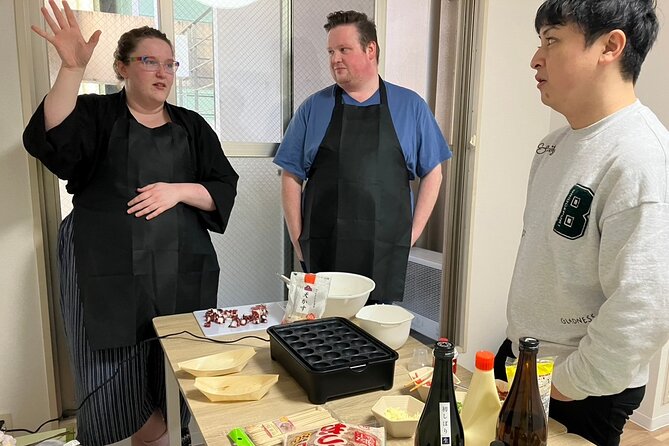
The total time is about 3 hours. That includes 30 minutes of orientation, 1.5 hours of cooking, and an hour of tasting.
A class this length is ideal for an evening because it does not swallow your whole day. You can enjoy dinner afterward or keep wandering Osaka without feeling like you are trapped in a long, slow tour.
With a maximum group size of 8, the class stays hands-on. And if your day books lightly, the experience can become extra intimate, meaning you get more attention and you can move through techniques at your own learning speed. Even with more people, the size keeps things from turning into a lecture.
This also tends to work well for mixed groups. One of the best signs is that the setup can be hospitable and accommodating, even for younger kids when they participate. If you are traveling as a family, this format often makes kids feel involved rather than stuck watching.
Price and value: what you get for about $70
At $70 per person, this is not a cheap activity, but it is also not overpriced for what you receive. Your money covers several things that add real value:
- ingredients for both dishes
- tools and cooking setup
- aprons and disposable gloves
- step-by-step instruction in English, plus Japanese or Spanish upon request
- sake and beer for adults, or soft drinks
- time to taste and eat the dishes you made
- written recipes to help you cook at home
In other words, you are paying for guidance plus the ingredients and the kitchen space. If you have ever bought the food needed for a Japanese cooking project and still struggled to get technique right, you know this kind of class can feel like paying for coaching, not just supplies.
If you are doing a tight budget, you might compare it to the cost of a single high-end meal. For many people, the difference is that you leave with a repeatable skill, not just a plate cleared.
Who should book this Osaka okonomiyaki and takoyaki class
This is a good fit if you want three things in one evening: hands-on learning, a fun food-focused atmosphere, and a clear path to cooking at home later.
It is especially great for:
- first-time visitors who want more than sightseeing
- food lovers who like practical skills, not just tasting
- couples or small groups who want interactive attention
- anyone who likes Osaka street foods and wants to understand the ingredients and finishing touches
It might be less ideal if:
- you hate cooking on hot surfaces or feel anxious in fast-paced kitchen settings
- you are looking for a passive food tour with only eating
- you want a deeper, multi-topic cultural lecture rather than a focused cooking session
Should you book? My straight call
Book it if you want an honest-to-goodness Osaka cooking lesson, not just a meal with a guide. The format is compact, hands-on, and designed so you can take something home with you: technique and written recipes.
The main reason I would skip it is if heat and cooking steps genuinely stress you out. But if you are comfortable wearing an apron and gloves and following a step-by-step process, this is a fun use of an evening, with a small-group feel and dishes you will actually be able to reproduce.
If you are already planning to eat Okonomiyaki and Takoyaki in Osaka anyway, consider this the upgrade. You will understand why it tastes the way it does, and your next attempt at home will feel more like cooking and less like guessing.
FAQ
How long is the Osaka Okonomiyaki cooking class?
The class runs for about 3 hours. It includes 30 minutes for orientation and preparation, about 1.5 hours of cooking, and about 1 hour for tasting.
What dishes will I learn to make?
You will make Okonomiyaki, a Japanese savory pancake with batter, cabbage, and fillings, topped with sauce and bonito flakes. You will also make Takoyaki, fried savory dough balls filled with octopus and topped with sauce, bonito flakes, and seaweed powder.
What language support is available during the class?
An English speaking instructor guides the class. Japanese speaking and Spanish speaking instructors are available upon request.
Is food included, and do I need to bring ingredients?
All ingredients and tools for the class are included. You do not need to bring ingredients. Aprons and disposable plastic gloves are provided as well.
Are drinks included during the tasting?
Yes. During the 1-hour tasting you will have drinks including sake, beer, and soft drinks.
Is alcohol included for minors?
Alcoholic drinks are only served to travelers age 20 and above. Minor travelers will be served non-alcoholic drinks.
Where is the kitchen located?
The kitchen is in central Osaka, about a 5-minute walk from both Shinsaibashi and Honmachi stations on the Osaka Metro.
What is the maximum group size?
The class has a maximum of 8 travelers.
What is the cancellation policy if my plans change?
Free cancellation is available. You can cancel up to 24 hours in advance for a full refund. The experience requires good weather, and if it is canceled due to poor weather, you will be offered a different date or a full refund.
Latest write-ups near Osaka
- Osaka Private Tour with Government-Licensed Guide★ 4.8 · 20 reviews
- Guided Photography Tour in Osaka: Capturing Memories★ 4.5 · 20 reviews
- Osaka: Food Tour at Night with Tastings★ 4.9 · 20 reviews
- Kansai/KIX Airport to or from Osaka/Kyoto Private Transfer★ 5.0 · 20 reviews
- Osaka: City Highlights Bike Tour★ 4.7 · 20 reviews
- From Osaka/Kyoto: Amanohashidate Day Tour【Including tickets】★ 3.7 · 20 reviews
- Volleyball in Osaka & Kyoto with Locals!★ 5.0 · 21 reviews
- Japanese Calligraphy Experience in Osaka★ 5.0 · 21 reviews
Cooking Classes, compared.
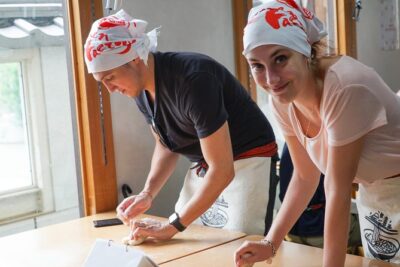
Ramen Cooking Class at Ramen Factory in Kyoto
Read our review →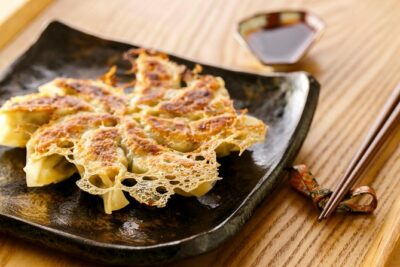
Ramen & Gyoza Cooking Class in Tokyo with Local Supermarket Visit
Read our review →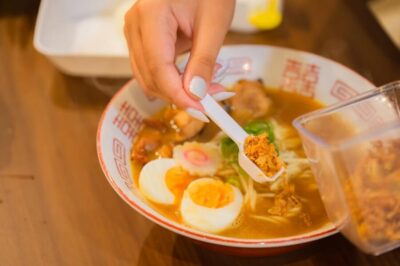
Ramen Cooking Class at a Ramen Factory with Souvenir
Read our review →
Japanese Washoku Bento Small Group Cooking Class
Read our review →

Easy Ramen Cooking Experience in Kabukicho, Shinjuku
Read our review →
Ramen and Sushi Cooking Class with Sake Pairing Set in Tokyo
Read our review →Browse the lists this tour appears in