
Reviewed · OSAKA TOURS
Osaka & Kyoto & Nara Top Hightlights English Speaking Tour
Kyoto and Nara in one day is interesting because the day is built like a travel highlight reel, not a slow museum crawl. You’ll start with Kiyomizu-dera and walk historic Kyoto lanes, then hit Fushimi Inari and finish with the famous deer time in Nara Park before ending in Osaka’s Shinsaibashi area.
I love how the route mixes famous icons with the street-level flavor that makes Kyoto feel like Kyoto. I also like that the day is run with a local driver and an English-speaking guide, and many guides do a good job of setting you up with what to look for and how to handle the crowds. One thing to consider is the tradeoff: this is a packed schedule with limited time per stop, so you need comfortable shoes and a flexible mindset.
If you want depth at every site, this may feel a bit rushed. If you want the biggest hits and an efficient day plan, it’s a strong way to make the most of a short trip.
Key highlights you can actually plan around
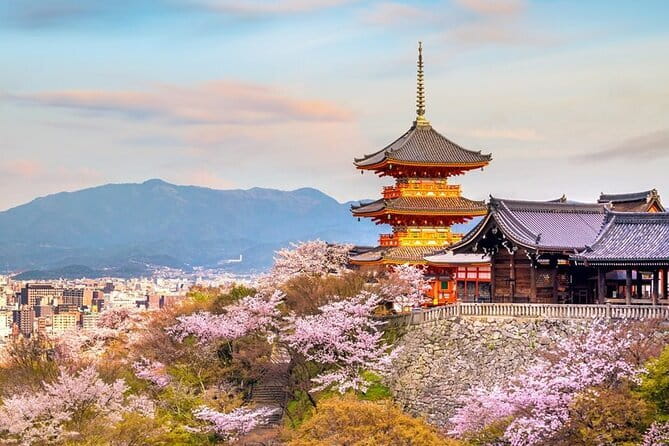
- Kiyomizu-dera plus Kyoto lanes: Kiyomizu Temple paired with Nineizaka and Sanneizaka and walking time through Hanamikoji and Yasaka Shrine.
- Fushimi Inari’s Senbon Torii: a classic, top-ranked stop with a dedicated time block for exploring.
- Real free time at each major area: the plan leaves you time to roam on your own instead of forcing a nonstop script.
- Nara deer time and Todai-ji: you get both the park experience and Japan’s Great Buddha temple in the same day.
- Finish in Shinsaibashi (Osaka): the tour ends in the Namba area so you can keep exploring Osaka after the last stop.
- Optional kimono: if you want the full photo moment, you can add it in advance.
A tight one-day loop through Kyoto, Nara, and Osaka
This tour’s big appeal is that it strings together three regions in one ride, which matters if you’re visiting Osaka and Kyoto for the first time and you don’t want to juggle separate days. The day is built around five named stops, with travel time and lunch time baked in, so the group can keep moving without turning the day into a long blur.
Because it’s a one-day highlight plan, you should expect a rhythm of quick orientation, walk a bit, look around at your own pace, then regroup. Many guide styles on this route are known for helping you make sense of what you’re seeing, including how temples and shrine spaces work and what to watch for as you wander.
The group is capped at 45 travelers, so it’s not a tiny private tour, but it should feel manageable compared to big bus crowds. Still, this is daylight sightseeing in high-demand places, so you’ll be standing in lines and sharing narrow lanes with other people.
Also on the shortlist for Osaka:
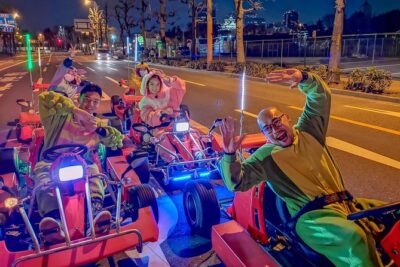
- Osaka Go Karting Tour with Funny Costume
★ 5.0 · 2,658 reviews - Osaka Castle: Museum and Tower Entry Ticket
★ 4.5 · 2,380 reviews - Osaka: Shinsekai Food Tour with 13-15 Dishes at 5 Eateries
★ 4.8 · 2,204 reviews
Price and value for $54, what you really get
At $54 per person for roughly 9 hours 20 minutes, you’re paying for transportation, a professional driver, and an English-speaking guide, plus the vehicle costs like fuel and highway tolls. That’s the value piece. You’re not paying for meals, hotel time, or temple admissions that are marked as excluded.
What you do get is a “convenience bundle”:
- someone handles the order of sights
- you ride together to save time and reduce train transfers
- you have a guide who can point out what matters at each stop
Where the value can feel uneven is if your personal travel style is slow, photo-heavy, or detail-obsessed. The time blocks are limited, so you’re buying efficiency more than you’re buying deep immersion.
Also note: there’s no return to Kyoto at the end of the day. The tour ends in Osaka, so you need to be ready to keep moving with your own transport plans after the group lets out.
Meeting point at Nipponbashi, then ending in Shinsaibashi
You start at 1-chōme-3-6 Nipponbashi, Chuo Ward, Osaka, 542-0073. It’s in the Namba area, which is convenient because you’re also near transit lines and a ton of food options later.
What catches people is the finish. The tour group ends in Osaka and does not return to Kyoto. Even if you board as part of a Kyoto meeting-point option, you’ll be dropped in the Osaka area around Osaka Nihonbashi Exit 2 in Shinsaibashi, Namba.
Here’s how I’d plan it:
- Treat this as an Osaka-based day with Kyoto and Nara highlights on the way in.
- Make sure you know your exact end spot from your email reminder, not just from memory.
- If you’re planning an evening in Kyoto anyway, you’ll need to arrange that yourself since the group is done in Osaka.
The night before, you should receive a reminder email with your pick-up time, vehicle registration number, and guide contact info. The guide won’t reach out to you directly, so do your part and be at the right waiting spot at the right time.
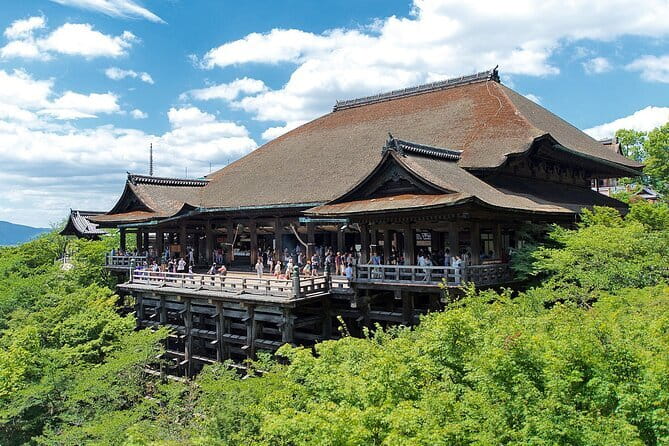
Kiyomizu-dera, Nineizaka, Sanneizaka, Hanamikoji, Yasaka Shrine

Stop one is Kiyomizu-dera Temple, with about 2.5 hours total, including lunchtime. Admission for Kiyomizu is not included, so plan to pay that entrance fee on arrival.
What makes this part of the day special is the walk-through approach to Kyoto. You’re not just going into the temple space. The route is designed to connect Kiyomizu Temple with:
- Nineizaka and Sanneizaka (classic hillside streets)
- Ishibei-koji Alley
- Hanamikoji Street
- Yasaka Shrine
Translation for your feet: you’ll likely be moving through slopes, stairs, and tight lanes. If you’re visiting in colder months, this can feel brisk but manageable. If you’re visiting in summer, water and breaks matter because you’ll be on your feet for a while even with a guide managing the flow.
Pros:
- You get the Kyoto “streets first” experience, which helps you understand why Kiyomizu-dera is more than a viewpoint.
- The lunchtime portion means you can snack or eat without feeling like you’re missing the main sights.
Possible drawback:
- Crowds. Kiyomizu and these street lanes are popular at almost any time, and the group still has a schedule. If you’re hoping for empty-photo conditions, set expectations and enjoy the energy instead.
A change of pace from Osaka:
- Osaka Food Tour: 13 Dishes at 5 Local Eateries
★ 5.0 · 2,149 reviews - Hungry Osaka Street Food Tour:15 Tastings & 3 Drinks with a Local
★ 5.0 · 1,727 reviews - Osaka: teamLab Botanical Garden Entry Ticket
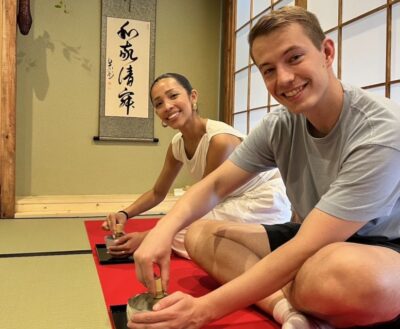
★ 4.5 · 1,710 reviews - Osaka: Tea Ceremony Experience
★ 4.9 · 1,426 reviews
Fushimi Inari-taisha and the Senbon Torii 70-minute hit
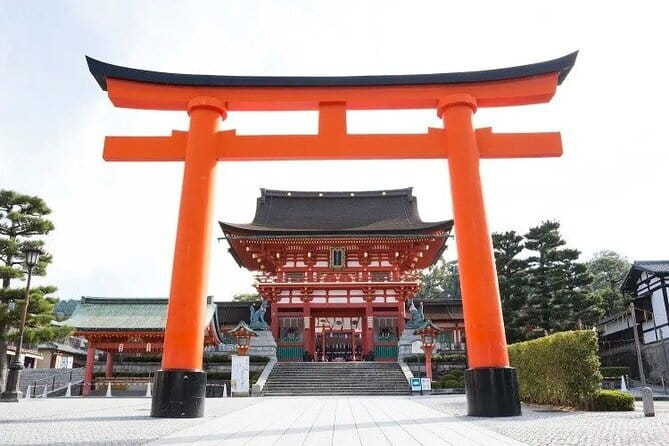
Next up is Fushimi Inari-taisha Shrine with around 70 minutes including free time. This stop is marked as admission ticket included.
This is the Senbon Torii moment: the rows of gates that climb and disappear into the hillside. You’ll have enough time to do the main paths, pause for photos, and still feel like you experienced the shrine rather than just passing it.
How to make the most of the time:
- Start early in your block so you can reach your favorite gate area before it gets too crowded.
- Wear shoes you can trust on uneven ground. Torii paths are not made for flimsy sandals.
- Decide what you want from the gates: quick icon photos or more of the stair-and-path exploration.
A practical note: your time here can shrink if the day’s route needs adjusting due to weather or road conditions, since the itinerary may be adjusted. But Fushimi Inari is usually the anchor stop, so it tends to stay on the plan.
Nara Park deer time plus Todai-ji’s Great Buddha factor
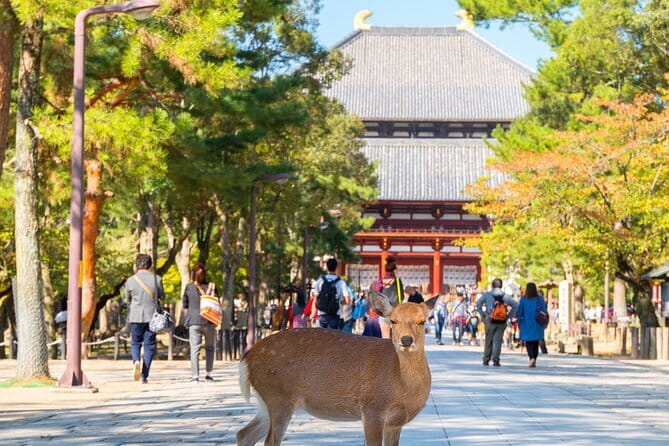
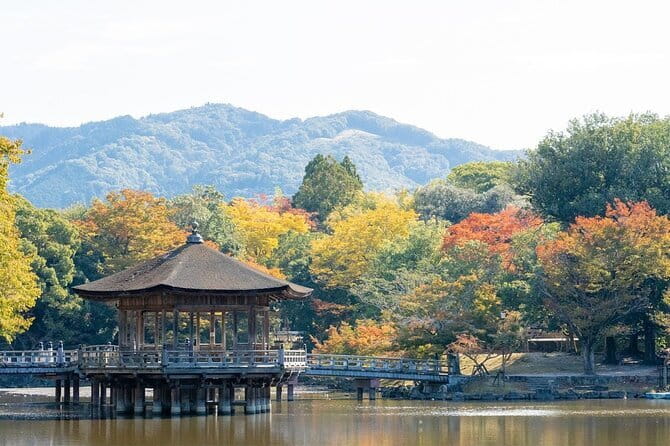
Then you head to Nara Park for about 1.5 hours of free time. After that, you move on to Todai-ji Temple for about 20 minutes, and Todai-ji admission is not included.
Nara Park is where the trip turns memorable in an emotional way. The park is where you get close to the friendly deer, and the free time lets you wander, take photos, and enjoy the relaxed park atmosphere without being herded nonstop.
Todai-ji is a different kind of experience. You’re stepping into one of Japan’s most important temple spaces and seeing the Great Buddha presence that makes people stop mid-sentence and stare. The catch is that you only have 20 minutes here, which means you’re there to see the main highlight, not to do a long, multi-building temple exploration.
One more consideration: the day has to fit a lot. If you notice a longer walk than you expected when you arrive at Todai-ji, that’s not entirely unusual for bus-based touring in busy areas. So keep your pacing steady and don’t spend your whole Nara time sprinting from deer spot to deer spot. Save some energy.
Shinsaibashi Osaka hour at the end of the day
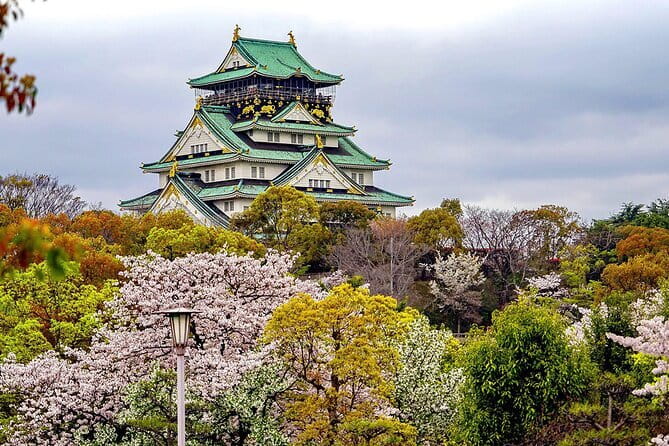
The last stop is Shinsaibashi with about 1 hour. Admission is free for this portion, and this is where you get an Osaka finish that feels more like real city life than another shrine stop.
This hour is great for:
- grabbing snacks and drinks on your own
- shopping for last-minute souvenirs
- sitting down briefly if your feet need a breather
The important logistics point is where the day ends. After the tour, you can usually disband directly in the Shinsaibashi area if you’re using the same pick-up and drop-off combo tied to the meeting point. Since the tour ends in Osaka, plan your return to your hotel from Shinsaibashi or Namba.
English guide and driver: what you should look for in the day

This tour is described as an English-speaking experience with a local professional driver and a guide who shares insights about Japanese customs and culture. In practice, the difference between an average day and a great day is often the guide’s ability to do two things:
- give you context fast enough that you know what you’re looking at
- keep the group moving without making you feel lost
Some guides on this route have stood out by being organized, friendly, and clear, including names like Kou Ran (Kosa), Anna, Amy Ono, Lou, Yang, Jason, Eigai, and Liu. When the guide is strong, you feel like you know the plan and you understand the sites, even when you get free time.
Also, remember: the guide and driver can’t control everything. Weather, crowds, and traffic can shift the timing. One practical way to protect your experience is to ask one simple question early in the day, something like where the group will regroup and what time you should be back. That keeps you from needing to improvise later.
Optional kimono, when it’s worth adding
There’s an optional kimono experience you can reserve in advance. If you love dressing up for photos and want that classic Kyoto look, it can be a nice add-on because you’ll be in the right neighborhoods at the right time.
The key is planning around timing. Since the tour is already structured tightly, adding kimono can influence how much walking or how quickly you need to move between stops. If you choose it, do it early in your booking process when possible, so you don’t lose flexibility later.
Practical tips that prevent most day-trip headaches
Here’s how to set yourself up for a smoother day on this route.
Carry basics but travel light. This tour is not recommended for bulky luggage. The guidance is that one luggage item is allowed per person. If you didn’t note it when booking, or if there’s more than one piece per guest, there’s an extra charge of 100 yuan per piece.
Bring your passport and keep valuables secure. You’re on buses and walking through crowded areas, so follow the normal Japan safety rule: keep your passport on you and don’t leave valuables behind.
Expect walking. Even if a stop looks short on paper, you’ll still walk between parking points and temple entrances. Comfortable shoes are the main requirement.
Don’t ignore your reminder email. The night before, it includes your vehicle registration number and pick-up time. Since guides won’t initiate contact, you need to show up at the right place and time.
Plan for heat or cold. If you’re traveling in summer, be ready that bus air conditioning may feel weaker than you expect. Bring a light layer anyway, because Japan’s indoor-outdoor shifts can be sudden.
Who this tour suits best
This is a good fit if:
- you’re short on time and want the big Kyoto, Nara, and Osaka highlights
- you like walking enough to reach viewpoints and temple areas
- you want an English-speaking guide to give you context and keep the day organized
- you’d rather pay for convenience and transportation than coordinate trains all day
It might be a weaker fit if:
- you want long, slow exploration with lots of museum-style explanations
- you dislike crowds and lines
- you need the day to end back in Kyoto, since this tour ends in Osaka
Should you book this Osaka, Kyoto, Nara highlights tour?
I’d book it if your priority is efficiency and iconic hits in one day, especially if you’ll be based near Namba or Osaka. The price is reasonable for the time you save, and the combination of Kiyomizu-dera streets, Fushimi Inari Senbon Torii, Nara Park deer, and Todai-ji gives you a strong “first-timer” overview.
I would think twice if you’re traveling with a high tolerance for tight schedules, because this day is paced like a highlight reel. Also, if you’re hoping to finish the day back in Kyoto, don’t. Build your evening around Shinsaibashi, and you’ll feel much less stressed.
If you want to maximize your chances of a smooth day, pick your end-of-day plan early, check the reminder email the night before, and wear shoes you can walk in for hours. That’s the boring advice that really works.
FAQ
How long is the Osaka, Kyoto, Nara highlights tour?
It runs for about 9 hours and 20 minutes (approx.).
Where does the tour start and where does it end?
It starts at 1-chōme-3-6 Nipponbashi, Chuo Ward, Osaka, 542-0073, Japan, and the tour ends in Osaka. After the tour, guests are dropped around Osaka Nihonbashi Exit 2 in the Shinsaibashi area (Namba), and the tour does not return to Kyoto.
Is the kimono experience included?
No, kimono is optional. You need to reserve in advance if you want to add it.
Are temple or shrine admission tickets included?
Fushimi Inari-taisha admission is included. Kiyomizu-dera and Todai-ji admission tickets are not included. Nara Park and Shinsaibashi are free-time or free admission.
Is lunch included?
Lunch is not listed as included. The time at Kiyomizu-dera is described as including lunchtime, so you will have time to eat on your own.
Is there a maximum group size?
Yes. The tour has a maximum of 45 travelers.
Can I bring luggage or a stroller?
Luggage is not recommended. One luggage item per person is allowed. Foldable strollers can be carried, but you should inform customer service when placing the order, or the driver may refuse boarding.
Latest write-ups near Osaka
- Osaka Private Tour with Government-Licensed Guide★ 4.8 · 20 reviews
- Guided Photography Tour in Osaka: Capturing Memories★ 4.5 · 20 reviews
- Osaka: Food Tour at Night with Tastings★ 4.9 · 20 reviews
- Kansai/KIX Airport to or from Osaka/Kyoto Private Transfer★ 5.0 · 20 reviews
- Osaka: City Highlights Bike Tour★ 4.7 · 20 reviews
- From Osaka/Kyoto: Amanohashidate Day Tour【Including tickets】★ 3.7 · 20 reviews
- Osaka Okonomiyaki Cooking Class “Learn here and make it at home”★ 5.0 · 20 reviews
- Volleyball in Osaka & Kyoto with Locals!★ 5.0 · 21 reviews
Osaka Tours, compared.

Shinsekai Food Tour with 13-15 Dishes at 5 Eateries
Read our review →
Osaka Food Tour: 13 Dishes at 5 Local Eateries
Read our review →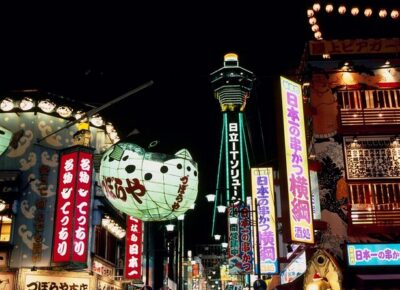
Hungry Osaka Street Food Tour:15 Tastings & 3 Drinks with a Local
Read our review →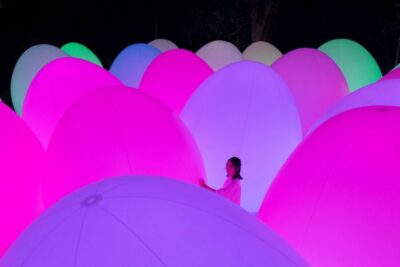
Browse the lists this tour appears in