
Reviewed · TEMPLE & SHRINE TOURS
Zodiac Shrines and Naha Backstreets Cycling Tour
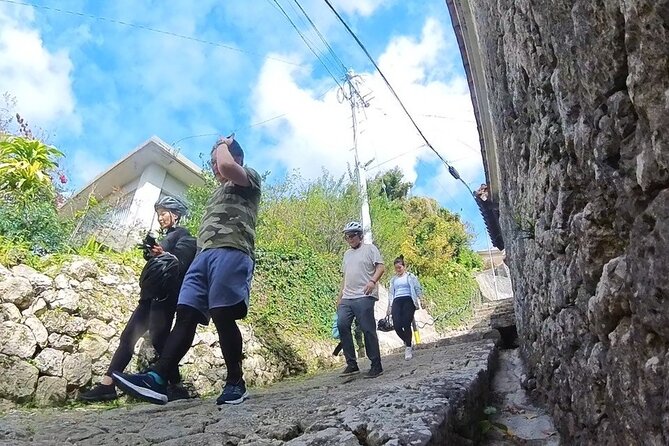
This tour is interesting because you mix two things that rarely go together on Okinawa, a zodiac shrine pilgrimage and a city cycling route that feels local, not checklisty. You ride through Naha and up into Shuri, then stop at sacred spots where modern worship connects back to the Ryukyu Kingdom era.
I like how smoothly the day is paced, short visits that keep you moving, plus electric bicycles that make hills and longer stretches feel doable. I also love that the tour is led by guides such as Maria, Jojo, Reija, and Sally, who explain what you are seeing so you do not feel like you are just passing temples at speed. One consideration: parts of the route include busy streets, so you will want to pay attention, ride defensively, and lean on the guide when the traffic is around.
Key highlights you should notice
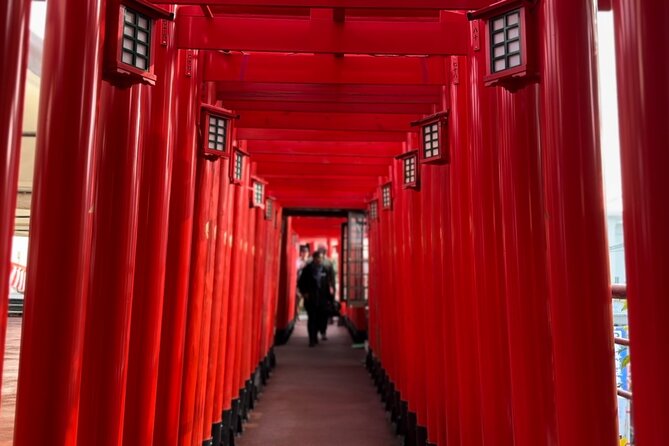
- Zodiac-shrine pilgrimage route across Naha and Shuri, with sites tied to Ryukyuan beliefs
- Electric bike comfort for climbs and faster repositioning between shrines
- Goshuin-cho pilgrim book included, so the day feels like more than sightseeing
- Free admission at each stop, so your money stays focused on the ride
- Small group size (max 5), which keeps questions and photo help realistic
- Short snack breaks that keep your energy up without slowing the rhythm
Zodiac Shrines by E-bike, a smart way to see Naha up close

Naha has plenty of big sights, but it can also feel like you are just moving from one landmark to the next. This tour changes that. You ride like a local through backstreets, then shift your pace into a pilgrimage mindset at shrines, temples, and sacred spots.
What makes it special is the mix of places. You are not only seeing one temple complex. You bounce between shrine spaces, Buddhist sites, royal-era connections, and sacred springs, all within a half-day window. And because it is on an e-bike, you can actually cover the route without arriving exhausted.
At around 4 hours, it hits a sweet spot. Long enough to feel like you discovered something, short enough that you can still eat well afterward and explore on your own.
More Temple & Shrine Tours in Naha:
- Naha: Guided E-Bike Tour of the 12 Zodiac Temples
★ 4.9 · 50 reviews - Kyoto: Fushimi Inari, Kinkakuji, Bamboo Grove 1 Day Bus Tour
★ 4.8 · 4,316 reviews - Kyoto: Tea Ceremony Ju-An at Jotokuji Temple
★ 4.9 · 3,207 reviews
Starting at Makishi, then getting your bearings fast
Your day starts near Makishi Monorail Station, at 3-chōme-13-20 Makishi. The location is convenient because you can line it up with the rest of your Naha plan without building a whole logistics puzzle.
After you meet up, the team hands you the electric bicycle and runs a quick safety briefing. This matters more than it sounds. You are mixing temples and traffic, and the guide’s job is to keep the ride predictable so your attention stays on the places you came for.
Also, this is not a big group experience. With a maximum of 5 travelers, you get a bit more freedom to ask questions and get help with small things like taking photos while you are stopped. One of my favorite travel rules is simple, small group, better information. This setup supports that.
How the e-bikes change the vibe on busy streets
Electric assist is the difference between a tour that feels like work and a tour that feels like you are out for the day. Expect some riding on wider or busier stretches, and at least a bit of climbing as you move toward Shuri.
The e-bikes also change the emotional tone. You stop thinking about leg fatigue, so you can focus on the meaning of each stop. And when your energy is intact, you are more likely to notice the details, like carvings, temple gates, and the way space is arranged for worship.
Practical note: you are not given a mobile phone holder or camera mount. If you want hands-free filming or easy photo setups, plan to use what you already have, or keep your phone secured in a pocket or small bag.
Stop-by-stop: Shuri Kannondo and the Ryukyu Kingdom guardian spirit
Your route quickly turns from city backstreets into Ryukyuan spiritual territory. One early stop is Shuri Kannondo, where you can see Kannon Bodhisattva, described as the guardian deity of the Ryukyu Kingdom. If you have seen Buddhist figures in other parts of Japan, the difference here is how the Ryukyu identity threads through the worship setting.
You also get a view over Shuri from within the temple’s bright vermilion setting. That color is not just decoration. Temple paint and architecture choices often communicate what a place wants you to feel, and in Shuri, that striking vermilion helps the site look ceremonial, not casual.
Even with a short time window, you can do two things well:
1) look slowly at the carvings and ornaments while you are there, and
2) step back and take in the city view so the whole area starts making sense.
More Cycling Tours in Naha:
- Afternoon Adventure: Okinawa Local Cycling with Spectacular Views
★ 5.0 · 92 reviews - E-Bike Nature Tour in Shuri
★ 5.0 · 25 reviews - Hidden Kyoto E-Biking tour
★ 5.0 · 1,843 reviews - Tokyo Guided Small-Group Biking Tour
★ 5.0 · 1,250 reviews
Ankoku-ji Temple: traditional houses and long-practicing Okinawan Buddhism
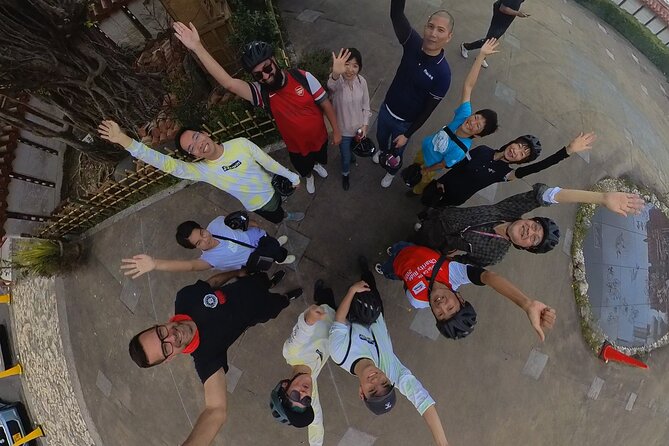
Next up is Ankoku-ji Temple. The ride to it passes through a local area where traditional houses remain. That transition is part of the experience. You are not only visiting sacred points, you are also seeing how everyday neighborhood life sits close to spiritual spaces.
At the temple, you are looking at Okinawan Buddhism that has been practiced for over 500 years. That is the kind of detail that quietly changes how you see a place. A temple is easy to photograph. It is harder to understand it. This stop gives you a simple bridge to that longer continuity.
Here is a good way to make short time work: spend your first minutes noticing how visitors behave, then use the guide’s explanation for context. You will get more out of the site when you link the physical space to the meaning the guide offers.
Shuri Castle ceremonial gate: a photo moment with real symbolism
Then you reach Shuri Castle, specifically the ceremonial gate that symbolizes Okinawa. This is the kind of stop where a bicycle photo feels appropriate. The gate’s vermilion color and balanced design make it look like a formal threshold, not just an entrance.
You will likely take your photos quickly, but do not rush the symbolic point. This is not random architecture. It is presented as an identifier for Okinawa, so you are capturing more than a pretty backdrop.
If you like getting photos without blocking walkways, this is one of your best opportunities during the tour. You are stopping with a schedule and guide support, so you can plan your picture instead of scrambling.
Sairaiin (Daruma Temple): the prayer for health and family hopes
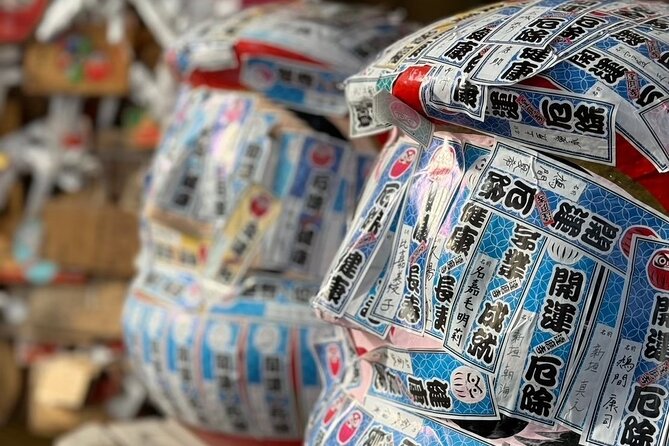
Sairaiin, also known as the Daruma Temple, is a favorite style of Okinawa pilgrimage for people who want something colorful and emotionally direct. It is visited by devotees who make pilgrimages to pray for good health and pregnancy, and also give thanks for their current life.
The visual cue is strong: bright red daruma dolls. That red does what good temple art always does. It pulls your attention. Even if you do not read the deeper meanings yet, you can feel that this is a place where people come with specific hopes.
One reason I like this stop in a short cycling tour is that it is easy to connect to real human reasons. You are not only learning about beliefs in theory. You are seeing how belief looks in practice when people show up with personal prayers.
Seikoji near the monorail: when modern city noise meets sacred atmosphere
After Shuri-style stops, you also get a sense of Okinawa’s modern layers. Seikoji is reached by crossing a main street and passing under a monorail that runs above you.
Then the experience flips. You suddenly arrive at a temple with a sacred atmosphere, adjacent to a newer temple rebuilt after the war, with mention of an ancient Japanese tree nearby. Even without a long time window, this stop makes you think about continuity and rebuilding, how sacred spaces survive and change across time.
Practical tip: keep your volume down as you approach. The monorail may be loud, but the moment you enter temple grounds, the vibe asks you to slow down.
Shuritobarucho sacred spring: the story of water found by noticing birds
Shuritobarucho is a miraculous spring, tied to a story about water being discovered deep in the forest after an Okinawan princess noticed waterfowl nearby. The water connects you to that narrative in a tangible way, and the spring becomes more than a pretty stop. It becomes a living reminder of how people interpret nature as meaningful.
You will only have about 15 minutes here, so the best approach is simple:
- Look at the spring and its surroundings
- Listen to the guide’s explanation of the origin story
- Then take a moment of quiet and move on
That rhythm works for springs and small shrines. You do not need a long stay to honor the idea.
Sogenji-dori downhill to royal entombment sites and a banyan gate
The last set of highlights includes a thrilling downhill ride to the sacred place where successive kings of the Ryukyu Kingdom were entombed. Today, it is a park in the city, with refreshing, clean air, plus a stone gate and banyan tree tied to the setting.
This stop helps the pilgrimage storyline land. Earlier you saw guardian deities, Buddhist practice, ceremonial architecture, and prayer for family wellbeing. Here, you see a royal-era connection to burial and the continued importance of sacred geography.
Also, this downhill segment is fun in the practical sense. It is hard to explain until you feel it. You go from focused temple pauses to a more energetic ride, then come back to a solemn destination. That push and release is what makes the tour feel complete rather than repetitive.
Goshuin-cho and why the pilgrimage format feels different
You get a pilgrim’s book, Goshuin-cho. Even if you have done shrine stamping elsewhere in Japan, the format here fits the tour pacing. You are not collecting marks randomly. You are moving through meaningful places as part of one coherent route.
This changes the tour from sightseeing into participation. You remember the day better because you attach your time to a physical object you can look at later.
If you are new to goshuin-style pilgrim books, don’t worry. The guide is there to help you understand what to do during each stop. The goal is to make it feel respectful and simple, not complicated.
Snacks, photo limits, and what you should pack for comfort
Snacks are included, which is a real quality-of-life detail for a bike tour. You still might want water, though, since bottled water is not included.
What I recommend packing:
- A small water bottle if you plan to drink during the ride
- Sun protection, Okinawa gets bright
- Comfortable shoes, you will walk a little at each stop
- Your own way to secure a phone for photos, since you are not provided a holder or mount
Also, wear your helmet properly. You get one as part of the tour, but you own how it fits. If it shifts or pinches, ask the staff to adjust it. It is easier to fix at the start than halfway up a hill.
Price and value: what $108.72 buys you in real terms
At $108.72 per person, this is not the cheapest way to spend half a day in Naha. But it is also not just paying for photos.
Your money covers:
- Electric bicycle use for the full route
- A helmet that is fitted for biking
- The Goshuin-cho pilgrim book
- Snacks
- A guided route through a series of sacred stops that are listed as free admission
When you add those things up, the price starts to make sense, especially because the tour is limited to a small maximum group size. It is also a practical choice if you want to see both Naha and Shuri without spending extra time on trains or taxis for every jump.
One more value point: the tour is designed as a 4-hour block. You can build the rest of your day around it. That time certainty is worth something when you are juggling food, beaches, and shopping.
Weather changes: what happens when conditions turn
This experience requires good weather. If precipitation probability exceeds 70 percent or if severe weather happens, the plan can change. In that case, you get contacted the day before.
This is why you should keep your schedule flexible in your head. If you are arriving in Naha and trying to fit too much in, this is the type of tour that works best when you give it room to adapt.
Who should book this Naha and Shuri shrine cycling tour
This tour fits you if:
- You want a guided way to understand Ryukyuan spiritual places, not just a route of photos
- You like cycling but still want help with traffic and hills
- You want a short, structured half day with clear stops
- You care about seeing both Naha and Shuri without turning it into a full-day commute
It might be less ideal if:
- You strongly dislike any riding on streets where traffic is present
- You want very long time inside each shrine or temple, because the visits are brief by design
Should you book this tour or skip it?
Book it if you want an efficient, culturally focused Naha experience that mixes city backstreets with actual sacred stops, and you are comfortable riding an e-bike with a small group. The combination of electric cycling, short guided explanations, and the Goshuin-cho pilgrim book makes the day feel purposeful rather than rushed.
Skip it if you want a more slow, contemplative temple day where you spend a lot of time inside each site. This tour is built for motion, and the best way to enjoy it is to accept the rhythm: ride, pause, learn, repeat.
If you can, book with a flexible day in mind. When the weather is good, this is a very smart way to connect Naha and Shuri in one coherent pilgrimage-style loop.
FAQ
How long is the Zodiac Shrines and Naha Backstreets cycling tour?
It runs for about 4 hours (approx.).
What is the price per person?
The price is $108.72 per person.
Where do I meet the guide and pick up the bikes?
Meet at 3-chōme-13-20 Makishi, Naha, Okinawa 900-0013, Japan. It is near Makishi Monorail Station, about a 1-minute walk from the station.
What is included in the tour?
The tour includes use of the bicycle, an installed cycling helmet, the pilgrim’s book Goshuin-cho, and snacks.
What should I bring since some items are not included?
Bottled water, camera mounts, and a mobile phone holder are not included, so you may want to bring your own if you need them.
What happens if the weather is bad?
If the precipitation probability exceeds 70 percent or severe weather occurs, the tour plans may change. You will be contacted the day before, and if the experience is canceled due to poor weather, you will be offered a different date or a full refund.
Latest write-ups near Naha
- Okinawa: Naha: 1 day Kerama Islands diving‣ license required★ 3.9 · 20 reviews
- Gorilla Kart Tour-Plenty of Time Slots|Many Great Views★ 3.9 · 20 reviews
- E-Bike Nature Tour in Shuri★ 5.0 · 25 reviews
- Kintsugi Experience in Naha, Okinawa – Art from Broken Pieces!★ 5.0 · 28 reviews
- Naha: Full-Day Introductory diving & Snorkeling in the Kerama Islands, Okinawa★ 4.5 · 28 reviews
- Okinawa Hip-Hop Bus C Course Tour to Northern Island★ 4.0 · 29 reviews
- Sushi Making Experience Class in Naha Makishi Public Market★ 5.0 · 35 reviews
- Okinawa Whale Watching From Naha★ 4.5 · 35 reviews
Temple & Shrine Tours, compared.
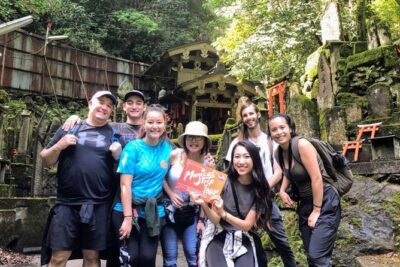
Fushimi Inari, Kinkakuji, Bamboo Grove 1 Day Bus Tour
Read our review →

Meiji Shrine, Asakusa, Skytree Bus Tour and Cruise
Read our review →
Osaka/Kyoto:Kinkakuji,Arashiyama,FushimiInariShrine,NaraPark
Read our review →
Asakusa Walking Tour with Sensoji Temple Visit
Read our review →
Nikko: Kegon Falls, Lake Chuzenji & Toshogu Temple
Read our review →
Kamakura & Enoshima Day Trip including Temple Tickets
Read our review →
Nikko Toshogu Shrine and Kegon Waterfall Tour
Read our review →Browse the lists this tour appears in