
Reviewed · OSAKA TOURS
Osaka: Private Japanese Traditional Ceramics Experience
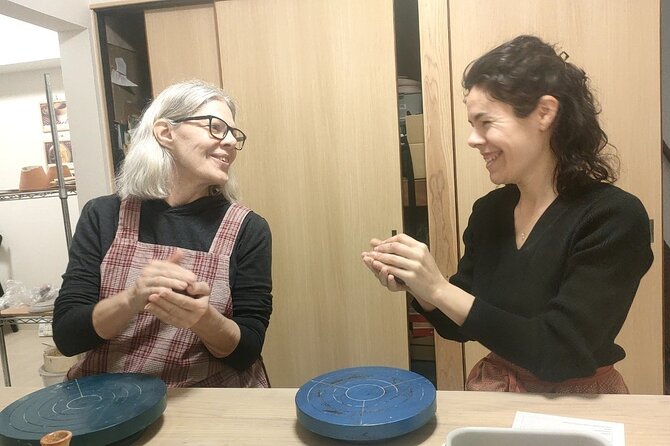
A private Japanese ceramics class in south Osaka is interesting because it trades the big-name sights for a working studio experience. You get hands-on clay time, plus cultural talk in a century-old two-storey house. Private pottery also means you are not squeezed into a crowd.
I like two things a lot. First, the instruction is personal, with Anna and Ryo guiding you as you build (and explaining what you are making beyond just the steps). Second, you get a built-in souvenir plan, including a small sushi dish and a sakura-shaped chopstick rest that are part of what you leave with.
The main drawback to weigh is timing and shipping. Your finished pottery needs about 1.5 months to ship, and the shipping fee is not included.
Quick hits before you go
- South Osaka studio walk: expect a real neighborhood feel on the route from Teradachō Station, with local food shops nearby
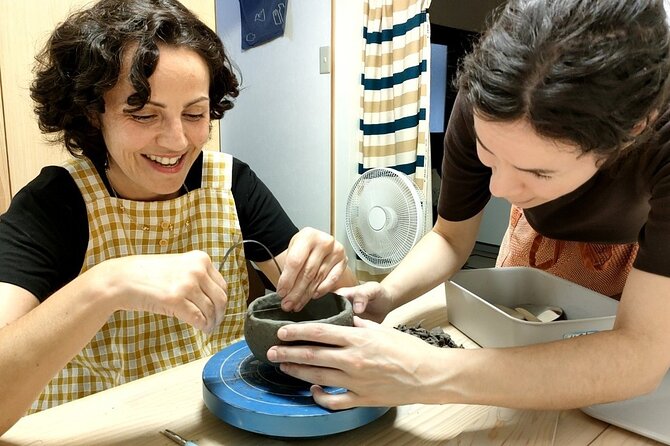
- Anna and Ryo teach directly: you get patient, friendly guidance, not just a quick demo
- Choose your ceramic set: sake set, sushi set, or a tea bowl (chawan) made with clay
- A private format: only your group participates
- Multiple language options: English, Spanish, Catalan, and Japanese
- You wait for the final firing result: plan around about 1.5 months for shipping (cost extra)
South Osaka, not the tourist shortcut, Teradachō Station to a century-old house
This workshop starts in a very normal part of Osaka, the kind of place you only notice if you actually walk. Your meeting point is Teradachō Station (2 Chome-3 Tennojichokita, Abeno Ward, Osaka 545-0001). From there, you head to the studio in the south of the city.
The setting matters. The class takes place in a century-old two-storey house, which gives the whole experience a quieter, more lived-in feel. You are also close to a street lined with shops selling local food, so the area around the studio feels practical and everyday, not staged for tourists. A couple of people have noted that the walk can feel like a look at real Osaka, and that is exactly what you should aim for: slow down, look around, and enjoy the contrast with central hotspots.
One practical consideration: if you are arriving late or stressed, you will miss some of the atmosphere. Give yourself enough time to get from the station to the house, and you will enjoy the neighborhood more.
Also on the shortlist for Osaka:
- Osaka Go Karting Tour with Funny Costume
★ 5.0 · 2,658 reviews - Osaka Castle: Museum and Tower Entry Ticket
★ 4.5 · 2,380 reviews - Osaka: Shinsekai Food Tour with 13-15 Dishes at 5 Eateries
★ 4.8 · 2,204 reviews
The workshop vibe: private, multi-language instruction in a small studio
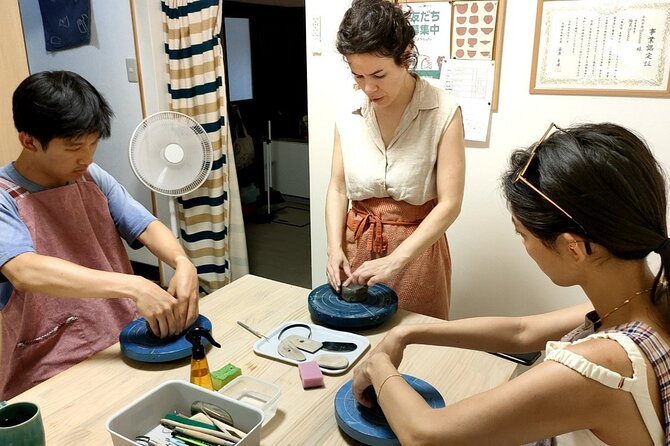
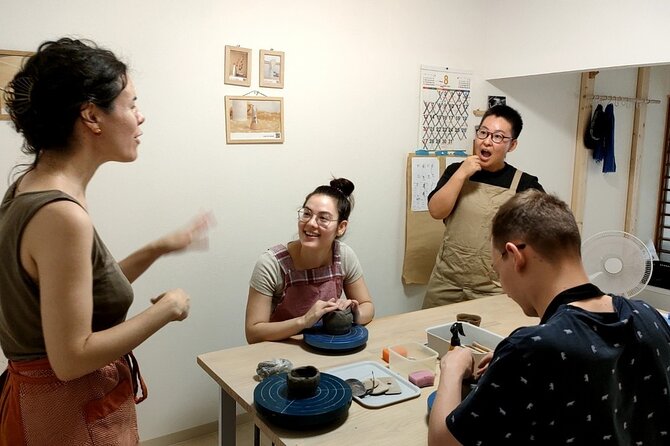
This is a private experience, so only your group participates. That matters more than it sounds. Instead of watching someone else work, you ask questions, adjust your pace, and get feedback while you are shaping the clay.
In the studio, the main teaching team includes Anna and Ryo. They talk about Japanese culture alongside the making process, so the class lands as more than a craft activity. You learn why the objects connect to Japanese gastronomy and how ceramic traditions fit into everyday rituals.
Language is handled well for an international audience. The class is offered in English, Spanish, Catalan, and Japanese. If you want the cultural explanations in your own language, this option is unusually flexible for Osaka-area ceramics.
If your group is mixed, this also helps. You can choose a language that makes you comfortable. When you are relaxed, your hands work better and your questions come easier.
Pick your ceramic project: sake set, sushi set, or chawan
You get to choose what you make from three clear options, all tied to Japanese food culture:
- Sake set: a small bottle and a glass
- Sushi set: a sushi plate plus a chopstick holder
- Chawan (tea bowl): the tea bowl form used for tea traditions
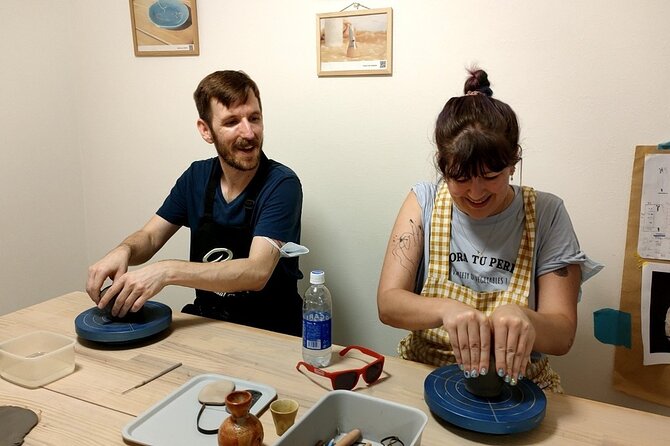
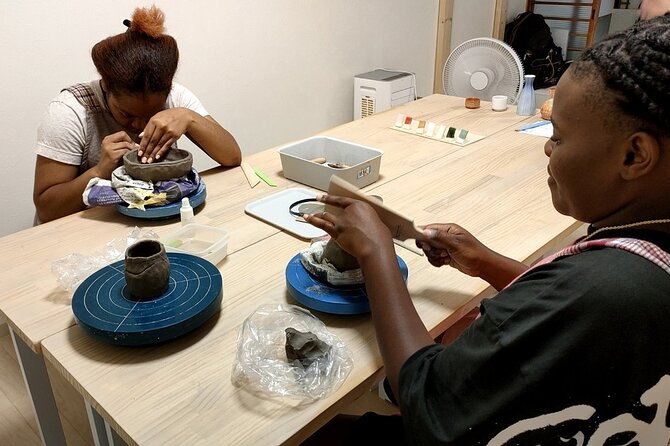
All options use clay, and the class focuses on Japanese traditional hand-building techniques rather than wheel throwing. That is good news if you are a beginner. You are not expected to master a spinning wheel in a two-hour session. You can focus on shaping, details, and getting the form right.
Here is how to choose based on your trip style:
- If you want something you can use as a quirky desk or kitchen set, the sake set is compact and memorable.
- If you want a piece that matches how you actually eat (and it is great for photos), the sushi set makes sense.
- If you like calm, functional tableware and you want a traditional-looking form, go for the chawan.
Also, think about luggage and future enjoyment. Even though the final items ship later, you are still going to live with this souvenir choice for months. Pick the object that feels most like your Japan story.
What happens during the 2 hours: clay work, cultural talk, and a hands-on flow
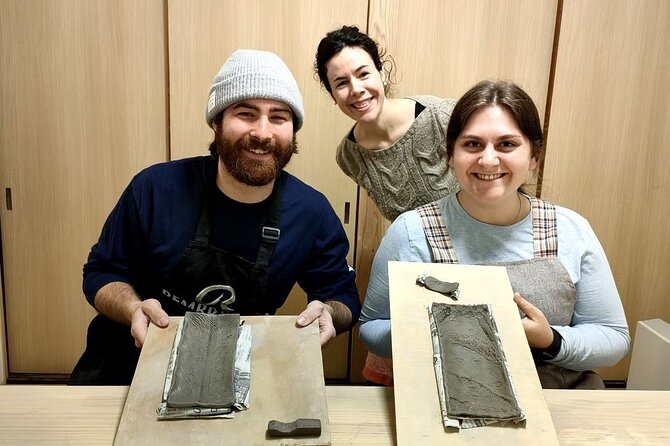
The workshop runs about 2 hours. In that time, you build your chosen ceramics, learn technique, and get context for what the forms represent.
You can expect a flow like this:
- Get instructions on the clay work and what to aim for with your specific piece
- Work on your chosen object(s), with guidance while you shape and refine
- During the session, Anna, Ryo, and the team talk about Japanese culture, linking the ceramics to food habits and traditional ideas
You are also offered Japanese green tea, coffee, or water. This sounds small, but it helps you slow down. When you are working with hands and patience, a warm drink is a nice reset.
The biggest “time reality” is that the workshop experience is only the start. Your pieces still need to be processed after you finish. That leads to the next part.
A change of pace from Osaka:
- Osaka Food Tour: 13 Dishes at 5 Local Eateries
★ 5.0 · 2,149 reviews - Hungry Osaka Street Food Tour:15 Tastings & 3 Drinks with a Local
★ 5.0 · 1,727 reviews - Osaka: teamLab Botanical Garden Entry Ticket
★ 4.5 · 1,710 reviews - Osaka: Tea Ceremony Experience
★ 4.9 · 1,426 reviews
The 1.5-month shipping wait, and how to plan for it
Here is the deal you should plan for: it takes about 1.5 months to ship your pottery. Shipping costs are not included, so you will want to budget for that if you are sending to home.
Why this wait is worth it: you are making a real ceramic piece that requires firing, and that final result takes time. You are not just painting something and walking away.
What I recommend you do:
- If you need a souvenir immediately in your trip, know that the final pottery will not be right away.
- If you can wait, this becomes one of the more meaningful “Japan gifts” you bring back, because you will get it after you return home.
Also, note the included items. Even if your main project ships later, the experience includes souvenir pieces, so you are not leaving empty-handed.
Souvenirs you actually leave with: sushi dish and sakura chopstick rest
Included in the experience are specific take-home items that many people remember long after the class ends. You receive a Japanese traditional small dish and a sakura-shaped chopstick rest.
During the workshop, you also receive details about those pieces: the sushi dish is decorated with traditional glaze, and the chopstick rest is shaped like a sakura flower made by Anna. This is a clever touch. You get both:
- The project you choose and make (which later ships)
- A ready-made souvenir set tied to Japanese food rituals and aesthetics
If you love the idea of using something at home, the chopstick rest is especially practical. It is easy to display, and it is the kind of small ceramic object people notice at the table.
Price and value: about $94.13 for a private ceramics experience
At $94.13 per person for about 2 hours, the value mostly comes from what is included. This is not a bare-bones “try it once” setup.
Included costs are clearly part of the package:
- Instructor guidance
- Material costs
- Firing fee
- The Japanese small dish and sakura chopstick rest
- Japanese green tea, coffee, or water
- Tax
What is not included is shipping fee for the pottery you make. So the “real cost” depends on whether you ship and where.
Is it pricey? For a private workshop, it is fairly reasonable because you are paying for time with an instructor, materials, and the firing process that turns clay into something durable. When you compare it to DIY clay-and-firing setups, you are paying for convenience plus expertise.
My rule of thumb: if you want a guided ceramics memory tied to Japanese food culture, and you like the idea of receiving your final piece after the trip, the price makes sense.
Who this workshop fits best in your Osaka plan
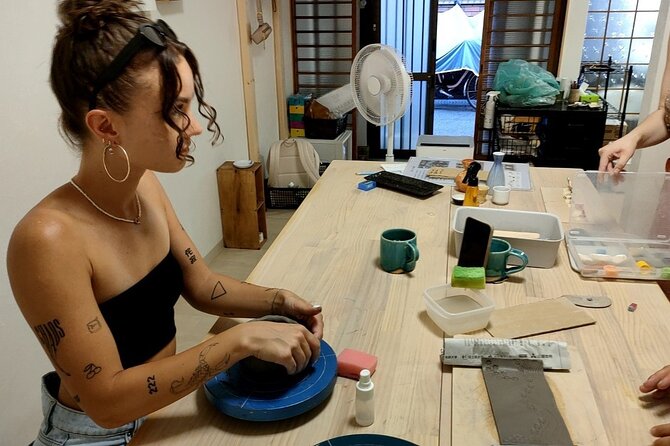
This works well if you want Osaka beyond the main sightseeing tracks. Because it is set in a residential area and taught in a small studio house, it suits people who enjoy:
- A slower, hands-on activity
- Cultural context, not just technique
- Private instruction and a calm pace
It also suits first-timers. The experience notes that most travelers can participate, and the project choices are friendly for beginners who want something real and functional at the end.
Families can fit too, since it is structured as a workshop rather than a hike or a hard outdoor activity. If you are bringing teens, this kind of craft time often lands as a welcome break from long lines and crowded attractions.
Practical tips to make it smooth
A few simple things will help you enjoy this more:
- Choose your language option carefully. If cultural explanations matter to you, pick the language you are most comfortable with.
- Treat it like a studio visit, not a quick photo stop. Wear comfortable clothes you would not mind getting a little messy.
- Take your time choosing between the sake set, sushi set, and chawan. Your choice affects what you learn and what you will remember later.
- Plan for the wait. Your pottery ships in about 1.5 months, and shipping costs are separate.
If you are the type who likes to get value out of every day, this is a smart add-on to an Osaka itinerary because it gives you a hands-on story you cannot replicate by just eating your way through the city.
Should you book Osaka private Japanese ceramics with Anna and Ryo?
Book it if you want a private, instructor-led ceramics experience that connects directly to Japanese food culture. You will likely enjoy it most if you like small studios, real neighborhoods, and leaving with objects that feel personal.
Skip it or think twice if you need a finished pottery souvenir before you leave Japan. Your main pieces take about 1.5 months to ship, and shipping fees are not included. If you cannot handle waiting, you might still like it for the included souvenir pieces, but the full payoff depends on receiving your fired pottery later.
Overall, this is a thoughtful choice when you want Osaka to feel human and handmade, with Anna and Ryo guiding you from clay to a ceramic keepsake tied to everyday Japanese rituals.
FAQ
How long is the Osaka private ceramics workshop?
It lasts about 2 hours.
What can I choose to make in the workshop?
You can choose one of three options: a sake set (small bottle and glass), a sushi set (sushi plate and chopstick holder), or a tea bowl (chawan).
Is this experience private or shared with other travelers?
It is private. Only your group will participate.
What languages are available during the class?
The class is offered in English, Spanish, Catalan, and Japanese.
When will I receive the pottery I make?
It takes about 1.5 months to ship your pottery.
Is shipping included in the price?
No. Shipping costs are not included.
What souvenir items are included?
You receive a Japanese traditional small dish and a sakura-shaped chopsticks rest.
What else is included during the workshop?
The price includes the instructor, material costs, firing fee, Japanese green tea, coffee or water, and tax.
Where does the experience start and end?
The meeting point is Teradachō Station (2 Chome-3 Tennojichokita, Abeno Ward, Osaka 545-0001, Japan). It ends back at the meeting point.
Do I need to print a ticket?
No. The experience uses a mobile ticket.
Can I get a full refund if I cancel, and what if the weather is bad?
Yes, there is free cancellation. You can cancel up to 24 hours in advance for a full refund. The experience requires good weather, and if it is canceled due to poor weather, you will be offered a different date or a full refund.
Latest write-ups near Osaka
- Osaka Private Tour with Government-Licensed Guide★ 4.8 · 20 reviews
- Guided Photography Tour in Osaka: Capturing Memories★ 4.5 · 20 reviews
- Osaka: Food Tour at Night with Tastings★ 4.9 · 20 reviews
- Kansai/KIX Airport to or from Osaka/Kyoto Private Transfer★ 5.0 · 20 reviews
- Osaka: City Highlights Bike Tour★ 4.7 · 20 reviews
- From Osaka/Kyoto: Amanohashidate Day Tour【Including tickets】★ 3.7 · 20 reviews
- Osaka Okonomiyaki Cooking Class “Learn here and make it at home”★ 5.0 · 20 reviews
- Volleyball in Osaka & Kyoto with Locals!★ 5.0 · 21 reviews
Osaka Tours, compared.



Shinsekai Food Tour with 13-15 Dishes at 5 Eateries
Read our review →
Osaka Food Tour: 13 Dishes at 5 Local Eateries
Read our review →
Hungry Osaka Street Food Tour:15 Tastings & 3 Drinks with a Local
Read our review →

Browse the lists this tour appears in