
Reviewed · FOOD & DRINK IN OSAKA
Osaka Delights: Traditional Japanese Food Tour
Osaka Delights is interesting because it strings together Osaka favorites in one tight evening plan, starting at a food market and ending in the neon crush around Dotonbori. I like that it is structured enough to keep you moving, but slow enough to actually taste and ask questions at each stop. My favorite part is the lineup, especially the takoyaki and kushikatsu, plus the last-photo moment at Ebisu Bridge under the Glico sign. The other reason it works is the local guide, with Spanish and English support.
One possible drawback to consider: this is a walking tour and it is not meant for mobility issues. It also depends on the day and group language setup, so if you strongly prefer English only, you should pay attention to how your tour group is arranged.
Key highlights worth the appetite
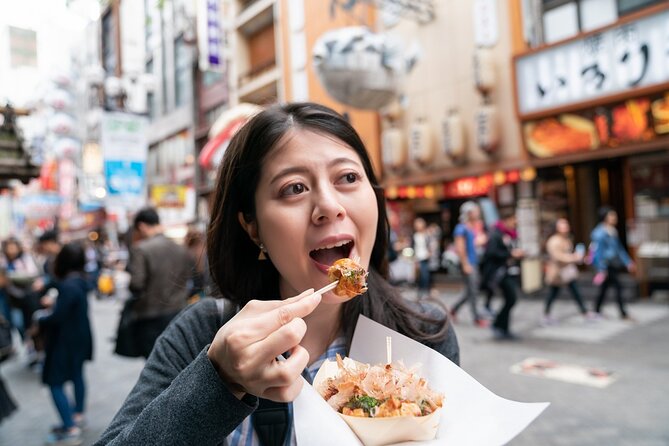
- Kuromon Market kickoff with fresh takoyaki from Wanaka, a classic Osaka starting point
- Mitoya three-color dango served on skewers, a quick cultural stop that is easy to love
- Kushikatsu Yokozuna Hozenji where you get both okonomiyaki and kushikatsu in one sitting
- A real dessert finish with a warm egg tart from a beloved bakery stop
- Dotonbori night stroll to see Osaka’s most famous signage energy, ending at Ebisu Bridge and the Glico Man
Starting point on Namba: why the 5:30 pm timing helps
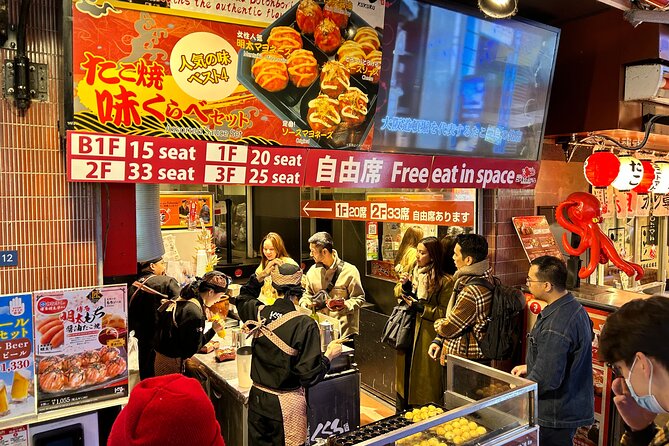
This tour meets at Hotel Royal Classic Osaka in Namba, Chuo Ward, with a 5:30 pm start. That timing matters in Osaka. You get enough day light to read the streets and find the market areas without rushing, then you hit Dotonbori as it turns on its night vibe. You finish back at the meeting point, which is practical after a few hours of walking and eating.
It runs about 3 hours and keeps a small-group feel, with a maximum of 30 travelers. For you, that usually means more time at the stalls and fewer issues with seeing what the guide is pointing out.
One more practical note: you’ll have a mobile ticket, and each stop lists no admission tickets for the areas themselves. So you are mostly paying for the guided tastings and local knowledge, not entry fees.
More Food & Drink in Osaka
- Osaka: Shinsekai Food Tour with 13-15 Dishes at 5 Eateries
★ 4.8 · 2,204 reviews - Osaka Food Tour: 13 Dishes at 5 Local Eateries
★ 5.0 · 2,149 reviews - Hungry Osaka Street Food Tour:15 Tastings & 3 Drinks with a Local
★ 5.0 · 1,727 reviews
Kuromon Market: your first taste of Osaka’s food engine
The tour starts with a short walk, about 10 minutes, toward Kuromon Market, often called Osaka’s Kitchen. The key value here is context. Without a guide, it is easy to wander past the exact stalls that locals chase for their go-to versions.
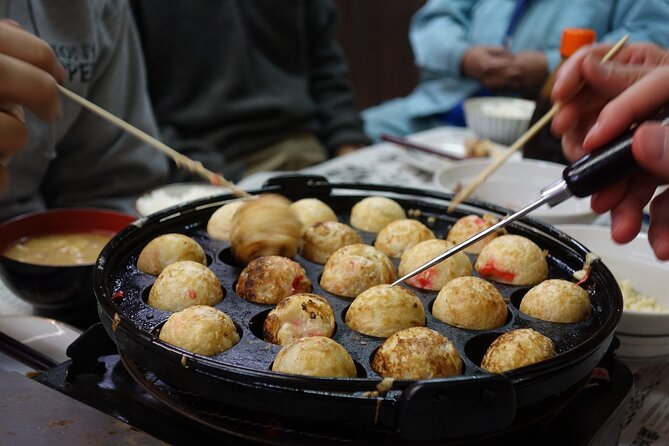
At your first food stop in Kuromon, you’ll try takoyaki at Wanaka, a renowned stall listed for this experience. Takoyaki are crispy dough balls filled with octopus and finished with sauces and bonito flakes. Even if you have had takoyaki before, this is a good chance to compare textures and flavor balance, because the market stalls tend to do it daily and know their rhythm.
What to expect in real life: you are standing close, eating fast, and moving on. That is part of the charm. If you are the kind of traveler who likes to taste and then talk, this section lets you do both without turning into a food marathon.
Wanaka takoyaki plus the first sauce lesson you’ll remember
What makes this stop click is the first bite sets expectations for the rest of the tour. Takoyaki have a lot going on at once, and your guide can help you spot the difference between the batter crunch, the sauce sweetness, and the umami from the bonito flakes.
I also like how this stop acts like a warm-up. Your guide gets you oriented, shows you what to order, and gives you a little cultural framing so the food feels like Osaka, not just random street bites.
Mitoya three-color dango: sweet, skewered, and symbolic
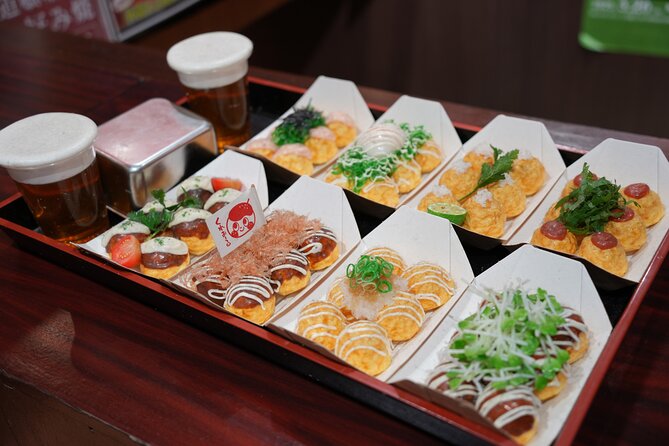
Next you head to Mitoya, where the star is dango. Here, you’ll have three-color dango served on skewers. The colors traditionally point to different aspects of Japanese culture, and your guide is there to connect the symbolism to what you are eating.
This is a smart pause. After the savory opener, you get something softer and sweeter. It also gives you a chance to slow your pace for a bit. The tour allots about 30 minutes for this stop, which is enough time to eat, compare bites, and listen without feeling like you have to keep up with a stopwatch.
One thing to know: dango is not the same style as pudding or cake. It is chewy rice dumpling texture, often with a sweetness that builds as you chew. If you like simple desserts, this is a good bet.
A change of pace from Osaka:
- Osaka Go Karting Tour with Funny Costume
★ 5.0 · 2,658 reviews - Osaka Castle: Museum and Tower Entry Ticket
★ 4.5 · 2,380 reviews - Osaka: teamLab Botanical Garden Entry Ticket
★ 4.5 · 1,710 reviews - Osaka: Tea Ceremony Experience
★ 4.9 · 1,426 reviews
Kushikatsu Yokozuna Hozenji: where Osaka comfort food stacks up
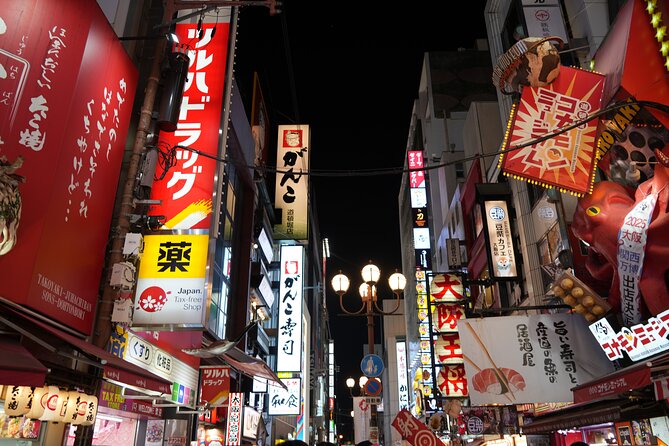
The biggest food block in the itinerary is at Kushikatsu Yokozuna Hozenji, with about 50 minutes at the stop. This is where the tour becomes a real dinner, not just snacks.
You’ll try two Osaka classics here:
- Okonomiyaki, a savory pancake made with flour, eggs, and cabbage
- Kushikatsu, crispy skewers
This combo is valuable because it gives you two textures and two cooking styles in one go. Okonomiyaki tends to be thick and savory, while kushikatsu gives you that satisfying crunch. If you have been curious about Osaka street food reputation, this is one of the most direct ways to experience it without wasting time hunting.
What I like for you: the pacing gives your stomach time to reset between bites. And having a guide helps you understand what you are looking at, including how people order and how to approach the food without stress.
The egg tart stop: a warm finish that feels made for night air
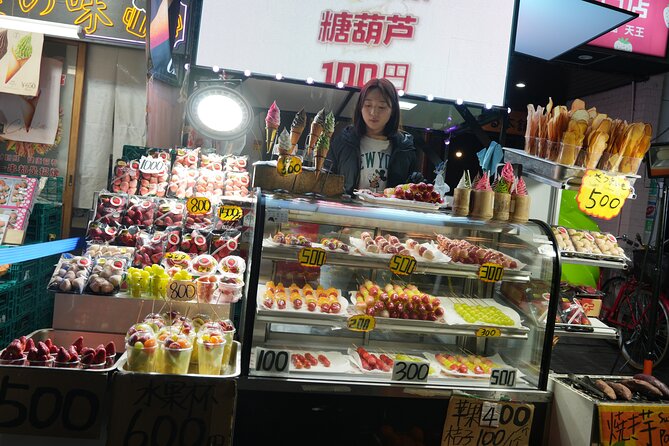
After you’ve handled the savory part of the meal, the tour moves to dessert for about 20 minutes. The itinerary lists a stop for egg tart, a pastry with creamy custard in a crispy, flaky crust.
This stop is a good choice because it is comforting and portable. You can eat it without feeling like you need cutlery or a long sit-down meal. Plus, a warm egg tart fits the seasonality of Osaka evenings, especially when you are going right from food into a photo-and-stroll section.
One small consideration: desserts can vary by day, and one way to set expectations is to remember that the itinerary specifically calls out egg tart as the sweet finish. If you are planning your own dessert hunting around that expectation, you will be in the right frame.
Dotonbori and Ebisu Bridge: the Osaka photo payoff
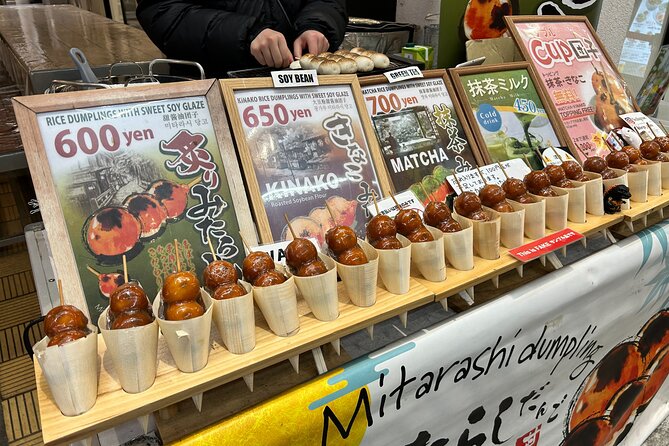
Once you move toward Dotonbori, you shift from eating mode to city mode. You get about 30 minutes in Dotonbori, one of the most famous areas in Osaka, known for the neon signage and crowd energy.
The tour then adds a final photo moment at Ebisu Bridge along the canal. This is where you find the Glico Man sign, one of Osaka’s most recognized nighttime landmarks. You get about 20 minutes here, so you can grab photos without feeling rushed.
This part matters because the food tour is not only about food. Osaka is a nightlife city too, and Dotonbori is where that energy is easiest to feel. Even if you are not a nightlife person, it is a great end cap: you’ve eaten well, and now you see why Osaka is Osaka.
Price and what you truly get for $84
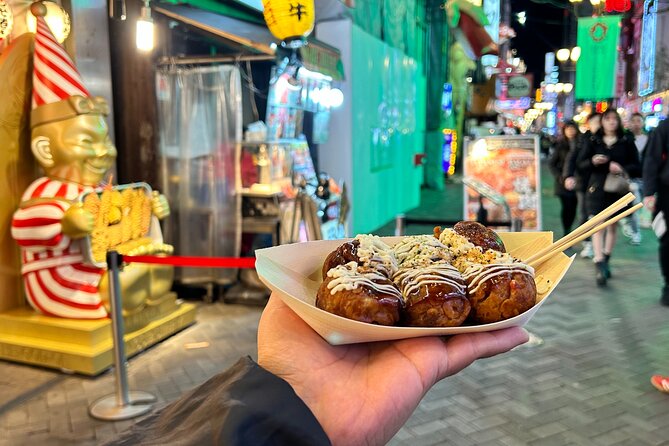
At $84 per person for about 3 hours, the value comes from combining three things:
- Multiple curated tastings that cover savory and sweet, not just one or two samples
- A bilingual guide in Spanish and English, which helps you order and understand what you are eating
- Local neighborhood context, from Kuromon Market through Namba and into Dotonbori
If you tried to copy this on your own, you would likely spend time figuring out where to go, what to order, and which stalls are best for each dish. The tour removes that guesswork and compresses it into one evening.
Another value point: it is typically booked in advance. On average it is reserved about 42 days ahead, which usually means these tastings are popular and the tour is planned to make those spots work.
Group size, guide style, and staying included
The tour has a maximum of 30 travelers, which generally keeps it from feeling chaotic. Many people love the guide factor here, especially guides such as Paula, Angeles, Eli, Heli, and Helimar, who are repeatedly credited for strong explanations and good food choices.
Now the realistic note: one guest experienced a mismatch where the tour leaned more Spanish than English, even though English was requested. That is not something you can fully predict from the basics, but it is something you should consider.
My practical advice: if English-only is crucial for you, confirm that your booking details reflect what you need, and ask the operator what language format your group will follow. A good guide can still help with food direction even when language differs, but your enjoyment will be higher when you feel clearly included.
What to wear and how to pace yourself (so you enjoy it, not just survive it)
This is a walking food tour, with several stops and a night stroll at the end. Wear shoes you trust for uneven market areas and crowded sidewalks. Plan to eat with a calm pace. The tour includes enough food that you should come hungry, but it is also paced so you are not overwhelmed at every single stop.
Also, remember that you are eating in tight windows:
- Quick takoyaki at Wanaka
- Chewy, sweet dango at Mitoya
- A longer meal-style block at Kushikatsu Yokozuna Hozenji
- A final warm dessert at the egg tart stop
- Then photos and a stroll in Dotonbori
That flow is why it works so well. You get variety without feeling lost.
Who should book this Osaka food tour
This tour is a strong match if you want:
- A guided path through famous food stops without spending your night doing route math
- One evening that covers savory classics plus a sweet finish
- A mix of food and city atmosphere, especially around Dotonbori and the Glico sign
It is also a good fit for first-time Osaka visitors, especially those staying around Namba, because the meeting point is in that area and you end back there.
Two groups might want to think twice:
- If mobility is an issue, you will not be able to join, since the tour cannot accommodate travelers with mobility issues.
- If you want total control over every single dish and timing, a guided tasting schedule might feel limiting, even if it is flexible in practice.
Should you book Osaka Delights: Traditional Japanese Food Tour?
If you want an evening plan that feels like Osaka, with market food, street classics, and a neon finale, this is an easy yes for many visitors. The price is not cheap, but you are paying for a tight package: a bilingual guide, multiple tastings, and a guided walk through the neighborhoods where these foods matter.
I would book it if you:
- Like trying several dishes in one night
- Want a guide to handle the ordering and explain what you are tasting
- Are excited to end with the Dotonbori and Ebisu Bridge photo moment
I would pause before booking if:
- You need mobility accommodations
- You have very strict language requirements and prefer not to risk a group language mix
FAQ
What dishes are included in the tastings?
The tour includes tastings of the dishes mentioned in the itinerary: takoyaki at Kuromon Market, three-color dango, okonomiyaki and kushikatsu at Kushikatsu Yokozuna Hozenji, and an egg tart.
How long is the tour and when does it start?
The tour lasts about 3 hours and starts at 5:30 pm.
Where do I meet, and where does the tour end?
You meet at Hotel Royal Classic Osaka in Namba, and the tour ends back at the meeting point.
Does the guide speak English and Spanish?
Yes. The tour includes a bilingual guide in Spanish and English.
Is the tour suitable for people with mobility issues?
No. The tour cannot accommodate travelers with mobility issues.
Is free cancellation available, and how late can I cancel?
Free cancellation is available up to 24 hours in advance for a full refund. If you cancel less than 24 hours before the start time, the amount you paid will not be refunded.
Latest write-ups near Osaka
- Osaka Private Tour with Government-Licensed Guide★ 4.8 · 20 reviews
- Guided Photography Tour in Osaka: Capturing Memories★ 4.5 · 20 reviews
- Osaka: Food Tour at Night with Tastings★ 4.9 · 20 reviews
- Kansai/KIX Airport to or from Osaka/Kyoto Private Transfer★ 5.0 · 20 reviews
- Osaka: City Highlights Bike Tour★ 4.7 · 20 reviews
- From Osaka/Kyoto: Amanohashidate Day Tour【Including tickets】★ 3.7 · 20 reviews
- Osaka Okonomiyaki Cooking Class “Learn here and make it at home”★ 5.0 · 20 reviews
- Volleyball in Osaka & Kyoto with Locals!★ 5.0 · 21 reviews
Food & Drink in Osaka, compared.

Shinsekai Food Tour with 13-15 Dishes at 5 Eateries
Read our review →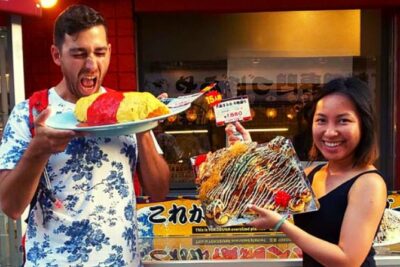
Osaka Food Tour: 13 Dishes at 5 Local Eateries
Read our review →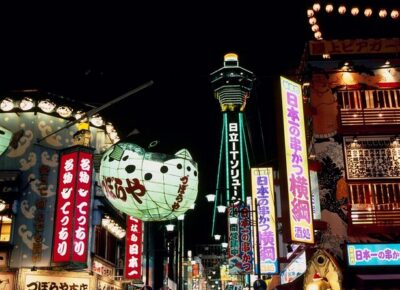
Hungry Osaka Street Food Tour:15 Tastings & 3 Drinks with a Local
Read our review →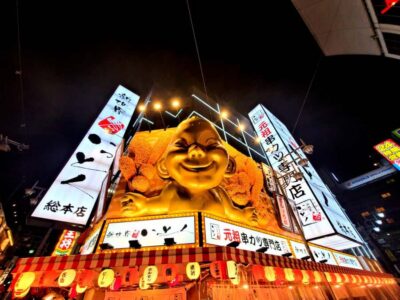
Hungry Osaka Street Food Tour: 15 Dishes & 3 Drinks
Read our review →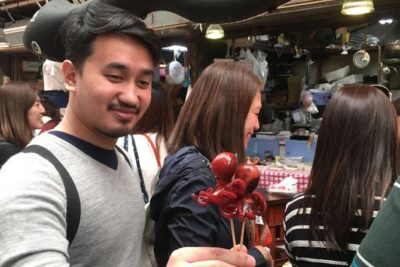
Kuromon Market Food Walking Tour in Osaka (6 stops, 6 tastes)
Read our review →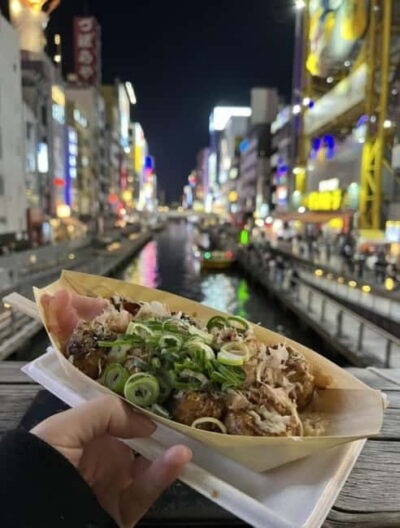
Guided Food Tour with 12 Dishes at 4 Local Eateries
Read our review →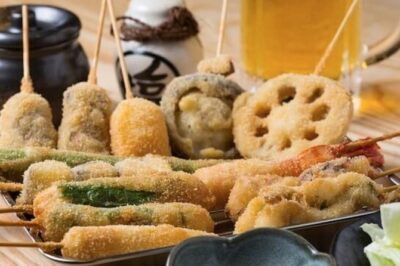
Traditional Mochi Pounding Experience with Tasting
Read our review →Browse the lists this tour appears in