
Reviewed · SUMO EXPERIENCES
Authentic Sumo Experience in Tokyo: Enter the Sanctuary
If you want sumo as a real lifestyle, not just a match on TV, this Kawasaki experience takes you into the spaces where wrestlers eat, train, and reset their bodies. You start with a guide at Shin-Kawasaki Station, then move into a stable environment that was officially used until 2022, with morning practice happening right in front of you.
I love how much of the day is hands-on. You get a chance to learn sumo moves from a wrestler, not only watch a demo, and you’re seated close enough to feel the seriousness of the training session.
One thing to consider: this is active, and Japan heat can be brutal in summer. Come prepared with water and a hat, and remember that large suitcases are not permitted.
Key things you’ll like about this sumo experience
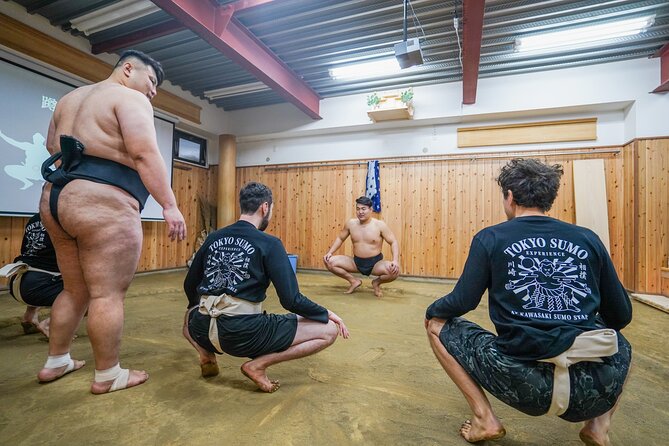
- A real stable tour, including dining, bath, and practice areas where wrestlers spend daily time
- Front-row-style viewing of morning practice, usually around 7:00 a.m. in the stable routine
- Hands-on training with rikishi, including trying the movements during the session
- Chanko-nabe lunch with the wrestlers, including chicken dumplings made with them
- Small group size (maximum 15), which helps the guide keep things moving and interactive
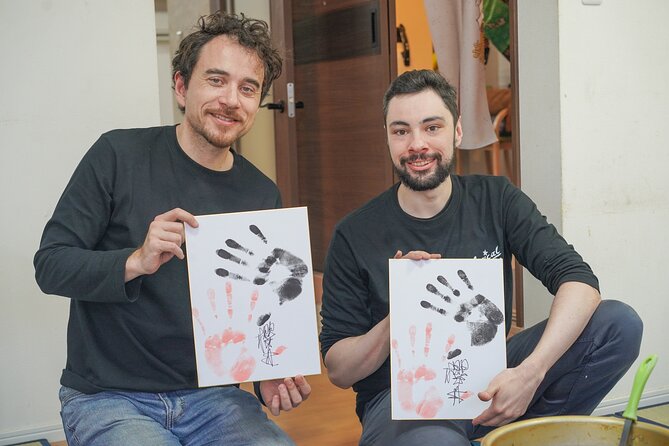
- Tour photos plus an original T-shirt, so you leave with proof beyond your phone camera
Why Kawasaki Sumo Training Beats Watching a Match
A sumo bout is dramatic, sure. But the sport has a whole second life, the quiet one, where routines repeat and bodies get trained day after day. That is what you’re paying for here: a behind-the-scenes look at how sumo works when no one is scoring points.
This tour feels special because you’re not stuck in a viewing room far away. You’ll watch morning practice from a spot right in front of the ring area, then you’ll try the training movements yourself. It turns sumo from a spectator sport into something you can understand with your own muscles, even if you’re new.
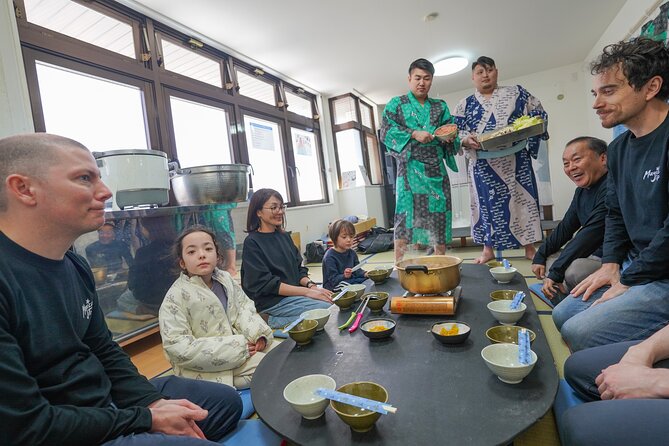
The other big win is the chanko-nabe lunch. This is not just food on the side. It’s part of the same world you toured earlier. You eat together around a table that was actually used in the sumo room, and the day’s meal centers on chicken dumplings made as part of the chanko-nabe process. That kind of connection is the difference between a fun cultural stop and a memorable story you’ll actually tell later.
More Sumo Experiences in Yokohama:
- Tokyo: Authentic Sumo Wrestling Experience with Lunch
★ 4.9 · 88 reviews - Tokyo: Sumo Show Experience with Chicken Hot Pot and a Photo
★ 4.8 · 6,678 reviews - Tokyo: Sumo Show and Dining Experience
★ 4.8 · 2,742 reviews
Meeting at Shin-Kawasaki Station and the Smooth Start
You begin at 9:30 a.m., meeting near Shin-Kawasaki Station. The listed start point is at kiyoken1-chōme-2-1 Kashimada, Saiwai Ward, Kawasaki, Kanagawa 212-0058, Japan, and the tour ends back there when it’s over.
Most people find the location straightforward because it’s near public transportation. On top of that, guides often manage the early logistics in a practical way, and some groups are met with pickup that can include a van or taxi, depending on timing and the day’s flow.
Here’s what matters for your plans: this is not a slow wander. It starts on time and runs as a tight half-day. If you’re more than 5 minutes late without contacting the team, it can be treated like a cancellation. So I’d treat this like an important reservation, not a casual morning idea.
Inside the Stable: Dining, Bath, and Practice Spaces
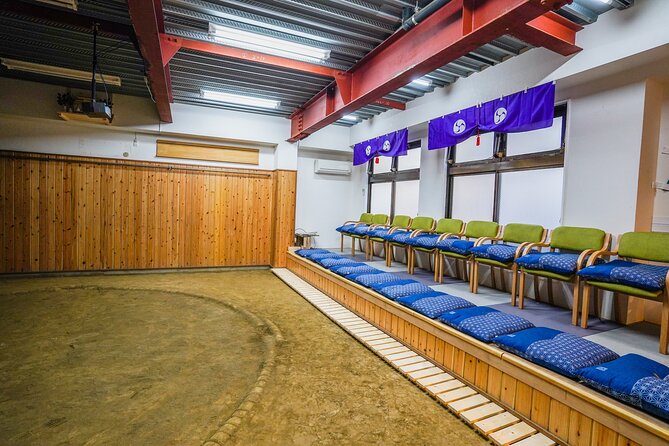
After you meet your guide, you head to a real sumo stable. The setting is notable because it was officially used until 2022, so you’re not visiting a generic museum recreation. You’re seeing the layout and rooms connected to daily sumo life.
The guide walks you through what makes the stable feel like a home base. You’ll tour spaces tied to:
- Dining, including how meals connect to training and routines
- Bathing, which is part of the recovery rhythm
- Practice areas, where technique gets repeated
This tour flow is smart. You don’t jump straight into ring action. You learn enough background first to make what you see later feel less like random movements and more like a system.
One practical point: stables are working environments, and you’re visiting as part of a small group. Listen when the guide sets boundaries, and you’ll get more out of the experience, because you won’t be constantly worried about where to stand or what’s off-limits.
Morning Practice Up Close, Then You Try the Moves
The heart of the day is the morning training session. Sumo morning practice usually begins around 7:00 a.m. and can last three to four hours, and you’ll watch from right in front of the ring area.
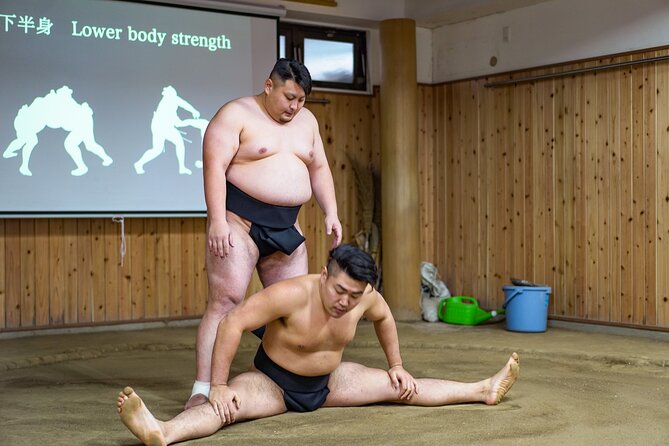
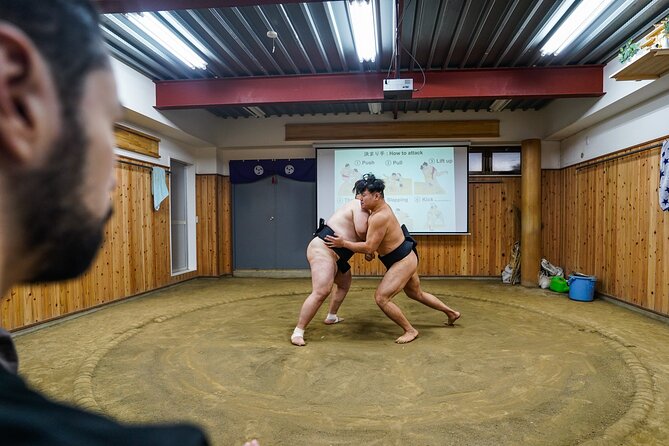
Then comes the part people love most, the hands-on section. Usually, you’ll have the chance to experience the movements with the instructors and wrestlers during the training time. That means you’re not only learning what sumo looks like, you’re learning what it feels like when someone who trains seriously shows you how to use your body.
This is where the day often clicks, because sumo technique is full of small details. Your stance, your timing, and your footwork matter more than people expect. Even if you don’t become a sumo convert overnight, you’ll leave with a better sense of why this sport takes so much discipline.
Guides in past groups, including people named Charlie, Jim, Lily, and Fugi, have been praised for mixing history with humor and keeping the explanation clear while staying respectful to the training culture. You’ll get commentary and tour photos too, which helps you remember what you saw once you’re back in the city.
A change of pace from Yokohama:
- EVO, WRX, Skyline – JDM Night Run to Daikoku Car Meet
★ 4.9 · 478 reviews - Tokyo: Best Price Daikoku Parking Area JDM Car Meet
★ 4.9 · 192 reviews - Daikoku & Tokyo Private JDM Tour by 700HP R34 GT-R
★ 4.9 · 101 reviews - Tokyo 8hr Private Tour with Licensed Guide from Yokohama
★ 5.0 · 94 reviews
Chanko-Nabe Lunch With Wrestlers, Not Just a Meal Ticket
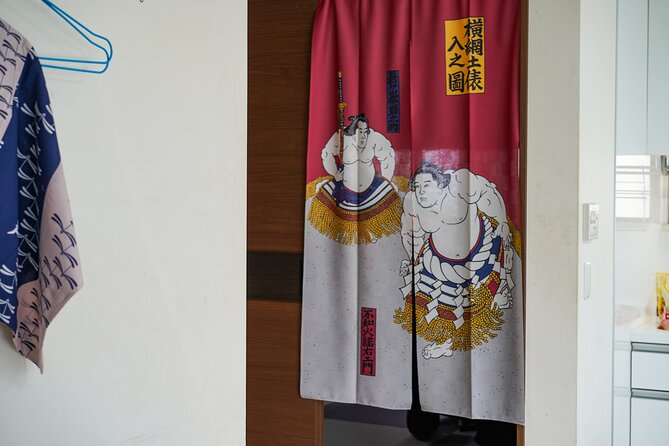
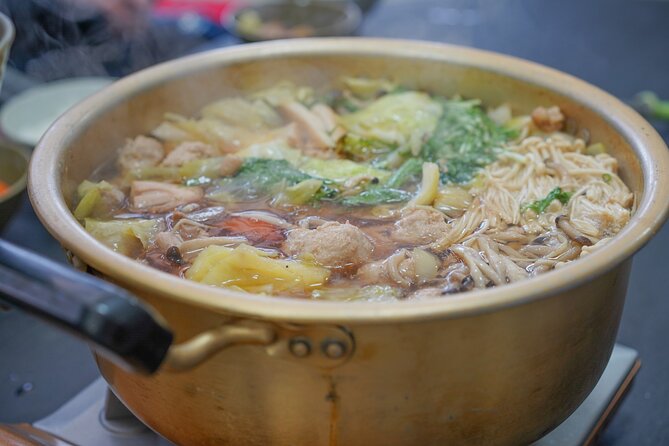
If you’re wondering what “sumo lunch” really means, it’s chanko-nabe, the wrestler’s staple hot pot. You’ll eat together after the practice session, and the meal ties directly into the culture you just toured.
Here are the key details that make this lunch feel earned:
- The chanko-nabe is served after the training time, so your appetite has a reason
- Chicken dumplings are part of the main ingredient process
- You make or prepare elements of the dumplings with the wrestlers
- Everyone eats together around a table used in the sumo room
The table part is surprisingly meaningful. It’s easy to think, Oh, cool, hot pot. But eating in the same style setup as the stable routine gives you a snapshot of daily life that you cannot get from a restaurant meal.
Also, the lunch is a core value point. At this price, you’re not just buying entry to a stable visit. You’re buying a guided cultural experience with a meal included, plus interaction with wrestlers.
Guide Energy, Photos, and the T-Shirt You’ll Actually Keep
I love experiences where the guide does more than recite facts. This one includes commentary throughout, plus tour photos, so you aren’t left scrambling to document everything while you’re learning.
It also includes an original designed T-shirt. That sounds like a throwaway perk, but it’s a practical souvenir from a day that’s about action and participation, not just standing in line.
As for the guide approach, many groups highlight how the instructors keep things lively while still explaining the tradition properly. Names like Charlie and Jim come up in feedback for being fun and informative, and Lily and Fugi are also mentioned for being engaging and passionate. You don’t need to speak sumo to enjoy this, because the instruction is built for visitors, and the group stays small enough for questions.
If you’re traveling with family, this is another reason the tour works. People often leave saying it was a standout day because kids and adults both get a chance to participate and ask questions.
Price and Value: What $171.12 Really Covers
At about $171.12 per person, the sticker price can look high if you compare it to a simple sightseeing tour. But the value here is in access and instruction.
You’re getting:
- A behind-the-scenes stable tour with dining, bath, and practice areas
- Ring-side viewing of morning practice
- An opportunity to participate in training movements
- Chanko-nabe lunch with the wrestlers and a table from the sumo room
- Tour photos and an original t-shirt
- A certified guide through MagicalTrip
That’s a lot of components, and many of them are labor-heavy. Getting close to the ring and having wrestlers interact with a small group takes planning and time.
The other value angle is that the price includes lunch. In Tokyo and nearby cities, meals can add up fast, and a lot of cultural experiences charge extra for food. Here, lunch is part of the experience, not an add-on.
So if you care about authenticity and you like doing something physical (even basic participation), I think this price makes sense.
Practical Tips for a Smooth Half-Day
A few things will help your day go smoothly.
First, plan for timing. The experience starts at 9:30 a.m., and it runs about 4 hours 10 minutes. It’s designed to fit a morning schedule, not a relaxed all-day plan.
Second, handle heat like it’s part of the itinerary. Summer in Japan is hot and humid, so bring water and wear a hat to help prevent heat stroke. This isn’t just generic advice, because you’ll be moving through stable areas and doing training-style participation.
Third, travel light. Large luggage like suitcases are not permitted. If you’re coming from another part of Japan that day, consider using coin lockers or luggage services before you head to Shin-Kawasaki.
Fourth, dietary issues need a heads-up. If you have dietary requests or allergies, inform the team at least one day before. Also, the tour notes that they can’t guarantee allergy-free meals because food is prepared in kitchens that do not belong to MagicalTrip, and substitutions may not always be possible. They will make an effort to compensate at different stops, but you should plan with that reality in mind.
Finally, keep your expectations flexible. Unexpected cancellations from sumo stables can happen a few days to a couple of days before the tour. When the stable is the main actor, the schedule can shift.
Who This Tour Suits Best
This is a strong fit if you:
- Want more than watching sumo, you want the lifestyle and routine
- Like hands-on experiences, even if you’re a beginner
- Travel with kids and want an active, structured cultural day
- Care about eating as part of the culture, not just as a break
It’s also great if you’re a long-time sumo fan. The chance to watch practice near the ring and then try movements gives you the kind of access that normal spectator experiences do not.
Where it might not be ideal is if you want a mostly passive, sit-and-watch activity. The tour does include viewing, but it’s built around participation and interaction.
Should You Book This Kawasaki Sumo Experience?
I’d book it if your priority is authentic access. The best part is the combination: stable tour, ring-side practice viewing, hands-on training with wrestlers, and chanko-nabe lunch that you eat in the stable style setting.
You’re paying for closeness and for instruction, not just entry. And the small group size helps you actually connect with the guide and the instructors instead of getting lost in a crowd.
The main reason to think twice is practical, not cultural. You need to arrive on time, travel without big luggage, and be ready for heat and active participation. If you can do that, this tour is one of the more memorable ways to understand sumo as a lived sport.
FAQ
Where do I meet for the tour?
You meet near Shin-Kawasaki Station. The listed meeting point is kiyoken1-chōme-2-1 Kashimada, Saiwai Ward, Kawasaki, Kanagawa 212-0058, Japan. The tour ends back at the meeting point.
What time does the tour start and how long is it?
The start time is 9:30 a.m., and the tour duration is about 4 hours 10 minutes.
What is included in the experience?
The experience includes the sumo experience, a certified guide by MagicalTrip, sumo wrestler lunch, tour photos, and an original designed T-shirt. You also receive a mobile ticket.
Is lunch included, and what do we eat?
Yes. Lunch is included, and you’ll eat chanko-nabe together after the match, with chicken dumplings being a main part of the chanko-nabe.
Do I get to participate in sumo practice or only watch?
You’ll watch morning sumo practice from in front of the ring, and if you wish to participate, you can experience the movements during the training session with the wrestlers/instructors.
Can the tour accommodate dietary allergies?
You should inform the team at least one day before if you have dietary requests or allergies. The tour notes that they can’t guarantee allergy-free meals, since the food is prepared in kitchens that do not belong to MagicalTrip, and substitutions may not always be possible, though efforts will be made to compensate.
Latest write-ups near Yokohama
- 【Tokyo】JDM Daikoku Parking Area & Nissan Facility Tour★ 5.0 · 87 reviews
- Tokyo: Authentic Sumo Wrestling Experience with Lunch★ 4.9 · 88 reviews
- Tokyo 8hr Private Tour with Licensed Guide from Yokohama★ 5.0 · 94 reviews
- Daikoku & Tokyo Private JDM Tour by 700HP R34 GT-R★ 4.9 · 101 reviews
- Tokyo: Best Price Daikoku Parking Area JDM Car Meet★ 4.9 · 192 reviews
- Yokohama: Guided Cup Noodles Museum Tour & Make Your Own Cup★ 4.9 · 27 reviews
- EVO, WRX, Skyline – JDM Night Run to Daikoku Car Meet★ 4.9 · 478 reviews
- Tokyo: Fast & Furious Authentic Drift and JDM Experience★ 4.9 · 21 reviews
Sumo Experiences, compared.
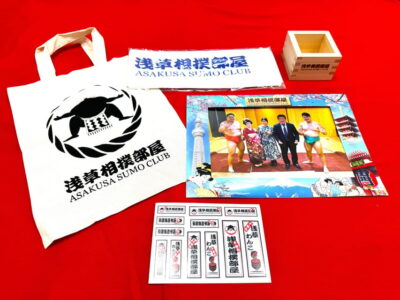
Sumo Show Experience with Chicken Hot Pot and a Photo
Read our review →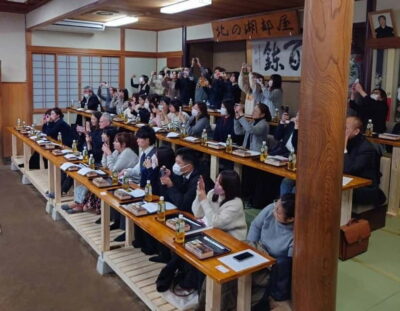
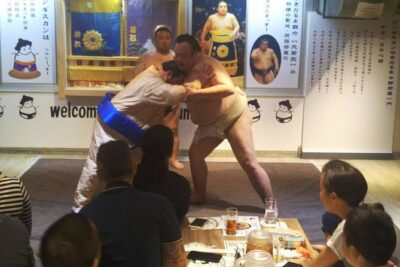
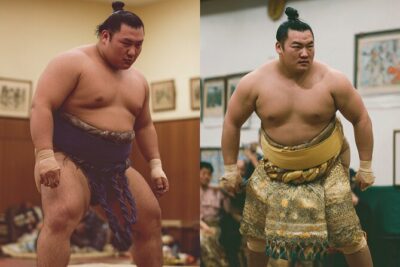
Tokyo Shinjuku Sumo Show & Experience with Photo
Read our review →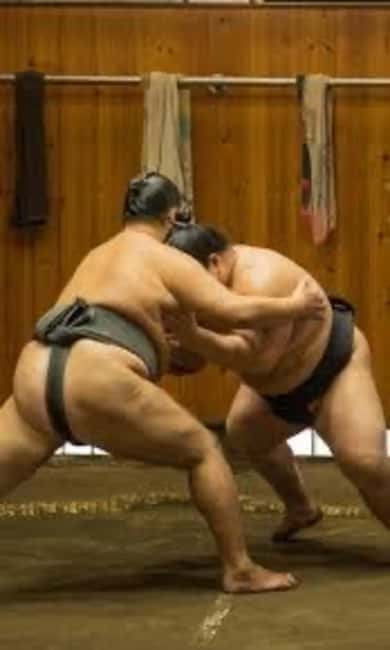
Sumo Show & Experience w/ Optional Kimono & Hot Pot
Read our review →
Luxury Sumo Show Experience & Japanese cuisine & Drink
Read our review →Browse the lists this tour appears in