
Reviewed · CALLIGRAPHY CLASSES
Calligraphy Culture SHODO Experience in Tokyo
Japanese Shodo is one of those skills you can’t fake. You hold the brush, you control the line, and suddenly the character on the paper feels personal. This small-group calligraphy experience is a hands-on way to learn the fundamentals, from posture to drawing lines, and then put it into your own name or a favorite word.
Two things I really like about this setup are the chance to practice the basics (so it feels more than a photo stop) and the take-home result, an autograph board with what you write during class. One thing to consider: the lesson takes place in a cozy, real-life setting, so if you are sensitive to distractions, you might run into some background activity in the shared space around the classroom.
Key highlights you should know
- 90 minutes of step-by-step Shodo basics, not just a quick demo
- Write your name or a Kanji word, so the paper becomes a souvenir with meaning
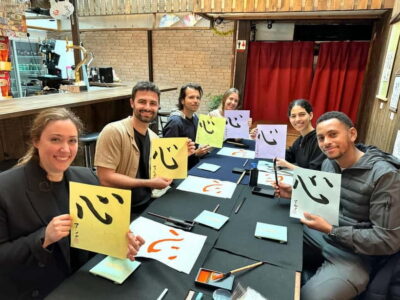
- Max group size of 5, which keeps it interactive and gives you time for corrections
- Supplies included, so you do not need to shop for anything first
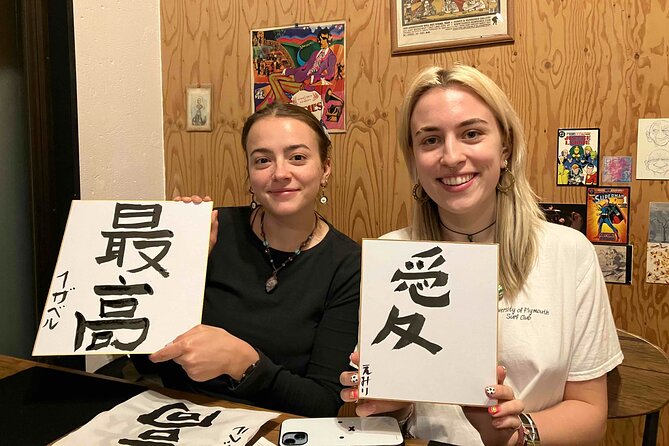
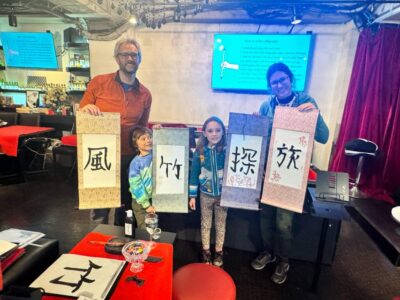
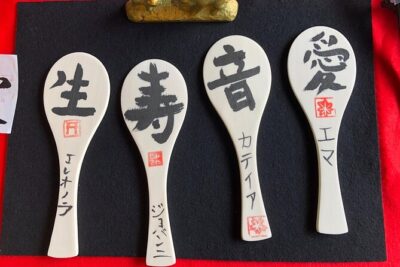
- Take-home autograph board, your finished piece at the end of class
- Near Iriya Station, with Asakusa and Ueno close by for an easy combo day
Shodo in 90 minutes, what you actually learn (brush, posture, lines)
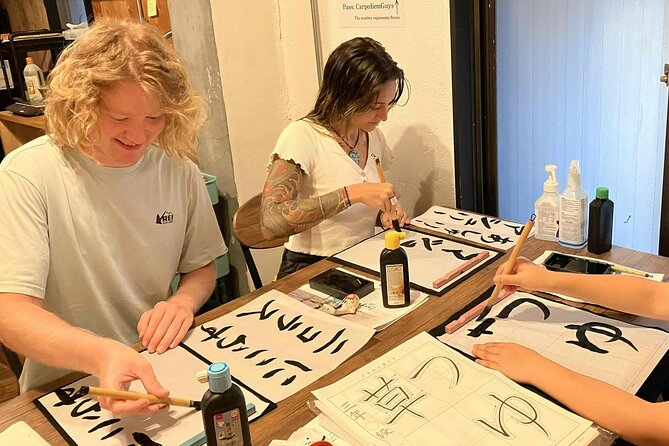
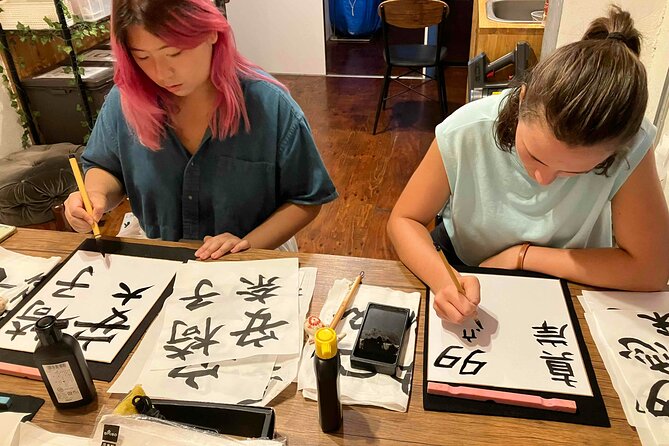
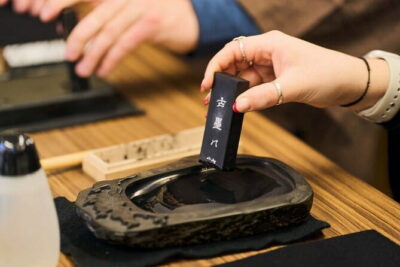
The heart of this experience is practical calligraphy training. In about an hour and a half, you work through the building blocks that make Japanese characters look right, even if you have zero background in handwriting art. You start with the basics of how to hold the brush and how to set your body into a steady posture, because in calligraphy, your position shows up in the strokes.
Then you move to line control. That means learning how to draw lines cleanly and with the right pressure, so the character does not look like a shaky signature. You are not expected to become an expert. Instead, you get the kind of guidance that helps you understand what to pay attention to when you try again.
The best part is that the “learning” stays connected to “doing.” After the foundational practice, you apply it to the character you choose for your own piece. By the time you are finishing, you are not just copying shapes, you are translating instructions into motion. That is what makes Shodo feel cultural rather than just decorative.
More Calligraphy Classes in Tokyo
- Tokyo: Calligraphy on Kanji Fan & Scroll with Drink
★ 5.0 · 210 reviews - Let’s experience calligraphy in YANAKA, Taito-ku, TOKYO !!
★ 5.0 · 127 reviews - Experience all of Japanese culture and Japanese food experience classes “origami, udon, Japanese food, green tea, calligraphy” in 4 hours
★ 5.0 · 105 reviews
Your character choice: name in Japanese or a favorite Kanji word
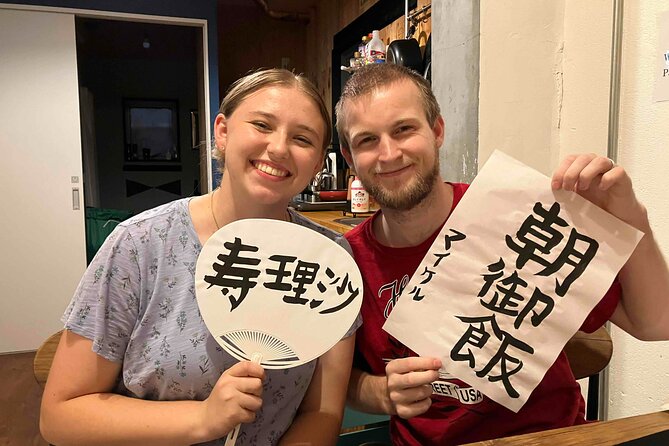
You get to write something that matters to you. The experience is designed for foreign visitors, and the goal is simple: write your name in Japanese or write a favorite word in Kanji. That choice changes the whole vibe of class. It turns a lesson into a keepsake.
If you choose your name, you will be working through how your sounds map into Japanese writing. If you choose Kanji, you are doing something even more satisfying, because you are selecting a word with meaning and shape, not just matching letters. Either way, you will practice until your strokes look like they belong together.
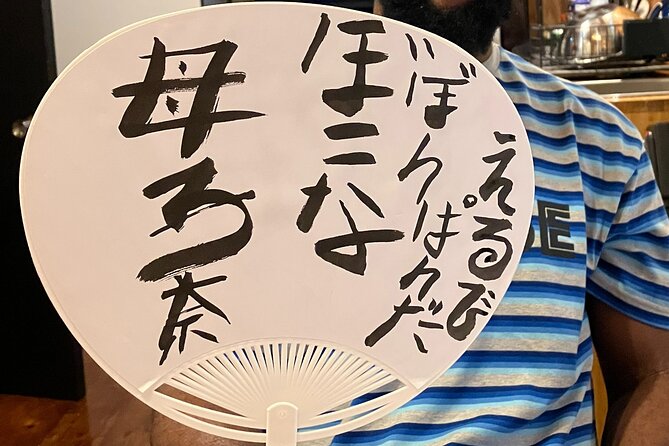
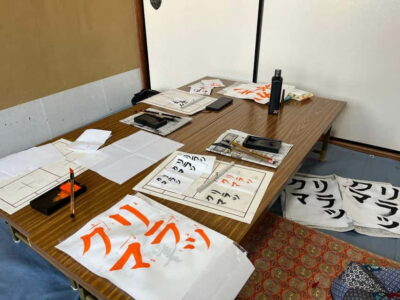
From real class outcomes people describe, many first-timers pick Katakana for their name and end up with something that is even readable by translation tools. If you are curious about that angle, it’s worth considering. Also, if you want a challenge, you can pick a more complex term. One class example includes trying a character set for a more complicated word, and the whole point was that even tricky choices become manageable with patience and coaching.
A smart move: think about your character choice before you go. If you already know your preferred word, or you have a close idea of how you want your name rendered, you spend less time deciding and more time practicing the strokes that matter.
The teacher impact: getting patient coaching in a small group
Calligraphy is detail work. So the teacher matters, a lot. In this experience, you are taught in a small group with a maximum of 5 travelers, which naturally keeps the class calm and lets the instructor see what you are doing wrong quickly.
You may meet instructors like Sachie or Zuisen depending on the session. The repeated theme in real teaching moments is clarity plus patience. The instruction is paced so you can follow, and if your line control is off, you get direct correction instead of just being told to start over.
This is also why it can feel personal. With a maximum of 5, you are not stuck watching someone else practice while you wait your turn. If your group size is small, you may even get very close attention, which helps for the one part everyone struggles with at first, getting the brush pressure consistent.
If you are traveling solo, this format works well because you still get interaction. If you are traveling as a pair or small group, it also works because you can practice your own word while the teacher manages the room.
Where you meet, what the neighborhood adds, and what to expect on arrival
You meet at Tokyo Iriya Shodo Club, located in Taito City, Iriya, at 2-chōme 292 2階. The area is convenient because it is close to Asakusa and Ueno, and it is only about a 5-minute walk from Iriya Station.
That matters because the lesson time is limited. With a nearby meeting point, you can plan your day without spending half of it commuting. You can pair Shodo with classic Tokyo walking, like heading toward Asakusa afterward or using Ueno as your second stop, depending on what time slot you book.
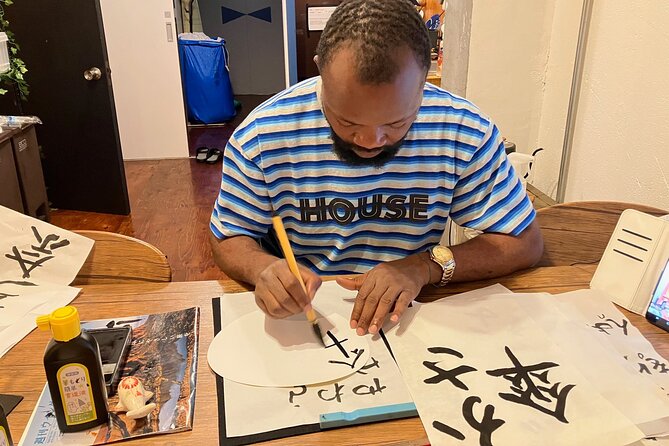
One more practical detail: the setting is close to how local people live and work. People describe it as a cozy classroom in an authentic boarding-house style environment, and in some cases they meet in a shared kitchen space. That’s part of the charm, but it also connects to the main caution: if other residents are moving around, cooking, or doing laundry during your class, you may notice interruptions.
If that would bother you, adjust your expectations. Arrive with a flexible mindset. Shodo is hands-on, so once you focus on your strokes, the background noise usually matters less than you think. Still, it’s fair to flag it if you are easily distracted.
Plan to return to the meeting point when the class ends. The experience stays contained, so you can move on to sightseeing right away.
A change of pace from Tokyo:
- Mt Fuji and Hakone 1-Day Bus Tour Return by Bullet Train
★ 5.0 · 26,383 reviews - 1-Day Tokyo Bus Tour
★ 5.0 · 14,250 reviews - Tokyo: TOKYO SKYTREE® Admission ticket
★ 4.5 · 11,192 reviews - Tokyo: teamLab Planets TOKYO Digital Art Museum Entry Ticket
★ 4.6 · 9,779 reviews
Price and value: what $33.03 buys you in Tokyo
At $33.03 per person for about 1 hour 30 minutes, this is priced like a true hands-on class rather than a pricey private atelier session. What makes the value feel solid is that the cost covers the core materials and the real learning time.
Here is what you get for your money:
- Calligraphy supplies included, so there is no surprise add-on cost
- Instruction focused on fundamentals, posture, brush hold, and line drawing
- A personal writing outcome, your name or word on a take-home autograph board
That last point is big. Many cultural activities give you a memory and maybe a photo. Here, you get something physical that ties directly to what you practiced. If you are the kind of traveler who likes souvenirs you actually use on your desk, this hits the mark.
Also, because the group is small (up to 5), you are not just buying access to a studio. You are buying the chance to get corrections while you work. That’s often what separates “I tried calligraphy” from “I learned something.”
Finally, the experience is popular enough that the average booking window is about 27 days ahead. So if you have specific dates or a tight schedule, it pays to lock it in early.
Tips to make your session smoother and your result better
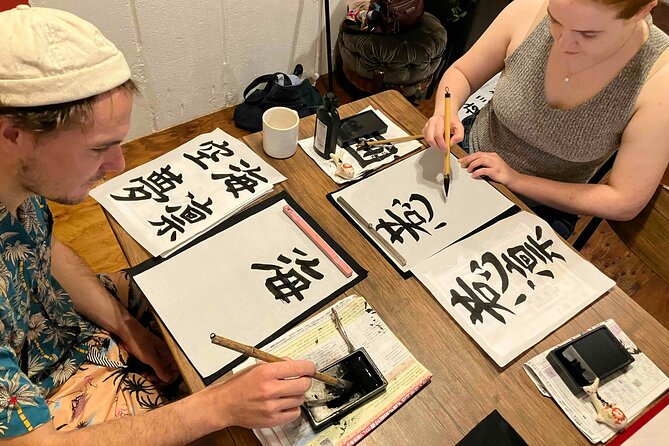
This kind of class goes best when you treat it like a mini workshop. You do not need prior calligraphy skills. But you can make your experience easier by preparing smartly.
First, choose your writing goal in advance. Decide whether you want to write your name, and if yes, think about which Japanese script you prefer: your goal can be to match how your name sounds, or you can try a style like Katakana if you want something that often feels straightforward for first-timers.
Second, pick a word that you truly want to live with afterward. Kanji characters become souvenirs that mean something, especially if you choose a favorite word tied to your trip mood or personal interests.
Third, be ready to focus on repetition. Early practice on lines and brush control is what makes your final character look clean. If the first few strokes feel awkward, that is normal. The teacher guidance is there to help you adjust quickly.
Fourth, wear comfortable clothes. You will be using posture and fine control, so you want to move easily and stay steady for the session.
Finally, save a little buffer before and after class. The experience is only about 90 minutes, so you can comfortably schedule it in the middle of your day, then walk off to Asakusa or Ueno afterward.
Should you book the Tokyo Iriya Shodo Shodo experience?
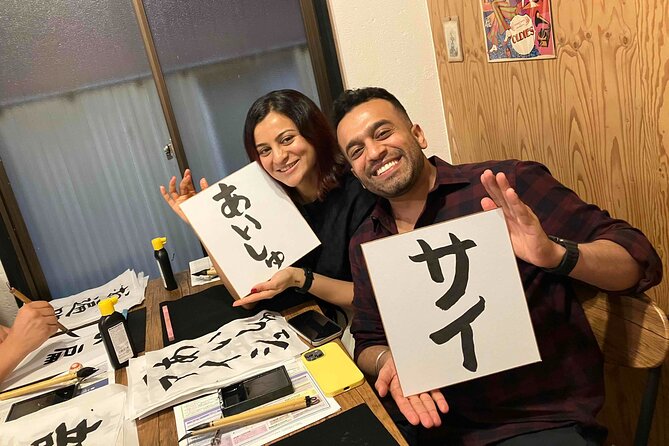
Book it if you want a real Shodo lesson and not a watered-down demonstration. You will get structured practice, learn the basics that make your strokes look right, and end with a take-home autograph board that reflects your own name or chosen Kanji word.
Skip it or consider your expectations first if you are extremely sensitive to shared-space distractions. The classroom environment can involve background activity from a lived-in setting, and that could interrupt your concentration.
This is also a great pick for solo travelers because the small-group format supports personal coaching. Couples and friends will like it too, since you can each do your own word and compare results afterward.
If you want a Tokyo cultural activity that feels genuinely hands-on, and you like the idea of leaving with something you made yourself, this is an easy yes.
FAQ
How long is the calligraphy experience?
The experience lasts about 1 hour 30 minutes.
What does the class include?
Calligraphy supplies are included, and you will take home your own autograph board with the work you create.
How big is the group?
The experience is limited to a maximum of 5 travelers.
Where do I meet the instructor?
You meet at Tokyo Iriya Shodo Club at Japan, 110-0013 Tokyo, Taito City, Iriya, 2-chōme 292 2階, and the activity ends back at the meeting point.
What can I write during the lesson?
You can write your name in Japanese or a favorite word in Kanji.
Is there a mobile ticket and what about cancellation?
A mobile ticket is included. You can cancel for a full refund up to 24 hours in advance of the experience start time.
Latest write-ups near Tokyo
- Tokyo Nights: Shibuya Photo Adventure★ 5.0 · 20 reviews
- Wagyu & Sake 8 Course Tasting Dinner in Shinjuku★ 4.9 · 20 reviews
- Making Japanese desserts Nerikiri & drinking matcha in Tokyo★ 5.0 · 20 reviews
- Japanese Whisky Hunting《HIGH-QUALITY-ONLY》Rare Tasting Class★ 5.0 · 20 reviews
- Mt. Fuji 5th Station, Owakudani Ropeway, Pirate Ship plus Outlet shopping!★ 4.5 · 20 reviews
- Kintsugi Experience with Arita Ware in Tokyo (English Guide)★ 4.8 · 20 reviews
- This is Asakusa! A Tour Includes the All Must-Sees!★ 5.0 · 20 reviews
- Ebisu Local Food Tour: Shibuya’s Most Popular Neighborhood★ 5.0 · 20 reviews
Calligraphy Classes, compared.
Calligraphy class at Buddhist temple in city center
Read our review →
Let’s experience calligraphy in YANAKA, Taito-ku, TOKYO !!
Read our review →
Calligraphy Workshop & Original T-Shirt Creation
Read our review →
An Amazing set of Cultural experience: Kimono, Tea Ceremony and Calligraphy
Read our review →Browse the lists this tour appears in