
Reviewed · CALLIGRAPHY CLASSES
Calligraphy Workshop in Namba, Dotonbori
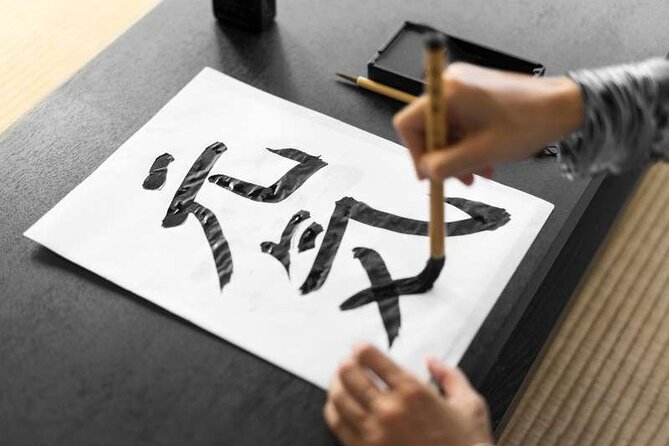
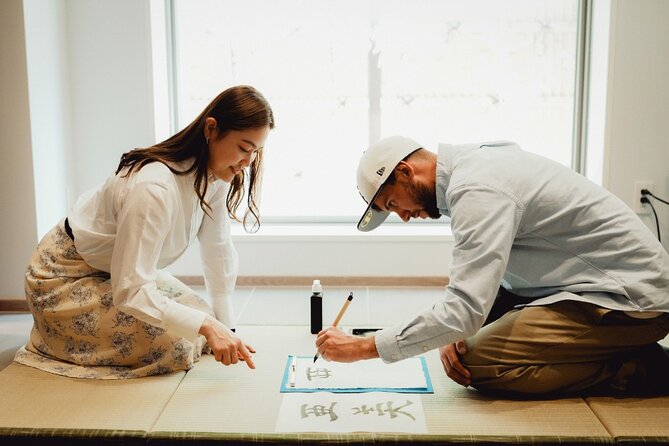
If you want a Japan activity that feels personal fast, a shodo (Japanese calligraphy) workshop in Namba hits the sweet spot. You get a short, guided session downtown, with a real instructor breaking things down clearly, even for first-timers, and you end with a handmade souvenir you actually wrote.
I especially like two parts. First, the teaching is step-by-step, the kind of support you need when you are learning brush and ink for the first time. Second, you get to write your own name in kanji or katakana, not just copy a sample. You might work with teachers like Nao and English support from people like Stephan, based on past sessions.
One thing to consider: calligraphy looks easy, then it gets serious. Even with guidance, the actual writing can feel challenging, and the 2 hours move quickly as you concentrate and finish your keepsake.
Key highlights in plain English
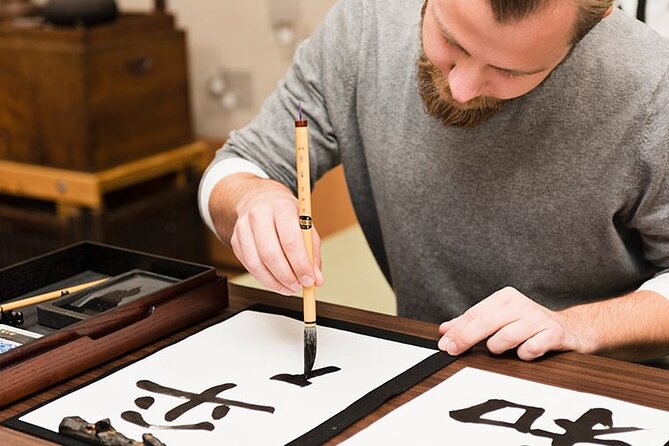
- Beginner-friendly shodo coaching with clear, step-by-step instructions
- Write your own name in kanji or katakana as the core takeaway
- A small group setting with a maximum of 6 participants
- Brush-and-ink practice that turns into a take-home souvenir
- Culture first, not just motions, with explanations of shodo and what characters mean
- Easy day-planning in Namba, with Dotonbori, Nihonbashi, and Kuromon Market nearby
Namba shodo: why this calligraphy workshop is more than a quick craft
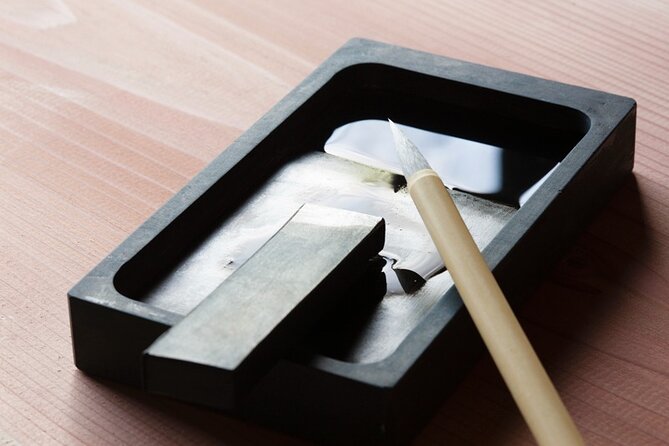
This is one of those Osaka experiences that gives you something you can only get on-site: the feel of brush work on paper, plus the cultural context behind it. In Namba, you are in the thick of downtown life, but the workshop itself is built for focus, so you are not just doing a tourist photo moment.
I like that the teaching treats beginners as normal. You are not expected to know kanji. The instructor guides you through how to hold the brush, how to control ink flow, and how to approach each stroke with patience. Past participants also noted the atmosphere as calm and enjoyable, which matters when your hand is suddenly doing something new.
The culture piece is also a big deal. You are not only learning how to form characters. You learn what shodo means in practice, plus the ideas behind the characters and the process. That makes your name look less like a random pattern and more like a small piece of Japanese literacy.
A practical note: this is a 2-hour experience. If you like slow, unhurried projects, you might find the time feels tight. But if you want a structured lesson with a clear finish and a keepsake at the end, that shorter format is a strength.
More Calligraphy Classes in Osaka
- Osaka: Private Japanese Calligraphy Experience
★ 5.0 · 66 reviews - Learning Zen of Japanese Calligraphy in kimono near Osaka Castle
★ 4.5 · 53 reviews - Osaka: Private Tea Ceremony and Calligraphy Experience
★ 5.0 · 50 reviews
Finding the class at Isuku English Academy in Nanbanaka
The workshop starts at イスク英語学院 Japan, 556-0011 Osaka, Naniwa Ward, Nanbanaka, 1-chōme61 タケダビル 3F. You end back at the same meeting point.
Why this matters: downtown Osaka can be a maze, and the workshop is inside a building. It helps that the location is near public transportation, so you can plan to arrive a little early without stress.
Also, I strongly recommend you do a quick route check the day you go. One prior participant mentioned it can be easy to miss the entrance down a hall near a nearby business. So give yourself a buffer, and use the address carefully rather than relying only on what you see from the sidewalk.
Once you are inside, you are in the right headspace. The class is small, and that makes it easier to get help without waiting around.
What happens during the 2 hours: the shodo lesson rhythm
You should think of the session as a sequence, not a single activity. The workshop is designed to get you from first brush touches to a finished personal piece.
First comes the introduction. You learn what Japanese calligraphy is, including the idea that shodo is both technique and mindset. In past sessions, instructors also explained the meaning of shodo and the concepts behind the characters before hands-on work started. That short theory chunk helps your strokes make more sense once you actually try them.
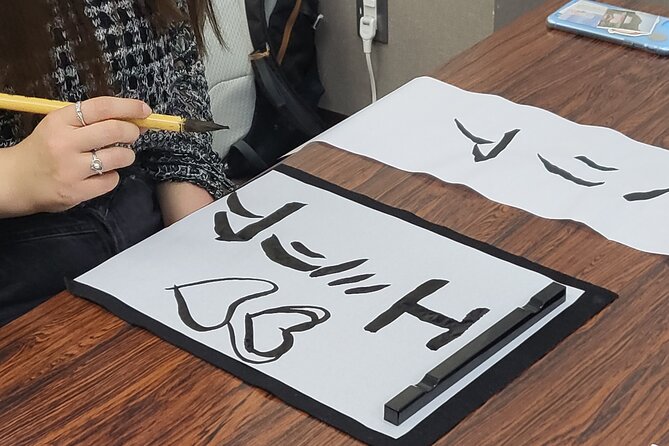
Next comes technique and guided practice. You write with a brush and ink, and you follow step-by-step instructions while the instructor corrects and encourages. This is where the “easy to look at, hard to do” factor kicks in. Brush calligraphy depends on pressure, speed, and control, and those are not skills you pick up instantly.
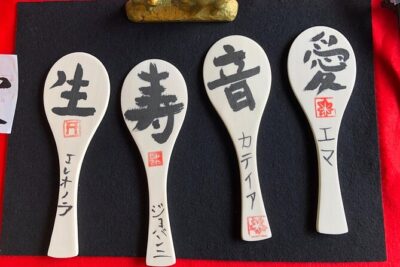
Then comes the personalized part. You write your name in kanji or katakana. You will not be handed a finished worksheet and told to copy it blindly. The goal is that you leave with something truly yours.
Finally, you create the take-home souvenir. You write your name on a specific format, either on colored paper or on a name tag/luggage tag type of keepsake. That last step is satisfying because you get to see the final version of your character work, not just practice strokes.
If you only have one Osaka morning or afternoon that you want to use well, this structure is why it works. You get learning, practice, and a completed memory in a compact time window.
Writing your name in kanji or katakana: the part that sticks
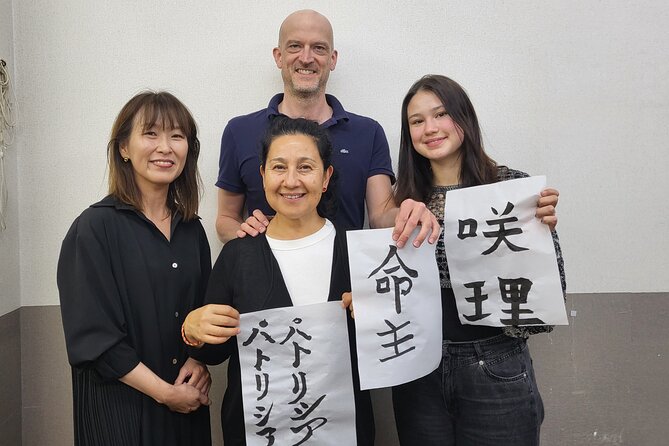
The best part of this workshop is that it ends with your name. It turns “I tried calligraphy” into “I have my name written in Japanese with a brush.”
Here is why that matters for real value: it gives you a souvenir that is personal and useful. A typical memory photo fades. Your name on colored paper stays interesting, and it is something you can show later when someone asks what you did in Osaka.
You also learn practical information while doing it. Even if you are not becoming fluent in kanji, you get a feel for character structure and stroke order. Past participants noted that understanding what the characters mean made the process less intimidating. That is the difference between copying and learning.
And yes, it can be challenging. One participant described the experience as positively challenging, and another pointed out that calligraphy is harder than it looks. That challenge is not a flaw. It is what makes the final result feel earned.
If you are traveling with kids, this can be a strong option too. Several families did the workshop with children around ages 9 to 11, and they came away with meaningful keepsakes, not just a quick activity for an hour.
A change of pace from Osaka:
- Osaka Go Karting Tour with Funny Costume
★ 5.0 · 2,658 reviews - Osaka Castle: Museum and Tower Entry Ticket
★ 4.5 · 2,380 reviews - Osaka: Shinsekai Food Tour with 13-15 Dishes at 5 Eateries
★ 4.8 · 2,204 reviews - Osaka Food Tour: 13 Dishes at 5 Local Eateries
★ 5.0 · 2,149 reviews
Your take-home keepsake: colored paper or a name tag you will actually keep
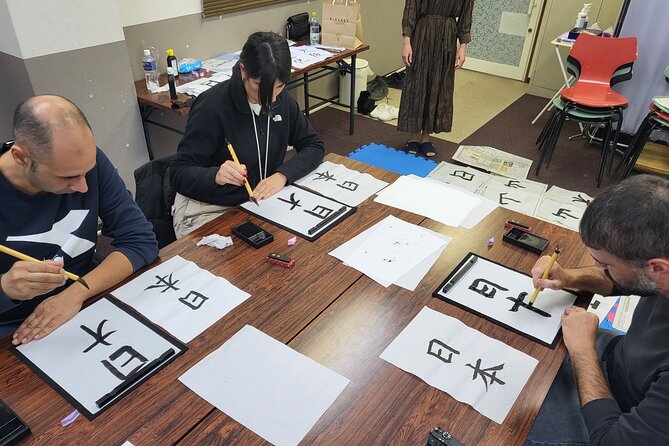
At the end, you create a one-of-a-kind handwritten souvenir by writing your name on either colored paper or a name tag style item (sometimes described like a luggage tag). This is not just decoration. It is the physical proof of what you learned during the lesson.
From a value standpoint, I like this format because it avoids the common souvenir problem. You know the kind: you buy something glossy at a stall, and it becomes clutter. Here, you make it yourself in 2 hours with an instructor coaching you through the hard parts.
Practical tip: if you are carrying bags through the rest of your day, plan how you will store the keepsake. Keep it flat if it is colored paper. If you get a tag format, treat it like a real item, not something to crumple.
You should also expect that your handwriting will be imperfect in a normal, human way. That is fine. The point is learning to control the brush and finish your name confidently. Most importantly, you will know how you got there, even if you are still learning.
How to pair it with Dotonbori, Nihonbashi, and Kuromon Market
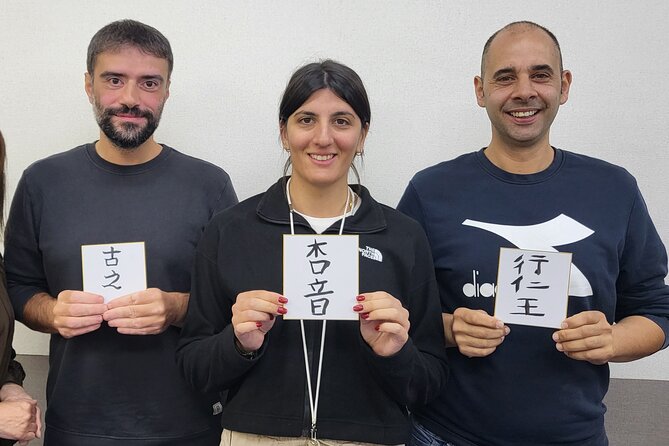
One smart thing about this Namba location is that your workshop slot is easy to build into a day of sights and food.
The workshop is in downtown Osaka near Dotonbori, Nihonbashi, and Kuromon Market, so you can go before or after your class. The timing is flexible because the workshop returns you to the starting point.
If you go before the class, you can do a quick walk and get your bearings in the area. The streets around Dotonbori are lively and full of visual stimulation, so a little browsing beforehand can get you in the Osaka mood.
If you go after the class, you have two wins. You can spend the rest of the time eating and shopping while your brain is still working on the characters. Calligraphy does not need to be a museum-style visit. Pair it with street food, then circle back to your lesson takeaway when you see your name later.
Kuromon Market is a particularly easy pairing because it is close and food-focused. Nihonbashi also gives you plenty of nearby walking options if you want to cool down after the concentration of brush work.
The only drawback with pairing: your hand may feel a bit tired after 2 hours of writing. So plan lighter walking if you can.
Price and value: is $49.54 a good deal?
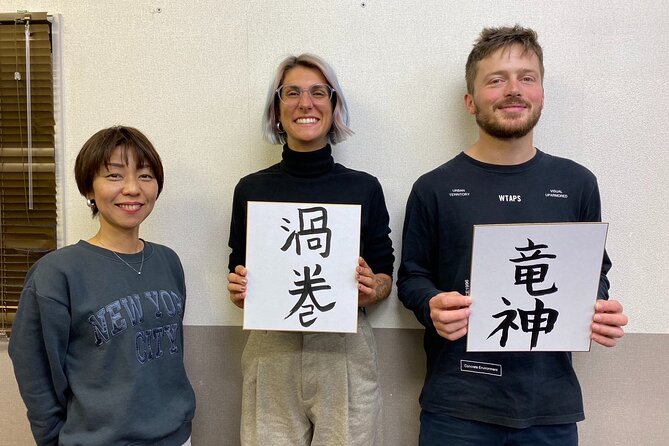
At $49.54 per person for about 2 hours, this workshop is priced like a focused cultural lesson, not a casual DIY craft. That price makes more sense when you remember what you are paying for: a real instructor guiding you through brush and ink technique, a small group setting (max 6), and a take-home item you personally write.
Also, you are not just buying a blank activity. You are paying for structure. Beginner-friendly step-by-step coaching can save you from the common “I did it, but I did not learn anything” problem.
One more value clue: it is often booked ahead. On average, it is booked about 38 days in advance, which suggests people treat it as a planned highlight rather than a last-minute stop.
If you compare it to half-day tours that include lots of transit and minimal hands-on time, this tends to feel more direct. You show up, learn, write, and go home with something you made.
Who should book this calligraphy workshop in Osaka
This is a great fit if you want an authentic Japan experience that is still manageable in limited time.
It works especially well if:
- You are a beginner who wants clear guidance rather than intimidation
- You want a small-group experience and more individual attention
- You like cultural context as well as the practical skill, like learning what shodo means
- You want a personalized souvenir, your own name written in Japanese
It may not be the best fit if:
- You hate sitting and concentrating for 2 hours
- You want something that requires minimal effort and no active doing
- You plan to rush immediately into another very active segment right after, since your hand may be a little tired
For families, this has proven to work for kids who can follow instructions and stay focused. Just remember it is still real brush-and-ink calligraphy, so patience is part of the package.
Should you book it? My bottom line
Yes, you should book this Namba calligraphy workshop if you want a meaningful Osaka activity that gives you a personal keepsake and real technique guidance. The biggest strength is that you do not just watch, you write your name in kanji or katakana, with teaching that supports beginners.
If you are on the fence, choose the practical side: book it if you can fit the 2-hour window and you are comfortable spending time focusing. You will walk away with something unique, and you will understand shodo beyond the appearance of characters.
And if you are the type who enjoys hands-on learning, this is exactly the kind of session you will be glad you planned.
FAQ
How long is the calligraphy workshop in Namba?
It runs for about 2 hours.
What does the workshop cost?
The price is $49.54 per person.
What will I make during the workshop?
You will write your name in Japanese in kanji or katakana, and you create a handwritten souvenir by writing it on colored paper or on a name tag.
Do I need to know kanji already?
No. The instructor gives step-by-step instructions, and the workshop is designed for beginners.
What is the group size?
The workshop has a maximum of 6 travelers.
Where is the meeting point?
The start point is イスク英語学院 Japan, 556-0011 Osaka, Naniwa Ward, Nanbanaka, 1-chōme61 タケダビル 3F. The activity ends back at the same meeting point.
Is the workshop near public transportation?
Yes, the meeting area is near public transportation.
Do I receive a mobile ticket?
Yes, it includes a mobile ticket.
What is the cancellation policy?
You can cancel for a full refund up to 24 hours in advance. If you cancel less than 24 hours before the experience starts, the amount paid is not refunded.
Latest write-ups near Osaka
- 90 min Shared Handmade Udon Experience★ 5.0 · 70 reviews
- Ramen and Gyoza Cooking Class in Osaka Dotonbori★ 5.0 · 73 reviews
- Osaka: Sushi Making in Spacious Studio (SAME-DAY OK!)★ 5.0 · 75 reviews
- Osaka E-Bike Tour With A Local Guide★ 4.7 · 75 reviews
- 1.5〜2 Hours Traditional Kintsugi Work Shop in Namba Osaka★ 5.0 · 75 reviews
- Retro Osaka Street Food Tour: Shinsekai★ 4.5 · 77 reviews
- Osaka: Osaka Castle Guided Tour with Local Guide★ 4.7 · 78 reviews
- Osaka Okonomiyaki Cooking Experience!★ 5.0 · 79 reviews
Calligraphy Classes, compared.
Calligraphy class at Buddhist temple in city center
Read our review →
Let’s experience calligraphy in YANAKA, Taito-ku, TOKYO !!
Read our review →
Calligraphy Workshop & Original T-Shirt Creation
Read our review →
An Amazing set of Cultural experience: Kimono, Tea Ceremony and Calligraphy
Read our review →Browse the lists this tour appears in