
Reviewed · CALLIGRAPHY CLASSES
Osaka: Private Tea Ceremony and Calligraphy Experience
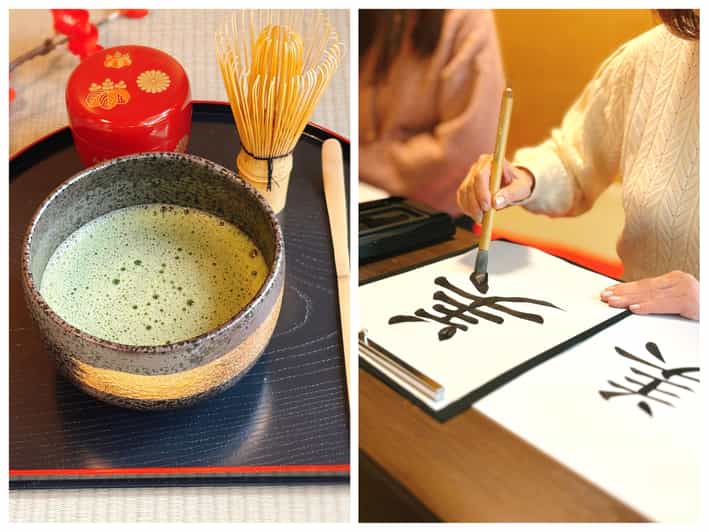
A private Osaka tea ceremony paired with Japanese calligraphy is interesting because it turns culture into something you do with your hands, not just watch. Private also matters here. You get a calm studio vibe and an instructor who can slow down when you need it.
I love that the calligraphy lesson personalizes your piece, including choosing a theme and writing your name in Japanese characters, plus turning your name into kanji based on personality. I also love the practical side of the tea ceremony, you learn the steps, then you make and taste matcha yourself.
One consideration before you go: you’ll need to wear socks, and this experience is not suitable for wheelchair users.
Key things to know before you go
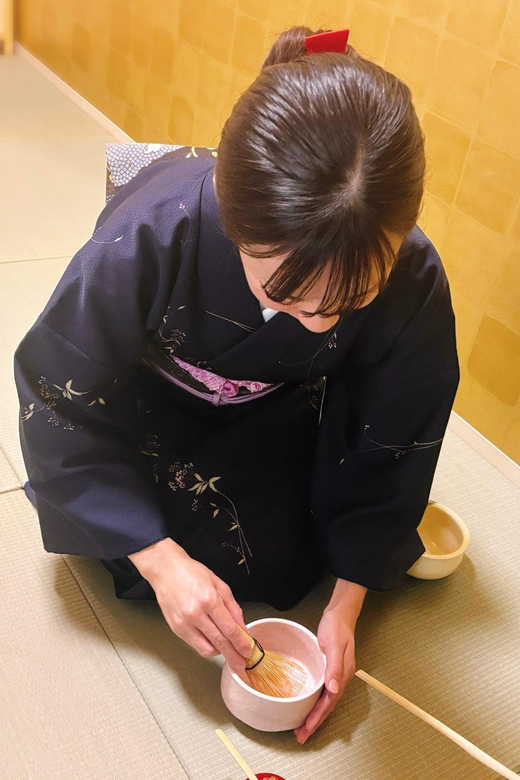
- It is completely private, so you can take photos anytime and ask for pacing adjustments.
- Kanji that reflects you, because you pick a theme and the instructor guides you toward characters that fit your personality.
- Hands-on matcha, you learn the process and then make tea yourself.
- Two tastings of Japanese sweets, with an explanation of how seasons influence what sweets you see.
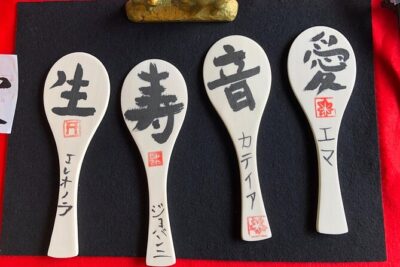
- You take home your calligraphy, including colored paper and a finished souvenir piece with an initial stamp.
Osaka tea ceremony and calligraphy, in the center of Namba
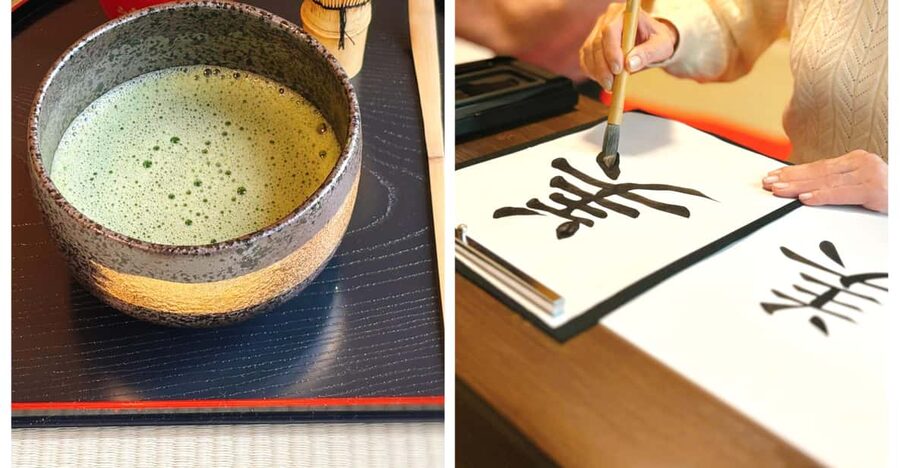
This is the kind of activity that works well when you want a break from shopping and street noise. It is based in Namba, the tourist hub near Shinsaibashi, so you can pair it with an afternoon of eating and walking without a long commute.
The experience is designed to feel unhurried. You get your own scheduled time, and the instructor pays close attention to each participant, not a fast-moving crowd.
More Calligraphy Classes in Osaka
- Osaka: Private Japanese Calligraphy Experience
★ 5.0 · 66 reviews - Calligraphy Workshop in Namba, Dotonbori
★ 5.0 · 57 reviews - Learning Zen of Japanese Calligraphy in kimono near Osaka Castle
★ 4.5 · 53 reviews
Finding the studio near New Osaka Hotel Shinsaibashi
You meet at the entrance of New Osaka Hotel Shinsaibashi. Go west for about 30 seconds, look for the blue vending machine, and then wait outside the building at the main entrance.
Plan to arrive about five minutes before your booked time. You should spot your guide easily because she wears a kimono.
Practical note: you are told socks are required. So if you usually wander around in shoes all day, keep a fresh pair in your day bag.
The calligraphy lesson: themes, kanji choices, and your finished souvenir
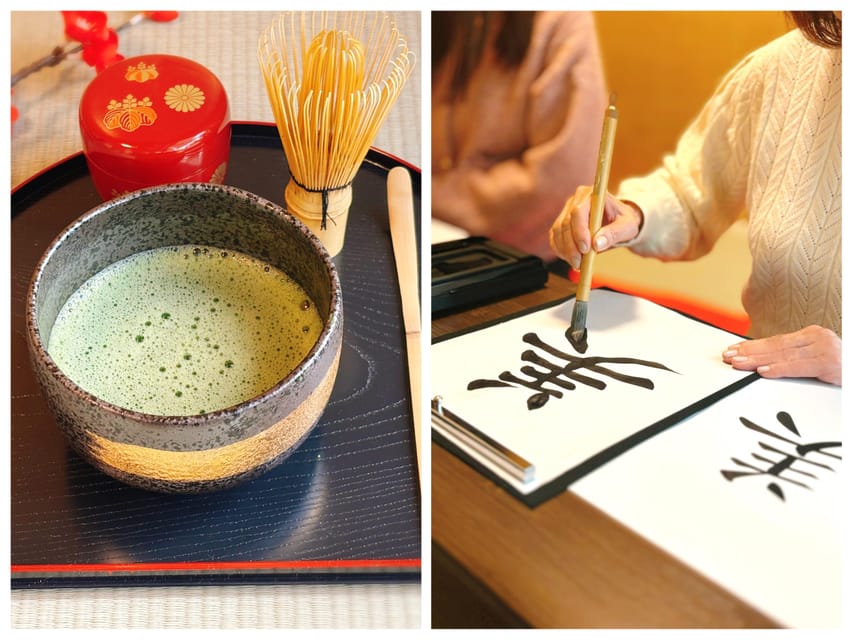
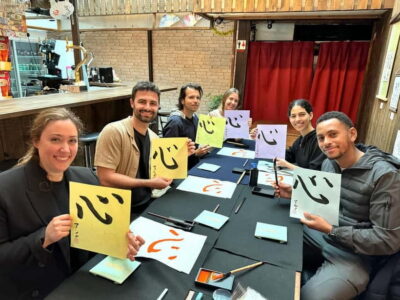
The calligraphy part is where you slow down and get something tangible to take home. You start by choosing a theme you want to write, then share your favorite letters and words.
From there, the instructor can suggest kanji that fit what you want to express. Multiple participants highlighted that she explains difficulty levels and walks you through stroke logic before you tackle your final piece.
You then get a basic lecture on practices to apply, the kind of fundamentals that matter if you want your brushwork to look intentional. After that, you choose colored paper from the options available and complete your artwork.
Your finished calligraphy typically includes writing your name in Japanese characters and stamping your initials. Even if you are a beginner, the structure keeps you from freezing with a blank page, because you already practiced the character shapes and brush movement first.
What if you’re bringing kids?
This is one of the more family-friendly setups in this style of class. For younger children, there is water calligraphy, which helps keep hands and clothes cleaner while they still learn brush control.
If your group includes kids, you’ll also like the private format. You can ask for a slower pace, and the instructor can proceed in a way that fits their attention span.
More Tea Ceremonies in Osaka
- Osaka: Tea Ceremony Experience
★ 4.9 · 1,426 reviews - Tea Ceremony Experience in Osaka Doutonbori
★ 5.0 · 754 reviews - Matcha Making Class in Osaka with Authentic Japanese Sweets Set
★ 5.0 · 509 reviews - Osaka: Matcha Making Experience with Japanese Sweets
★ 5.0 · 146 reviews
How the tea ceremony works when you learn, then make matcha
The second half shifts from brush to bowl. You learn how to make tea the traditional way, and then you try it yourself.
One detail I really like is the choice element. During the tea ceremony you can select among different tea bowls, based on the feelings you want to express. That makes the ritual feel personal instead of scripted.
You also get to taste matcha during the ceremony, so you are not only learning technique. You connect the process with what you actually taste when the matcha is prepared correctly.
If you are new to matcha, do not worry. The instructor is there to guide you step by step, and the overall mood is meant to be relaxing rather than performance-based.
Japanese sweets twice, and why the seasons matter
In the tea ceremony, you enjoy Japanese sweets twice. That is not just for sugar satisfaction, it helps you experience the contrast between matcha and different flavors and textures.
One theme that came through clearly in participant feedback is how the instructor connects sweets to seasons. You’ll hear why the sweets change across the year, and what that means for how you experience the tea in that moment.
This matters because it turns sweets from random treats into part of a cultural system. You start seeing the ceremony as an intentional rhythm: tea, sweetness, pause, then tea again.
If you have dietary concerns, it is worth asking in advance. A participant specifically mentioned lactose-free sweets, so dairy needs may be accommodated, but you should confirm what is possible for your date.
Choosing your pace, and why private time feels different here
A lot of experiences in Japan say private, then run like a mini performance for many people. This one is different in how it is described, you can take photos anytime and make adjustments toward your satisfaction.
That means you can request things like taking lots of pictures during the process, or slowing down to match a child’s pace. It also means the instructor can answer questions as they come up, instead of rushing through a scripted explanation.
If you like learning but hate feeling rushed, this is a smart fit. The class length is 135 minutes, so there is time to practice calligraphy strokes and still settle into the tea ceremony without looking at a clock every two minutes.
Materials and take-home value, what’s included
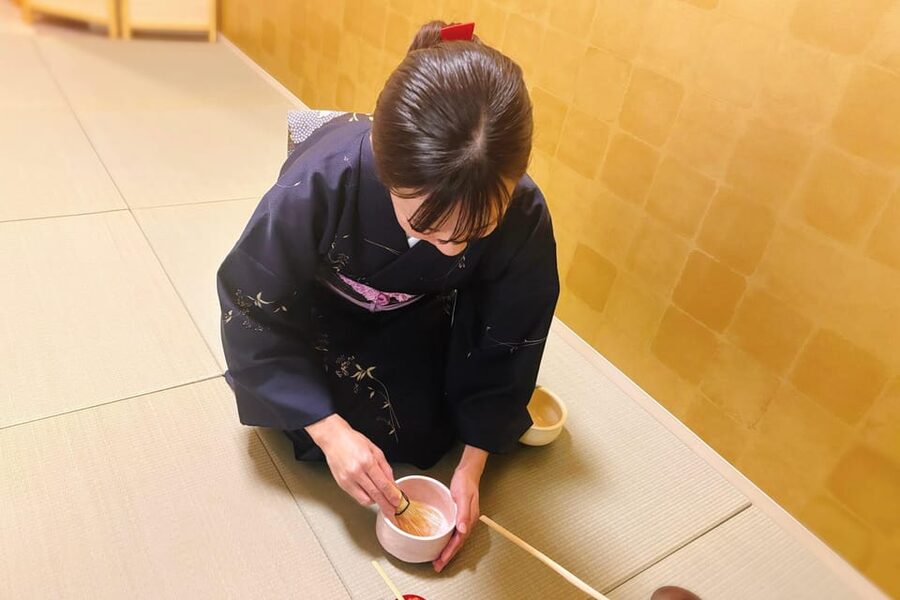
You get the essentials covered. The package includes colored paper for the calligraphy works, matcha and various Japanese sweets, and the matcha making experience with an instructor.
That is part of the value equation. You are not paying just for observation. You are paying for time with a teacher, plus the materials to create something you keep.
And because the class is private, the included instructor time stretches further. You are not competing for explanations, which is huge when you want to understand why the steps matter.
Language and teaching style, English support included
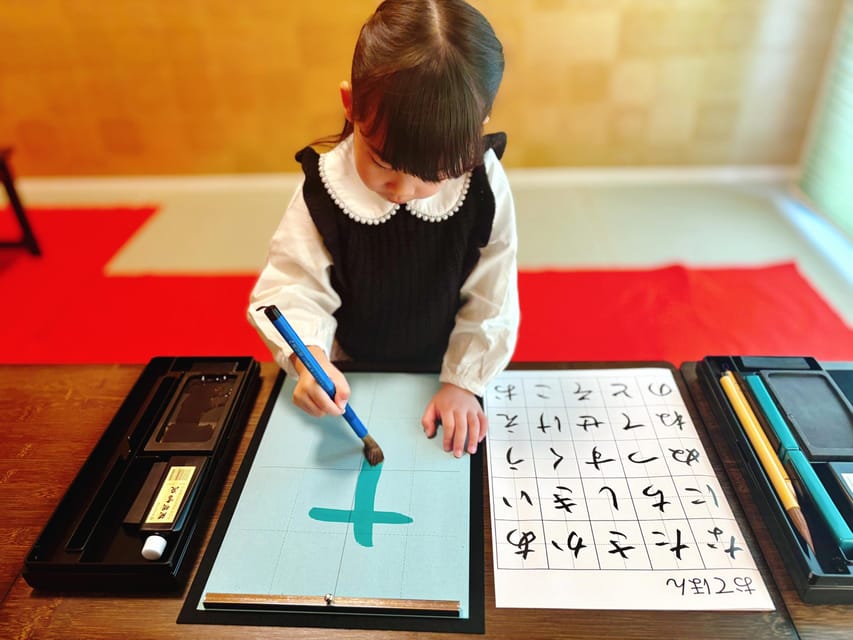
The instructor supports both English and Japanese. That matters because tea ceremony and calligraphy each have technical steps, and it’s helpful when you can ask follow-up questions and get clear answers.
Participant feedback also points to the instructor’s patience, including encouragement when people make mistakes. That is important in a craft like calligraphy, where beginners can get stuck on the fear of getting it wrong.
In a good class, you learn the stroke motion, then you build confidence by practicing. The way this one is structured, practice comes before you commit to your final piece.
Price and value: is $64 per person fair for 135 minutes?
At $64 per person for 135 minutes, this is not the cheapest thing on an Osaka itinerary. But it also is not paying for a bus ride and a show.
You are paying for a private, guided cultural workshop with materials included. You get calligraphy supplies, matcha making, sweets twice during the ceremony, plus an instructor who stays with you through both sections.
If you are traveling as a couple or a small group, the value often feels better because you are not sharing learning time with strangers. You also end up with a souvenir that is personal, your name written in Japanese characters and your own initial stamp on the piece.
If you are solo and want a lot of structure, it can still be a good buy. The private format is what you are really paying for, and the class is built around that calmer, slower attention.
Who should book this Osaka tea ceremony and calligraphy class
This is a strong choice if you want a meaningful cultural activity that feels hands-on. If you like practical learning, you’ll appreciate making matcha yourself rather than only tasting it.
It also fits families. The option for water calligraphy and the private pacing adjustment can make a big difference when kids need room to move and re-focus.
If you love photography, this is another reason to consider it. The experience is described as one where you can take photos anytime during the class, which is perfect for capturing your brushwork and the bowls during tea.
Who should think twice
If you need wheelchair access, this is not suitable. Also, if you hate sock-based activities or you arrive without socks, you’ll be stuck for a simple fix.
Finally, if you want only sightseeing or only eating, this may feel too craft-focused. This class is about learning technique and doing the ritual, not just strolling and sampling.
Should you book it
If you want a calm break in Osaka where you learn two classic arts in one afternoon, I think you should book it. The private format, hands-on matcha, and the calligraphy keepsake are a strong combo, especially if you’re the type who likes to bring home proof you were there.
If you’re on the fence, pick it if your schedule can handle 135 minutes and you’re okay with socks. Skip it only if mobility access is a must, or if you want a more purely observational experience.
FAQ
How long is the private tea ceremony and calligraphy experience?
The experience lasts 135 minutes.
Where do I meet the instructor?
Meet at the entrance of New Osaka Hotel Shinsaibashi. Walk west about 30 seconds to a blue vending machine, and wait outside the main entrance.
Is this activity private?
Yes, it is a completely private experience for your group.
What languages are spoken?
The instructor speaks English and Japanese.
What should I bring?
Bring socks.
Is it wheelchair accessible?
No, it is not suitable for wheelchair users.
What is included in the price?
It includes all fees and taxes, colored paper for calligraphy, matcha and various Japanese sweets, the matcha making experience, and an instructor.
Latest write-ups near Osaka
- 90 min Shared Handmade Udon Experience★ 5.0 · 70 reviews
- Ramen and Gyoza Cooking Class in Osaka Dotonbori★ 5.0 · 73 reviews
- Osaka: Sushi Making in Spacious Studio (SAME-DAY OK!)★ 5.0 · 75 reviews
- Osaka E-Bike Tour With A Local Guide★ 4.7 · 75 reviews
- 1.5〜2 Hours Traditional Kintsugi Work Shop in Namba Osaka★ 5.0 · 75 reviews
- Retro Osaka Street Food Tour: Shinsekai★ 4.5 · 77 reviews
- Osaka: Osaka Castle Guided Tour with Local Guide★ 4.7 · 78 reviews
- Osaka Okonomiyaki Cooking Experience!★ 5.0 · 79 reviews
Calligraphy Classes, compared.
Calligraphy class at Buddhist temple in city center
Read our review →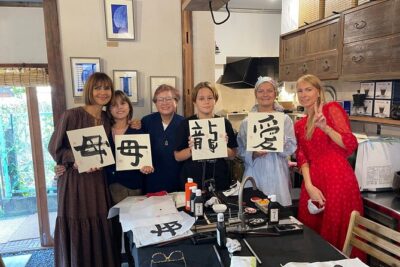
Let’s experience calligraphy in YANAKA, Taito-ku, TOKYO !!
Read our review →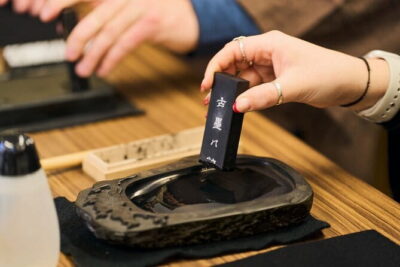
Calligraphy Workshop & Original T-Shirt Creation
Read our review →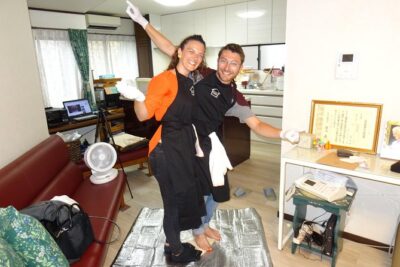
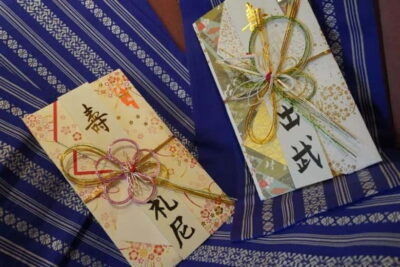
An Amazing set of Cultural experience: Kimono, Tea Ceremony and Calligraphy
Read our review →Browse the lists this tour appears in