
Reviewed · BULLET TRAIN TRIPS
From Tokyo 1-Day Kyoto English-guided Tour by Bullet Train
Kyoto in one day is a little like trying to eat an entire bento box before it gets cold. It is fast. It is crowded. But it is also a smart way to hit Kyoto’s biggest hits without getting lost in Tokyo’s train maze. This tour pairs a round-trip Shinkansen with an English-speaking guide and a set lineup of temples, plus a sit-down lunch at a hotel.
I especially like the way the day is built around real help: escorts guide you from Tokyo Station to the right train, then the handoff continues in Kyoto so you do not waste time figuring things out. I also like that the key sights are classics for a reason, Fushimi Inari Taisha, Sanjusangendo, and Kiyomizu-dera, with admission tickets included where it counts.
One consideration: it is a long day, and Kyoto’s peak crowds plus tight time windows can make each stop feel rushed. If you want slow wandering and empty temple courtyards, this is not that kind of trip.
Why this tour can feel worth it (key points)
- Shinkansen round trip included, with an option for standard or first-class train tickets
- English support at both ends, Tokyo Station departures and Kyoto arrivals have staff to meet you
- Lunch is included at Miyako Hotel Kyoto Hachijo (semi-buffet in 2025), with vegetarian requests possible at booking
- Three major Kyoto sights with guided stories, not just photo stops
- Kiyomizu-dera gives big city views, plus the temple approach has shopping lanes for quick browsing
- Smallish group size (max 40) helps keep logistics manageable
A Shinkansen day trip to Kyoto that actually runs on rails
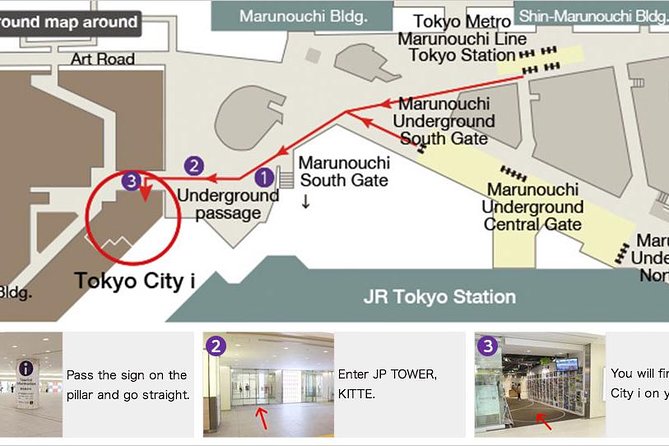
You start in Tokyo at 9:20 am from Tokyo City iJapan (KITTE), in the Marunouchi area. The plan is simple: get on the Shinkansen to Kyoto, arrive around midday, eat lunch, then head out to the three temple highlights in the afternoon before returning to Tokyo later the same day.
What makes this tour interesting is the structure. Instead of “good luck, see you in Kyoto,” you get an actual sequence of people helping you with the handoffs. In Tokyo, an English-speaking tour conductor leads you to the Shinkansen at Tokyo Station. Staff then escort you at Kyoto Station to the lunch venue. After lunch, you are walked to the Kyoto tour desk and then brought into the sightseeing portion by coach.
This matters because Tokyo Station is busy and confusing even when you speak Japanese. The escort removes friction. You spend your energy on Kyoto, not on figuring out which platform has which train.
Now, let’s talk reality. The day is long. You are doing a lot of waiting, walking, and re-gathering. Some people find the day has more downtime than they expected, especially after lunch. On top of that, Kyoto’s top sites can be packed, and this itinerary lands you right in the middle of that peak energy.
So I’d frame the value like this: you are paying for convenience, timing, and English interpretation, not for “unhurried” temple time.
More Day Trips in Tokyo
- Mt Fuji and Hakone 1-Day Bus Tour Return by Bullet Train
★ 5.0 · 26,383 reviews - 1-Day Tokyo Bus Tour
★ 5.0 · 14,250 reviews - Mt Fuji & Hakone Cruise, Drum Show Bullet Train 1 Day from Tokyo
★ 4.0 · 7,413 reviews
Tokyo-to-Kyoto logistics: where the time goes (and why it still helps)
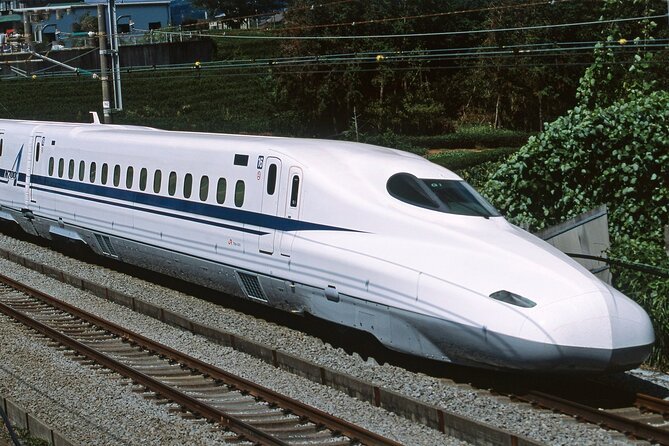
The tour says it runs about 12 hours. A big chunk of that is the Shinkansen ride, which is about 2 hours 20 minutes each way on the included Nozomi service. If you choose this tour, you are choosing the idea of “Kyoto today,” not “Kyoto at my own pace.”
Here is what you can expect in practical terms.
In Tokyo
- Meet at Tokyo City iJapan in KITTE (B1F) at the starting location
- You get guided to the Shinkansen at Tokyo Station
- Guides and staff do not ride in the same cars as participants, but you are not left alone at the station
In plain language, you get your bearings once, then the train handles the long distance.
In Kyoto
- An English-speaking staff member waits on the platform
- You are escorted to Miyako Hotel Kyoto Hachijo for lunch
- After lunch, you are escorted to the JTB Sunrise Tours desk at Kyoto Avanti to meet your group before you board the coach
This sequence reduces the classic one-day-trip problem: the “where do I go next” panic. You also avoid missing your departure train by misreading a time or misunderstanding a meeting point.
One thing to keep in mind: seats may not be designated, and the tour includes the bullet train fare but does not promise you a specific seat assignment. If you care about having the seat you want on the return, you should be mentally prepared for typical shared-group boarding.
Also note the luggage limit: you cannot bring large luggage whose total size exceeds 160 cm on the Shinkansen. If you have big bags, you may need to use a delivery service on your own.
More days built around the bullet train:
- Tokyo Mt Fuji 5th St & Hakone Cruise Bus Tour w/Bullet Train
★ 4.4 · 5,024 reviews - From Tokyo: Mt. Fuji & Hakone Tour w/ Return by Bullet Train
★ 4.2 · 1,278 reviews - Mt. Fuji and Hakone Day Trip From Tokyo with Bullet Train Option
★ 4.0 · 368 reviews - Mt. Fuji & Hakone Bus Tour Bullet Train Return & 28-Hotel Pick-up
★ 4.5 · 107 reviews
Lunch at Miyako Hotel Kyoto Hachijo: included, reliable, not a street-food fantasy
Lunch is a Western-style meal at Miyako Hotel Kyoto Hachijo, and it is included. In 2025, it is served as a semi-buffet. If you want vegetarian food, you must request it when booking, and you can only change the main dish.
(There is an update mentioned for 2026: lunch will be a vegetarian-friendly Western-style set menu.)
I like this approach because one-day trips often mess up lunch. Either you get stuck with something rushed and overpriced, or you end up skipping food because the itinerary is chaotic. Here, lunch is scheduled and included, and it is in a hotel restaurant, which usually means predictable timing.
Is it “authentic Kyoto cuisine”? Not really. It is a practical pause. Think of it as fuel in the middle of temple time.
The timing matters too. Lunch is listed around 40 minutes plus the staging before you move to the next stops. Some reviews call out extra waiting time, so if you hate hanging around, pack something small you can do while you wait, like water, a snack, or offline maps for your own side plans.
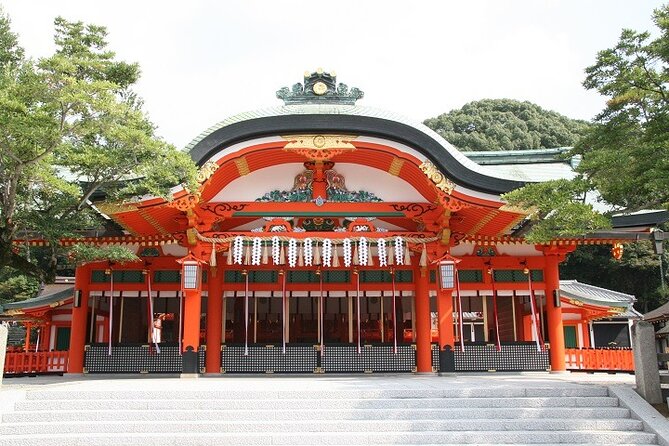
Fushimi Inari Taisha: the torii gates that make you want to keep walking
Fushimi Inari Taisha is the headline for many Kyoto first-timers, and this tour treats it that way. You go by coach and then walk from the parking area to the shrine.
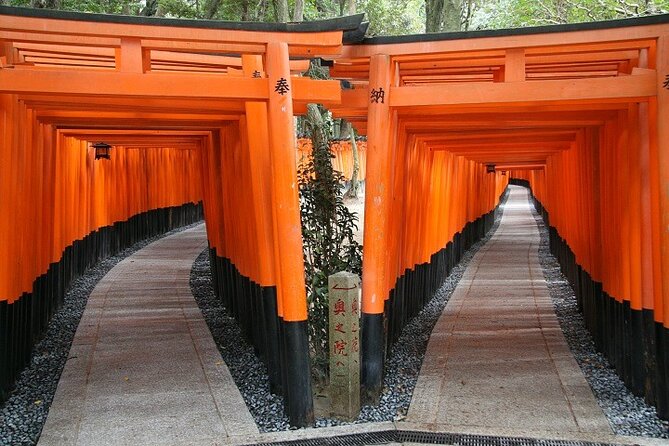
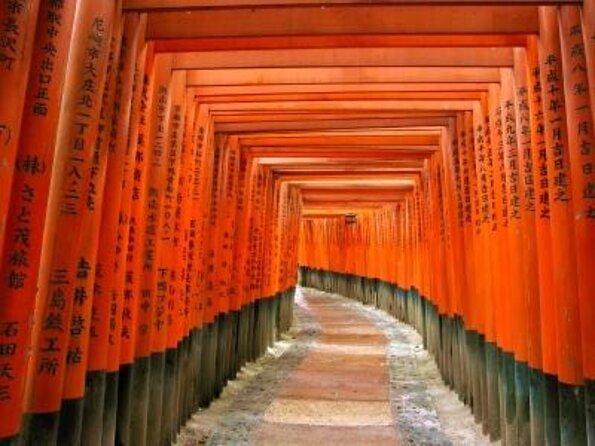
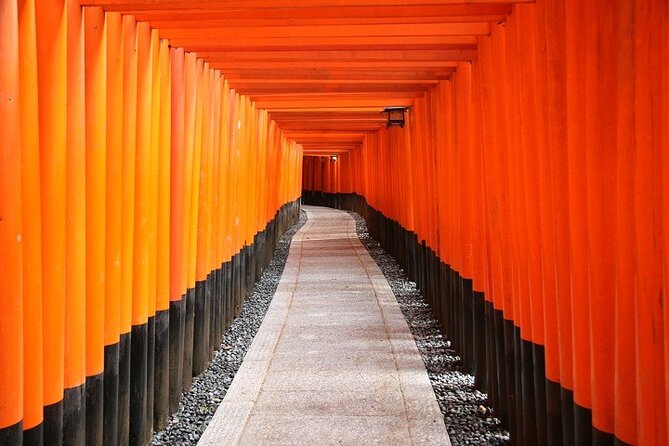
You will see the famous Senbon Torii, the bright red shrine gates that create a tunnel effect. Even if you have seen photos, you still feel the scale once you are under them. It is one of those places where your brain switches from “sightseeing” to “okay, we’re actually walking through something.”
This stop is about 30 minutes total, and it will be in peak crowd conditions. You can expect lots of people moving in both directions, people taking pictures, and the constant ebb and flow of tour groups. The shrine has places to pause for reflection, and the tour encourages quiet time inside.
What I like about this visit
- You get an introduction to Inari, the god associated with the shrine, and the fact that Inari-jinja shrines are spread widely across Japan
- You are not just dumped at the gates, you get a guided context so it feels more meaningful than a red photo maze
The drawback to plan around
In 30 minutes, you will not do the entire deep hike up all the way to the far viewpoints. This tour is set up to show the core experience, not to turn into a full on exploration. If you want the longest walking experience, you would likely need more time in Kyoto on your own.
Still, even a short walk through the first stretch of torii gates is memorable. It is the kind of scene that sticks with you on the train back to Tokyo.
Sanjusangendo: 1,001 statues and why it feels oddly personal
Sanjusangendo is one of those temple stops that can surprise you even if you think you already know Kyoto. The key detail here is the world’s longest wooden structure housing 1,001 life-size statues of Buddhist Kannon deities, dating back to the 13th century.
This stop is about 30 minutes, with admission included. You visit the hall and take in the scale of the statues. The tour focuses on the idea of Kannon and the meaning of the space, including the presence of many life-size statues representing Buddhist deities.
Why this hall works in a short itinerary
Some temples are about a garden, a building exterior, or a single viewpoint. Sanjusangendo is about atmosphere and concentration. You can stand in one place, look around, and feel like you are surrounded by devotion and history without needing a long walk.
Also, this is an indoor visit. When weather is bad, it is easier to keep the day moving.
What you might miss if you are rushed
Because time is tight, you may not get the slower “study every detail” experience. If you like art history and want time to read every caption and interpretive panel, you might want a separate visit in Kyoto later. But as a first pass, it is a strong use of your limited time.
Kiyomizu-dera: the hilltop views, plus crowds and a climb
Kiyomizu-dera is the final temple stop and the one that often delivers the biggest payoff: views over Kyoto. It is also World Heritage listed, and the tour includes time at the site for the temple experience plus time to enjoy the shopping lane approach leading up to it.
This stop is about 1 hour 10 minutes, with admission included. That is noticeably longer than the other two temple stops, and it makes sense, because the Kiyomizu-dera area is a mix of temple space, stairs, and browsing.
What to expect under the crowd
Kiyomizu-dera can be extremely busy. In a compressed schedule, you may feel like you are walking through a moving crowd rather than strolling. That said, the views from the temple area are worth the climb. When the light hits the city from the hilltop, you understand why this spot is famous.
The guided portion also includes a story behind the temple’s construction. That narrative element helps you connect what you see to why it was built the way it was, which turns the visit from pure sightseeing into something more grounded.
A practical tip
Go in with a photo strategy. With crowds, you will spend energy waiting for space to move. If you care about getting a clear view, plan to move earlier and aim for your photos quickly when the crowd thins in your area.
Standard vs first-class Shinkansen: is it worth paying more?
The tour offers a choice of standard or first-class bullet train ticket. The train ride is already a big part of the day, so comfort can matter.
From a value standpoint, first-class can make the day feel less punishing because you have longer time sitting in transit. You also get a better chance of enjoying the ride instead of just tolerating it.
But here’s the tradeoff: you are already spending a lot on the entire tour, and this is a day where time in Kyoto is limited. I would treat first-class as a “comfort upgrade for a long day,” not as “the ride is the point of the whole trip.”
If your budget is tight, standard is still good. If you want less stress, better comfort, and the psychological boost of starting your day trip on a higher note, first-class can be a smart spend.
Also, because seats may not be designated, your comfort will still depend on what you’re assigned on boarding.
Pricing and value: what you’re really buying for $452.45
At $452.45 per person, this is not a bargain. It is a premium day trip. So what are you paying for?
You are paying for:
- Round-trip Shinkansen fare between Tokyo and Kyoto
- Afternoon sightseeing in Kyoto by coach
- An English guide interpreter with licensed status
- Lunch at Miyako Hotel Kyoto Hachijo
- Admissions for key stops (Sanjusangendo and Kiyomizu-dera included, Fushimi Inari listed as free)
When you put it together, the price starts making sense as a package. The big cost drivers are the trains, the guide, and the structured timing.
You are also buying time. Instead of spending part of your Tokyo trip learning train logistics and building your own route, you outsource it. If your priority is maximizing what you see with minimal hassle, this price becomes easier to justify.
The main value risk
The risk is that you want more than highlights. Kyoto rewards slow time. This tour gives you three famous sites with guided stories, but it cannot replace a multi-day Kyoto stay.
If you want day-long temple wandering, you’ll likely feel the limits. If you want a clean first look at Kyoto’s must-sees while staying based in Tokyo, it is one of the most straightforward ways to do it.
Who should book this Kyoto by bullet train tour, and who should skip it
This tour fits best if:
- You are staying in Tokyo and cannot spare an overnight in Kyoto
- You want an English-guided plan that handles the station stress
- You prefer a structured afternoon itinerary over self-guided logistics
- You like iconic sights and want a guided “why it matters” explanation, not just photos
I would skip or at least think twice if:
- You hate crowds and already know Kyoto peak times wear you down
- You want long free time at each site for shopping, walking, and lingering
- You need a slow, quiet experience rather than a run-through of major highlights
- You are sensitive to long days with waiting around
This is also a good “first Japan trip” style tour. It is designed for international visitors, with staff support throughout. That is the real selling point.
Should you book? My honest call
If your main goal is to see Kyoto’s top temple and shrine icons in the limited window of a Tokyo stay, I think booking this makes sense. The Shinkansen included, the English guidance, and the escorted handoffs remove the most frustrating parts of planning a one-day trip.
But if you secretly want a calmer Kyoto, with extra time at Kiyomizu-dera or a deeper hike at Fushimi Inari, this itinerary will feel tight. In that case, save your energy and consider adding a Kyoto night, or pick a smaller, more flexible day plan.
My bottom line: book it if you want certainty. Skip it if you want space.
FAQ
What time does the tour start and when does it end?
It starts at 9:20 am at Tokyo City iJapan in KITTE (B1F). The tour ends with return to Tokyo, with arrival times listed as approximately 8:30 pm to 9:30 pm.
How long is the Kyoto sightseeing portion?
The total tour is listed as about 12 hours. The Kyoto sightseeing includes scheduled stops of roughly 30 minutes at Fushimi Inari, 30 minutes at Sanjusangendo, and 1 hour 10 minutes at Kiyomizu-dera, plus lunch.
Is lunch included?
Yes. Lunch is included at Miyako Hotel Kyoto Hachijo. In 2025 it is a semi-buffet. Vegetarian requests can be made when booking.
Can I choose standard or first-class Shinkansen tickets?
Yes. The tour offers your choice of standard or first-class bullet train tickets.
Are temple and shrine admission fees included?
Sanjusangendo and Kiyomizu-dera admissions are included. Fushimi Inari Taisha is listed as free for the stop.
Do I get an English guide?
Yes. The tour includes a national government licensed English guide interpreter.
Will the tour help me get from Tokyo Station to the Shinkansen?
Yes. An English-speaking tour conductor escorts you to the Shinkansen at Tokyo Station. Staff are also waiting in Kyoto to escort you to lunch and the next meeting point.
What are the luggage limits for the Shinkansen?
Large luggage with total height, width, and length over 160 cm cannot be brought onto the Shinkansen. The tour notes you may need to use a delivery service on your own.
Are seats guaranteed on the train?
The tour states that seats may not be designated.
Is the tour suitable for most travelers?
It says most travelers can participate and it is a special tour for international visitors. The tour has a maximum of 40 travelers.
What is the cancellation policy?
You can cancel for a full refund up to 24 hours before the experience’s start time. If you cancel less than 24 hours before, the amount paid is not refunded.
Latest write-ups near Tokyo
- Tokyo Customized Private Tour: See Top Attractions in 1 Day★ 4.8 · 67 reviews
- From Tokyo: Top 5 Scenic Spots of Mount Fuji Full-Day Tour★ 4.5 · 67 reviews
- Tokyo: Shinjuku Izakaya and Golden Gai Bar Hopping Tour (2h)★ 4.9 · 67 reviews
- Traditional Japanese Music ZAKURO SHOW in Tokyo★ 5.0 · 67 reviews
- Tsukiji: Unlimited Sake Tasting Experience★ 4.9 · 67 reviews
- Tokyo: Not a show- a professional sumo practice with experts★ 4.9 · 67 reviews
- Samurai Ninja Museum Asakusa: Kid-Friendly Ninja Training★ 4.7 · 67 reviews
- Private Harajuku Omotesando Architecture Walking Tour★ 5.0 · 67 reviews
Bullet Train Trips, compared.
Mt Fuji and Hakone 1-Day Bus Tour Return by Bullet Train
Read our review →
Mt Fuji & Hakone Cruise, Drum Show Bullet Train 1 Day from Tokyo
Read our review →
Tokyo Mt Fuji 5th St & Hakone Cruise Bus Tour w/Bullet Train
Read our review →Mt. Fuji & Hakone Tour w/ Return by Bullet Train
Read our review →
Osaka/Kyoto: Hiroshima Miyajima Bus Tour & Shinkansen Ticket
Read our review →
Mt. Fuji and Hakone Day Trip From Tokyo with Bullet Train Option
Read our review →
Full Day Hiroshima and Miyajima Tour by Bullet Train from Kyoto
Read our review →
Full Day Hiroshima and Miyajima Tour by Bullet Train from Osaka
Read our review →Browse the lists this tour appears in