
Reviewed · CYCLING TOURS
Hiroshima 3hr Peace Cycling Tour with Local Guide
Hiroshima can be heavy, but this small-group peace cycling tour keeps it focused and human, with a local guide turning big history into real places you can point to. I like the easy pace on electric bikes plus the mix of major and lesser-seen stops, so you get a fuller picture than you would with just a quick walk. One thing to weigh: you are cycling through memorial areas where you need to stay alert and keep your spot in the group.
I also like that the tour saves you from logistics headaches by building in entrance fees and planning a tight 3-hour loop. In past groups, guides like Shin, Moe (spelled as Moe in some feedback), Moet, Toma, Thomas, and Kana have been praised for clear storytelling and personal family perspectives. A possible drawback is bike comfort for some riders, since one note mentioned the e-bikes can feel a bit undersized for certain body types.
Key things you’ll notice on this Hiroshima peace ride
- Max 10 people for an intimate, conversation-friendly morning
- E-bikes make the route feel gentle, even on a warm day
- Entrance tickets included, so you can just show up and move
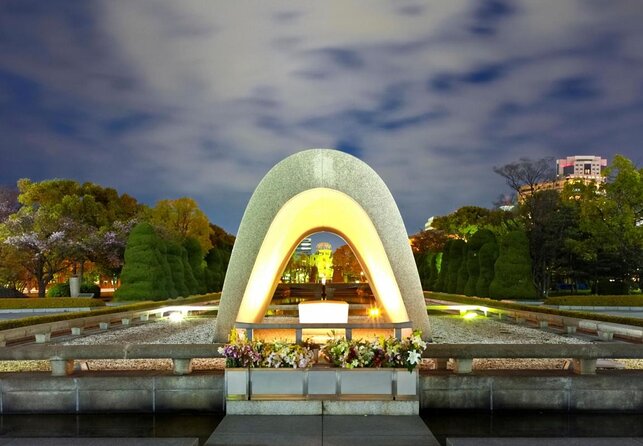
- A thoughtfully spaced route that follows the blast area and surviving landmarks
- Guides share family-linked stories, not only dates and facts
Why Hiroshima feels different when you cover it by bike
Walking the Peace Memorial Park area can be powerful, but it is also short on context. A bike tour gives you something practical and meaningful at the same time: distance. You can get from the Peace Park core to the edges of the blast zone and back without turning your day into a marathon.
This tour is built as a half-day commitment, about 3 hours, so you still have the rest of the day to explore on your own. That matters in Hiroshima, because the city is not only monuments. There are neighborhoods, rivers, and everyday life. The cycling route helps you see how the city rebuilt itself, not just what happened in one moment of 1945.
More Cycling Tours in Hiroshima:
- Hiroshima in a Nutshell: Morning Bike Adventure
★ 5.0 · 524 reviews - Hiroshima 2hr Peace Cycling Tour with Local Guide
★ 5.0 · 321 reviews - Hiroshima: Peace Cycling Tour with Local Guide
★ 4.8 · 286 reviews
Meeting at Hiroshima Peace Memorial Park Rest House, then rolling with your guide
You start at the Hiroshima Peace Memorial Park Rest House. The morning begins with the basics: greetings, route overview, and a quick set of safety and health checks. Expect to get your bearings fast, then match pace with the group.
Then comes the bike part. This is designed around adult electric bikes and children’s cross-style bikes (when height fits). Adults need a height of 145 cm or more to use the electric bicycle. If you are traveling with kids, the tour notes that children’s bikes are available depending on height and weight, and they also mention bike seats for smaller children.
You do not need fancy biking skills. The route is set up for a gentle cycle between stops, and the electric assist helps you keep effort low. One practical detail I’d take seriously: the tour is a shared group. If the group includes kids or people who are less comfortable on bikes, the guide will adjust pace.
Stop 1, Peace Memorial Park: setting the tone before you move
Your first stop is the Peace Memorial Park area, meeting at the rest house and getting oriented. This is the right starting point because it gives the emotional and historical frame before you pedal out.
You are there for a short window, around 5 minutes, so you are not stuck waiting around or trying to read everything at once. Think of it as the launch pad. From here, the route builds outwards, then returns.
Stop 2, Hiroshima Castle: the pre-war anchor point
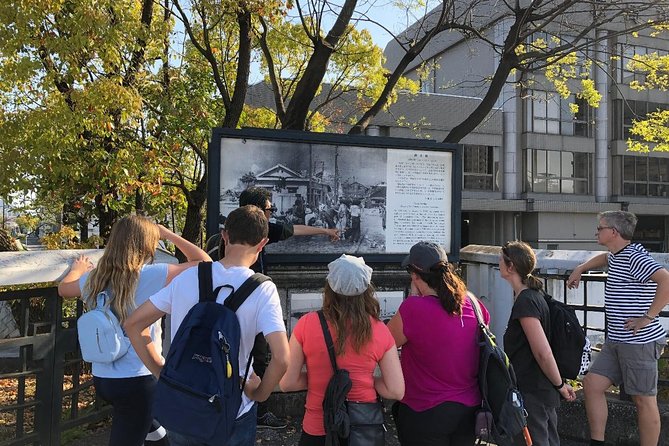
Next you ride to Hiroshima Castle, about 20 minutes on site. The guide links it to the city’s earlier military role and to the fact that it was the location of a military fort that reported early about the atomic bomb.
This stop matters because it prevents a common mistake: treating Hiroshima as if it began on August 6, 1945. The city had a long story before the blast, and the tour uses landmarks like Hiroshima Castle to remind you of what existed first.
If you want a quick tip: keep your eyes open for the way your guide connects earlier eras to what came after, especially when they talk about reconstruction and memory.
A change of pace from Hiroshima:
- Peaceful Hiroshima & Miyajima UNESCO 1 Day Bus Tour
★ 5.0 · 5,309 reviews - Hiroshima: Hiroshima and Miyajima UNESCO Sites 1-Day Tour
★ 4.9 · 2,330 reviews - Hiroshima / Miyajima Full-day Private Tour with Government Licensed Guide
★ 5.0 · 1,298 reviews - Hiroshima Historical Walking Tour – Why A-Bomb was Dropped
★ 4.8 · 893 reviews
Stop 3, Hiroshima Gokoku Shrine gate and guardian dog details
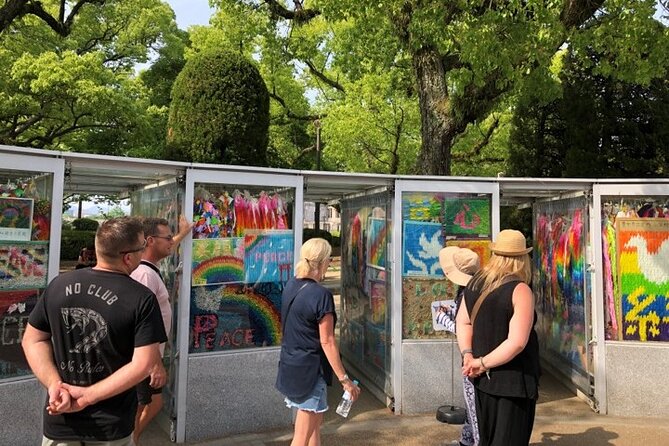
From the castle you head to Hiroshima Gokoku Shrine, including the shrine gate and nearby details like the guardian dog statue. The stop is about 15 minutes.
Why this is worth your time is simple: not every Hiroshima memorial experience focuses on the surviving structures and smaller symbolic features. Here, you learn what endured, and that helps the bigger memorial sites hit even harder.
Stop 4, Chuo Park: a breather of green before the heavy stuff
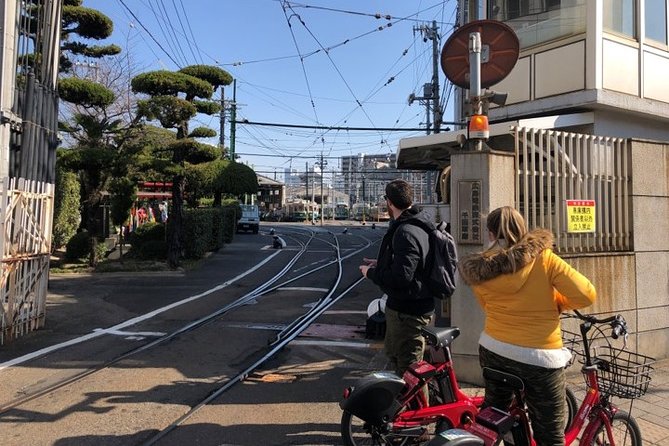
You get a palate cleanser at Hiroshima Central Park (Chuo Koen-mae), around 20 minutes. This is a large green space. It is not an afterthought, either. The guide uses this breathing room to move you between zones without overwhelming you.
If you are sensitive to pacing, this stop can be a lifesaver. You get a moment to reset your mind before the tour heads toward the bridge and the dome area.
Stop 5, Aioi Bridge: the target remembered in place
At Aioi Bridge, you spend about 10 minutes. This bridge was the target. Both the river and the bridge remain, so it is a place where history is not just in a building, it is in the geography.
This is one of those stops where the bike position and timing help. You are not staring from a single angle like you might in a museum. You are moving through the corridor of the city, then pausing where the guide points. You feel the continuity of the waterway and the human-built structure.
Stop 6, Atomic Bomb Dome: the photo you take, and the story you remember
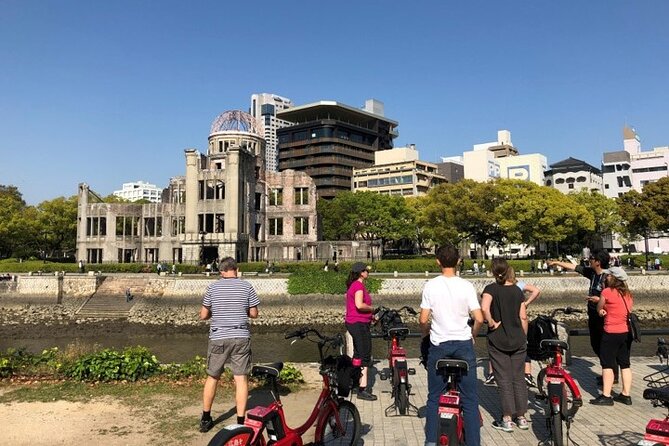
Then comes the Atomic Bomb Dome, about 15 minutes. It is world-famous for a reason, but the value here is how the guide brings in local stories and how people remember.
This is the stop most people think of first, but the tour’s structure makes it different. You already heard context at the castle, you already saw surviving symbolism at the shrine, and you’ve had one moment to breathe in the park. By the time you reach the Dome, you are not just seeing an iconic ruin. You are seeing a turning point in a city’s full timeline.
Stop 7, Motoyasu River and Peace Bridge: the city’s edges that still hold meaning
You next ride down toward the south side of the Peace Park area for Motoyasu River and Peace Bridge, about 15 minutes. This stop blends scenery with historical explanation.
You see riverside nature, but your guide keeps the focus on what the river area meant then and what it represents now. It is a good reminder that Hiroshima is not only a memorial zone. It is also lived-in space.
Stop 8, Higashisenda Park: trees and the long reach of memory
At Higashisenda Park, you spend about 20 minutes. The tour highlights a special detail: trees sent from countries around the world. This is about international connection and remembrance, not just a local event.
If you pay attention here, you can understand why Hiroshima’s peace message has global weight. The city’s recovery became part of a worldwide conversation.
Stop 9, Hiroshima Red Cross Hospital remnants: the blast gets real fast
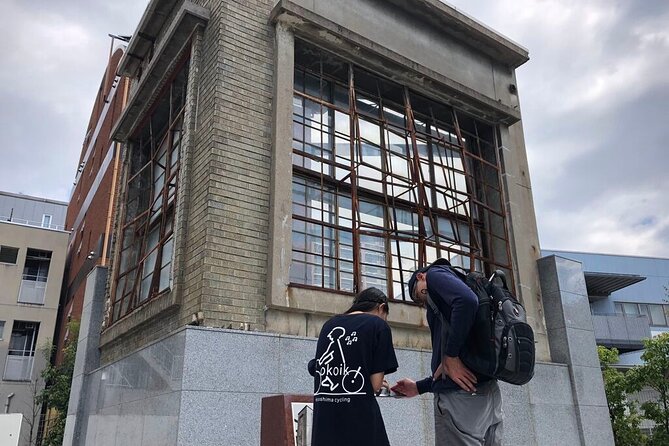
Next is the Atomic Bomb Window Frame Monument, connected to the remnants of the Hiroshima Red Cross Hospital building. The stop is about 20 minutes.
This is one of the heavier stops, and that is the point. You face a physical remnant that helps you understand the strength of the bomb. It is also a place where you might feel yourself wanting to rush. Don’t. Slow down and let the guide’s framing do its work.
Stop 10, Hiroshima Railway: surviving trains and continuity
You then pass through a Hiroshima Railway related point, around 10 minutes. The tour notes that two trains survived the blast and started running again, still in use today.
This is the kind of detail that often gets missed when you only focus on the Dome and museum. It shifts your brain from shock to continuity. The city did not just rebuild buildings. It restored routine.
Stop 11, Miyuki Bridge and Kobayashi River: where the reach ended
At Miyuki Bridge and Kobayashi River, you spend about 10 minutes. The tour describes a picture displayed right where the bomb’s reach ended, showing the stark difference between then and now.
This stop helps you understand the blast zone as a boundary, not an abstract idea. The guide’s explanation helps you place distance and direction in your mind, which makes earlier stops more meaningful.
Stop 12, surviving weeping willow: a living symbol that kept growing
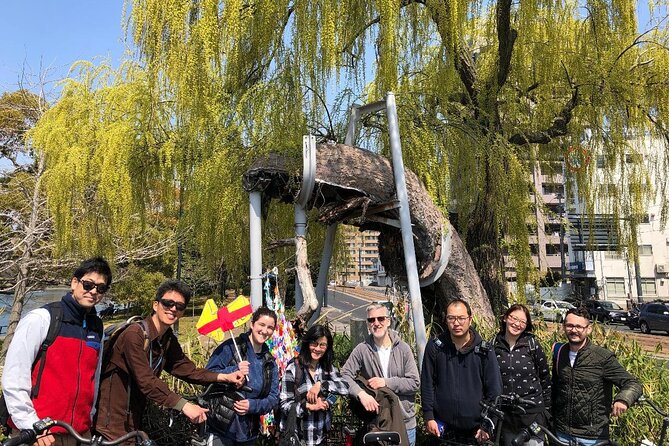
Now you reach Surviving Weeping Willow Tree, also tied to the Hiroshima City Children’s Culture and Science Museum area. It’s about 10 minutes, and it is listed as a highlight.
The key idea is that the tree kept growing even though there were rumors it would not. The tour frames it as a symbol of strength and survival over decades.
This is a gentle stop compared to the hospital remnants, but emotionally it can hit just as hard. Watching something alive persist makes the story feel less like a distant event and more like a slow, daily kind of survival.
Stop 13, Peace Boulevard: monuments and the working city
On the return ride you pass Peace Boulevard, about 10 minutes. You see various monuments and trees tied to Hiroshima’s history, but also the current city.
This is where cycling shines. You are moving through Hiroshima as it is now, not only as a memorial map. That is a big reason this tour can feel balanced, even when the subject is deeply somber.
Stop 14, back at Peace Memorial Park: wrap-up and time for the rest of your day
You end back at Hiroshima Peace Memorial Park. The stop is about 5 minutes and your tour ends around the planned end time.
The afternoon is open for you. If you want more time in the museum, or a slow lunch near the park, this half-day structure makes it easy.
What you’re actually paying for: value at $85.89 and what is included
At $85.89 per person for roughly 3 hours, the value comes from three things you would otherwise piece together yourself.
First, you get a local guide who is not just reciting facts. In prior groups, guides like Shin, Moe, Moet, Toma, Thomas, and Kana have been praised for sharing family-linked stories and making the ride personal. That human angle is what you can’t easily recreate from a printed map.
Second, entrance fees are included, so you are not stopping to dig for tickets or worry about paying at each site. Even if your itinerary is already planned, that saved hassle adds up fast.
Third, you are paying for the “how to get around” part. Biking between the Peace Park core and scattered blast-area landmarks is efficient. You cover ground without turning it into a series of taxi hops.
There is also bicycle accident insurance included. That doesn’t make the subject lighter, but it does make the practical side feel safer.
Bike comfort and real-world pacing: who this tour fits best
This tour is for people who want a guided peace experience with movement. It is not a full-on mountain bike adventure. The pace is described as gentle, and the e-bikes are used for adults when you meet the height requirement.
It also fits families with children, as long as you match the bike needs listed in the tour details. The operator notes children’s bikes are available, and they can adapt pace if the group includes people who are new to cycling.
One note to keep in mind: a guest mentioned the e-bikes felt undersized for them. If you are between sizes or you have a taller torso, it is worth paying attention at check-in to how the bike fits before you roll.
In hot weather, electric assistance is a big plus. One of the clear benefits called out in the feedback was that the e-bike makes the ride comfortable in summer heat.
Rain plans: switching routes without losing the core message
This kind of tour needs decent weather, because you’re cycling between outdoor stops. If weather forces a change, you have options.
The data says you can choose a Rainy Day Limited Peace Route, which keeps you in a similar wartime-and-memory track, but adjusts what you do and when. There is also a walking tour option for rainy days that focuses on the hypocenter area reduced to scorched earth, walking roughly 0.5 km to 1 km in that zone. If you do not want to switch, you can request a refund.
So you are not stuck canceling your entire Hiroshima day just because of showers.
Practical tips for your morning ride
Here are the details that help you make the most of the ride without stressing.
Bring a light layer, even in warm months. You stop often, and the pace between stops can make you feel cool when the shade hits.
For bags and luggage, the tour notes there is no place to leave luggage at the Rest House. Coin lockers are available at the International Conference Center Hiroshima and at the Hiroshima Peace Memorial Museum (about a 6-minute walk from the rest house).
Also, free city Wi-Fi is available around Hiroshima, but the tour itself does not provide Wi-Fi. If you rely on offline maps, download what you need before you arrive.
Finally, keep your phone use respectful. You can take photos, but the guide’s pacing and the sensitive nature of the sites mean you should listen first, then capture.
Should you book this Hiroshima peace cycling tour?
Yes, if you want Hiroshima to feel organized, personal, and not too exhausting. The strongest reason to book is the mix of small-group size, electric bikes, and a route that follows the story across key areas, not only the most famous one.
Skip it only if cycling through memorial sites would stress you out. Also consider bike fit, since one piece of feedback mentioned e-bikes can feel undersized for some riders.
If you are aiming for a meaningful Hiroshima morning with time left for lunch and self-guided wandering later, this is a solid choice. It turns a history lesson into a morning you can feel in your legs, then carry in your memory for much longer than a standard walk.
Latest write-ups near Hiroshima
- An Amazing set of Cultural experience: Kimono, Tea Ceremony and Calligraphy★ 5.0 · 69 reviews
- Hiroshima: Private Walking Tour with a Local★ 4.6 · 70 reviews
- Hiroshima: Miyajima Island Half-Day Tour with Guide★ 4.9 · 71 reviews
- Kimono and Tea Ceremony in Miyajima★ 5.0 · 73 reviews
- Hiroshima and Miyajima Private Guided Tour★ 4.5 · 75 reviews
- HIROSHIMA ORIZURU TOWER Admission Ticket★ 4.6 · 75 reviews
- Hiroshima & Miyajima: UNESCO A-Bomb Dome & Itsukushima★ 5.0 · 76 reviews
- Hiroshima to Miyajima: Private Custom Tour with Ferry Ride★ 4.9 · 77 reviews
Cycling Tours, compared.

3h Tokyo E-Bike Tour: Hidden Gems, and Local Life with guide
Read our review →
Arashiyama Bamboo Forest & Hidden Gems Bike Tour (Early Bird)
Read our review →
Hiroshima in a Nutshell: Morning Bike Adventure
Read our review →Browse the lists this tour appears in