
Reviewed · CYCLING TOURS
Hiroshima: Best of Hiroshima Guided Bike Tour
Hiroshima on a bike is interesting because you get to cover a lot of ground without the fatigue of constant walking, yet you still slow down for meaningful stops. I really like the way the guides (Miyu, James, Aimee, Awais, and others) mix careful explanations with personal, respectful storytelling. I also like that the route stays flat, so the ride feels relaxed even if you are not a cycling machine. The main drawback to consider is that this is weather-dependent, and you need to be comfortable riding outdoors for the full 210 minutes.
You meet at Cycle Hiroshima HQ, get fitted to a proper bike and helmet, then roll out on a smooth riverside path. The group is small, capped at 8, so it feels more like a guided day with your crew than a rushed line of sightseeing. You will come away seeing the big hits, but also understanding why Hiroshima’s landmarks matter beyond the photos.
Key things that make this tour work so well
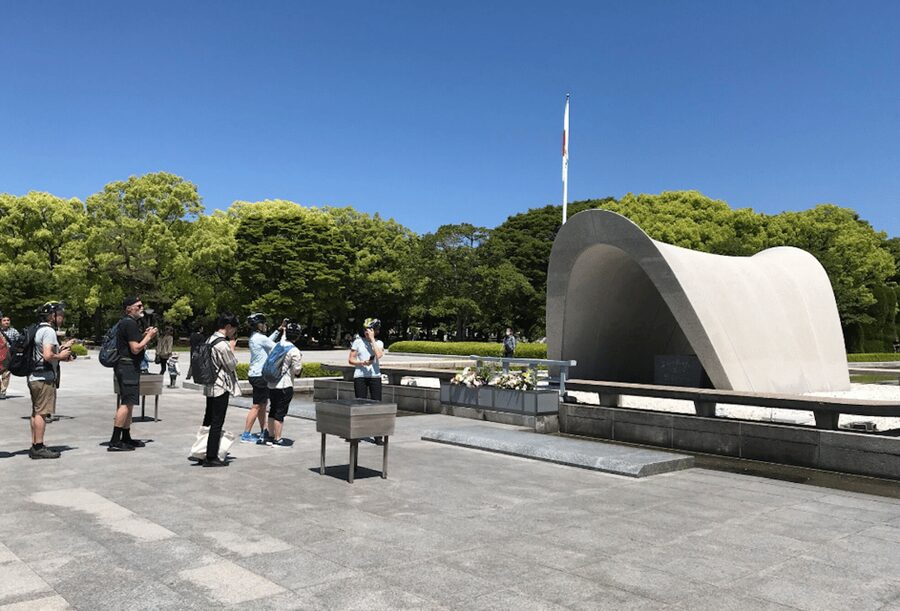
- Peace Park by bike saves your legs while still giving time at major memorial stops
- Flat route with multiple bike options (Trek models, step-throughs, e-bikes, and child-sized bikes)
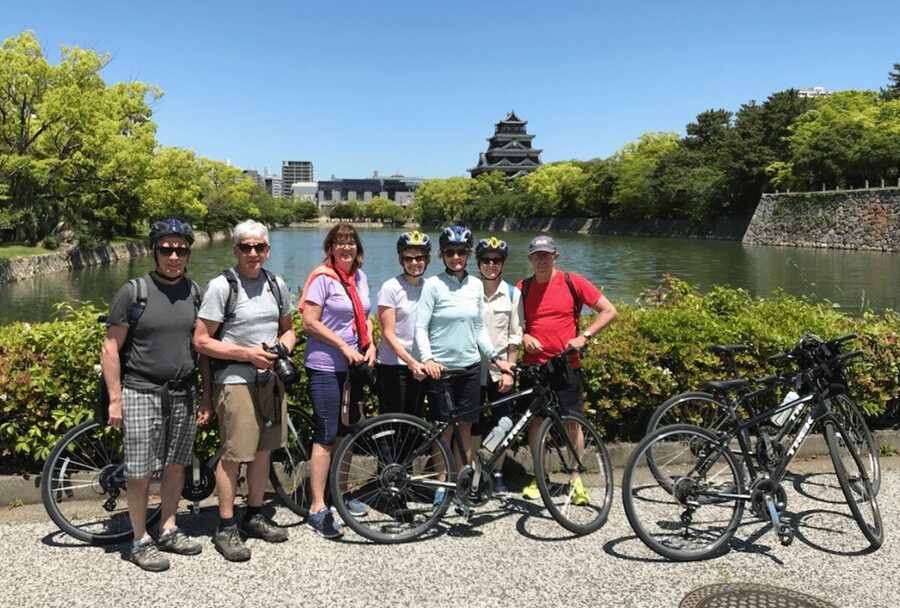
- Small group size makes it easier to ask questions and get photo help
- Guides who tell the story well with clear pacing and respectful attention to the subject
- Shukkei-en Garden included gives you a calm Edo-period finish after the city sights
- Trek bikes plus helmets and water keeps the basics handled for you
From Cycle Hiroshima HQ to a riverside start that feels easy
Your tour begins at Cycle Hiroshima HQ, with a big Cycle Hiroshima sign out front. Plan to arrive a bit early. Bike fitting is part of the experience, and once you are set up, you can enjoy the ride instead of worrying about comfort.
What I like about the start is how “normal” it feels. You get a quick orientation, a helmet on your head, and then you ease into the day on a riverside route. It is not a technical ride and you are not dealing with tricky hills. This matters because the tour is really about the sights and the stories, and the bike should remove stress, not add it.
The bikes are Trek, in a range of sizes, and the tour also offers step-throughs and e-bikes if you want extra help. That flexibility shows up in how people experience the ride. Even if you have not ridden much lately, you are set up to succeed.
More Cycling Tours in Hiroshima:
- Hiroshima in a Nutshell: Morning Bike Adventure
★ 5.0 · 524 reviews - Hiroshima 2hr Peace Cycling Tour with Local Guide
★ 5.0 · 321 reviews - Hiroshima: Peace Cycling Tour with Local Guide
★ 4.8 · 286 reviews
Peace Memorial Park and the Atomic Bomb Dome, seen with time to think
The heart of the day is the Peace Memorial Park area. After the easy intro ride, you head to some of Hiroshima’s most iconic and moving monuments connected to the atomic bombing of August 6, 1945.
You will visit major memorial stops, including the Atomic Bomb Dome, a UNESCO World Heritage Site. It is one of those places where the photo is only the beginning. The real weight comes from understanding what you are looking at, and from hearing it explained in a calm, clear way by your guide.
What makes the time at Peace Park especially valuable is the pacing. You are not sprinting from point to point. Your guide paints a picture of 1945, then gives you moments to ask questions and absorb the significance. That Q-and-A time is a big deal. It lets you clear up confusion on the spot and move from “I saw it” to “I get what this means.”
Also, biking changes your relationship with the area. You still slow down for monuments, but you are not spending your energy on nonstop walking. That means you are more likely to stay present, especially on a day that can be emotionally intense.
A respectful detail worth noting
More than one guide has been praised for handling the topic with care and respect. That is not a small thing in Hiroshima. You want a guide who keeps the tone serious, gives space for photos without turning the moment into a checklist, and explains in a way that feels humane.
Gokoku Jinja and Hiroshima Castle grounds: a different lens on the city
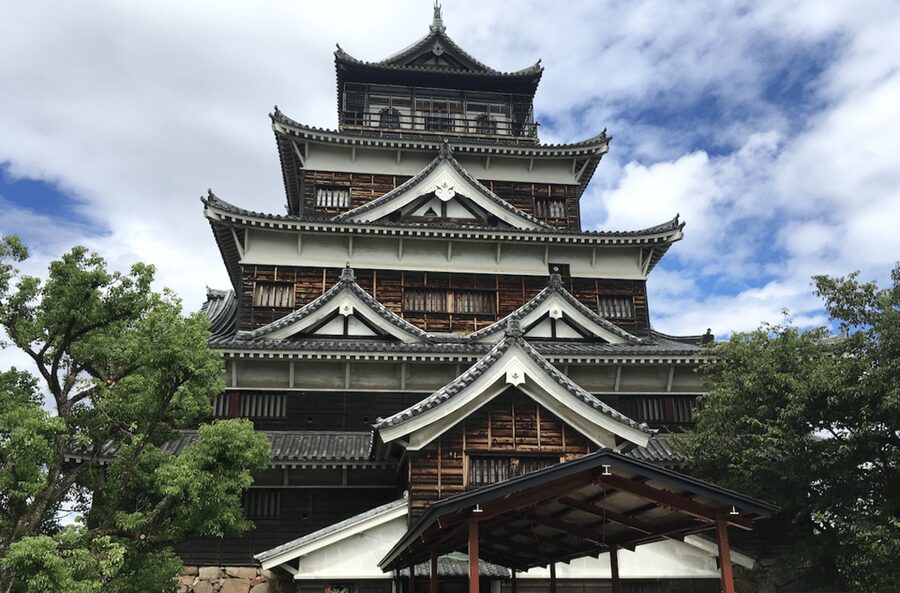
After Peace Park, the tour heads north to Gokoku Jinja, described as the most popular Shinto shrine in Hiroshima. This is a different side of the city, one that helps you see how Hiroshima continued life and spiritual practice alongside its recovery.
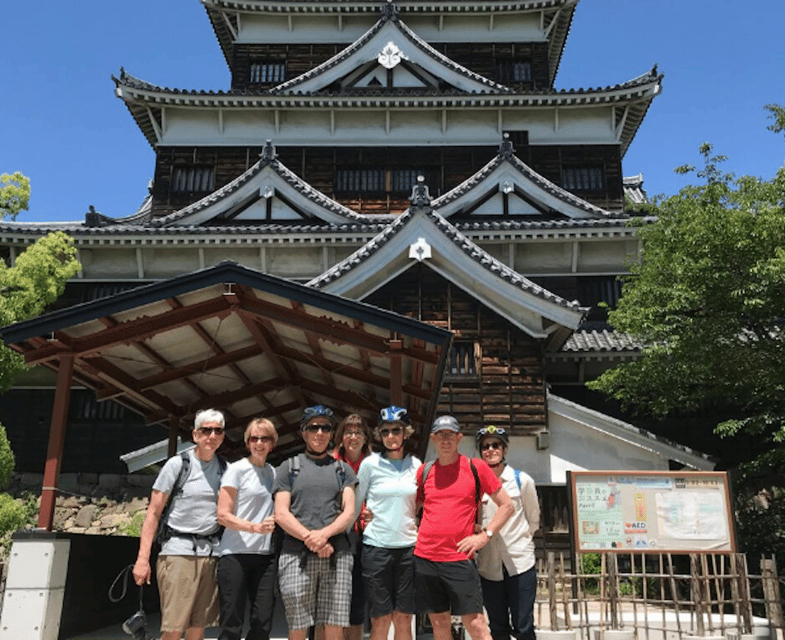
From there, you pass through the grounds of Hiroshima Castle. Even if you are not doing a full museum-style visit, you get a glimpse into the days when samurai culture shaped the region. The tour approach here is smart. You are not trying to become an expert in one stop. Instead, you get a broader view of Hiroshima as a place with layered time periods, not only one day in 1945.
This portion also balances the day. Peace Park is heavy. Gokoku Jinja and the castle grounds help you move through the city in a way that feels more complete, like you are watching Hiroshima’s story unfold across different eras.
A change of pace from Hiroshima:
- Peaceful Hiroshima & Miyajima UNESCO 1 Day Bus Tour
★ 5.0 · 5,309 reviews - Hiroshima: Hiroshima and Miyajima UNESCO Sites 1-Day Tour
★ 4.9 · 2,330 reviews - Hiroshima / Miyajima Full-day Private Tour with Government Licensed Guide
★ 5.0 · 1,298 reviews - Hiroshima Historical Walking Tour – Why A-Bomb was Dropped
★ 4.8 · 893 reviews
Shukkei-en Garden: your calm reset, with entry included
You finish with Shukkei-en Garden, built in the Edo Period and widely regarded as the most beautiful traditional garden in Western Japan. Garden time is included, and that matters because it prevents a common travel annoyance: trying to figure out tickets and entry rules after you already biked for hours.
What I love about ending here is the emotional temperature shift. You have just spent time with deep history and commemorations. Then you ride into a quieter space designed for walking, looking, and breathing out. It is the kind of stop that helps your brain sort the day.
If you like gardens, architecture, and slow sightseeing, you will probably want extra minutes here. The included entry removes friction, so you can focus on being in the moment rather than planning logistics on the fly.
Flat cycling, bike options, and who should skip this tour
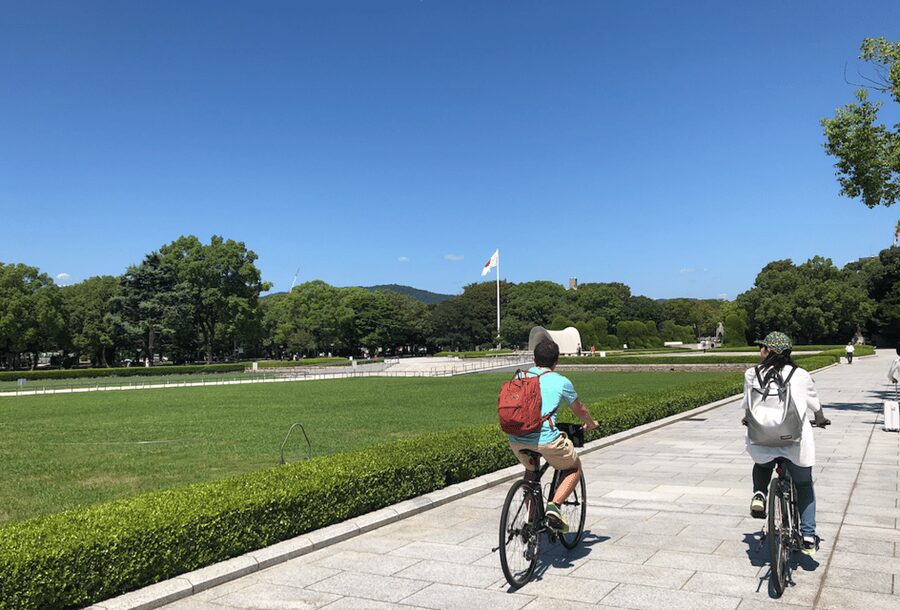
The big promise is simple: the route is completely flat, and the tour is suitable for anyone who can ride a bike. Reviews back this up by repeatedly calling out how safe and easy the experience feels, and how often the route avoids stressful road riding.
Still, this is not a “no effort” activity. You need to be able to ride a bicycle comfortably for about 3.5 hours. If you have balance issues, knee problems, or trouble sitting for long stretches, you might find it tiring even on a flat route.
The tour also has clear limits:
- Not suitable for children under 12
- Not suitable for pregnant women
- Not suitable for people with back problems or heart problems
- Not suitable for people under 140 cm (4 ft 6 in)
- Not suitable for people with pre-existing medical conditions
If any of those apply to you, it is better to choose a different way to see Hiroshima that is easier on your body.
On the positive side, the bike options help. Step-throughs make mounting easier. E-bikes give you extra support without changing the fact that the route is flat. Child-sized bikes exist too, but since the minimum age is 12, they are still for the right age group.
Price and value: how $70 stacks up for this kind of day
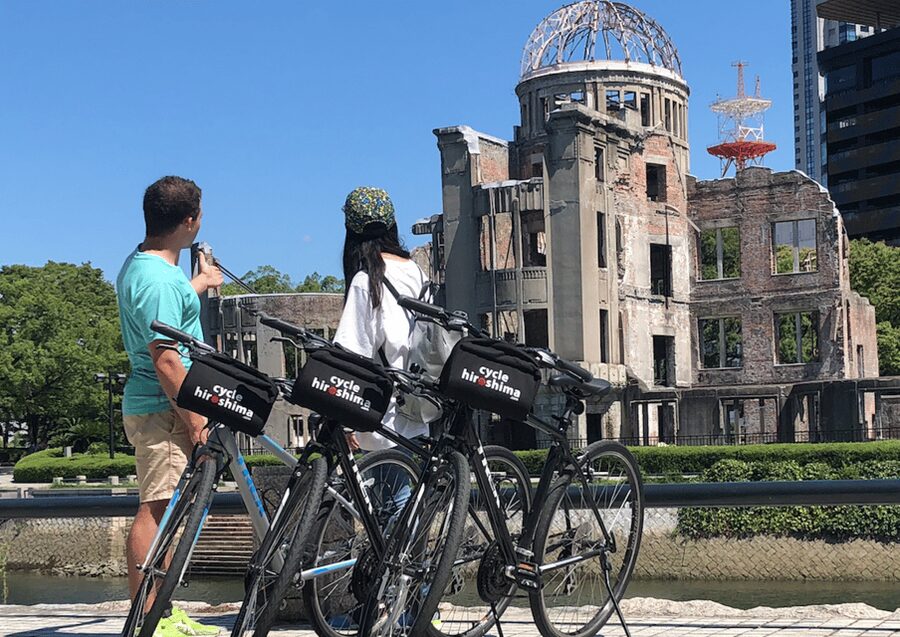
At $70 per person for 210 minutes, this is not a “budget only” activity. But it is also not overpriced for what you get.
Here is what is included:
- English-speaking guide
- High quality bike rental and helmet
- Bottled water
- Entry to Shukkei-en Garden
When a tour includes the bike, helmet, guide time, and garden admission, you are really paying for access and interpretation. The guide is not just pointing at buildings. People frequently mention that guides explain the atomic bombing and Hiroshima’s recovery from careful angles, sometimes with personal family perspective. That kind of storytelling is hard to replicate on your own unless you are willing to do a lot of independent reading and arranging.
Also, the tour hits several top landmarks in one outing. Without a bike, that would mean more walking and more time spent maneuvering between sites. With this format, you get movement, comfort, and enough time at each stop to make it feel meaningful.
For $70, I think the “win” is convenience plus guided context. You are buying both the transportation and the narrative, and you get them in a time window that fits a normal visit.
What the guides do right, based on real experiences you can borrow
If you care about how the tour feels, not just what it includes, pay attention to guide style. Across many departures, guides are praised for being engaging story tellers, taking care with safety, and answering questions patiently.
Names that show up again and again in traveler reports include Miyu, James, Aimee, Awais, Ehsan, Ali, Hasan, Levi, Melissa, Alex, and Ihsan. Beyond the names, the pattern is clear:
- Guides often stop frequently for information and photo moments
- Breaks happen when the day gets hot or the weather turns
- Explanations connect Hiroshima’s monuments to real events and to how the city moved forward
One more helpful detail: in some departures, guides have offered extra time for additional sites or extended the tour when the group was ready. You cannot count on an extra hour every time, but it signals that the guides care about the experience, not just clocking out.
Practical tips so the ride stays comfortable and the sights land
A few small choices will make a big difference on a guided bike day.
- Wear comfortable shoes and clothes. You will be on the bike for stretches, then walking at stops.
- Bring a water habit. Bottled water is included, but staying consistent with sips helps, especially in warmer months.
- Arrive a little early for fitting. You get more benefit from the tour when the bike size feels right from the start.
- Bring questions. If something about the bombing, the memorials, or Hiroshima’s rebuilding doesn’t make sense, ask. This is exactly the kind of question time guides are set up for.
- Plan for weather. The tour requires good weather. If conditions are poor, you will be offered an alternative date or a full refund.
One more thing: this is history with real emotional weight. You do not need to force a reaction. Just let the explanations and your own pace do the work.
Should you book this Hiroshima bike tour?
Book it if you want a smart way to see Hiroshima’s top sites in a tight time window, without exhausting yourself on foot. It is a strong fit if you like guided interpretation, want to understand what you are seeing at Peace Memorial Park, and you prefer a comfortable, flat bike route.
Skip or reconsider if you cannot ride comfortably for about 3.5 hours, if any of the health and age limits apply, or if you prefer to go at your own pace without a set route and stop order.
If you are debating between walking tours and this bike format, I would lean toward the bike tour. Not because it makes history “easy,” but because it makes the logistics easier, which helps you stay focused on what the places mean.
FAQ
Where does the tour meet?
The meeting point is Cycle Hiroshima HQ. The shop has a big sign saying Cycle Hiroshima at the front.
How long is the bike tour?
The duration is 210 minutes, about 3.5 hours.
What sights are included?
You’ll visit Hiroshima Peace Memorial Park area monuments including the Atomic Bomb Dome, then go to Gokoku Jinja and Hiroshima Castle grounds, and finish at Shukkei-en Garden.
Is Shukkei-en Garden admission included?
Yes. Entry to Shukkei-en Garden is included in the tour price.
Is the ride difficult?
The route is completely flat and suitable for anyone who can ride a bike.
What’s included in the price?
Included items are an English-speaking guide, high quality bike and helmet rental, bottled water, and entry to Shukkei-en Garden.
Do I need hotel pickup or drop-off?
No. Hotel pickup and drop-off are not included, so you will need to get to the meeting point on your own.
What happens if the weather is bad?
This experience requires good weather. If it is canceled due to poor weather, you will be offered a different date or a full refund.
What health or age limits are there?
It is not suitable for children under 12, pregnant women, people with back problems, people with heart problems, people under 140 cm, or people with pre-existing medical conditions.
Latest write-ups near Hiroshima
- An Amazing set of Cultural experience: Kimono, Tea Ceremony and Calligraphy★ 5.0 · 69 reviews
- Hiroshima: Private Walking Tour with a Local★ 4.6 · 70 reviews
- Hiroshima: Miyajima Island Half-Day Tour with Guide★ 4.9 · 71 reviews
- Kimono and Tea Ceremony in Miyajima★ 5.0 · 73 reviews
- Hiroshima and Miyajima Private Guided Tour★ 4.5 · 75 reviews
- HIROSHIMA ORIZURU TOWER Admission Ticket★ 4.6 · 75 reviews
- Hiroshima & Miyajima: UNESCO A-Bomb Dome & Itsukushima★ 5.0 · 76 reviews
- Hiroshima to Miyajima: Private Custom Tour with Ferry Ride★ 4.9 · 77 reviews
Cycling Tours, compared.
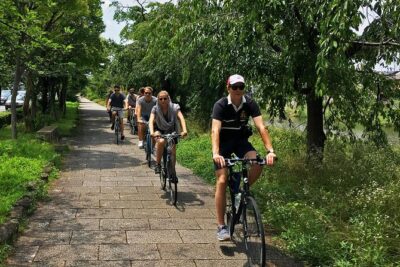
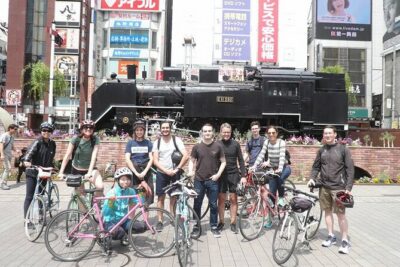
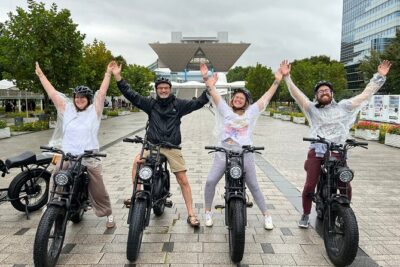

3h Tokyo E-Bike Tour: Hidden Gems, and Local Life with guide
Read our review →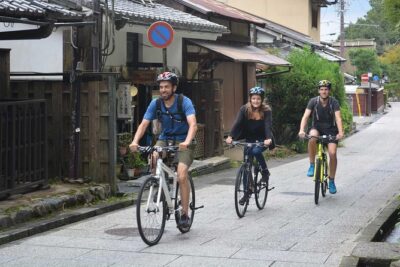
Arashiyama Bamboo Forest & Hidden Gems Bike Tour (Early Bird)
Read our review →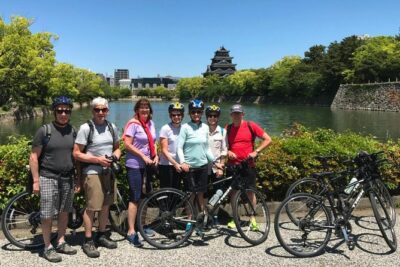
Hiroshima in a Nutshell: Morning Bike Adventure
Read our review →Browse the lists this tour appears in