
Reviewed · WALKING TOURS
Kamakura 6hr Private Walking Tour with Government-Licensed Guide
Kamakura is one of those places where the past keeps showing up in everyday scenery, and this private walking tour strings together classic shrines and temples with a government-licensed guide so the day makes sense fast. You’re walking in the steps of samurai-era history, then using local trains and buses like a pro.
I love the way the route is customizable. You pick 3 to 4 stops from a strong menu, so you can focus on what you care about most, whether that’s the Great Buddha, the hydrangeas, or bamboo and quiet Zen gardens. I also like that you get hands-on public transport help, not just a checklist of photo spots.
One possible drawback: this is a walking and transit day. Even with a guide managing the route, you should expect hills, temple stairs, and a steady pace, so build in comfy shoes and plan to choose your stops wisely.
Key highlights you will care about
- 3 to 4 sights, customized to your pace, so you do not feel herded through sacred places
- Public transportation guidance included, which is a big deal in a city built around trains
- Government-licensed English guides, with multiple guides noted for clear communication
- Iconic Kamakura anchors plus quieter temple options, including Zen temples and bamboo
- Port or hotel style meet-ups, handy if you’re in Yokohama on a cruise day
- Great value if you want less stress, especially when navigating trains, buses, and routes
Why Kamakura feels different, even on a short day
Kamakura sits just south of Tokyo, but it does not feel like an extension of the big city. It feels slower, more grounded. You get old shrine approaches, temple grounds with seasonal gardens, and even coastal hints when you choose the right stops.
This tour works because it connects Kamakura’s top touchstones without turning your day into an exhausting sprint. You are moving through the city on foot and by train or bus, so you see how people actually get around. It also helps that the guide can tailor your selection, meaning you can steer toward “big ticket” highlights or toward calmer Zen sites.
More Walking Tours in Yokohama:
- Yokohama Half Day Walking Tour with an Expert Local Guide
★ 4.5 · 22 reviews - Kyoto Geisha Walking Tour: Gion District & Hidden Gems
★ 4.7 · 3,273 reviews - Tokyo Tsukiji Fish Market Food and Culture Walking Tour
★ 5.0 · 3,184 reviews
The private, licensed guide part that actually changes your day
A private tour is not automatically better. The magic is in how the guide uses the time. Here, that shows up in three practical ways.
First, the guide meeting format is built for real travel days. You can have pickup offered, and meet your guide on foot within a designated area of Kamakura or Yokohama. In real terms, that means less time wandering and second-guessing where to stand.
Second, the guide experience comes through in pacing and clarity. In past tours, guides like Shinji, Masa, and Takako were praised for professional explanations and easy-to-follow English. Others, including Koba, Sam, Noripy, Hiro, Kenzo, Taka, and Kiro, were highlighted for managing public transport confidently and keeping the day smooth.
Third, you are not locked into a rigid script. The plan is described as customizable, and that matters because Kamakura offers both major landmarks and smaller temple corners. If you want more walking for views, you can lean that way. If you want fewer stairs, your guide can build the day around that.
Public transport, handled like a local skill, not a math problem
One of the strongest reasons to book a guide for Kamakura is transportation. The area is built around train lines, and getting from one temple area to the next can feel like a scavenger hunt if you are figuring it out alone.
Here’s what helps: transportation time is included in the 6 hours, and the tour is designed as a walking and public transport day. In plain terms, your guide does the navigation, you keep up when you can, and you learn enough that the system starts to click.
If you arrive at a cruise port, this can be especially useful. In reviews, guides such as Sam and Kenzo met people at Yokohama’s cruise terminal area and then led them onward by public transportation. That kind of hand-holding saves real energy on days when you want to start sightseeing, not figure out which train platform is correct.
How long it really takes: 6 hours and 3 to 4 stops
The tour is about 6 hours total, and you typically visit 3 to 4 sights. That is a good number for Kamakura because each temple area can take time, not just for photos, but for walking the approach roads, sitting for a moment, and taking in the grounds.
A smart way to think about it: your “time tax” is usually walking plus transit, not time spent at the main hall. This format helps you avoid the classic half-day problem where you see signs but do not actually experience the place.
Also, the guide is able to tailor the plan after reservation, since you can customize your choice. If you want more stops, extensions are mentioned as possible by contacting directly.
A change of pace from Yokohama:
- Authentic Sumo Experience in Tokyo: Enter the Sanctuary
★ 5.0 · 603 reviews - EVO, WRX, Skyline – JDM Night Run to Daikoku Car Meet
★ 4.9 · 478 reviews - Tokyo: Best Price Daikoku Parking Area JDM Car Meet
★ 4.9 · 192 reviews - Daikoku & Tokyo Private JDM Tour by 700HP R34 GT-R
★ 4.9 · 101 reviews
Stop-by-stop options in Kamakura, what to expect and what to watch for
You will choose a subset of these. Use the notes below to decide what fits your interests and your walking comfort.
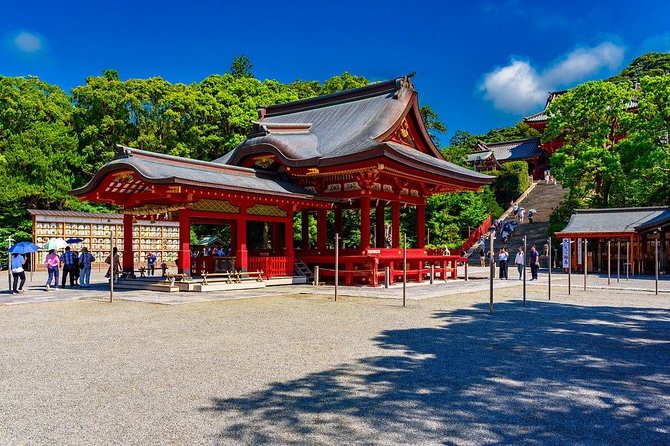
Tsurugaoka Hachimangu Shrine: the samurai-era starting point (free)
This is Kamakura’s big shrine anchor, dedicated to Hachiman, the patron god of the Minamoto family and samurai in general. It is a great place to begin because it frames the story of Kamakura’s rise.
Why you might love it: it feels ceremonial right away, and it sets the tone for the rest of your day.
What to watch for: it can be busy depending on the season and time of day, so arrive ready to move through crowds at a calm pace.
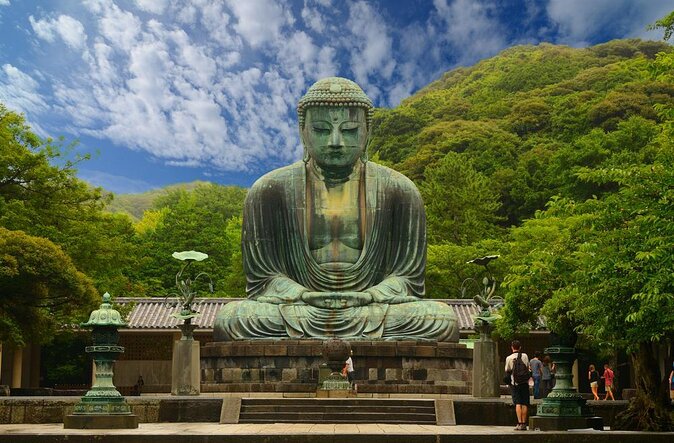
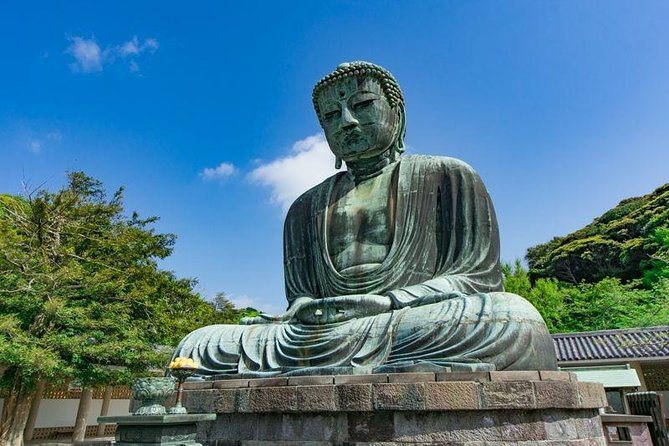
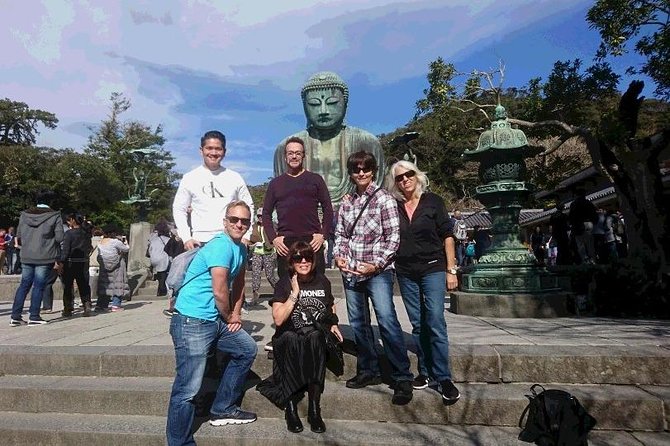
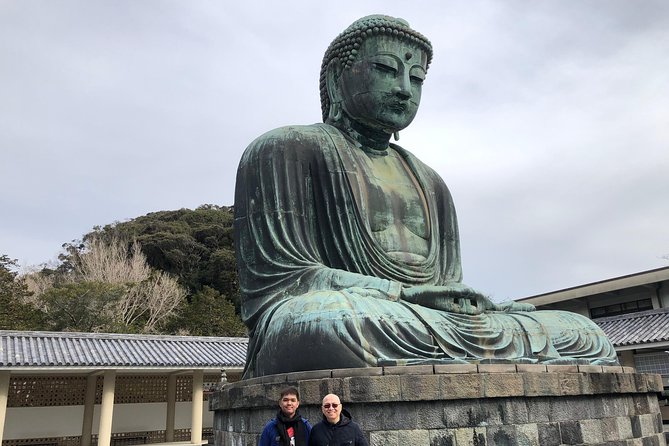
Kotoku-in and the Great Buddha: 11.4 meters of bronze impact (admission not included)
The Great Buddha of Kamakura sits on the Kotoku-in grounds. It’s tall, about 11.4 meters, and it is instantly recognizable once you’re near.
Why you might love it: this is one of those “you get it immediately” sights. Even if you are not a deep Buddhism fan, the scale does the talking.
What to watch for: it may take less time than you expect, so pair it with another stop nearby or with a temple area that has more walking time.
Hasedera Temple: ocean views plus a legendary mercy statue (admission not included)
Hasedera is known for its Kannon (goddess of mercy) statue, including an eleven-headed form. It’s also famous for views, including the chance to see the ocean from the higher parts around the temple.
Why you might love it: the combination of sculpture and the view factor.
What to watch for: it is not a flat stroll. Plan for stairs and uneven ground.
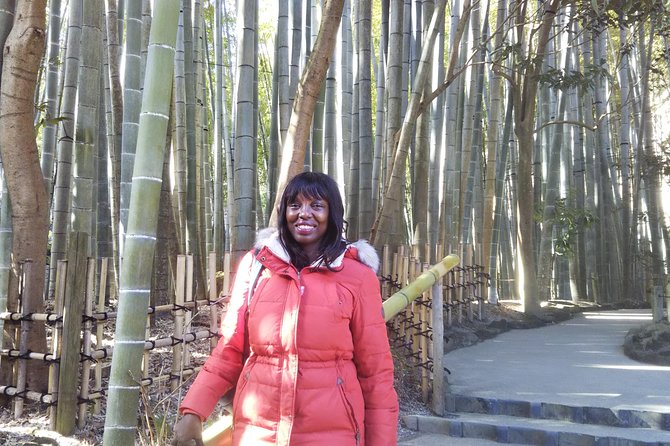
Hokoku-ji Temple: a bamboo grove that feels like it has a soundtrack (admission not included)
Hokoku-ji is especially known for the small bamboo grove behind the main hall, with over 2,000 bamboo stalks in the area.
Why you might love it: it offers a break from crowds, and the bamboo paths make for calm, atmospheric walking.
What to watch for: the best bamboo experience often depends on lighting, so if you can, time it so you’re not rushing.
Enoshima Island: island vibes with shrine stops (free)
Enoshima is a short train ride west of Kamakura and is connected by a bridge to the mainland. It’s described as a touristy island off the coast with attractions, including a shrine.
Why you might love it: it gives your day a coastal change of scenery.
What to watch for: “free” does not mean “no walking.” Expect island walking plus stairs in spots.
Engaku-ji: one of Kamakura’s key Zen temples (admission not included)
Engaku-ji is noted as one of the leading Zen temples in eastern Japan and the second of Kamakura’s “five great Zen temples.” It was founded in 1282 by regent Hojo Tokimune.
Why you might love it: Zen temple grounds can be a slow, soothing reset after busier shrine streets.
What to watch for: it may be quieter than you expect. That is a plus if you like calm, but go in knowing it is not a shopping street.
Kencho-ji: the oldest Zen temple in Kamakura (admission not included)
Kencho-ji is the number one of Kamakura’s five great Zen temples and is described as the oldest Zen temple in Kamakura, founded in 1253 during the Kencho era under Hojo Tokiyori.
Why you might love it: it feels like the roots of the Zen tradition in the area, and it pairs well with Engaku-ji if your schedule allows.
What to watch for: admissions are not included, so budget for entry if you want to go inside key areas.
Zeniarai Benten Shrine: coin washing for good luck (free)
This shrine is popular for the ritual meaning behind the name: zeniarai means coin washing. People wash their money in a spring, and it is said that money washed there brings luck.
Why you might love it: it is memorable in a fun, local way, and it’s a nice change from statue and garden focused stops.
What to watch for: it is described as a popular shrine, so go prepared for crowd movement.
Meigetsuin (Hydrangea Temple): flowers and Zen calm (admission not included)
Meigetsuin is known as Hydrangea Temple because hydrangea blooms are abundant on the grounds. It’s a Rinzai Zen temple founded in 1160.
Why you might love it: if your timing matches hydrangea season, this is a very visual stop. Even outside peak bloom time, it can still deliver calm temple atmosphere.
What to watch for: admissions not included, so check what you want to access.
Ankokuronji: a Nichiren foundation you can plug into a hill walk (admission not included)
Ankokuronji is a Nichiren sect temple along Kamakura hills. It’s noted that Nichiren founded it around 1253 when he first came to Kamakura.
Why you might love it: if you enjoy learning how different Buddhist branches took shape, this adds a distinct angle.
What to watch for: hill locations mean more walking and potentially steeper paths.
Jomyo-ji: Ashikaga-influenced Zen in the eastern hills (admission not included)
Jomyo-ji is described as a Zen temple in eastern Kamakura hills, founded by the influential Ashikaga family.
Why you might love it: it can feel more “temple grounds” than “big postcard,” especially when paired with larger anchors earlier in the day.
What to watch for: it is one of the hill-hopping stops, so keep your energy for the final climb segments.
Zuisen-ji: calm Zen in a narrow valley (admission not included)
Zuisen-ji is in a narrow valley, surrounded by wooded hills, and is described as a branch temple of Engaku-ji. In a tour story I heard, this kind of remote-feeling temple was praised for a calm atmosphere and flowers.
Why you might love it: this is where you often get that quiet, leave-your-phone-silently feeling, with shade and greenery.
What to watch for: the remoteness is a feature, but it also means you need comfortable shoes.
Myohonji: Nichiren along the southeast hills (admission not included)
Myohonji is another Nichiren sect option on the southeastern hills, founded in 1260 by Hiki Yoshimoto.
Why you might love it: it keeps your day varied, especially if you already did a Zen-heavy stretch.
What to watch for: hill terrain again, so pair it with an easier stop if you think you will tire.
Jochiji Temple: Rinzai-linked branch of Engaku-ji (admission not included)
Jochiji is described as the number four of Kamakura’s five great Zen temples and a branch temple of the Engaku-ji school of the Rinzai sect.
Why you might love it: good if you like “family tree” temple connections and want multiple stops in the same spiritual ecosystem.
What to watch for: the point is breadth, not speed, so do not cram too many similar hill temples on the same day.
Tokeiji Temple: a small Engaku-ji branch (admission not included)
Tokeiji is a small branch temple of the Engaku-ji school within Rinzai Zen. It is described as being just a few hundred meters from Engaku-ji on the opposite side.
Why you might love it: it can act as a breather stop between larger temple areas.
What to watch for: since it is small, you want it as part of a balanced route, not as the only stop you choose.
Jufukuji Temple: branch temple of Kencho-ji, linked to Masako (admission not included)
Jufukuji is the number three of Kamakura’s five great Zen temples and a branch temple in the Rinzai sect’s Kencho-ji school. It was established by order of Ma Masako, Minamoto Yoritomo’s wife.
Why you might love it: it adds a named historical figure connection, not just architecture.
What to watch for: again, budget time for walking around grounds.
Eishoji Temple: the only surviving nunnery in Kamakura (admission not included)
Eishoji is described as the only surviving nunnery in Kamakura, located near Tsurugaoka Hachimangu. It was founded in the early Edo period by a woman connected to the Tokugawa family.
Why you might love it: it’s a distinctive category stop, not just another hall and gate.
What to watch for: keep it in your plan if you like social and human-history angles behind temple traditions.
What about the extra Kamakura street life and snacks?
This tour description points to the old Komachi shopping street area and classic local snacks like Hatosabure, dove-shaped biscuits. If your guide includes time near the shopping lanes, you’ll likely get a chance to stop for food without breaking the day.
Also, one of the charming details tied to the area is the chance to write a wish on an oyster shell. That kind of ritual is small, but it makes your shrine stop feel personal instead of just observational.
If food is a priority, plan it into the “between stops” moments. Lunch is not included, but you can use breaks to keep energy steady for walking.
Price and value: where $155.22 makes sense
At $155.22 per person for a private 6-hour walking tour, the question is not just cost. It’s what you buy with that price.
You get a licensed English-speaking guide, private time tailored to your 3 to 4 selected sights, and a structure that includes walking plus public transit with timing built in. You also get a mobile ticket and the guide entry fees are covered for sights listed under what to expect.
What is not included is just as important. You will not have transportation fees, entrance fees, lunch, or personal expenses covered. So if you choose multiple paid-entry temples, your total day cost goes up.
Where this tour tends to shine in value is when you want:
- Less confusion on trains and buses
- Better explanations during the time you are already spending walking
- A route that matches your interests without wasting time hopping randomly
If you are traveling with older relatives or someone who needs extra help staying oriented, the guide support is a big deal. In reviews, that kind of care was specifically praised, including help for an elderly parent and support for a husband with hearing aids.
Practical tips so you enjoy the walking
Here’s how to set yourself up for a smooth day.
- Wear shoes you can trust on temple steps and uneven paths.
- Pick only 3 to 4 sights if your feet are average, 4 if you know you handle hills well.
- If hydrangeas matter to you, consider season when choosing Meigetsuin.
- If bamboo calm sounds perfect, plan Hokoku-ji as one of your stops, then balance it with either a major icon like the Great Buddha or a story-driven Zen site like Kencho-ji.
- Keep your appetite for snacks and street stops. Hatosabure and Komachi street browsing can fit naturally into the gaps.
And one small mindset shift helps: treat the transit segments as part of the experience. The day is designed so you learn the system while still getting the history.
Who this tour fits best
This is a strong fit if you:
- Want a private, English-speaking guide who can explain what you are seeing on the spot
- Prefer a set of high-impact stops instead of a rushed checklist
- Like using public transport and want help doing it confidently
- Travel with family members who appreciate pacing and guidance, not just monuments
It may be less ideal if you:
- Want a fully car-based itinerary, since this is a walking and public transport format
- Have very limited mobility and cannot handle hills or temple stairs, because the route includes walking between areas
Should you book? My straight answer
Book it if you want your Kamakura day to feel organized, calm, and meaningful, not stressful. The private licensed guide plus public transit help is the core value, and the stop customization helps you avoid wasting time.
Skip it only if you already know Kamakura transit well and feel confident navigating temple areas on your own with minimal explanations. Also skip if walking is a major concern, since this is designed around steps and hills.
FAQ
How long is the Kamakura private walking tour?
It is about 6 hours.
How many sights will we visit?
The tour is described as customizable, and you can view 3 to 4 sights.
Is pickup available?
Yes, pickup is offered. Pick up is on foot, and you meet your guide within a designated area in Kamakura or Yokohama.
Is this tour private?
Yes. It is a private tour/activity, with only your group participating.
Is the guide entry fee included?
Guide entry fees are covered for sights listed under what to expect.
Are entrance fees included for temple and shrine visits?
No. Entrance fees are not included, along with transportation fees, lunch, and other personal expenses.
Do we use public transportation during the tour?
Yes. It is a walking and public transport tour, and transportation time is included.
Is lunch included?
No, lunch is not included.
Is the tour ticket mobile?
Yes, it includes a mobile ticket.
Can I cancel for a full refund?
You can cancel up to 24 hours in advance for a full refund. If you cancel less than 24 hours before the start time, the amount paid is not refunded.
Is the tour suitable for most travelers, and are service animals allowed?
Most travelers can participate, and service animals are allowed.
Latest write-ups near Yokohama
- Yokohama Half Day Tour with a Local Expert Guide★ 4.0 · 20 reviews
- Yokohama Private Food Tours with a Local: 100% Personalized★ 4.5 · 21 reviews
- Yokohama Private Tour with a Local: Highlights & Hidden Gems★ 4.5 · 21 reviews
- Yokohama Private Tour★ 5.0 · 21 reviews
- Yokohama Full Day Tour with a Local Expert Guide★ 4.3 · 23 reviews
- Yokohama and Kamakura 6hr Private Trip Government-Licensed Guide★ 5.0 · 25 reviews
- Tokyo Full Day Tour with Licensed Guide and Vehicle from Yokohama★ 5.0 · 26 reviews
- Daikoku & Tokyo JDM Night Tour in R34 or TopSecret R35 GT-R★ 4.8 · 27 reviews
Walking Tours, compared.
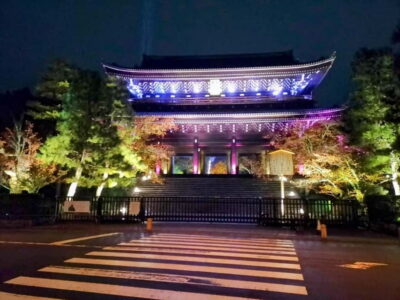
Kyoto Geisha Walking Tour: Gion District & Hidden Gems
Read our review →
Tokyo Tsukiji Fish Market Food and Culture Walking Tour
Read our review →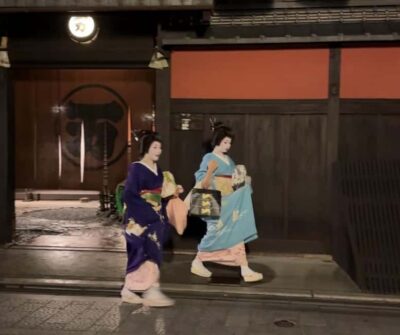
Gion Magical Night Walking Tour with Geisha Trivia
Read our review →
Imperial Palace and Shogun Historical Walking Tour
Read our review →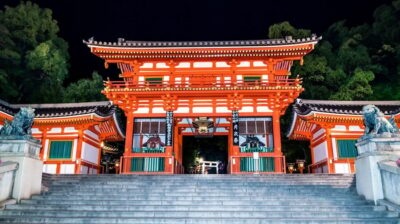
Gion Geisha District Walking Tour – Stories of Geisha
Read our review →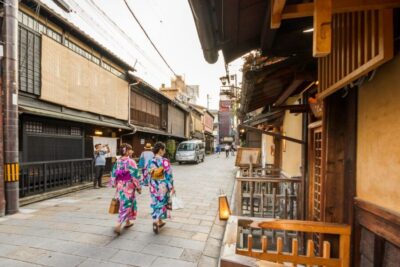
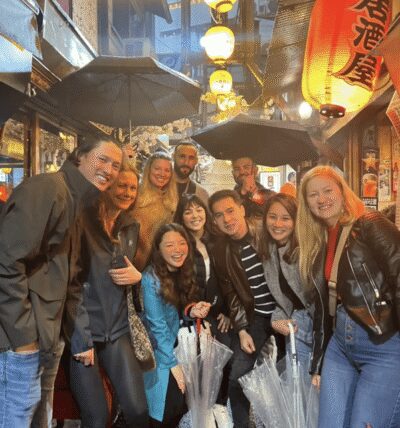
Shinjuku Local Bar and Izakaya Guided Walking Tour
Read our review →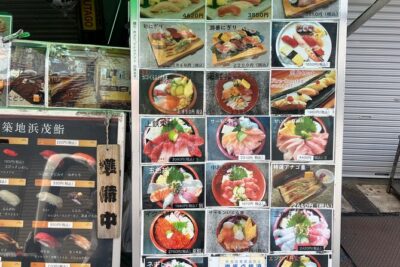
Browse the lists this tour appears in