
Reviewed · DAY TRIPS IN OSAKA
Kyoto and Nara Day Trip from Osaka
Kyoto and Nara in one long day is the kind of plan that either feels genius or feels like a sprint, depending on your travel style. What makes this one interesting is the mix of guided World Heritage stops and fast rail transfers that keep you from spending your morning figuring out trains and tickets.
I like that you get a professional English-speaking guide who can give you the big picture fast. I also like the way guides such as Momo and Hatchi keep the group moving while still sharing stories that make each site easier to understand.
The trade-off is time. You hit major highlights with limited minutes per stop, and if you want slow wandering or lots of photos without pressure, this may feel rushed.
Key things to know before you go
- Shinkansen travel without reserved seats means you are boarding, not picking seats you love
- Nijo Castle, Kinkaku-ji, and Kyoto Imperial Palace are the core Kyoto hits, with set time boxes for each
- Imperial Palace closure plan swaps in Kitano Tenmangu Shrine (or another backup if needed)
- Kasuga Grand Shrine includes the special sanctuary area when access is available
- Lunch is optional and menu options are fixed based on the choice you make at booking
How this Osaka-to-Kyoto-and-Nara plan really works
This is built for people staying in Osaka who want Kyoto and Nara on the same day without planning logistics. You meet near Hotel Granvia Osaka at 7:15 am, and you end near Osaka-Namba Station around 6:30 pm, with no hotel drop-off.
You start with train travel toward Kyoto. The route uses JR for the first leg to Shin-Osaka and then Shinkansen between Shin-Osaka and Kyoto, and seats are non-reserved, so you will be taking what you can get when the doors open. Back from Nara, you return by Kintetsu to Osaka-Namba with non-reserved seating, and an assistant helps you with the station-to-station direction.
Plan your day around a full schedule. Even though it is “one day,” it feels like you are doing two tight half-days, Kyoto in the morning and Nara in the afternoon, with transit time and crowd time baked in.
More Day Trips in Osaka
- From Kyoto/Osaka: Kyoto Top Highlights 1-Day Guided Bus Tour
★ 4.5 · 714 reviews - From Osaka or Kyoto: Kyoto and Nara 1-Day Bus Tour
★ 3.5 · 141 reviews - Hiroshima & Miyajima 1 Day Bus Tour with Bullet Train Tickets
★ 4.5 · 105 reviews
Morning transfer: your first test is the non-reserved seats
The transport approach is practical, but it changes how you should prepare. Because the trains use non-reserved seats, seating is not guaranteed. If you are traveling with heavy luggage, bring a compact bag, and keep an eye on where the group forms at boarding time.
The tour also notes that bus or JR connections may be used depending on participant numbers and conditions. Translation: expect a bit of “flex,” not a perfect script.
You’ll walk to a tour desk area in Kyoto, then ride by bus to the first stop. In other words, the tour uses both trains and buses, so you should wear shoes that handle station stairs and walking speed changes.
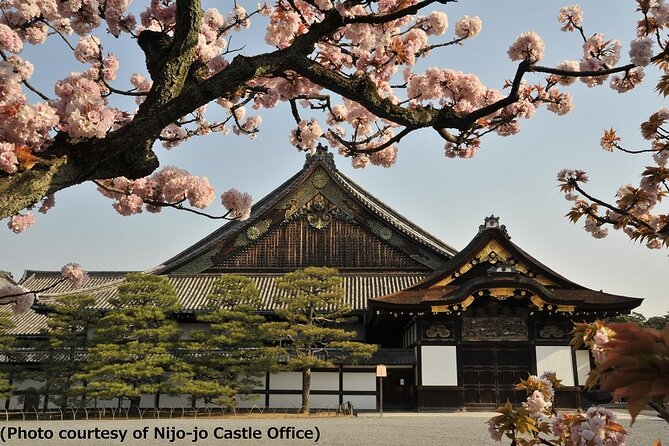
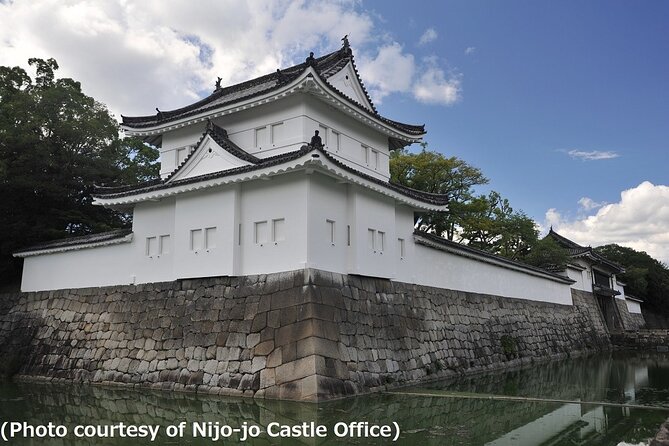
Nijo Castle: Tokugawa prestige in a fast 50-minute visit
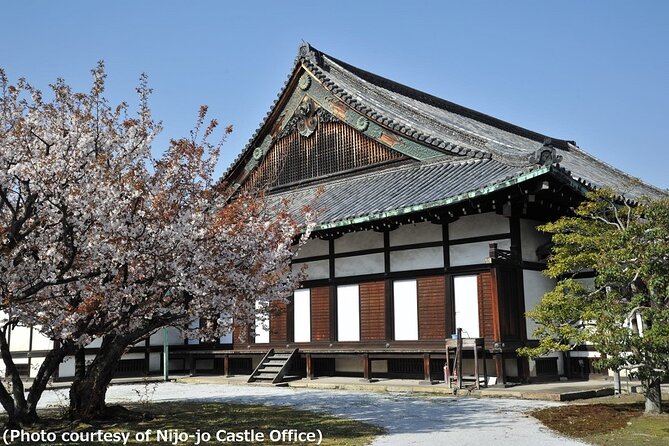
Nijo Castle is a World Heritage site, completed in 1626, tied to the Tokugawa shogun and designed to support the Kyoto Imperial Palace. The key is the contrast: the exterior gives you that serious, fortress-like feeling, while the interior is where the opulence shows up.
You get about 50 minutes here, including the admission ticket. That is enough time to see the main highlights, but not enough time to linger in every corridor. If you like details, you will have to choose what to look for first, like where the castle’s decorative emphasis shows up or which interiors feel most impressive to you.
One practical tip: you do not want to lose the group early. In a castle, you can get curious, then suddenly you are ten minutes behind, and then the rest of the day becomes a catch-up game.
Kinkaku-ji Golden Pavilion: the pond, the gold, and the crowds
Kinkaku-ji, the Golden Pavilion, is the Kyoto stop most people picture first. It is also World Heritage, known for wooden architecture covered in thin layers of pure gold and set by a pond.
You have around 45 minutes here. That sounds short, but it is designed around what the site needs: you will want time for the exterior views from the key angles, then time to move through the queue and platform areas without getting stuck. This is one of the easiest places to take great photos, but it is also one of the easiest places to feel squeezed by other visitors.
At this stop, I’d focus on one job: find a viewing point you like, get your photos, then move. Trying to do everything at once is how you run out of time.
A change of pace from Osaka:
- Osaka Go Karting Tour with Funny Costume
★ 5.0 · 2,658 reviews - Osaka Castle: Museum and Tower Entry Ticket
★ 4.5 · 2,380 reviews - Osaka: Shinsekai Food Tour with 13-15 Dishes at 5 Eateries
★ 4.8 · 2,204 reviews - Osaka Food Tour: 13 Dishes at 5 Local Eateries
★ 5.0 · 2,149 reviews
Kyoto Imperial Palace: best on the day it is open
Kyoto Imperial Palace is a major highlight and a very different vibe than the temple-and-castle rhythm earlier. You see the kind of palace style that is described as “pure and simple,” and you also hear about the emperor who lived there until about 150 years ago.
You get about 40 minutes, and admission is free on the tour plan. The schedule includes an important reality check: the palace is closed to visitors on Mondays, and also on days when there is an Imperial Household Agency event. If that happens, the tour goes to Kitano Tenmangu Shrine instead.
There’s a second backup rule too. If the closure falls on the 25th, the tour goes to Nishi Hongan-ji Temple. So if you have your heart set on the Imperial Palace specifically, check the day you are traveling and do not assume it will always be open.
Kasuga Grand Shrine: deer messengers and the special sanctuary area
Kasuga Grand Shrine is one of the best “Nara-style” experiences because it feels spiritual and local at the same time. It is a Nara Period shrine and a World Heritage site, and the connection to the deer matters here. The shrine notes that the Nara deer are thought to be the messengers of the shrine.
The tour allots about 1 hour and includes admission. A big plus is that the tour also enters the Main Sanctuary special visit area starting January 2025, when access is available.
If access to that special area is not possible due to events or operations, you will visit either the Kasuga Taisha Museum or the Todaiji Museum instead. That is a smart swap because you still get meaning out of the visit, even if you cannot do the main interior viewing portion.
Todai-ji Temple: the giant Buddha and a big wooden main hall
Todai-ji is the Nara anchor stop. It is World Heritage and known as a symbol of the Nara Period, and it includes one of the world’s largest wooden structures. The main hall is huge, and inside sits the bronze Great Buddha, plus there is emphasis on the surrounding lanterns and historical objects.
You get about 1 hour 10 minutes, with admission included. This is your “wow” moment, but it is also a stop where crowds can swell. If you want photos, do the widest, iconic shot first, then slowly work your way to a viewpoint that feels less packed.
Also, Todai-ji is often paired in your head with the later Nara Park deer moment. Here’s the trick: enjoy Todai-ji for scale and atmosphere, then go into Nara Park thinking about behavior, not just cuteness.
Nara Park and the deer behavior lesson
The tour includes Nara Park as part of the Kasuga and Todai-ji combo, and you get time around the Great Buddha area. The deer are famous for being friendly and for bowing when you feed them, and the tour experience includes the reality check that you should be firm.
If you act uncertain, deer can get pushy. If you say no clearly, the situation stays more manageable. You can buy deer crackers onsite, and you should treat the whole thing like a quick, controlled interaction rather than a free-for-all.
This matters because the deer are close to people and the tone in the park can shift fast when crowds surge. If you want a calmer moment, keep your group moving and do not let the deer game turn into a long detour.
Lunch options: choose based on what you actually want to eat
Lunch is only included if you select it during booking. The tour offers options, and you should pay attention to the one you choose because switching on the day is not available.
If you choose the With Lunch option, lunch is described as a Western-style set menu. Some people experienced it as more buffet-style in practice, and a few found it unexciting. If you care about traditional Japanese meals, this is the one area where expectations can be tricky.
If you choose the Indian Thali option, it is vegetarian-friendly with multiple curries (including bean curry, vegetable curry, and spinach and potato curry), vegetable pakora, yogurt, naan or roti, rice, salad, and a non-alcoholic drink.
If you choose No Lunch, you get free time to eat on your own around Kyoto Station. That can be a good compromise if you want more control over food choices, or if you’re picky.
What I’d watch out for: the “too much in one day” issue
The best part of this tour is the idea. You get major Kyoto and Nara sights without you handling transportation and ticketing. The downside is also the same idea: you are going to move a lot, and each site is time-boxed.
Some visitors noted the pace felt very fast at Kyoto stops and that exploration time can feel limited, especially for photos. That lines up with the structure: castles, pavilion photos, palace viewing, shrine entry, then temples, then deer and park time.
There is also a practical comfort factor in guided interpretation. Without individual headsets, it can be hard to hear clearly in large crowds, especially when the guide turns while speaking or when accents make it tricky at speed. If you know you struggle in noisy situations, consider using a “big picture” listening strategy: focus on the key themes, not every single word.
Finally, the group size can feel large depending on the day. Even if the tour lists a maximum of 40, the real-world experience at popular sites can still feel like a crowd. That makes it even more important to stick with your group and move when the guide moves.
Price and value: what you get for $198
At $198.15 per person, you are paying for three things: guided interpretation, admission tickets where included, and transportation between major areas. The tour includes admission fees and transportation costs, plus a national government licensed English guide interpreter.
So the value question becomes: are you buying time and organization? If you want to avoid planning and ticket headaches, you are paying to outsource that work. And because Kyoto and Nara have so many must-sees, it can be hard to fit them efficiently on your own in one day without losing hours to transit and queues.
If you are hoping for deep, slow, linger-around-it exploring, the price can start to feel steep because the time per stop is limited. In that case, you may get more satisfaction doing fewer sites and extending the day on your own.
My practical take: this is best if you want an efficient sampler of Kyoto and Nara landmarks and you like having a guide translate the big meaning quickly.
Who this tour suits best (and who might skip)
You’ll likely love it if:
- You are short on time in Japan and you want Kyoto and Nara in one day from Osaka
- You are a first-timer who likes a guided overview of famous sites
- You prefer not to plan the rail and ticket logistics yourself
- You appreciate professional storytelling, even when the pace is brisk
You may want to skip if:
- You want lots of free time at each attraction for photos, sketches, or quiet wandering
- You are sensitive to crowd noise and you rely on hearing every word
- You care a lot about traditional lunch experiences, since lunch options may not match what you hoped for
If your travel partner wants a slower style and you want a faster style, this is where conflict can happen. Better to agree beforehand that you are doing a highlights tour.
Should you book this Kyoto and Nara day trip from Osaka?
Book it if you want a guided, efficient first look at Nijo Castle, Kinkaku-ji, Kyoto Imperial Palace (or the shrine swap), Kasuga Grand Shrine, and Todai-ji without wrestling trains and admissions. It is also a good fit if you like clear structure and a guide who keeps the day on track, with examples of friendly guide personalities like Momo and Hatchi showing up in recent groups.
Hold off if you want a relaxed pace, long photo pauses, or a more traditional food experience at lunch. In that case, consider building your own day in Kyoto and Nara, or choosing a tour that gives more time per site.
If you do book, go in with one mindset: you are collecting highlights, not savoring every room like you have a week. That mindset turns the sprint into a win.
FAQ
How long is the Kyoto and Nara day trip from Osaka?
The tour duration is about 11 hours 15 minutes.
Where do I meet and where does the tour end?
You meet at Hotel Granvia Osaka at 7:15 am. The tour ends around 6:30 pm at Osaka-Namba Station. No hotel drop-off is provided.
What stops are included in the tour?
The tour includes Nijo Castle, Kinkaku-ji, Kyoto Imperial Palace (or an alternative if closed), Kasuga Grand Shrine, and Todai-ji.
Is lunch included?
Lunch is included only if you select a lunch option when booking. There is a With Lunch option and an Indian Thali lunch option. If you select No Lunch, you have free time to eat around Kyoto Station.
What happens if Kyoto Imperial Palace is closed?
Kyoto Imperial Palace is closed to visitors on Mondays (or the following day if Monday is a holiday) and on days with Imperial Household Agency events. On those days, the tour visits Kitano Tenmangu Shrine instead. If the closure day is the 25th, the tour visits Nishi Hongan-ji Temple.
What happens if Nijo Castle is closed?
Nijo Castle is closed on Tuesdays in January, July, August, and December. If it is closed, the tour visits Ryoan-ji Temple instead.
Are train seats reserved?
No. The seats are non-reserved for the trip from Osaka to Kyoto and for the trip from Nara back to Osaka, and seating is not guaranteed.
Who provides the English guidance?
The tour includes a National Government Licensed English guide interpreter. There is also an English-speaking assistant from Hotel Granvia Osaka to the Sunrise Tours Desk in Kyoto, and another assistant from Kintetsu Nara Station to Osaka Namba Station.
Can I cancel and get a full refund?
Yes. You can cancel up to 24 hours in advance for a full refund.
Latest write-ups near Osaka
- PRIVATE 6hr, Food tour from Osaka Castle, Kuromon, Dotonbori.★ 5.0 · 68 reviews
- 90 min Shared Handmade Udon Experience★ 5.0 · 70 reviews
- Ramen and Gyoza Cooking Class in Osaka Dotonbori★ 5.0 · 73 reviews
- Osaka: Sushi Making in Spacious Studio (SAME-DAY OK!)★ 5.0 · 75 reviews
- Osaka E-Bike Tour With A Local Guide★ 4.7 · 75 reviews
- 1.5〜2 Hours Traditional Kintsugi Work Shop in Namba Osaka★ 5.0 · 75 reviews
- Retro Osaka Street Food Tour: Shinsekai★ 4.5 · 77 reviews
- Osaka: Osaka Castle Guided Tour with Local Guide★ 4.7 · 78 reviews
Day Trips in Osaka, compared.
From Kyoto/Osaka: Kyoto Top Highlights 1-Day Guided Bus Tour
Read our review →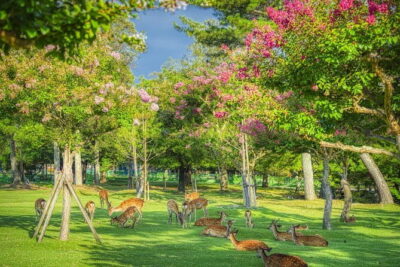
From Osaka or Kyoto: Kyoto and Nara 1-Day Bus Tour
Read our review →Hiroshima & Miyajima 1 Day Bus Tour with Bullet Train Tickets
Read our review →
Hiroshima and Miyajima Day Trip by Bullet Train
Read our review →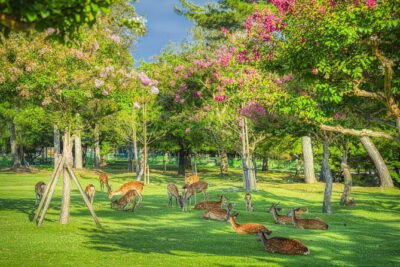
From Osaka/Kyoto: Kyoto & Nara Day Trip with Optional Lunch
Read our review →
1 Day Takoyaki Making and Osaka Castle Walking Tour
Read our review →Browse the lists this tour appears in