
Reviewed · MT FUJI TOURS
Mt. Fuji & Hakone Cherry Blossom private One Day Tour
Getting out of Tokyo to see Mt. Fuji and then move on to Hakone in one smooth day is what makes this tour feel different. You’re not bouncing between trains and bus schedules, and you get a full, scenic hit of lakes, shrines, and volcanic views.
Two things I really like about this setup are the private, air-conditioned vehicle and the convenient pickup and drop-off so your day starts and ends with less stress. One drawback to consider is that this is more of a car-and-driving experience than a guaranteed deep-dive history lesson, so you’ll want to set expectations about time for photos and explanation.
Key highlights worth your attention
- Fuji Subaru Line 5th Station at about 2,300 meters for big views (and a quick stop you can still enjoy even off climbing season)
- Oshino Hakkai with eight Fuji-fed spring ponds, drinkable water, and thatched-roof atmosphere
- Lake Ashi area time with views around Togendai, where the scenery is the main show
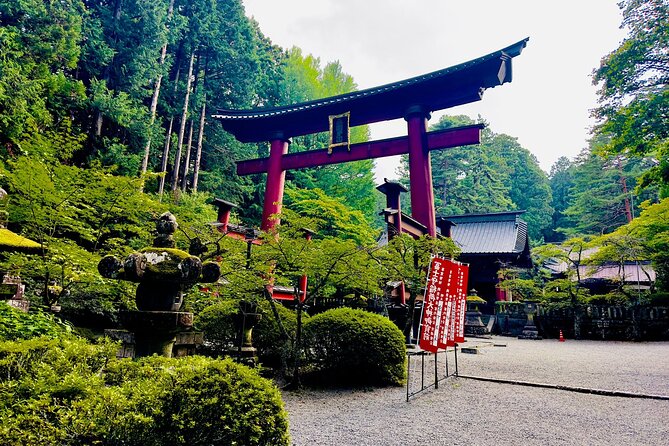
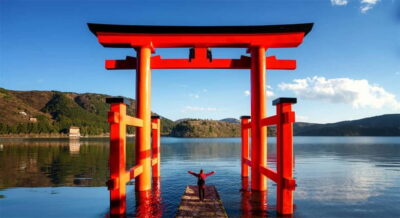
- Moto Hakone Shrine and its torii gate in the water, one of the most photogenic stops on the route
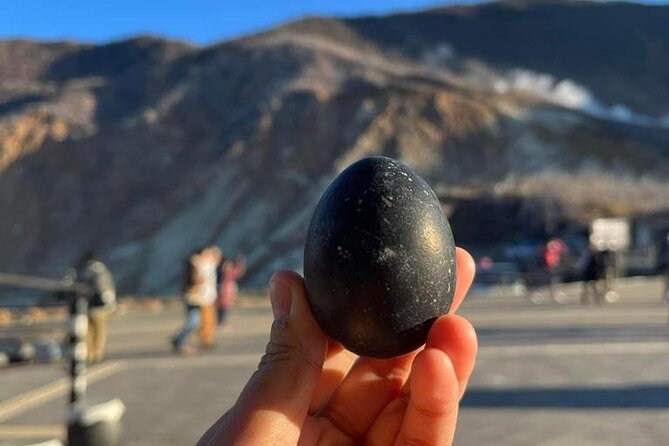
- Owakudani volcanic valley with sulfur fumes and the famous black eggs cooked right there
Why Mt. Fuji and Hakone together works so well in one day
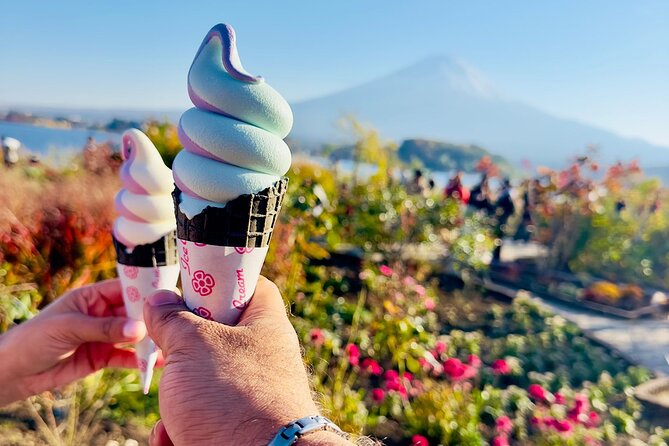
Mt. Fuji is already a big commitment when you’re based in Tokyo, and Hakone is its own trip. Bundling them makes sense if you want the classic photo points plus the surrounding nature without losing a whole day to transit.
I also like that the route is built around stops that are quick to reach and easy to enjoy in a timed day. You’re not spending your limited daylight hunting for the best bus line or wondering what time a view point closes.
If you’re traveling for spring scenery, keep in mind the day is organized around Fuji and Hakone highlights, not a guaranteed cherry-blossom itinerary. Still, spring is when the gardens and walking areas around Hakone tend to feel extra pleasant.
More Day Trips in Tokyo
- Mt Fuji and Hakone 1-Day Bus Tour Return by Bullet Train
★ 5.0 · 26,383 reviews - 1-Day Tokyo Bus Tour
★ 5.0 · 14,250 reviews - Mt Fuji & Hakone Cruise, Drum Show Bullet Train 1 Day from Tokyo
★ 4.0 · 7,413 reviews
How the day runs from Tokyo Station (and why timing matters)
This is a private one-day tour that runs about 10 hours. It starts at Tokyo Station and ends back at the same meeting point, which is handy when you don’t want to scramble for final transport.
The tour includes air-conditioned vehicle comfort and a hotspot on board, which is a nice touch for maps and translating signs while you’re moving between areas. You can also use the mobile ticket, so you’re not hunting for paper.
The real timing trick is that traffic and day closures can affect what you actually get to see. One of the sharper lessons from past experiences is that asking for an early start can be worth it, because some areas around the Fuji side can be limited until later in the afternoon when you’re on a tight schedule.
Fuji Subaru Line 5th Station: the best chance at epic views
Your first major scenic target is the Mt. Fuji Subaru Line 5th Station, about 2 hours on site. This is the most popular of the four 5th stations, and it’s also one of the easiest to access from Tokyo compared to the other stations.
At around 2,300 meters, the payoff is the view and the feeling that you’ve really left Tokyo behind. Even when you’re not climbing, the 5th station is a classic “this is real” moment, with Fuji and the surrounding area looking close and dramatic.
Two practical considerations to plan around:
- Access can vary in winter. The station is described as accessible almost year-round, but heavy snow can cause partial closures and seasonal route changes.
- During the main climbing period, the road can be closed to private vehicles (the data notes July 14 to September 10 in 2023). Since this is a private vehicle tour, you’re still going, but the local road rules are a reminder that conditions can change.
One more cost detail: the tour lists a Subaru line fee of $15 USD as not included. That small add-on matters for budgeting.
Oshino Hakkai: eight ponds fed by Fuji snowmelt
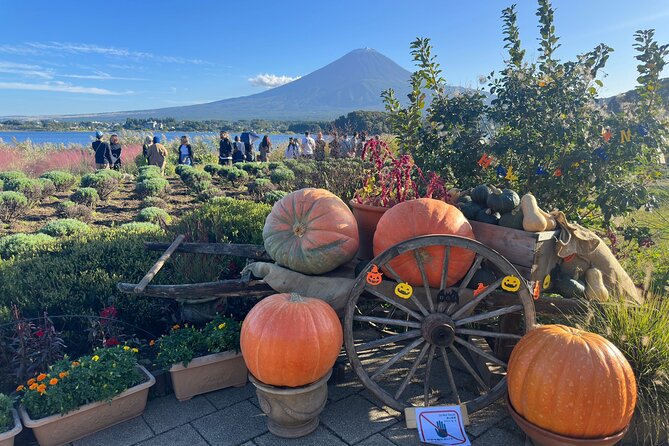
After the Fuji viewpoint, the tour moves to Oshino Hakkai, the famous eight spring ponds area. Expect about 30 minutes here, and admission is free.
What I love about Oshino Hakkai is the water. The ponds are fed by snowmelt from Mt. Fuji that filters through volcanic rock, which is why the water is so clear and why you can get crisp reflections on clear days.
The area also has a traditional feel. You’ll see thatched-roof houses, little shops, and you can even drink the spring water right from the source area. It’s one of those stops where you can do a slow walk, take photos, and still feel like you “got” the place, even with limited time.
If you’re short on time, focus on the pond viewpoints rather than trying to sprint from shop to shop. The charm is in standing still for a minute and letting the scene come together.
More Mt Fuji days:
- Tokyo Mt Fuji 5th St & Hakone Cruise Bus Tour w/Bullet Train
★ 4.4 · 5,024 reviews - From Tokyo: Mount Fuji Full-Day Sightseeing Trip
★ 4.5 · 4,970 reviews - Tokyo: Mt. Fuji Tour, Hakone Ropeway, Owakudani, Lake Ashi
★ 4.7 · 4,002 reviews - Tokyo:Mt.Fuji,Kawaguchiko Oishi Park,Arakurayama Sengen Park
★ 4.4 · 2,682 reviews
Lake Ashi and Togendai: Hakone’s waterline views
Next up is Lake Ashinoko, also called Lake Ashi, with about 2 hours in the area. This is one of Hakone’s signature scenery stops, and it’s also tied to the famous Togendai area near the lake.
Lake Ashi is a crater lake formed after a volcanic eruption roughly 3,000 years ago, so it has that big-caldera feeling even though you’re just looking across the water. On clear days, the Fuji view can be stunning from the lake side, which is why this stop keeps showing up on the classic Hakone route.
The tour data says Togendai is a popular starting point for the ascent to Mt. Fuji summit via the Fujisan Gotemba Trail, which gives the area a “mountain energy” even if you’re not hiking that day. You can also find optional activities around the lake, like boat cruises and hot springs, but your time here is structured so you’re not required to do any one specific thing.
Practical tip: plan to be flexible about how much you can see of Fuji. On some days it’s sharp and clear, and on others you’ll mostly enjoy the lake and the mountain atmosphere around it.
Moto Hakone Shrine: the torii gate in the water
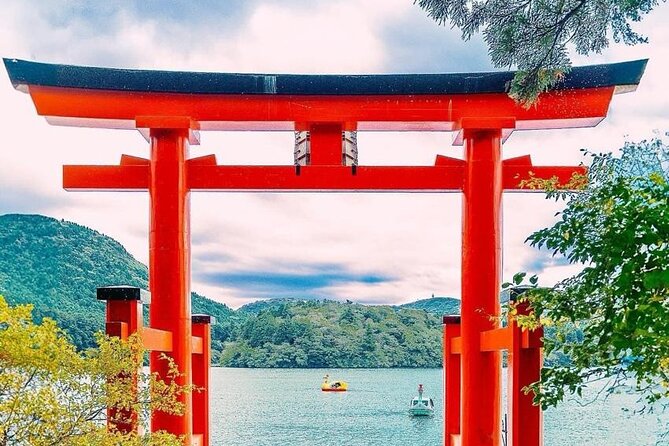
For a quick but very memorable photo stop, you’ll visit Hakone Moto Tsumiya Shrine, also known as Moto Hakone Jinja, on the shores of Lake Ashi. You get about 30 minutes, and admission is free.
This is the shrine with the torii gate standing in the water, often called the torii of peace. It’s a simple scene, but it’s dramatic because the gate lines up with the lake and the surrounding mountains.
What makes it special is the setting. The shrine is tucked into a forested area, and you’re right on the water edge, so you get both the quiet shrine atmosphere and the open view of the lake.
If you want photos without stress, arrive ready to shoot quickly. The torii scene is the moment people come for, and 30 minutes goes fast once you’re walking, taking pictures, and checking angles.
Owakudani volcanic valley: sulfur fumes and black eggs
Then the day turns more wild with Owakudani (Owakudani) Valley. You’ll spend about 1 hour here, and admission is free.
Owakudani is around a crater created during the last eruption of Mt. Hakone about 3,000 years ago. Today it’s an active volcanic zone, so you can experience sulfurous fumes, hot springs, and hot rivers in the area.
This is also where the classic “only in Hakone” food shows up. The area sells eggs cooked in the hot spring pools, with shells blackened by sulfur. Eating one is said to prolong life by seven years, which is the kind of local legend you either love or laugh at, depending on your mood. I’m in the love camp.
The other bonus is the possibility of a Fuji view. The tour data notes good views of Mt. Fuji on clear days, but even when Fuji is hidden, the volcanic atmosphere is the main draw.
Gotemba Premium Outlets: shopping time with a mountain backdrop
To wrap up the day, you’ll have time at Gotemba Premium Outlets, about 2 hours. Admission is listed as free.
This is a major outlet mall near the base of Mt. Fuji in Gotemba City, and it has a lot going on: around 300 stores, a food court, a 50-meter-high Ferris wheel, a hotel, and a public hot spring bath. The pricing isn’t described as dirt cheap, but it’s said to be better on average than regular retail in Japan.
If shopping isn’t your plan, you can still use this time for a meal break and a reset. It’s often easier to find familiar snack options here than it is to hunt around late in the day after a full schedule.
Price and value: is $450 per group fair?
The price is $450 USD per group up to 5 people. That’s a private day, so the math depends on whether you’re splitting the cost with family or friends.
For a group of two, you’ll feel the price more. But if you’ve ever tried to piece together Fuji and Hakone in one day using trains, buses, and timed connections, you’ll understand why private transport costs this much. The value is not just comfort. It’s buying back decision fatigue, route planning, and the risk of missed connections when schedules get tight.
For a group of four or five, the value gets easier to justify. You’re paying for a dedicated vehicle and a day plan that hits multiple high-demand sights without turning the trip into a logistics test.
One budgeting note: even though the tour says all fees and taxes are included, the data lists two extra costs as not included:
- Fuji Subaru line fee (listed as $15 USD)
- Hakone Open Air Museum fee (also listed as $15 USD)
So if Hakone Open Air Museum is part of your ideal day, plan for that extra admission.
The guide versus driver reality: what to expect on the ground
This is where I’d be honest with you before you book. Some past experiences describe the day as a car and driver arrangement more than a full-on guided tour with deep storytelling. That doesn’t mean the day is bad, but it changes what you should ask for.
The positive side is that professionalism and kindness can make the day feel smooth. In at least one case, a driver named Rezi was able to take people to less crowded spots and still allow enough time for photos. That’s the kind of practical care that matters when you want good pictures without feeling rushed.
On the other hand, there are also negative reports about driving style and a hurried vibe. One complaint described recklessly driving and pushing the schedule hard, especially with kids in the car. That’s not something you should ignore.
How to protect yourself:
- Clarify what you want at the start, especially time for photos at the top views and calmer stops at shrines.
- If you have kids, request a gentle pace from the beginning.
- If you want more cultural context, ask directly how much explanation you’ll get versus just route driving.
With clear expectations, private car days can be great. With unclear expectations, they can feel like “we drove around” instead of “we experienced Japan.”
Who this tour is best for (and who should look elsewhere)
This tour fits couples, families, and small groups who want to cover a lot without sweating train transfers. The private format also helps if you want flexibility around photo timing.
It can be especially useful if your group includes people who don’t want long walks up and down between viewpoints. The itinerary is mostly structured around short, timed stops in scenic areas.
If you’re the type who wants a rigorous, lecture-style guide built around history and cultural details, you might prefer a tour that explicitly promises that kind of narration. For this one, you’ll get the sights and the logistics support, and you may need to ask more for explanations.
Should you book the Mt. Fuji and Hakone private one-day tour?
I think it’s a strong choice if your priority is one-day convenience and seeing the big hits: Fuji at the Subaru 5th Station, Oshino Hakkai, Lake Ashi, Moto Hakone Shrine, Owakudani, and then some downtime at Gotemba. The schedule is designed to keep the day moving while still giving you time at each key spot.
Book it if:
- You want a private vehicle so you can relax and focus on views.
- Your group is at least three people, so the $450 cost splits better.
- You’re happy to guide yourself with signs and ask questions when you want more context.
Skip it, or at least reconsider, if:
- You expect a guaranteed history-forward guided tour, not just driving and stop time.
- Your group is very sensitive to pace and driving style, because quality can vary.
If you do book, your best move is setting expectations on day one. Ask for photo time, a comfortable pace, and how you’ll handle busy traffic. Get that right, and this day can feel like the easiest way to earn those classic Mt. Fuji and Hakone photos.
FAQ
How long is the Mt. Fuji and Hakone one-day tour?
The tour runs for about 10 hours.
What is the group size for this private tour?
It is a private tour for your group, with a maximum group size of up to 5 people.
Where do we meet at the start, and where do we end?
The meeting point is Tokyo Station (1 Chome-9 Marunouchi, Chiyoda City, Tokyo 100-0005, Japan), and the activity ends back at the meeting point.
Is hotel pickup offered?
Yes, pickup is offered, and the tour includes pickup and drop-off from your hotel for convenience.
What is included in the price?
The tour includes all fees and taxes, an air-conditioned vehicle, a hotspot on board, and private transportation.
What is not included in the price?
Coffee and/or tea, lunch, and alcoholic beverages are not included. Also not included are the Fuji Subaru line fee ($15 USD) and the Hakone Open Air Museum fee ($15 USD).
Is the Mt. Fuji Subaru Line 5th Station fee required?
The tour lists the Subaru line fee as not included, so you should plan to pay the $15 USD fee.
Are the main stop admissions included?
Oshino Hakkai, Lake Ashinoko, Moto Hakone Shrine, and Owakudani are listed as free. The Hakone Open Air Museum fee is listed as not included.
Is this tour usable in winter?
The Fuji Subaru Line 5th Station is described as accessible almost year-round, but winter conditions can cause partial closures in heavy snow.
Are service animals allowed?
Yes, service animals are allowed.
Latest write-ups near Tokyo
- From Tokyo: Top 5 Scenic Spots of Mount Fuji Full-Day Tour★ 4.5 · 67 reviews
- Tokyo Customized Private Tour: See Top Attractions in 1 Day★ 4.8 · 67 reviews
- Traditional Japanese Music ZAKURO SHOW in Tokyo★ 5.0 · 67 reviews
- Tokyo: Shinjuku Izakaya and Golden Gai Bar Hopping Tour (2h)★ 4.9 · 67 reviews
- Tsukiji: Unlimited Sake Tasting Experience★ 4.9 · 67 reviews
- Samurai Ninja Museum Asakusa: Kid-Friendly Ninja Training★ 4.7 · 67 reviews
- Tokyo: Not a show- a professional sumo practice with experts★ 4.9 · 67 reviews
- Private Harajuku Omotesando Architecture Walking Tour★ 5.0 · 67 reviews
Mt Fuji Tours, compared.
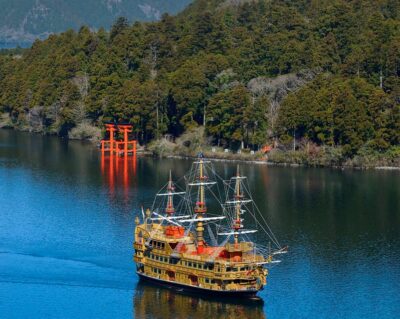
Mt Fuji and Hakone 1-Day Bus Tour Return by Bullet Train
Read our review →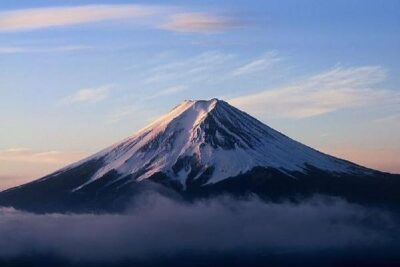
Mt Fuji & Hakone Cruise, Drum Show Bullet Train 1 Day from Tokyo
Read our review →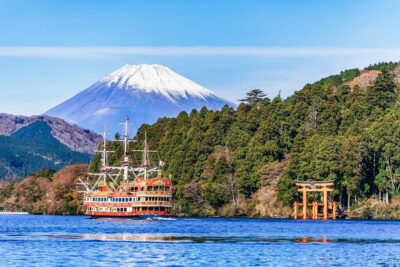
Tokyo Mt Fuji 5th St & Hakone Cruise Bus Tour w/Bullet Train
Read our review →
Mt. Fuji Tour, Hakone Ropeway, Owakudani, Lake Ashi
Read our review →
Mt.Fuji,Kawaguchiko Oishi Park,Arakurayama Sengen Park
Read our review →
Mt. Fuji 5th Station & Hakone Cruise 1-Day Bus Tour
Read our review →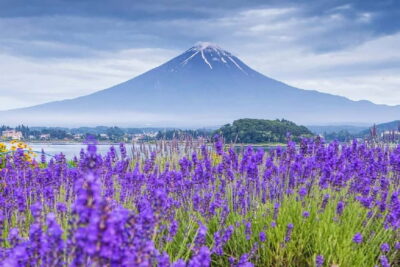
Mt Fuji Top 5 Spots Day Tour: Arakurayama Park,Oshino Hakkai
Read our review →Browse the lists this tour appears in