
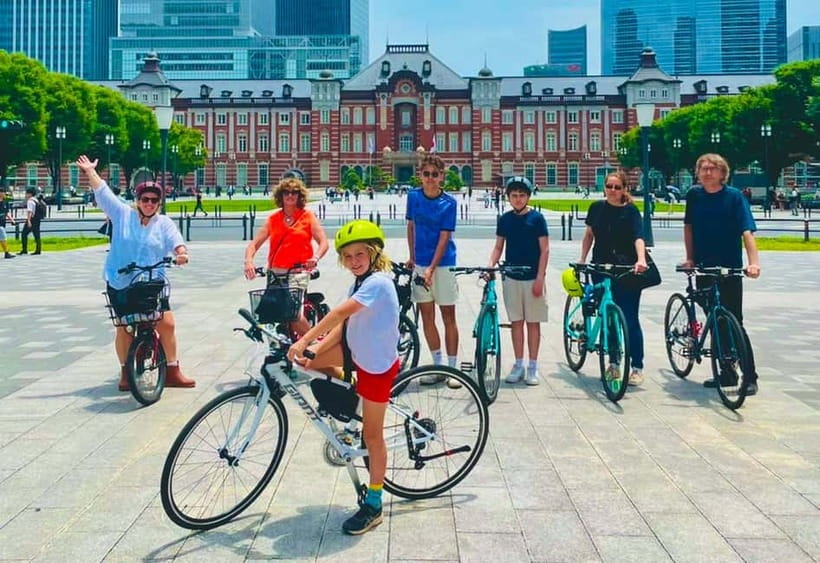
Reviewed · CYCLING TOURS
Tokyo: 3-Hour Bike or E-Bike City Highlights Tour
Tokyo on a bike is interesting for one simple reason: it turns the city from a grid you study into a route you ride. This 3-hour tour strings together iconic Tokyo landmarks and quieter corners with English-speaking local guides and high-quality bikes (Bianchi and Fuji or an e-bike).
What I like most is how the guide-led stops mix quick history with real street-level moments. One thing to consider up front: this is not a fully closed-course ride, so you need to be comfortable riding in real traffic flows, even if your guide keeps you organized and safe.
You also get practical “tour setup” details that make it feel smoother than DIY. The day builds in photo stops plus short guided sections, so you are not constantly stopping and starting yourself, and there is a mini pouch on the bike to keep your phone, wallet, and key handy. You will meet at a very clear landmark, the statue of Commodore Perry near Daimon Station (A6 exit), and the tour includes bike insurance, with helmets available on site for an extra cash fee.
Key highlights you will actually use
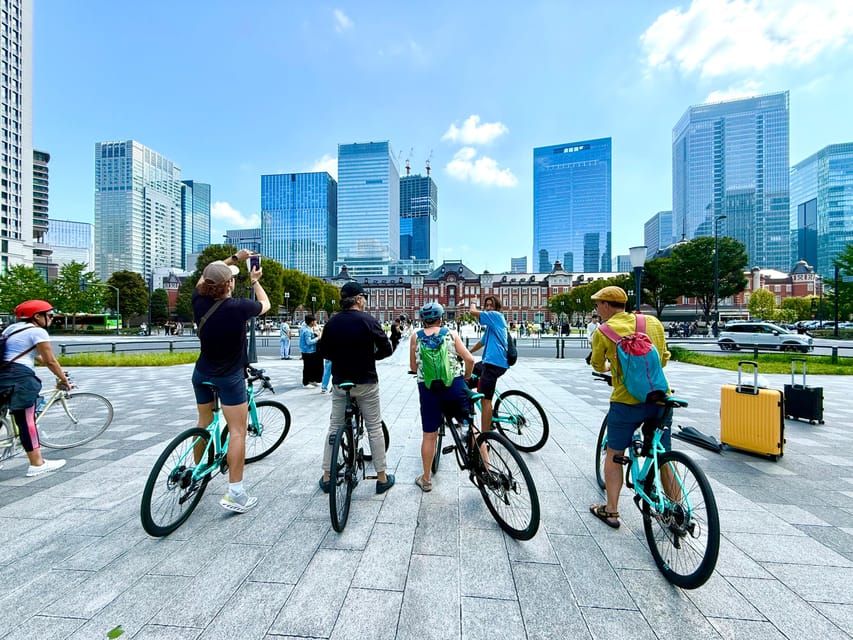
- English, on-the-street guidance in a small-group format, with guides such as Tam, KJ, Naoki, Atsu, and Kosei showing up in recent experiences
- Bianchi or Fuji cross bikes for a comfortable ride, or an e-bike if you want help with longer effort
- A tight route that covers Zojo-ji, the Imperial Palace area, Tokyo Station, Shibuya Crossing, and ends at the Bell of Peace
- Photo stops plus guided moments (often 3 to 15 minutes each) that keep the pace sightseeing-friendly
- Safety focus in real-world riding, including bike insurance and a setup that tries to keep you feeling protected
How a 3-hour ride gives you Tokyo orientation without burning your whole day
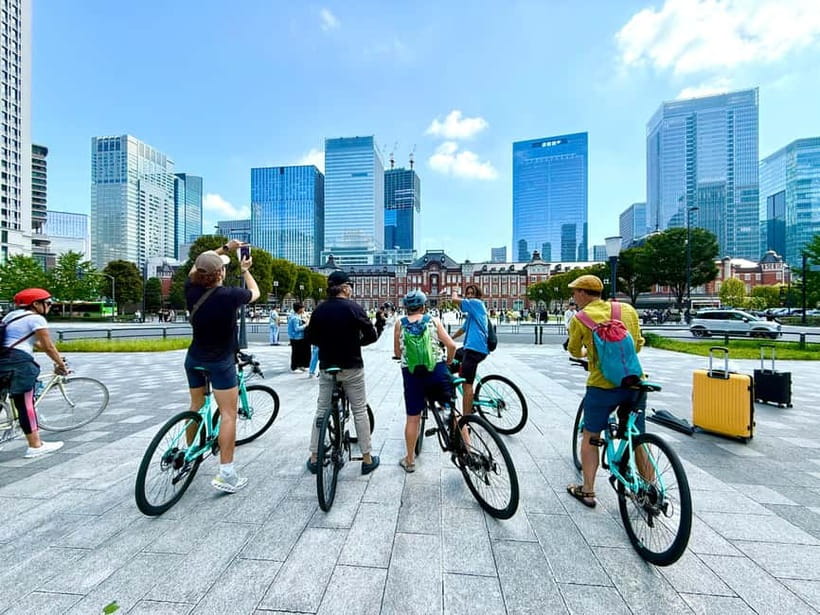
Tokyo is huge. Trains help, but they can also make the city feel fragmented, like you are hopping between islands. A bike tour is different because you glide from one atmosphere to another in a single continuous loop.
This tour is built around that idea: temple area to palace grounds to major downtown nodes, then into Shibuya with its loud intersections and big-city energy. In practice, you will get a sense of direction fast, because the ride physically connects neighborhoods that would take way more time to piece together.
I also like the way the tour uses time. Stops are short on purpose, so you do not spend the whole day parked, and the guided parts are long enough to give you context. That is exactly what you want early in a trip, when you are still figuring out what areas you like.
The route includes a clear mix of traditional and modern Tokyo. You will be around Buddhist temple space at Zojo-ji, then shift to ceremonial and government symbolism near the Imperial Palace area, then pivot into places that feel distinctly 21st century, like the New National Stadium and Shibuya’s shopping streets.
More Cycling Tours in Tokyo
- Tokyo Guided Small-Group Biking Tour
★ 5.0 · 1,250 reviews - Tokyo Great Cycling Tour
★ 5.0 · 811 reviews - Tokyo Top Highlights 3h Guided E-bike Tour
★ 5.0 · 714 reviews
Meeting at the Commodore Perry statue, then rolling out on Bianchi or Fuji
You meet at the statue of Commodore Perry, a short walk from Daimon Station with the A6 exit as your best orientation point. That is helpful because it makes “finding the group” less stressful, especially in a city where stations can feel like mazes.
Once you are with the crew, you get your bike and go over the basics. The tour uses high quality cross bikes in the Bianchi and Fuji lineup, or you can choose an e-bike option. From the ride accounts shared by other guests, equipment tends to be in good working order, and the guides are attentive to safety and pacing.
Also pay attention to the helmet detail. Helmets are not automatically included. You can rent one on site for ¥1,000 per unit in cash. If you are the type who hates last-minute fees, plan ahead and bring the cash.
One small detail that matters more than you might think: there is a mini pouch on the bike for a phone, wallet, or keys. That means you are not juggling your stuff or trying to shove everything into a bag while you stop for photos.
The Zojo-ji to Imperial Palace stretch, where Tokyo changes tone quickly
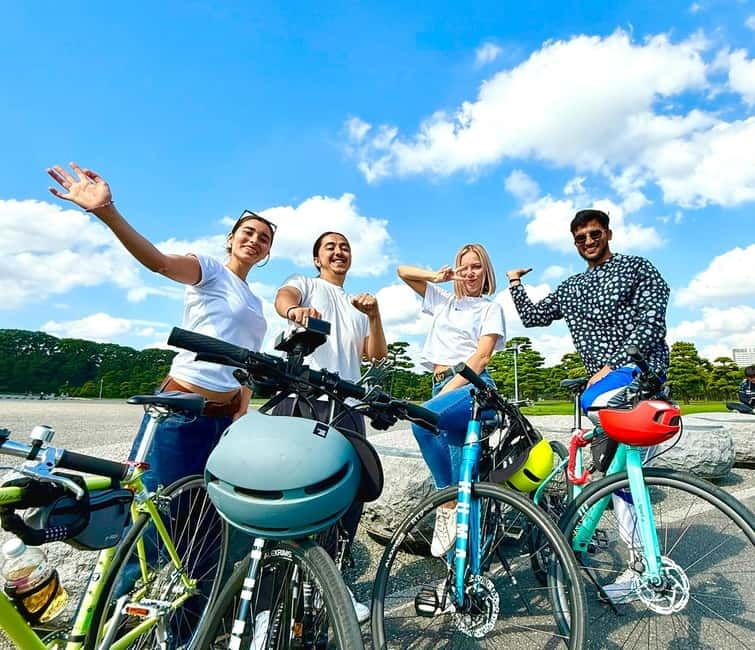
This tour starts in a spot with international history symbolism, the Commodore Perry statue. From there, the ride heads into the temple zone around Zojo-ji Temple.
Zojo-ji Temple (photo stop, visit, guided tour)
You get about 15 minutes here, including a guided component. Zojo-ji sits in a part of Tokyo where old and modern sit close together, so it is a good early “contrast anchor” for the day. The guided time matters because it helps you notice what you would otherwise rush past.
If you like temples that are more than just a quick look, this is a strong start. The tour uses a normal pace, not a sprint, so you can actually look up, walk slowly, and absorb the space.
A change of pace from Tokyo:
- Mt Fuji and Hakone 1-Day Bus Tour Return by Bullet Train
★ 5.0 · 26,383 reviews - 1-Day Tokyo Bus Tour
★ 5.0 · 14,250 reviews - Tokyo: TOKYO SKYTREE® Admission ticket
★ 4.5 · 11,192 reviews - Tokyo: teamLab Planets TOKYO Digital Art Museum Entry Ticket
★ 4.6 · 9,779 reviews
Hibiya Park (quick visit)
Next is Hibiya Park, a shorter stop at about 3 minutes. Think of it as a breather. You get a micro break in a green area without losing momentum. It is also a useful reset point if the morning started to feel too compressed.
Tokyo Imperial Palace (photo stop, visit, guided tour, plus the Ōte-mon Gate)
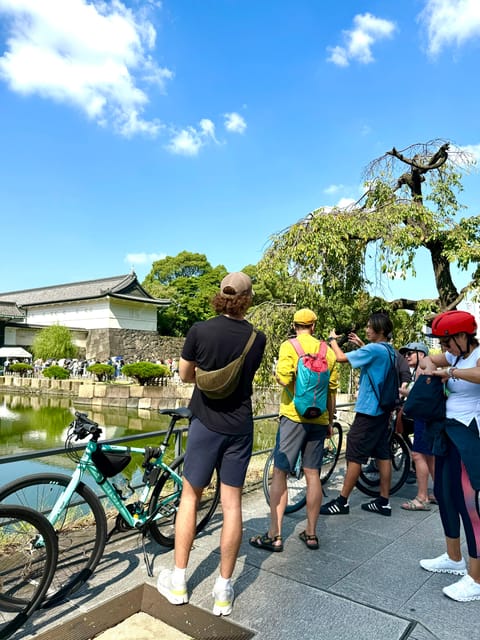
You then move into the Imperial Palace area with a longer guided slot. You have a photo stop plus a guided visit of about 15 minutes near the palace grounds, then later another short photo and visit at the Ōte-mon Gate.
In Tokyo, gates and boundaries can be cultural stories all by themselves. Having a guide here helps you understand what you are seeing, instead of just photographing stone and gates and moving on. It is also a great section for anyone who wants to connect the city’s modern life with the formal, historical power structures that still shape Tokyo.
A practical note: this part of the route includes a few “walk and pause” moments. Wear comfortable shoes, because you will be standing and moving more than you might expect from a bike tour.
Chidorigafuchi (break time, photo stop)
Then comes Chidorigafuchi for break time, with about 5 minutes allocated for photos and viewing. This area is famous for how it looks along the water, and even if you do not go at the season peak, it is still a pleasant stop. Break time is also where you can refill water and reset your legs before the tour shifts deeper into downtown.
Tokyo Station, Akasaka, and the New National Stadium stop sequence
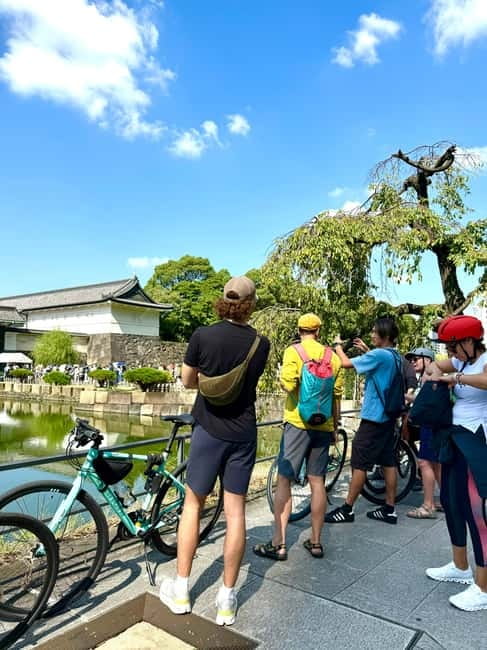
After the Imperial Palace section, the tour pivots into major landmarks that help you map Tokyo’s scale.
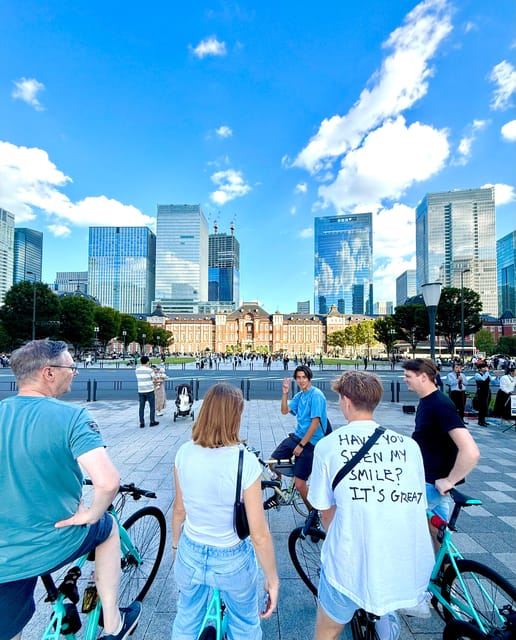
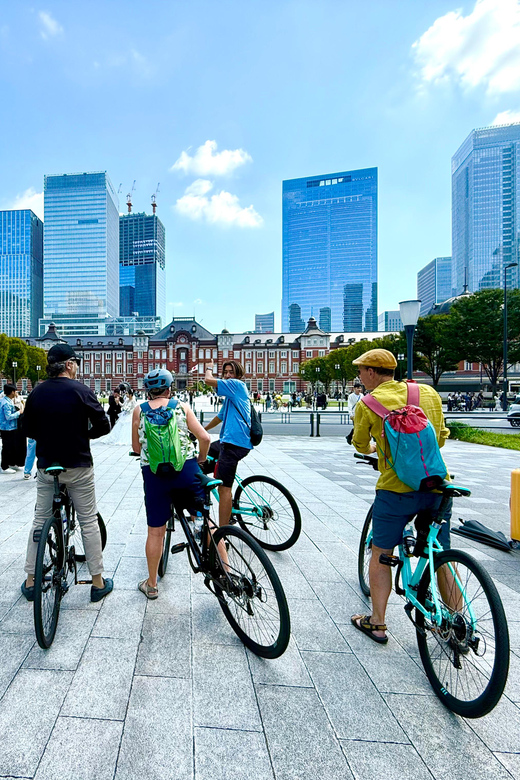
Tokyo Station (photo stop, visit)
You spend about 10 minutes around Tokyo Station, including a photo stop and a visit. Tokyo Station is one of those places where the building itself teaches you something. It is part of what makes Tokyo feel both orderly and massive.
Even if you have already been there, the time on foot plus the guide context makes it more than a quick “been there, done that” moment.
State Guest House Akasaka Palace (photo stop)
Next is State Guest House Akasaka Palace with about a 10-minute photo stop. This is not a long “tour inside” moment, but it is a worthwhile visual stop. It also gives you another example of how Tokyo balances public street life with formal government spaces.
New National Stadium (photo stop, visit)
You then hit the New National Stadium area for about 10 minutes. This is where the tour leans into modern Tokyo. Even if you are not a sports fan, it helps your brain understand the city’s newer architecture and big public projects.
The guide’s surprise stop, then fashion Tokyo into Shibuya
One of the best parts of this kind of tour is that the route is not only a list of postcard icons. Midway through, you will reach a stop described as a surprise “hidden gem” moment, with about 15 minutes for a visit and guided tour.
I am keeping the label general on purpose, because the point is how it functions in the day. That stop is designed to break the pattern. Instead of the tour feeling like it is only hitting the biggest names, the guide adds a local-feeling moment where you slow down and look at a different Tokyo layer.
After that, you transition to stylish, neighborhood-style Tokyo.
Aoyama St. Grace Cathedral (photo stop)
You get about 3 minutes for a photo stop at Aoyama St. Grace Cathedral. This is a small stop, but it works as a visual palate cleanser between big landmarks.
Cat Street (visit)
Then it is Cat Street for about 5 minutes. Cat Street is the kind of street you either love instantly or treat as a quick wander. On this tour, you do not lose time, and a guide can point out the vibe so you know what to notice as you ride and stop.
Shibuya Crossing and Tower Records Shibuya
Next is the main event: Shibuya Crossing. You get around 10 minutes with a guided component plus a photo stop. Then you finish the Shibuya push with about 3 minutes near Tower Records Shibuya for sightseeing.
Shibuya Crossing is loud, fast, and visually intense. Having it in the middle of your 3-hour tour is smart, because you are already in motion mode, and you do not have to plan a separate half-day just for one intersection.
Also, some rides are timed so the crossing and neon feel more dramatic. One account noted the thrill of cycling through Shibuya at night or evening, and it is a good reminder that Tokyo changes by time of day.
E-bike vs bike: choosing the option that matches your stamina
If you ride bikes often, the standard bike option may feel perfect. If you do not, the e-bike option can turn the whole tour from a challenge into a relaxed sightseeing ride.
The tour explicitly recommends e-bikes if you do not feel comfortable riding long distances or you do not have much stamina. One rider described e-bikes as making the experience effortless, and another suggested the e-bike was especially helpful on hills when the group was tired.
Here is my practical take: your goal is to enjoy Tokyo, not punish your legs. If you know you will spend the rest of your day walking a lot anyway, an e-bike can help you save energy for the fun stuff after the tour.
If you choose the standard bike, bring your best “bike confidence.” Recent accounts also point out that it can include riding from sidewalks to roads, meaning you cannot assume a fully segregated bike path situation.
Safety, traffic reality, and who should skip this ride
The tour messaging and guides aim for safety, and the bike insurance is a real plus. You also see repeated emphasis on guides keeping an eye on the group, checking in if people are okay, and adjusting pacing when needed.
Still, be realistic about Tokyo street conditions. One parent-and-teen experience called out that riding in traffic can feel stressful if you expected calmer conditions. Another account said the ride feels safe because traffic is light, so the truth likely depends on the day, the exact streets used, and how comfortable you are with urban riding.
This is not for everyone. It is not suitable for:
- Children under 12
- Pregnant women
- People with back problems
- Anyone who cannot ride a bike
If any of those apply, skip the ride and consider a walking tour or transit-based sightseeing.
If you are unsure, the e-bike option is your safety valve. And if you decide to do the standard bike, practice a calm riding mindset: keep your line, hold steady, and let the guide manage stops.
Price and value: is $45 a good deal in Tokyo?
$45 for a 3-hour guided bike highlights tour is strong value when you zoom out. You are paying for more than a bike rental. You are buying:
- an English-speaking local guide
- route planning that strings together major landmarks
- bike insurance
- a setup that handles the practical friction of a long day
- a small-group style experience (often described as groups of 5 to 8)
You also get a lot of “Tokyo coverage” for a half-day. The stops include temple area, palace grounds, Tokyo Station, Shibuya Crossing, and more. Even if you later revisit a few places on your own, this tour gives you that first mental map, which can save you time on the rest of your trip.
Now the small costs to note. Helmets are extra (¥1,000 in cash), and a child seat is extra if applicable. If you already know you will rent a helmet, budget for it.
My bottom line: if you want Tokyo orientation plus landmark time without spending hours coordinating routes yourself, the $45 price looks fair.
What to bring, how to dress, and what to do if weather hits
Bring comfortable shoes and comfortable clothes. Add water, because you will be outside for the full 3 hours plus stops. Pack light, and remember you can use the bike pouch for essentials.
Weather can change the feel fast. One rider recommended a simple poncho strategy when rain threatened, and the overall point is this: if it is wet, protect your comfort so you do not start fighting your clothes instead of enjoying the ride.
Also, the tour has clear rules: no smoking, no alcohol or drugs, and no littering. You should be able to follow basic public-safety norms in a city like Tokyo, and these rules keep the ride comfortable for everyone.
Should you book this Tokyo bike tour?
Book it if you want a guided way to connect Tokyo’s big landmarks with real street-level neighborhoods, in just 3 hours. It is especially worth it early in your stay, so you can get your bearings fast and decide what neighborhoods you want to explore later on foot.
Pass on it if you cannot ride a bike confidently, have back issues, are pregnant, or you are expecting a totally traffic-free experience. Also consider the e-bike if you are not a frequent cyclist, because it changes the whole feel of the day.
If you want to see Tokyo through a mix of temples, palace symbolism, and Shibuya’s modern pulse, this tour is a practical, good-value way to do it.
Latest write-ups near Tokyo
- Tokyo Customized Private Tour: See Top Attractions in 1 Day★ 4.8 · 67 reviews
- From Tokyo: Top 5 Scenic Spots of Mount Fuji Full-Day Tour★ 4.5 · 67 reviews
- Tokyo: Shinjuku Izakaya and Golden Gai Bar Hopping Tour (2h)★ 4.9 · 67 reviews
- Traditional Japanese Music ZAKURO SHOW in Tokyo★ 5.0 · 67 reviews
- Tsukiji: Unlimited Sake Tasting Experience★ 4.9 · 67 reviews
- Tokyo: Not a show- a professional sumo practice with experts★ 4.9 · 67 reviews
- Samurai Ninja Museum Asakusa: Kid-Friendly Ninja Training★ 4.7 · 67 reviews
- Private Harajuku Omotesando Architecture Walking Tour★ 5.0 · 67 reviews
Cycling Tours, compared.
3h Tokyo E-Bike Tour: Hidden Gems, and Local Life with guide
Read our review →
Arashiyama Bamboo Forest & Hidden Gems Bike Tour (Early Bird)
Read our review →
Hiroshima in a Nutshell: Morning Bike Adventure
Read our review →Browse the lists this tour appears in