
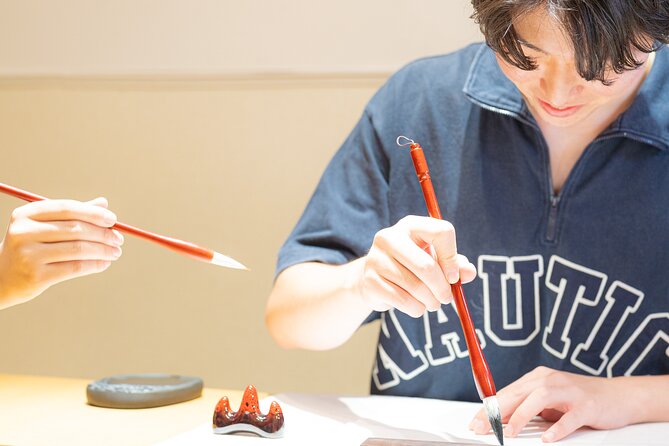
Reviewed · CALLIGRAPHY CLASSES
Tokyo: Calligraphy Experience at Japanese Room in Shibuya
Japanese calligraphy in Shibuya is interesting because it slows you down in a way Tokyo often does not. I like that the session starts with traditional ink preparation on an inkstone, not just a quick demo, and I like that you finish by writing a real calligraphy character on decorative paper to take home. One drawback to consider, if you want nonstop action, is that this is a relaxed 1-hour class, so it rewards patience more than speed.
You’ll learn basic techniques and the right etiquette for handling brushes and writing with care. The vibe feels calm and focused, and the instructor style described here is supportive, which matters when you’re trying something new like kanji or stylized strokes.
Key Highlights You Should Care About
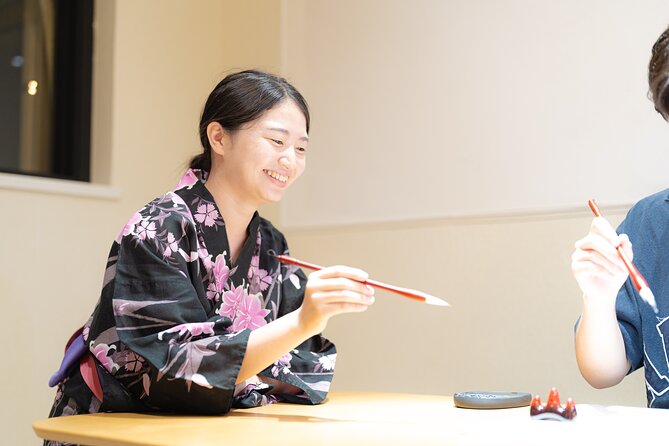
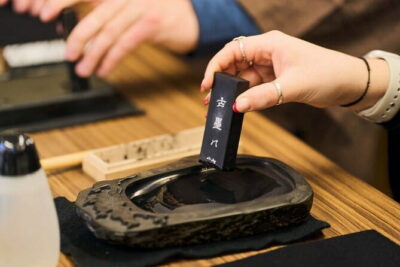
- Inkstone-first intro to ink: You learn how to grind and mix ink the traditional way before you pick up the brush.
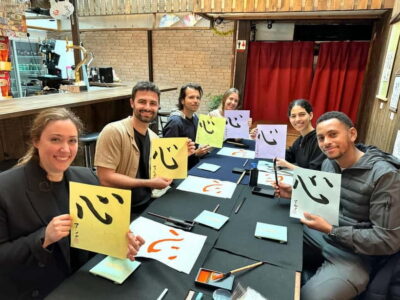
- Small group, max 8 people: Easier guidance and more chances to get feedback as you practice.
- Sowa’s teaching style, patient and clear: Multiple comments highlight his friendly, encouraging approach and step-by-step character explanations.
- Choose your character: Pick from a prepared list or write a character based on your own name.
- Practice before the final piece: You get time to work on strokes so the last sheet does not feel like a rushed test.
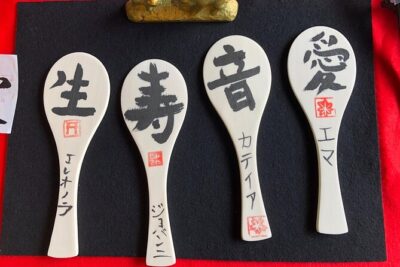
- A take-home keepsake: You leave with the character you wrote, on decorative paper.
Japanese Calligraphy in Shibuya: A Calm Hour That Teaches You How to Slow Down
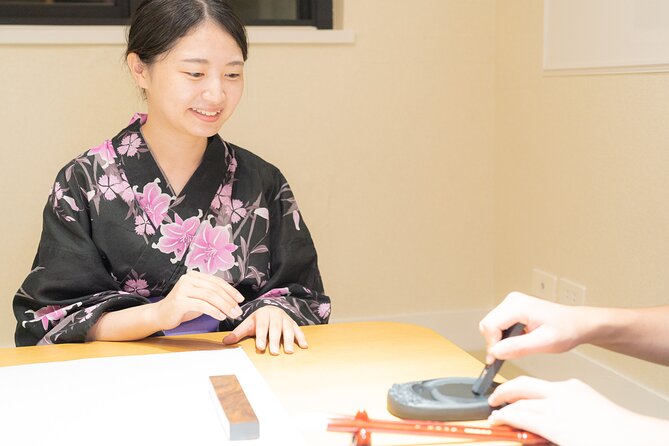
This workshop is one of those Tokyo experiences that actually makes the city feel quieter. You are not just watching art happen from the outside. You are doing it with your own hands, grinding ink, practicing strokes, and finishing with a character that you can keep.
I like that it is not framed as performance. It is taught as technique plus etiquette, so you understand the why behind the brush work. And since the group is capped at 8 travelers, it stays personal rather than chaotic.
The biggest consideration is simple: this is a 1-hour workshop, so it is not meant to turn you into a calligraphy expert. Think of it as a strong introduction and a meaningful souvenir, not a long-form course.
More Calligraphy Classes in Tokyo
- Tokyo: Calligraphy on Kanji Fan & Scroll with Drink
★ 5.0 · 210 reviews - Let’s experience calligraphy in YANAKA, Taito-ku, TOKYO !!
★ 5.0 · 127 reviews - Experience all of Japanese culture and Japanese food experience classes “origami, udon, Japanese food, green tea, calligraphy” in 4 hours
★ 5.0 · 105 reviews
Step-by-Step Workshop Flow From Inkstone to Final Character
Here is what the class structure looks like, in plain terms, and why each step matters.
1) Preparing ink the traditional way
You start with the tools of Japanese calligraphy and a key step most shortcuts skip. You grind and mix the ink using an inkstone. The point is not only tradition. It also gets you in the right mindset: you slow down, you pay attention, and you learn that good ink and good strokes are connected.
This also helps you avoid the most common beginner problem. When people jump straight to writing without understanding the ink, the strokes often look uneven. Starting with the preparation makes the whole session feel more grounded.
2) Etiquette and basic technique
Next, the instructor guides you on basics and proper etiquette. That includes how to handle the tools and how to approach writing carefully. You practice strokes at your own pace, which is a big deal when everyone’s writing style and confidence level is different.
In the feedback shared here, the teaching approach stands out as friendly and step-by-step, including clear explanations for how characters are built. That is exactly what you want for a first time experience.
A change of pace from Tokyo:
- Mt Fuji and Hakone 1-Day Bus Tour Return by Bullet Train
★ 5.0 · 26,383 reviews - 1-Day Tokyo Bus Tour
★ 5.0 · 14,250 reviews - Tokyo: TOKYO SKYTREE® Admission ticket
★ 4.5 · 11,192 reviews - Tokyo: teamLab Planets TOKYO Digital Art Museum Entry Ticket
★ 4.6 · 9,779 reviews
3) Practice strokes before the final sheet
You do practice first, then create the final piece. That ordering matters. It means your last character is not your first attempt. For beginners, that can be the difference between feeling proud and feeling frustrated.
Several comments also describe the class as zen-like or calming. That makes sense because the work itself, slow brush movement and controlled strokes, naturally pulls your attention away from everything else.
4) Choose your character and write your keepsake
Finally, you choose a character and write it on decorative paper. You can pick from a prepared list or write a character connected to your own name. Either way, the goal is the same: you leave with something you made, not something you watched.
Picking a Character: Name-Based Kanji Options and Prepared Lists
The character choice is where this workshop becomes personal fast.
If you choose from the prepared list, you get structure. If you choose based on your name, you add meaning. Either option gives you a keepsake that feels tied to you, not just to the workshop.
A practical note: take a moment before you sit down and write. If your character is name-related, you may want to double-check it mentally as you go, because once you start writing, you are committing to the strokes. The instructor guidance helps, but your own focus still counts.
What You Actually Learn Beyond Pretty Writing
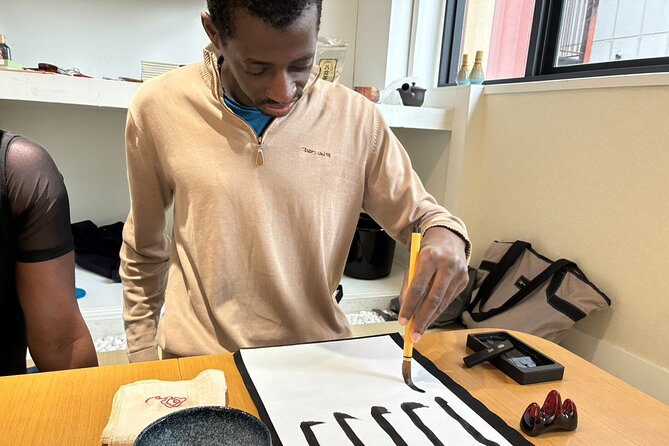
This is not only about making one nice-looking sheet. You also get context that helps the character make sense.
From the instructor style described here, Sowa (also referred to as Soba in some comments) tends to explain characters clearly and connect them to real-life examples. One comment also highlights explanations that work from basic radicals, then gradually build toward full characters. Even if you only catch part of that, it can change how you look at kanji after the class.
You also learn essential etiquette. That matters because calligraphy is not just handwriting. It is a disciplined art form where the way you hold and move the brush influences what you produce. When you understand that, your final piece feels more intentional.
And yes, the experience includes a proper introduction to scripts and how the strokes come together. Even a short class can give you a useful framework for reading and recognizing character structure later.
The Instructor Matters: Why Sowa’s Style Shows Up in Every Kind Comment
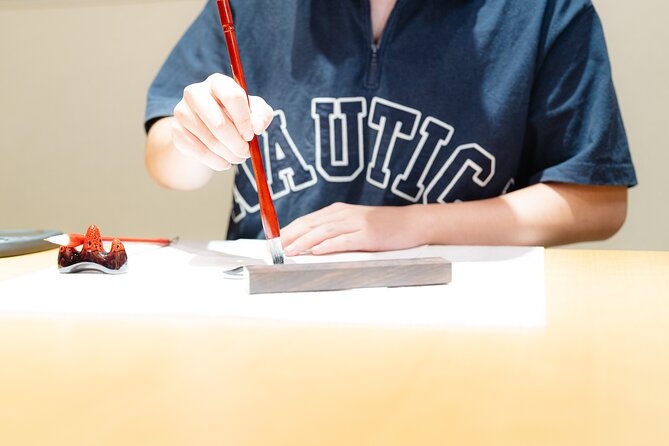
When a class gets consistent praise for the same reasons, it tells you something about the experience.
Here, the instructor named Sowa repeatedly comes up as friendly, encouraging, informative, and passionate about sharing the art. People highlight that his instructions are easy to follow, with support that makes it doable even if you have never written in Japanese before.
The theme I’d take from that is guidance that reduces anxiety. Calligraphy can feel intimidating because characters look complex. A supportive teacher can turn that fear into curiosity, and that is what you should look for if you want a good first hour of learning.
Timing, Group Size, and Where You’ll Meet in Shibuya
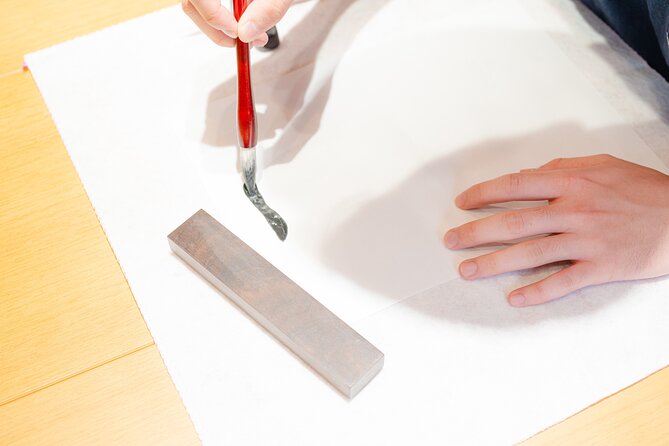
This workshop runs for about 1 hour. That timing is ideal for a Shibuya day, because you can fit it between neighborhoods without losing your whole schedule.
It also ends back at the meeting point, so you are not dealing with a long transfer. The session is near public transportation, which matters because Shibuya can swallow time if you misjudge walking routes.
The group maximum is 8 travelers, which tends to create breathing room. You can ask questions and get help as you practice, instead of waiting your turn while the instructor focuses on someone else.
Meeting point address:
2-chōme-14-13 Shibuya, Tokyo 150-0002, Japan
Price and Value: Why $32.84 Feels Fair for a Take-Home Piece
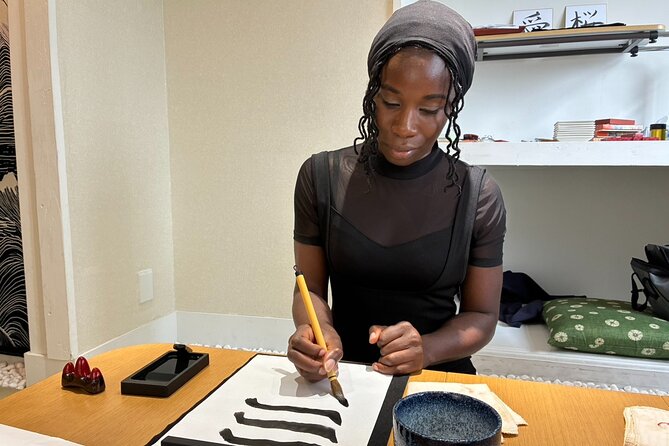
At $32.84 per person, this sits in the “worth it if you will actually use the result” category. The key value is not the brush lesson alone. It is what you get to do and what you take home.
In this class, you:
- prepare ink with an inkstone
- practice basic strokes with guidance
- choose a character and write it on decorative paper
- take that piece home as a keepsake
So you are paying for instruction, tools during the session, guided practice, and a finished item. For a 1-hour experience, that can be a solid deal as long as your goal is hands-on art rather than sightseeing.
Also, the mobile ticket helps on travel days. Less paperwork, fewer steps, easier check-in.
Who Should Book This Calligraphy Workshop (and Who Might Not)
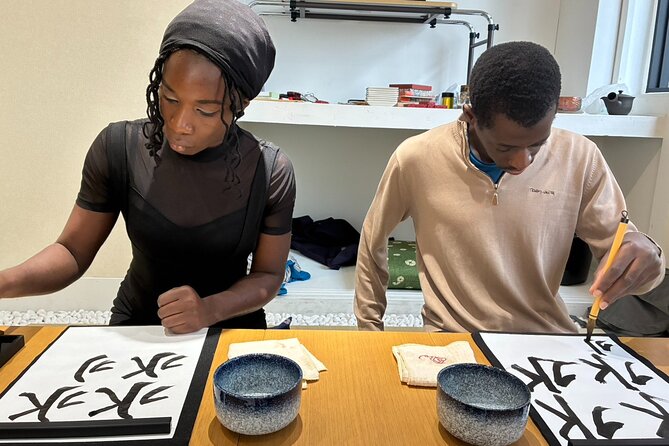
I think this is a great fit if you want an authentic Tokyo cultural activity that is calm, hands-on, and achievable. It is also a smart choice if you like making something tangible to remind you of a trip.
You’ll likely enjoy it most if:
- you want a short, meaningful cultural experience
- you enjoy crafts, writing, or anything tactile
- you want instruction and etiquette, not just watching
- you are happy with a small group setting
It might feel less ideal if you:
- want a fast pace with lots of movement
- only want photos and watching rather than doing
- expect a multi-session deep course
The good news is that most people can participate, and the session is designed to be doable for beginners.
Quick FAQ You’ll Actually Use
FAQ
How long is the Japanese calligraphy experience?
It lasts about 1 hour.
Where is the meeting point in Shibuya?
You meet at 2-chōme-14-13 Shibuya, Tokyo 150-0002, Japan.
Is the group small?
Yes. The group maximum is 8 travelers.
What do I do during the workshop?
You learn about calligraphy tools, prepare ink using an inkstone, practice basic techniques and etiquette, then choose a character and write it on decorative paper.
Can I write a character based on my name?
Yes. You can choose a character from a prepared list or based on your own name.
Do I take a finished piece home?
Yes. You create a calligraphy piece on decorative paper and take it home as a keepsake.
What kind of ticket do I receive?
You receive a mobile ticket.
Is it near public transportation?
Yes, it is near public transportation.
Is there free cancellation?
Yes. You can cancel for a full refund up to 24 hours in advance of the experience start time.
Should You Book This Shibuya Calligraphy Class?
If you want a calm, high-impact cultural activity that results in a real take-home artwork, I’d book it. The blend of inkstone preparation, guided stroke practice, and a character you choose (even name-based) makes this more than a quick craft demo.
Skip it only if you hate slow, focused work or you’re looking for a big sightseeing hit. Otherwise, this is exactly the kind of experience that leaves you with a small piece of Tokyo that you can hold in your hands back home.
Latest write-ups near Tokyo
- Tokyo Nights: Shibuya Photo Adventure★ 5.0 · 20 reviews
- Wagyu & Sake 8 Course Tasting Dinner in Shinjuku★ 4.9 · 20 reviews
- Making Japanese desserts Nerikiri & drinking matcha in Tokyo★ 5.0 · 20 reviews
- Mt. Fuji 5th Station, Owakudani Ropeway, Pirate Ship plus Outlet shopping!★ 4.5 · 20 reviews
- Japanese Whisky Hunting《HIGH-QUALITY-ONLY》Rare Tasting Class★ 5.0 · 20 reviews
- Kintsugi Experience with Arita Ware in Tokyo (English Guide)★ 4.8 · 20 reviews
- This is Asakusa! A Tour Includes the All Must-Sees!★ 5.0 · 20 reviews
- Tokyo: Karate Experience with Former All-Japan Champion★ 5.0 · 20 reviews
Calligraphy Classes, compared.
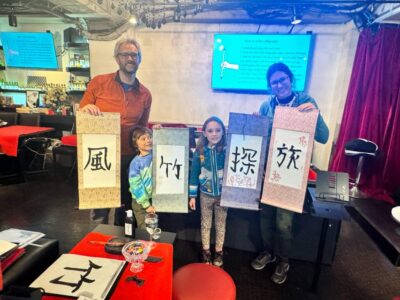
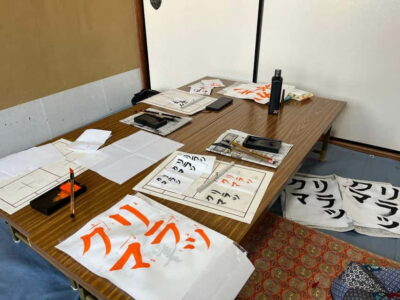
Calligraphy class at Buddhist temple in city center
Read our review →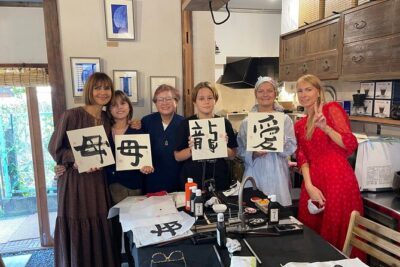
Let’s experience calligraphy in YANAKA, Taito-ku, TOKYO !!
Read our review →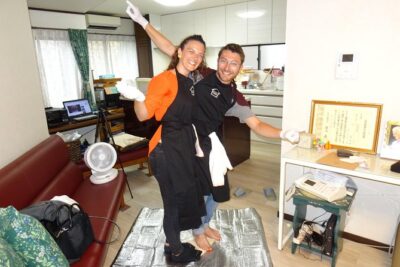
Calligraphy Workshop & Original T-Shirt Creation
Read our review →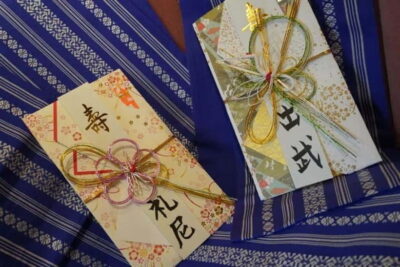
An Amazing set of Cultural experience: Kimono, Tea Ceremony and Calligraphy
Read our review →Browse the lists this tour appears in