
Reviewed · CALLIGRAPHY CLASSES
Tokyo:Calligraphy &Make your original folding fan in Asakusa
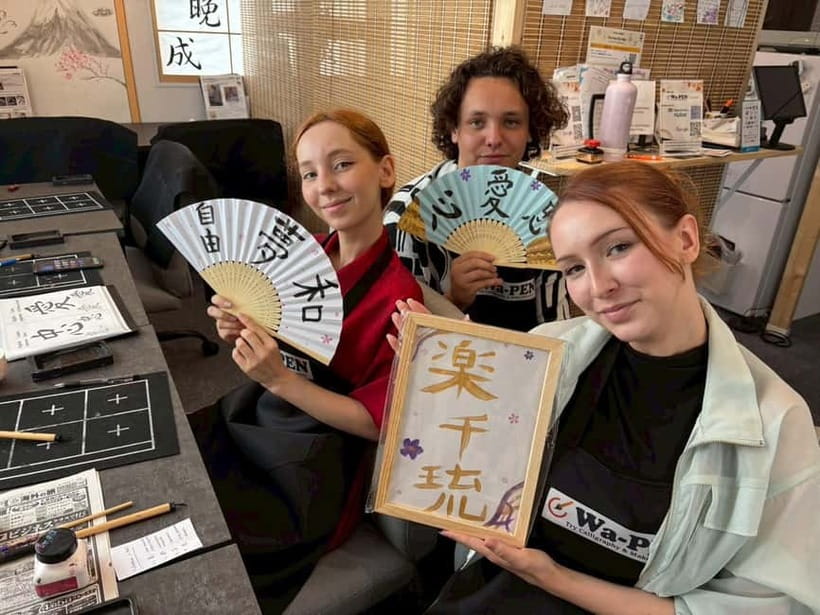
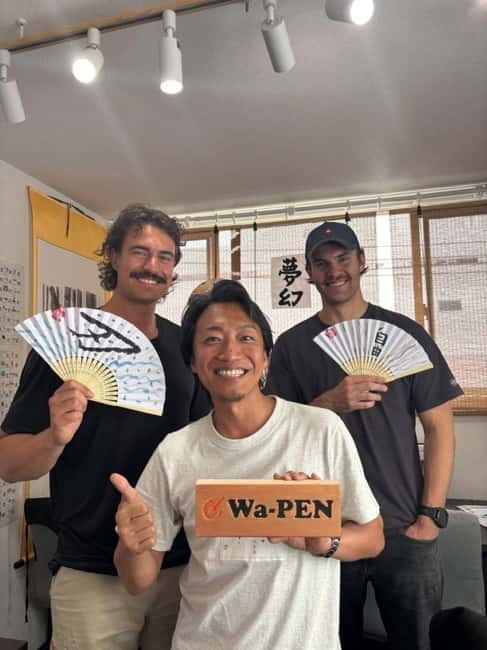
If you want a Tokyo activity that feels calm and hands-on, this Japanese calligraphy class in Asakusa hits the sweet spot. You learn from an English-speaking instructor named Mana, practice strokes with a brush called a fude, and end up with something personal you can actually use later.
I love how you’re taught the right posture and attitude before you ever chase pretty results. And I love the full keepsake arc, from ink practice to a calligraphy postcard and then your own folding fan. One consideration: you’ll want to wear clothes that can take a little ink risk, even though aprons are provided.
Key things I’d highlight before you go
- Mana teaches in English and keeps the pace comfortable, with real patience for beginners.
- Ink sticks get melted with water, so the process feels traditional instead of just “crafty.”
- You practice multiple techniques with guide paper, then write on thin paper for about 30 minutes.
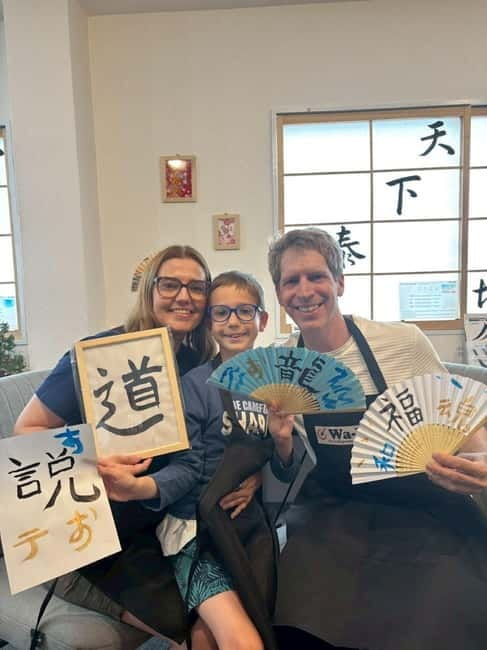
- You make a one-of-a-kind folding fan using your chosen design and calligraphy.
- You get green tea and write a postcard to yourself to help you remember the day.
- Henna tattoo option matters, because if you pick it, the calligraphy part isn’t included.
Why This Asakusa Calligraphy And Fan Workshop Works So Well
Asakusa is the place where you can bounce from temples, snacks, and souvenir streets, but it can also get hot and crowded. This workshop gives you a purposeful pause. Instead of chasing another photo stop, you sit down, learn how brush and ink behave, and create something with meaning behind it.
What I like is that the class is not just about copying a sample. You’re taught fundamentals first, especially how to hold your body and how to use the brush with the right kind of focus. That changes the whole experience. Even if your first attempts are shaky, you quickly understand what the instructor is aiming for.
And then comes the payoff. You don’t just take home a sheet of paper and call it done. You bring home a keepsake folding fan made from your own work, plus a postcard you write while the moment is still fresh.
More Calligraphy Classes in Tokyo
- Tokyo: Calligraphy on Kanji Fan & Scroll with Drink
★ 5.0 · 210 reviews - Let’s experience calligraphy in YANAKA, Taito-ku, TOKYO !!
★ 5.0 · 127 reviews - Experience all of Japanese culture and Japanese food experience classes “origami, udon, Japanese food, green tea, calligraphy” in 4 hours
★ 5.0 · 105 reviews
Getting There in Asakusa: Location, Timing, and What To Expect When You Arrive
This experience runs about 30 to 90 minutes, depending on the session time and how much you want to practice. The meeting point can vary by option, but the area is around the coordinates 35.7162239, 139.7922354, which puts you in central Asakusa.
Arrive a little early so you can settle in. The class starts with basics, and it’s easier to absorb posture and brush technique when you aren’t rushing to keep up.
A few practical notes from the experience details you should plan for:
- You’ll want comfortable clothes you don’t mind if they get ink on them. Aprons are available.
- No food and drinks are allowed during the session, though you do get a cup of green tea as part of the experience.
- Pets are not allowed (assistance dogs are allowed).
Also note the physical setup may not work for everyone. Wheelchair users are listed as not suitable for this activity, so plan accordingly if mobility is a concern.
Starting With Meaning: Japanese Calligraphy, Hiragana Mindset, and Stroke Basics
The class begins with the “why” behind the art. You’ll learn about Japanese calligraphy history and also how hiragana connects to modern life culture. That matters because it changes your goal. You’re not just making something decorative, you’re learning a system built around intention, movement, and balance.
Then Mana focuses on the skills that make the rest of the session click:
- How to hold and use the fude brush
- How much ink to use
- How to sit and practice with the right attitude, not stiff muscle tension
This is the part that makes the workshop feel like a real lesson rather than a one-off craft. The instructor’s emphasis on posture gives you a better stroke quickly, even if you’re a total beginner.
One of the best parts is that the teaching style is practical and supportive. In multiple personal accounts, people describe Mana as kind and patient, explaining steps clearly and encouraging longer practice when students want extra time.
Traditional Ink Meets Modern Practice: Melting Ink Sticks and Learning Control
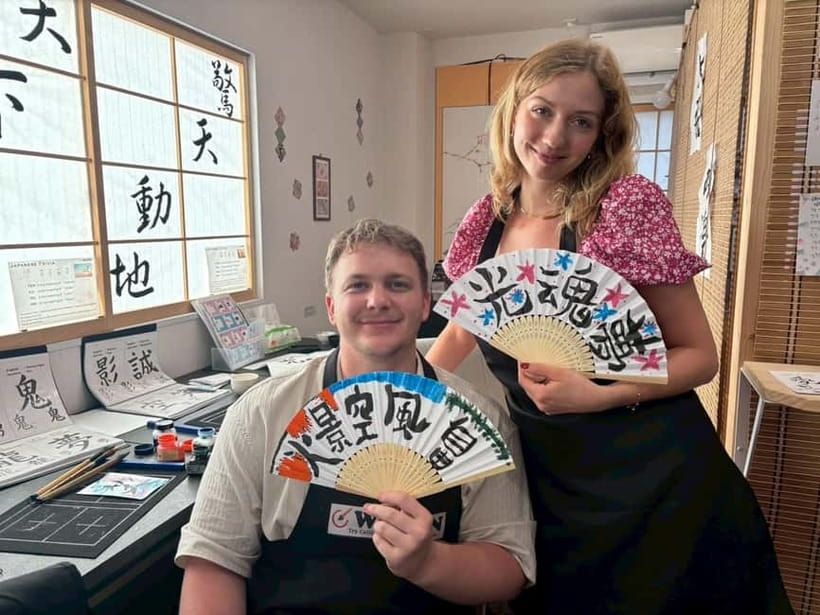
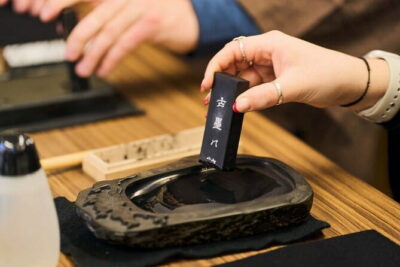
Then you get into the tactile, satisfying part: you’ll use water to melt traditional solid ink sticks for calligraphy. Watching ink dissolve is oddly calming, and it also helps you understand why brush strokes look the way they do. Too much or too little ink changes everything.
Once the ink is ready, you start practicing techniques with guide paper and expert staff support. You’ll work through basically eight techniques. That sounds like a lot, but the point is you learn building blocks, not a random pile of exercises.
Here’s what you should watch for as you practice:
- Brush pressure affects stroke weight.
- Speed affects how the line looks.
- The way you lift the brush changes the shape and finish.
This is where the class becomes “meditative” for many people. You’re not solving a puzzle, you’re training your hand to do what your mind intends.
A change of pace from Tokyo:
- Mt Fuji and Hakone 1-Day Bus Tour Return by Bullet Train
★ 5.0 · 26,383 reviews - 1-Day Tokyo Bus Tour
★ 5.0 · 14,250 reviews - Tokyo: TOKYO SKYTREE® Admission ticket
★ 4.5 · 11,192 reviews - Tokyo: teamLab Planets TOKYO Digital Art Museum Entry Ticket
★ 4.6 · 9,779 reviews
The Hands-On Part: 30 Minutes of Writing on Thin Paper
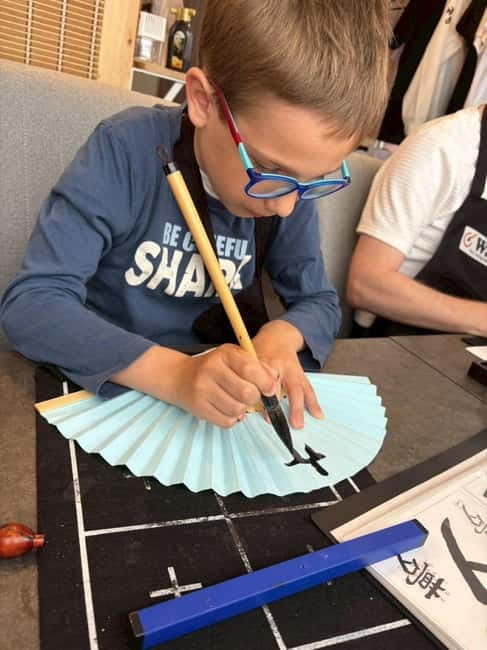
After the technique practice, you move into your main writing period. You practice for around 30 minutes on thin paper with guide paper support. This is when you choose the design direction, using a sample book and guidance from the staff.
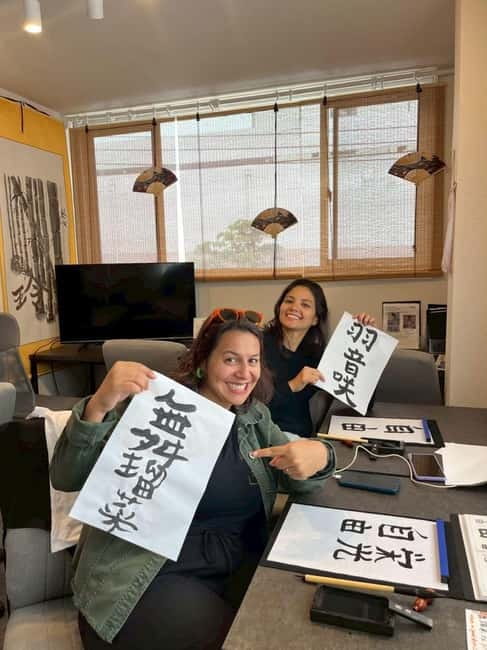
This is also the stage where your work starts to feel personal. You’re usually writing something meaningful, and many students enjoy writing their names in Japanese characters. Even if you’re only picking a simple phrase or symbol, it feels different because it’s your ink and your strokes.
Importantly, the class is designed to let you work until you’re satisfied with the result. That’s a quiet advantage. Instead of being rushed into a final product, you can rework and adjust. Several people highlight that they were able to take their time, and some even extended their practice until it felt right.
Choosing Your Keepsake: What You Take Home After Calligraphy
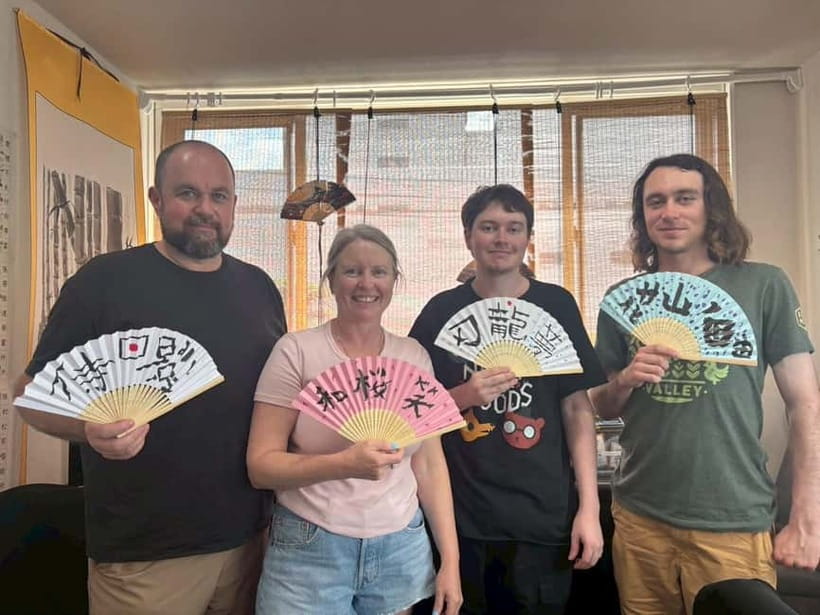
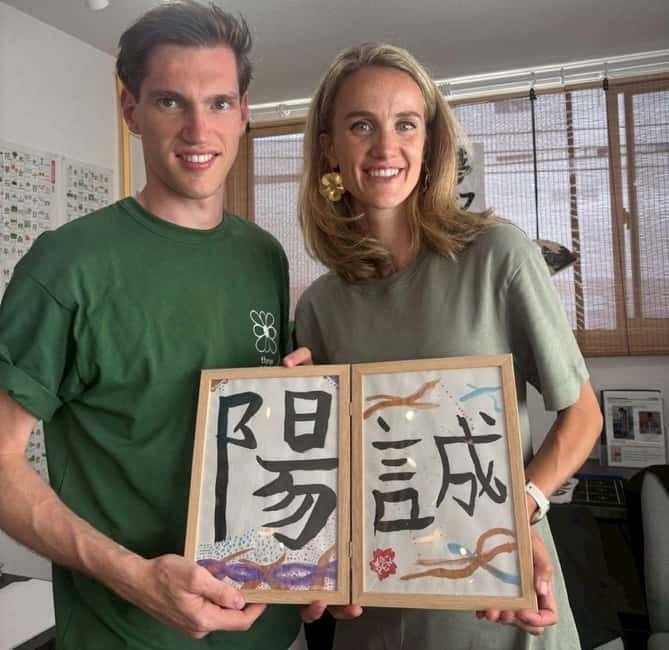
At the end, you take home your calligraphy and your custom folding fan. The “original” part is not marketing fluff. You’re selecting your design, then translating it into something you physically craft, not just print or copy.
In practical terms, this means you’ll leave with:
- A one-of-a-kind calligraphy souvenir
- A custom folding fan that matches your calligraphy choices
There’s also mention in the activity details that some options can add extra services, like printing calligraphy onto a T-shirt. That part is not included in the standard experience. If you want it, you can buy a T-shirt in the shop, but you should expect that as an add-on cost and decision.
Also pay attention to the option you choose before you arrive. If you select a henna tattoo option, the calligraphy experience is not included. So confirm you’re booking the calligraphy class if that’s the main reason you’re going.
Green Tea Break and the Postcard to Your Future Self
This is one of those small details that makes the workshop feel more complete. You get a cup of green tea after your writing. It’s not a huge ceremony, but it gives you a gentle landing at the end.
Then you write a postcard to yourself at home. The prompt is your emotions after calligraphy, so you’re basically capturing how the process felt while it’s still fresh. That’s clever, because calligraphy lessons can be technical in the moment. Writing it down adds a human layer: how you felt concentrating, how it surprised you, how your hand steadied, what you want to remember when you’re back in your normal routine.
If you like travel souvenirs that don’t just sit in a drawer, this helps. A postcard can age with time and become a mini time capsule.
Making Your Original Folding Fan: The Fun Craft Moment That Locks It In
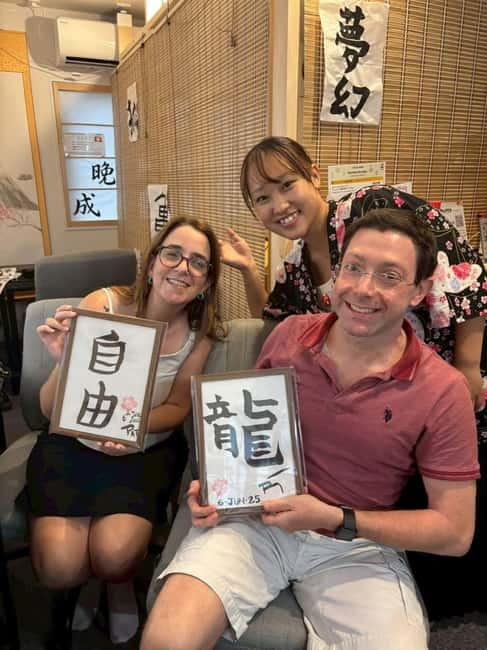
The final segment is the folding fan. Think of it as the “I made this” moment. You’ve already learned the brush basics, you’ve written the calligraphy, and then you turn it into an object you can actually carry, use, or display.
Why that matters for your experience: a fan is functional. It fits Japan’s everyday culture, especially during warmer months, and it’s also small enough to travel with.
And because it’s your own work, it doesn’t feel like a generic souvenir you could buy anywhere. It becomes a story item: this is what I wrote, this is how I practiced, and this is how the strokes look when they become a final design.
Instructor Style: What You Can Expect From Mana in Real Life
The instructor is English-speaking, and the accounts you provided paint a consistent picture of how Mana teaches:
- Very patient with beginners
- Encouraging without pushing
- Clear explanation of steps and stroke guidance
- Willing to help you practice until you feel good about your final work
- Helpful with extra needs like timing when people have plans nearby
One example in the details is that Mana hand-delivered items later so someone wouldn’t miss a meeting because their T-shirt wasn’t ready yet. That kind of care is not required, but it shows you’re in hands that take the experience seriously.
In plain terms, if you’re anxious about messing up, this class seems to work because the instruction is gentle and structured.
Price and Value: Is $16 Fair for 30 to 90 Minutes in Asakusa?
At $16 per person, this is a strong value for what you get. You’re paying for:
- Instruction on technique and posture
- Traditional ink stick melting and brush guidance
- Practice time on thin paper
- Design support for your calligraphy choice
- A postcard writing component
- A custom folding fan souvenir
- Green tea
For Tokyo, where many workshops cost quite a bit more for a less taught craft, this pricing feels approachable. The big reason is the “teaching” is built into the experience. You’re not just given materials and sent off.
Also, the duration flexibility helps. If you’re short on time, you can still get the core experience. If you want extra practice, the class atmosphere is described as allowing that, not cutting you off immediately.
Who This Workshop Is Best For (And Who Might Want to Skip)
This suits you if:
- You want a relaxing break from Tokyo crowds and heat
- You like hands-on learning, not just watching
- You want a meaningful souvenir that’s more personal than a typical purchase
- You enjoy writing, symbols, or cultural crafts
- You’re traveling with family, including kids. One account notes a great experience for a 6-year-old with very patient instruction.
You might reconsider if:
- You need wheelchair accessibility. This is listed as not suitable for wheelchair users.
- You want a purely social event. This is focused and calm, more “concentration” than “party.”
- You only want casual photo ops. The best part is the practice and the process, not the scenery.
Small Logistics to Plan For So You Enjoy It More
A few things to do before you go:
- Wear a shirt or outfit you can tolerate ink stains on. Aprons help, but you should still be cautious.
- Bring comfortable shoes and simple clothing. You’ll be seated and writing.
- If you’re pairing this with temple time at Senso-ji, plan a buffer. Some classes involve finishing touches and timing matters for other plans.
No food and drinks are allowed during the session, but you will have green tea. So eat beforehand or plan a snack after.
Should You Book This Asakusa Calligraphy and Folding Fan Workshop?
If you want one Tokyo activity that feels both cultural and calming, I’d book it. The combination is hard to beat: brush technique, traditional ink stick handling, guided practice, and then a practical keepsake folding fan plus a postcard memory note.
Book it sooner if:
- You like the idea of writing your name in Japanese characters.
- You want a souvenir that’s small, usable, and truly made by you.
- You value patient instruction over trying to “figure it out.”
Skip or rethink it if you’re not interested in hands-on writing at all, or if mobility needs make the setup a problem.
Bottom line: for $16 and a short window in Asakusa, this is the kind of class that leaves you with a story you can still feel weeks later.
FAQ
How long is the calligraphy and folding fan experience?
It runs about 30 to 90 minutes, depending on the session time and how long you practice.
Is the instructor able to teach in English?
Yes. The instructor provides English instruction.
What should I wear to the workshop?
Wear comfortable clothes that can get a bit dirty from ink. Aprons are provided.
Do I get to make an original folding fan?
Yes. You make an original folding fan as part of the experience, using your calligraphy work.
Is writing included, or do they just give you a finished souvenir?
Writing and practice are included. You practice calligraphy techniques and write for about 30 minutes on thin paper.
What is included with the class besides calligraphy?
You get traditional ink melting instruction, brush technique practice, guidance with guide paper, green tea, and a postcard to yourself.
If I choose a henna tattoo option, does calligraphy still happen?
No. If you select the henna tattoo option, the calligraphy experience is not included.
Are pets allowed during the workshop?
Pets are not allowed. Assistance dogs are allowed.
Latest write-ups near Tokyo
- Tokyo Nights: Shibuya Photo Adventure★ 5.0 · 20 reviews
- Wagyu & Sake 8 Course Tasting Dinner in Shinjuku★ 4.9 · 20 reviews
- Making Japanese desserts Nerikiri & drinking matcha in Tokyo★ 5.0 · 20 reviews
- Japanese Whisky Hunting《HIGH-QUALITY-ONLY》Rare Tasting Class★ 5.0 · 20 reviews
- Mt. Fuji 5th Station, Owakudani Ropeway, Pirate Ship plus Outlet shopping!★ 4.5 · 20 reviews
- Kintsugi Experience with Arita Ware in Tokyo (English Guide)★ 4.8 · 20 reviews
- This is Asakusa! A Tour Includes the All Must-Sees!★ 5.0 · 20 reviews
- Ebisu Local Food Tour: Shibuya’s Most Popular Neighborhood★ 5.0 · 20 reviews
Calligraphy Classes, compared.
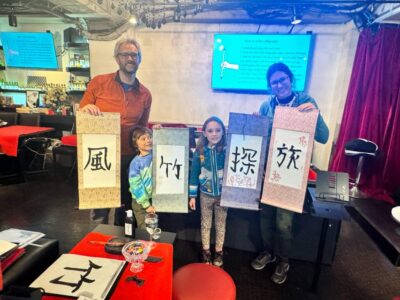
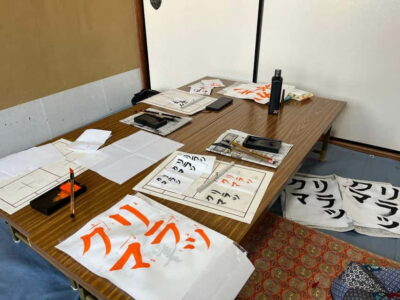
Calligraphy class at Buddhist temple in city center
Read our review →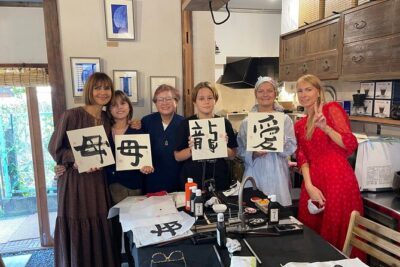
Let’s experience calligraphy in YANAKA, Taito-ku, TOKYO !!
Read our review →
Calligraphy Workshop & Original T-Shirt Creation
Read our review →
An Amazing set of Cultural experience: Kimono, Tea Ceremony and Calligraphy
Read our review →Browse the lists this tour appears in