
Reviewed · HISTORICAL TOURS
Nara World Heritage PRIVATE TOUR
This tour is interesting because it strings together Nara’s top World Heritage sights in a tight route, then lets you have the most Nara moment of all: feeding the sacred deer. I like that it’s fully private, so you’re not stuck dodging people while trying to understand what you’re looking at. You also get the practical bonus of admission and deer crackers included, so the day stays simple.
My favorite part is the pacing. In about 3 to 4 hours, you hit Todai-ji, Nara Park, Ukimido, and Kofuku-ji without feeling like you need a full day map and a second phone battery. One consideration: it’s mostly outdoors walking, and Nara summers can be brutally hot, especially in August, when temperatures often go above 35°C. Bring heat gear and plan to go early when you can.
Key highlights before you lace up

- Private guide, not a crowd tour: your route and timing stay flexible for your group.
- Deer feeding included: one packet of cracker is part of the experience.
- World Heritage anchors in one half day: Todai-ji plus Nara Park, then Kofuku-ji.
- Ukimido Pavilion at Sagiike: a stop built around reflections from the pond.
- Most entry fees handled: you’re covered for the temples and shrines with admission.
- Good for first-timers: you get fast orientation, then you can wander more later.
Nara in 3 to 4 hours: why this route works
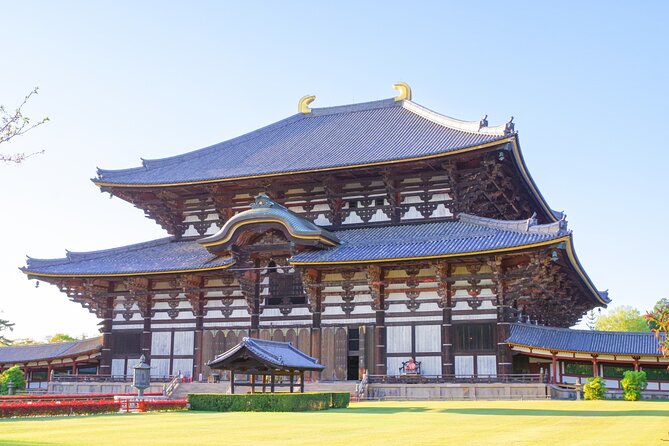
Nara can feel like a lot at first. You step into temple grounds that are huge, ponds that hide picture angles, and parks where you are literally sharing space with hundreds of deer. This tour helps because it doesn’t try to do everything in the city. It does the big pieces in a sensible order, so you get your bearings fast.
Todai-ji is the obvious anchor, but the smart move here is pairing it with Nara Park right after. That way, the day makes sense. You go from the scale of the Daibutsu, to the atmosphere of the park, to the more delicate detail of Ukimido, and then to Kofuku-ji’s iconic pagoda. If you’ve ever returned from a trip feeling like you saw a photo gallery instead of a place, this format is built to prevent that.
More Historical Tours in Nara:
- World Heritage Kyoto & Nara Uji Authentic Matcha Experience
★ 5.0 · 1,573 reviews - World Heritage Shirakawa-go and Experience Tours from Kanazawa
★ 5.0 · 4,049 reviews - Tokyo: Imperial Palace and Shogun Historical Walking Tour
★ 5.0 · 2,251 reviews
Meeting at Todai-ji Museum: the calm start you want
The tour begins at Todai-ji Museum, inside the Todai-ji General Cultural Center (Todai-ji Sōgō Bunkacen). It’s a nice kickoff because you’re starting at the temple complex rather than somewhere far away. The stop is short, about 10 minutes, and the idea is to get oriented before you hit the main gate and the grounds.
Even if you’re not a museum person, I like this approach. A quick start reduces that feeling of wandering with no plan. You’ll know what to look for as you move from the gate into the temple itself.
Also, the tour is designed for convenience: it’s near public transportation, and it ends at Kintetsu-Nara Station. That’s handy if you’re connecting back to Kyoto or just want a clean finish point.
Todai-ji Namdaimon (Great South Gate): the gate that sets the mood
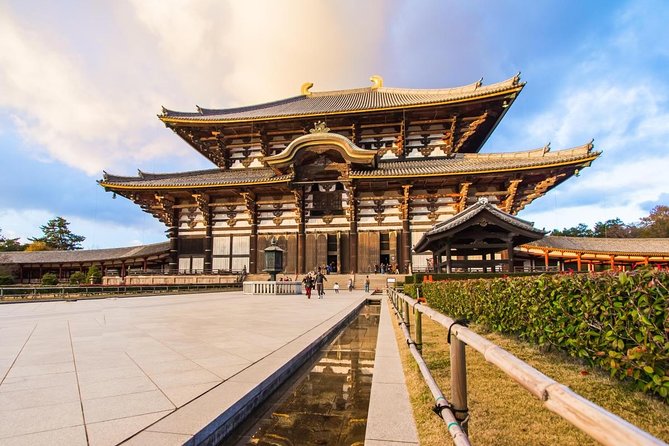
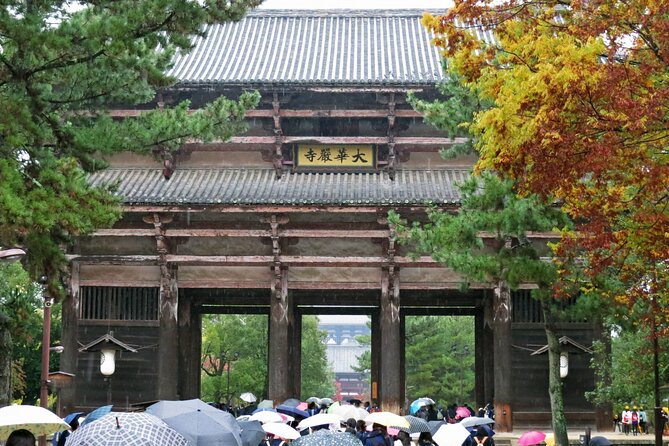
Next comes Todai-ji Namdaimon, the Great South Gate. This is one of those stops where you pause because the architecture grabs your attention immediately. The gate you see today was rebuilt in the 13th century, and it’s tied to Kamakura period design. It’s massive, all wood, and it gives you that instant “I’m in the real thing” feeling.
This is a short stop, around 10 minutes, and that’s a good thing. You want to look, absorb, then move on. The guide’s job is to point out the elements your eyes might skip when you’re just rushing for the next photo.
Todai-ji: the Daibutsu moment you’re really here for
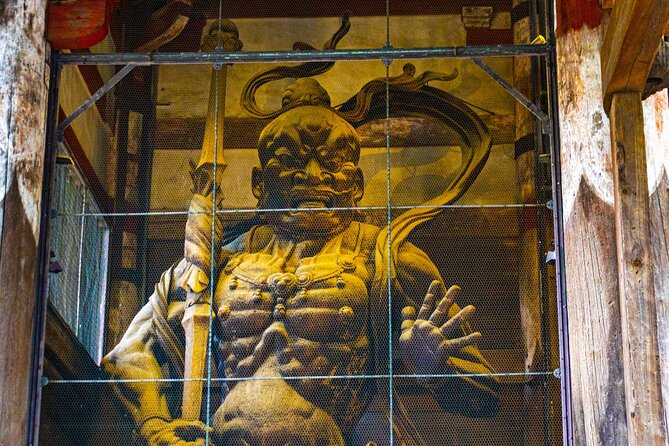
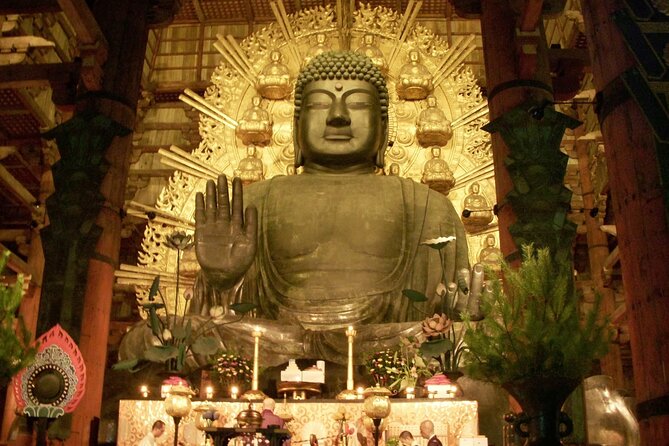
Then you enter Todai-ji proper, with about 1 hour and 5 minutes on the grounds. Todai-ji is a World Cultural Heritage site, and it’s famous for having the largest Buddha statue in Japan, the Daibutsu.
Here’s how this part becomes memorable beyond the headline. The grounds are spacious, and the temple sits in a landscape that feels natural and open. So even if you’ve seen Buddha statues before, you’re meeting this one in a setting that changes how it feels. You get the scale, the quiet, and the rhythm of walking through a major temple complex rather than just a single room.
Practical tip: pace yourself. The grounds can encourage slow wandering, but you also want to save energy for the park deer feeding later. If you’re visiting in peak heat, take slow breaks and drink water early, not after you start feeling it.
A change of pace from Nara:
- Nara Half Day Trip Walking Tour (Private Option Available)
★ 5.0 · 937 reviews - Nara Early Morning Tour (Kyoto or Osaka Departure Available)
★ 5.0 · 676 reviews - Osaka: Nara and Uji Day Trip with Deer Park and Hot Spring
★ 4.4 · 302 reviews - Kyoto/Osaka: Kinkakuji, Bamboo Forest, and Nara Deer Park
★ 4.4 · 265 reviews
Nara Park and deer feeding: do it with rules, not luck
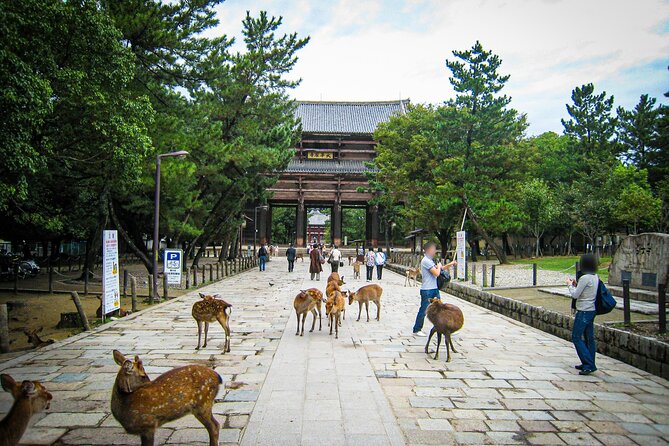
After Todai-ji, the route opens up into Nara Park. You’ll spend about 35 minutes here, and this is where the city’s most iconic feature becomes the center of the experience: deer that roam freely and are revered as messengers of the gods.
Feeding the deer is included. You get one packet of crackers, and you do it right inside the park area with your guide. I like that the cracker is portioned and handled as part of a guided moment. It reduces the chaos you might run into if you just show up and figure it out on your own.
What to expect: the deer are not background characters. They come close, and you’ll want to stand calmly and follow the guide’s direction. Keep your hands controlled, be ready for the deer to move fast, and don’t treat it like a circus. In this setting, it’s respectful fun.
Also, if you have kids, this moment tends to be a highlight because it turns sightseeing into interaction. Just be realistic about timing if it’s very hot.
Ukimido Pavilion at Sagiike: a small stop that pays off
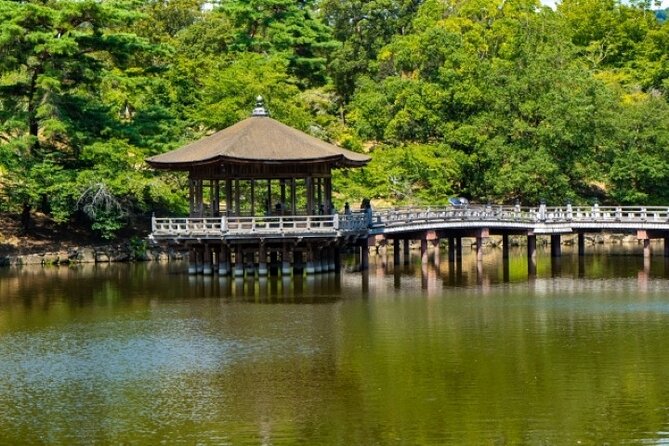
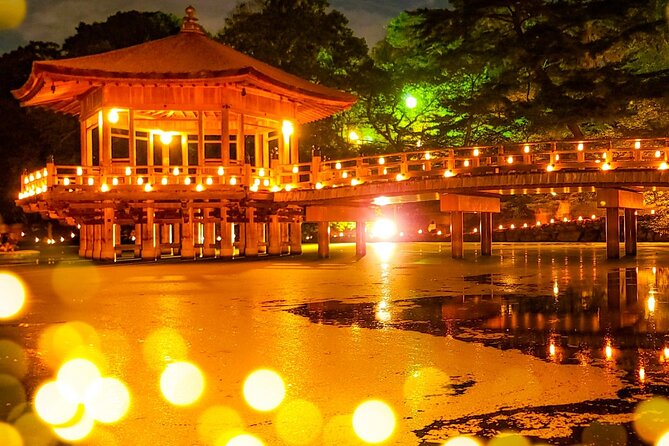
Next is Ukimido Pavilion, about 30 minutes. This one is special because it’s a hexagonal hall floating in Sagiike (the pond). On a clear day, you can see the blue of the sky, the green of nature, and the pavilion reflected in the water.
So you’re not just walking to a building. You’re getting a view composition. The pond reflection can make even a simple stop feel like a postcard moment. If the weather is flat, it still matters, but reflections are the payoff.
Practical tip: bring a moment of patience here. You might need a minute to find the best angle, and the guide can help you move to a spot where the pavilion and reflections line up.
Kofuku-ji: the five-story pagoda and why it’s iconic
Your final major stop is Kofuku-ji, with about 30 minutes. The star attraction is the Five-Story Pagoda, and it’s a standout example of traditional Japanese architecture. It was originally built in 730 and is about 50 meters tall, which is part of why it still feels dramatic even in photos.
This stop is a different mood from Todai-ji. Todai-ji gives you scale and solemn weight. Kofuku-ji gives you vertical structure and that pagoda silhouette that you can often spot from multiple angles once you know what you’re looking for.
If you only have time for a few temples, this pair is a strong match. You finish with the pagoda image still in your head, which helps when you later explore on your own.
Guides matter: George, Kimu, and the pacing effect
Because this is private, the guide’s style can make a noticeable difference. In real life, guides can be more chatty or more quiet, and some groups mention that an overly scripted delivery can feel less engaging. On the better end of the experience, guides like George and Kimu are described as friendly, polite, patient with children, and focused on explaining details in a way that makes the sights click.
Even if your guide is more reserved, the structure still helps. The stops are spaced so you get time to look and time to ask. And the route design prevents burnout, especially on a hot day. One useful tip you can take with you: go early to reduce crowd pressure in the park and around the big temple spots.
Price and value: what you’re really paying for
The price is $96.67 per person for a private tour that runs about 3 to 4 hours. That might sound steep until you count what’s included.
You’re getting:
- a professional tour guide
- entrance fees for the shrines and temples visited
- the deer feeding experience, including one packet of cracker
When you factor in admission fees plus the value of a guide who can point out what matters, the price starts to feel fair, especially if you’re splitting cost among a small group. It’s also a strong value if you’re a first-timer who wants to avoid the guesswork of planning your own route across Nara’s most famous sites in a few hours.
If you’re trying to squeeze Nara into a half day from Kyoto, it’s also practical. This kind of route is built for efficiency, not wandering until your legs beg for mercy.
Timing and heat: how to enjoy Nara Park without suffering
This tour is outdoors enough that weather matters. The provider notes that the experience requires good weather, and summer can be intense, especially in August, when temperatures often exceed 35°C.
Here’s what I’d do in your shoes:
- Start the day earlier in the morning if your schedule allows. One guide style tip you can copy is to go early to avoid crowd stress.
- Hydrate before you feel thirsty. Bring water and take small breaks.
- Use shade tools. A parasol can help more than you think in direct sun.
- Wear comfortable shoes you already trust.
Also, keep in mind that deer feeding happens in the park area. That means you’ll likely spend a bit of time standing in one place, so heat can feel even more direct. Plan for that, and you’ll enjoy the interaction instead of wishing it was over.
Who should book this private Nara tour
This is a great fit if you:
- are visiting Nara for the first time
- want a structured route without planning every turn
- care about seeing Todai-ji, Nara Park, Ukimido Pavilion, and Kofuku-ji in one half day
- like the idea of deer feeding as an actual included experience, not a maybe
It may be less ideal if:
- you hate outdoor walking in heat and you’re traveling during the hottest months without proper shade and water
- you expect a highly interactive guide style, every second of the time. Because it’s private, you can ask questions, but some groups are still more comfortable with a detailed script approach than others
Should you book Nara World Heritage Private Tour?
If you want a fast, focused Nara highlight circuit with the big names and the deer feeding moment handled for you, I’d book it. The tour’s strength is that it gives you the “best of Nara” layout in about half a day, while also giving you enough time at each stop to actually look.
If you’re the type who would otherwise spend your day arguing with yourself over which temple to do first, this private structure is worth it. And if you show up ready for the heat, you’ll turn what could be a stressful walk into a very satisfying Nara story.
FAQ
How long is the Nara private tour?
It lasts about 3 to 4 hours.
Where does the tour start?
It starts at Todai-ji Museum, inside the Todai-ji General Cultural Center at Todai-ji Suimoncho 100 (630-8208 Nara).
Where does the tour end?
The tour ends at Kintetsu-Nara Station, around Nishimikadochō 29 (630-8215 Nara). Since it is private, you can discuss dispersal based on your plans after the tour.
Is the tour private?
Yes. This is a private tour, meaning only your group participates.
Is deer feeding included?
Yes. You get one packet of cracker to feed the deer.
Are temple and shrine admissions included?
Yes. Entrance fees for the temples and shrines you visit are included.
What’s the approximate walking style and outdoors time?
It is a walking tour that includes time in outdoor areas like Nara Park, so you should plan for sun and heat.
What should I bring for hot weather?
The guidance recommends hydration and heat protection for hot summer days, especially August. A parasol for shade is specifically suggested.
What happens if the weather is bad?
The experience requires good weather. If it’s canceled due to poor weather, you’ll be offered a different date or a full refund.
Can I cancel for a full refund?
Yes. You can cancel for a full refund if you cancel at least 24 hours before the experience start time.
How do I get the tickets?
You receive a mobile ticket.
Latest write-ups near Nara
- Nara Highlight Walking Tour with Furoshiki Experience with Lunch★ 5.0 · 73 reviews
- Nara – Highlights Bike Tour★ 4.5 · 89 reviews
- All must-sees in 3 hours – Nara Park Classic Tour! From JR Nara!★ 5.0 · 108 reviews
- Nara:Authentic Tea Ceremony(Max 5 ppl) -Master Matcha Making★ 5.0 · 119 reviews
- Nara Early Bird Tour (Kyoto Departure Option Available)★ 4.9 · 142 reviews
- Nara 6hr Private Tour with Government-Licensed Guide★ 5.0 · 219 reviews
- Nara Early Morning Tour (Kyoto or Osaka Departure Available)★ 5.0 · 676 reviews
- Nara Half Day Trip Walking Tour (Private Option Available)★ 5.0 · 937 reviews
Historical Tours, compared.
World Heritage Shirakawa-go and Experience Tours from Kanazawa
Read our review →
Imperial Palace and Shogun Historical Walking Tour
Read our review →
World Heritage Kyoto & Nara Uji Authentic Matcha Experience
Read our review →
Kyoto Gion: 2-Hour Geisha Culture & History Walking Tour
Read our review →
World Heritage Shirakawa-go Morning Guided Tour
Read our review →
Hiroshima Peace (Heiwa) Walking Tour at World Heritage Sites
Read our review →
Shinjuku Historical Walking Tour & Secret Backstreets
Read our review →Browse the lists this tour appears in