
Reviewed · SUMO EXPERIENCES
Tokyo Sumo Morning Practice: Viewing & Exclusive Interaction
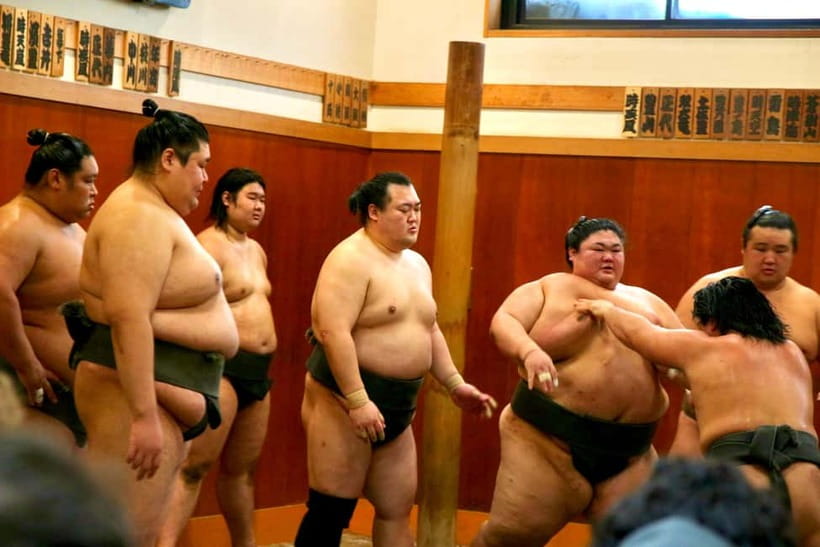
This Tokyo sumo morning practice experience is compelling because it trades the usual performance for the real, early pace of a working stable. You start in the quiet hours of Sumida and then step into the kind of atmosphere most people only see from far away.
I love the chance to ask questions directly after training, and I love the way the guides make sumo etiquette feel simple instead of mysterious. I also like the official souvenir, an authentic banzuke ranking sheet in a presentation folder.
The main drawback is practical: it is an active morning visit where you will be watching closely, sitting on floor cushions or using stools, and keeping quiet during practice. If you hate early starts or sitting on the floor, plan accordingly.
Key highlights at a glance
- Real training, not a staged show, plus guidance that helps you read what you are seeing
- Close seating options with zabuton floor cushions in front rows and stools in the back
- Exclusive interaction with a Q&A and photo time with active wrestlers
- Official banzuke souvenir placed in a special folder
- Deep Q&A at the park to answer questions you did not even know to ask
Why this Tokyo Sumo Morning Practice is different from a show
Tokyo is full of cultural experiences, but sumo is one of those things where the difference between real and staged matters. Here, you are not just watching from the edge. You are joining a working stable for morning practice, with your guide setting etiquette so you do not accidentally get in anyone’s way.
You also get a rare payoff after the training. The tour is built around more than photos. It includes an exclusive Q&A where you can ask about daily routines, training life, and the mindset behind the sport. Guides like Sarah, Sana, Haru, Momo, and Ryoko come up repeatedly in feedback, and the common thread is that they help you turn curiosity into smart questions.
For me, that is the real value. Watching is great, but understanding what you are watching makes it stick.
More Sumo Experiences in Tokyo:
- Tokyo: Sumo Show Experience with Chicken Hot Pot and a Photo
★ 4.8 · 6,678 reviews - Tokyo: Sumo Show and Dining Experience
★ 4.8 · 2,742 reviews - the SUMO show
★ 5.0 · 1,960 reviews
Getting there: Narihira Park meeting point and quiet-morning manners
You meet near the multipurpose restroom at Narihira Park. Your guide checks names and hands out sumo-related materials, then gives a quick run-through of manners and rules before you go anywhere near the stable area.
This matters more than you might think. Sumo practice has a rhythm, and the wrestlers need calm. The tour sets you up to follow house rules, so you can focus on the training instead of worrying if you are doing something wrong. It also helps that the schedule is early, when the atmosphere is serious but still welcoming to visitors who behave respectfully.
A practical note: the tour does not include transportation to the meeting point. Build in buffer time so you arrive without rushing. Rushing is the enemy of quiet, and quiet is the ticket.
Before the action: what your guide covers and what to watch for
Right after the check-in, you get an introduction that covers sumo history, basics of rules, and etiquette. This is not filler. It is what helps you understand why certain moments matter, why silence is expected, and what the training sequence is trying to build.
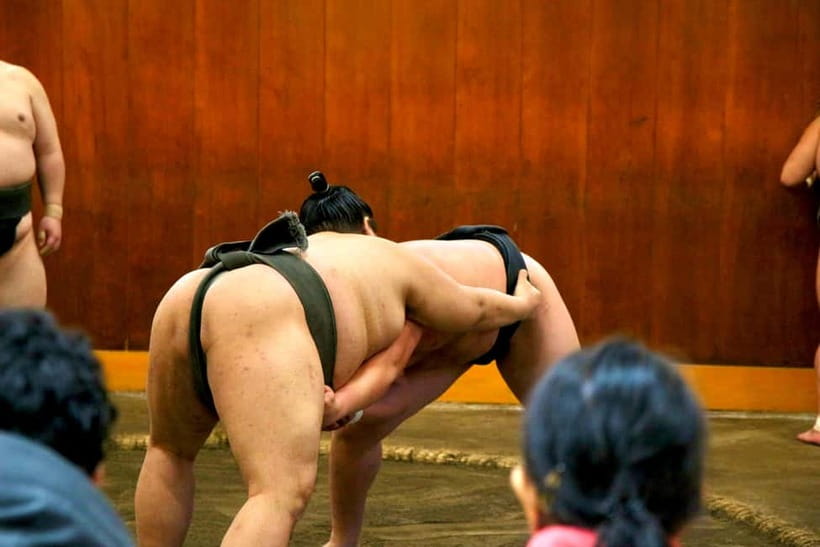
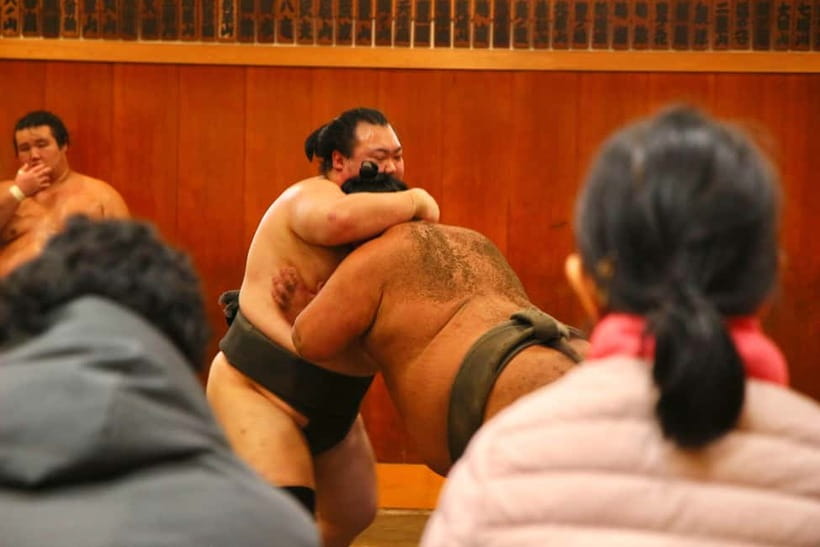
Even without getting technical, you can usually spot the structure of a stable day: warm-up, focused practice drills, and sparring-like movements that show how wrestlers match strength, balance, and timing. With a good guide, you start to notice details instead of just seeing bodies collide.
The tour also encourages questions early and again later. If you go in with a few topics you want covered, you will leave with clearer answers. A simple list in your Notes app helps, especially on a morning where your brain is still waking up.
Inside the stable: training atmosphere, seating choices, and timing
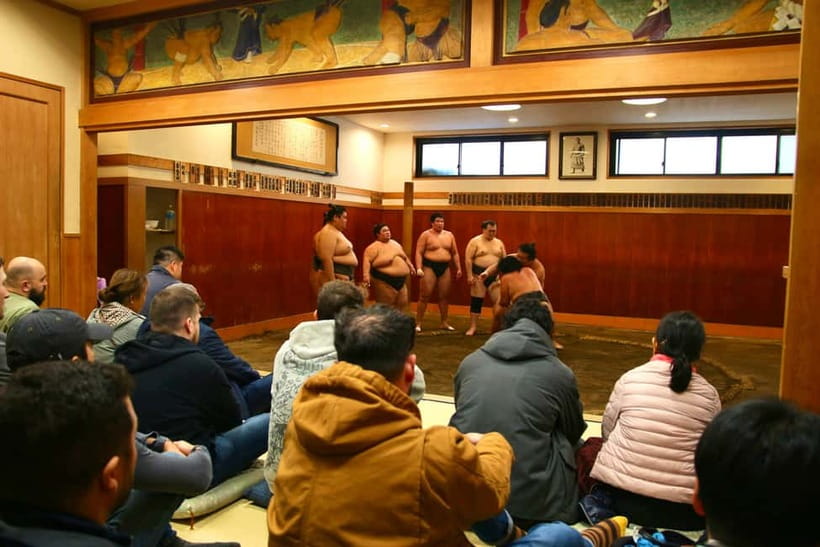
A short walk brings you to an active sumo stable. This is where the visit becomes truly personal. You are close enough to feel how physical the training is, and you can see the intensity in how wrestlers move, correct, and repeat.
A change of pace from Tokyo:
- Mt Fuji and Hakone 1-Day Bus Tour Return by Bullet Train
★ 5.0 · 26,383 reviews - 1-Day Tokyo Bus Tour
★ 5.0 · 14,250 reviews - Tokyo: TOKYO SKYTREE® Admission ticket
★ 4.5 · 11,192 reviews - Tokyo: teamLab Planets TOKYO Digital Art Museum Entry Ticket
★ 4.6 · 9,779 reviews
Seating options that actually change the experience
You have flexible seating options:
- Zabuton floor cushions in the front rows for a close, grounded view
- Stools toward the back if you do not want to sit on the floor
Choosing right is worth your time. If you want maximum closeness, zabuton seats help. If you are tall, have knee issues, or just do not enjoy floor sitting early in the morning, the stools make the difference between enjoying the tour and counting minutes.
Photography rules and noise rules
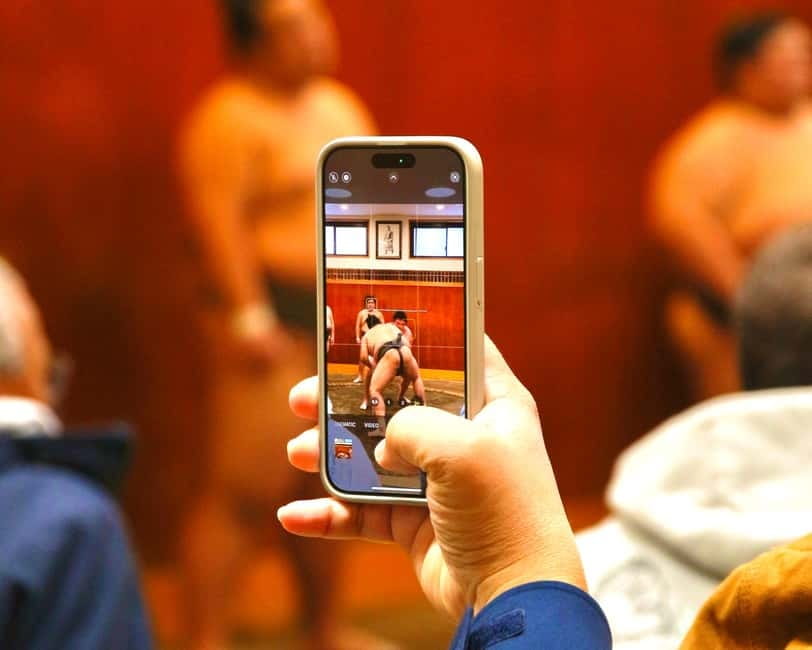
Photography is allowed, but you must remain quiet during practice. Flash photography is not allowed. Video recording and audio recording are also not allowed, along with food and alcohol.
That rule set is not meant to spoil your fun. It keeps the space respectful and keeps attention on the training. The tour is designed so you can take photos without disrupting the session.
Tournament period timing
There is a special note for Grand Sumo Tournament periods, roughly two weeks in January, May, and September. During tournament time, practice starts about 30 minutes earlier, and the viewing window is about 1 hour. The structure is the same, but your schedule gets tighter, so double-check your specific date.
Exclusive interaction: Q&A and photos with active wrestlers
After you watch practice, the tour shifts from observation to conversation. This is the part that repeatedly earns top marks.
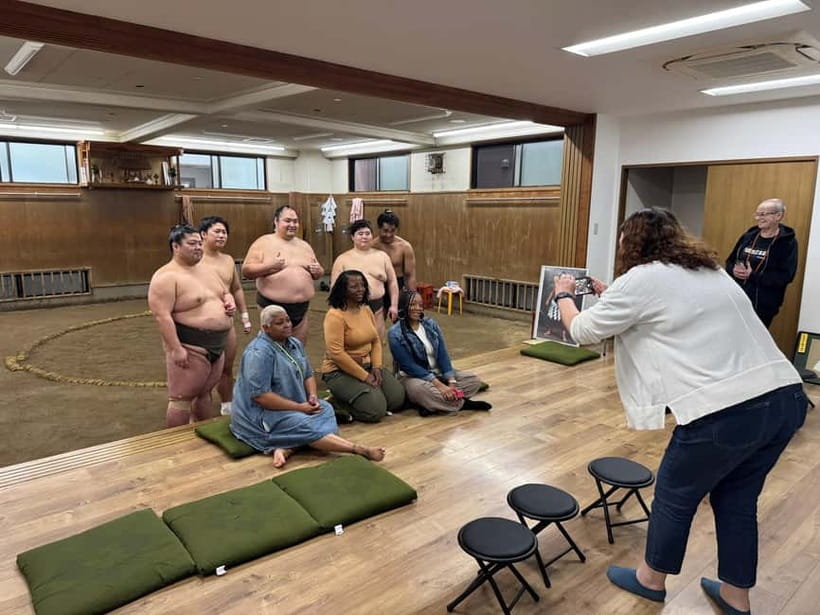
Through your guide, you get a direct Q&A and photo session with active wrestlers. Your questions can range from daily life and training routines to how athletes keep their mindset sharp. This is also where good guidance pays off, because it helps translate what you want to ask into something that gets a useful answer.
Some feedback also mentions extra interaction that goes beyond conversation. In a few cases, audience members were invited to try sumo moves or even experience sparring in a controlled way with a wrestler, depending on the session. You should treat this as “possible,” not guaranteed, but it is a reminder that this experience is about access, not a one-way show.
Photo time is also guided. Your guide helps you understand where to stand, how to behave in the moment, and how to keep the atmosphere calm. The photos feel more like a cultural exchange than a quick tourist snapshot.
The banzuke souvenir and the park Deep Q&A that ties it together
After the stable visit, you return to Narihira Park for a special closing session. Here you receive an official banzuke ranking sheet in a specially designed souvenir folder.
That banzuke piece is more than a keepsake. It is the sport’s formal language, the ranking document that connects training performance to tournament outcomes. Seeing one in person gives the day you just experienced a concrete anchor. You can take the souvenir home and remember not just the spectacle, but the system underneath it.
Instead of rushing you into a meal, the tour schedules time for a Deep Q&A at the park. Your guide stays with you to answer lingering questions about traditions, etiquette, and what you are likely to encounter as you continue exploring Tokyo. People who walk away feeling unsure about what they just saw usually leave happier here, because they get a final chance to connect the dots.
The tour wraps around 11:00 AM, which is a big plus. You are not stuck in a long day of structured activities. You can head straight toward nearby areas like Tokyo Skytree or Asakusa while the experience is still fresh in your mind.
Price and logistics: what $93 buys you in real terms
At $93 per person for about 3 hours, this is not a budget activity. But it does not price like a generic “look from behind glass” event either.
Here is what you are paying for, in practical terms:
- Stable access and viewing as an organized visit
- An English-speaking guide who handles etiquette and helps you understand the training
- The included souvenir: an official banzuke in a folder
- The structured interaction time after practice, including Q&A and photos
If you are the type of traveler who values cultural context, that interaction time is a major part of the value. If you only want to watch, you might find cheaper ways to see sumo-related scenes, but you would miss the explanation and the conversation.
This price tends to make sense if you fall into one of these groups:
- You like hands-on access, especially morning experiences where you see work, not performance
- You enjoy asking questions and getting real answers through a translator or guide
- You want a meaningful souvenir that connects to the sport’s ranking system
Practical tips for a smooth experience (and better photos without flash)
A few details can make the difference between an okay visit and a genuinely memorable one.
Wear comfortable clothes for a morning and for sitting
You will spend time seated on either zabuton cushions or stools. Dress in layers because early morning can feel cool, and you will be attentive for a while.
Keep your phone ready, but follow the rules
Photography is allowed, but no flash. Video recording and audio recording are not allowed. If you are the person who automatically records everything, put that habit on pause.
Bring curiosity, not a script
The Q&A is most satisfying when your questions are personal and specific, like:
- What training habit matters most day to day
- How they prepare mentally for practice
- What people often misunderstand about sumo traditions
Your guide will help you phrase things, but your interest helps steer the conversation.
Expect an intense, physical training atmosphere
Even if you know the basics, sumo practice can feel intense up close. That is normal. The more you treat it like watching real work, the more respect you will show, and the more comfortable the session feels.
Is this Tokyo sumo tour worth booking for you?
I think this is a strong booking for the right traveler. It is best if you want authentic access, not a packaged show, and if you value conversation with real athletes through a guide.
I would skip it or choose carefully if:
- You cannot handle early mornings
- You strongly dislike sitting on the floor, even if stools are available
- You want a long meal break during the tour (this one prioritizes Q&A and training time instead)
For everyone else, this is one of those Tokyo experiences that leaves you with more than photos. You get context, etiquette, and a tangible souvenir, plus the chance to ask questions face to face. That combination is hard to recreate on your own.
FAQ
Where is the meeting point for the sumo morning practice tour?
You meet near the multipurpose restroom at Narihira Park. Your guide will check your name and provide materials related to sumo.
How long is the tour, and what time does it end?
The tour lasts about 3 hours and wraps up around 11:00 AM.
Is transportation included to the meeting point?
No. Transportation to the meeting point is not included.
What is included in the price?
The price includes the sumo stable visit fee, guidance by an English-speaking guide, and a special souvenir.
What souvenir do I receive?
You receive an official banzuke ranking sheet in a specially designed souvenir folder.
Can I take photos during the practice?
Photography is allowed. You just need to remain quiet during practice and follow the seating rules. Flash photography is not allowed.
Can I record video or audio?
No. Video recording and audio recording are not allowed.
Is food allowed during the tour?
No. Food is not allowed.
What if my tour date falls during the Grand Sumo Tournament?
During the Grand Sumo Tournament period, practice starts about 30 minutes earlier, and the viewing time is about 1 hour.
Who should not book this experience?
Children under 6 years are not suitable for this tour.
Latest write-ups near Tokyo
- Harajuku Private Tour: Kawaii Fashion & Animal Cafe Included★ 5.0 · 69 reviews
- Mt Fuji Customizable Private Tour English Speaking Driver Pick-up★ 5.0 · 69 reviews
- Tokyo Night Cooking Class: 5 Home-Cooked Japanese Dishes★ 5.0 · 70 reviews
- Tokyo: Sumida Aquarium Entry Ticket★ 4.6 · 70 reviews
- Private Customizable Walking Tour of Tokyo★ 5.0 · 70 reviews
- Official Japan Go-Kart Through Tokyo Bay / Ginza (IDP Required)★ 4.5 · 71 reviews
- Wagyu Beef and Sake Pairing Foodie Tour in Tokyo★ 5.0 · 71 reviews
- Experience Big soba knife Soba Making Class in Tokyo Kappabashi★ 5.0 · 71 reviews
Sumo Experiences, compared.
Sumo Show Experience with Chicken Hot Pot and a Photo
Read our review →
Tokyo Shinjuku Sumo Show & Experience with Photo
Read our review →
Sumo Show & Experience w/ Optional Kimono & Hot Pot
Read our review →
Authentic Sumo Experience in Tokyo: Enter the Sanctuary
Read our review →Browse the lists this tour appears in