
Reviewed · HISTORICAL TOURS
Fukuoka Essentials: History, Culture, & Charms
Fukuoka is one of those Japanese cities where the mix feels effortless, and this tour is built for that. It links Zen temples, the street-level rhythm of Hakata, and a finale from Hakata Station’s rooftop view. I love that the route starts at Shofukuji, Kyushu’s oldest Zen Buddhist temple, and I also like the sensory stop at Kawabata Shopping Street, where you get a real taste of everyday Fukuoka.
The main thing to know is that this is a walking-first experience, with short on-foot stretches between each site. If you want lots of breaks or you move slowly, wear comfortable shoes and consider arranging transport if needed.
Quick highlights you will feel immediately
- Shofukuji Temple: Kyushu’s oldest Zen Buddhist temple, a calm start that sets the tone fast
- Tochoji Temple’s Buddha focus: a meaningful contrast to Zen serenity
- Kushida-jinja, the festival heart: see how the shrine connects to Hakata Gion Yamakasa
- Kawabata Shopping Street time: a focused window to shop, snack, and watch daily life
- Sumiyoshi Jinja by the sea: an architectural change of pace and a quieter reset
- Hakata Station rooftop: the easiest way to get a big-city view without extra planning
A temple-to-market walk that makes Fukuoka feel readable
This tour works because it does not try to cram everything in. Instead, it gives you a clean line from sacred spaces to street life, then finishes with a wide-angle view of the modern city. Walking between the stops also helps you understand where Hakata’s center actually breathes, not just where it is on a map.
I like that the focus stays practical: what to look for, what the places mean, and how each stop fits into the broader Fukuoka story. You are not left wandering alone with a phone and a vague sense of direction. With a private guide, you also get better pacing for your interests, whether you care more about temple details or food-and-shopping energy.
More Historical Tours in Fukuoka:
- World Heritage Shirakawa-go and Experience Tours from Kanazawa
★ 5.0 · 4,049 reviews - Tokyo: Imperial Palace and Shogun Historical Walking Tour
★ 5.0 · 2,251 reviews - World Heritage Kyoto & Nara Uji Authentic Matcha Experience
★ 5.0 · 1,573 reviews
Meeting at CASETiFY STUDiO and the rhythm of an easy start
You meet at CASETiFY STUDiO アミュプラザ博多店, right next to the main entrance under the big clock. That is helpful because it is a clear landmark, and it keeps your morning stress low. From there, you have a short walk before the first guided temple stop, so you settle into the area quickly.
This first stretch matters more than it sounds. You are not just traveling to a site, you are getting your bearings around Hakata Station’s orbit. Even before you reach the temples, you start noticing the urban flow, the crowds thinning and thickening by block, and how the shrine and shopping areas connect.
If you are staying nearby, there is also hotel meetup available on request for central locations, which can save time on your first day.
Shofukuji: Kyushu’s oldest Zen temple and the calm you can actually notice
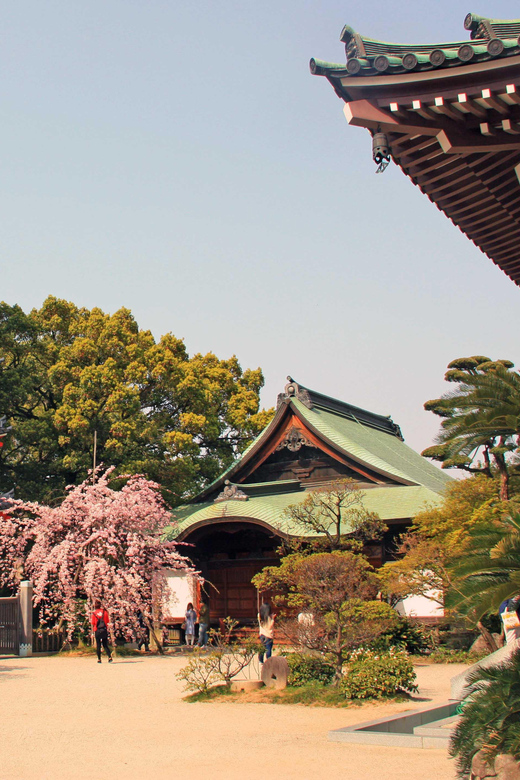
The tour’s tone shifts right away with Shofukuji (Shojukuji), the Kyushu favorite for anyone who wants Zen Buddhism at the roots. This is not a hurried look. You get a guided visit where you can slow down and notice the architecture and the quiet structure of the grounds.
I like this start because it makes the rest of the tour easier to enjoy. When you understand the temple atmosphere you are stepping into, the later shrine and shopping streets feel less random. You start seeing the city as layered, not as a list of places.
A practical tip: take a moment to step back from the most photographed angles and just listen. Temples in Japan often feel strongest when you are not racing to the next highlight.
Tochoji Temple: Buddha presence as a contrasting chapter
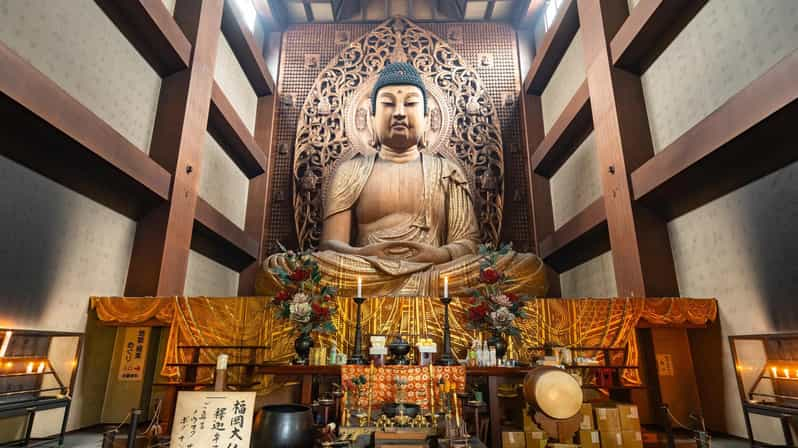
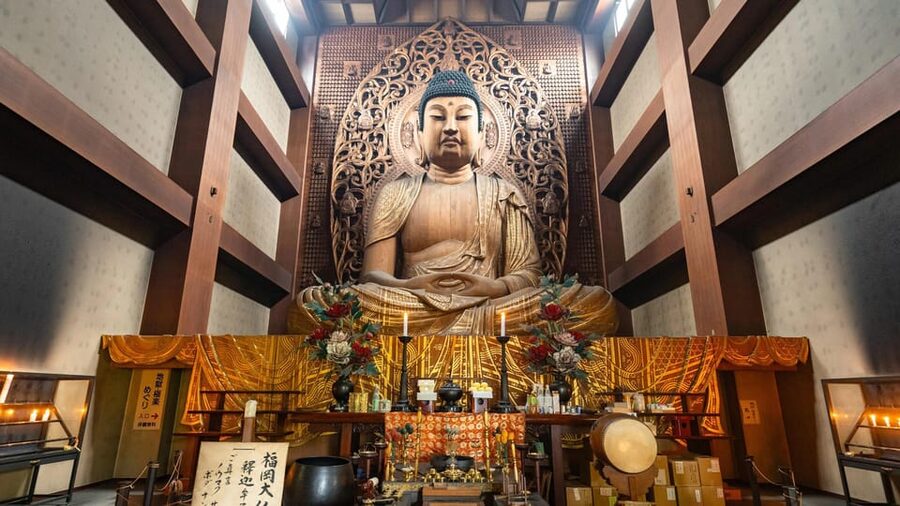
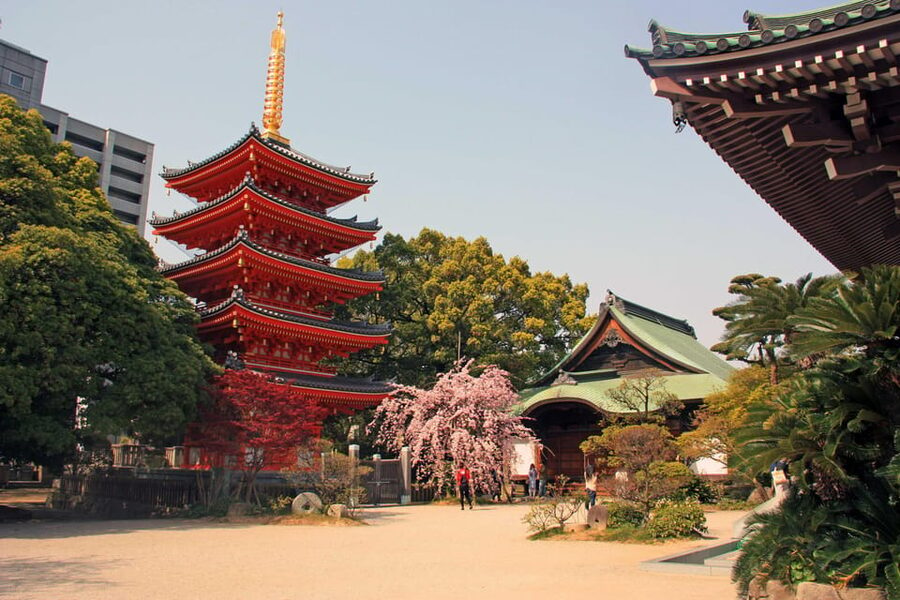
After Shofukuji, you move to Tochoji Temple for another guided stop. The main draw here is that it features a magnificent Buddha statue, and that visual anchor gives you a different kind of spiritual focus than what you likely felt at Shofukuji.
This contrast is valuable for your understanding. Zen gardens and Zen temple design can feel restrained and controlled. A large Buddha statue, by contrast, pulls your attention forward, grounding the visit in a more direct, instantly readable image. Together, the two stops make your temple time feel varied instead of repetitive.
If you like photos, you will get them here. If you like context, the guide’s explanation is what makes the stop worth slowing down for, because the statue does not exist in isolation. It sits within the broader spiritual landscape of the area.
A change of pace from Fukuoka:
- Mt. Aso & Takachiho Gorge Tour with Optional Boat Ride
★ 4.7 · 222 reviews - Fukuoka: Takachiho Gorge & Scenic Railway One Day Tour
★ 4.8 · 178 reviews - Private Fukuoka Tour with a Local, Highlights & Hidden Gems 100% Personalised
★ 5.0 · 143 reviews - Fukuoka Your Way: 100% Customisable Private Tour with Local Guide
★ 5.0 · 83 reviews
Kushida-jinja: the shrine that powers Hakata Gion Yamakasa
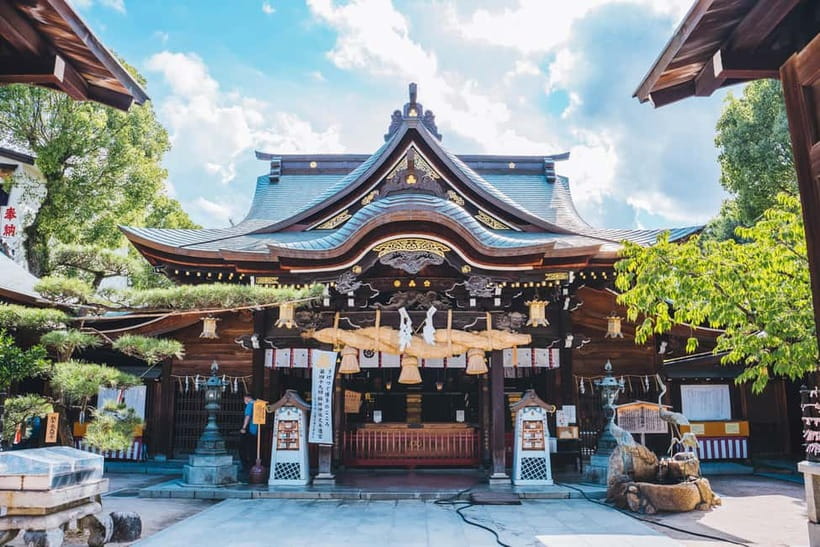
Next up is Kushida-jinja, Fukuoka’s main shrine. This stop is where the tour starts to feel like Hakata in motion, because the shrine is tied to major local festivities, including the Hakata Gion Yamakasa festival.
The guide-led part is important here. Shrines can look similar at a glance, but the details are the story. You get to admire the intricate buildings and learn what makes this shrine central in the calendar. Even if you are not visiting during festival season, Kushida-jinja still carries that sense of rhythm.
If you enjoy cultural nuance, this is one of the best moments to ask questions. I find that a good guide can connect physical details like architectural design to the living traditions nearby. You leave with a clearer idea of how community celebrations fit into everyday places of worship.
Kawabata Shopping Street: 15 minutes to see, hear, and taste
Then comes the most sensory stop: Kawabata Shopping Street. You get free time for about 15 minutes, which is enough to get your bearings, browse a bit, and pick up something small if it catches your eye. This is not a long shopping spree, it is a chance to experience the vibe.
What makes Kawabata worth your attention is that it is made for daily life. Shops pack in goods, you get the sounds of people moving and calling, and food aromas start working on your appetite right away. Even if you skip buying, you still learn a lot from how the street feels and how people spend their time there.
Practical approach for your short free window:
- Decide early if you want food, a small souvenir, or just browsing
- Keep your purchases light so you are not rushing later
- Watch what locals do, then copy the simple choices
And yes, you can take this street time as a snack break. Food and drinks are not included, so budget for your own treats.
Sumiyoshi Jinja: a seaside-feeling pause in the middle of the city
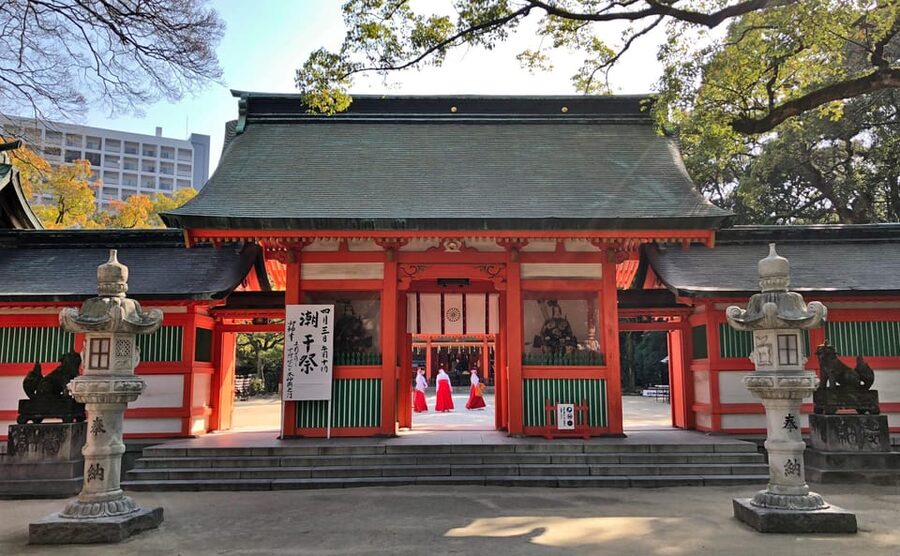
After Kawabata, you head to Sumiyoshi Jinja. This shrine is known for a different architectural feel compared with many other shrines you might see in Japan, and it also has a special connection to the sea.
That sea link changes the mood. In a dense city, knowing there is a coastline connection makes the shrine feel like a breath of quieter space. I like that this stop acts like a reset button after the street noise. It helps you return to the tour with fresh attention for the finale.
If you enjoy noticing design differences, pay attention to what looks distinct in the buildings and the overall layout. A guided explanation helps you see beyond the obvious and understand why the style matters.
Hakata Station rooftop: the easiest big view of Fukuoka
The tour closes with Hakata Station and a scenic walk en route to the rooftop viewpoints. This is where you get a wide, practical perspective of Fukuoka, and it is a smart ending because the city starts to make more sense after the temple and shrine sequence.
The rooftop view is especially good as the light changes. When the sun drops and the city lights start turning on, you can watch Fukuoka shift into night mode. That is when photos look better, but it is also when the moment feels reflective, not just visual.
One helpful detail: the tour notes that you may catch seasonal or station-area happenings. A past guest even reported seeing a sumo wrestler during a Hakata Station event, which shows how lively the station can get on certain dates. If your timing overlaps with a happening, your rooftop payoff may feel even more memorable.
Price and value: what $58 buys you in real terms
The price is $58 per person, and the value comes from how the tour is packaged. You are not only paying for entry to a couple of famous locations. You are paying for a private and personalized experience with a local host, plus structured pacing through multiple guided stops.
It also matters that the tour is built around walking. You avoid the time cost of figuring out transit between scattered points, and you get enough time at each site to feel like more than a quick glance.
A note on duration: the activity shows a 3 to 8 hour range depending on starting times, while the included description specifies a 3-hour tour with a local host. In practice, that means you should check the start-time options you see when you book, so you know how long your specific tour will run.
What is not included is also clear. Food and drinks are on you, and tickets to any attractions are not included. The tour fee covers the guided experience and the walking plan, with transportation costs not included, though other transport can be arranged for an additional cost.
Walking pace, private tailoring, and what to do if you need adjustments
This is a private experience, and that matters for comfort and enjoyment. With one group, the guide can adjust pacing to your needs and interests. Past guests described guides as engaging and capable of tailoring the tour on the go, including adjusting speed for someone with temporary physical impairment. That tells me this format is not rigid.
Still, you should go in expecting a lot of walking. The schedule includes short on-foot segments between stops, including around 10 minutes between some temple points, plus additional walking to reach the next shrine and the station. If you want to minimize steps, it is smart to ask about transport options when you confirm your tour, since walking is the core structure.
Good shoes win here. Even with a guide, your body does the work of moving from place to place, so comfort pays off.
English and Czech guide support, and who this tour fits best
This tour runs with a live guide in English and Czech, and it is a good fit if you want your Japan time to feel guided without feeling rushed. If you like to understand what you are seeing, this format helps because each stop has a purpose, not just a location.
It is especially suitable for:
- First-timers who want a clean overview of central Hakata without getting lost
- People who like temples and shrines but also want street-level city life
- Travelers who prefer private attention over big group tours
- Anyone who wants an easy finale with a city view from Hakata Station rooftop
If you are the type who hates any walking at all, you might prefer a different style of tour. But if you can handle a steady pace with breaks, this is a strong way to learn how Hakata works.
Should you book Fukuoka Essentials: History, Culture, & Charms?
I think you should book this tour if you want a short, high-impact walk that mixes Shofukuji, Kushida-jinja, Kawabata Shopping Street, and a Hakata Station rooftop view into one smooth story. For $58, the big value is the human context, the private pacing, and the fact that the route is designed to help you read the city instead of just collecting photos.
Skip it if you strongly prefer only one type of site, like temples only, or if walking for several segments is a problem for you. Otherwise, this is a practical and memorable way to get your bearings in Fukuoka fast, with just enough freedom to taste and browse on the street.
FAQ
Where do I meet the guide?
You meet at CASETiFY STUDiO アミュプラザ博多店, right next to the main entrance under the big clock.
How long is the tour?
The duration is listed as 3 to 8 hours, and the included experience description also mentions a 3-hour tour with a local host. Starting times vary by availability.
What’s included in the price?
The tour includes a private and personalized experience, a local host, and walking experience. Hotel meetup is available on request for central locations. Food, drinks, and attraction tickets are not included.
What language is the guide available in?
The live tour guide is available in English and Czech.
Is the tour private?
Yes, private group available is listed.
Can I cancel for a refund?
Yes. Free cancellation is offered if you cancel up to 24 hours in advance for a full refund.
Latest write-ups near Fukuoka
- Fukuoka Sumo Tournament November 2025 with a Sumo Expert Guide★ 5.0 · 21 reviews
- Fukuoka: Takachiho or Minami Aso Customizable 1-Day Tour★ 5.0 · 21 reviews
- Fukuoka Evening Tours: Yatai, Izakaya, Karaoke and more★ 5.0 · 21 reviews
- Fukuoka: Customized Tour with Local Guide★ 4.9 · 22 reviews
- Kyushu Grand Sumo Tournament Viewing Tour with English Guide★ 5.0 · 22 reviews
- Kyushu Tour From Fukuoka: Itoshima Nature & Coastal Scenery★ 4.7 · 24 reviews
- Fukuoka: Hakata Doll Painting Experience★ 4.8 · 30 reviews
- Fukuoka: Mount Aso Volcano, Kumamoto Castle, Grasslands Day Tour★ 4.5 · 33 reviews
Historical Tours, compared.
World Heritage Shirakawa-go and Experience Tours from Kanazawa
Read our review →
Imperial Palace and Shogun Historical Walking Tour
Read our review →
World Heritage Kyoto & Nara Uji Authentic Matcha Experience
Read our review →
Kyoto Gion: 2-Hour Geisha Culture & History Walking Tour
Read our review →
World Heritage Shirakawa-go Morning Guided Tour
Read our review →
Hiroshima Peace (Heiwa) Walking Tour at World Heritage Sites
Read our review →
Yanaka Walking Tour: Historic and Traditional District of Tokyo
Read our review →Browse the lists this tour appears in