
Reviewed · CASTLE TOURS
Kyoto: Imperial Palace & Nijo Castle Guided Walking Tour
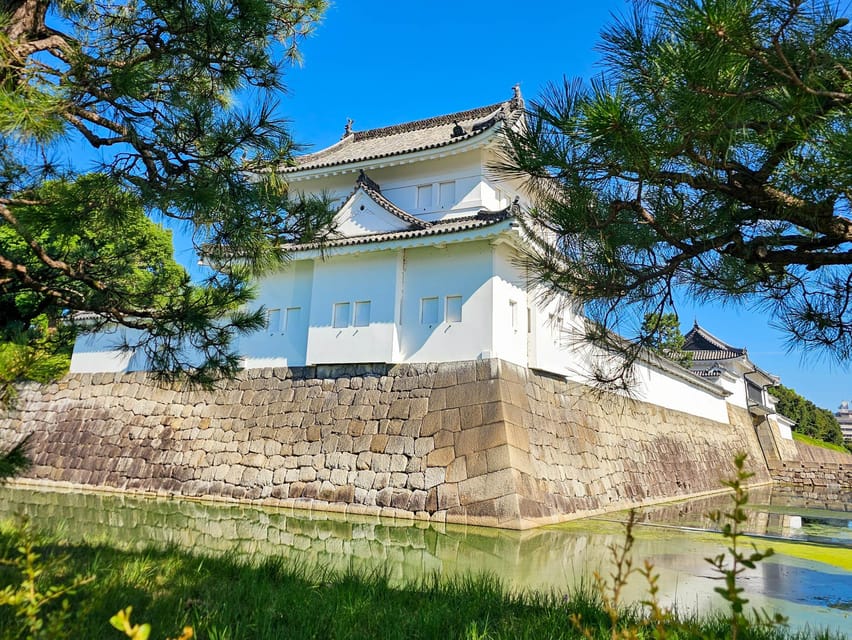
Kyoto is one of those cities where power has a physical shape. This guided walk puts you in two places that represent two different eras of rule, and you get help noticing what you would otherwise miss. I like that it is short and focused, so you can fit it into a busy day without turning Kyoto into a blur. I also like the small group size, capped at 9, which makes it easier to ask questions.
The day is built around two guided segments: Nijo Castle first, then the Kyoto Imperial Palace. One possible drawback is that the Nijo Castle visit is limited to specific areas, so if you want to roam the full complex on your own, this may feel a bit structured.
Key Points I’d Prioritize
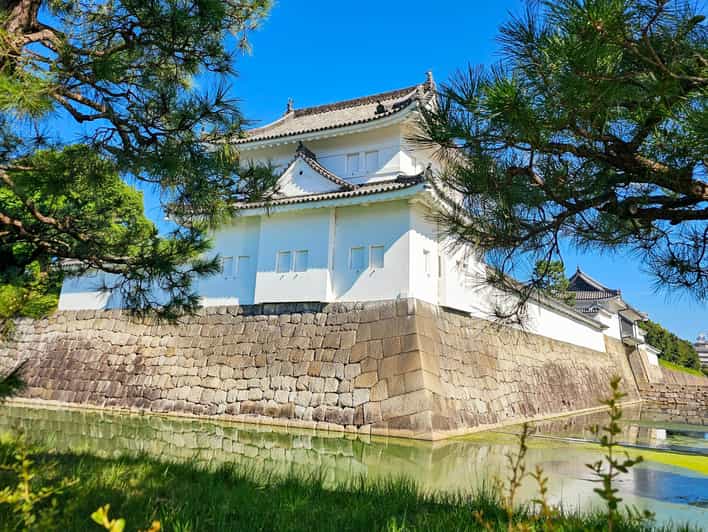
- Two eras of Japanese authority in one afternoon, emperor-side at the Imperial Palace and shogun-side at Nijo Castle
- Small group (max 9), so you get more back-and-forth than a big bus tour
- Nijo Castle access is specific, with the guide bringing you to the Ninomaru-goten Palace and Garden
- Included entry fees for Nijo Castle, including the Ninomaru Goten Palace and Painting Gallery
- Finish point is Imadegawa Station, useful if you are heading elsewhere after the tour
Two Power Centers in One Walk (Why This Tour Works)
What makes this tour click is that it compresses two major Kyoto stops into about 3 hours. You are not spending half your day commuting or waiting around. You are walking, seeing, and learning as you go.
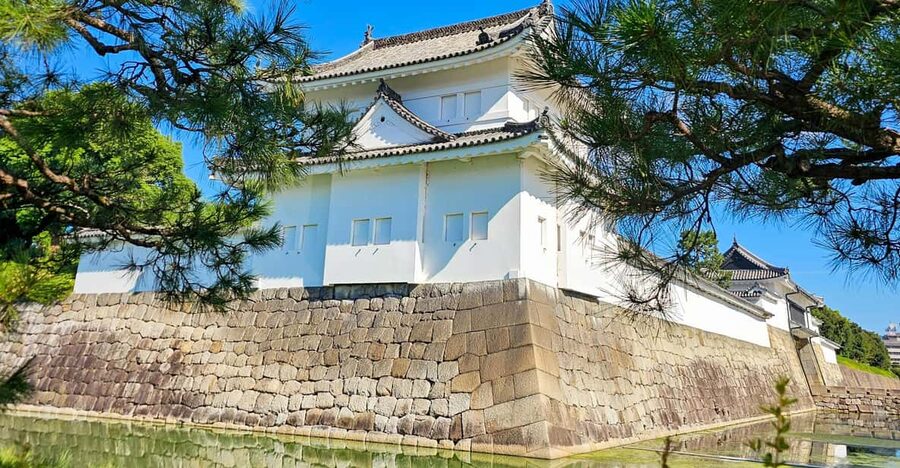
The pairing is the real story. Nijo Castle is tied to the shogun world, while the Kyoto Imperial Palace points to the imperial side of Japan’s political life. Even if you are not a Japan-history superfan, you’ll start spotting the differences in how space, formality, and decoration communicate status.
Your guide’s job is to translate the buildings into plain language. In the best moments, you stop staring at walls and start reading them, like knowing why a layout feels ceremonial or why gardens are treated as part of the message.
More Castle Tours in Kyoto
- Kyoto: Nijo-jo Castle and Ninomaru Palace Guided Tour
★ 4.7 · 1,020 reviews - Kyoto: Nijo Castle, Kiyomizu & Fushimi Inari Guided Tour
★ 4.7 · 700 reviews - Kyoto: Nijo Castle World Heritage Guided Tour with Admission
★ 5.0 · 128 reviews
Getting Started at Nijojo-mae Station, Exit 1
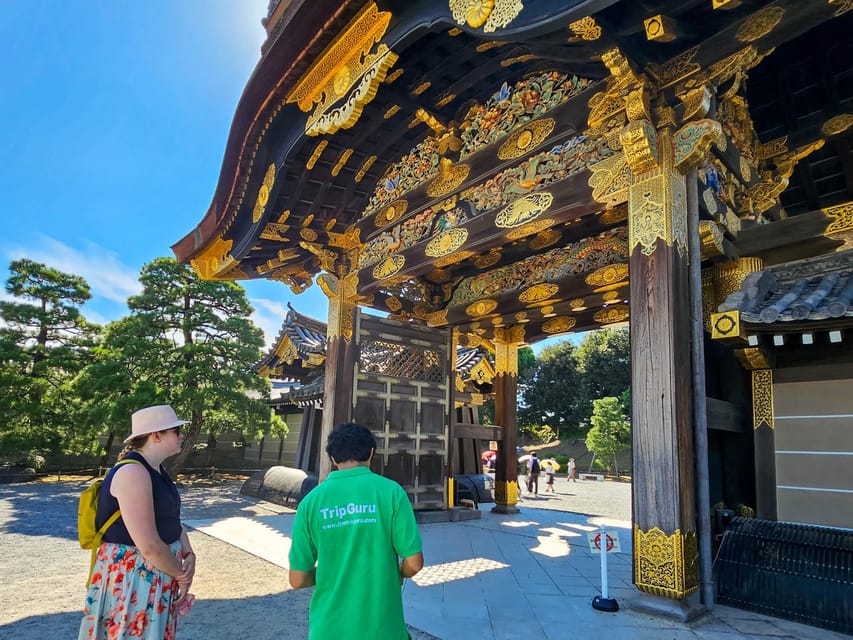
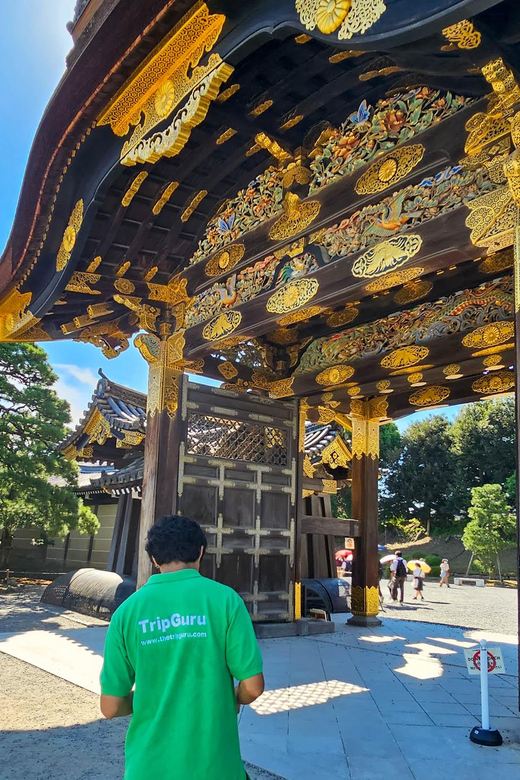
Your meeting point is Nijojo-mae Station outside Exit 1. Your guide waits there wearing a TripGuru shirt or holding a TripGuru sign. I like that the meeting setup is straightforward, because Kyoto stations can be giant and confusing when you are arriving on foot.
Plan to show up early. The guide will wait a maximum of 10 minutes, and you are expected to be at the meeting point at least 10 minutes before the listed start time. If you are coming from another part of Kyoto, leave buffer time, because morning traffic can be very different from what navigation apps promise.
This tour is also a walking experience. That means your arrival timing matters more than on a tour where you can quietly catch up. If you are late, you can lose the start of the historical context your guide is building.
Nijo Castle in 1 Hour: What You’ll Actually See
Nijo Castle is where the tour gets most visual fast. You start with a guided visit for 1 hour, and the guide brings you to the Ninomaru-goten Palace and Garden.
That detail matters. This is not a whole-castle roam where you wander every wing. You get the specific areas that most directly communicate the castle’s intended use and design.
Inside that focused window, your guide is typically pointing out architectural choices and garden planning that help you understand how the shogun-era residence functioned. The palace and garden pairing is especially useful because it lets you see how indoor space and outdoor space work together. In a short tour, that is exactly the kind of pairing that prevents you from leaving with only vague impressions.
One more practical note: the included entry fees for Nijo Castle cover the Ninomaru Goten Palace and the Painting Gallery. So you are not doing extra ticket steps mid-tour. It is one less thing to manage while you are trying to pay attention.
The Imperial Palace Segment: Emperor-Era Design and Atmosphere
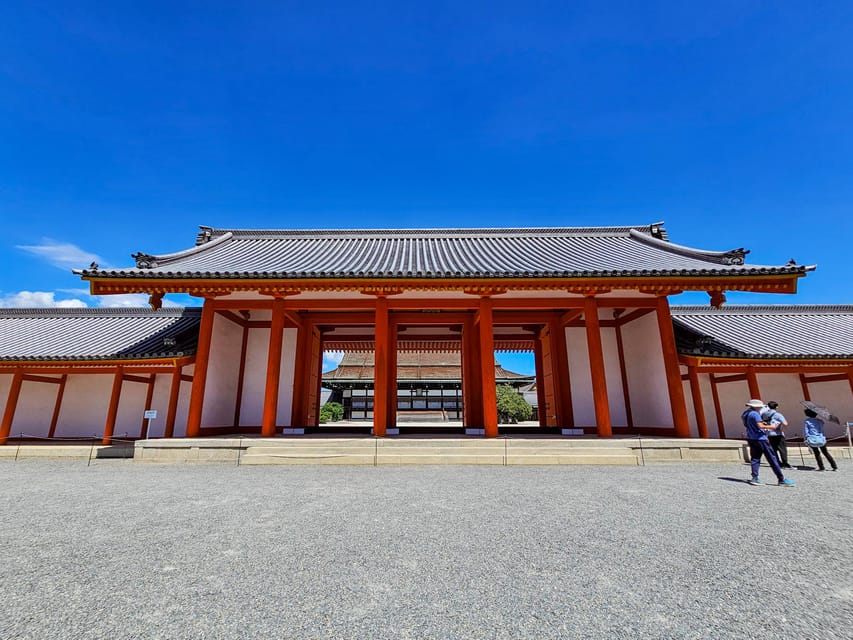
After Nijo Castle, you move to the Kyoto Imperial Palace for another 1 hour guided visit. This is the other half of the political contrast, the emperor’s residence area, used for more than a thousand years.
The guide will walk you around the impressive structures and give you time to admire the gardens and architecture. I like this structure: you do not just speed through. You get pauses where you can stop, look up, and actually process what makes the place feel formal.
What you should watch for is the tone. Imperial spaces tend to feel more about controlled ceremony and careful separation, not the fortress feeling you might expect from other castles. Even if your Japanese history knowledge is basic, a good guide helps you translate the mood into something you can recognize.
The Imperial Palace portion is also a nice reset after Nijo Castle. If your brain is still sorting dates and titles, your guide’s explanations can help you connect the dots without turning the whole experience into a textbook.
More Walking Tours in Kyoto
- Kyoto Geisha Walking Tour: Gion District & Hidden Gems
★ 4.7 · 3,273 reviews - Kyoto: Gion Magical Night Walking Tour with Geisha Trivia
★ 4.9 · 2,393 reviews - Kyoto: Gion Geisha District Walking Tour – Stories of Geisha
★ 4.7 · 2,187 reviews - Night Walk in Gion: Kyoto’s Geisha District
★ 4.5 · 2,003 reviews
How the 3 Hours Really Feel on Your Feet
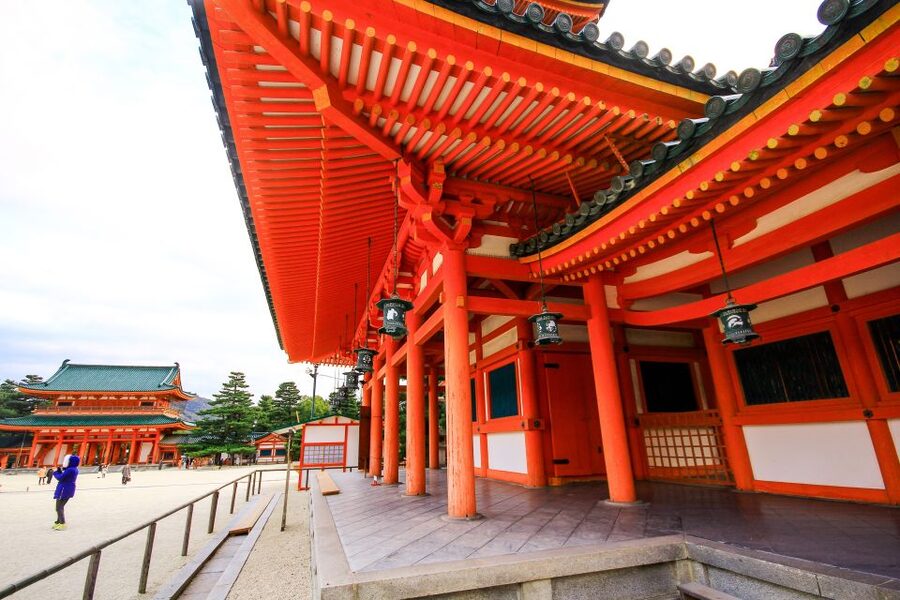
On paper, the schedule is simple: Nijo Castle, then the Imperial Palace, and you finish back out at Imadegawa Station. In real life, the feel depends on pacing and the group’s questions.
The tour is listed as 3 hours total, and both main stops have 1 hour guided time. That suggests a plan with minimal downtime. It is long enough to get meaning out of the places, but short enough that you do not lose the thread.
Still, it is a walking tour. Wear comfortable shoes, and keep your camera ready. If you know you are someone who needs lots of photo stops, consider moving a little slower on the important moments and accepting fewer photos overall. You will get better results if you focus on a few standout angles rather than trying to document everything.
If you are sensitive to walking time or exertion, double-check suitability. This tour is noted as not suitable for people with mobility impairments, pregnant women, people with heart problems, and people with respiratory issues. That is not a casual warning. In a short tour with limited breaks, it can matter.
Price and Value: Why $49 Can Be a Good Deal
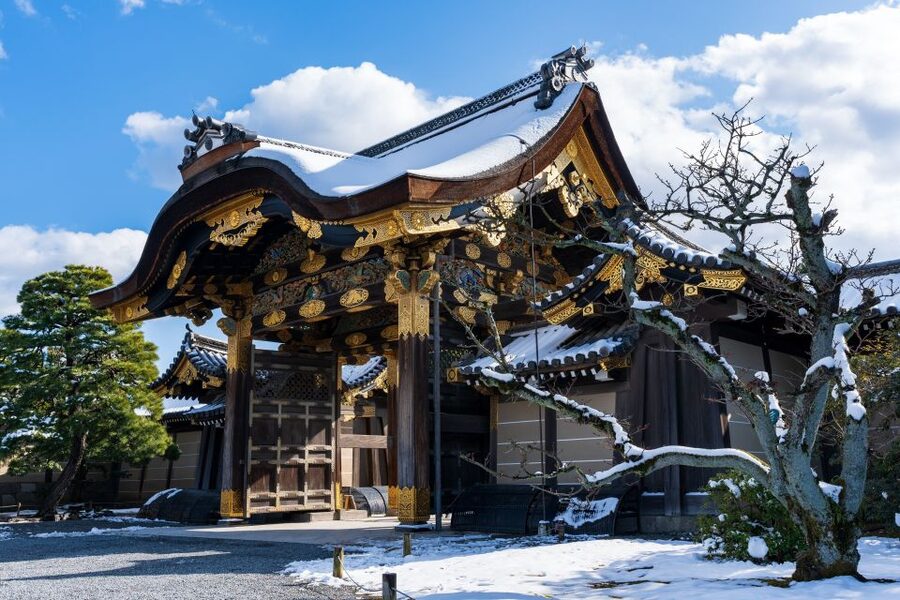
At $49 per person for about 3 hours, the value comes from what is included, not just the headline price.
Here is what you should anchor on:
- You get an English-speaking live guide (with tour availability also in French and Spanish).
- Nijo Castle entry fees are included, specifically the Ninomaru-goten Palace and Garden plus the Painting Gallery.
- It is a small group experience, limited to 9 participants.
That combination is usually what you pay extra for in Kyoto. If you plan to do both places on your own, you often end up spending time sorting entry details and figuring out what to prioritize. Paying for a guide is essentially buying back your attention span.
Also, you are getting two big-name sites in one compact window. That saves you the stress of planning a full half day around one place, then scrambling for the second.
One thing to keep in mind for your budget planning: meals are not included, and you may want cash on hand for snacks or personal expenses. The tour specifically asks you to bring cash.
Small Group Size, Big Difference: Your Guide Matters
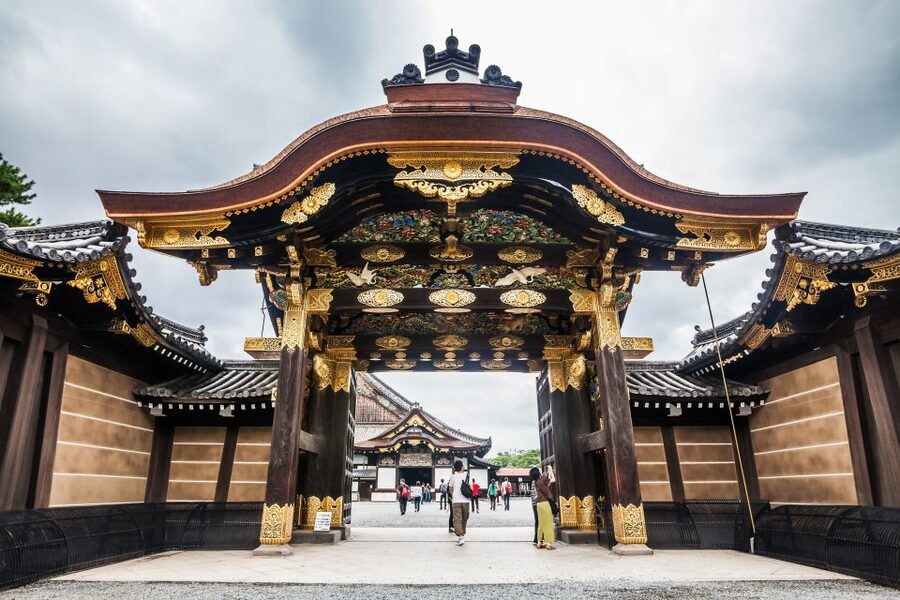
The small group size is not just a comfort feature. It affects the tour quality.
With a maximum of 9 people, a guide can respond to questions more naturally. You are less likely to feel like you are competing with a loud group for attention. You can also hear the guide better, which is important when you are standing near walls where sound can bounce weirdly.
The reviews attached to this experience show a consistent pattern: guides make the sites click. Names that come up strongly include Raphael Matsui, Jasmine Lau, Kenta, Cecilia, Gus, Alex, Vincent, and Taku. When a guide like that is present, you usually get more than a description. You get help noticing the details that explain why these places were built and used the way they were.
Some guides also tailor the experience with extra context, not just reading facts. For example, one review highlighted that the tour helped clearly distinguish shogun and emperor experiences in practical terms. That is exactly what you want from a guided pairing, because it stops the sites from blending into two generic “pretty historic buildings.”
Pace, Dress Code, and Practical Tips That Avoid Friction
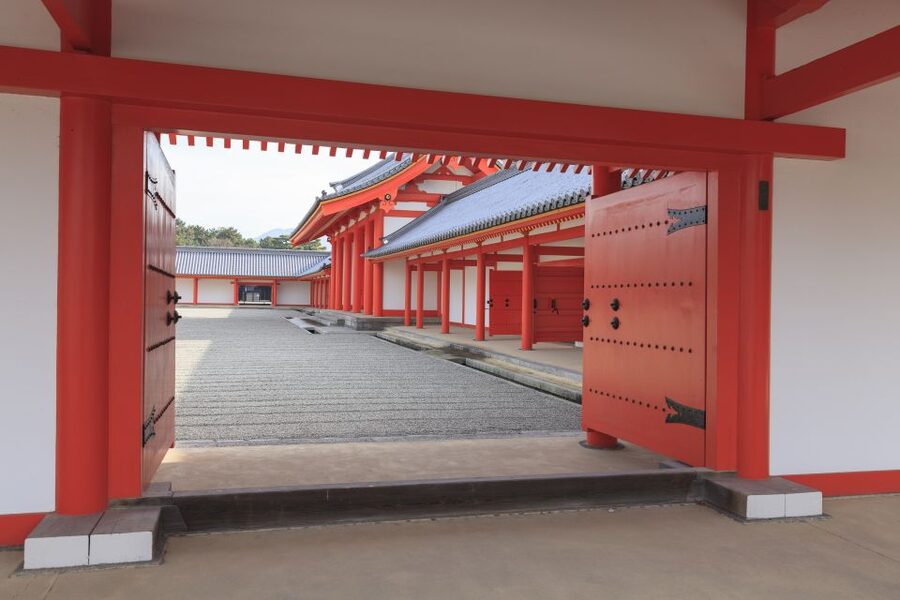
Kyoto can be picky about tone, and this tour is clear on the dress code. For the palace grounds, dress modestly and respectfully. That means avoiding clothing that is too revealing or casual, like shorts or tank tops.
If you are planning this tour on a day you also do casual streets or a shopping stop, set aside one outfit that meets the rules. It is not worth getting turned away or feeling awkward while everyone else looks prepared.
Punctuality is also part of the experience quality. The guide waits at most 10 minutes. That means you should treat the meeting time as real, not optional.
Traffic can be heavier in the morning than navigation apps suggest. If you are getting yourself there by taxi or another transport plan, build in extra time so you arrive without rushing.
Finally, the tour asks you to bring a camera and cash. That tells me the tour is set up for photos and small personal purchases, so do not show up empty-handed if you like to grab souvenirs or quick snacks after.
Who This Tour Suits Best (And Who Should Rethink It)
This tour is a strong match for you if:
- You want a guided, historical-feeling walk but only have a couple of hours to spare.
- You care about understanding what you are seeing, not just checking boxes.
- You prefer a small group where questions are possible.
- You want to pair two major Kyoto sites without planning them across separate days.
It may be less ideal if:
- You want unrestricted roaming inside every part of a large site. Nijo Castle coverage is limited to the Ninomaru-goten Palace and Garden.
- You cannot comfortably handle a walking tour and the short, structured pacing.
- You have concerns that match the listed non-suitable conditions (pregnancy, mobility impairments, heart problems, respiratory issues).
If you are traveling with family, check comfort levels first. The tour is built for walking and attention. It is not marketed as a slow stroll with lots of sit-down breaks.
Should You Book This Kyoto Imperial Palace and Nijo Castle Tour?
I’d book it if you want the smartest use of a limited afternoon and you enjoy learning while you walk. The pairing is genuinely useful. You see how two different power centers shaped space, gardens, and atmosphere, and your guide helps you put those differences into words.
I would not book it if your main goal is total independence and roaming without structure. This is guided and focused, with Nijo Castle coverage centered on specific areas, and it runs on a timed rhythm.
If you are on the fence, here is my quick decision rule: if you can only spare 2 to 4 hours and you want two major Kyoto landmarks with meaning, this fits. If you want the most freedom possible or you have mobility or health limits that make walking hard, you should look for a different format.
FAQ
Where do I meet the guide?
Meet at Nijojo-mae Station outside Exit 1. The guide will be waiting for you there wearing a TripGuru shirt or holding a TripGuru sign.
How long is the tour, and where does it end?
The tour lasts about 3 hours. It ends at Imadegawa Station.
What are the main stops and how much time is spent at each?
You’ll visit Nijo Castle for a guided visit of 1 hour, then you’ll visit the Kyoto Imperial Palace for a guided visit of 1 hour.
What’s included in the price?
Included are an English-speaking tour guide, entrance fees for Nijo Castle (including the Ninomaru Goten Palace and Painting Gallery), and the walking tour.
What languages are available for the tour?
The live guide languages offered are English, French, and Spanish.
What should I wear and bring?
Wear comfortable shoes and dress modestly for the palace grounds, avoiding shorts or tank tops. Bring a camera and cash.
Is the tour suitable for everyone?
No. It is not suitable for pregnant women, people with mobility impairments, people with heart problems, or people with respiratory issues.
What if I’m running late?
Be at the meeting point at least 10 minutes before the stated start time. The guide waits a maximum of 10 minutes before moving to the next stop.
Latest write-ups near Kyoto
- Kyoto: Nishiki Market Tour with a Local Foodie & Tastings★ 4.5 · 67 reviews
- Kyoto Kimono Rental mimosa |Kimono/Yukata Rental Couple Plan★ 4.8 · 67 reviews
- Kyoto: Traditional Kimono Fabric Handicrafts Workshop★ 5.0 · 67 reviews
- Kyoto Tea Ceremony and Samurai Photo Session★ 5.0 · 70 reviews
- Kyoto: Replica food making experience★ 4.8 · 70 reviews
- Kyoto: Kinkakuji, Golden Pavilion Guided Tour★ 4.7 · 71 reviews
- Private departure transfer from Kyoto city to Kansai International airport★ 5.0 · 72 reviews
- Uji: Green Tea Tour with Byodoin and Koshoji Temple Visits★ 4.8 · 72 reviews
Castle Tours, compared.
Tokyo Castle & Imperial PalaceーShogun Walking Tour
Read our review →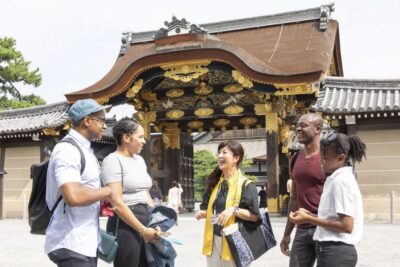
Nijo-jo Castle and Ninomaru Palace Guided Tour
Read our review →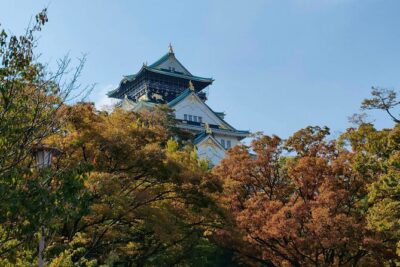
Ultimate Osaka Walking Tour: Castle, Dotonbori & Hidden Gems
Read our review →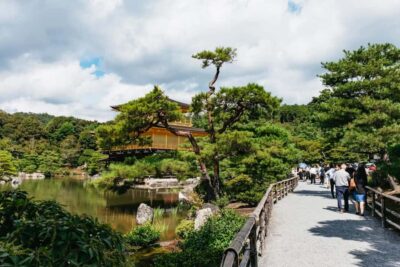
Nijo Castle, Kiyomizu & Fushimi Inari Guided Tour
Read our review →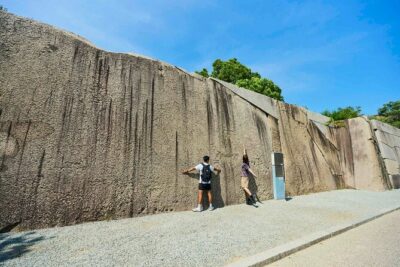
Osaka Castle Walking Tour and Castle Tower Admission
Read our review →
Imperial Palace East Garden and Edo Castle Walking Tour in Tokyo
Read our review →
Japanesel Archery Experience HIROSHIMA CASTLE SHARAKU
Read our review →Browse the lists this tour appears in