Reviewed · TOKYO TOURS
EDOCCO Tea House – A Quick Dive into Japanese Traditional Culture
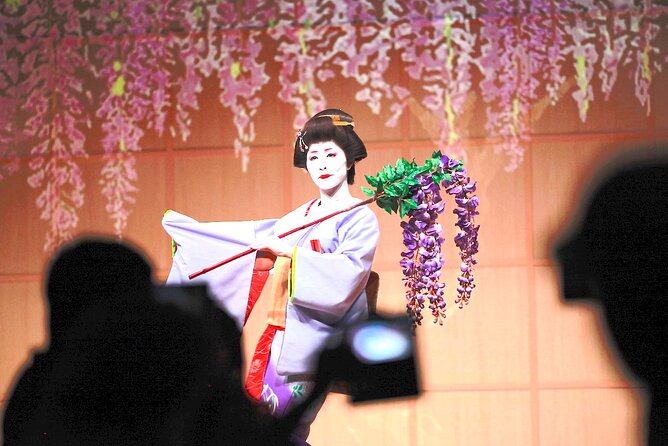
EDOCCO Tea House in Tokyo is an interesting pick because in about an hour you sample several classic Edo-flavored arts in one calm session. I love the matcha tea ceremony with Japanese sweets and the English explanations that make the dance easier to understand. It is a very friendly way to start appreciating Japanese craft and performance without needing prior experience.
One consideration: the schedule is tight, and the Geisha-style dance show can feel brief if you came hoping for a long, full-length performance.
Key Highlights to Look Forward To
- Tea ceremony hands-on time making and serving matcha with sweets included
- Japanese dance show with English guidance so you know what you are watching
- Kimono cosplay for photos in an Edo-style setting
- Shodo basics in calligraphy using brush strokes and your own character
- Origami mini workshop that goes from simple folds to more detailed designs
- Small-group feel with a max of 20 people, so instruction stays practical
EDOCCO Tea House: a compact Tokyo culture program that actually works
If you only have a small slice of time in Tokyo and you want something more meaningful than a quick photo stop, EDOCCO Tea House is built for that. The idea is simple: you move through multiple traditions back-to-back, guided step by step, and you end up leaving with a couple of very real keepsakes.
The best part is the balance. You get craft (calligraphy and origami), a sensory ritual (matcha), and performance (the dance show), plus a little role-play (kimono cosplay). That combination helps you connect the dots. Tea is not just a drink here. It is linked to calm, manners, and attention. The dance is not just entertainment. You get the cues for what the movements mean. And the paper folding and brush strokes make the culture feel personal, not distant.
The value also comes from the practical pacing. At roughly one hour, it is long enough to feel you did things with your hands and eyes, not just sat and watched. It is short enough to fit into almost any first-time Tokyo itinerary.
Also on the shortlist for Tokyo:
- Mt Fuji and Hakone 1-Day Bus Tour Return by Bullet Train
★ 5.0 · 26,383 reviews - 1-Day Tokyo Bus Tour
★ 5.0 · 14,250 reviews - Tokyo: TOKYO SKYTREE® Admission ticket
★ 4.5 · 11,192 reviews
Your one-hour flow at EDOCCO Studio, and what each segment gives you
The whole experience happens at EDOCCO Studio in Sotokanda, Chiyoda City. Think of it as one program with multiple mini-classes. You will go from snack and matcha to performance, then into dress-up and hands-on arts, all within the same session.
Here is the practical flow you can expect:
1) Matcha tea ceremony, snack set, and first contact with etiquette
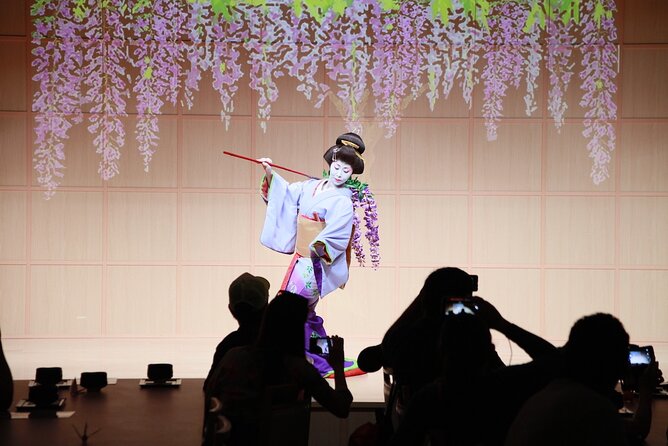
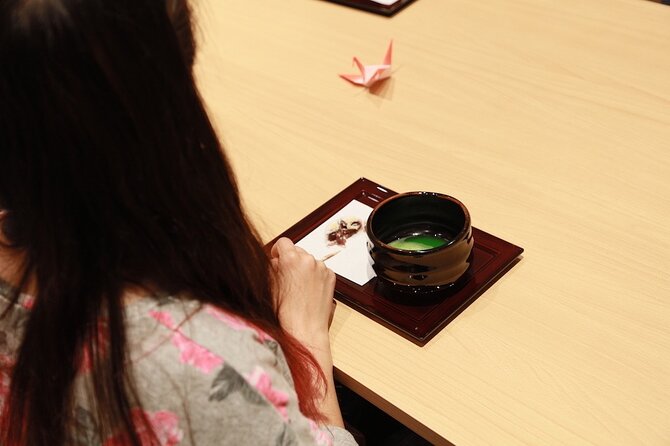
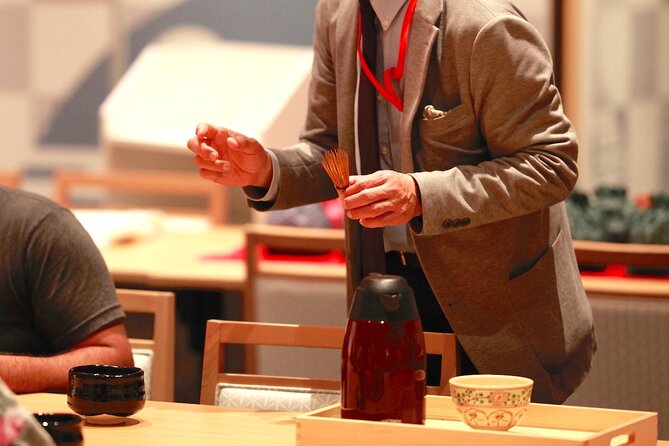
You start with the tea ceremony component. You make and prepare matcha with an expert instructor, and you also get a set of matcha and Japanese sweets. That snack pairing matters because it turns the session from technique-only into a fuller taste experience.
This part is especially good if you are a complete beginner. You do not need to know the Japanese terms ahead of time. You mainly need to listen closely, follow the instructor, and take your time with the motions.
2) Japanese dance show with context in English
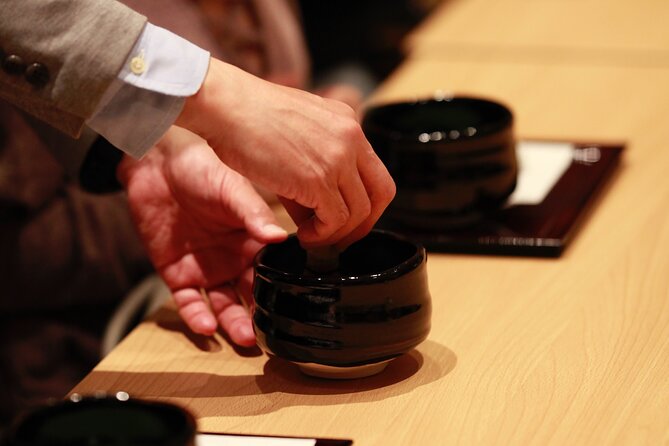
Next comes the Japanese dance show. You watch the performance while the staff provide English explanations that connect the movements to the culture and art behind them.
If you are worried about understanding without a background in dance, this segment is designed to solve that. The goal is not to turn you into a dance scholar. It is to help you recognize what you are seeing so it does not feel random.
A change of pace from Tokyo:
- Tokyo: teamLab Planets TOKYO Digital Art Museum Entry Ticket
★ 4.6 · 9,779 reviews - Mt Fuji & Hakone Cruise, Drum Show Bullet Train 1 Day from Tokyo
★ 4.0 · 7,413 reviews - Tokyo: Sumo Show Experience with Chicken Hot Pot and a Photo
★ 4.8 · 6,678 reviews - Tokyo: Shinjuku Food Tour (13 Dishes at 4 Local Eateries)
★ 5.0 · 6,603 reviews
3) Kimono cosplay, Edo-style photo moment
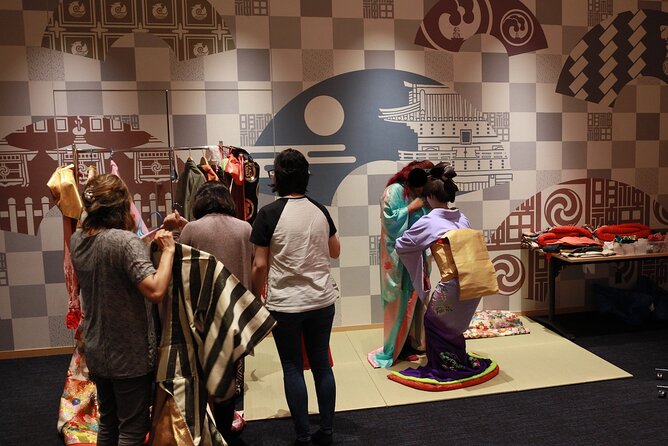
After the performance, you get the kimono cosplay experience. You dress in a traditional-style kimono and get to feel the atmosphere of the past while you savor the moment.
This is one of those activities that sounds like a gimmick until you actually do it. The posture, the sleeves, the way clothing changes your movement, it all makes the culture feel physical. It also gives you great photos without forcing you to figure out a rental system on your own.
4) Shodo calligraphy basics, then your own character
Then you shift into Shodo (Japanese calligraphy). You learn basic brush strokes first, then create your own character under guidance.
This is one of the most rewarding parts because you can compare before and after. Your first strokes will probably look different from your final one. That progress is the point.
5) Origami mini workshop, from cranes to other designs
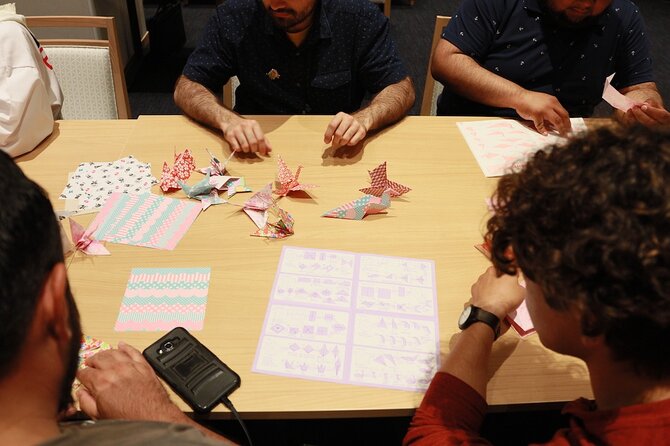
Finally, you try origami. The workshop includes guidance, and you learn how a single piece of paper can become artwork. It can start with familiar shapes, like cranes, and then go into more intricate folding designs.
If you like activities that reward patience, this is the one. Origami is also a great souvenir because it is light, easy to pack, and it reminds you of the steps you practiced.
Matcha tea ceremony: what you actually practice (and why it matters)
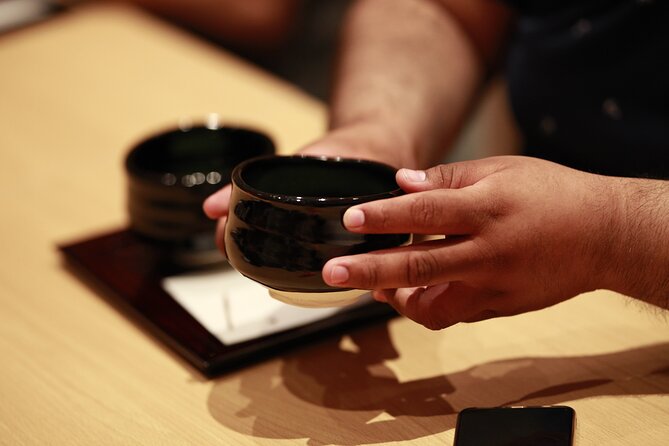
The tea ceremony here is not framed as a secret club. It is taught in a way that helps first-timers participate. You prepare matcha and then serve it, which means you experience the full ritual flow, not just mixing powder and calling it done.
A big plus is that you get Japanese sweets with your matcha. This makes the taste part more complete. Matcha can be intense if you only think of it as green powder. The sweets help you balance the flavors and slow down enough to notice how the experience changes moment to moment.
Also note what is and is not included. You get a snacks set as part of the session. The full matcha set tools (like the tea bowl, matcha powder, bamboo whisk, and other tools) are available for purchase separately. If you fall in love with the ritual, you can take your interest further without being forced to buy anything right away.
The Japanese dance show: performance you can follow in English
The dance show is a highlight for a reason. It gives your eyes a break from sitting at a desk and it adds drama and rhythm to the session.
What makes it work for visitors is that the staff offer English explanations. You get the cultural and artistic meaning behind the movements. That transforms the experience from watching performers to understanding the performance.
One timing note to keep in mind: some people felt the dance segment was shorter than expected. So if your top priority is a long, uninterrupted performance, you might want to pair this with another event during your Tokyo trip.
Still, for most visitors, the dance show is the perfect mid-program reset. You leave with a stronger mental picture of what the Edo-style arts feel like.
Kimono cosplay in an Edo-style setting: fun, but also surprisingly useful
The kimono cosplay part is where this experience becomes memorable fast. You change clothes, you get into the mood, and you suddenly understand why people love cultural dressing for photos.
This is not just about the outfit. Kimono changes how you hold your body. That matters because it makes the whole session feel less like watching a slideshow. You are moving with the culture, even if it is for a short time.
Practical tip: if photos are a priority for you, treat this segment like your mini photo session. Take a few quick shots as soon as you are dressed, then enjoy the rest. When time is tight, you want your best images before you are focused on the next activity.
Shodo and origami: the best souvenirs are the ones you make
If you want take-home proof that you were there, Shodo and origami deliver.
Shodo calligraphy
In calligraphy, the instructor teaches brush stroke basics and then helps you create a character. You will likely start carefully, then gain confidence as your strokes get more consistent. That is where the satisfaction is.
Origami
Origami is hands-on in a different way. It trains patience and attention. The workshop can include starting folds and then progressing to more intricate designs, so you feel a sense of accomplishment when your paper becomes something recognizable.
You also end up with items you can keep without special storage. They are small, and they are meaningful because they represent your own work.
Price and value: does $72.48 feel fair for one hour?
At $72.48 per person for about one hour, this price looks steep at first glance. But when you break it down, it becomes more reasonable.
You are paying for:
- instruction for tea ceremony plus the snack set of matcha and Japanese sweets
- a dance show appreciation with English explanation
- hands-on teaching for kimono cosplay
- taught practice for Shodo
- taught practice for origami
- a small-group environment capped at 20 travelers
So you are not paying for one workshop. You are paying for a cluster of guided activities that would normally require planning, separate bookings, and extra travel time.
If your goal is a quick, structured sampler of Japanese traditions, the value is strong. If your goal is deep training in only one art form, you may prefer a longer class or a specialized workshop. But for many first-time visitors, this format hits the sweet spot.
Who should book EDOCCO Tea House, and who might want a different plan
This fits best if you want:
- a beginner-friendly introduction to multiple Japanese traditions
- a short activity that you can place early in your Tokyo trip
- something fun for families, including kids, since the session moves along and keeps you doing things
- English guidance so you are not lost during the cultural parts
You might consider another option if:
- you mainly want a long dance performance, not a short show inside a multi-activity program
- you prefer longer, single-focus instruction rather than a sampler format
- you are only interested in one craft and would rather spend more time on it in depth
Practical tips for showing up ready
Here are the small details that will make your visit smoother:
- Go to EDOCCO2-chōme-16-2 Sotokanda, Chiyoda City, Tokyo 101-0021, Japan. That is your start point, and the activity ends back there.
- Plan around being done in about one hour. It is efficient, so schedule your next stop with buffer time if you want snacks or a short walk afterward.
- The experience uses a mobile ticket, so have it ready on your phone.
- It is near public transportation, which is helpful for keeping your day simple.
- The program has a maximum of 20 travelers, so you can expect a small-group atmosphere rather than a huge crowd.
- If you are traveling with kids, this style of guided moving from station to station can be a good fit.
One more detail I would trust your senses on: this is a culture-and-craft experience, not a strict museum tour. If you like doing, touching, writing, and folding, you will get more out of it.
Should you book EDOCCO Tea House?
I think it is a strong booking for most people on a first Tokyo trip who want an organized, beginner-friendly taste of Japanese traditions. The big win is the mix: matcha tea ceremony, an English-guided dance show, kimono cosplay for the photo and feeling, plus Shodo and origami that you make yourself.
Book it if you want a short, structured cultural experience that does not require planning five different activities. Skip or supplement it if your top priority is one long performance or a deep single craft class.
If you are on the fence, one simple rule helps: if you like hands-on learning and you want more than one cultural stop in a short window, EDOCCO Tea House is a good use of time.
FAQ
How long is the EDOCCO Tea House experience?
It runs for about 1 hour.
What does the $72.48 ticket include?
It includes a snacks set with matcha and Japanese sweets, a Japanese dance show appreciation, calligraphy (Shodo), an origami experience, and Japanese dress cosplay.
Is there an English component?
Yes. The dance show includes explanations in English, and the overall experience is set up to be understandable for English-speaking visitors.
Do I need to buy matcha tools?
No. A matcha set with tools is not included, but it is available for purchase on site.
Where is the meeting point in Tokyo?
The meeting point is EDOCCO2-chōme-16-2 Sotokanda, Chiyoda City, Tokyo 101-0021, Japan.
How large is the group?
The experience has a maximum of 20 travelers.
What is the cancellation policy?
You can cancel for a full refund up to 24 hours in advance of the experience start time.
Latest write-ups near Tokyo
- Tokyo Nights: Shibuya Photo Adventure★ 5.0 · 20 reviews
- Wagyu & Sake 8 Course Tasting Dinner in Shinjuku★ 4.9 · 20 reviews
- Making Japanese desserts Nerikiri & drinking matcha in Tokyo★ 5.0 · 20 reviews
- Mt. Fuji 5th Station, Owakudani Ropeway, Pirate Ship plus Outlet shopping!★ 4.5 · 20 reviews
- Japanese Whisky Hunting《HIGH-QUALITY-ONLY》Rare Tasting Class★ 5.0 · 20 reviews
- Kintsugi Experience with Arita Ware in Tokyo (English Guide)★ 4.8 · 20 reviews
- This is Asakusa! A Tour Includes the All Must-Sees!★ 5.0 · 20 reviews
- Tokyo: Karate Experience with Former All-Japan Champion★ 5.0 · 20 reviews
Tokyo Tours, compared.

Mt Fuji and Hakone 1-Day Bus Tour Return by Bullet Train
Read our review →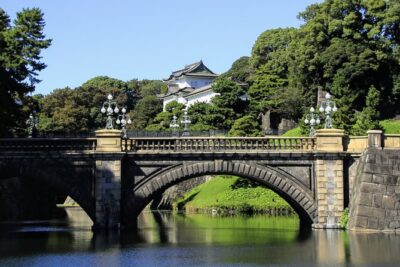

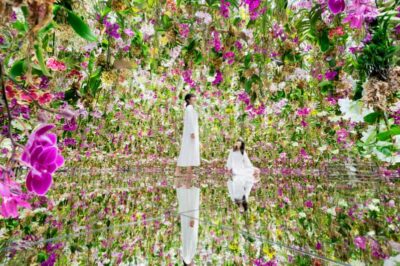
teamLab Planets TOKYO Digital Art Museum Entry Ticket
Read our review →
Mt Fuji & Hakone Cruise, Drum Show Bullet Train 1 Day from Tokyo
Read our review →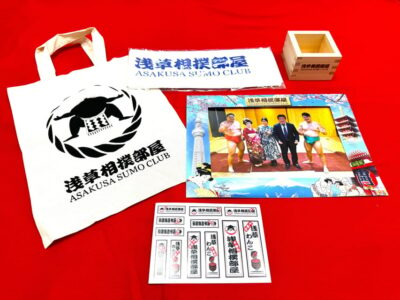
Sumo Show Experience with Chicken Hot Pot and a Photo
Read our review →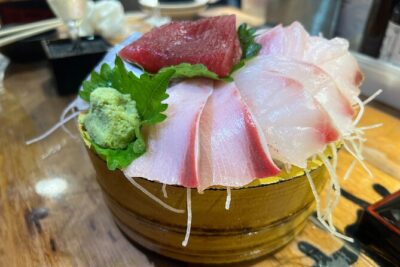
Shinjuku Food Tour (13 Dishes at 4 Local Eateries)
Read our review →