
Reviewed · SUMO EXPERIENCES
Experience the Sumo World in Tokyo
Seeing a sumo stable in action in Tokyo is the kind of access that is hard to score on your own. I love the front-row practice on chairs, and I love the chance to try pushing wrestlers and get photos at the end. The only real catch is timing, the day starts early, so you need to show up at Ueno Station right on schedule.
This half-day tour is built for people who care about sport and culture, not just watching big bouts on TV. You ride local trains with your guide, learn what you are seeing, and finish with a meal of chanko nabe, plus a vegetarian option if you give notice in advance. It is also capped at a small group size, with a maximum of 26 travelers.
If you are the type who likes hands-on travel, this fits. If you prefer a slower start and zero interaction, the early morning and the try-it-yourself moment might feel a little intense.
Key highlights that matter on the ground
- Asahiyama Beya, up close training viewing with comfortable seating right beside the action
- Interactive sumo moment where you can try pushing wrestlers in a playful, safe way
- Lunch included, chanko nabe style with vegetarian service available (with advance notice)
- Photography at the end so you get memorable photos without interrupting training
- Guided train run from Ueno Station to make the local transit part painless
- Small group size (max 26) that helps the whole thing feel personal
From Ueno Station at 7:45 am to Matsudo and Kunugiyama
The experience starts in a way that makes sense for Tokyo travelers: meet at 7:45 am at Ueno Station (7 Chome-1 Ueno, Taito City). Ueno is easy to navigate, and meeting there keeps the tour from feeling like a scavenger hunt. A mobile ticket is part of the deal, so you can keep things simple on your phone.
Then you shift into local mode. You will take trains that include a stop at Matsudo Station and another at Kunugiyama Station, before heading toward the stable area. This matters because sumo training is not in the middle of the tourist map. Getting there with a guide is the difference between “I sort of found it” and “I saw the real thing.”
One practical note: you are starting early, and the tour moves as a group. If you are prone to running late, build in buffer time. This is not the kind of experience you want to join after training has already begun.
More Sumo Experiences in Tokyo:
- Tokyo: Sumo Show Experience with Chicken Hot Pot and a Photo
★ 4.8 · 6,678 reviews - Tokyo: Sumo Show and Dining Experience
★ 4.8 · 2,742 reviews - the SUMO show
★ 5.0 · 1,960 reviews
Asahiyama Beya training: what you actually see in the ring area
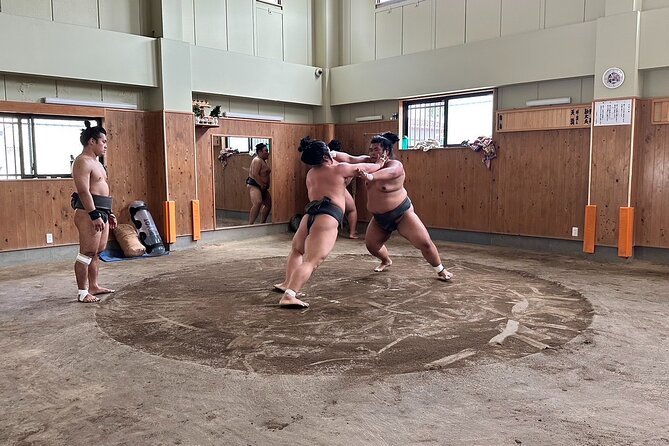
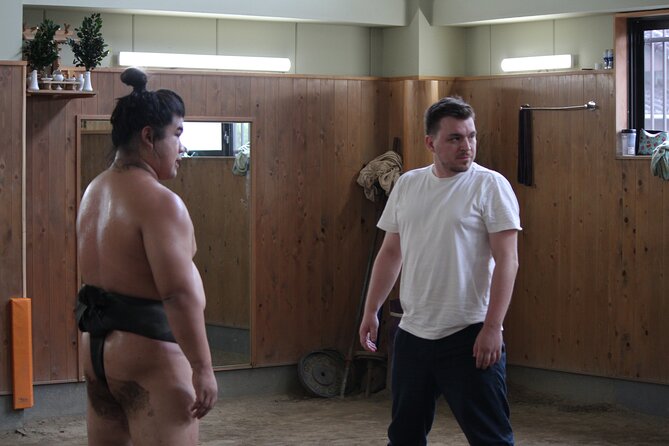
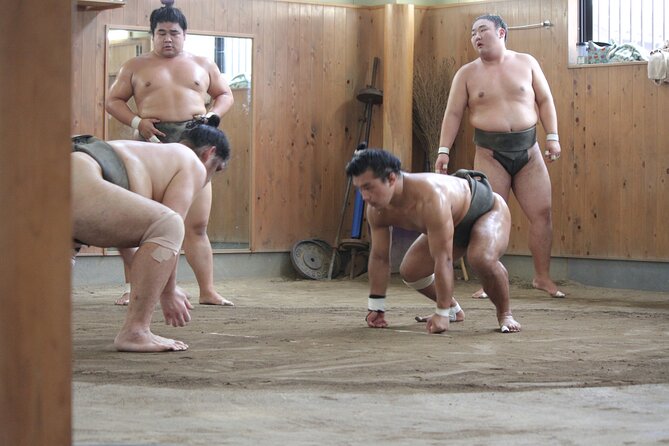
The heart of the day is the training session at 朝日山部屋 (Asahiyama Beya). This is where the tour earns its reputation. You do not just get a photo opportunity from far away. You get a front-row, seated view of the practice, with chairs placed for comfortable viewing while training happens.
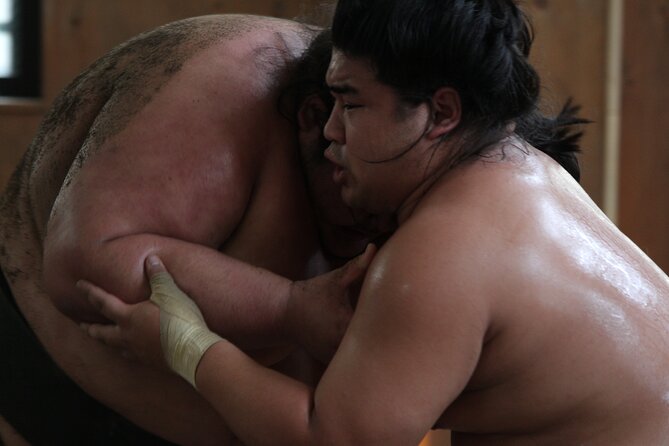
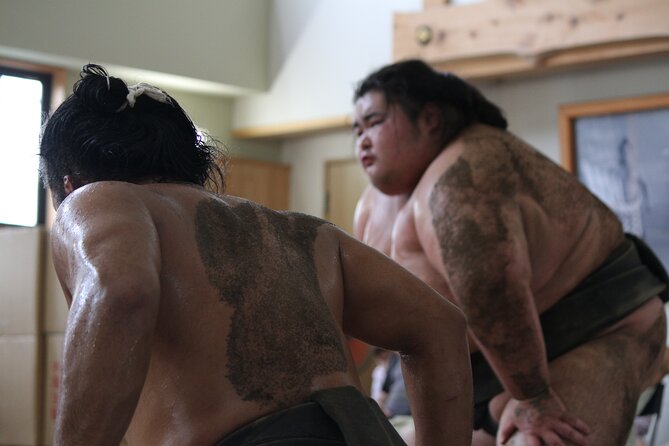
You will typically see multiple segments of training, and the energy can feel very focused and intense even when you are only watching. The wrestlers are working on strength, control, footwork, and timing. And you notice something quickly if you pay attention: it is not just size. Even when the movements look slow, the body mechanics are precise.
You also get the benefit of context from your guide. Guides like Ryoko and Haru are often highlighted for turning sumo terms and traditions into plain, usable explanations, so you understand what the wrestlers are doing and why. Guides such as Tomer and Tammy are also mentioned for being helpful with questions, which is great if you have always wondered how routines, rituals, and rules connect.
Because training can vary day by day, keep your mind open. The key is that you are seeing real daily practice, not a staged show.
Trying sumo in a real way: pushing, play, and photos at the end
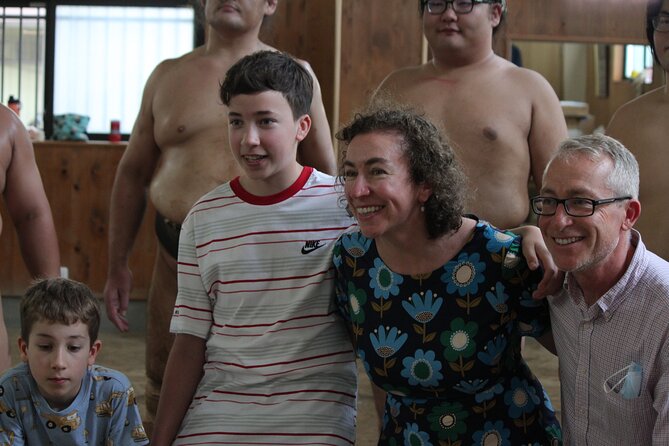
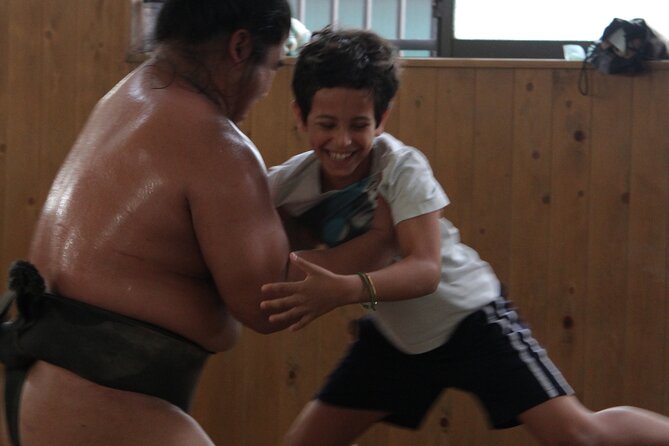
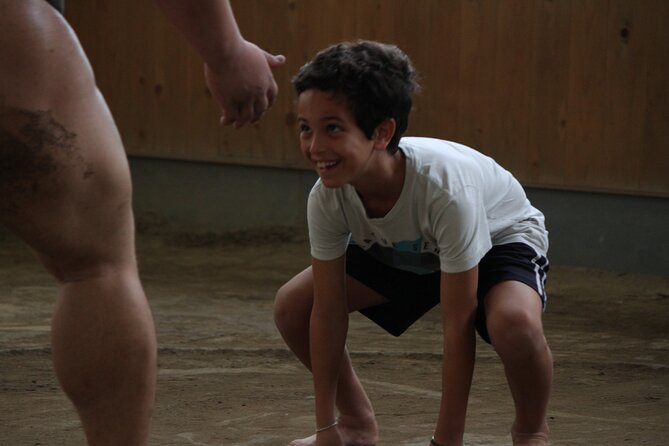
One of the most memorable parts is that this is not only spectator tourism. You get an interactive time where you can try sumo wrestling firsthand against the wrestlers. In plain terms, you are given a playful test of strength, often described as pushing or trying to move a wrestler, followed by a photo moment.
Yes, you are likely to feel outmatched. That is part of the joke and part of the reality. The wrestlers are strong in ways you cannot guess until you are up close. Still, the mood is friendly and welcoming, and the experience is designed to include you without turning it into a chaotic free-for-all.
The tour also includes photography allowed at the end of the session. That timing is smart. You get the action first, then photos when the session flow is done. Bring your camera habits up to speed before you get there, because you will want photos without rushing.
If you are traveling with kids, this is often the moment that makes the day click. Families tend to like that it is safe, structured, and hands-on, and it also helps younger travelers understand the sport beyond what they see on TV.
The chanko nabe lunch: what you eat and why it matters
After training, you share a meal with the wrestlers, and the included dish is chanko nabe, the traditional training food sumo wrestlers eat. This is one of those “small detail, big meaning” travel moments. Food here is not a generic restaurant lunch. It is connected to the athletes’ daily lives and energy needs.
Vegetarian service is available, but you have to give notice at least 3 days in advance. That is worth planning for, because you do not want to rely on day-of changes. If vegetarian food is important for your trip, request it early when you book.
In practical terms, many people describe the chanko nabe as a hearty, broth-based meal with vegetables and typically chicken. Even if you are not a “foodie,” this is a good meal to understand the sport. You are basically eating the training rhythm.
Also, sharing the meal changes the tone of the day. Training is intense. Lunch is calmer. You get a chance to talk, ask questions, and see that these athletes can be friendly and relaxed off the dohyo.
A change of pace from Tokyo:
- Mt Fuji and Hakone 1-Day Bus Tour Return by Bullet Train
★ 5.0 · 26,383 reviews - 1-Day Tokyo Bus Tour
★ 5.0 · 14,250 reviews - Tokyo: TOKYO SKYTREE® Admission ticket
★ 4.5 · 11,192 reviews - Tokyo: teamLab Planets TOKYO Digital Art Museum Entry Ticket
★ 4.6 · 9,779 reviews
What the train stops add to the tour (instead of wasting time)
You might wonder why the itinerary includes train stops like Matsudo and Kunugiyama. Here is the practical answer: it makes the schedule work and it gets you to the stable area with less hassle. Instead of you figuring out transit on your own while jet lagged, the guide handles the route rhythm.
It also gives your guide time to explain sumo culture in smaller chunks. People often mention that guides cover sumo history and rules along the way, not only at the stable. That matters because by the time you arrive, you are not hearing random facts. You are building a mental map of what you are about to see.
And you get a real sense of Tokyo outside the main tourist lanes. That is a quiet win. You are traveling like locals between points that actually matter to daily life.
Price and value: what $105.71 really buys you
The tour price is listed at $105.71 per person, and it includes the experience components that are hard to DIY. You are paying for guided logistics from Ueno, the training stable access, the seated viewing setup, the chance to participate, photography time at the end, and lunch.
What is not included is the JR transit cost. The tour notes a round trip total of ¥1060 (about $7) for JR trains. For value, that is actually reasonable because a guided day still saves you mental energy and helps you arrive on time.
Here is how I would think about it: the money is not only for “seeing sumo.” It is for the full package of timing, access, and interpretation. If you love Japanese sports culture and want something you likely cannot reproduce without planning, this is the kind of tour that feels worth it.
Also, the group size is small enough that it does not feel like a conveyor belt. With up to 26 travelers, you still have room for questions, and that pushes the experience beyond a quick photo stop.
Who should book this sumo stable tour in Tokyo
This is a great fit if you:
- Want a real sumo training look, not just tournament day excitement
- Like cultural context and ask questions, especially about rules and daily routines
- Want an included meal, with chanko nabe and a vegetarian option with notice
- Travel as a couple, friends, or family and want the day to feel hands-on
It may feel less ideal if you:
- Hate early mornings and do not handle transit well
- Prefer purely observational experiences with no participation
- Get stressed by group timing, especially since the day runs like a schedule with a set start time
If you are visiting Tokyo for a short trip, this is one of those “use your time well” tours. It gives you a distinct Tokyo experience that is not replaceable by wandering around neighborhoods.
The practical details that help you enjoy the day
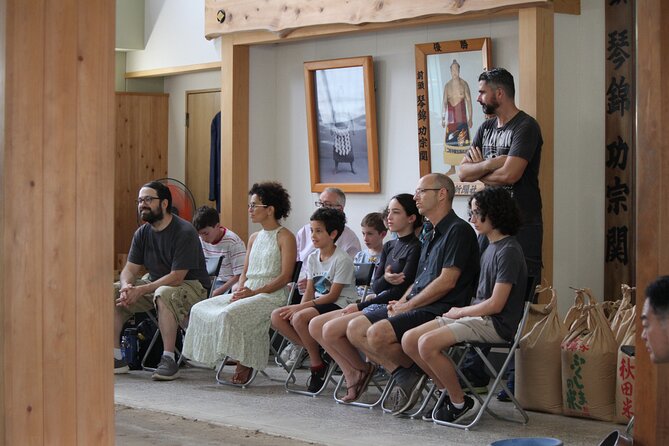
A few details can make or break your experience, so plan around them:
- Start time: 7:45 am meeting at Ueno Station. Arrive early, not right at the minute.
- Duration: about 4 hours total. It is a focused half-day.
- Vegetarian lunch: request it at least 3 days before.
- On-site viewing: you watch training from chairs, so you can settle in and focus.
- Interaction and photos: you get a try-it moment, and photos are allowed at the end.
Also, be ready for a real training schedule pace. Even if you are not fluent in Japanese, the guide’s explanations and the structure of the day will keep you oriented.
Should you book Sumo World in Tokyo?
I would book this if you want the closest thing to a backstage pass for sumo that you can do in Tokyo without needing a complex plan. The combination is strong: a real stable setting, comfortable seated viewing, a chance to participate in a playful strength moment, and an included lunch of chanko nabe.
The value is best for people who enjoy sports culture and cultural interpretation, not only spectacle. If you are okay with the early start and you like being part of the moment rather than just watching, this is one of the most memorable sumo experiences you can fit into a visit.
If you want, tell me your travel dates and group type (solo, couple, family, kids ages). I can suggest how to build the rest of your Tokyo day around the 7:45 am start.
FAQ
What time do I meet, and where is the meeting point?
You meet at Ueno Station at 7:45 am. The meeting point is listed as 7 Chome-1 Ueno, Taito City, Tokyo 110-0005, Japan.
How long is the tour?
The tour runs about 4 hours.
What is included in the tour price?
The experience includes the sumo wrestling experience, viewing the practice session from chairs, lunch (with vegetarian service available if you notify in advance), and photography allowed at the end.
Is lunch included, and can I request a vegetarian option?
Yes. Lunch is included, and vegetarian service is available if you notify at least 3 days in advance.
Do I have to pay for trains to get to the stable?
Yes. Round trip JR train cost is listed as ¥1060 (about $7) and is not included.
Can I take photos during the training?
You can take photos at the end of the session. The tour includes photography allowed at that time.
Which stable does the tour visit?
The tour visits 朝日山部屋 (Asahiyama beya).
How large is the group?
The group has a maximum size of 26 travelers.
FAQ
Can I cancel and get a full refund?
Yes, you can cancel up to 24 hours in advance for a full refund.
Is this tour easy to find for public transportation users?
Yes. The meeting point and route are described as being near public transportation.
Do I need to print anything or can I use a phone?
A mobile ticket is included.
What should I expect at the sumo training session?
You will watch the training session comfortably seated on chairs, and you will also have a chance for interactive participation where you try sumo wrestling firsthand against the wrestlers.
Latest write-ups near Tokyo
- Harajuku Private Tour: Kawaii Fashion & Animal Cafe Included★ 5.0 · 69 reviews
- Mt Fuji Customizable Private Tour English Speaking Driver Pick-up★ 5.0 · 69 reviews
- Tokyo Night Cooking Class: 5 Home-Cooked Japanese Dishes★ 5.0 · 70 reviews
- Tokyo: Sumida Aquarium Entry Ticket★ 4.6 · 70 reviews
- Private Customizable Walking Tour of Tokyo★ 5.0 · 70 reviews
- Official Japan Go-Kart Through Tokyo Bay / Ginza (IDP Required)★ 4.5 · 71 reviews
- Wagyu Beef and Sake Pairing Foodie Tour in Tokyo★ 5.0 · 71 reviews
- Experience Big soba knife Soba Making Class in Tokyo Kappabashi★ 5.0 · 71 reviews
Sumo Experiences, compared.
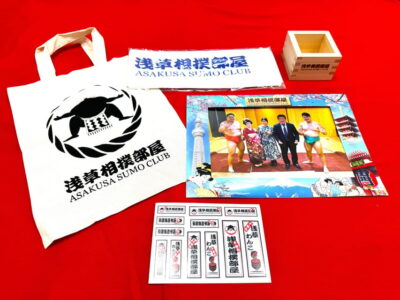
Sumo Show Experience with Chicken Hot Pot and a Photo
Read our review →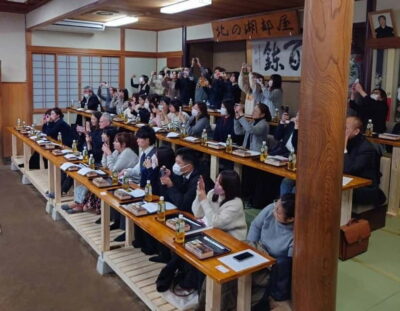
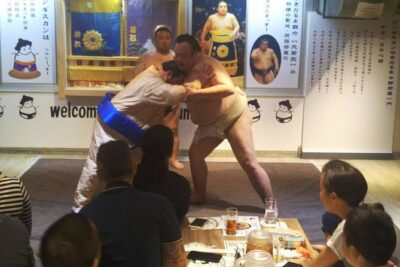
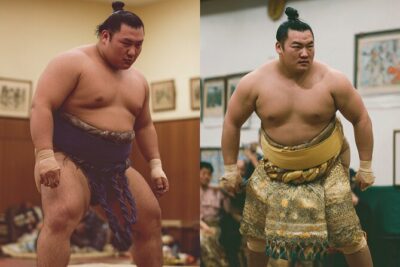
Tokyo Shinjuku Sumo Show & Experience with Photo
Read our review →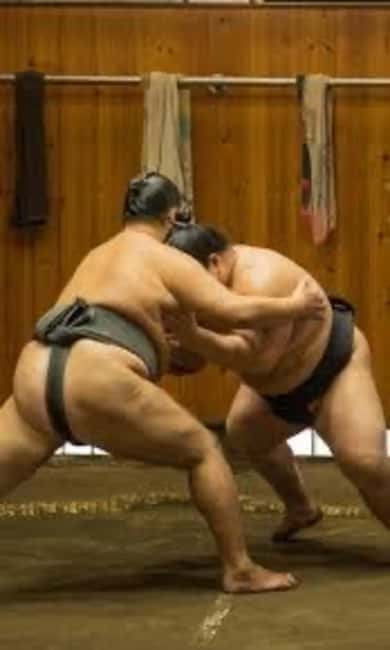
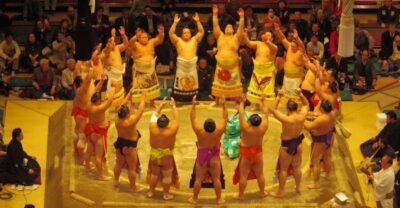
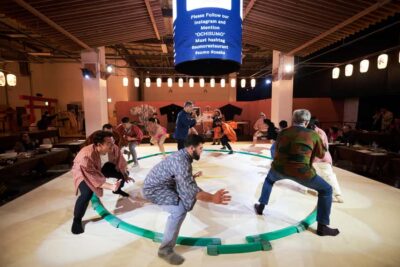
Sumo Show & Experience w/ Optional Kimono & Hot Pot
Read our review →
Authentic Sumo Experience in Tokyo: Enter the Sanctuary
Read our review →Browse the lists this tour appears in