Reviewed · TOKYO TOURS
Tokyo’s Imperial Palace & Nihonbashi Tour
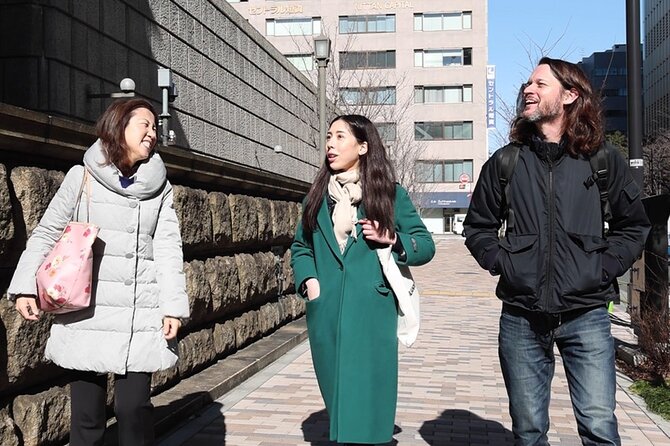
This tour is interesting because it connects two Tokyo worlds that normally feel separate, the formal quiet of the Imperial Palace grounds and the hands-on craft shops of Nihonbashi. If you get a guide like Mari or Yoshi, the walk feels organized, and the explanations make the spaces easier to read. You also get a real cultural thread, Edo Castle context up front, then everyday Japanese food and making traditions right after.
I love the way this itinerary stacks small, high-value stops instead of one big museum. I also like that it includes practical tastings, including a dashi sample and a Japanese sake set, plus you get to see long-running businesses up close. One possible drawback: it’s a walking tour, and bad weather can tighten the timing, with some stops taking less time than you might hope.
Key Highlights Worth Your Time
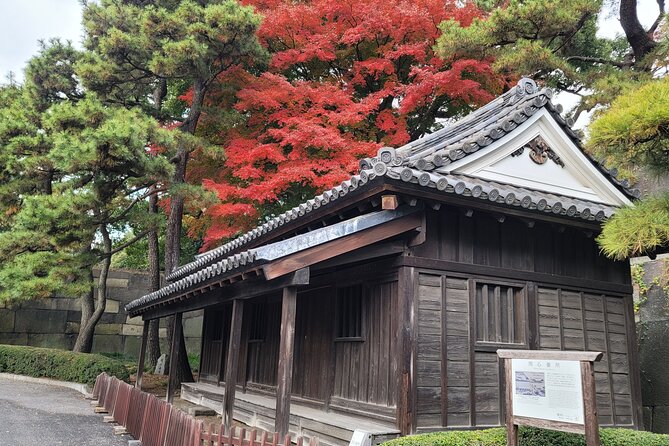
- Imperial Palace East Gardens entry plus a guided look at areas tied to Edo Castle, including Otemon Gate
- Nihonbashi’s long road story, described as the start of Japan’s national highway network since the early 1600s
- Dashi stop you can taste, at a traditional dashi soup stock store (with a sample included)
- Nori roasting at Yamamoto Noriten Honten, a seaweed producer in business since 1849
- Knife and washi craft culture in real shops, including a knife store founded in 1792 and hands-on washi making at Ozu Washi
- Group size up to 28, guided by a nationally accredited interpreter, with a mobile ticket for smoother check-in
Imperial Palace to Nihonbashi, the point of the walk
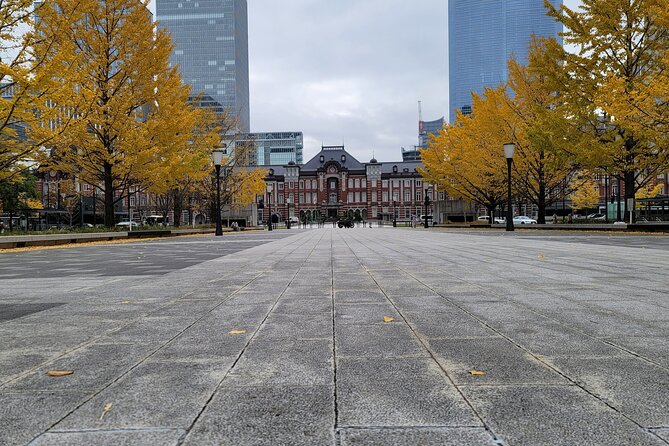
The tour starts at Tokyo Station, in the Marunouchi area, then moves toward the Imperial Palace via a ginkgo tree-lined avenue. That first stretch matters because it sets expectations. Tokyo can feel fast and confusing early in a trip, so a guided sequence helps you get your bearings fast before you hit the city’s maze of stations.
The whole experience runs about 4 hours, and you can usually choose a morning or afternoon slot. That flexibility helps if you’re trying to line up jet lag, cherry blossom timing, or just avoiding the harsh midday heat. You’ll also end in the Nihonbashi area, where you can hop to several subway lines without a long trek afterward.
This is not a “sit and watch” tour. It’s a guided walking route with short stops where you look, learn, and taste. If you like that style, you’ll probably enjoy how the tour builds momentum from one tradition to the next.
Also on the shortlist for Tokyo:
- Mt Fuji and Hakone 1-Day Bus Tour Return by Bullet Train
★ 5.0 · 26,383 reviews - 1-Day Tokyo Bus Tour
★ 5.0 · 14,250 reviews - Tokyo: TOKYO SKYTREE® Admission ticket
★ 4.5 · 11,192 reviews
East Gardens of the Imperial Palace and Edo Castle ruins, what you will see
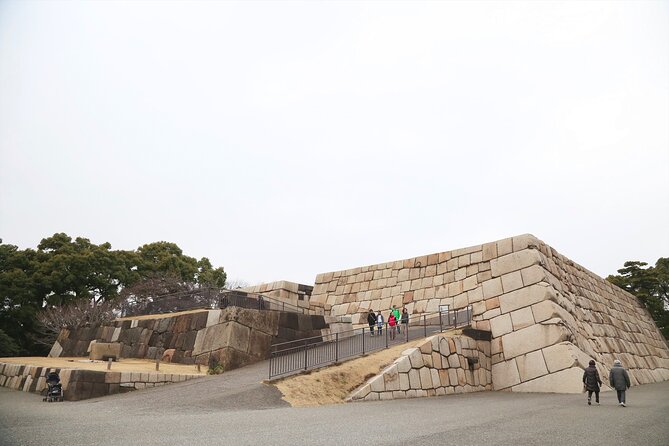
Your first major stop is the Imperial Palace area, followed by the East Gardens (which are open to the public). The tour includes entrance into the East Gardens, so you’re not scrambling for tickets on the day. You spend about an hour in this section, with time to walk through the grounds and hear how it ties to the Tokugawa era.
A key moment here is the Otemon Gate, described as the main entrance to Edo Castle. Even if you know little about the shoguns, the guide’s job is to make the space readable. You’ll notice how the gardens are planned, and how seasonal features like cherry and pine trees show up throughout the walk.
One important expectation note: the included access is the East Gardens, not a guaranteed interior tour of the main palace building. Some people end up mainly seeing the garden grounds that are open for free. That doesn’t make it less worthwhile, but it is the difference between a “palace interior” day and a “palace grounds” day.
Nihonbashi, Japan’s old commercial spine in one neighborhood
After the palace grounds, you move over to Nihonbashi, a major commercial district. The tour frames Nihonbashi as the start of Japan’s national highway network since the early seventeenth century. That’s a fun detail to understand before you start shopping, because it explains why this neighborhood has always been a trade hub, not just a modern business zone.
What I like about placing Nihonbashi right after the palace is contrast. You go from manicured grounds and gates to shopfronts with active production and centuries of customer traffic. The tour also focuses on long-standing businesses, the kind that survive because they do one thing well and keep customers returning.
This part of the day is where the tour becomes more than sightseeing. You’re not just looking at buildings. You’re seeing food supply chains (dashi, nori), tools (knives), and stationery crafts (washi). Even if you don’t buy anything, you get a better sense of what kinds of products Japan exports, sells locally, and keeps refining over generations.
Dashi, nori, and knives: the craft stops that turn history into real stuff
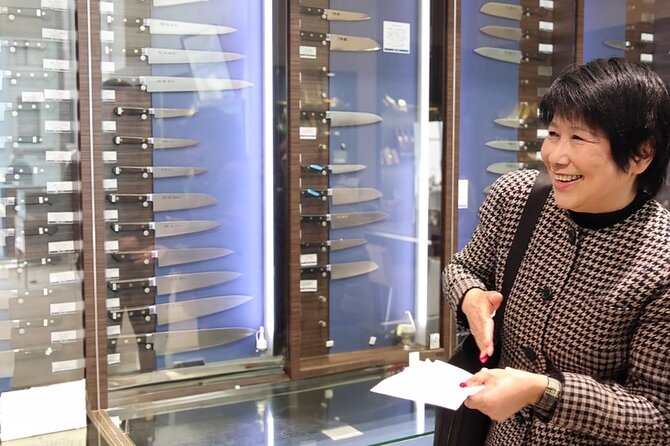
The Nihonbashi half of the tour is built around specific shops, each with its own purpose. You’re scheduled for multiple short visits, typically 20 minutes each, which sounds quick until you realize that each stop has a “point.” This is the kind of structure that keeps the day from dragging, even if you’re tired.
At the dashi store stop, the focus is traditional Japanese soup stock. Dashi shows up in hotpot dishes and noodle soups, so tasting it makes the concept click. The tour includes a dashi soup stock sample, which is one of the most direct ways to understand what these shops actually sell. You’re not just hearing a history story, you’re sampling the taste.
Next is Yamamoto Noriten Honten, a nori producer in business since 1849. Here, you can usually watch staff roast or process seaweed. That hands-on sight is a big deal, because nori is one of those “simple” foods that still involves careful drying and roasting.
Then you get to Kiya Nihombashi, a Japanese knife store founded in 1792. You’ll see a wide range of utensils, from traditional knives to more modern European styles. For me, the value of a knife stop on a tour like this is not buying a knife. It’s learning why certain blades are shaped and marketed differently, and how Japanese tool culture fits into daily cooking.
A change of pace from Tokyo:
- Tokyo: teamLab Planets TOKYO Digital Art Museum Entry Ticket
★ 4.6 · 9,779 reviews - Mt Fuji & Hakone Cruise, Drum Show Bullet Train 1 Day from Tokyo
★ 4.0 · 7,413 reviews - Tokyo: Sumo Show Experience with Chicken Hot Pot and a Photo
★ 4.8 · 6,678 reviews - Tokyo: Shinjuku Food Tour (13 Dishes at 4 Local Eateries)
★ 5.0 · 6,603 reviews
Ozu Washi and making a sheet of washi
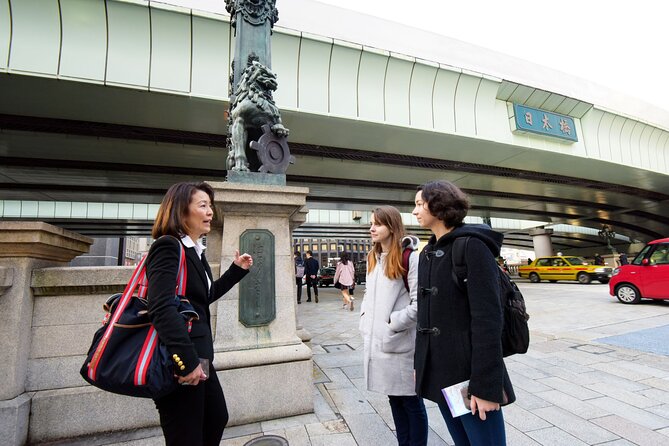
Ozu Washi is the craft stop that turns the day from tasting into doing. You’ll learn about Japanese paper and stationery items, and you should expect a washi-making activity where you make a sheet.
This is also where the tour often shines if your guide is good at translating small craft concepts into plain language. Paper-making can sound abstract until you’re holding it and seeing how it works. Even if you just make a small sheet, you’ll leave with a tactile memory, not just photos.
Timing is about one hour at this stop, which is long enough to watch the process and still do your own portion. This is also a useful activity if you want something to balance out palace walking. Paper-making gives your legs a break while still keeping you engaged.
Toyama Antenna Shop, sake set, and how the tour finishes
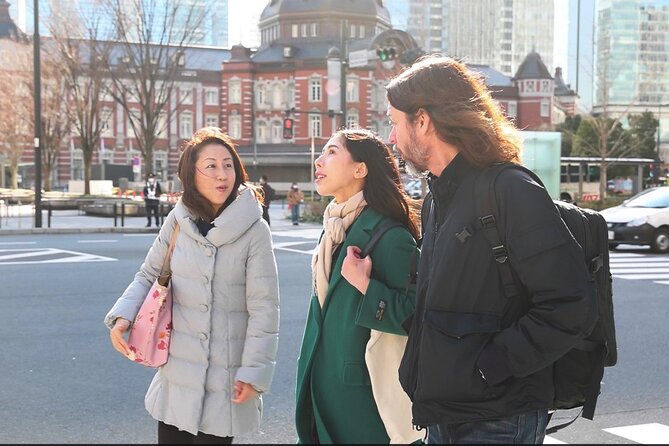
The final stop is the Toyama Prefecture antenna shop. This shop sells items from Toyama, a coastal prefecture on the Sea of Japan. It’s a calmer finish compared with the knife and shopfront intensity earlier in the day.
What makes this ending stronger is that the tour includes Japanese sake. The included items list mentions a Japanese sake set, and the tour schedule places a tasting close to the finish. That usually means you get to slow down after the walking, sit with your guide, and connect what you learned about Japanese ingredients back to what you’re tasting.
If you like food and drink, this ending lands well. You get a snack-and-walk rhythm throughout the day, then a more relaxed closer where you can compare impressions. And since the tour ends in Nihonbashi, you’re already positioned in a part of central Tokyo with plenty of options afterward.
Price and value: does $101.72 make sense for this mix?
At $101.72 per person, this tour is not a budget impulse buy. The reason it can still be a solid value is what’s included. You get a nationally accredited tour guide-interpreter, entrance into the East Gardens, a dashi sample, and a Japanese sake set. Those items cover the hardest parts of DIY travel: guided context, correct access, and tasting without awkward guessing.
You’re also getting multiple specialty shop stops in one route: dashi, nori, knives, and washi. If you try to piece this together alone, you’d spend time figuring out where to go, what’s worth your attention, and how to get the language support that makes the shopping portion feel more than random browsing.
Group size caps at 28, so it’s big enough to feel lively, but not so huge that you’re lost in a stampede. Still, it is a group tour, so it won’t be as flexible as hiring a private guide.
Walking, weather, and the day-of reality in Tokyo
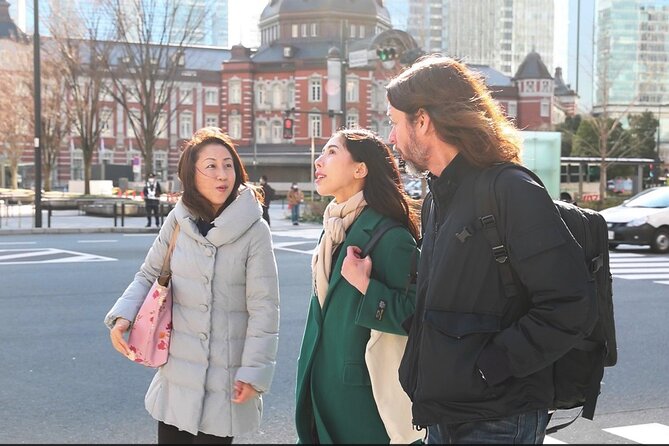
This experience requires good weather. That warning isn’t just legal cover. Tokyo weather can change fast, and the day is designed as a sequence of walking segments. If it’s windy, rainy, or brutally hot, the schedule can feel tighter and the pace harder.
The good news is that guides often adjust on the fly. Some people have described guides responding to heavy rain by shortening or shifting parts of the route to keep the experience comfortable. Others have mentioned hot conditions and getting parts of the tour adjusted instead of forcing everyone to suffer.
Your practical move: wear shoes you can walk in for a few hours, bring an umbrella, and carry water. If you’re visiting in summer or during sudden rain, treat this as a walking day first, shopping tour second.
Getting more out of the guide, and using their strengths
This tour lives and dies by the guide. Many people praise specific guides by name, including Mari, Michi, Yoshi, Eriko, Andy Watanabe, and others. When the guide is strong, you’ll notice it in how they connect details across stops. You’ll go from Edo Castle context to dashi tasting to washi paper-making without it feeling like disconnected “shopping errands.”
To get your money’s worth, ask questions that match the stop:
- With the dashi shop, ask how dashi is used and what ingredients matter.
- With the nori shop, ask about roasting and what you should look for when buying.
- With the knife store, ask what types are best suited for common cooking styles.
- With washi, ask what makes one type different from another in everyday use.
Even if your Japanese is basic, the interpreter support is there for a reason. Lean on it. The best moments tend to happen when you ask the one question you’re actually curious about, not the generic “what is this” question.
Avoiding expectation gaps around the palace and shop stops
The tour title includes Imperial Palace, but the included access is specifically the East Gardens. If you’re hoping for a full palace interior tour, you may be disappointed. A more realistic expectation is a guided walking tour through public grounds plus historical context tied to Edo Castle.
Another expectation gap can come from temporary closures. The itinerary notes that if a facility is temporarily closed, you’ll be guided to other facilities. That means the shop lineup could change slightly depending on conditions.
Finally, some stops can feel more like a shop visit than a demonstration-heavy event. For example, seaweed roasting and knife-related content may vary in depth depending on staffing and timing. You can still learn a lot, but keep your mindset flexible.
If you want a day with guaranteed deep demonstrations at every stop, you should consider asking what’s currently running that day. If you want a guided sampler of Japan’s food and making culture with good context, this tour fits well.
Should you book this Imperial Palace and Nihonbashi tour?
Book it if you want a smart, guided way to connect Tokyo’s palace area with hands-on crafts and tastings in one afternoon or morning. This is especially good for first-time Tokyo visits when you want structure, language help, and a route that ends conveniently in Nihonbashi.
Skip it, or reconsider, if you mainly want an interior palace tour, or if you hate walking in rain. Also, if you are the type who expects every shop to be a long, staged performance, this will feel more like a sequence of curated visits plus tastings.
If your ideal day sounds like: palace gardens for context, then dashi, nori, knives, washi, and sake for texture and taste, this is a very reasonable half-day plan.
FAQ
How long is the Tokyo’s Imperial Palace & Nihonbashi Tour?
The tour lasts about 4 hours.
What’s included in the tour price?
You get a nationally accredited tour guide-interpreter, entrance into the East Gardens of the Imperial Palace, a dashi soup stock sample, and a Japanese sake set.
Where does the tour start and where does it end?
It starts at Tokyo Station (1 Chome-9 Marunouchi, Chiyoda City) and ends in the Nihonbashi area (near Nihombashi Station and Mitsukoshimae Station).
What do you do at the East Gardens stop?
You walk through the East Gardens and enter via Otemon Gate, with time in the palace grounds that include features like cherry and pine trees.
Does the tour depend on weather?
Yes. This experience requires good weather, and if it’s canceled due to poor weather, you’ll be offered a different date or a full refund.
How large is the group?
The maximum group size is 28 travelers.
Can I get a refund if I cancel?
Yes. You can cancel for a full refund up to 24 hours before the experience start time. If you cancel less than 24 hours before, the amount you paid will not be refunded.
Latest write-ups near Tokyo
- Tokyo Nights: Shibuya Photo Adventure★ 5.0 · 20 reviews
- Wagyu & Sake 8 Course Tasting Dinner in Shinjuku★ 4.9 · 20 reviews
- Making Japanese desserts Nerikiri & drinking matcha in Tokyo★ 5.0 · 20 reviews
- Japanese Whisky Hunting《HIGH-QUALITY-ONLY》Rare Tasting Class★ 5.0 · 20 reviews
- Mt. Fuji 5th Station, Owakudani Ropeway, Pirate Ship plus Outlet shopping!★ 4.5 · 20 reviews
- Kintsugi Experience with Arita Ware in Tokyo (English Guide)★ 4.8 · 20 reviews
- This is Asakusa! A Tour Includes the All Must-Sees!★ 5.0 · 20 reviews
- Tokyo: Karate Experience with Former All-Japan Champion★ 5.0 · 20 reviews
Tokyo Tours, compared.
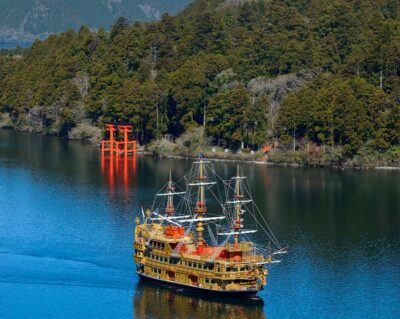
Mt Fuji and Hakone 1-Day Bus Tour Return by Bullet Train
Read our review →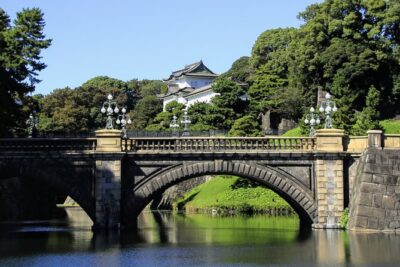

teamLab Planets TOKYO Digital Art Museum Entry Ticket
Read our review →
Mt Fuji & Hakone Cruise, Drum Show Bullet Train 1 Day from Tokyo
Read our review →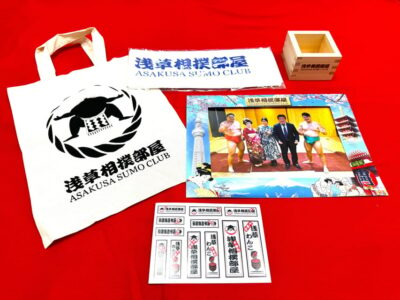
Sumo Show Experience with Chicken Hot Pot and a Photo
Read our review →
Shinjuku Food Tour (13 Dishes at 4 Local Eateries)
Read our review →