
Reviewed · SUMO EXPERIENCES
1.5 Hour VIP Sumo Event in Tokyo
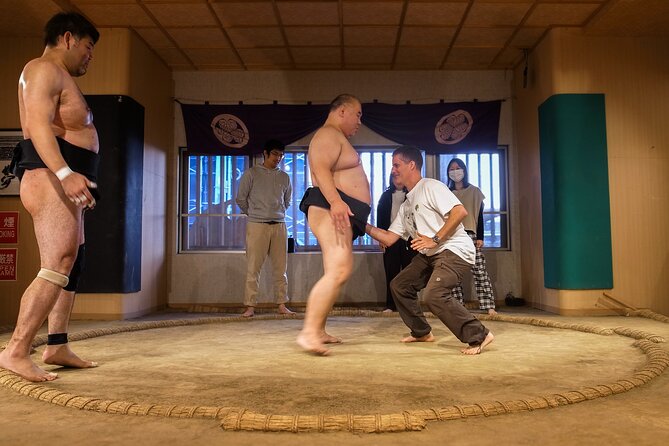
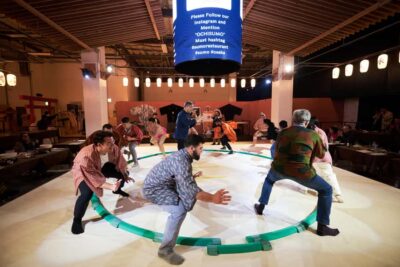
What makes this VIP sumo event interesting is that you don’t just sit and watch. You learn the basics, then you step into the ring for your own short practice round. I like the small group size (up to 20) because it means everyone gets a turn, including kids.
I also like that the coaches are former rikishi who demonstrate techniques and then guide your bout-style practice. The one drawback to keep in mind is that this does not include a ticket to the sumo tournament, so plan on separate tournament entry if you want to watch real matches.
Key highlights at a glance
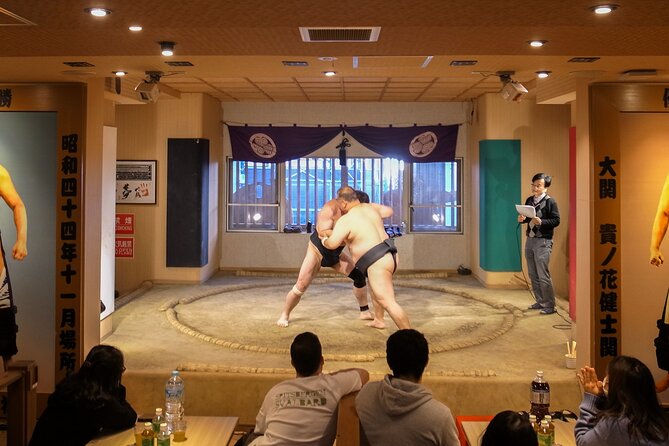
- Up to 20 people, so the pace stays personal and most folks get real interaction time
- Former rikishi coaching, with clear technique demos before you try anything
- You get into the ring for a short, beginner-friendly round
- Lots of photo opportunities plus an end-of-session Q&A
- English-led instruction, so you are not stuck translating everything yourself
- Mobile ticket and a meeting spot near Ryogoku, making arrival fairly straightforward
VIP Sumo Near Ryogoku, Not Just Another Watch-and-Point Tour
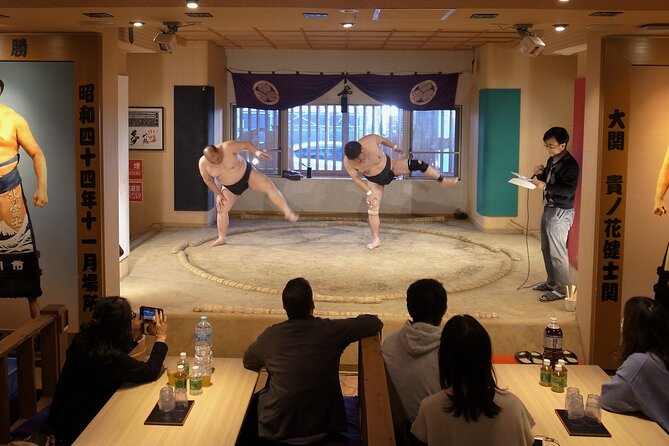
Tokyo has plenty of ways to “see sumo,” but most of them keep you on the sidelines. This one takes a different approach: you learn, you train a little, and then you actually do a round in the ring.
I think that is why this works for beginners. The event is designed so you do not need any wrestling background. You also get a structured introduction to sumo’s rules and cultural meaning, not just a crash course in moves.
There is also a practical advantage to the location. The meeting point is near Ryogoku station, a major hub for reaching Tokyo’s sumo-related areas. For an early-morning activity, that matters. You are not burning time on transfers while your energy is still waking up.
One more thing: the group size is capped at 20, so it feels like a lesson with coaching, not a crowded show. That usually leads to better questions, more clarity, and less waiting around while others get their turn.
More Sumo Experiences in Tokyo:
- Tokyo: Sumo Show Experience with Chicken Hot Pot and a Photo
★ 4.8 · 6,678 reviews - Tokyo: Sumo Show and Dining Experience
★ 4.8 · 2,742 reviews - the SUMO show
★ 5.0 · 1,960 reviews
Price and Value: What You’re Paying For (and What You’re Not)
At $114.78 per person for about 1.5 hours, this is not a budget activity. The value comes from the fact that you are buying access, instruction, and participation, not just observation.
Here is what you actually get for your money:
- In-ring time guided by former rikishi
- A structured explanation of sumo history, cultural significance, and basic rules
- Practice exercises so you understand how the techniques feel
- Photos and an end question and answer session
What it does not include is crucial: there is no tournament ticket. That means this event is best seen as a pre-match primer or a standalone “hands-on sumo morning,” not a replacement for a real tournament day.
If your goal is to watch the finest bouts, you will still want tournament access. But if your goal is to understand why sumo looks the way it does, how the training works, and how the moves translate in a simple way, this is a very direct way to get there.
And for families, the format can be a real win. The activity is small-group, interactive, and runs for long enough that kids do not feel like they are just waiting to be entertained.
Meeting at 9:30 am: Finding the Spot, Using the Mobile Ticket
The session starts at 9:30 am and ends back at the meeting point, so you can plan the rest of your day without guessing how late it might run. The event duration is listed at about 1 hour 30 minutes, so it fits neatly into a morning schedule.
Your meeting address is: 1-chōme-1-2 Kamezawa, Sumida City, Tokyo 130-0014, Japan. The organizer also notes it is near public transportation and positioned as a handy location near Ryogoku station.
You’ll use a mobile ticket, which is the modern way to keep things simple. You should also expect confirmation at booking. If you like to travel with less stress, this kind of setup is a good match.
Practical tip: since this is an address-specific meetup, plan to arrive early. Early in the morning in a big city is not the time to cut it close. If you have ever had a meeting point turn into a small scavenger hunt, you already know the cost of being late: you lose time, focus, and good mood.
The good news is that the meeting location is presented as easy to reach. The even better news is that once you find the spot, the rest of the experience flows as a guided program.
What Happens First: Rules, Etiquette, and the Meaning Behind Sumo
The event’s structure starts with you learning the foundation. You get an introduction to sumo’s history and cultural significance, plus the rules and basic techniques you need to follow what you see and do.
This part matters more than it sounds. Sumo can look confusing at first. A lot of the fun of tournament viewing is understanding why a moment matters, how fighters are trained to think, and what the ritual elements communicate.
During the early portion, you should expect the coaches to explain:
- basic rules and what to watch for
- how training shapes the techniques
- how sumo fits into Japanese culture
Because the event is conducted in English, you are not stuck missing key points. You can ask real questions as you go, which makes the in-ring part less intimidating. Instead of feeling like you are being tossed into a sport you do not know, you get a map.
And there is a built-in respect factor. Sumo has etiquette, and learning it before you step into the ring helps you interact more comfortably with the coaches and the space.
If you are bringing kids, this part also helps. Kids often learn fast when they can connect the action to a story. This event gives you the story first.
A change of pace from Tokyo:
- Mt Fuji and Hakone 1-Day Bus Tour Return by Bullet Train
★ 5.0 · 26,383 reviews - 1-Day Tokyo Bus Tour
★ 5.0 · 14,250 reviews - Tokyo: TOKYO SKYTREE® Admission ticket
★ 4.5 · 11,192 reviews - Tokyo: teamLab Planets TOKYO Digital Art Museum Entry Ticket
★ 4.6 · 9,779 reviews
Practice Exercises, Then Your Turn: How the Training Really Works
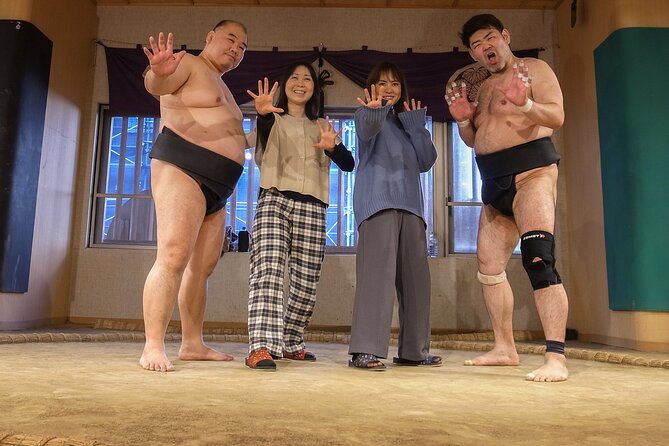
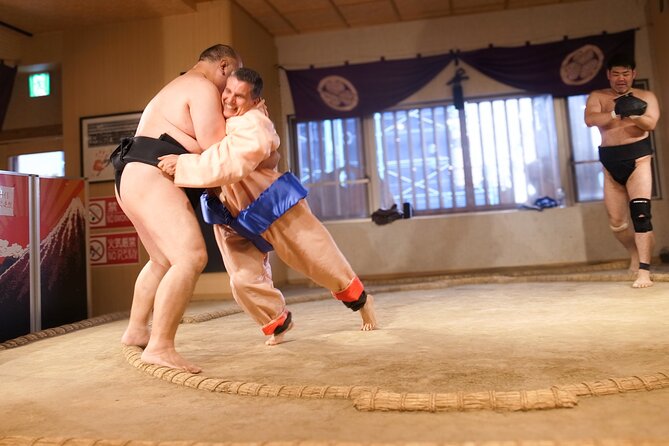
After the intro, the event moves into hands-on training. You practice sumo exercises and basic drills, then you get the chance to challenge a former sumo wrestler in the ring.
This is where the experience becomes genuinely different from most watching-only tours. The goal is not to turn you into a rikishi in 90 minutes. The goal is to give you a clear sense of stance, movement, and force.
You should expect a guided progression:
- technique basics and rule context
- practice exercises so you understand the body mechanics
- a short in-ring round where you apply it with coaching
The coaches are former rikishi, and there are two ex-rikishi who demonstrate and guide you. Having more than one coach can make a big difference in class flow. It also gives you more viewpoints on technique and timing.
When you step into the ring, it is typically framed as a challenge, not a test. Still, it is physical. You should be ready for active participation.
One practical consideration: this is interactive, so you are not just a spectator. If you are nursing an injury or you hate any kind of physical activity, this might feel like the wrong kind of “tour.” On the other hand, if you enjoy trying things, this is one of the most memorable ways to experience sumo without needing prior training.
Photos, Q&A, and Getting Your Questions Answered in Real Time
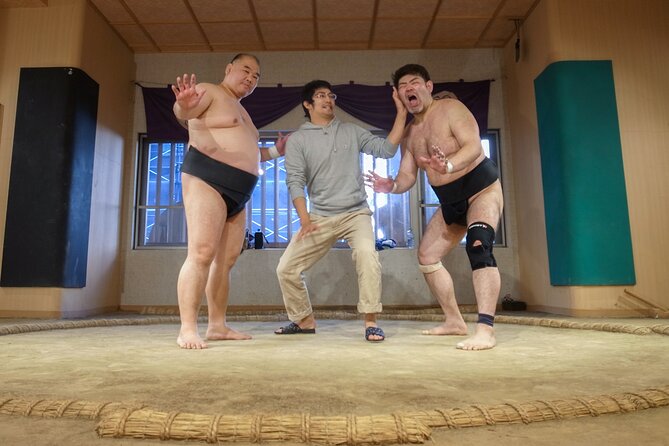
A big part of the joy here is that you get visible proof you did it. The event includes lots of photo opportunities, plus time for questions.
That matters because sumo is more than a sport. It is tradition, training, and ritual. If you walk into a tournament afterward without any context, you will miss a lot of the “aha” moments.
The end of the event includes a question and answer session. This is your chance to ask things like:
- what certain movements mean
- how training impacts match strategy
- why sumo looks the way it does
Because you have already done the beginner drills, your questions are usually sharper. You are not asking in the abstract. You are asking from the standpoint of, I tried it, now explain what I felt.
For families, the photo moment is also a built-in memory maker. For first-timers, it is a great way to turn a morning lesson into something you can laugh about later. It is hard to forget the sight of yourself trying to apply sumo technique, even in a simple guided round.
If you combine this with a tournament later in the day, the morning experience becomes a personal decoder ring for what you watch.
Who This Sumo Morning Is Best For
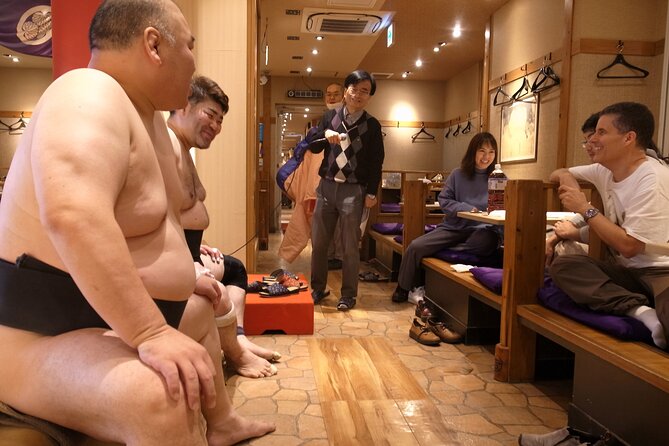
This is made for people who want more than a passive cultural stop. If you have zero sumo knowledge, you are the target audience. You do not need wrestling experience, and the instruction is in English.
It also works well if you are short on time. You get a high-impact experience in about 1.5 hours, starting at 9:30 am, and you are back at the same meeting point afterward.
Here is who it fits especially well:
- first-time sumo fans who want the rules and context
- families with kids old enough to participate comfortably
- people who prefer small-group learning over crowded shows
- travelers who like hands-on activities, even if they are not “sporty”
Age-wise, the info is specific: the activity notes kids aged eight and above. Another detail lists a minimum age of 5, with the requirement that children must be registered and paid for the event. If you are traveling with a child near those boundaries, the best move is to use the age rules given and double-check fit based on the age limit details you have at booking.
One last thought: if you are mainly craving the atmosphere of a real tournament day, this is not that. This is training plus a ring experience. Think of it as learning sumo at human speed.
Should You Book It, or Skip to the Tournament?
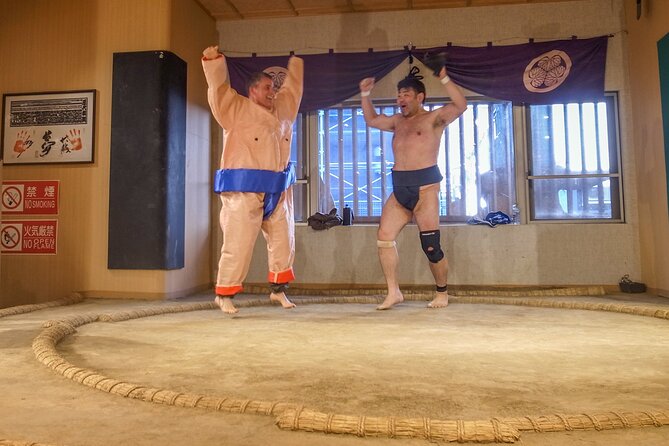
I’d book this if you fall into one of these buckets: you want to understand sumo before you watch it, you like interactive lessons, or you are traveling with a group that enjoys doing something together.
I would think twice if your primary goal is pure tournament viewing. Since there is no tournament ticket included, you still need separate access to actually watch matches. Also, because you will practice and get into the ring, this is not a sit-and-smile activity.
If you want a smart two-step plan, do the sumo VIP session in the morning, then go to the tournament later if you can. You’ll already know what you are looking for, and you will recognize what the coaches taught once the real bouts start.
Overall, the value is in the participation: small group, former rikishi guidance, and ring time. For many first-timers, that combo is exactly what turns sumo from unfamiliar to unforgettable.
FAQ
How long is the VIP sumo event, and what time does it start?
It runs for about 1 hour 30 minutes and starts at 9:30 am.
Where is the meeting point in Tokyo?
The meeting point is 1-chōme-1-2 Kamezawa, Sumida City, Tokyo 130-0014, Japan. The activity is near Ryogoku station and public transportation.
Is the event conducted in English?
Yes. The event is conducted in English.
Do I need sumo or other wrestling experience?
No sumo or other wrestling experience is necessary.
What is the minimum age for children?
The information lists a minimum age of 5, and it also notes that kids aged eight and above can participate. Children must be registered and paid for the event.
Does the event include a ticket to the sumo tournament?
No. It does not include a ticket to the sumo tournament.
How do I get my ticket?
You receive a mobile ticket.
What is the price per person?
The price is $114.78 per person.
Can I cancel for free?
Yes, you can cancel up to 24 hours in advance for a full refund.
Should You Book?
If you want a beginner-friendly, hands-on way to understand sumo and you like small-group interactive activities, this is a strong choice. If you only care about watching tournament bouts, you will still need separate tournament tickets, since this event is not that.
Latest write-ups near Tokyo
- Tokyo Nights: Shibuya Photo Adventure★ 5.0 · 20 reviews
- Wagyu & Sake 8 Course Tasting Dinner in Shinjuku★ 4.9 · 20 reviews
- Making Japanese desserts Nerikiri & drinking matcha in Tokyo★ 5.0 · 20 reviews
- Mt. Fuji 5th Station, Owakudani Ropeway, Pirate Ship plus Outlet shopping!★ 4.5 · 20 reviews
- Japanese Whisky Hunting《HIGH-QUALITY-ONLY》Rare Tasting Class★ 5.0 · 20 reviews
- Kintsugi Experience with Arita Ware in Tokyo (English Guide)★ 4.8 · 20 reviews
- This is Asakusa! A Tour Includes the All Must-Sees!★ 5.0 · 20 reviews
- Tokyo: Karate Experience with Former All-Japan Champion★ 5.0 · 20 reviews
Sumo Experiences, compared.
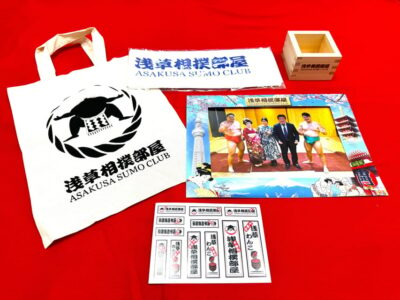
Sumo Show Experience with Chicken Hot Pot and a Photo
Read our review →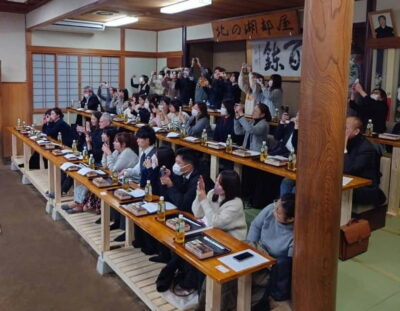
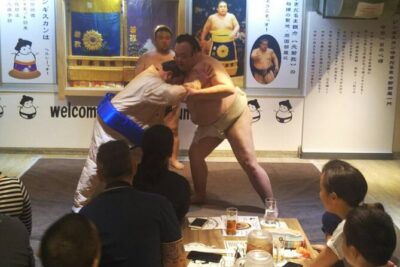
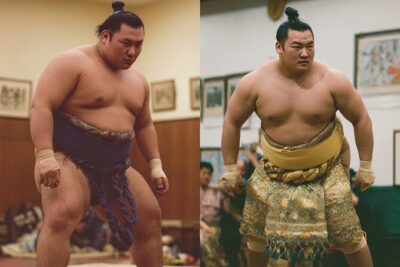
Tokyo Shinjuku Sumo Show & Experience with Photo
Read our review →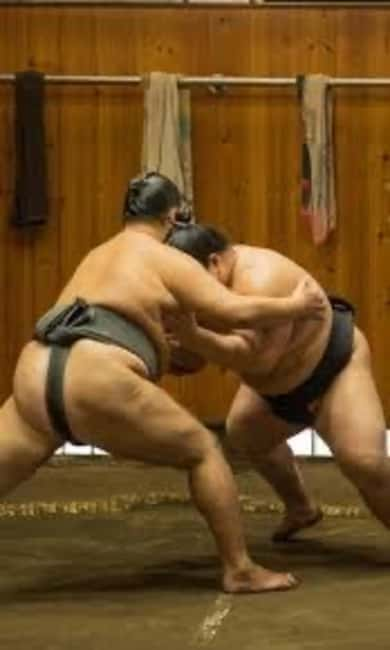
Sumo Show & Experience w/ Optional Kimono & Hot Pot
Read our review →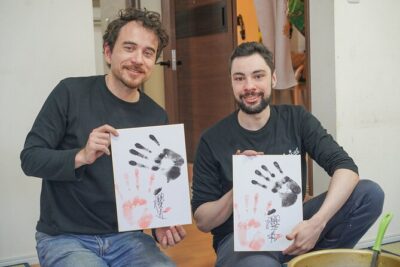
Authentic Sumo Experience in Tokyo: Enter the Sanctuary
Read our review →Browse the lists this tour appears in