
Reviewed · FOOD & DRINK IN KYOTO
Kyoto: Replica food making experience
Kyoto’s food replica workshops are interesting because you get hands-on with the same style of lifelike display food you see in front of Japanese restaurants, the shokuhin culture. This one is a compact, small-group class built around making a convincing tempura-style sample you can take home. You’ll also get a clearer sense of why those “fake” dishes matter so much in everyday street food life.
I especially like two things. First, the technique is genuinely fun, wax to shape, then batter-wrapping to get that realistic look. Second, you leave with a finished replica that’s packaged like a real supermarket item, so it feels like a proper souvenir, not just a craft project.
One consideration: this is a craft with hot materials, and it’s not meant for very young kids. If you’re traveling with children under 6, or you hate the idea of getting a little wax mess potential, this may not be your best match.
Why This Kyoto Replica Food Class Feels Different
- You make an actual restaurant-style sample (tempura plus an optional lettuce item) instead of a simple craft.
- Small group format (up to 4 people) means you get more personal attention and time to practice.
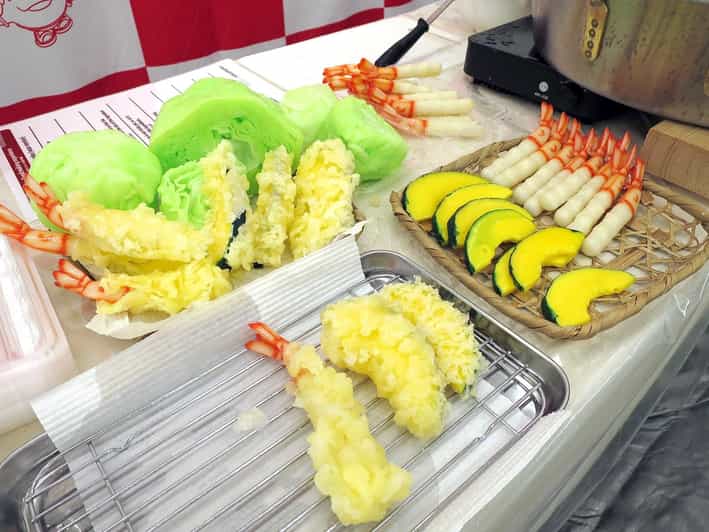
- The method is old-school: melt wax, shape it in stages, then wrap it to look like batter and texture.
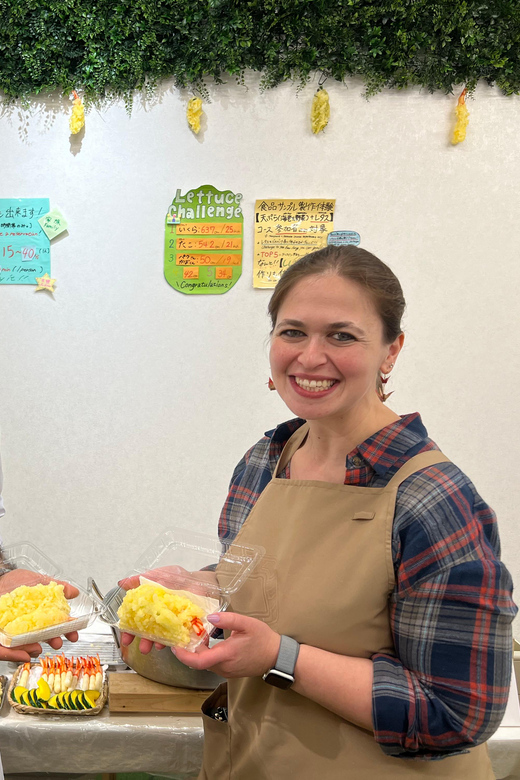
- You take home a boxed display-ready souvenir that looks like it belongs in a Japanese store.
- It’s a great break from Kyoto walking since it’s only about 1 hour and you can pair it with nearby food afterward.
Kyoto Replica Food Workshop: Making Wax Tempura That Looks Real
If you’ve ever stopped in front of a Japanese restaurant window and stared at the display food, you already know the magic. The dishes look so convincing that your brain wants to believe they’re edible. In Kyoto, this replica food workshop turns that curiosity into a hands-on lesson you can actually do in about an hour.
This isn’t about painting a cute model. It’s about learning the logic behind Japanese restaurant food displays, and then building your own convincing tempura style replica using a traditional technique. You start by shaping melted wax (with guidance), then you wrap it so it reads like battered shrimp and pumpkin. It’s challenging in a good way, and you get real satisfaction when the final piece looks “right” from the front, like it’s ready to sit behind glass.
And the best part for your trip? You don’t just leave with photos. You leave with the object itself, packaged like something you’d find in a shop. That makes it one of those rare activities that feels worth the money, even if you’ve already planned plenty of temples, markets, and meals.
More Food & Drink in Kyoto
- Kyoto Night Foodie Tour in Gion (9+ dishes + 6 Sake tastings)
★ 5.0 · 1,762 reviews - 3-Hour Kyoto Insider Sake Brewery Tour with Tastings & Pairings
★ 5.0 · 917 reviews - Arashiyama Bamboo, Temple, Monkeys, or Secret Sake Brewery
★ 4.8 · 886 reviews
Where to Find It Near Kani Douraku and Sanjo Meiten-gai
Location matters in Kyoto because streets can tangle quickly. This workshop has an easy street-level landmark: it’s diagonally across from Kani Douraku, the place with a big crab signboard. That crab reference is handy when you’re in the shopping lanes and trying not to overthink directions.
The class also ties in nicely with the Sanjo Meiten-gai shopping arcade vibe. One review notes it’s in that area, which is useful because you can eat before or after without scrambling. Another comment says it’s not far from Nishiki Market, so you can combine it with a food-focused afternoon.
What I’d do: plan the workshop around a time you’d normally shop or snack anyway. After the class, you’re likely to crave the real thing, especially since you’re making tempura replicas.
What You Actually Make in This 1-Hour Workshop
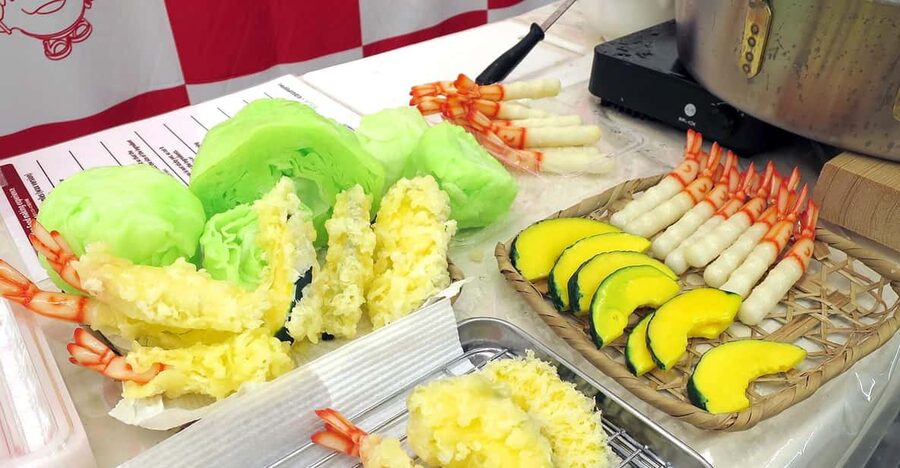
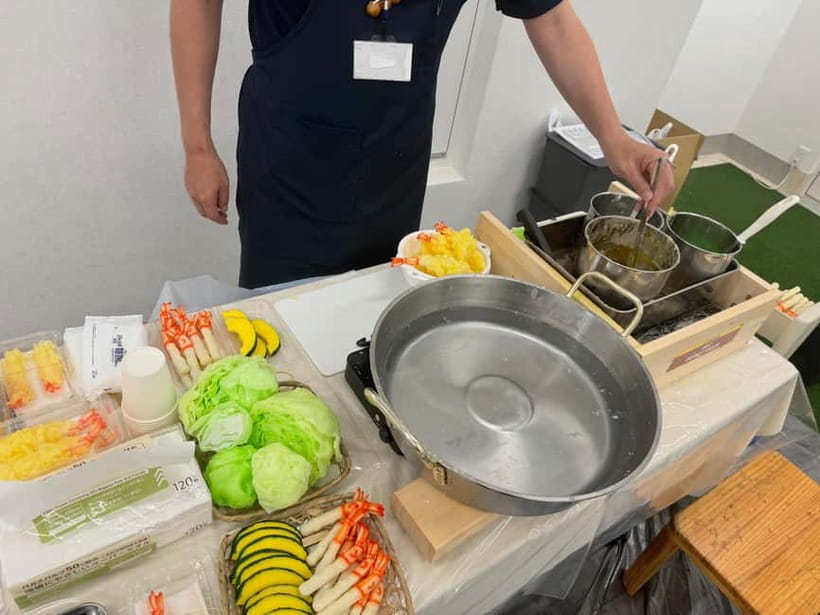
This is a short workshop, about 1 hour, and it’s tightly focused. You’ll make a replica food sample based on shrimp and pumpkin tempura. The process is the core experience, and it goes in steps.
Here’s the sequence in plain terms:
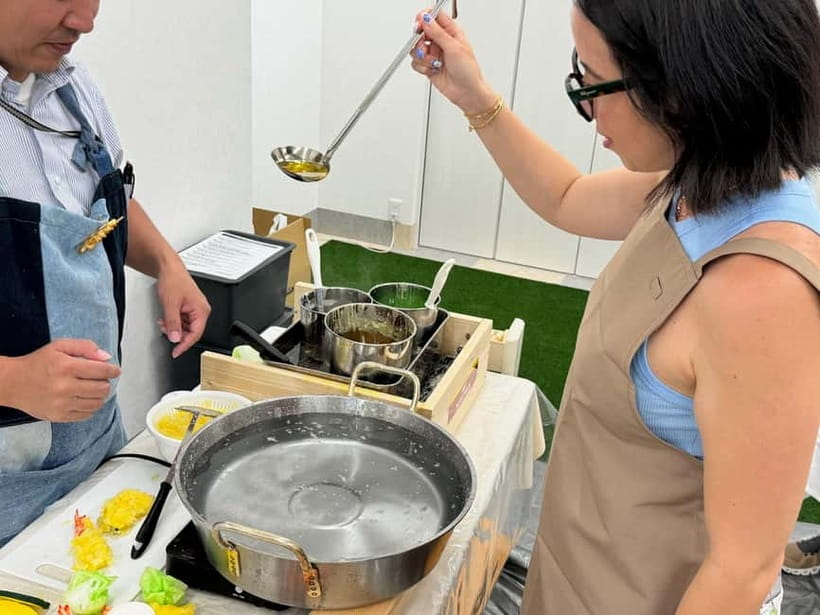
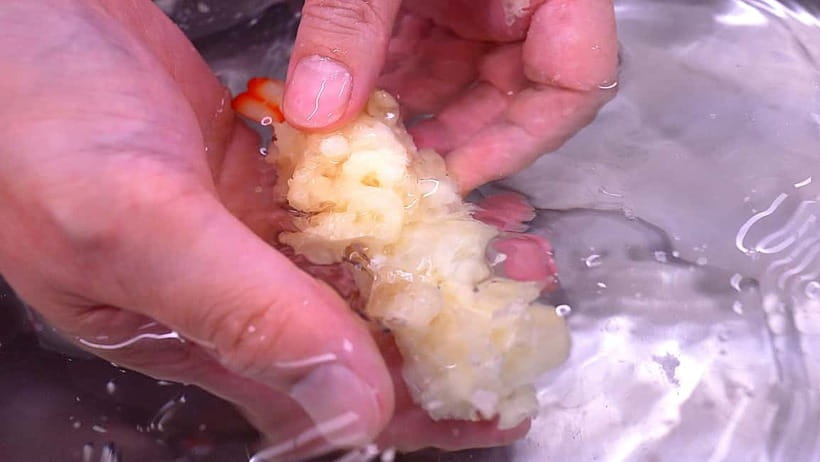
- Wax shaping: you pour melted wax into hot water and shape it before it hardens.
- Batter wrap: you wrap the wax form with a realistic-looking batter layer so it reads like tempura from a distance.
- Optional lettuce replica: you can also choose a lettuce item if that’s included in your set.
That optional lettuce is a nice twist if you want something that feels different from the tempura bowl look. It also gives you a bit of variety in what you take home.
Important detail: this is a display replica. It’s for keeping, not serving. The whole idea is that it imitates what you see outside restaurants to attract customers, so it’s not meant to end up on your dinner table by mistake.
The Studio Experience: How the Small Group Format Helps
The class runs with an instructor and stays small, limited to 4 participants. That small size is the difference between a generic demo and an actual “I can do this” experience.
When groups are tiny:
- You can ask questions without feeling rushed.
- You get more personal correction if your wax shaping or batter wrap needs tweaking.
- You have time to practice at least a little before final assembly.
The instruction is listed as English and Japanese. Reviews also point out that instructors are very patient and willing to work through language barriers. One person used translation help when communication was tricky, and it still worked smoothly. So if you’re not fluent in Japanese, you’re not doomed. You’ll still be guided step-by-step.
Also, arrive at your reserved time. The workshop is built to explain how to make the dish all at once, so if you’re late, you’re basically walking into the middle of a set of instructions.
A change of pace from Kyoto:
- PERFECT KYOTO 1-Day Bus Tour
★ 5.0 · 13,518 reviews - Kyoto: Fushimi Inari, Kinkakuji, Bamboo Grove 1 Day Bus Tour
★ 4.8 · 4,316 reviews - Kyoto: Tea Ceremony in a Traditional Tea House in Kiyomizu
★ 4.9 · 3,519 reviews - Kyoto Geisha Walking Tour: Gion District & Hidden Gems
★ 4.7 · 3,273 reviews
The Technique: Wax, Hot Water, and the Art of Realistic Texture
This is the part that makes the class feel authentic. You’re not just assembling pre-made pieces. You’re learning a technique that relies on texture, shape, and timing.
The biggest “wow” moment is when wax shaping starts to look like the food form you’re targeting. Wax has a particular behavior in water, and the shaping step is where you learn how to control form before it sets. Then you wrap the shaped piece with batter so it visually reads as a crunchy tempura surface.
What helps you understand the Japanese replica culture is realizing it’s not random. Display food has one job: look good quickly. From a restaurant street view, details that matter are silhouette, color, and texture cues. This workshop teaches you those cues through your own hands.
If you love crafts, it’s satisfying. If you prefer “just tell me what to do,” it’s still doable, but you’ll need to follow along. It’s described as challenging but rewarding, and that checks out logically: wax shaping is a hands-on skill, not a trick you can speed-run without paying attention.
Optional Lettuce Replica: Why It’s a Fun Contrast
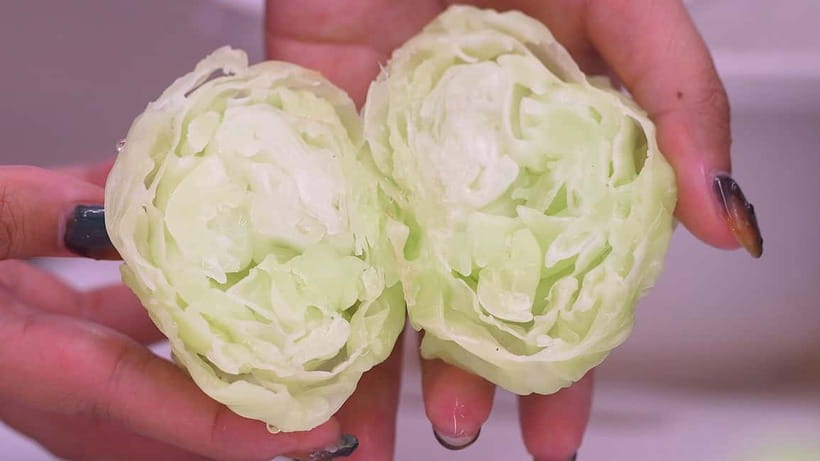
The optional lettuce replica is more than a “second item.” It gives you a chance to play with a different kind of realism.
Tempura focuses on batter texture and the idea of fried crunch. Lettuce focuses on shape and leaf-like surfaces. Even if the workshop time is limited, adding lettuce means your final souvenirs aren’t all the same visual language. It also lets you choose based on what you’re most excited to see on your shelf afterward.
If you’re the type who buys one souvenir and regrets it, this option can be a smart way to make your purchase feel more personal. You’re not stuck with only one look.
Taking Home Your Replica Food in Supermarket-Style Packaging
You’ll take home what you make. And it’s packaged to look like real retail items, like something you’d find at a supermarket. That packaging detail matters more than you might think.
Most food souvenirs are edible, or they’re flat. This one is an object meant to be displayed, and the packaging makes it feel like a real product. You’ll likely want to keep it upright in your hotel room or pack it carefully, since it’s the shape and presentation that make it impressive.
One review even points out that after looking at oishii sou (the fake food), that person wanted to eat tempura right away. That’s the emotional effect of the experience. You’ll probably start noticing how restaurants use the display food to sell texture, not just flavor.
Price and Value: Is $22 Worth It?
For a 1-hour, small-group, take-home workshop, $22 per person is pretty reasonable. You’re paying for three things that add up fast:
- instructor time and materials (wax and wrapping supplies),
- the guided craft skill-building, and
- a finished souvenir that’s packaged.
If you’re comparing it to typical Kyoto activities, it lands in the “small, memorable, and tangible” category. You’re not just buying entry to a museum, and you’re not just collecting a postcard. You’re making something you can display, and it uses an eye-catching Kyoto specialty: replica food.
The only time I’d hesitate is if you hate hands-on workshops, or if you’re traveling super light and don’t want boxed items. Otherwise, it’s good value for the uniqueness factor and the fact that you finish with something real in your hands.
Who This Workshop Suits Best (and Who Might Skip It)
This fits best if you:
- enjoy hands-on activities more than passive sightseeing,
- like food culture and restaurant details,
- want a memorable, conversation-starting souvenir,
- are traveling with kids who are old enough to participate with guidance.
It’s not suitable for children under 6. And when kids join, the workshop may ask for parental assistance. Reviews also describe kids enjoying it, including ages 9 and up, with parents staying involved.
If you’re an absolute minimalist or you dislike workshops with hot materials, skip it. Also skip it if you’re short on time and can’t spare the 1 hour. This isn’t designed as a quick photo stop.
Practical Tips Before You Go
A few details that make the day smoother:
- Go at your reserved time so you can get the instructions all at once.
- Wear something you can handle. One review notes they suggest a change of clothes in case wax gets on you, and they provide aprons or chef jackets. Even with protection, it’s smart to dress like you’re doing a craft.
- Bring a positive mindset. Wax and batter wrapping take focus. If you expect it to be easy, you might feel annoyed. If you expect to learn, you’ll enjoy it.
- Plan your food nearby. After making tempura replicas, you’ll likely want the real thing, and the area has plenty of options.
Finally, if you’re nervous about language, relax. The workshop is structured with clear teaching, and multiple reviews point out that instructors were patient, helpful, and able to communicate even when English levels varied.
The Bottom Line: Should You Book This Kyoto Replica Food Class?
If your Kyoto trip includes food markets, restaurant windows, and you like the idea of making something weird and impressive, I’d book this. The combination of small group size, a 1-hour hands-on process, and a take-home packaged replica is exactly how you get a standout memory without turning your day into a full production.
Skip it if hot materials and hands-on crafting make you uncomfortable, or if you’re traveling with a child under 6. And if you’re the type who only wants edible souvenirs, remember: this is for display, not eating.
My call: book it when you want a creative break. It’s one of those Kyoto experiences that makes the city feel hands-on, not just watched from the sidewalk.
Latest write-ups near Kyoto
- Kyoto Tea Ceremony and Samurai Photo Session★ 5.0 · 70 reviews
- Kyoto: Kinkakuji, Golden Pavilion Guided Tour★ 4.7 · 71 reviews
- Private departure transfer from Kyoto city to Kansai International airport★ 5.0 · 72 reviews
- Uji: Green Tea Tour with Byodoin and Koshoji Temple Visits★ 4.8 · 72 reviews
- Kyoto: Geisha Dinner & Gion Cultural Walk★ 5.0 · 73 reviews
- Kimono and Yukata Experience in Kyoto★ 4.5 · 73 reviews
- Kyoto: Toei Kyoto Studio Park Admission Ticket★ 4.1 · 73 reviews
- Private car tour in Kyoto (up to 9)★ 5.0 · 74 reviews
Food & Drink in Kyoto, compared.

Kyoto Night Foodie Tour in Gion (9+ dishes + 6 Sake tastings)
Read our review →
3-Hour Kyoto Insider Sake Brewery Tour with Tastings & Pairings
Read our review →
Arashiyama Bamboo, Temple, Monkeys, or Secret Sake Brewery
Read our review →
Insider Sake Brewery Tour with Sake and Food Pairing
Read our review →
Kyoto Nishiki Market Food and Culture Walking Tour
Read our review →
1.5-Hour Kyoto Insider Sake Experience with 7 Tastings & Pairings
Read our review →Browse the lists this tour appears in